
lovethailand home >Northeastern Travel Attractions >Chaiyaphum Travel Attractions >Muang Chaiyaphum >Tha Hin Ngom > Mo Hin Khao
TL;DR: Mo Hin Khao is located at Ban Wang Kham Khaen, Moo 9, Tha Hin Ngom Subdistrict, Mueang Chaiyaphum District, Chaiyaphum Province, within Phu Laen Kha National Park, open Daily, hours 06.00 – 18.00 (Recommended Visiting Hours For The National Park Area And.

Mo Hin Khao
Open Days: Daily
Opening Hours: 06.00 – 18.00 (Recommended Visiting Hours For The National Park Area And Viewpoints)
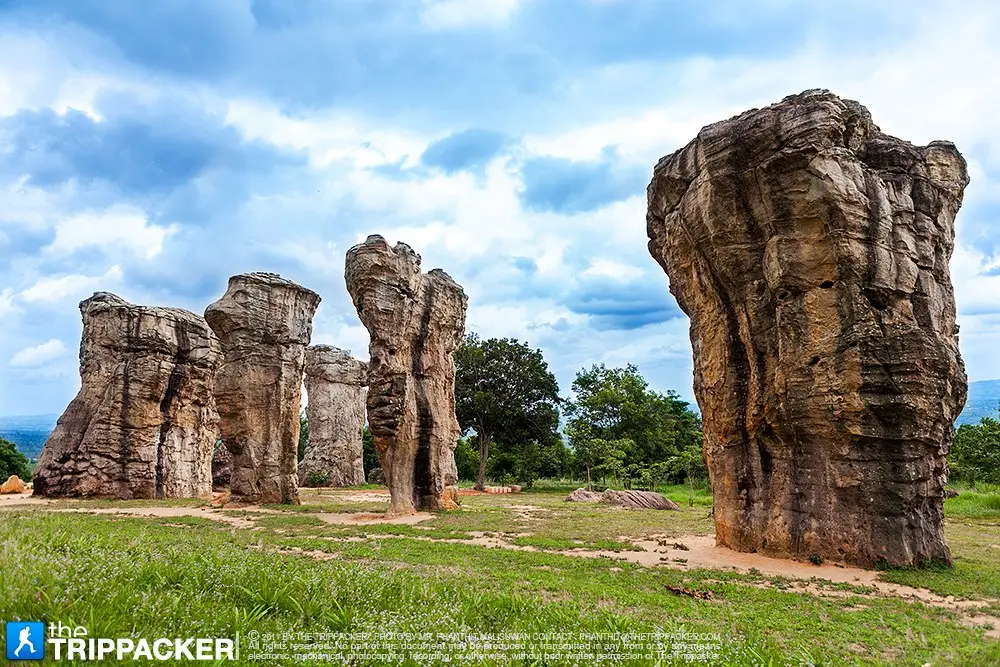
Mo Hin Khao, often called the “Stonehenge of Thailand,” is located at Ban Wang Kham Khaen, Moo 9, Tha Hin Ngom Subdistrict, Mueang Chaiyaphum District, Chaiyaphum Province. It lies within Phu Laen Kha National Park and is one of the most remarkable natural and geological attractions in the province. The site is about 40 kilometers north of Chaiyaphum city and is set on a highland area in the Phu Laen Kha forest landscape. Its most famous feature is a group of five massive white sandstone pillars standing upright above grassland and open woodland. When sunlight falls on the stones, or shortly after rain, their pale white surfaces become especially clear and visible from a distance.
The name “Mo Hin Khao” directly reflects the landscape. In the local Isan language, “mo” means a hill or raised ground, while “hin khao” means white stone. The name therefore describes a hill where white sandstone rises above the grass. It is a name that comes from local observation rather than a modern tourism slogan. Local people noticed the unusual pale stones long before the place became widely known as a tourist attraction.
The nickname “Stonehenge of Thailand” comes from the visual impression of the five large standing stones. Although their cultural origin and formation are completely different from Stonehenge in England, the upright arrangement of huge stones in an open landscape creates a similar sense of wonder. Each stone has its own size, shape, surface, and personality. Together, they create one of the most memorable natural scenes in Chaiyaphum.
Geologically, the rocks at Mo Hin Khao are around 175-195 million years old. They were formed from layers of sand, silt, and clay that accumulated over long periods and later hardened into rock. Over geological time, movements of the Earth’s crust, compression, folding, fracturing, weathering, and erosion gradually shaped the sandstone into pillars, slabs, platforms, and unusual rock forms. The stones visible today are therefore the result of natural processes working slowly over an immense span of time.
For visitors, Mo Hin Khao is not simply a place with large rocks. It is a natural archive of the Earth’s history. Standing in front of the stones means standing before evidence of ancient sediment, land movement, cracking, erosion, rain, wind, sunlight, and time. The beauty of the site comes from both its visual impact and the geological story behind it.
The physical landscape of Mo Hin Khao includes standing pillars, rock platforms, sandstone slabs, open rock fields, and large boulders scattered across the highland. Many rocks resemble familiar shapes depending on the viewer’s imagination. Some look like mushrooms, boats, elephants, turtles, or pagodas. This makes the site enjoyable for families, students, photographers, and travelers who like observing natural forms closely.
The main tourism areas of Mo Hin Khao include the five standing stone pillars, the Khlong Chang rock group, and the rock formations near Pha Hua Nak. Each area has its own atmosphere. The five pillars are the iconic highlight. The Khlong Chang group features scattered rocks that many visitors imagine as a herd of elephants. Pha Hua Nak offers wide mountain views and links the rock landscape with the broader scenery of Phu Laen Kha National Park.
The five standing stones are the heart of Mo Hin Khao. They rise from open ground and create a strong vertical contrast against the sky. From a distance, they appear like pale monuments. Up close, visitors can see rock texture, weathering marks, natural fractures, and traces of erosion. Each stone looks different from every angle, which is why photographers often walk around the group to find the best perspective.
The stones are especially beautiful in the morning, late afternoon, and after rainfall. Soft light creates shadows and highlights on the rock surface. After rain, the white sandstone often appears cleaner and brighter. The surrounding grass and woodland also look fresher, giving the site a strong natural atmosphere. For photography, early and late light is usually more suitable than harsh midday sun.
The Khlong Chang rock group adds another layer of interest. The rocks are scattered in forms that many visitors compare to a group of elephants. This imaginative interpretation makes the area easy to enjoy, especially for children and educational groups. It also shows that Mo Hin Khao is not limited to the famous five pillars; it is a broader geological landscape with many forms and textures.
Pha Hua Nak and the nearby highland route offer wide views of Phu Laen Kha. From this area, visitors can see layered mountains, forested slopes, and mist in some seasons. Many travelers combine Mo Hin Khao with Pha Hua Nak for sunrise, sunset, camping, or stargazing. This creates a route that combines rock formations with panoramic mountain scenery.
The area around Mo Hin Khao also has ecological value. It includes open woodland, grassland, local plant communities, small wildlife, insects, and headwater areas within the Phu Laen Kha forest system. For nearby communities such as Ban Wang Kham Khaen, the landscape is not only a tourist attraction but also part of a living environment. Local efforts such as small water-retention structures show the connection between tourism, forest, water, and community life.
Mo Hin Khao is important because it combines geology, scenery, and community context. Geology created the unusual white rocks. The highland setting makes them visually powerful. The Ban Wang Kham Khaen community gives the site local meaning and helps connect visitors with the landscape. For this reason, Mo Hin Khao should be seen not only as a photo spot, but as a natural cultural landscape.
Before Mo Hin Khao became widely known, it was part of the local highland and forest area used and recognized by nearby communities. After surveys and tourism promotion, the image of the white stone pillars became increasingly famous. The site is now one of the key natural attractions of Chaiyaphum and a well-known symbol of Phu Laen Kha National Park.
Responsible travel is important here. The rocks may look strong, but they are part of a fragile natural heritage site. Visitors should not climb the stones, write on the rock surface, strike the stones, remove rock fragments, or leave trash behind. Protecting the surface and surroundings helps preserve the site for future visitors and for the local community.
Mo Hin Khao suits many kinds of travel. Families can enjoy the five pillars and nearby rock groups. Friends can come for photography, sunset, or camping. Students can use the site as an outdoor classroom for geology, ecology, and conservation. Nature lovers can combine Mo Hin Khao with Pha Hua Nak, forest trails, viewpoints, and camping areas within Phu Laen Kha National Park.
The best season depends on the visitor’s goal. The rainy season brings fresh green grass and clean white rock surfaces, especially after rain. The cool season offers pleasant temperatures, misty viewpoints, and camping conditions. The hot season often has clear skies for photography, but visitors should prepare water, sun protection, and suitable clothing because much of the area is open and exposed.
Morning and late afternoon are the most comfortable times to visit. The light is softer, the air is cooler, and the shadows help reveal the shape of the rocks. Midday can be hot, especially on open ground. Visitors should wear shoes suitable for walking on uneven rock and soil, and should be careful after rain because some surfaces may become slippery.
A meaningful visit can begin at the five stone pillars, then continue to the Khlong Chang rock group and other nearby rock formations. If time allows, visitors should continue to Pha Hua Nak for the broader view of Phu Laen Kha. This route gives a complete experience: the iconic white pillars, imaginative rock forms, and highland scenery.
Mo Hin Khao is highly photogenic. Popular photographs include the five pillars in wide angle, people standing near the rocks to show their scale, rock silhouettes at sunrise or sunset, fresh white sandstone after rain, and unusual boulders in the surrounding area. Photographers should avoid climbing rocks or damaging plants while looking for a camera angle.
For those interested in geology, the rock surfaces are worth slow observation. Visitors can look for color differences, sedimentary layers, fractures, erosion lines, and patterns of weathering. These details show how the stone was formed and shaped over time. Observing the rocks carefully turns a sightseeing trip into a deeper learning experience.
Ban Wang Kham Khaen is closely connected with Mo Hin Khao because it lies along the route to the site and is the nearest community. Travelers can support the community by using local services, buying food or drinks from local vendors when available, respecting village life, and keeping the area clean. Community respect is part of responsible tourism in Mo Hin Khao.
Camping is available in designated areas of Phu Laen Kha National Park, especially around the highland route toward Pha Hua Nak. Travelers who plan to stay overnight should contact the park in advance, follow park rules, check weather conditions, and prepare suitable equipment. Mountain weather can change quickly, with wind, rain, mist, or lower temperatures at night.
Mo Hin Khao can be combined with several major attractions in Chaiyaphum. Nearby places include Pha Hua Nak, the Khlong Chang rock group, pine woodland areas, Tat Ton Waterfall, Phra That Chaiyaphum, Lam Pa Thao Dam, and Chaiyaphum city. A half-day trip from the city is possible, but a full-day route gives visitors more time to combine rocks, viewpoints, waterfalls, and local food stops.
Tat Ton Waterfall is a popular place to combine with Mo Hin Khao. Travelers can visit the white rock formations in the morning and continue to the waterfall in the afternoon. The waterfall area has broad rock platforms and flowing water, especially impressive during the rainy and early cool seasons. This route combines the highland rock landscape with a lower forest-waterfall landscape.
Phra That Chaiyaphum is another suitable stop in the broader Phu Laen Kha route. Visitors who want a combination of nature and faith can visit Mo Hin Khao, Pha Hua Nak, and Phra That Chaiyaphum in one day. This route shows Chaiyaphum through geology, forest viewpoints, sacred architecture, and local travel culture.
Food options near Mo Hin Khao include simple food and drinks near Pha Hua Nak, roadside restaurants, cafés, and local food shops in the Tha Hin Ngom, Kao Ya Di, and Lam Pa Thao route areas. Nearby options include Food And Drinks Pha Hua Nak, Suan Ahan Rim Nam, Pine Camp Chaiyaphum, Ahan Suan Khon Phon, Ban Phat Thai Desserts, Warm House Bakery, and Tor Boon Coffee. Travelers should also bring water and basic snacks because food options inside the park area may be limited.
Accommodation near Mo Hin Khao includes national park camping areas, local homestays, resorts along the Kaeng Khro-Kao Ya Di route, and hotels in Chaiyaphum city. Options include Ban Rai Phu Phailin Resort, Homestay Yai Nan, On The Rock Chaiyaphum, The Peak Resort Chaiyaphum, and city hotels. Travelers who want to see stars or mist should stay closer to the national park, while those who prefer more restaurants and services may stay in Chaiyaphum city.
Getting There from Chaiyaphum city: take Highway 2051 toward Tat Ton Waterfall for about 18 kilometers. Turn left onto the Tat Ton-Tha Hin Ngom route and continue uphill on a paved road for about 12 kilometers. Continue along the Chaeng Charoen-Sok Chueak route for about 6.5 kilometers, passing Ban Wang Kham Khaen, then turn toward the agricultural road leading to Mo Hin Khao for about 3.5 kilometers. Travelers may use coordinates 16.3583997, 102.1488931 for navigation.
Drivers should be careful because parts of the route are uphill, narrow, or affected by seasonal road conditions. During the rainy season, some sections may be slippery or uneven. Private cars can generally access the area in normal conditions, but drivers should reduce speed, use lower gears on slopes, and be careful on curves. Motorcyclists should check brakes and wear protective gear.
The entrance fee follows the rate of Phu Laen Kha National Park: Thai adult 20 baht, Thai child 10 baht, foreign adult 100 baht, and foreign child 50 baht. Vehicle fees, camping fees, and other services follow the park’s current regulations. Visitors should carry some cash because electronic payment or mobile signal may not be reliable in every highland area.
Useful items for visiting Mo Hin Khao include walking shoes, a hat, sun protection, rain protection during the rainy season, drinking water, a camera, a personal trash bag, and a flashlight if staying overnight. Visitors who plan to photograph stars should check the moon phase, weather forecast, and park regulations before traveling.
Overall, Mo Hin Khao is one of the most distinctive natural attractions in Chaiyaphum. It combines ancient white sandstone pillars, grassland, open woodland, viewpoints, ecology, community context, and the broader landscape of Phu Laen Kha National Park. It is ideal for travelers interested in geology, photography, camping, nature, and conservation-based travel.
For international travelers who want to see a different side of Thailand, Mo Hin Khao should not be overlooked. Standing before the five white stone pillars, walking among unusual rock forms, viewing the mountains from Pha Hua Nak, and learning how nature shaped this landscape over millions of years make the visit both visually impressive and intellectually rewarding.
| Name | Mo Hin Khao / Stonehenge Of Thailand |
| Location | Ban Wang Kham Khaen, Moo 9, Tha Hin Ngom Subdistrict, Mueang Chaiyaphum District, Chaiyaphum Province, within Phu Laen Kha National Park |
| Address | Mo Hin Khao, Phu Laen Kha National Park, Ban Wang Kham Khaen, Tha Hin Ngom Subdistrict, Mueang Chaiyaphum District, Chaiyaphum 36000, Thailand |
| Coordinates | 16.3583997, 102.1488931 |
| Highlights | Five massive white sandstone pillars, Khlong Chang rock group, unusual rock fields, Pha Hua Nak viewpoint, wide sky, open woodland, and the natural landscape of Phu Laen Kha National Park |
| Geological Age / Background | The rocks are about 175-195 million years old, formed from accumulated sand, silt, and clay, later shaped by crustal movement, folding, fracturing, weathering, and erosion |
| Landscape Features | A highland area within the Phu Laen Kha forest landscape, with grassland, open woodland, rock platforms, stone pillars, slabs, and large boulders scattered across the hill |
| Name Origin | “Mo” means a hill or raised ground in local Isan usage, while “Hin Khao” means white stone, referring to the pale sandstone visible above the grassland |
| Geological Significance | Large white sandstone pillars and rock formations created by long-term natural processes including sediment deposition, land movement, cracking, weathering, and erosion |
| Main Areas / Zones | Five stone pillar zone, Khlong Chang rock group zone, rock platform zone, Pha Hua Nak zone, viewpoint zone, pine woodland and camping zone, nature study route, and Ban Wang Kham Khaen community zone |
| Facilities | Parking areas at some points, toilets at park service points, limited food and drink services, designated camping areas, viewpoints, and park information services |
| Main Activities | Viewing the five stone pillars, photographing rock formations, walking across rock fields, learning geology, watching sunrise or sunset, visiting Pha Hua Nak, camping, stargazing, and studying the Phu Laen Kha ecosystem |
| Caretaker / Main Organizations | Phu Laen Kha National Park, Department of National Parks, Wildlife and Plant Conservation, together with Ban Wang Kham Khaen community and local authorities in Tha Hin Ngom Subdistrict |
| Contact Numbers | Phu Laen Kha National Park, Tel. 044-810-903, 093-093-9193 / TAT Nakhon Ratchasima Office, Tel. 044-811-376 |
| Open Days | Daily, according to announcements and regulations of Phu Laen Kha National Park |
| Opening Hours | 06.00 – 18.00 (Recommended Visiting Hours For The National Park Area And Viewpoints) |
| Entrance Fee | Phu Laen Kha National Park fee: Thai adult 20 baht, Thai child 10 baht; foreign adult 100 baht, foreign child 50 baht; vehicle and camping fees follow current park regulations |
| Travel Information | From Chaiyaphum city, take Highway 2051 toward Tat Ton Waterfall for about 18 km, turn left onto the Tat Ton-Tha Hin Ngom route for about 12 km, continue along the Chaeng Charoen-Sok Chueak route for about 6.5 km, pass Ban Wang Kham Khaen, then continue toward Mo Hin Khao for about 3.5 km. Use coordinates 16.3583997, 102.1488931 |
| Current Status | An important natural and geological attraction within Phu Laen Kha National Park, open to visitors according to park announcements |
| Visitor Guidelines | Do not climb the rock pillars, write on rocks, leave trash, remove rocks or plants, leave designated routes, or ignore park staff instructions |
| Nearby Tourist Attractions | 1. Five Stone Pillars Of Mo Hin Khao, about 0.1 km 2. Khlong Chang Rock Group, about 1 km 3. Pha Hua Nak, Phu Laen Kha National Park, about 2 km, Tel. 093-093-9193 4. Pine Woodland And Camping Area, about 3 km 5. Ban Wang Kham Khaen, Tha Hin Ngom Subdistrict, about 6 km 6. Tat Ton Waterfall, Tat Ton National Park, about 28 km, Tel. 044-104-002 7. Phra That Chaiyaphum, about 12 km 8. Lam Pa Thao Dam, about 18 km |
| Nearby Restaurants | 1. Food And Drinks Pha Hua Nak, about 2 km 2. Suan Ahan Rim Nam, Lam Pa Thao Dam Area, about 8 km 3. Pine Camp Chaiyaphum, about 9 km 4. Ahan Suan Khon Phon, about 11 km 5. Warm House Bakery, about 11 km 6. Tor Boon Coffee, about 12 km 7. Ban Phat Thai Desserts, about 16 km |
| Nearby Accommodations | 1. Phu Laen Kha National Park Camping Area, about 2-3 km, Tel. 093-093-9193 2. Ban Rai Phu Phailin Resort, about 10 km, Tel. 081-790-1692 3. Homestay Yai Nan, about 15 km, Tel. 095-904-7205 4. On The Rock Chaiyaphum, about 11 km, Tel. 081-300-3399 5. The Peak Resort Chaiyaphum, about 36 km, Tel. 082-615-5587 6. Hotels In Chaiyaphum City, about 30-40 km |
Frequently Asked Questions (FAQ)
Q: Where is Mo Hin Khao located?
A: Mo Hin Khao is located at Ban Wang Kham Khaen, Moo 9, Tha Hin Ngom Subdistrict, Mueang Chaiyaphum District, Chaiyaphum Province, within Phu Laen Kha National Park, about 40 km from Chaiyaphum city.
Q: Why is Mo Hin Khao called the Stonehenge of Thailand?
A: It is called the Stonehenge of Thailand because of its five massive white sandstone pillars standing prominently in an open landscape, creating an image similar to a group of giant standing stones.
Q: How old are the rocks at Mo Hin Khao?
A: The rocks are about 175-195 million years old, formed from accumulated sand, silt, and clay, then shaped by crustal movement, fracturing, weathering, and erosion.
Q: What are the main attractions at Mo Hin Khao?
A: The main attractions include the five white sandstone pillars, Khlong Chang rock group, unusual rock fields, pine woodland, camping areas, and Pha Hua Nak viewpoint.
Q: What are the recommended visiting hours?
A: The recommended visiting hours are 06.00 to 18.00. Visitors should check the latest park announcements before traveling, especially during the rainy season or when some areas may be temporarily closed.
Q: Is there an entrance fee?
A: Yes. The Phu Laen Kha National Park fee is 20 baht for Thai adults, 10 baht for Thai children, 100 baht for foreign adults, and 50 baht for foreign children. Vehicle and camping fees follow current park regulations.
Q: How can travelers get to Mo Hin Khao?
A: From Chaiyaphum city, take Highway 2051 toward Tat Ton Waterfall, then continue on the Tat Ton-Tha Hin Ngom route, pass Ban Wang Kham Khaen, and follow the road toward Mo Hin Khao. Travelers may use coordinates 16.3583997, 102.1488931.
Q: Are there accommodations near Mo Hin Khao?
A: Yes. Options include the national park camping area, local homestays, nearby resorts such as Ban Rai Phu Phailin, Homestay Yai Nan, On The Rock Chaiyaphum, and hotels in Chaiyaphum city.
Mobile : 0879601853, 0819760486
 Mobile : 0879601853, 0819760486
 Category: ●Nature and Wildlife
 Group: ●National Parks and Marine Reserves
Last Update : 3 MonthAgo
 Last Update : 3 MonthAgo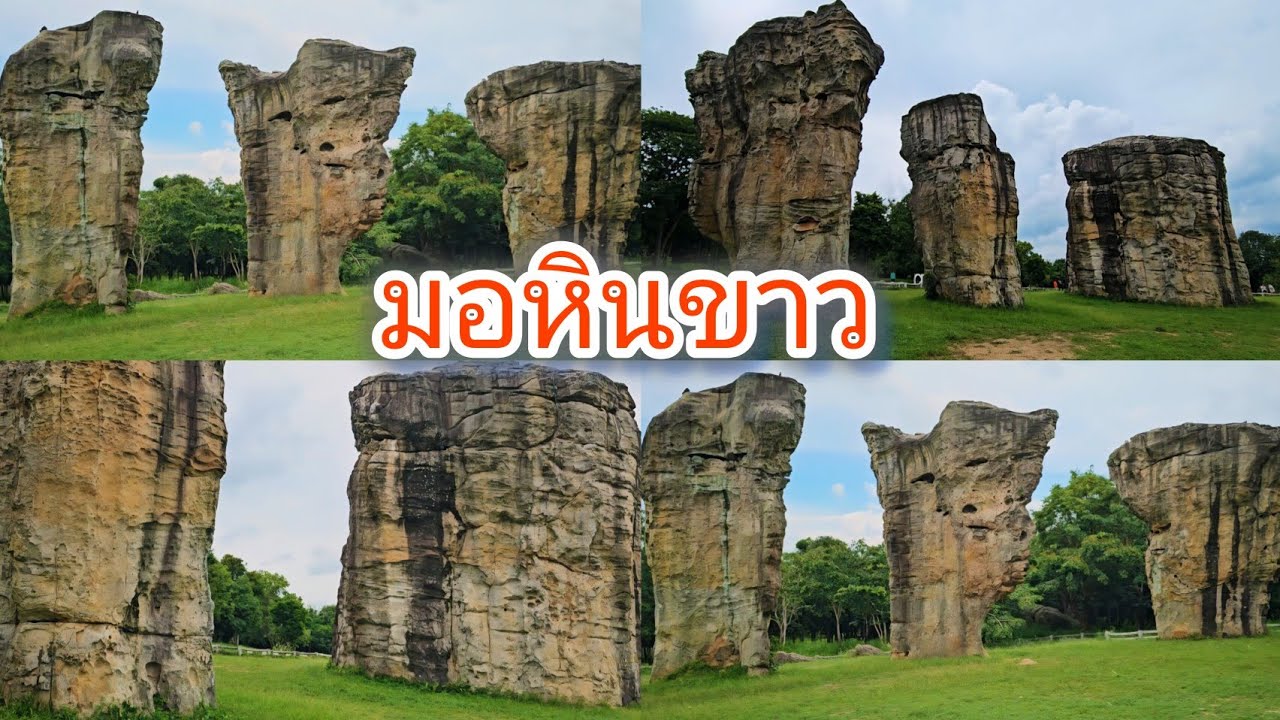
 Click to Access the Navigation Map GPS
Mo Hin Khao Map
Gellery
Recommend

 Art, Culture and Heritage
 Historical Sites and Monuments(1)
 Landmarks and Memorials(3)
 Royal Palace(1)
 Art, Craft Centres, Tradition(3)
 Educational Places
 Educational Gardens, Farm(1)
 Places of Worship
 Temple(141)
 Other Sacred Sites(7)
 Suburban Living
 Village, Community(4)
National Parks and Marine Reserves(7)
Village, Community(4)
National Parks and Marine Reserves(7)
 Mountain (Doi)(5)
 Dam, Reservoir, Lake(10)
 Waterfalls(15)
 Caves(5)
 River, Canal(4)
 Other natural attractions(1)
 Entertainment and Agricultural
 Farms, Parks and Ecotourism(2)


