
lovethailand home >Northeastern Travel Attractions >Buri Ram Travel Attractions >Muang Buri Ram >Lak Khet > Wat Ban Ta Phaeo (Luang Pu Mang)
TL;DR: Wat Ban Ta Phaeo (Luang Pu Mang) is located at Ban Ta Phaeo, Lak Khet Subdistrict, Mueang Buri Ram District, Buri Ram Province, open Daily, hours 08.00 – 17.00.
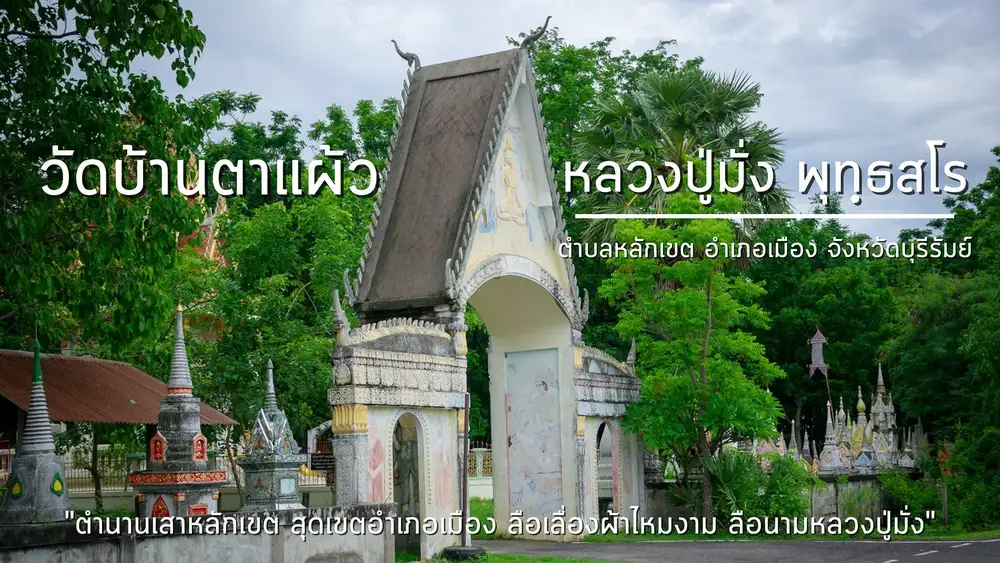
Wat Ban Ta Phaeo (Luang Pu Mang)
Open Days: Daily
Opening Hours: 08.00 – 17.00
Wat Ban Ta Phaeo (Luang Pu Mang) in Buri Ram Province is an important Buddhist temple in Lak Khet Subdistrict, Mueang Buri Ram District. The temple is closely associated with Phra Khru Wimon Phutthisan, widely known as Luang Pu Mang Phutthasaro, a revered monk and former abbot whose reputation remains deeply respected among devotees in Buri Ram and nearby provinces. Today, the temple is best known as a sacred place where visitors come to pay respect at the stupa built to enshrine Luang Pu Mang’s ashes, after his body had once been remembered with deep awe by followers for remaining undecayed after his passing. His royal cremation ceremony has already been completed, and the stupa now serves as the central place of remembrance for his disciples and the wider Buddhist community.
Wat Ban Ta Phaeo is a quiet local temple with the simple atmosphere of a rural Buddhist monastery in the lower northeastern region of Thailand. Its significance, however, reaches beyond its role as a community temple. For many people, this is a place of faith, memory, and spiritual connection. Luang Pu Mang was regarded as a respected monk with strong moral discipline, compassion, and spiritual practice. His name continues to be remembered by local residents, devotees, and those interested in revered monks of Buri Ram Province.
The main reason travelers and devotees visit Wat Ban Ta Phaeo is to pay homage at the stupa of Luang Pu Mang. This stupa enshrines his ashes and stands as the spiritual heart of the temple. Visitors often approach the area quietly, offer flowers or incense, make merit, or stand in silence to recollect the virtues of the revered monk. Even after many years, the atmosphere around the stupa still reflects the lasting bond between Luang Pu Mang and the people who continue to honor him.
The importance of Luang Pu Mang is not limited to sacred objects or his reputation as a famous monk. His role as a spiritual refuge for local people is central to the identity of Wat Ban Ta Phaeo. In Thai rural communities, temples are not only places for worship. They are also centers for merit-making, Buddhist ceremonies, community gatherings, annual religious events, Kathin offerings, and important life rituals. The presence and memory of Luang Pu Mang have given this temple a particularly meaningful place in the spiritual life of Ban Ta Phaeo and nearby communities.
After Luang Pu Mang passed away, the story of his body remaining undecayed became a subject of deep wonder among devotees. For followers, this phenomenon was understood as a sign of the spiritual merit, discipline, and purity of a monk who practiced well. From a cultural perspective, the story also made Wat Ban Ta Phaeo a temple with a distinct identity. It is not simply another village temple, but a place where faith, local memory, and devotion to a respected spiritual teacher are preserved.
At present, Luang Pu Mang’s royal cremation has already taken place, and his ashes are preserved in the stupa inside the temple. Visitors can come daily to pay their respects, make merit, and spend quiet time in reflection. For Thai Buddhist devotees, visiting a stupa dedicated to a revered teacher is not only an act of worship, but also a way to remember the values of kindness, discipline, humility, and faith.
What makes Wat Ban Ta Phaeo different from general tourist attractions is its peaceful and non-commercial character. This is not a destination designed for entertainment or crowded sightseeing. Most visitors come with a clear intention: to pay respect, make merit, ask for blessings, or learn about a revered monk who shaped the faith of the local community. The temple is therefore suitable for travelers interested in spiritual tourism, Thai Buddhist culture, local temples, and the religious heritage of Buri Ram Province.
Buri Ram is widely known for Khmer temples, ancient stone sanctuaries, volcanic landscapes, football, motorsports, and modern landmarks such as Chang Arena and Buri Ram Castle. Yet another important side of the province is its network of local temples and Buddhist communities. Wat Ban Ta Phaeo helps reveal this quieter dimension of Buri Ram. It offers visitors a chance to understand the province not only through famous landmarks, but also through the living faith of local people.
Lak Khet Subdistrict, where the temple is located, still preserves the rural atmosphere of lower northeastern Thailand. The journey toward Ban Ta Phaeo passes through local communities, fields, village roads, and a landscape that differs from the busy areas around central Buri Ram. This setting gives the visit a calm character and allows travelers to see a more local side of the province, away from the main sports and tourism districts.
Upon entering the temple, visitors should maintain a respectful attitude. Since Wat Ban Ta Phaeo is closely connected with a revered monk and remains an active religious site, travelers should dress modestly, speak softly, and behave with restraint. This type of temple visit should not be treated only as a photo stop. It is more meaningful when visitors approach the place with respect for the faith of the local community.
For those interested in revered monks of Buri Ram, Wat Ban Ta Phaeo is an important place to include in a spiritual travel route. Luang Pu Mang Phutthasaro remains a respected figure among many devotees, and his memory continues through oral stories, religious activities, commemorative objects, and the continued reverence of disciples. The temple and the name of Luang Pu Mang are therefore inseparable in the spiritual identity of this community.
Luang Pu Mang held the ecclesiastical title Phra Khru Wimon Phutthisan and served as the former abbot of Wat Ban Ta Phaeo. His monastic name was Phutthasaro. For many people in Buri Ram, the name Luang Pu Mang represents a teacher of faith, moral conduct, and spiritual refuge. His influence remains part of the religious memory of the province and continues to draw visitors who wish to pay homage at the place associated with his life and legacy.
As a community temple, Wat Ban Ta Phaeo continues to support regular Buddhist activities such as merit-making on Buddhist holy days, annual religious ceremonies, Kathin offerings, and community gatherings. These activities reflect the strong relationship between the temple and the surrounding village. In northeastern Thai culture, the temple is a place where people meet, cooperate, preserve traditions, and cultivate gratitude toward parents, teachers, ancestors, monks, and the Triple Gem.
The Kathin ceremony after Buddhist Lent is one of the important annual traditions of Thai temples, and Wat Ban Ta Phaeo also participates in this cycle of Buddhist merit-making. Visitors who come during the post-rainy season may encounter a lively yet respectful atmosphere, with local people preparing offerings, food, and ceremonies together. This gives travelers a chance to observe local Buddhist practice as it naturally takes place within the community.
The most important area inside the temple is the stupa of Luang Pu Mang. Visitors who wish to pay respect may bring flowers, incense, candles, or other appropriate offerings. The act of paying homage does not require elaborate items. A calm mind, respectful behavior, and sincere intention are more important. Visitors should follow any temple signs or instructions and should not enter restricted areas or touch important objects without permission.
For cultural travelers, Wat Ban Ta Phaeo is a good example of a temple whose importance comes not from grand architecture, but from the legacy of a respected monk and the faith of the people. The temple is meaningful because of the person who lived, taught, and was remembered here. Luang Pu Mang’s story turns Wat Ban Ta Phaeo into a place of memory, connecting older generations, present-day devotees, and new visitors through shared reverence.
In terms of travel planning, Wat Ban Ta Phaeo is suitable for a half-day or one-day trip from central Buri Ram. Travelers can start from Buri Ram city and head toward Surin Province, passing through the Sawai Chik area before entering Lak Khet Subdistrict and Ban Ta Phaeo. The distance from central Buri Ram to the temple is about 22 km. A private car, rental car, or hired local vehicle is the most convenient way to reach the temple and continue to other attractions in the province.
Getting There from Buri Ram city is straightforward. Drive in the direction of Surin Province, pass through Sawai Chik Subdistrict, and continue toward Lak Khet Subdistrict and Ban Ta Phaeo. The total distance is approximately 22 km. Travelers using a private vehicle should search for Wat Ban Ta Phaeo or Ban Ta Phaeo, Village No. 6, Lak Khet Subdistrict, Mueang Buri Ram District, for navigation. Since part of the route passes through local village roads, careful driving is recommended.
If traveling from Buri Ram Railway Station or Buri Ram Bus Terminal, visitors can continue by rental car, hired vehicle, or local transport. Public transport may require advance planning because the temple is located in a village area outside the city center and is not on a route with frequent tourist transport. For travelers from other provinces, renting a car or using a private vehicle is the most practical option, especially if the plan includes Khao Kradong Forest Park, Buri Ram Castle, Chang Arena, or the King Rama I Monument.
The best time to visit Wat Ban Ta Phaeo is from morning to late afternoon, when the weather is more comfortable and the atmosphere is suitable for quiet worship. Visitors who wish to take photos should choose the morning or softer afternoon light. Photography should always be done respectfully, especially around the stupa and ceremonial areas. It is also polite to avoid photographing monks or local visitors without permission.
Before visiting, travelers should prepare modest clothing, drinking water, and some cash for merit-making or offerings. In the hot season, a hat or umbrella may be useful, but it should be used appropriately within the temple grounds. Elderly visitors should wear comfortable shoes because rural temple grounds may include concrete surfaces, soil paths, or slightly uneven areas. Good preparation helps make the visit more comfortable and respectful.
Temple etiquette is important at Wat Ban Ta Phaeo. Visitors should avoid loud conversations, music, inappropriate clothing, and any behavior that may disturb monks, local residents, or other devotees. The story of Luang Pu Mang and the memory of his undecayed body after passing are matters of faith for many people. Listening and learning with respect will make the visit more meaningful than treating the temple as a casual stop.
The area around Wat Ban Ta Phaeo can be combined with several attractions in and around Buri Ram city. Travelers with only half a day can pay respect at the stupa of Luang Pu Mang and then return to the city to visit the King Rama I Monument or have a meal in town. With a full day, visitors can continue to Khao Kradong Forest Park, Wat Phra Phutthabat Khao Kradong, Buri Ram Castle, or Chang Arena in the evening.
The King Rama I Monument is one of the key landmarks of Buri Ram city. It commemorates King Phutthayotfa Chulalok the Great, who is connected with the founding history of Buri Ram. Visiting this monument after Wat Ban Ta Phaeo helps travelers understand the province from both local spiritual and broader historical perspectives.
Khao Kradong Forest Park is another worthwhile stop for those who want to combine temple visits with nature. It is located on an extinct volcano and features viewpoints, natural scenery, and Phra Suphattharabophit, a large Buddha image on the hilltop. The atmosphere differs from Wat Ban Ta Phaeo, but together they create a balanced travel route that includes faith, landscape, and one of Buri Ram’s distinctive volcanic landmarks.
Buri Ram Castle and Chang Arena are suitable for travelers who want to end the day with a modern side of the province. Buri Ram Castle offers restaurants, leisure spaces, and photo spots, while Chang Arena is the home stadium of Buriram United and one of the province’s most recognizable contemporary landmarks. Combining Wat Ban Ta Phaeo with these places allows visitors to experience Buri Ram through community, religion, history, nature, and sports.
Travelers interested in Khmer heritage sites such as Prasat Hin Mueang Tam or Phanom Rung Historical Park should plan a separate day, as these attractions are located farther from Wat Ban Ta Phaeo. A balanced itinerary could begin with a visit to Wat Ban Ta Phaeo and central Buri Ram, followed by an overnight stay in the city, then a trip to the ancient stone sanctuaries on the following day.
For dining, visitors can stop at local restaurants in Sawai Chik or return to Buri Ram city, where there are more choices. Wua Daeng Cafe in Sawai Chik is a convenient option along the route, while the city area offers Thai food, Isan food, steak restaurants, duck restaurants, cafes, and family-friendly dining places. Eating in the city is generally more convenient for travelers who plan to stay overnight.
For accommodation, staying in Buri Ram city or near Chang Arena is the most convenient option. Hotels in these areas provide easier access to restaurants, transportation, and other attractions. Options such as HOP INN Buriram, Buritel Hotel, The Sita Princess Buriram Hotel, Fortune Hotel Buriram, Cresco Hotel Buriram, Modena by Fraser Buriram, and Amari Buriram United are suitable for travelers who want reliable services and practical locations. Advance booking is recommended during football matches, major events, or provincial festivals.
A visit to Wat Ban Ta Phaeo should be planned with both spiritual and travel purposes in mind. Those who come only to pay respect may not need a long visit, but travelers who want to understand the context of the temple should allow time to walk quietly, observe the atmosphere, speak respectfully with local caretakers when appropriate, and appreciate the relationship between the temple and the surrounding community.
Wat Ban Ta Phaeo is also useful for those studying Thai culture, local Buddhism, and community-based religious heritage. The temple combines several important elements: a revered monk, faith after death, the preservation of ashes in a stupa, local ceremonies, village life, and a practical travel route from Buri Ram city. These elements make it an interesting site for anyone who wants to understand Thai Buddhist culture beyond major tourist destinations.
Overall, Wat Ban Ta Phaeo (Luang Pu Mang) is a destination for travelers who want to experience a quieter, deeper side of Buri Ram. The stupa of Luang Pu Mang is the heart of the temple and the main reason devotees continue to visit. The atmosphere is simple, but spiritually meaningful. Visitors should come with respect, maintain proper conduct, and take time to learn about the revered monk whose memory remains alive in the faith of the local community.
For those planning a trip to Buri Ram, Wat Ban Ta Phaeo can be the starting point of a meaningful spiritual route. Visitors can pay homage to Luang Pu Mang, make merit, explore nearby city landmarks, enjoy local food, and stay in Buri Ram city before continuing to other attractions. This temple is not only for those who already know Luang Pu Mang, but also for travelers who want to understand the living faith of lower northeastern Thailand and the close relationship between temples and local communities.
| Name | Wat Ban Ta Phaeo (Luang Pu Mang) |
| Location | Ban Ta Phaeo, Lak Khet Subdistrict, Mueang Buri Ram District, Buri Ram Province |
| Address | Village No. 6, Ban Ta Phaeo, Lak Khet Subdistrict, Mueang Buri Ram District, Buri Ram Province 31000, Thailand |
| Coordinates | 14.82536992234544, 103.17848816514017 |
| Highlights | The stupa enshrining the ashes of Phra Khru Wimon Phutthisan, also known as Luang Pu Mang Phutthasaro, the former abbot of Wat Ban Ta Phaeo |
| History | A community temple known for the faith surrounding Luang Pu Mang, a revered monk of Buri Ram Province. After his passing, his body was remembered by devotees for remaining undecayed. His royal cremation has been completed, and a stupa was built at the temple to enshrine his ashes. |
| Name Origin | The temple name is connected with Ban Ta Phaeo, Village No. 6 in Lak Khet Subdistrict, and is widely associated with the name of Luang Pu Mang, the former abbot revered by the local community. |
| Distinctive Features | A peaceful lower northeastern Thai community temple suitable for worship, merit-making, and paying respect at the stupa of Luang Pu Mang. |
| Travel Information | From Buri Ram city, drive toward Surin Province, pass through Sawai Chik, and continue to Lak Khet Subdistrict. The distance is about 22 km. A private car, rental car, or hired local vehicle is recommended. |
| Current Status | Open daily for visitors to pay respect at Luang Pu Mang’s stupa and make merit. |
| Open Days | Daily |
| Opening Hours | 08.00 – 17.00 |
| Fees | No Admission Fee |
| Facilities | Parking area, worship area, merit-making area, and the stupa area dedicated to Luang Pu Mang |
| Main Areas / Zones | Luang Pu Mang Stupa Area, Worship Area, Monastic Hall, and Community Religious Activity Area |
| Abbot / Caretaker | Phra Khru Udom Mongkhonkan |
| Official Website / Official Page | Wat Ban Ta Phaeo - Luang Pu Mang Phutthasaro |
| Nearby Tourist Attractions | 1. King Rama I Monument, About 23 km 2. Khao Kradong Forest Park, About 25 km 3. Wat Phra Phutthabat Khao Kradong, About 25 km 4. Chang Arena, About 26 km 5. Buri Ram Castle, About 26 km 6. Chang International Circuit, About 27 km |
| Nearby Restaurants | 1. Wua Daeng Cafe Sawai Chik, About 12 km, Tel. 093-523-4423 2. London Steak Buriram, About 23 km, Tel. 044-115-213 3. Baan Chay Nam Buriram, About 25 km, Tel. 044-620-713 4. Ped Yang Ku Mueang, Buri Ram Branch, About 26 km, Tel. 061-651-2131 5. Miles Cafe’ Buriram, About 27 km, Tel. 063-803-9365 |
| Nearby Accommodations | 1. HOP INN Buriram, About 24 km, Tel. 063-205-7360 2. Buritel Hotel, About 24 km, Tel. 044-612-688 3. The Sita Princess Buriram Hotel, About 25 km, Tel. 080-797-3300 4. Fortune Hotel Buriram, About 26 km, Tel. 044-163-800 5. Cresco Hotel Buriram, About 27 km, Tel. 044-634-901 6. Modena By Fraser Buriram, About 27 km, Tel. 044-118-188 7. Amari Buriram United, About 27 km, Tel. 044-111-444 |
Frequently Asked Questions (FAQ)
Q: Where is Wat Ban Ta Phaeo (Luang Pu Mang) located?
A: Wat Ban Ta Phaeo is located in Ban Ta Phaeo, Lak Khet Subdistrict, Mueang Buri Ram District, Buri Ram Province. It is about 22 km from central Buri Ram.
Q: Why is Wat Ban Ta Phaeo important?
A: The temple is closely associated with Phra Khru Wimon Phutthisan, or Luang Pu Mang Phutthasaro, a revered monk and former abbot. The temple houses a stupa enshrining his ashes, where devotees come to pay respect.
Q: Who was Luang Pu Mang Phutthasaro?
A: Luang Pu Mang Phutthasaro was the former abbot of Wat Ban Ta Phaeo and a respected monk in Buri Ram Province. He remains deeply revered by local people and his disciples.
Q: Is there an admission fee to visit Wat Ban Ta Phaeo?
A: No. Visitors can enter the temple, make merit, and pay respect at Luang Pu Mang’s stupa without an admission fee.
Q: What are the opening days and hours of Wat Ban Ta Phaeo?
A: The temple is open daily from 08.00 to 17.00.
Q: How can travelers get from Buri Ram city to Wat Ban Ta Phaeo?
A: From Buri Ram city, drive toward Surin Province, pass through Sawai Chik, and continue to Lak Khet Subdistrict. The total distance is about 22 km. A private car, rental car, or hired local vehicle is recommended.
Q: What should visitors wear when paying respect at Luang Pu Mang’s stupa?
A: Visitors should wear modest clothing, behave respectfully, avoid loud noise, and follow temple guidelines because this is an active Buddhist temple and an important place of faith for the local community.
Q: Which nearby attractions can be visited together with Wat Ban Ta Phaeo?
A: Nearby attractions include the King Rama I Monument, Khao Kradong Forest Park, Wat Phra Phutthabat Khao Kradong, Chang Arena, Buri Ram Castle, and Chang International Circuit.
 Category: ●Places of Worship
 Group: ●Temple
Last Update : 2 MonthAgo
 Last Update : 2 MonthAgo
 Click to Access the Navigation Map GPS
Wat Ban Ta Phaeo (Luang Pu Mang) Map
Recommend

 Art, Culture and Heritage
 Historical Sites and Monuments(14)
 Landmarks and Memorials(2)
 Art, Craft Centres, Tradition(6)
 Museums(3)
 Educational Places
 Museum for Study(1)
Temple(74)
Museum for Study(1)
Temple(74)
 Other Sacred Sites(5)
 Suburban Living
 Village, Community(3)
 Nature and Wildlife
 National Parks and Marine Reserves(2)
 Mountain (Doi)(1)
 Dam, Reservoir, Lake(14)
 River, Canal(1)
 Bays and Beaches(1)
 Other natural attractions(2)
 Entertainment and Agricultural
 Animal camps and shows(1)
 Stadium(2)
 Farms, Parks and Ecotourism(2)
 Waterpark(1)


