
lovethailand home >Northeastern Travel Attractions >Buri Ram Travel Attractions >Muang Buri Ram >Nai Muang > Ancient Moat (Khlong La Lom)
TL;DR: Ancient Moat (Khlong La Lom) is located at Central Buriram City Municipality, Nai Mueang Subdistrict, Mueang Buriram District, Buriram Province, open Daily, hours Open Public Outdoor Area, Accessible Throughout The Day.

Ancient Moat (Khlong La Lom)
Open Days: Daily
Opening Hours: Open Public Outdoor Area, Accessible Throughout The Day
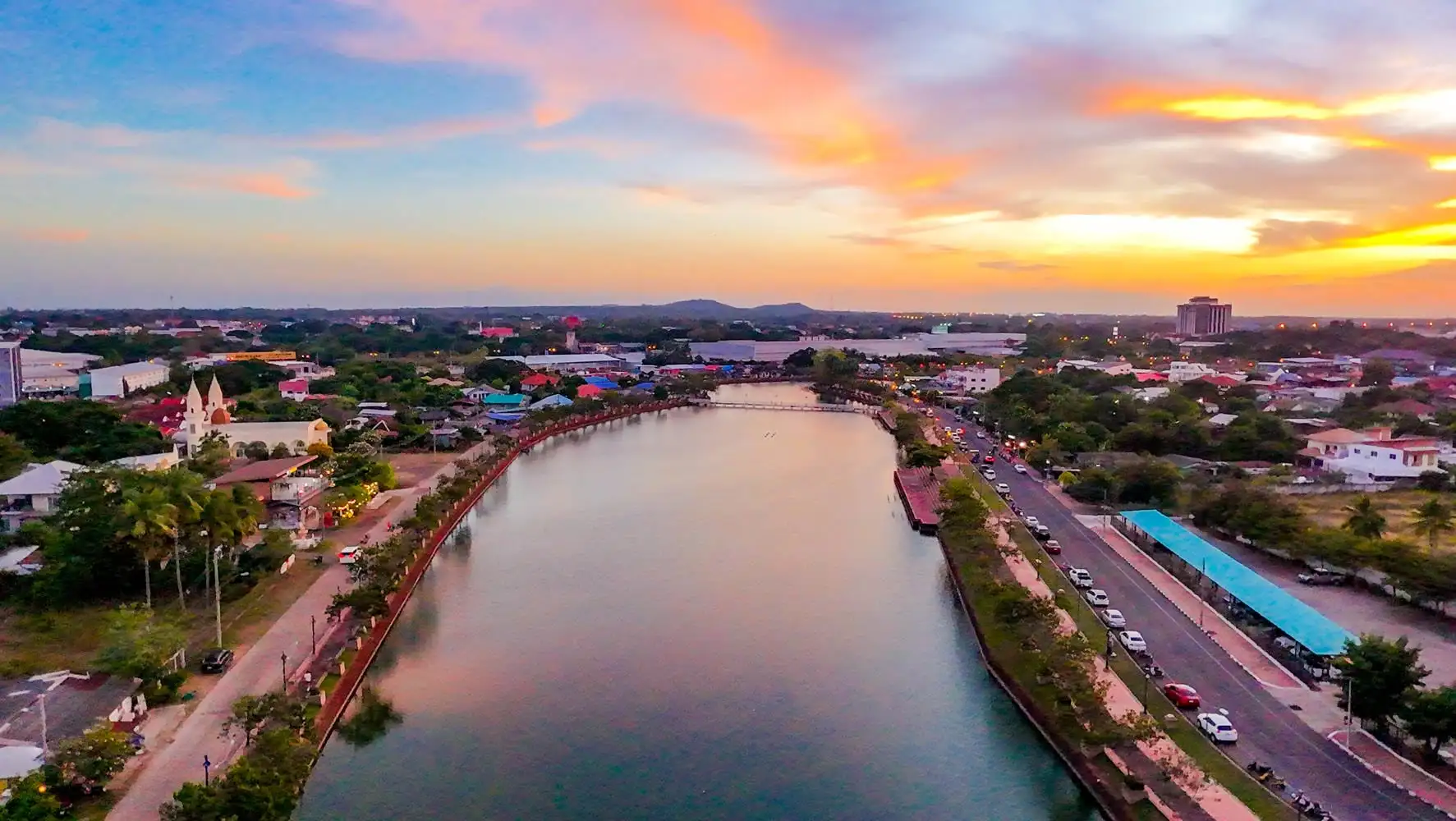
The Ancient Moat of Buriram, locally known as Khlong Lalom, is a historic oval-shaped moat system in the heart of Buriram City. Divided today into 6 sections, it is an approximately 1,800-year-old archaeological landmark, a registered historic site, an urban water resource, a green public space, and one of the most meaningful places to understand the old city of Buriram in a single visit.
The Ancient Moat, or Khlong Lalom, Sections 1 to 6, is located in the center of Buriram City Municipality, Buriram Province. It is one of the clearest surviving cultural landscapes of the old city. More than a scenic waterway, Khlong Lalom is a historic urban structure that reflects settlement, water management, city planning, local ecology, and the long development of communities in Thailand’s lower northeastern region.
The history of Buriram goes far beyond its modern identity as a sports city and a gateway to Khmer stone sanctuaries. Archaeological evidence shows that human settlement in this area dates back to the prehistoric Iron Age, around 2,500 to 1,500 years ago. Early communities lived in close relationship with water sources, dry mounds, lowland areas, agricultural land, and natural resources. One important funerary tradition associated with ancient communities was secondary burial, in which the deceased was first buried for a period of time before the bones were later collected and reburied, either inside pottery vessels or directly in the ground. This practice reveals a deep relationship between the living, the dead, ancestors, and sacred space.
As the settlement grew into an organized town, the excavation of a moat around the inner city became a major act of urban planning. A moat was not only a water reservoir. It marked the boundary between the inner settlement and the outside area, helped manage water in both rainy and dry seasons, supported daily life, and strengthened the identity of the city. Khlong Lalom therefore served physical, social, economic, and symbolic functions for ancient Buriram.
Khlong Lalom is distinguished by its oval form surrounding the old city area. It has an average width of about 80 meters and covers a total area of 179 rai, 2 ngan, and 12 square wah. Today, the moat is divided into 6 sections, locally called 6 “luk”, because modern roads cut through the original inner-city area. Some parts of the old moat have been filled for commercial buildings, houses, and roads, yet the remaining sections still preserve the historic outline of the ancient town.
Section 1 of Khlong Lalom is one of the best-known areas for local residents because it is close to the market zone and the city’s public activity area. It is suitable for walking, jogging, relaxing, and photographing the urban waterscape. Sections 2 and 3 help connect the old-town image with public green areas, while Section 4 is the longest section and clearly demonstrates the scale of the ancient moat system. Sections 5 and 6 complete the broader oval pattern of the old city and show that Khlong Lalom was once a planned, connected system rather than a series of isolated ponds.
The Fine Arts Department registered the moat and city wall area of Buriram, known as Khlong Lalom, as an archaeological site on June 4, 1980. The site is associated with the Dvaravati period and is approximately 1,800 years old. This official recognition gives Khlong Lalom a status beyond that of a city park or reservoir. It is a protected historical asset that should be understood, preserved, and used respectfully.
The word “Lalom” is a local term used to refer to a large pond, water depression, or moat-like water body. Combined with the Thai word “khlong,” meaning canal or waterway, the name Khlong Lalom has become the familiar name for this ancient moat. The name reflects local language, landscape, and the close relationship between Buriram people and the water system at the center of their city.
In the present day, Khlong Lalom continues to serve the city in practical ways. It is an important urban water source used for public purposes, agriculture, fisheries, fire protection, and the care of public parks. It also supports the city’s ecological system, functions as a water-retention area, provides habitat for aquatic plants and animals, and creates a cooling green-blue corridor in the middle of the urban landscape.
For travelers, Khlong Lalom offers a deeper way to understand Buriram beyond football stadiums and stone sanctuaries. A visit can begin at Khlong Lalom Section 1 before continuing to Buriram City Pillar Shrine, Wat Klang Phra Aram Luang, Sroew Ground Walking Street, the King Rama I Monument, and the Southern Isan Cultural Center at Buriram Rajabhat University. This route reveals the city as an ancient settlement, a spiritual center, a market town, a cultural hub, and a modern provincial capital.
The atmosphere around Khlong Lalom changes throughout the day. In the morning, it is suitable for walking, jogging, and taking photographs in soft light. In the evening, local residents come out to exercise, relax, and enjoy the public space. On Saturdays and Sundays, visitors can combine the moat with Sroew Ground Walking Street on Rom Buri Road, where local food, cultural performances, community products, and a lively market atmosphere add another layer to the city experience.
One of the most appealing qualities of Khlong Lalom is that it remains part of everyday life. It is not a tourist attraction detached from the community. Students, office workers, elderly residents, runners, families, and visitors all use the area in their own ways. The sight of people walking along the old moat, resting beside the water, or exercising around the public park shows how ancient heritage can continue to live within a modern city.
From an archaeological perspective, Khlong Lalom helps explain that ancient towns in lower northeastern Thailand were connected to waterways, trade routes, iron-working areas, agricultural fields, and regional cultural networks. A moat of this scale required labor, technical knowledge, and organized community planning. It also shows that people in the past understood seasonal water patterns, land elevation, and the need to create a sustainable settlement in the environmental conditions of the lower northeast.
Visitors should not look only at the surface of the water. The best way to appreciate Khlong Lalom is to read the entire cityscape together. When seen alongside Buriram City Pillar Shrine, Rom Buri Road, the old market zone, the railway station, and surrounding communities, the moat becomes a living map of Buriram’s history. The city did not begin with roads, stadiums, or commercial districts; it grew from water, settlement, belief, and community memory.
For history-focused travelers, walking slowly around the moat is the best approach. Notice the waterline, the city shape, the roads that cut through the original moat, and the areas where the old landscape still remains visible. This helps explain why Khlong Lalom is now divided into separate sections and why some parts have become roads, buildings, and neighborhoods. These changes are part of the modern history of the city and reflect the continuing balance between conservation and urban growth.
For general travelers and families, Khlong Lalom is easy to include in a half-day or full-day city itinerary. A good route is to visit the moat and City Pillar Shrine in the morning, have lunch in the city, continue to the Southern Isan Cultural Center or King Rama I Monument in the afternoon, and return to Sroew Ground Walking Street in the evening on the weekend. The area is close to restaurants, cafés, hotels, markets, and transport points, making it practical for both Thai and foreign visitors.
Getting There is convenient because Khlong Lalom lies within Buriram City. Travelers from Bangkok can drive to Buriram via the Nakhon Ratchasima route, with a road distance of about 384 kilometers. Train travelers can arrive at Buriram Railway Station and continue by local transport, taxi, rental vehicle, or by walking to some parts of the central city. Travelers arriving by air can land at Buriram Airport, about 30 kilometers from the city center, and continue by road into Buriram City Municipality.
When visiting Khlong Lalom, travelers should keep the area clean, avoid throwing waste into the water, respect signs and public facilities, and share the space politely with local residents. The moat is simultaneously a historic site, a public water source, a park, and an exercise area. Morning and evening are the most pleasant times to visit because the weather is cooler, the light is better for photography, and local life around the moat is more visible.
Khlong Lalom Sections 1 to 6 are therefore much more than a pleasant place to walk in Buriram. They form an open-air historical document with water, people, memory, and continuous use. Walking along the ancient moat allows visitors to read the past of Buriram through a real landscape where archaeology, community life, water management, and modern urban development still meet.
| Name | Ancient Moat Of Buriram, Khlong Lalom Sections 1 To 6 |
| Location | Central Buriram City Municipality, Nai Mueang Subdistrict, Mueang Buriram District, Buriram Province |
| Address | Around The Old City Area Of Buriram, Near Rom Buri Road, Buriram City Pillar Shrine, And The Central Urban Community, Buriram 31000 |
| Highlights | An Approximately 1,800-Year-Old Oval Ancient Moat Divided Into 6 Sections, Used Today As A Historic Site, Water Resource, Green Space, And Urban Recreation Area |
| History | The Area Has Evidence Of Prehistoric Iron Age Settlement Around 2,500 – 1,500 Years Ago. The Moat Is Associated With The Dvaravati Period And Is About 1,800 Years Old. |
| Name Origin | “Lalom” Is A Local Term Referring To A Large Water Depression Or Moat-Like Water Body, Giving The Site Its Familiar Name, Khlong Lalom. |
| Distinctive Features | Oval Waterway With An Average Width Of About 80 Meters And A Total Area Of 179 Rai, 2 Ngan, And 12 Square Wah, Now Divided Into 6 Sections By Roads Entering The Inner City. |
| Main Areas / Zones | Khlong Lalom Section 1: 50 M Wide, 320 M Long Khlong Lalom Section 2: 100 M Wide, 180 M Long Khlong Lalom Section 3: 90 M Wide, 110 M Long Khlong Lalom Section 4: 50 M Wide, 1,250 M Long Khlong Lalom Section 5: 70 M Wide, 230 M Long Khlong Lalom Section 6: 90 M Wide, 350 M Long |
| Travel Information | Located In Buriram City, About 384 Km From Bangkok By Car, About 376 Km By Train, And About 30 Km From Buriram Airport. Travelers Can Reach The Area By Private Car, Train, Flight, Rental Car, Local Songthaew, Or City Taxi. |
| Current Status | Registered Historic Site, Urban Water Resource, Public Green Space, Rest Area, And Exercise Area Of Buriram City |
| Open Days | Daily |
| Opening Hours | Open Public Outdoor Area, Accessible Throughout The Day. Morning And Evening Visits Are Recommended. |
| Fees | No Admission Fee |
| Facilities | Waterside Walkways, Green Areas, Rest Areas, Exercise Space, Lighting In Some Sections, And Nearby Urban Restaurants And Shops |
| Caretaker | Buriram City Municipality, Together With Relevant Agencies Responsible For Historic Site Conservation And Urban Development |
| Main Contact Number | Buriram City Municipality, Tel. 044-602-345 |
| Official Website / Official Page | https://www.buriramcity.go.th |
| Nearby Tourist Attractions | 1. Buriram City Pillar Shrine, About 0.5 Km 2. Wat Klang Phra Aram Luang, About 0.6 Km 3. Sroew Ground Walking Street, About 1 Km 4. King Rama I Monument, About 2 Km 5. Southern Isan Cultural Center, Buriram Rajabhat University, About 2 Km 6. Chang Arena, About 6 Km 7. Chang International Circuit, About 7 Km 8. Khao Kradong Forest Park, About 9 Km |
| Nearby Restaurants | 1. La Lom Buriram, About 0.5 Km, Tel. 091-014-1936, 090-290-2021 2. Baan Chay Nam Buriram, About 3 Km, Tel. 044-620-713, 096-336-5141 3. London Steak Buriram, About 2 Km, Tel. 044-115-213, 096-315-5075 4. Muang Pizza Buriram, About 2 Km, Tel. 044-612-032, 062-138-9432 5. Osteria Italia, About 3 Km, Tel. 044-634-653 6. Romantic Restaurant And Pizzeria, About 2 Km, Tel. 087-114-1466 |
| Nearby Accommodations | 1. B2 Buriram Boutique & Budget Hotel, About 1 Km, Tel. 052-009-161, 088-263-2897 2. QOO Hotel Buriram, About 1 Km, Tel. 044-602-561, 098-592-2654 3. Chill D Resort Buriram, About 1 Km, Tel. 044-110-724 4. Klim Hotel Buriram, About 2 Km, Tel. 044-601-989 5. Green@Buriram Hotel, About 2 Km, Tel. 044-666-086 6. Snow House Buriram, About 2 Km, Tel. 090-258-3030 |
Frequently Asked Questions (FAQ)
Q: Where Is Khlong Lalom Located?
A: Khlong Lalom is located in the center of Buriram City Municipality, Nai Mueang Subdistrict, Mueang Buriram District, Buriram Province, near Buriram City Pillar Shrine, Rom Buri Road, and the old urban area.
Q: How Many Sections Does Khlong Lalom Have?
A: Khlong Lalom is divided into 6 sections today, following the roads that cut through the old inner city. These sections were once part of the same ancient oval moat system.
Q: How Old Is The Ancient Moat Of Buriram?
A: The moat is associated with the Dvaravati period and is approximately 1,800 years old. It was registered as an archaeological site on June 4, 1980.
Q: Is There An Admission Fee For Khlong Lalom?
A: No. Khlong Lalom is a public outdoor area in the city, and visitors can walk, relax, and exercise there without an admission fee.
Q: What Is The Best Time To Visit Khlong Lalom?
A: Morning and evening are the best times to visit because the weather is cooler, the light is good for photography, and local life around the moat is more visible.
Q: Is Khlong Lalom Good For History Travelers?
A: Yes. It is one of the best places in Buriram City to understand ancient settlement, water management, city planning, and the cultural development of the old town.
Q: What Attractions Can Be Visited Together With Khlong Lalom?
A: Nearby attractions include Buriram City Pillar Shrine, Wat Klang Phra Aram Luang, Sroew Ground Walking Street, King Rama I Monument, Southern Isan Cultural Center, Chang Arena, and Khao Kradong Forest Park.
Q: Is It Easy To Reach Khlong Lalom From Buriram Railway Station?
A: Yes. Khlong Lalom is in the central city area and is close to markets, main roads, and local transport. Visitors can continue by songthaew, taxi, rental vehicle, or walk to some nearby sections.
 Category: ●Art, Culture and Heritage
 Group: ●Historical Sites and Monuments
Last Update : 3 MonthAgo
 Last Update : 3 MonthAgo
 Click to Access the Navigation Map GPS
Ancient Moat (Khlong La Lom) Map
Recommend
 Historical Sites and Monuments(14)
 Landmarks and Memorials(2)
 Art, Craft Centres, Tradition(6)
 Museums(3)
 Educational Places
 Museum for Study(1)
 Places of Worship
 Temple(74)
 Other Sacred Sites(5)
 Suburban Living
 Village, Community(3)
 Nature and Wildlife
 National Parks and Marine Reserves(2)
 Mountain (Doi)(1)
 Dam, Reservoir, Lake(14)
 River, Canal(1)
 Bays and Beaches(1)
 Other natural attractions(2)
 Entertainment and Agricultural
 Animal camps and shows(1)
 Stadium(2)
 Farms, Parks and Ecotourism(2)
 Waterpark(1)


