
lovethailand home >Northeastern Travel Attractions >Buri Ram Travel Attractions >Nang Rong >Nong Kong > Ban Nong Ta Kai Silk Weaving Center
TL;DR: Ban Nong Ta Kai Silk Weaving Center, Buri Ram attractions : Suburban Living, Village, Community.

Ban Nong Ta Kai Silk Weaving Center
Open Days: Daily, advance contact is recommended for group visits
Opening Hours: Please contact Nong Ta Kai Tourism Service Center or Nong Ta Kai Silk Weaving Group in advance
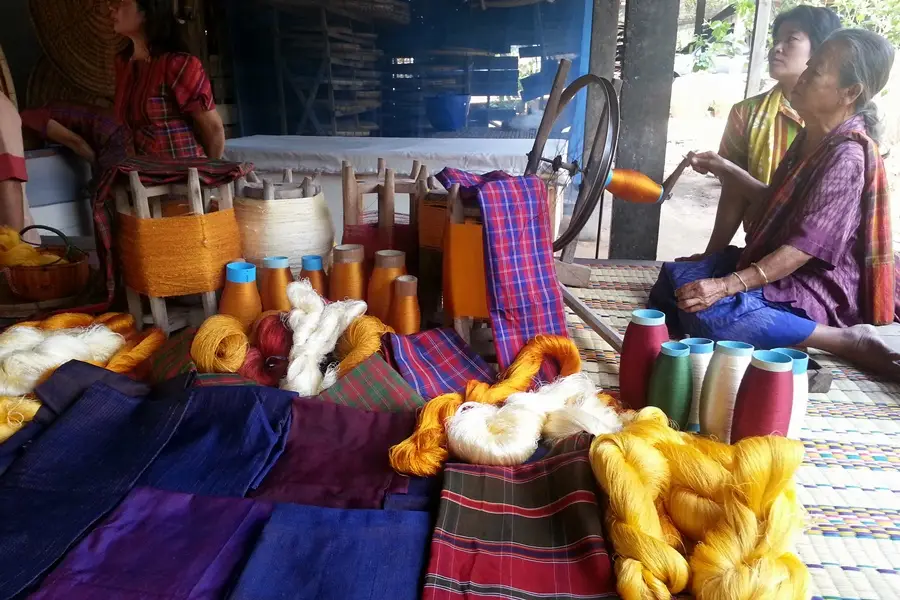
Ban Nong Ta Kai Silk Weaving Center is a community-based silk village in Nong Kong Subdistrict, Nang Rong District, Buri Ram Province. The main silk tourism area includes Ban Nong Ta Kai, Moo 3, and Ban Nong Ta Kai Noi, Moo 4. This village is known for traditional Isan silk weaving, red-hemmed silk skirts, mudmee silk, plain silk, silk shawls, scarves, bags, and unique local patterns such as Dok Ta Kai Ban. Visitors can learn about the silk-making process from mulberry growing, silkworm raising, silk reeling, dyeing, mudmee tying, hand-weaving, and product development. It is one of the best places in Buri Ram for travelers who want to experience living textile heritage, local craftsmanship, and rural community tourism.
Ban Nong Ta Kai Silk Weaving Center is one of the most meaningful cultural destinations in Nang Rong District, Buri Ram Province. Located in Nong Kong Subdistrict, the community is recognized as a silk tourism village where visitors can learn about traditional Thai silk directly from local weavers. The main area includes Ban Nong Ta Kai, Moo 3, and Ban Nong Ta Kai Noi, Moo 4. Unlike a standard souvenir shop, this community allows travelers to see how silk is created, how patterns are developed, and how weaving remains part of everyday village life.
Ban Nong Ta Kai is an old community in southern Isan with a long history of preserving local culture and rural ways of life. Silk weaving has been passed down through families for generations. Many women in the village grew up hearing the sound of looms, watching older relatives prepare silk threads, and learning how to control color, pattern, and rhythm. For this reason, silk here is not simply a product. It is a living form of knowledge shaped by family memory, local skill, patience, and community identity.
The name Nong Ta Kai is connected with the natural landscape of the village. In the past, the area had a large pond and many Ta Kai trees, which became the origin of the village name. Over time, the name became part of the community’s cultural identity. Today it appears not only as the name of the village, but also in textile patterns such as Dok Ta Kai Ban, a local motif that reflects the village’s own story through silk design.
One of the distinctive textiles associated with the community is the red-hemmed silk skirt, known in Thai as pha sin tin daeng. This type of traditional skirt is highly important in the textile culture of Buri Ram and southern Isan. Its red hem gives the cloth a strong and auspicious character. In local culture, such textiles are often connected with ceremonies, respect, family occasions, and formal dress. At Nong Ta Kai, this heritage is interpreted through hand-woven silk and local patterns, making each textile more than a decorative item.
The beauty of Nong Ta Kai silk lies in the hand-weaving process. Hand-woven silk is never completely identical from one piece to another. Even when the same pattern and colors are used, the rhythm of the weaver, the tension of the threads, and the handmade nature of the loom create subtle differences. These differences are not flaws. They are the signature of craftsmanship. They show that each piece has passed through human hands, attention, and time.
Visitors can learn the silk-making process in a complete and practical way. The journey begins with mulberry growing, because mulberry leaves are the food of silkworms. It continues with silkworm raising, silk cocoon production, silk reeling, thread preparation, washing, dyeing, mudmee pattern tying, and weaving. Each step requires skill and experience. Seeing the process in person helps visitors understand why genuine hand-woven silk has cultural and economic value far beyond ordinary fabric.
The early stage of silk production begins with the relationship between the mulberry tree and the silkworm. Healthy mulberry leaves help produce good cocoons, and good cocoons lead to better silk thread. The knowledge of raising silkworms therefore combines agriculture and textile craft. It is a form of rural wisdom that connects farming, household labor, and artistic production. This makes the community especially suitable for educational visits by students, textile researchers, designers, and cultural travelers.
Mudmee tying is one of the most important steps in Isan silk production. The weaver or craftsperson ties sections of silk thread before dyeing in order to reserve colors and create patterns. When the tied threads are dyed and later woven, the design appears on the cloth. This process requires careful planning before the weaving even begins. A beautiful mudmee cloth is therefore the result of memory, calculation, color control, and long experience.
The weaving stage is where the prepared threads become a finished textile. Visitors can observe the loom, the shuttle, the warp and weft threads, and the steady movement of the weaver. A single piece of cloth grows slowly, line by line. The weaver must control the tension, rhythm, and accuracy of every movement. This process gives travelers a clear understanding of the value of handwoven textiles. The price of a silk cloth reflects not only material cost, but also time, skill, patience, and cultural knowledge.
The products available in Ban Nong Ta Kai include mudmee silk, plain silk, sin khan, red-hemmed skirts, traditional shoulder cloths, silk shawls, silk scarves, silk bags, outer-cocoon silk products, and locally inspired patterns. Outer-cocoon silk has a distinctive texture and natural feel, making it suitable for scarves, shawls, and contemporary handmade products. These items are popular with visitors who want practical souvenirs with a strong cultural story.
Buying silk directly from the community supports local livelihoods. It helps create income for weavers, older residents, women’s groups, and families in the village. It also helps younger generations see that traditional weaving can continue as a meaningful occupation, not merely as an old custom. In this way, community tourism becomes part of cultural preservation. Visitors who buy a textile here are not only taking home a beautiful item; they are supporting the continuation of local knowledge.
Ban Nong Ta Kai and Ban Nong Ta Kai Noi also offer the atmosphere of a living rural community. Visitors may see weaving areas near homes, community product displays, local houses, small agricultural areas, and daily village life. This makes the experience different from visiting a museum or a commercial textile store. The craft remains connected with real people and real households. Travelers should therefore visit respectfully, speak politely, and ask permission before photographing weavers or private homes.
The village is suitable for many types of travelers. Families can bring children to learn where silk comes from. Students can study community economy, local knowledge, and textile production. Designers can explore color combinations, pattern structures, and handmade textile techniques. Cultural travelers can experience a quieter side of Buri Ram beyond stone sanctuaries and sports attractions. Those who enjoy shopping for meaningful local products can choose directly from the weavers.
Nong Kong Subdistrict also adds historical depth to the trip. Near the silk village is Prasat Nong Kong, also known as Prasat Khok Prasat or Prasat Thao Kong. It is an ancient site in Nong Kong Subdistrict associated with the ancient Khmer road network and the time of King Jayavarman VII. A visit combining Ban Nong Ta Kai and Prasat Nong Kong allows travelers to experience both tangible heritage, such as an ancient monument, and intangible heritage, such as living silk-weaving wisdom.
The community also has seasonal rural charm, including local plants, flowers, orchids, fruits, and village agriculture. This gives the destination a broader character than silk alone. Travelers who enjoy rural scenery can take time to observe local gardens, seasonal produce, and the slow rhythm of village life. The combination of textile craft, agriculture, and community hospitality makes Ban Nong Ta Kai a strong example of community-based tourism in Buri Ram.
Getting There is easiest by private car. Use Highway 218 on the Nang Rong – Buri Ram route. From Highway 24 near Sam Yaek Thanon Hak in Nang Rong District, take Highway 218 toward Buri Ram for about 10 km. Ban Nong Ta Kai is about 14 km from Nang Rong town and about 41 km from Buri Ram city. Travelers should set the destination as Ban Nong Ta Kai, Nong Kong Subdistrict, Nang Rong District, Buri Ram Province, or Nong Ta Kai Silk Weaving Group.
Travelers coming from Buri Ram city can take Highway 218 toward Nang Rong and continue to Nong Kong Subdistrict. The route is suitable for a half-day or full-day trip. For group visits, study trips, or visitors who want to see several stages of silk production, advance contact is strongly recommended. Some activities, such as silk reeling, dyeing, and mudmee tying, may not take place at every hour of every day, so arranging the visit beforehand allows the community to prepare a better learning experience.
A meaningful visit usually takes at least 1 to 2 hours. A short stop is enough for buying silk, but travelers who want to understand the craft should allow more time. Watching the process, speaking with weavers, and comparing different cloth types give the visit much more value. The slower the visit, the more clearly travelers can appreciate the knowledge embedded in each textile.
Respectful behavior is important when visiting a weaving village. Visitors should ask permission before taking photographs of people, looms, silk threads, or private homes. They should not touch silk threads, tools, or finished products without permission. Bargaining should be polite and reasonable because handmade silk represents many hours of work. Respect for the weaver is part of responsible cultural tourism.
A one-day itinerary can begin at Ban Nong Ta Kai in the morning, then continue to Prasat Nong Kong for a short historical visit. After that, travelers can go to Nang Rong town for lunch or coffee before continuing to Wat Khao Angkhan, Phanom Rung Historical Park, or Prasat Muang Tam if time allows. This route gives a balanced view of Buri Ram: silk heritage, village life, ancient monuments, and major historical attractions.
The best time to visit is during the morning or early afternoon. The weather is more comfortable, and there is enough time to continue to nearby attractions. During hot months, visitors should bring water, a hat, or an umbrella. During the rainy season, local roads should be checked in advance. For the most complete experience, visitors should contact the community before traveling so that the weaving group can prepare demonstrations and explanations.
In summary, Ban Nong Ta Kai Silk Weaving Center is a valuable cultural destination in Buri Ram. It shows that Thai silk is not only a beautiful product, but also the result of local knowledge, family transmission, agricultural skill, design, patience, and community cooperation. Ban Nong Ta Kai and Ban Nong Ta Kai Noi are ideal for travelers who want to experience the deeper side of Buri Ram through handwoven silk, village life, and the living heritage of southern Isan.
| Name | Ban Nong Ta Kai Silk Weaving Center / Ban Nong Ta Kai Silk Tourism Village |
| Location | Ban Nong Ta Kai, Moo 3, And Ban Nong Ta Kai Noi, Moo 4, Nong Kong Subdistrict, Nang Rong District, Buri Ram Province |
| Address | Nong Kong Subdistrict, Nang Rong District, Buri Ram Province 31110, Thailand |
| Highlights | A community-based silk tourism village where visitors can learn about mulberry growing, silkworm raising, silk reeling, dyeing, mudmee tying, hand-weaving, and silk product development |
| History | An old community in Nong Kong Subdistrict that has preserved southern Isan culture and silk-weaving wisdom before developing into a silk tourism village of Buri Ram Province |
| Name Origin | The village name is connected with an old pond and many Ta Kai trees in the area, later becoming part of the community identity and local silk pattern inspiration such as Dok Ta Kai Ban |
| Distinctive Features | A living silk-weaving community where travelers can observe real weaving practices, buy directly from local weavers, and experience the rural lifestyle of Ban Nong Ta Kai and Ban Nong Ta Kai Noi |
| Main Products | Mudmee Silk, Plain Silk, Sin Khan, Red-Hemmed Silk Skirts, Traditional Shoulder Cloths, Silk Shawls, Silk Scarves, Silk Bags, Outer-Cocoon Silk Products, And Dok Ta Kai Ban Pattern Silk |
| Main Areas / Zones | 1. Silk Weaving Center And Nong Ta Kai Silk Group Zone 2. Mulberry, Silkworm Raising, And Silk Reeling Demonstration Zone 3. Washing, Dyeing, And Mudmee Tying Zone 4. Handloom Weaving Zone 5. Silk Product Display And Sales Zone 6. Ban Nong Ta Kai Noi Community Activity Zone 7. Homestay, Local Lifestyle, And Community Learning Zone |
| Caretaker / Coordinator | Ban Nong Ta Kai Silk Weaving Group, Nong Ta Kai Tourism Service Center under Nong Kong Subdistrict Administrative Organization, and Nong Kong Subdistrict Administrative Organization |
| Contact Numbers | Ban Nong Ta Kai Silk Weaving Group Tel. 085-028-8396 Nong Ta Kai Tourism Service Center, Nong Kong SAO Tel. 044-605-024 Nong Kong Subdistrict Administrative Organization Tel. 044-666-945 |
| Important Activities | Silk study visits, mulberry and silkworm learning, silk reeling, dyeing, mudmee tying, hand-weaving observation, silk shopping, local wisdom learning, and community homestay by advance arrangement |
| Current Status | Active silk tourism village and local craft learning center in Nang Rong District, Buri Ram Province |
| Open Days | Daily, advance contact is recommended for group visits |
| Opening Hours | Please contact Nong Ta Kai Tourism Service Center or Ban Nong Ta Kai Silk Weaving Group in advance to arrange activity demonstrations and group visits |
| Facilities | Silk demonstration area, silk product sales area, visitor reception area, community parking area, homestay by arrangement, and community learning spaces |
| Travel Information | Use Highway 218 on the Nang Rong – Buri Ram route. From Highway 24 near Sam Yaek Thanon Hak in Nang Rong District, take Highway 218 toward Buri Ram for about 10 km. The village is about 14 km from Nang Rong town and about 41 km from Buri Ram city. |
| Nearby Tourist Attractions | 1. Prasat Nong Kong / Prasat Khok Prasat, about 6 km 2. Nang Rong Town And Nang Rong Market Area, about 14 km 3. Wat Khun Kong, Nang Rong District, about 15 km 4. Wat Khao Angkhan, about 38 km 5. Phanom Rung Historical Park, about 40 km 6. Prasat Muang Tam, about 48 km |
| Nearby Restaurants | 1. Man Dee Na, Thanon Hak, Nang Rong, about 8 km, Tel. 094-970-4559 2. Tri Cafe & Restaurant Nang Rong, about 14 km, Tel. 044-631-168 3. Jing Nam Kha Mu Nang Rong, about 14 km, Tel. 044-631-473, 081-790-4808 4. Laksana Kha Mu Branch 2 Nang Rong, about 15 km, Tel. 044-631-319 5. Nat Tee Nee Slow Bar Coffee, about 16 km, Tel. 095-283-7146 |
| Nearby Accommodations | 1. S.S. Hotel Nangrong, about 14 km, Tel. 044-631-288, 090-271-5887 2. Nangrong Hotel, about 14 km, Tel. 044-631-014, 085-879-5945 3. Akelada Hotel Nang Rong, about 14 km, Tel. 084-825-9214, 044-622-199 4. Socool Grand Hotel Nang Rong, about 15 km, Tel. 044-632-333, 080-488-1888 5. Phanomrungpuri Hotel Nang Rong, about 16 km, Tel. 044-632-222, 086-336-6618 |
Frequently Asked Questions (FAQ)
Q: Where is Ban Nong Ta Kai Silk Weaving Center located?
A: It is located in Ban Nong Ta Kai, Moo 3, and Ban Nong Ta Kai Noi, Moo 4, Nong Kong Subdistrict, Nang Rong District, Buri Ram Province, Thailand.
Q: What is Ban Nong Ta Kai famous for?
A: The community is famous as a silk tourism village where visitors can learn about the full silk-making process, including mulberry growing, silkworm raising, silk reeling, dyeing, mudmee tying, weaving, and silk product development.
Q: What silk products can visitors find here?
A: Visitors can find mudmee silk, plain silk, sin khan, red-hemmed silk skirts, traditional shoulder cloths, silk shawls, scarves, silk bags, outer-cocoon silk products, and Dok Ta Kai Ban pattern silk.
Q: Should visitors contact the community before visiting?
A: Yes. Advance contact is recommended, especially for group visits or travelers who want to see several demonstration activities, so the weaving group and tourism service center can prepare the visit properly.
Q: How can travelers get to Ban Nong Ta Kai?
A: Take Highway 218 on the Nang Rong – Buri Ram route. From Highway 24 near Sam Yaek Thanon Hak in Nang Rong District, drive toward Buri Ram for about 10 km. Ban Nong Ta Kai is about 14 km from Nang Rong town.
Q: Who should visit Ban Nong Ta Kai?
A: The village is suitable for families, students, study groups, textile designers, Thai craft lovers, cultural travelers, and visitors who want to learn about southern Isan silk heritage.
Q: What nearby places can travelers visit after Ban Nong Ta Kai?
A: Nearby places include Prasat Nong Kong, Nang Rong town, Wat Khun Kong, Wat Khao Angkhan, Phanom Rung Historical Park, and Prasat Muang Tam.
Q: Are there accommodations near Ban Nong Ta Kai?
A: Yes. Most nearby accommodations are in Nang Rong town, including S.S. Hotel Nangrong, Nangrong Hotel, Akelada Hotel, Socool Grand Hotel, and Phanomrungpuri Hotel, about 14 – 16 km from the village.
 Category: ●Suburban Living
 Group: ●Village, Community
Last Update : 3 MonthAgo
 Last Update : 3 MonthAgo
 Click to Access the Navigation Map GPS
Ban Nong Ta Kai Silk Weaving Center Map
Recommend

 Art, Culture and Heritage
 Historical Sites and Monuments(14)
 Landmarks and Memorials(2)
 Art, Craft Centres, Tradition(6)
 Museums(3)
 Educational Places
 Museum for Study(1)
 Places of Worship
 Temple(74)
 Other Sacred Sites(5)
Village, Community(3)
Other Sacred Sites(5)
Village, Community(3)
 Nature and Wildlife
 National Parks and Marine Reserves(2)
 Mountain (Doi)(1)
 Dam, Reservoir, Lake(14)
 River, Canal(1)
 Bays and Beaches(1)
 Other natural attractions(2)
 Entertainment and Agricultural
 Animal camps and shows(1)
 Stadium(2)
 Farms, Parks and Ecotourism(2)
 Waterpark(1)


