
lovethailand home >Northeastern Travel Attractions >Buri Ram Travel Attractions >Nang Rong >Thanon Hak > Wat Thanon Hak (Sri Wisuttharam)
TL;DR: Wat Thanon Hak (Sri Wisuttharam) is located at Ban Thanon Hak, Thanon Hak Subdistrict, Nang Rong District, Buriram Province, Thailand, open Daily, hours 08.00 – 17.00.

Wat Thanon Hak (Sri Wisuttharam)
Open Days: Daily
Opening Hours: 08.00 – 17.00
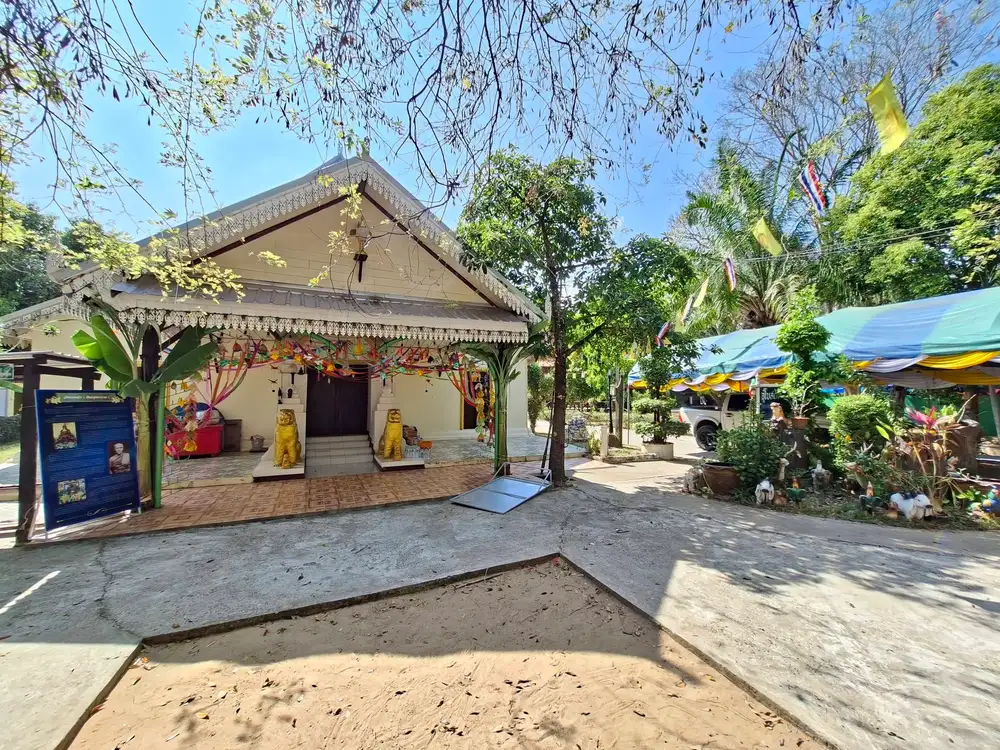
Wat Thanon Hak (Sri Wisuttharam) in Buriram Province is an old Buddhist community temple in Ban Thanon Hak, Thanon Hak Subdistrict, Nang Rong District. Established in 1869, or 2412 BE, the temple belongs to the Mahanikaya order of Thai Buddhism and occupies an area of 9 rai, 3 ngan, and 22 square wah. It is one of the meaningful old temples around Nang Rong, especially for travelers who want to understand local Buddhist life, community memory, and the cultural roots of southern Buriram beyond the better-known historical parks and large tourist landmarks.
The temple is located about 4 km from Nang Rong Bus Station, making it easy to include in a short cultural route around Nang Rong. It is suitable for worship, merit-making, a quiet visit, and learning about a real Thai community temple. Wat Thanon Hak is not a large commercial tourist site. Its value lies in its long history, its connection with the local community, and the memory of Phra Upatcha Phian Silawisuttho, widely respected as Luang Pu Phian, the former abbot of the temple from 1896 to 1945.
Wat Thanon Hak is closely connected with Ban Thanon Hak and the surrounding community. In Thailand, especially in local communities of the Northeast, a temple is not only a place for worship. It is a center for merit-making, ordination, funerals, annual festivals, community gatherings, moral education, and the preservation of shared memory. Wat Thanon Hak has served this role for generations. Its long presence since 1869 shows that the community has maintained Buddhist faith and temple life in this area for more than a century and a half.
The name Wat Thanon Hak comes from the local place name Thanon Hak. Over time, the temple and the village became closely identified with each other. For local people, the name does not simply refer to a location. It represents the temple at the heart of the community, the place where families have made merit, attended ceremonies, listened to monks, and remembered respected elders and ancestors. This close link between temple and village is one of the most important characteristics of Thai Buddhist community life.
The most important historical figure connected with Wat Thanon Hak is Luang Pu Phian, or Phra Upatcha Phian Silawisuttho. He served as the former abbot of Wat Thanon Hak from 1896 to 1945. His period of leadership was long and highly significant for the temple. In Thai Buddhist communities, a respected upatcha, or preceptor, is more than a monk who presides over ordination. He is a spiritual teacher, moral leader, adviser, and a figure of trust for local people. Luang Pu Phian continues to be remembered and respected by the community because of his religious role and the faith he inspired.
The continuing respect for Luang Pu Phian gives Wat Thanon Hak a deeper spiritual identity. Visitors do not come here only to see a temple building. They come to a place shaped by memory, devotion, and the legacy of a monk who served the community for many decades. For travelers interested in Thai Buddhist culture, this is an important point. Many local temples in Thailand are meaningful not because of grand architecture, but because of the monks, villagers, ceremonies, and shared memories that have made the place sacred over time.
In the past, Wat Thanon Hak functioned as a central space for the people of Ban Thanon Hak. Children and young people learned moral values through temple activities. Adults came to make merit and support ceremonies. Elderly people came to listen to Dhamma teachings and find peace. Families gathered at the temple during important life events, including ordination, funerals, and annual Buddhist festivals. This traditional relationship between temple and community remains one of the most important reasons why Wat Thanon Hak continues to matter today.
Wat Thanon Hak is classified as a royal-free community temple, or wat rat, which means it is maintained through the cooperation of monks and lay supporters. This kind of temple reflects local Buddhist devotion very clearly. The buildings, ceremonies, repairs, offerings, and everyday activities depend on the support of the community. The temple is therefore not separate from local life. It is supported by the people and, in return, serves as a place of faith, comfort, and social connection for the people.
The current abbot of Wat Thanon Hak is Phra Khru Thawon Bun Sathit. The temple remains active, with monks residing there and religious activities continuing throughout the year. Visitors can enter the temple daily for worship, merit-making, and quiet reflection. Because this is an active Buddhist temple rather than a staged tourist venue, visitors should behave respectfully, especially around monks, worship areas, the ordination hall, and people performing religious activities.
The main areas of the temple include the ordination hall, worship areas, pavilions, activity spaces, monks’ residence area, and places used for community ceremonies. While the temple may not be known for elaborate tourist architecture, its importance lies in the way these spaces continue to serve real religious and community needs. The ordination hall is the most important ritual space. Pavilions and open areas support ceremonies, merit-making, and local gatherings. Together, these areas show how a Thai temple functions as both a sacred and social center.
For visitors, the best way to experience Wat Thanon Hak is to move slowly and observe the temple as a living community space. Begin by paying respect to the Buddha images, then walk quietly through the temple grounds. Notice the relationship between the religious buildings and the everyday environment around them. Unlike large tourist temples, Wat Thanon Hak reveals its value through calmness, continuity, and local faith. A short visit can be meaningful if approached with respect and attention.
Wat Thanon Hak is also part of the wider faith-based travel route of Nang Rong. The district has several old and community temples that can be visited together, including Wat Khun Kong, Wat Rong Man Thet, Wat Klang Nang Rong, Wat Hua Saphan, Wat Pa Rerai, Wat Mai Rerai Thong, and Wat Phu Man Fah. These temples help visitors understand Nang Rong as more than a transit town on the way to Phanom Rung Historical Park. They show the religious and cultural life of local communities across different parts of the district.
For travelers interested in local history, Wat Thanon Hak adds an important layer to the story of Nang Rong. The district is known for its access to major heritage sites such as Phanom Rung Historical Park, but the local temples tell another story: the story of villages, monks, families, ceremonies, and community faith. Visiting Wat Thanon Hak before or after larger historical attractions helps travelers understand how Buddhism remains part of everyday life in Buriram today.
A normal visit to Wat Thanon Hak may take about 30 minutes to 1 hour. This is enough time to pay respect, walk through the main temple areas, and reflect on the history of Luang Pu Phian and the community. Visitors who want to combine the temple with other nearby temples should allow half a day. The temple is not designed for rushed sightseeing. Its value is best understood through a slow and respectful visit.
The best time to visit is in the morning or late afternoon. Morning visits are peaceful and suitable for merit-making, while late afternoon offers a softer atmosphere after the heat of the day. On Buddhist holy days or during local merit-making events, visitors may see more community activity. These moments can be culturally meaningful, but visitors should give priority to local worshippers and avoid interrupting religious ceremonies.
Visitors should dress modestly when entering Wat Thanon Hak. Shoulders and knees should be covered when possible, and behavior should remain calm around Buddha images, monks, and worshippers. Photography should be done respectfully. Avoid taking intrusive photos of people praying or monks performing duties. The temple is part of the community’s daily religious life, so courtesy toward local people is essential.
Getting There is convenient by private car, motorcycle, local taxi, hired vehicle, or local transport within Nang Rong District. From Nang Rong Bus Station, Wat Thanon Hak is about 4 km away. Travelers staying in central Nang Rong can reach the temple within a short ride. Those coming from Buriram city should first travel to Nang Rong District, then continue toward Thanon Hak Subdistrict by local roads.
Wat Thanon Hak can be combined easily with nearby temples and local attractions. Travelers can begin in central Nang Rong, visit Wat Khun Kong, Wat Rong Man Thet, or Wat Klang Nang Rong, then continue to Wat Thanon Hak and Wat Mai Rerai Thong in Thanon Hak Subdistrict. This route is suitable for visitors who want to make merit at several temples and understand the local Buddhist landscape of Nang Rong in a single half-day trip.
Nang Rong is a practical base for visiting Wat Thanon Hak because the district has hotels, restaurants, markets, cafés, and transport services. Travelers can stay in town, visit the temple in the morning, return for lunch, and then continue toward Phanom Rung Historical Park or other attractions in southern Buriram. This makes Wat Thanon Hak a convenient and meaningful stop for both Thai visitors and foreign travelers interested in local culture.
For families, Wat Thanon Hak is easy to visit because it is close to town and does not require a long walk. Elderly visitors can come to pray and rest quietly. Children can learn about old temples, community faith, and the role of monks in Thai society. Adults can make merit and observe the calm atmosphere of a local temple. The visit is simple, but it can add meaningful cultural depth to a trip around Nang Rong.
For foreign visitors, Wat Thanon Hak is a good example of a southern Isan community temple. It shows that a Thai temple is not only a place for worshipping Buddha images. It is also a place of memory, education, moral training, ceremonies, and social connection. With a local guide or Thai companion, visitors can better understand the significance of Luang Pu Phian, the history of Ban Thanon Hak, and the continuing role of the temple in local life.
The charm of Wat Thanon Hak lies in its quiet authenticity. It is not a monumental temple built for mass tourism. Its importance comes from its age, its connection with Luang Pu Phian, its role as a temple of Ban Thanon Hak, and its continued use by the community. Travelers who appreciate slow cultural travel, local history, and living Buddhist places will find the temple meaningful even though it is modest in appearance.
In summary, Wat Thanon Hak (Sri Wisuttharam) is an old Buddhist community temple in Thanon Hak Subdistrict, Nang Rong District, Buriram Province. Established in 1869, it belongs to the Mahanikaya order and covers 9 rai, 3 ngan, and 22 square wah. The temple is closely associated with Luang Pu Phian Silawisuttho, the respected former abbot who served from 1896 to 1945. Today, the temple remains open daily for worship, merit-making, community ceremonies, and cultural visits. Located about 4 km from Nang Rong Bus Station, it is a worthwhile stop on a temple and cultural travel route around Nang Rong.
| Name | Wat Thanon Hak (Sri Wisuttharam) |
| Location | Ban Thanon Hak, Thanon Hak Subdistrict, Nang Rong District, Buriram Province, Thailand |
| Address | Ban Thanon Hak, Thanon Hak Subdistrict, Nang Rong District, Buriram Province, Thailand |
| Highlights | Old Buddhist community temple established in 1869, closely connected with Ban Thanon Hak and the memory of Luang Pu Phian Silawisuttho |
| History | Established in 1869, or 2412 BE. The temple belongs to the Mahanikaya order and has long served as a Buddhist and community center of Ban Thanon Hak |
| Name Origin | The name Wat Thanon Hak comes from Ban Thanon Hak and Thanon Hak Subdistrict, the community where the temple is located |
| Distinctive Features | A long-established local temple covering 9 rai, 3 ngan, and 22 square wah, serving as a center for merit-making, Buddhist ceremonies, and community activities |
| Important Figure | Phra Upatcha Phian Silawisuttho, or Luang Pu Phian, former abbot of Wat Thanon Hak from 1896 to 1945 and a highly respected monk among local people |
| Travel Information | About 4 km from Nang Rong Bus Station. Accessible by private car, motorcycle, local taxi, hired vehicle, or local transport within Nang Rong District |
| Current Status | Open as an active Buddhist community temple for worship, merit-making, local ceremonies, and cultural visits |
| Open Days | Daily |
| Opening Hours | 08.00 – 17.00 |
| Facilities | Worship area, ordination hall, pavilion, activity courtyard, merit-making area, parking area, and visitor toilets |
| Main Areas / Zones | 1. Ordination Hall 2. Principal Buddha Image And Worship Area 3. Pavilion And Merit-Making Area 4. Temple Activity Courtyard 5. Monks’ Residence Area 6. Community Ceremony Area 7. Area Connected With The Memory Of Luang Pu Phian And The Temple History |
| Abbot / Caretaker | Phra Khru Thawon Bun Sathit, Abbot of Wat Thanon Hak |
| Official Website / Official Page | Tee Nee Wat Ban Thanon Hak Facebook Page and Wat Thanon Hak information in the nationwide Kathin project database |
| Nearby Tourist Attractions | 1. Wat Mai Rerai Thong, about 1 km 2. Wat Pa Rerai, about 2 km 3. Wat Hua Saphan, about 3 km 4. Sa Ya Ma Market, about 4 km 5. Wat Klang Nang Rong, about 5 km 6. Wat Khun Kong, about 5 km 7. Wat Rong Man Thet, about 5 km 8. Nang Rong Walking Street, about 5 km 9. Wat Phu Man Fah, about 13 km 10. Phanom Rung Historical Park, about 31 km |
| Nearby Restaurants | 1. Kiniku Japanese Curry Rice, Nang Rong Branch, about 3 km, Tel. 099-0055456 2. CHANN Terrace, about 4 km, Tel. 065-5619353 3. Jing Nam Kha Mu, about 5 km, Tel. 044-631473, 080-1528880 4. Laksana Kha Mu Branch 2, about 5 km 5. SOFIT Cafe' Nang Rong, about 5 km 6. The Tower Cafe & Hangout NangRong, about 6 km |
| Nearby Accommodations | 1. Akelada Hotel, about 3 km 2. The Room@Nangrong, about 5 km, Tel. 044-633366 3. Socool Grand Hotel, about 5 km, Tel. 044-632333, 080-4881888 4. Bumnsaya Place, about 5 km, Tel. 085-4956929 5. Phanom Rung Puri Boutique Hotel & Resort, about 6 km, Tel. 044-632222, 086-3366618 6. Laksana Boutique Hotel, about 5 km |
Frequently Asked Questions (FAQ)
Q: Where is Wat Thanon Hak located?
A: Wat Thanon Hak is located in Ban Thanon Hak, Thanon Hak Subdistrict, Nang Rong District, Buriram Province, about 4 km from Nang Rong Bus Station.
Q: What is the history of Wat Thanon Hak?
A: Wat Thanon Hak was established in 1869, or 2412 BE. It is a Mahanikaya Buddhist temple and an old community temple of Ban Thanon Hak.
Q: Who was Luang Pu Phian of Wat Thanon Hak?
A: Luang Pu Phian, or Phra Upatcha Phian Silawisuttho, was the former abbot of Wat Thanon Hak from 1896 to 1945 and remains a highly respected monk among local people.
Q: Who is the current abbot of Wat Thanon Hak?
A: The current abbot of Wat Thanon Hak is Phra Khru Thawon Bun Sathit.
Q: What are the opening hours of Wat Thanon Hak?
A: The temple is open daily from 08.00 to 17.00. Morning and late afternoon are suitable times for worship and a peaceful visit.
Q: How can visitors get to Wat Thanon Hak from Nang Rong Bus Station?
A: The temple is about 4 km from Nang Rong Bus Station and can be reached by private car, motorcycle, local taxi, hired vehicle, or local transport.
Q: How long should visitors spend at Wat Thanon Hak?
A: A normal visit takes about 30 minutes to 1 hour. Visitors who want to combine several temples in Nang Rong should allow half a day.
Q: What nearby places can be visited with Wat Thanon Hak?
A: Nearby places include Wat Mai Rerai Thong, Wat Pa Rerai, Wat Hua Saphan, Sa Ya Ma Market, Wat Klang Nang Rong, Wat Khun Kong, Wat Rong Man Thet, Wat Phu Man Fah, and Phanom Rung Historical Park.
 Category: ●Places of Worship
 Group: ●Temple
Last Update : 1 MonthAgo
 Last Update : 1 MonthAgo
 Click to Access the Navigation Map GPS
Wat Thanon Hak (Sri Wisuttharam) Map
Recommend

 Art, Culture and Heritage
 Historical Sites and Monuments(14)
 Landmarks and Memorials(2)
 Art, Craft Centres, Tradition(6)
 Museums(3)
 Educational Places
 Museum for Study(1)
Temple(74)
Museum for Study(1)
Temple(74)
 Other Sacred Sites(5)
 Suburban Living
 Village, Community(3)
 Nature and Wildlife
 National Parks and Marine Reserves(2)
 Mountain (Doi)(1)
 Dam, Reservoir, Lake(14)
 River, Canal(1)
 Bays and Beaches(1)
 Other natural attractions(2)
 Entertainment and Agricultural
 Animal camps and shows(1)
 Stadium(2)
 Farms, Parks and Ecotourism(2)
 Waterpark(1)


