
lovethailand home >Northeastern Travel Attractions >Buri Ram Travel Attractions >Non Suwan >Non Suwan > Wat Ubon Samakkee
TL;DR: Wat Ubon Samakkee is located at Moo 5, Non Suwan Subdistrict, Non Suwan District, Buri Ram 31110, open Daily, hours 08.00 – 17.00.
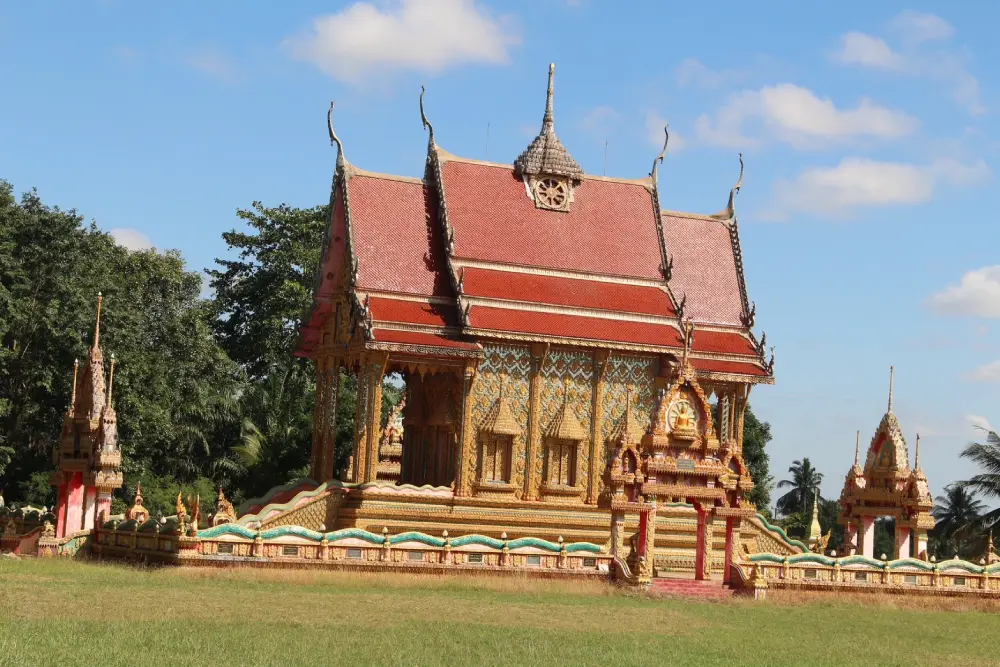
Wat Ubon Samakkee
Open Days: Daily
Opening Hours: 08.00 – 17.00
Wat Ubon Samakkee is located in Moo 5, Non Suwan Subdistrict, Non Suwan District, Buri Ram Province. It is a local Buddhist temple under the Mahanikaya order and an important spiritual center for the surrounding communities. The temple was established around 1975 and is remembered as a place that brings together the goodwill and unity of communities in Moo 5, Moo 11, and Moo 17. These communities use the temple as a shared place for merit-making, Buddhist ceremonies, and traditional community events. For foreign travelers, Wat Ubon Samakkee offers a quiet and authentic way to understand how a rural Thai temple supports village life in Buri Ram.
The meaning of the name Wat Ubon Samakkee is closely connected with the identity of the temple. The word samakkee means unity, and this is not only a name. It reflects the way local people from several villages have worked together to maintain the temple, organize religious activities, and preserve community traditions. Wat Ubon Samakkee is therefore more than a place of worship. It is a symbol of shared faith, mutual support, and collective responsibility among people in Non Suwan Subdistrict.
The temple was created during a period when the local community needed a stable Buddhist center for worship, merit-making, ordination ceremonies, funerals, seasonal festivals, and village gatherings. In rural Thailand, a temple is rarely just a religious building. It is also a social institution that supports family life, community relationships, moral learning, and local identity. Wat Ubon Samakkee grew from this need and continues to serve the same function today.
As a local temple, Wat Ubon Samakkee exists through the faith and support of villagers. Local people come together to make offerings, maintain the temple, support the resident monks, prepare food for ceremonies, and organize annual merit-making events. This makes the temple a living community institution rather than a tourist attraction designed for visitors. Its value lies in sincerity, continuity, and its close relationship with daily rural life.
The current abbot of Wat Ubon Samakkee is Phra Athikan Sayan Satharo. The temple has 5 resident monks, showing that it remains an active Buddhist temple. Resident monks support daily chanting, alms-related activities, sermons, merit-making, Buddhist holy day observances, funeral rites, ordination ceremonies, Kathin ceremonies, robe offerings, and other community religious events. Their presence gives the temple spiritual continuity and allows local people to rely on the temple throughout the year.
Wat Ubon Samakkee stands within Non Suwan Subdistrict, an area strongly connected with agriculture, community learning, and sufficiency-based living. The surrounding communities are known for farming, mixed agriculture, fruit growing, and local wisdom. This agricultural context is important because the temple is part of the same landscape. Villagers work in fields and farms, then return to the temple for merit-making, ceremonies, and spiritual renewal. The temple and farming life support one another in a natural rhythm.
The fact that the temple serves Moo 5, Moo 11, and Moo 17 gives it a wider community role. It is not only the temple of one small neighborhood. It is a shared spiritual center for several groups of villagers. When temple events are held, people from these communities work together to prepare food, clean the temple, welcome guests, organize offerings, and conduct religious ceremonies. This cooperation keeps the meaning of samakkee alive in everyday practice.
On Buddhist holy days, villagers come to Wat Ubon Samakkee to offer food, take precepts, listen to sermons, and make merit. These activities allow people to step away from daily work and reflect on Buddhist values. Merit-making also gives families a chance to spend meaningful time together. Children see older generations practicing generosity and respect, while elders continue to feel connected with their community.
Kathin and robe-offering ceremonies are especially meaningful at Wat Ubon Samakkee because they show the collective strength of the community. These events require coordination, preparation, food, offerings, and shared labor. They are religious ceremonies, but they are also social events that renew community bonds. Former residents, relatives, and supporters may return to the temple during these occasions, strengthening ties with their home community.
The temple also supports traditional village ceremonies. In northeastern Thailand, Buddhist temples are central to many annual customs, including Songkran activities, Buddhist Lent, the end of Buddhist Lent, memorial merit-making, and local merit traditions connected with the Isan cultural calendar. At Wat Ubon Samakkee, these customs are preserved through participation. Younger people learn by watching and helping, while elders pass on religious and cultural knowledge through actual practice.
For children and young people, the temple is a place to learn manners, respect, generosity, and Buddhist culture. They learn how to pay respect to monks, how to participate in merit-making, how to listen quietly during ceremonies, and how to behave in a sacred space. This learning may not always be formal, but it shapes character and community behavior. Wat Ubon Samakkee therefore has an educational role even when it is not described as a formal school.
Wat Ubon Samakkee is suitable for travelers who want to experience a quiet rural temple rather than a famous tourist landmark. Its value is not based on monumental architecture but on its community role. Visitors can pay respect, make merit, observe local temple life, and understand how Buddhism remains part of everyday life in rural Buri Ram. The temple is especially meaningful when combined with a visit to the nearby Ubon Samakkee community learning area.
Ban Ubon Samakkee community is a nearby community-based tourism area focused on agricultural learning and the sufficiency economy philosophy. The community is located in Moo 11, Non Suwan Subdistrict, and is known for mixed farming, fruit growing, vegetable cultivation, compost learning, earthworm farming, and local agricultural demonstrations. A visit to the temple can therefore be combined with community learning, making the trip both spiritual and educational.
The Ban Ubon Samakkee learning center covers about 12 rai and includes several agricultural learning bases. Visitors can learn about fruit orchards, vegetables, safe farming, compost, and practical agricultural techniques. This makes the area suitable for families, students, farmers, and travelers who want to understand rural life beyond sightseeing. Combining Wat Ubon Samakkee with the learning center gives visitors a deeper view of local values: faith, work, sufficiency, and cooperation.
The Ban Ubon Samakkee community forest is another important nearby place. The forest covers a large area and contains wild mushrooms, medicinal plants, edible forest plants, and wildlife. Local stories also mention a sacred tree respected by villagers. Visitors who want to explore the forest should contact the community in advance and follow local rules. The community forest is part of the natural and cultural heritage of Ban Ubon Samakkee, and respectful tourism helps protect it.
The community also offers local meals for visitors. These meals allow travelers to taste local Isan food and experience community hospitality. Eating with the community after visiting Wat Ubon Samakkee is a practical way to understand the connection between temple life and village life. Food, merit-making, farming, and local identity all belong to the same cultural environment.
Ban Ubon Samakkee homestay is suitable for visitors who want to stay overnight and experience local life more closely. Staying in the community allows guests to wake up early, make merit, learn agriculture, taste local food, and speak with villagers. This slow style of travel is better suited to Wat Ubon Samakkee than a rushed visit because the temple and community are best understood through everyday life rather than quick sightseeing.
Wat Ubon Samakkee can be used as the starting point for exploring Non Suwan District. A half-day route may include worship at the temple, a visit to Ban Ubon Samakkee Learning Center, the community forest, and a local meal. A full-day route can include nearby temples and agricultural sites in Non Suwan District. This makes the temple useful for travelers who want to combine Buddhism, rural culture, agriculture, and community-based tourism in one trip.
Nearby places that can be combined with Wat Ubon Samakkee include Ban Ubon Samakkee Community, Ban Ubon Samakkee Learning Center, Ban Ubon Samakkee Community Forest, Wat Pa Samakkee Tham, and Thudongkhasathan Wat Pa Siri Somboon. These places show different sides of Non Suwan: a community temple, a learning village, a community forest, and forest-temple culture. The route is suitable for travelers who want to see a quieter and more local side of Buri Ram.
Getting There from Buri Ram city, travel toward Non Suwan District, then continue to Non Suwan Subdistrict and Moo 5. Private car, motorcycle, or locally arranged transport is recommended. When using navigation apps, search for Wat Ubon Samakkee, Non Suwan Subdistrict, Non Suwan District, Buri Ram Province. Including the district and province is important because temples with similar names may exist in other areas.
Travelers coming from Nang Rong or Nong Ki can also connect to Non Suwan District by local roads. Those who plan to eat with the community, join learning activities, or stay in a homestay should contact Ban Ubon Samakkee community in advance. This allows the community to prepare food, guides, learning activities, and accommodation properly.
Visitors should allow about 30 minutes to 1 hour for the temple itself. Those who want to visit the learning center, community forest, or local food service should allow at least a half day. Travelers who want to stay in the homestay and experience village life more deeply should consider an overnight plan. The temple and community are best experienced slowly and respectfully.
Respectful behavior is important at Wat Ubon Samakkee. Visitors should dress modestly, speak quietly, respect monks and villagers, avoid disturbing ceremonies, and take photographs appropriately. When continuing to the community learning center or forest, visitors should follow local rules, avoid taking forest products without permission, and support community services fairly. Responsible travel helps the temple and community benefit sustainably.
Food options near the temple include local meals arranged by Ban Ubon Samakkee community and restaurants or cafés in Non Suwan District. Options include Tam Lia Chan, Jungle Cafe at Lotus Express Non Suwan, Movie Cafe, and Café Amazon in the area. Planning meals in advance is useful because rural restaurants may be spread out and community food service should be arranged before arrival.
Accommodation options include Ban Ubon Samakkee Homestay for travelers who want to stay close to the temple and community. Other options are available in nearby districts, including Phutara Resort & Spa in Nong Ki and hotels in Nang Rong such as Phanomrungpuri Boutique Hotel & Resort and Laksana Boutique Hotel. The best choice depends on whether the trip focuses on community life or wider travel around southern Buri Ram.
Overall, Wat Ubon Samakkee is valuable because of its simplicity and its strong connection with local people. It was established around 1975 through community faith and continues to serve as the shared religious center of Moo 5, Moo 11, and Moo 17. It is a place for merit-making, Buddhist ceremonies, village traditions, and community unity. For foreign travelers, the temple offers an authentic way to understand Buddhism as part of rural life, not only as architecture or sightseeing.
Wat Ubon Samakkee is therefore a meaningful destination for travelers interested in local temples, community-based tourism, agricultural learning, and Isan rural culture. A visit here can begin with worship at the temple, continue to the Ban Ubon Samakkee Learning Center, include a local meal, and extend to the community forest or homestay. This route allows visitors to see how faith, farming, food, forest, and village cooperation remain connected in Non Suwan District, Buri Ram Province.
| Name | Wat Ubon Samakkee |
| Location | Moo 5, Non Suwan Subdistrict, Non Suwan District, Buri Ram 31110 |
| Address | Ban Noi Ubon Samakkee / Moo 5 area, Non Suwan Subdistrict, Non Suwan District, Buri Ram Province, Thailand |
| Sangha Affiliation | Mahanikaya Order |
| Temple Status | Local Buddhist Temple |
| Highlights | A community temple established around 1975 and known as the shared spiritual center of Moo 5, Moo 11, and Moo 17 for merit-making and traditional ceremonies |
| History | Wat Ubon Samakkee was established around 1975 through local faith and community cooperation. It remains an important religious center of Non Suwan Subdistrict |
| Name Meaning | The name reflects unity among the local communities, especially Moo 5, Moo 11, and Moo 17, which use the temple as a shared place for merit-making and ceremonies |
| Distinctive Features | A rural community temple connected with Ban Ubon Samakkee community-based tourism, agricultural learning, and the community forest |
| Main Activities | Buddhist holy day merit-making, Kathin ceremony, robe offering, ordination ceremonies, memorial merit-making, village traditions, and joint community activities of Moo 5, Moo 11, and Moo 17 |
| Traditions / Rituals | Food offerings, Dhamma listening, precept-taking, Buddhist holy day ceremonies, Songkran activities, Buddhist Lent, end-of-Lent activities, Kathin, and robe-offering ceremonies |
| Related Communities | Moo 5, Moo 11, and Moo 17 in Non Suwan Subdistrict, which use the temple as a shared religious and traditional activity center |
| Travel Information | From Buri Ram city, travel toward Non Suwan District, then continue to Non Suwan Subdistrict and Moo 5. Private car, motorcycle, or locally arranged transport is recommended. Search with the full temple name, subdistrict, district, and province |
| Current Status | An active local Buddhist temple under the Mahanikaya order and a spiritual center of Ban Ubon Samakkee community |
| Open Days | Daily |
| Opening Hours | 08.00 – 17.00 |
| Facilities | Merit-making area, Buddha worship area, temple courtyard, Buddhist activity space, community ceremony space, and areas connected with Ban Ubon Samakkee community-based tourism |
| Main Areas / Zones | Buddhist worship area, merit-making area, temple courtyard, community activity area, and shared religious space for Moo 5, Moo 11, and Moo 17 |
| Abbot / Caretaker | Phra Athikan Sayan Satharo |
| Resident Monks | 5 monks |
| Entrance Fee | Free Admission |
| Local Administrative Contact | Non Suwan Subdistrict Administrative Organization, Tel. 044-607-215, and Non Suwan Municipality, Tel. 044-607-218 |
| Nearby Tourist Attractions | 1. Ban Ubon Samakkee Community-Based Tourism Village, about 1 km, Tel. 099-986-8992 2. Ban Ubon Samakkee Learning Center, about 1 km, Tel. 099-986-8992 3. Ban Ubon Samakkee Community Forest, about 3 km, Tel. 099-986-8992 4. Wat Pa Samakkee Tham, Non Suwan District, about 8 km 5. Thudongkhasathan Wat Pa Siri Somboon, Non Suwan District, about 14 km |
| Nearby Restaurants | 1. Ban Ubon Samakkee Local Food Service, about 1 km, Tel. 099-986-8992 2. Tam Lia Chan Restaurant, about 10 km, Tel. 061-083-6715, 084-058-5021 3. Jungle Cafe Lotus Express Non Suwan, about 8 km, Tel. 096-007-5459 4. Movie Cafe Non Suwan, about 8 km, Tel. 044-634-634 5. Café Amazon Non Suwan, about 6 km |
| Nearby Accommodations | 1. Ban Ubon Samakkee Community Homestay, about 1 km, Tel. 099-986-8992 2. Phutara Resort & Spa, Nong Ki District, about 27 km, Tel. 064-968-4683, 044-119-990 3. Phanomrungpuri Boutique Hotel & Resort, Nang Rong District, about 36 km, Tel. 044-632-222, 086-336-6618 4. Laksana Boutique Hotel, Nang Rong District, about 36 km, Tel. 085-778-2697 5. Bumnsaya Place, Nang Rong District, about 36 km |
Frequently Asked Questions (FAQ)
Q: Where is Wat Ubon Samakkee located?
A: Wat Ubon Samakkee is located in Moo 5, Non Suwan Subdistrict, Non Suwan District, Buri Ram Province 31110.
Q: When was Wat Ubon Samakkee established?
A: Wat Ubon Samakkee was established around 1975 through the faith and cooperation of local communities.
Q: Why is Wat Ubon Samakkee important?
A: The temple is the shared spiritual center of communities in Moo 5, Moo 11, and Moo 17. Local people use it for merit-making, Buddhist ceremonies, and traditional community events.
Q: Who is the abbot of Wat Ubon Samakkee?
A: The abbot of Wat Ubon Samakkee is Phra Athikan Sayan Satharo.
Q: How many resident monks are at Wat Ubon Samakkee?
A: Wat Ubon Samakkee has 5 resident monks.
Q: What are the opening days and opening hours of Wat Ubon Samakkee?
A: The temple is open daily from 08.00 to 17.00. It is suitable for worship, merit-making, and learning about rural community life in Non Suwan District.
Q: What nearby places can visitors combine with Wat Ubon Samakkee?
A: Visitors can combine the trip with Ban Ubon Samakkee Community-Based Tourism Village, Ban Ubon Samakkee Learning Center, Ban Ubon Samakkee Community Forest, Wat Pa Samakkee Tham, and Thudongkhasathan Wat Pa Siri Somboon.
Q: How can travelers get to Wat Ubon Samakkee?
A: From Buri Ram city, travel toward Non Suwan District, then continue to Non Suwan Subdistrict and Moo 5. A private car, motorcycle, or locally arranged transport is recommended.
 Category: ●Places of Worship
 Group: ●Temple
Last Update : 3 MonthAgo
 Last Update : 3 MonthAgo
 Click to Access the Navigation Map GPS
 Art, Culture and Heritage
 Historical Sites and Monuments(14)
 Landmarks and Memorials(2)
 Art, Craft Centres, Tradition(6)
 Museums(3)
 Educational Places
 Museum for Study(1)
Temple(74)
Museum for Study(1)
Temple(74)
 Other Sacred Sites(5)
 Suburban Living
 Village, Community(3)
 Nature and Wildlife
 National Parks and Marine Reserves(2)
 Mountain (Doi)(1)
 Dam, Reservoir, Lake(14)
 River, Canal(1)
 Bays and Beaches(1)
 Other natural attractions(2)
 Entertainment and Agricultural
 Animal camps and shows(1)
 Stadium(2)
 Farms, Parks and Ecotourism(2)
 Waterpark(1)


