
lovethailand home >Northeastern Travel Attractions >Buri Ram Travel Attractions >Prakhon Chai >Phai San > Wat Phaisan Phatthana
TL;DR: Wat Phaisan Phatthana is located at Moo 1, Tambon Phaisan, Amphoe Prakhon Chai, Buri Ram Province, open Daily, hours Best Visited During Daytime.
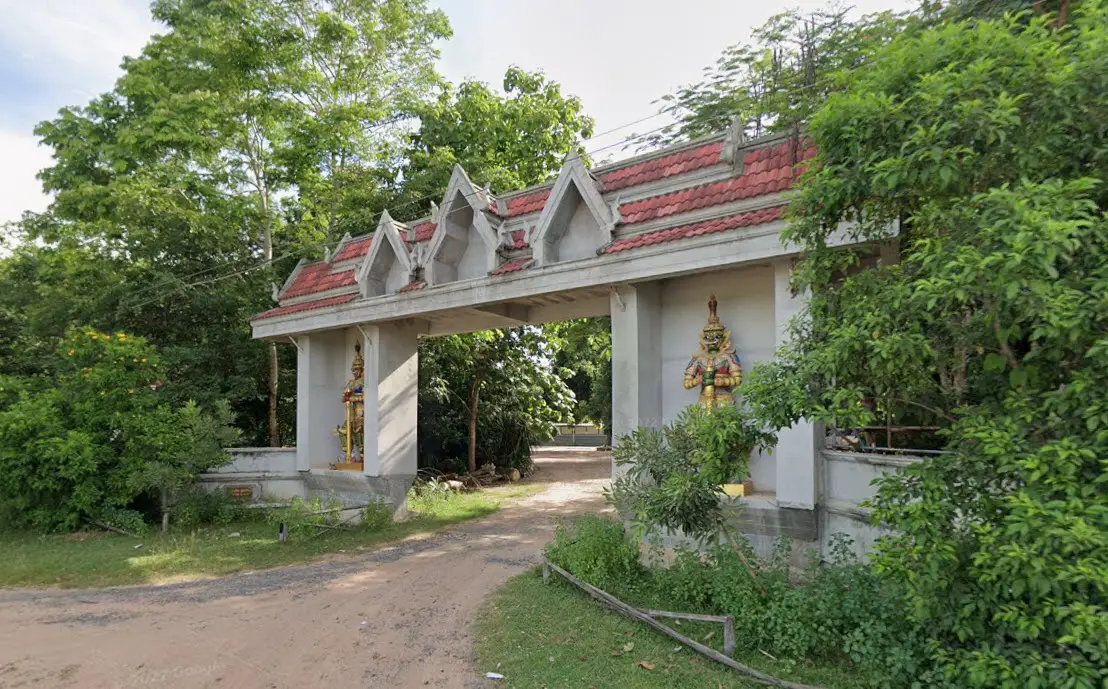
Wat Phaisan Phatthana
Open Days: Daily
Opening Hours: Best Visited During Daytime
Wat Phaisan Phatthana in Buri Ram Province is a peaceful community forest temple located in Tambon Phaisan, Amphoe Prakhon Chai. Set close to the Phaisan Subdistrict Administrative Organization office, the temple is known for its natural forest atmosphere, quiet surroundings, and meaningful social role through the Saeng Tian Song Thang Center. For travelers, it offers a different side of Buri Ram: not a crowded landmark, but a calm Buddhist site where nature, faith, community care, and local life come together.
The temple is suitable for visitors who want to make merit, pay respect, rest the mind, and experience the atmosphere of a rural Buddhist temple in southern Isan. Unlike large tourist temples that are known for grand architecture or busy photo spots, Wat Phaisan Phatthana is best appreciated slowly. Its value lies in its simplicity, forest setting, spiritual calm, and connection with the local community.
Wat Phaisan Phatthana is located at Moo 1, Tambon Phaisan, Amphoe Prakhon Chai, Buri Ram Province. It is a community temple under the Dhammayuttika Nikaya order. The temple was officially established on 14 December 1998 and received Wisungkhamsima, the formal boundary for ordination ceremonies, on 4 June 2000. Although it is younger than many ancient temples in Buri Ram, it has become an important religious and community space for people in Phaisan and nearby villages.
Prakhon Chai District is one of Buri Ram’s culturally significant areas. It is located near major Khmer heritage routes such as Prasat Muang Tam and Phanom Rung Historical Park. In this setting, Wat Phaisan Phatthana adds another layer to the travel experience. It represents the living Buddhist culture of today, while nearby historical sites represent the ancient civilization of the region. Visiting the temple together with these sites helps travelers understand Buri Ram as a province of both living faith and ancient heritage.
The name “Phaisan Phatthana” reflects both place and purpose. “Phaisan” is the name of the subdistrict, while “Phatthana” means development. Together, the name suggests a temple that grows with the community and serves as a space for spiritual development, local merit-making, and social support. It is a name that fits the temple’s character well, because this temple is not only a place of worship but also a place where people can find direction and strength.
The most distinctive feature of Wat Phaisan Phatthana is its natural forest environment. The temple sits in a quiet rural setting, surrounded by greenery and a calm atmosphere. Visitors who enter the temple grounds can feel the slower rhythm of village life. The sound of wind, trees, birds, and temple activity creates a peaceful environment that is suitable for reflection and respectful travel.
Forest temples have long held an important place in Thai Buddhism. Forest surroundings help reduce external distractions and create an environment that supports mindfulness. Although Wat Phaisan Phatthana is a community temple, its forest-like atmosphere gives visitors a sense of stillness. It is a good place to pause between travel routes, especially for those visiting the historical attractions of Prakhon Chai and the Phanom Rung area.
The current abbot and caretaker of the temple is Phra Khru Phaisan Chaikit. He oversees the temple’s Buddhist activities and community role. The temple continues to have resident monks and regular religious activities, including merit-making and Kathin ceremonies. This shows that Wat Phaisan Phatthana is not an abandoned or symbolic site. It remains an active Buddhist temple that supports the religious life of local people.
In rural Thailand, temples often function as more than places of worship. They are community centers, places for ceremonies, moral education, local meetings, and charitable activities. Wat Phaisan Phatthana reflects this traditional role. Villagers come to make merit, join Buddhist events, support temple maintenance, and use the temple as a spiritual anchor for the community.
One of the most meaningful aspects of Wat Phaisan Phatthana is the Saeng Tian Song Thang Center. The center is associated with support for people who want to leave drug addiction behind and rebuild their lives. Its approach is described as peer support, where people help one another through encouragement, shared understanding, discipline, and a peaceful natural environment. This makes the temple socially significant beyond its religious function.
The idea of “friends helping friends” is important because people going through difficult transitions often need empathy and encouragement from those who understand their situation. In this context, the temple’s calm forest setting becomes part of the supportive environment. The name “Saeng Tian Song Thang,” meaning a candlelight guiding the way, carries a strong symbolic meaning: even a small light can help someone find a path forward.
The center emphasizes natural surroundings, daily discipline, Buddhist values, and community support rather than presenting the temple as a medical facility for tourists to observe. Travelers should understand this area with respect. Wat Phaisan Phatthana is a living religious and social space, and visitors should not intrude on private areas, photograph people without permission, or treat the project as a tourist spectacle.
The natural setting of the temple strengthens the atmosphere of the project. A quiet environment, limited distractions, simple daily rhythms, and a sense of spiritual guidance can help create a more stable space for people who are trying to rebuild their lives. For ordinary visitors, learning about this role helps reveal the deeper meaning of the temple. It is not only a place for merit-making, but also a place where compassion is practiced in a practical way.
For spiritual travelers, Wat Phaisan Phatthana is a good stop for quiet merit-making and cultural reflection. It is not a place to rush through. Visitors should take time to walk calmly, observe the temple grounds, pay respect, and appreciate how the temple connects Buddhism, nature, and social responsibility. The experience is different from visiting a major historical monument, but it can be equally meaningful.
The main areas of the temple include the worship and merit-making area, the surrounding natural forest zone, community activity areas, temple halls, the Mondop area associated with Wat Pa Phaisan Phatthana, and the Saeng Tian Song Thang Center. Visitors should stay within appropriate public areas and avoid entering private or restricted zones connected with temple activities or community projects.
The best time to visit is in the morning or late afternoon, when the weather is more comfortable and the light is gentle. During the rainy season, the natural surroundings feel fresh and green, but visitors should wear practical shoes because some ground areas may be damp. During the hot season, morning visits are more comfortable for walking around the temple grounds.
Visitors should dress modestly when visiting Wat Phaisan Phatthana. Shoulders and knees should be covered, voices should be kept low, and respectful behavior is expected. Alcohol, loud behavior, and intrusive photography are not appropriate. Because the temple has both religious and social functions, respect for privacy is especially important.
Getting There is easiest by private car. Travelers can drive to Prakhon Chai District and continue toward Tambon Phaisan. The temple is located near the Phaisan Subdistrict Administrative Organization office, which can be used as a practical landmark. From Buri Ram city, visitors can travel toward Prakhon Chai and then continue into the subdistrict. From Nang Rong, Chaloem Phra Kiat, or the Phanom Rung route, the temple can be included before or after visiting historical attractions.
Public transportation is less convenient for reaching the temple directly. Travelers using buses or vans can first reach Prakhon Chai town and then arrange local transport or a hired vehicle to Tambon Phaisan. A private car or rental car is the best option because nearby attractions are spread across different areas, including Prasat Muang Tam, Phanom Rung Historical Park, Wat Khao Phra Angkhan, and the ancient stone quarry area.
A good travel route can begin with a quiet visit to Wat Phaisan Phatthana, followed by Prasat Muang Tam, one of the most beautiful Khmer sanctuaries in Buri Ram. Travelers can then continue to Phanom Rung Historical Park, which sits on an extinct volcano and is one of Thailand’s most important historical sites. Those with more time can add Wat Khao Phra Angkhan, the ancient stone quarry, or Ban Khok Mueang to the route.
Prasat Muang Tam is one of the most important nearby attractions. It is located in Prakhon Chai District and is closely connected with the Phanom Rung cultural landscape. The site is known for its Khmer architecture, ponds, carved stone elements, and peaceful layout. Combining Wat Phaisan Phatthana with Prasat Muang Tam allows travelers to see both living Buddhist culture and ancient Khmer heritage in one journey.
Phanom Rung Historical Park is another major destination that pairs well with this temple. Built as a Hindu sanctuary dedicated to Shiva, Phanom Rung is located on an extinct volcano and represents Mount Kailasa in Hindu cosmology. The contrast between the simple forest atmosphere of Wat Phaisan Phatthana and the grand stone architecture of Phanom Rung makes the travel route rich and varied.
Wat Khao Phra Angkhan is also worth visiting for travelers who are interested in temples located on ancient volcanic landscapes. Its architecture is unusual and visually distinctive. A route that includes Wat Phaisan Phatthana, Wat Khao Phra Angkhan, Prasat Muang Tam, and Phanom Rung gives travelers a deeper understanding of the relationship between faith, landscape, and cultural history in Buri Ram.
Restaurants with clear public information are mostly located in Prakhon Chai town rather than directly beside the temple. Travelers should plan meals before or after visiting the temple. Recommended options in the district include Lang Wang Prakhon Chai, Chai Rad Na, Phanarin Roasted Duck Noodles, Kai Yang-Lap Ped Huai Thap Than, and Good View Prakhonchai. These restaurants are useful stops when combining the temple with the wider Prakhon Chai travel route.
Accommodation is also more convenient in Prakhon Chai town. Travelers can choose from hotels, resorts, and guesthouses such as Hotel de l'amour, Prakhonchai Resort Hotel, Ban Klang Jai Guesthouse & Resort, Sabaidee Resort, and Phatthira Resort. Staying in Prakhon Chai is practical for travelers who want to explore Prasat Muang Tam, Phanom Rung Historical Park, and nearby temples without returning to Buri Ram city each day.
Travelers who want to understand Wat Phaisan Phatthana more deeply should also pay attention to Tambon Phaisan itself. The temple is close to the subdistrict administrative office and is connected to local community life. The area is rural, calm, and shaped by village networks. Visiting the temple is therefore also a way to understand the relationship between Buddhist temples, local administration, monks, and villagers in rural Thailand.
Because the temple is associated with a social support project, visitors should be especially careful about privacy. They should not photograph people connected with the project, ask personal questions, or enter restricted areas. The project should be understood as a compassionate community effort, not as an attraction. Respectful behavior helps preserve the dignity of everyone involved.
Wat Phaisan Phatthana shows that not all meaningful temples need to be ancient or monumental. Some temples are valuable because they serve as places of refuge, quiet, moral support, and new beginnings. This temple is meaningful because it combines Buddhist practice, forest surroundings, and social compassion in a modest but important way.
In summary, Wat Phaisan Phatthana in Buri Ram Province is a worthwhile destination for travelers interested in forest temples, community Buddhism, quiet spiritual travel, and the cultural landscape of Prakhon Chai. Its peaceful natural setting, active temple life, the leadership of Phra Khru Phaisan Chaikit, and the role of the Saeng Tian Song Thang Center make it more than a place to visit. It is a place of calm, development, and a small guiding light for the local community.
| Name | Wat Phaisan Phatthana |
| Location | Moo 1, Tambon Phaisan, Amphoe Prakhon Chai, Buri Ram Province |
| Address | Tambon Phaisan, Amphoe Prakhon Chai, Buri Ram 31140, Thailand, near the Phaisan Subdistrict Administrative Organization office |
| Highlights | A peaceful community forest temple with natural surroundings and the Saeng Tian Song Thang Center, which uses peer support and a calm temple environment to help people rebuild their lives |
| History | A community temple under the Dhammayuttika Nikaya order, officially established on 14 December 1998 and granted Wisungkhamsima on 4 June 2000 |
| Name Origin | The name reflects Tambon Phaisan and the idea of developing a Buddhist space for merit-making, spiritual growth, and community support |
| Distinctive Features | A forest-style rural temple with a quiet atmosphere, suitable for merit-making, peaceful reflection, and learning about the temple’s social role |
| Travel Information | Best reached by private car. Travel to Prakhon Chai District and continue to Tambon Phaisan. The temple is near the Phaisan Subdistrict Administrative Organization office and can be combined with Prasat Muang Tam, Phanom Rung Historical Park, and Wat Khao Phra Angkhan |
| Current Status | Active Buddhist temple with resident monks and community religious activities |
| Open Days | Daily |
| Opening Hours | Best visited during daytime |
| Fees | No standard tourist admission fee |
| Facilities | Merit-making area, temple hall, community activity space, natural forest area, and parking space within the temple grounds according to local conditions |
| Main Areas / Zones | Worship and merit-making area Natural forest area around the temple Temple hall and community activity area Mondop area of Wat Pa Phaisan Phatthana Saeng Tian Song Thang Center area |
| Abbot / Caretaker | Phra Khru Phaisan Chaikit |
| Key Project | Saeng Tian Song Thang Center, a peer-support project using natural surroundings, discipline, encouragement, and a temple environment to support people who want to leave drug addiction behind |
| Nearby Tourist Attractions | 1. Phaisan Subdistrict Administrative Organization Office, about 1 km 2. Prasat Muang Tam, about 24 km 3. Phanom Rung Historical Park, about 32 km 4. Wat Khao Phra Angkhan, about 38 km 5. Ancient Stone Quarry, Buri Ram, about 35 km 6. Ban Khok Mueang, about 24 km 7. Lam Nang Rong Dam, about 58 km |
| Nearby Restaurants | 1. Lang Wang Prakhon Chai, about 22 km, Tel. 099-170-9199, 084-605-4324 2. Chai Rad Na, about 22 km, Tel. 091-336-0108 3. Phanarin Roasted Duck Noodles Prakhon Chai Ang Tia, about 22 km, Tel. 095-636-5497, 081-869-6175 4. Kai Yang-Lap Ped Huai Thap Than, about 23 km, Tel. 092-453-6163 5. Good View Prakhonchai Restaurant, about 22 km, Tel. 095-159-9142 |
| Nearby Accommodations | 1. Hotel de l'amour, about 23 km, Tel. 044-651-555 2. Prakhonchai Resort Hotel, about 22 km, Tel. 044-671-288, 081-955-9089 3. Ban Klang Jai Guesthouse & Resort, about 26 km, Tel. 089-847-8852 4. Sabaidee Resort, about 23 km, Tel. 088-505-4887 5. Phatthira Resort, about 23 km, Tel. 044-670-181 |
Frequently Asked Questions (FAQ)
Q: Where is Wat Phaisan Phatthana located?
A: Wat Phaisan Phatthana is located at Moo 1, Tambon Phaisan, Amphoe Prakhon Chai, Buri Ram Province, near the Phaisan Subdistrict Administrative Organization office.
Q: What is special about Wat Phaisan Phatthana?
A: The temple is known for its peaceful natural forest setting, community role, and the Saeng Tian Song Thang Center, which supports people who want to rebuild their lives.
Q: Who is the abbot of Wat Phaisan Phatthana?
A: The abbot and caretaker is Phra Khru Phaisan Chaikit.
Q: What is the Saeng Tian Song Thang Center?
A: It is a peer-support project connected with the temple, using encouragement, discipline, natural surroundings, and a calm temple environment to support people who want to leave drug addiction behind.
Q: Is there an admission fee?
A: There is no standard tourist admission fee. Visitors may make donations according to their faith.
Q: What is the best time to visit Wat Phaisan Phatthana?
A: Morning and late afternoon are the best times to visit because the weather is more comfortable and the temple atmosphere is calm.
Q: How should visitors dress at the temple?
A: Visitors should dress modestly, keep voices low, avoid intrusive photography, and respect both religious and community areas within the temple grounds.
Q: What nearby attractions can be visited on the same route?
A: Nearby attractions include Prasat Muang Tam, Phanom Rung Historical Park, Wat Khao Phra Angkhan, the ancient stone quarry, and Ban Khok Mueang.
 Category: ●Places of Worship
 Group: ●Temple
Last Update : 3 MonthAgo
 Last Update : 3 MonthAgo
 Click to Access the Navigation Map GPS
Wat Phaisan Phatthana Map
Recommend

 Art, Culture and Heritage
 Historical Sites and Monuments(14)
 Landmarks and Memorials(2)
 Art, Craft Centres, Tradition(6)
 Museums(3)
 Educational Places
 Museum for Study(1)
Temple(74)
Museum for Study(1)
Temple(74)
 Other Sacred Sites(5)
 Suburban Living
 Village, Community(3)
 Nature and Wildlife
 National Parks and Marine Reserves(2)
 Mountain (Doi)(1)
 Dam, Reservoir, Lake(14)
 River, Canal(1)
 Bays and Beaches(1)
 Other natural attractions(2)
 Entertainment and Agricultural
 Animal camps and shows(1)
 Stadium(2)
 Farms, Parks and Ecotourism(2)
 Waterpark(1)


