
lovethailand home >Northeastern Travel Attractions >Buri Ram Travel Attractions >Lahan Sai >Lahan Sai > Wat Pho Sai Thong
TL;DR: Wat Pho Sai Thong is located at Tambon Lahan Sai, Amphoe Lahan Sai, Buri Ram Province, open Daily, hours Best Visited During Daytime.
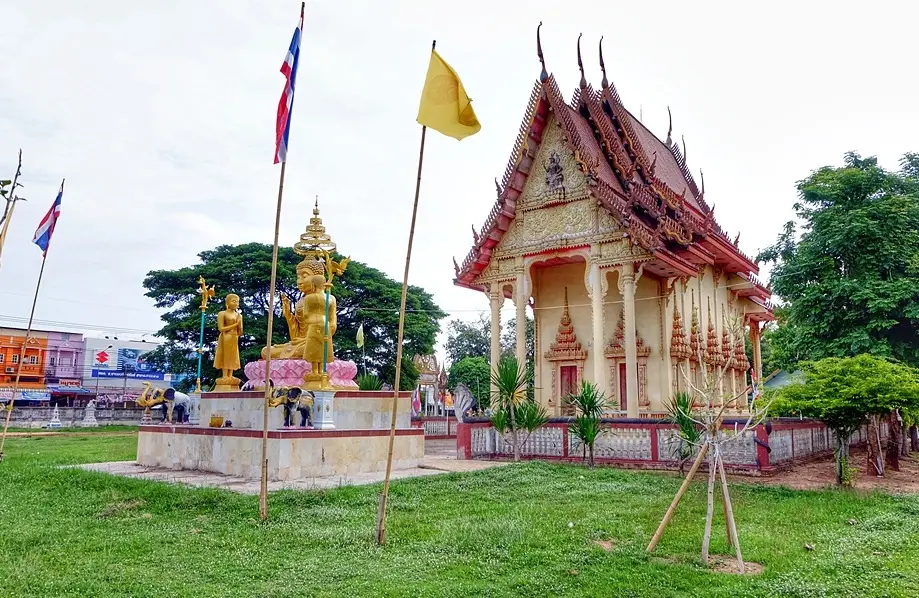
Wat Pho Sai Thong
Open Days: Daily
Opening Hours: Best Visited During Daytime
Wat Pho Sai Thong in Buri Ram Province is one of the most meaningful temples in Lahan Sai District. It is deeply respected by the local community as a long-established Buddhist temple and a spiritual landmark associated with Luang Pu Suk Dhammachoto, also known as Phra Khru Phawana Phimon. For the people of Lahan Sai, this temple is not only a place for merit-making and Buddhist ceremonies, but also a living center of faith, memory, and local identity.
When local people speak about Lahan Sai, the name Wat Pho Sai Thong is often mentioned together with Luang Pu Suk. He was a revered monk whose discipline, compassion, and spiritual practice made him highly respected among villagers, disciples, and devotees across southern Isan. Many visitors come to the temple to pay respect, make merit, ask for blessings, and remember the life and virtues of this important monk.
Wat Pho Sai Thong is located in Tambon Lahan Sai, Amphoe Lahan Sai, Buri Ram Province. It is a royal-recognized community temple under the Mahanikaya order. The temple was formerly known as Wat Lahan Sai before it became widely known as Wat Pho Sai Thong. Today, it remains one of the most important temples in the district and a cultural destination for travelers who want to understand the spiritual life of Buri Ram beyond its famous Khmer historical sites.
The importance of Wat Pho Sai Thong began with its role as a central temple for the local community. In earlier times, temples in rural Thailand were not only religious sites; they also served as places of learning, community gatherings, moral education, and local ceremonies. Wat Pho Sai Thong played this role for generations. It was where villagers came to make merit, attend Buddhist ceremonies, study basic religious knowledge, and maintain social bonds within the community.
The temple is believed to date back to the early Rattanakosin period. Although the exact year of its foundation is not clearly recorded, it was officially established as a Buddhist temple in 1867 and later received its Wisungkhamsima, the royal boundary for ordination ceremonies, on 18 February 1981. These historical details show that Wat Pho Sai Thong has long been part of the religious landscape of Lahan Sai and continues to hold formal importance within Thai Buddhism.
The name “Pho Sai Thong” is connected with a local story about a large Bodhi tree within the temple grounds. Local tradition tells of an unusual event involving birds on the great Bodhi tree, leading villagers to associate the site with sacred power and auspiciousness. The name therefore carries more than a geographical meaning. It reflects the temple’s relationship with the Bodhi tree, the sandy land of Lahan Sai, and the spiritual imagination of the local people.
The most important figure in the history of Wat Pho Sai Thong is Luang Pu Suk Dhammachoto. He was born on 5 April 1878 in Ban Lahan Sai, Buri Ram Province. His early life was closely connected with the temple and the rural community around it. As a young boy, he studied traditional Khmer script and basic religious knowledge at Wat Pho Sai Thong, which was an important center of learning in the area before modern education became widely available.
Luang Pu Suk was ordained on 20 May 1899 at the ordination boundary of Wat Pho Sai Thong. He received the monastic name “Dhammachoto,” meaning one whose Dhamma shines brightly. After ordination, he remained closely connected with the temple and devoted himself to the study of Buddhist discipline, meditation, and monastic practice. Local people remembered him for his calm conduct, humility, and deep commitment to the path of Dhamma.
What made Luang Pu Suk deeply respected was not only his reputation as a revered monk, but also his simple and disciplined way of life. He was known as a monk who valued meditation, chanting, mindfulness, and strict observance of the monastic code. His way of life became an example for the people of Lahan Sai, and many devotees believed that his presence brought moral strength and spiritual protection to the community.
Among Thai Buddhist devotees, Luang Pu Suk is also remembered as an important monk of southern Isan. Sacred objects associated with him, such as small cast images, amulets, and takrut talismans, are known among collectors and disciples. However, for visitors to Wat Pho Sai Thong, the most meaningful experience is not the objects themselves, but the opportunity to pay respect at the temple where Luang Pu Suk lived, practiced, taught, and supported the local community.
Luang Pu Suk was appointed abbot of Wat Pho Sai Thong in 1955 and was later granted the ecclesiastical title Phra Khru Phawana Phimon in 1970. He passed away on 31 December 1972 at the age of 95. Even decades after his passing, devotion to him remains strong. This can be seen in the annual worship ceremony held in April, when villagers, disciples, and visitors gather at the temple to pay homage and make merit in his memory.
Inside Wat Pho Sai Thong, the important areas include the main merit-making area, the place for paying respect to Luang Pu Suk, ceremonial halls, open grounds used for temple events, and the area connected with the large Luang Pu Suk statue project. These spaces reflect the temple’s continuing role as a place of worship, community activity, and spiritual remembrance.
The temple remains active during major Buddhist days and community ceremonies. Local people come to make merit on Makha Bucha Day, Visakha Bucha Day, Asalha Bucha Day, Buddhist Lent, the end of Buddhist Lent, and during Kathin season. The annual Luang Pu Suk worship event in April is especially important. It brings together faith, local identity, and a sense of gratitude toward a monk who remains central to the memory of Lahan Sai.
The atmosphere of Wat Pho Sai Thong is simple, sincere, and rooted in local life. It is not a large tourist temple designed primarily for photography. Instead, it is a working community temple where monks reside, villagers make merit, and local traditions continue. This is what gives the temple its distinctive character. Visitors who come here will experience a quieter and more authentic side of Buri Ram’s religious culture.
For travelers interested in spiritual tourism, Wat Pho Sai Thong is a worthwhile stop. A visit usually takes around 30 minutes to 1 hour, depending on whether travelers wish to make offerings, pay respect to Luang Pu Suk, walk around the temple grounds, or speak with local devotees. The temple is suitable for visitors who want to learn about local Buddhist faith, important monks of Isan, and the relationship between temples and rural Thai communities.
Visitors should dress respectfully when entering the temple. Shoulders and knees should be covered, and quiet behavior is expected within the sacred areas. Shoes should be removed before entering buildings or any designated worship area. Photography should be done respectfully, especially when people are praying, chanting, or making merit. Wat Pho Sai Thong is an active place of worship, so cultural sensitivity is important.
The best time to visit is from morning to afternoon, when the atmosphere is comfortable for worship and walking around the temple. Travelers who want to experience the temple at its most lively should plan their visit during the annual Luang Pu Suk worship ceremony in April. Those who prefer a quieter visit should come on a normal weekday outside the festival period.
Getting There is most convenient by private car. From Buri Ram city, travelers can drive toward Nang Rong District and continue to Lahan Sai District. From nearby provinces such as Sa Kaeo, Surin, or Si Sa Ket, road connections to Lahan Sai are also available. Once in the district center, search for “Wat Pho Sai Thong Luang Pu Suk Dhammachoto” to reach the temple within the local community area.
Wat Pho Sai Thong can be combined with other nearby attractions in a cultural and spiritual route. Travelers may begin with paying respect to Luang Pu Suk at Wat Pho Sai Thong, then continue to Wat Pa Lahan Sai, Lam Nang Rong Dam, Prasat Nong Hong, or Wat Khao Phra Angkhan. With more time, the route can extend to Phanom Rung Historical Park and Prasat Muang Tam, two of Buri Ram’s most important historical sites.
What makes Wat Pho Sai Thong different from many other attractions in Buri Ram is its strong connection with the local community. It is not just a landmark, but a temple that preserves stories, faith, and gratitude. Through Luang Pu Suk, the temple represents the bond between monks and villagers, the importance of moral leadership, and the continuation of Buddhist values in everyday life.
For foreign travelers, Wat Pho Sai Thong offers a deeper understanding of Buri Ram beyond stone sanctuaries and sports tourism. It introduces the living culture of southern Isan, where temples remain important to family life, community ceremonies, and local identity. Visiting this temple with patience and respect allows travelers to see how Buddhist devotion is woven into daily life in rural Thailand.
In summary, Wat Pho Sai Thong in Buri Ram Province is a meaningful temple for anyone interested in Thai Buddhism, local history, spiritual travel, and the life of Luang Pu Suk Dhammachoto. It is a place of faith, memory, and cultural continuity. For travelers visiting Lahan Sai District, this temple is one of the most important places to understand the heart of the local community.
| Name | Wat Pho Sai Thong Luang Pu Suk Dhammachoto |
| Location | Tambon Lahan Sai, Amphoe Lahan Sai, Buri Ram Province |
| Address | 180 Tambon Lahan Sai, Amphoe Lahan Sai, Buri Ram 31170, Thailand |
| Coordinates | Plus Code: CV73+FH3, Lahan Sai, Buri Ram |
| Highlights | Historic community temple of Lahan Sai District and an important place for paying respect to Luang Pu Suk Dhammachoto, a revered monk of southern Isan |
| History | Believed to date back to the early Rattanakosin period. Officially established as a Buddhist temple in 1867 and granted Wisungkhamsima on 18 February 1981 |
| Name Origin | Formerly known as Wat Lahan Sai. The name Wat Pho Sai Thong is connected with a local story about a large Bodhi tree and the sacred character of the temple grounds |
| Distinctive Features | A living community temple with a worship area for Luang Pu Suk, religious halls, ceremonial grounds, and an annual worship event in April |
| Travel Information | Best reached by private car. From Buri Ram city, travel via Nang Rong District toward Lahan Sai District, then continue into Tambon Lahan Sai. Search for Wat Pho Sai Thong Luang Pu Suk Dhammachoto for navigation |
| Current Status | Active Buddhist temple and cultural attraction in Lahan Sai District |
| Open Days | Daily |
| Opening Hours | Best visited during daytime |
| Fees | No standard tourist admission fee |
| Facilities | Parking area, merit-making area, temple halls, ceremonial ground, and worship area |
| Main Areas / Zones | Main merit-making area Worship area for Luang Pu Suk Dhammachoto Temple hall and ceremonial ground Luang Pu Suk large statue project area |
| Abbot / Caretaker | Phra Khru Siri Photithada Pannagamo |
| Main Contact Number | 044-649-282, 044-656-037, 089-881-1136 |
| Official Website / Official Page | Wat Pho Sai Thong Luang Pu Suk Dhammachoto official Facebook page |
| Nearby Tourist Attractions | 1. Wat Pa Lahan Sai, about 4 km 2. Nong Prue Public Pond, about 4 km 3. Prasat Nong Hong, about 23 km 4. Lam Nang Rong Dam, about 24 km 5. Wat Khao Phra Angkhan, about 41 km 6. Phanom Rung Historical Park, about 49 km 7. Prasat Muang Tam, about 56 km |
| Nearby Restaurants | 1. Kon-La-Yum Lahan Sai, about 1 km, Tel. 044-115-248 2. PunThai Coffee Lahan Sai, about 1 km, Tel. 098-282-1687 3. Jungle Cafe Lahan Sai Branch, about 2 km, Tel. 098-651-2652 4. BEST BEEF Wagyu Kokhun Lahan Sai, about 2 km, Tel. 080-572-8385 5. Krua Khun Kung Lahan Sai, about 2 km, Tel. 080-167-0760 |
| Nearby Accommodations | 1. Rim Nong Lahan Sai Resort, about 2 km, Tel. 097-428-9198, 093-498-4948 2. Suwanna Resort Lahan Sai, about 3 km, Tel. 097-962-3815 3. Lamom Resort, about 2 km 4. Lung Pok Resort, about 7 km, Tel. 084-702-3914, 081-826-1549 5. Phanomrungpuri Hotel Buriram, about 29 km |
Frequently Asked Questions (FAQ)
Q: Where is Wat Pho Sai Thong located?
A: Wat Pho Sai Thong is located in Tambon Lahan Sai, Amphoe Lahan Sai, Buri Ram Province, Thailand.
Q: Why is Wat Pho Sai Thong important?
A: It is a historic temple of Lahan Sai District and an important place of devotion to Luang Pu Suk Dhammachoto, a revered monk of southern Isan.
Q: Who was Luang Pu Suk Dhammachoto?
A: Luang Pu Suk Dhammachoto, also known as Phra Khru Phawana Phimon, was a former abbot of Wat Pho Sai Thong and a highly respected monk among local people and devotees.
Q: Does Wat Pho Sai Thong have an annual festival?
A: Yes. The annual worship ceremony for Luang Pu Suk is held in April and is an important merit-making event for the local community.
Q: What should visitors wear when visiting the temple?
A: Visitors should dress modestly, covering shoulders and knees, and behave respectfully within the temple grounds.
Q: Is Wat Pho Sai Thong suitable for foreign travelers?
A: Yes. It is suitable for travelers interested in Thai Buddhism, local faith, rural temple culture, and the spiritual history of Buri Ram Province.
Q: Is there an admission fee?
A: There is no standard tourist admission fee. Visitors may make donations according to their faith.
Q: What nearby attractions can be combined with a visit?
A: Nearby attractions include Wat Pa Lahan Sai, Lam Nang Rong Dam, Prasat Nong Hong, Wat Khao Phra Angkhan, Phanom Rung Historical Park, and Prasat Muang Tam.
 Category: ●Places of Worship
 Group: ●Temple
Last Update : 3 MonthAgo
 Last Update : 3 MonthAgo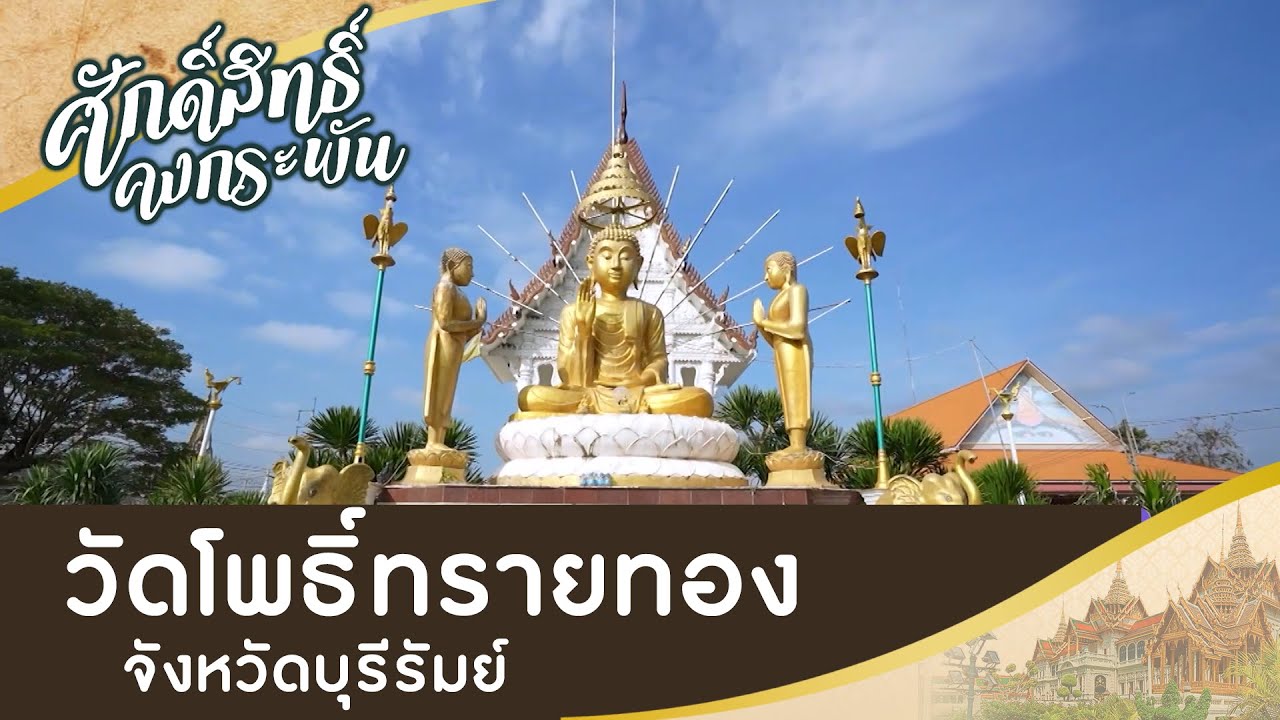
 Click to Access the Navigation Map GPS
Wat Pho Sai Thong Map
Recommend

 Art, Culture and Heritage
 Historical Sites and Monuments(14)
 Landmarks and Memorials(2)
 Art, Craft Centres, Tradition(6)
 Museums(3)
 Educational Places
 Museum for Study(1)
Temple(74)
Museum for Study(1)
Temple(74)
 Other Sacred Sites(5)
 Suburban Living
 Village, Community(3)
 Nature and Wildlife
 National Parks and Marine Reserves(2)
 Mountain (Doi)(1)
 Dam, Reservoir, Lake(14)
 River, Canal(1)
 Bays and Beaches(1)
 Other natural attractions(2)
 Entertainment and Agricultural
 Animal camps and shows(1)
 Stadium(2)
 Farms, Parks and Ecotourism(2)
 Waterpark(1)


