
lovethailand home >Northeastern Travel Attractions >Buri Ram Travel Attractions >Nong Ki >Don Arang > Huai Yang Dam
TL;DR: Huai Yang Dam is located at Don Arang Subdistrict, Nong Ki District, Buri Ram Province, open Daily, hours 08.00 – 17.00. Highlights include Community irrigation reservoir with a peaceful atmosphere, open water views, sunset scenery, and a rural local setting.

Huai Yang Dam
Open Days: Daily
Opening Hours: 08.00 – 17.00
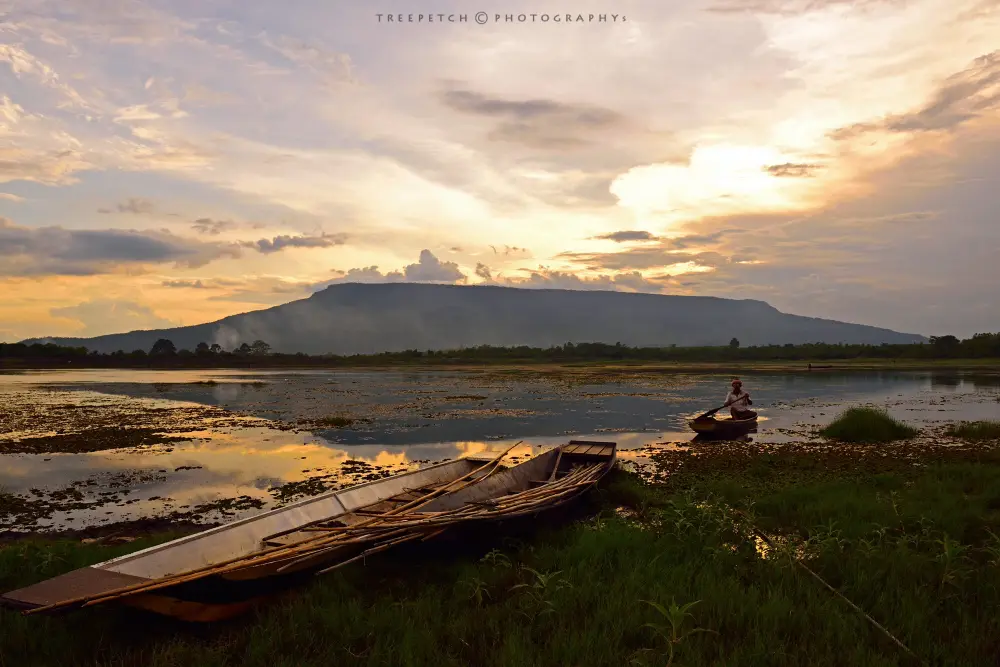
Huai Yang Dam is a community reservoir and water-based attraction in Don Arang Subdistrict, Nong Ki District, Buri Ram Province. Created through an irrigation dam project, it serves both practical and recreational purposes. The reservoir supports local agriculture, household water use, livestock raising, and everyday life in the surrounding communities, while also offering a calm place for visitors to relax by the water. Its main appeal lies in the open reservoir scenery, the quiet embankment, the rural landscape, and the beautiful sunset views over the water.
Huai Yang Dam is not a large commercial tourist site with heavy facilities or crowded entertainment activities. Instead, it is a peaceful local water source that reflects the real character of rural Buri Ram. Visitors come here to enjoy the wide surface of the reservoir, the wind along the dam crest, and the slow rhythm of village life around Don Arang. For travelers who prefer simple, quiet places rather than crowded attractions, Huai Yang Dam offers a very different experience from the province’s more famous historical parks and sports landmarks.
The reservoir is deeply connected with local life. In this part of northeastern Thailand, water storage is essential because the dry season can be long and agricultural communities depend heavily on reliable water sources. Huai Yang Dam helps support farming, plant cultivation, animal raising, and daily household use. For this reason, visiting the dam is also a way to understand how irrigation, agriculture, and rural communities are linked together in Nong Ki District.
The atmosphere around Huai Yang Dam is open and unhurried. The most attractive area for visitors is around the dam crest and the reservoir edge, where the water view stretches across the landscape. On clear days, the water reflects the sky and creates a soft, spacious scene. In the late afternoon, the light becomes warmer, making the dam a pleasant place for photography, quiet walking, and sunset viewing. Travelers who enjoy landscape photography, countryside scenery, or simple local viewpoints will find the site especially appealing.
One of the charms of Huai Yang Dam is that it still feels like a real community place. It has not been overly modified or heavily staged for tourism. The reservoir remains a working water source, and that authenticity is part of its value. The sound of the wind, the wide water surface, and the surrounding rural roads create a calm atmosphere that allows visitors to slow down. This is a suitable destination for travelers who want to take a break from long-distance driving or spend a quiet moment in a local setting.
Historically, Huai Yang Dam was developed as an irrigation water source for Don Arang Subdistrict. Local information identifies it as an important reservoir with a storage capacity of approximately 13.80 million cubic meters. Its function goes beyond sightseeing because it contributes directly to water management in the area. As a result, the dam should be understood not only as a scenic place, but also as a key piece of local infrastructure that helps support the stability of community life.
In the context of Nong Ki District, Huai Yang Dam is one of the important local landmarks associated with nature and community identity. Nong Ki is known for its rural culture, local food, silk traditions, and natural water sources. Huai Yang Dam fits into this identity as a place where people can rest, gather, and connect with the landscape. For local residents, it is a familiar recreational area; for visitors, it is a window into the everyday environment of rural lower northeastern Thailand.
For travelers coming from outside the district, Huai Yang Dam is best planned as a short scenic stop rather than a full-day destination by itself. A visit can take around 30 minutes to 2 hours depending on how much time you want to spend taking photos, sitting by the water, or waiting for sunset. It works well as part of a route that includes Nong Ki town, local restaurants, cafes, temples, and nearby reservoirs. Travelers with a private car will have the most flexibility.
The best times to visit are early morning and late afternoon. Morning offers cooler air and a quieter mood, while late afternoon is better for warm light and sunset views. Midday can be hot, especially during the dry season, because some areas along the dam are exposed to direct sun. Visitors should bring drinking water, sun protection, and comfortable footwear. During the rainy season or shortly after the rains, the landscape may look greener and fresher, but travelers should be more careful around wet roads and reservoir edges.
Recommended activities at Huai Yang Dam include enjoying the view, taking photos, relaxing by the reservoir, watching sunset, and observing the surrounding rural scenery. The site is particularly suitable for road-trippers, families, local travelers, and visitors who enjoy slow travel. It is also a good stop for those interested in seeing how water resources are used in an agricultural community rather than visiting only famous tourist landmarks.
Because Huai Yang Dam is a functional reservoir, visitors should behave responsibly. Do not litter, do not disturb local residents, do not enter restricted or unsafe areas, and do not swim in places where safety is not clearly provided. The reservoir is part of the community’s water system, so respectful travel helps preserve the area for both residents and future visitors. Keeping the site clean and safe is especially important because it remains closely tied to local livelihoods.
Families traveling with children or elderly visitors should choose the morning or late afternoon to avoid the strongest heat. It is best to park safely before walking around the viewing area and to keep children away from the water’s edge. Elderly travelers should wear comfortable shoes and be careful on uneven ground. If you plan to stay for sunset, prepare drinking water, personal items, and a return plan before it gets dark.
Huai Yang Dam can be combined with several nearby places in Nong Ki District and neighboring districts. A half-day route may start from Nong Ki town, continue to a local restaurant or cafe, and then end at Huai Yang Dam in the late afternoon. A longer route can include Wat Kao Nong Ki, Phutara Green Park, Thung Kraten Reservoir, Nong Hong Sanctuary, and Lam Nang Rong Dam. These combinations allow travelers to experience local temples, food, reservoirs, and Khmer heritage in one broader Buri Ram itinerary.
Wat Kao Nong Ki adds a cultural stop to the route, with a peaceful temple atmosphere and local religious significance. Phutara Green Park is suitable for travelers looking for food, drinks, a resort setting, and a family-friendly rest area. Thung Kraten Reservoir provides another local water landscape, while Nong Hong Sanctuary and Lam Nang Rong Dam extend the trip toward Non Din Daeng District for travelers interested in history and larger reservoir scenery.
Nong Hong Sanctuary is especially useful for travelers who want to add a historical dimension to the journey. It is a Khmer archaeological site in Non Din Daeng District, not far from Lam Nang Rong Dam. Combining Huai Yang Dam with Nong Hong Sanctuary and Lam Nang Rong Dam gives visitors a more complete picture of Buri Ram: local reservoirs, rural communities, and ancient Khmer cultural heritage. This route is most suitable for visitors traveling by private car.
From a community perspective, Huai Yang Dam is important because it supports agriculture and daily life. The water stored here helps sustain cultivation, livestock, and household use in the surrounding area. This makes the dam more meaningful than a simple photo spot. It is a living part of the local landscape, and its value comes from both its scenery and its role in supporting the people of Don Arang Subdistrict.
Huai Yang Dam is also a good destination for slow travel. Visitors do not need many activities to enjoy the place. Sitting by the reservoir, watching the color of the water change, listening to the wind, and observing local movement around the area can be enough. For foreign travelers, this kind of destination offers a softer, more authentic view of Buri Ram beyond the province’s best-known attractions.
Getting There is easiest by private car. Don Arang Subdistrict is connected by Highway 2317, which branches from Highway 24, the Chok Chai–Det Udom Road, from Nong Ki District toward Soeng Sang District in Nakhon Ratchasima Province. The route allows travelers from Nong Ki town to reach the reservoir without a complicated journey, while also making it possible to continue toward nearby districts. From Nong Ki District, Don Arang is around 12 km away, and from Buri Ram city the distance is approximately 94–95 km.
If you do not have your own car, plan carefully. Public transport directly to small reservoir attractions may be limited. Travelers can first reach Nong Ki town and then arrange local transport or a private transfer to Don Arang Subdistrict. Make sure to agree on the return time, especially if you want to stay until sunset, because transportation may be harder to find after dark.
Motorcycle travelers can also include Huai Yang Dam in a countryside route, but road safety should come first. Some roads pass through local communities and agricultural areas where local vehicles, farm vehicles, and motorcycles share the same route. Drive at a moderate speed, avoid blocking local roads, and do not enter areas where vehicle access is not clearly permitted. During rainy weather, be especially careful on wet or uneven road surfaces.
For photography, late afternoon is the best time. The warm light over the reservoir can create attractive photos of the water surface, sky reflection, dam crest, and rural surroundings. A clear day or a day with light clouds is ideal. Visitors should avoid walking down steep or unsafe areas just to take photos. The best images are those taken safely from accessible viewpoints along the reservoir.
Food options are best planned around Nong Ki town and nearby local restaurants or cafes. The district has Thai restaurants, Isan food, cafes, and resort-style dining places. Travelers can eat before going to the dam or return to town after sunset for dinner. Checking restaurant opening hours before traveling is recommended, as local businesses may have different schedules.
Accommodation is available in Nong Ki District and around Don Arang Subdistrict. Travelers who want to stay near the reservoir can consider local resorts close to Huai Yang Dam, while those who prefer easier access to restaurants, shops, and main roads may choose accommodation closer to Nong Ki town. Always call ahead to confirm room availability, road access, and check-in details before traveling.
Huai Yang Dam is also suitable for content creators and travel writers focusing on local Thailand. It offers several strong elements: a working reservoir, agricultural life, rural roads, sunset scenery, and community atmosphere. It helps present Buri Ram in a way that differs from the more familiar images of Phanom Rung Historical Park, stone sanctuaries, and football culture. For visitors who value local identity, the dam provides a quiet but meaningful stop.
Travelers should avoid relying only on shortcuts suggested by map applications, especially at night. It is safer to use main roads and routes passing through communities. If you plan to continue toward Non Din Daeng, Soeng Sang, Nang Rong, or other districts after visiting the dam, make sure your fuel level is sufficient and your return route is clear. Rural travel is most enjoyable when it is planned with enough time and flexibility.
Overall, Huai Yang Dam is suitable for local travelers, families, photographers, slow travelers, and foreign visitors interested in rural Buri Ram. It is not a highly developed tourist attraction, and that is exactly why it has its own charm. The wide reservoir, quiet dam area, and connection to local agriculture make it a meaningful place to visit for those who want to experience a more grounded side of northeastern Thailand.
In summary, Huai Yang Dam is a water-based attraction in Don Arang Subdistrict, Nong Ki District, Buri Ram Province, where visitors can enjoy reservoir scenery, sunset views, and the rural atmosphere of a real irrigation community. It is best visited by private car, especially in the morning or late afternoon. While the site is simple, its value lies in its peaceful landscape and its importance to local life.
| Name | Huai Yang Dam |
| Location | Don Arang Subdistrict, Nong Ki District, Buri Ram Province |
| Address | Ban Sam Liam / Thai Phatthana Community Area, Don Arang Subdistrict, Nong Ki District, Buri Ram 31210, Thailand |
| Highlights | Community irrigation reservoir with a peaceful atmosphere, open water views, sunset scenery, and a rural local setting |
| History | A reservoir created through an irrigation dam project to store water and support community use in Don Arang Subdistrict |
| Distinctive Features | Large community reservoir with a dam crest, wide water surface, and rural landscape suitable for quiet relaxation |
| Local Importance | Supports agriculture, crop cultivation, livestock raising, household water use, and local recreation |
| Storage Capacity | Approximately 13.80 million cubic meters |
| Travel Information | Private car is the most convenient option. Highway 2317 connects from Highway 24, Chok Chai–Det Udom Road, from Nong Ki District through Don Arang Subdistrict toward Soeng Sang District in Nakhon Ratchasima Province |
| Approximate Distance | About 12 km from Nong Ki District and about 94–95 km from Buri Ram city |
| Current Status | Important local reservoir of Don Arang Subdistrict and a community leisure area by the water |
| Open Days | Daily |
| Opening Hours | 08.00 – 17.00 |
| Facilities | Road access, reservoir viewpoint, dam-side resting area, and local services in Don Arang Subdistrict / Nong Ki District |
| Main Areas / Zones | Dam crest, reservoir viewpoint, sunset viewing area, nearby community area, and agricultural water-use zone |
| Caretaker | Royal Irrigation Department / Buri Ram Irrigation Project, with local service support from Don Arang Subdistrict Municipality |
| Main Contact Number | Don Arang Subdistrict Municipality Tel. 044-666-488, 044-666-489 |
| Official Website / Official Page | www.dar.go.th |
| Nearby Tourist Attractions | 1. Chao Pho Nong Hin Shrine at Huai Yang Dam, about 1 km 2. Wat Kao Nong Ki, about 14 km 3. Phutara Green Park, about 18 km 4. Thung Kraten Reservoir, about 24 km 5. Nong Hong Sanctuary, Non Din Daeng District, about 50 km 6. Lam Nang Rong Dam, Non Din Daeng District, about 52 km |
| Nearby Restaurants | 1. Krua Mae Kim Hiang, about 13 km, Tel. 095-679-6848 2. Krua Ton Mai, Nong Ki District, about 14 km, Tel. 044-641-386, 044-653-071 3. S.K. Restaurant & Khae Naphar Homestay, about 15 km, Tel. 044-110-584, 065-649-1811 4. Phutara Green Park, about 18 km, Tel. 064-968-4683, 044-119-990 5. Krua Pannathat, about 19 km, Tel. 091-824-5426 6. The First Corner Buri Ram, about 14 km |
| Nearby Accommodations | 1. Rim Khuean Baan Suan Resort, about 1 km, Tel. 065-930-0026 2. N K Resort, about 14 km, Tel. 044-653-299 3. Si Rung Resort, about 14 km, Tel. 081-266-7090 4. Naraya Resort, about 15 km, Tel. 085-168-1879 5. Phutara Resort and Spa, about 18 km, Tel. 064-968-4683, 044-119-990 6. Si Rung Resort 2, about 20 km, Tel. 083-125-3713 7. Somjai Nueak Resort, about 20 km, Tel. 087-239-7721 |
Frequently Asked Questions (FAQ)
Q: Where is Huai Yang Dam located?
A: Huai Yang Dam is located in Don Arang Subdistrict, Nong Ki District, Buri Ram Province. It is a community reservoir and a quiet water-based attraction suitable for scenic relaxation.
Q: What type of travel experience is Huai Yang Dam best for?
A: It is best for relaxing by the reservoir, taking photos, enjoying the countryside atmosphere, and watching sunset. It suits families, slow travelers, photographers, and visitors who prefer peaceful local places.
Q: When is the best time to visit Huai Yang Dam?
A: Morning and late afternoon are the best times. The weather is cooler, and the late afternoon light is especially suitable for sunset views and landscape photography.
Q: How can travelers get to Huai Yang Dam?
A: Traveling by private car is the most convenient option. From Nong Ki District, use the route toward Don Arang Subdistrict, with Highway 2317 connecting from Highway 24, the Chok Chai–Det Udom Road.
Q: Why is Huai Yang Dam important to the local community?
A: It supports agriculture, crop cultivation, livestock raising, household water use, and local recreation, making it an important water source for Don Arang Subdistrict.
Q: What nearby attractions can be combined with Huai Yang Dam?
A: Nearby places include Wat Kao Nong Ki, Phutara Green Park, Thung Kraten Reservoir, Nong Hong Sanctuary, and Lam Nang Rong Dam. These can be combined into a half-day or full-day route.
Q: Is Huai Yang Dam suitable for foreign travelers?
A: Yes. It is suitable for foreign travelers who want to see a quieter, more local side of Buri Ram, especially rural water landscapes and community life outside the main tourist routes.
 Category: ●Nature and Wildlife
 Group: ●Dam, Reservoir, Lake
Last Update : 3 MonthAgo
 Last Update : 3 MonthAgo
 Click to Access the Navigation Map GPS
 Art, Culture and Heritage
 Historical Sites and Monuments(14)
 Landmarks and Memorials(2)
 Art, Craft Centres, Tradition(6)
 Museums(3)
 Educational Places
 Museum for Study(1)
 Places of Worship
 Temple(74)
 Other Sacred Sites(5)
 Suburban Living
 Village, Community(3)
 National Parks and Marine Reserves(2)
 Mountain (Doi)(1)
Dam, Reservoir, Lake(14)
Mountain (Doi)(1)
Dam, Reservoir, Lake(14)
 River, Canal(1)
 Bays and Beaches(1)
 Other natural attractions(2)
 Entertainment and Agricultural
 Animal camps and shows(1)
 Stadium(2)
 Farms, Parks and Ecotourism(2)
 Waterpark(1)


