
lovethailand home >Northeastern Travel Attractions >Buri Ram Travel Attractions >Ban Mai Chaiyapot >Nong Yueang > Ku Ruesi
TL;DR: Ku Ruesi is located at Moo 4, Ban Ku Ruesi, Nong Yueang Subdistrict, Ban Mai Chaiyaphot District, Buriram Province 31120, open Daily, hours Recommended Daytime Visit.
Ku Ruesi
Open Days: Daily
Opening Hours: Recommended Daytime Visit
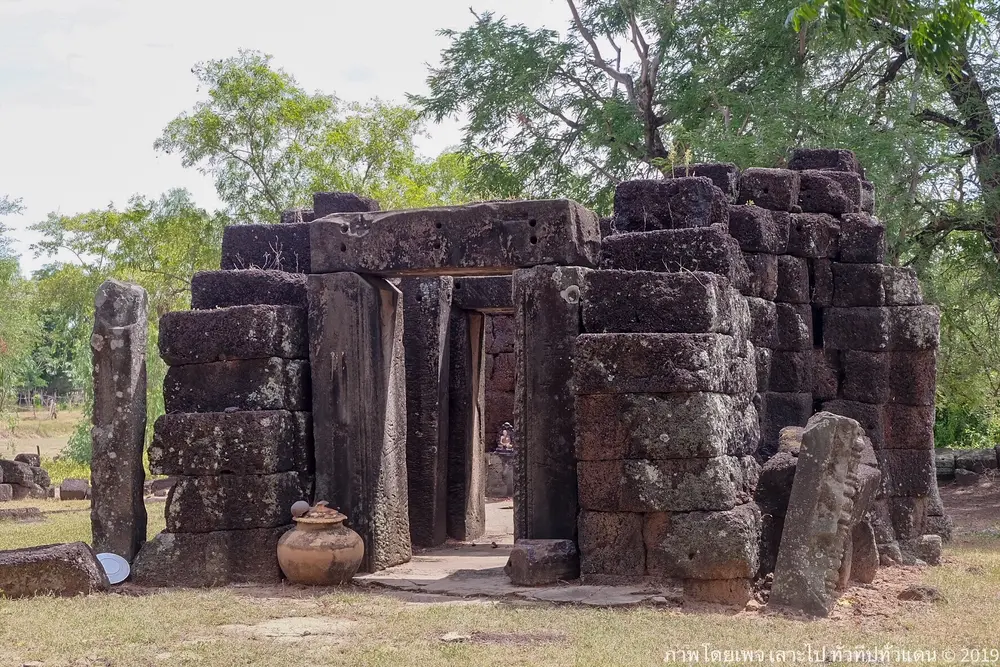
Ku Ruesi, also known as Prang Ku Ruesi Nong Yueang in Buriram Province, is a compact laterite Khmer ruin with deep historical, religious, and community significance. Located in Ban Ku Ruesi, Nong Yueang Subdistrict, Ban Mai Chaiyaphot District, this ancient site preserves the layout of a Khmer Mahayana Buddhist site preserves the layout of a sanctuary associated with the arogayasala system, or ancient hospital shrines, from the reign of King Jayavarman VII. Today, Ku Ruesi remains a sacred place for local villagers, with a large Buddha image, a hermit statue, laterite walls, a small sacred pond, seven champak trees inside the enclosure, and a quiet rural atmosphere that makes it an excellent destination for travelers interested in Khmer heritage beyond Thailand’s major tourist routes.
Ku Ruesi stands in Moo 4, Ban Ku Ruesi, Nong Yueang Subdistrict, Ban Mai Chaiyaphot District, Buriram Province, close to the border area between Buriram and Prathai District in Nakhon Ratchasima. The surrounding landscape is rural and agricultural, with local roads, fields, seasonal crops, natural waterways, and villages that still retain the slow rhythm of northeastern Thailand. When visitors arrive, the most noticeable feature is the group of laterite blocks arranged as an enclosure around the inner sanctuary. The monument is not large or dramatic like Phanom Rung Historical Park or Prasat Muang Tam, but it has a quiet and powerful character as a sacred community ruin still respected by local people.
The name “Ku Ruesi” is closely tied to the identity of the village. Ban Ku Ruesi itself was named after this ancient monument, which has long served as a cultural and spiritual landmark for the community. In northeastern Thailand, the word “ku” is commonly used for ancient shrines or ruined religious structures, while “ruesi” refers to a hermit or ascetic figure in local belief. Archaeologically, the site is connected to Mahayana Buddhism and the Khmer arogayasala network, but in local understanding, the name Ku Ruesi carries the meaning of sacredness, stillness, protection, and reverence passed down through generations.
The historical importance of Ku Ruesi lies in its role as a Mahayana Buddhist religious site and part of the arogayasala system established during the 18th Buddhist century under King Jayavarman VII of the Khmer Empire. Jayavarman VII is one of the most significant Khmer kings, known for building religious monuments, infrastructure, rest houses, and hospital shrines across his realm. The idea of the arogayasala was not limited to physical healing. It connected medicine, spiritual care, Buddhist ritual, compassion, sacred water, and the belief that human suffering could be addressed through both religious merit and practical welfare.
In the case of Ku Ruesi Nong Yueang, this ancient ruin represents more than a group of weathered stones. It reflects a worldview in which the healing of the body and the calming of the mind were deeply connected. A typical arogayasala site included a main sanctuary, an auxiliary building, an enclosure wall, a gateway, and a pond. Water was especially meaningful, associated with purification, ritual use, and spiritual restoration. These features make Ku Ruesi an important historical clue for understanding how Khmer civilization extended its religious, medical, and administrative systems into local communities in the lower northeastern region of Thailand.
The main structure of Ku Ruesi was built primarily from laterite, a reddish-brown stone widely used in Khmer architecture across northeastern Thailand. Laterite has a rugged surface, visible pores, and a strong earthy tone that gives the monument a grounded and ancient appearance. The principal shrine faces east, following the traditional orientation of Khmer religious architecture. It has one main entrance on the eastern side and three false doors on the remaining sides. The east-facing layout reflects symbolic ideas of light, beginning, auspiciousness, and sacred access.
Although parts of the central shrine have collapsed or deteriorated over time, enough of the structure remains to show the original plan of the sanctuary. Some elements, such as doorframes and pillars, were made of sandstone, while the main walls were constructed from laterite. This combination of materials is significant. Laterite was suitable for strong structural walls, while sandstone was often used for architectural elements requiring finer shaping or carving. The contrast between the rough laterite blocks and the more refined sandstone components is one of the details that makes the site rewarding for travelers who enjoy studying ancient architecture closely.
A laterite enclosure wall surrounds the sacred inner area. This wall is not merely a physical boundary; it also creates a symbolic separation between the ordinary world outside and the sacred space within. Passing through the entrance into the enclosed area, visitors can sense a shift in atmosphere. The roadside and village setting outside feels open and everyday, while the inner area feels quieter, more concentrated, and more clearly devoted to worship. This contrast is part of the experience of visiting a small Khmer sanctuary that still functions as a place of reverence.
The gopura, or gateway, forms the main access point into the sanctuary enclosure. It links the outside area with the inner courtyard and guides visitors into the site in a gradual way. The passage is modest in size, but it helps define the ceremonial approach to the shrine. Travelers interested in Khmer architecture should observe the alignment of the gateway, the enclosure wall, the main shrine, and the auxiliary structure. Together, these elements reveal the standard planning principles of an arogayasala site.
Inside the sacred area, a large Buddha image and a hermit statue are enshrined. These are the most important objects of worship for present-day visitors. The presence of the Buddha image shows how the site continues to be used as a place of devotion. Although its original historical context was connected to Mahayana Buddhism in the Khmer period, later Thai Buddhist communities adapted the area into a local sacred space for merit-making, prayer, and blessing. This continuity gives Ku Ruesi a living role rather than leaving it as an abandoned archaeological ruin.
The hermit statue reinforces the local meaning of the name Ku Ruesi and gives visitors a clearer sense of the belief surrounding the site. In Thai and northeastern folk belief, a hermit often represents wisdom, spiritual discipline, sacred knowledge, and supernatural protection. The hermit image inside the sanctuary therefore matches the local perception of Ku Ruesi as a spiritually powerful place. For many villagers, the site is not only a historical ruin but also a place where sacred presence is felt and respected.
Within the laterite enclosure, seven champak trees have been planted around the interior area. Champak trees are known for fragrant flowers and are often associated with temple grounds, peaceful spaces, and devotional environments. Their presence softens the visual weight of the laterite stones and adds shade, scent, and life to the ancient structure. When the trees are in bloom, the fragrance and the reddish-brown stones together create a calm atmosphere that makes the visit feel more contemplative than a simple sightseeing stop.
A small pond stands outside the laterite enclosure. This pond is an important component of the ancient arogayasala plan. It was not simply a utilitarian water source but also carried symbolic meaning related to purity, ritual, and healing. Across many Khmer ruins in northeastern Thailand, ponds located near religious sites have become part of local legends and sacred traditions. At Ku Ruesi, the pond helps connect the archaeological layout with continuing local beliefs about sacred water, protection, and spiritual power.
According to local accounts, Ku Ruesi has existed for a very long time, and monks once stayed in the area. At present, there is no resident monk in the same way as in the past, but the site continues to be respected by villagers in the surrounding area. People still come to pay respect to the Buddha image, the hermit statue, and the sacred elements inside the sanctuary. This ongoing devotion is one of the reasons Ku Ruesi feels different from an abandoned ruin. It remains embedded in the life and belief of the community.
The sacredness of Ku Ruesi is not created by the ancient monument alone. It also comes from the collective memory of Ban Ku Ruesi. The village grew around the monument, and the people use it as a geographical, cultural, and emotional reference point. Many villagers have known the site since childhood through local stories, annual rituals, merit-making activities, and community gatherings. This long relationship turns the site into both a historical inheritance and a spiritual center.
Ban Ku Ruesi is a rural community where daily life remains closely connected to agriculture. Many local residents work in rice farming, field crops, seasonal vegetable cultivation, animal raising, weaving, mulberry planting, sericulture, basketry, small trade, and general labor. The community uses northeastern dialects and the Korat dialect in everyday communication, reflecting its location near the cultural boundary between Buriram and Nakhon Ratchasima. This local identity adds depth to a visit. Travelers are not only seeing an ancient Khmer ruin but also entering a living community that still preserves its own language, rhythm, and cultural memory.
Visitors should explore Ku Ruesi slowly. A good way to begin is by walking around the outer laterite wall and observing how the stones are stacked. Then enter through the gateway into the inner area and pay attention to the Buddha image, the hermit statue, the champak trees, and the remaining architectural elements. This walking sequence helps reveal the site’s layout and reinforces the sense that the inner enclosure is a sacred zone deserving respect.
One of the most attractive aspects of Ku Ruesi is its modest size. Because the site is compact, visitors can observe all key features within a relatively short visit while still gaining a strong impression of the place. It is ideal as a stop along a route linking Nakhon Ratchasima, Prathai District, Ban Mai Chaiyaphot District, and northern Buriram. Travelers interested in Khmer ruins will see a community-scale example of an arogayasala. Travelers interested in local beliefs will encounter a sacred site that villagers still use and honor.
Historically, Ku Ruesi helps broaden the understanding of lower northeastern Thailand as a region rich with Khmer heritage. Khmer civilization is often associated with major monuments, but smaller village ruins are just as important for understanding how religion, healing, power, and community life were connected. Sites such as Ku Ruesi show that Khmer religious and administrative influence was not limited to grand monuments. It also reached smaller settlements and local communities through networks of shrines, ponds, roads, and ritual landscapes.
As a cultural destination, Ku Ruesi is suitable for many types of travelers. History lovers can study the Khmer layout and laterite construction. Cultural travelers can learn about village beliefs and local devotion. Photographers can capture the texture of laterite stone, the quiet enclosure, and the contrast between ancient architecture and rural greenery. Visitors seeking spiritual travel can pay respect to the Buddha image and hermit statue. The site is also appropriate for travelers who prefer peaceful, lesser-known destinations rather than crowded tourist attractions.
Respectful behavior is important when visiting Ku Ruesi. Visitors should dress politely, avoid climbing on laterite structures, refrain from moving stones or objects, keep noise low, and avoid disturbing people who come to pray. Photography is welcome in a respectful manner, but visitors should be careful not to step on fragile areas or touch ancient elements unnecessarily. Laterite and sandstone may look strong, but after centuries of exposure, they can be more fragile than they appear.
Ku Ruesi is also connected to the wider Ban Ku Ruesi community tourism route. Nearby local stories include the sacred pond of Phaya Naga Khotanaka, Lam Sathat waterway, Wat Pa Som Poi-Ku Ruesi, community products, and traditional foods made with local ingredients such as lotus shoots, taro stems, freshwater fish, vegetables, and herbs. These elements make a visit to Ku Ruesi more than a heritage stop. With local coordination or during community events, travelers may experience a broader cultural route that combines history, belief, food, crafts, and rural hospitality.
During certain times of the year, the Ku Ruesi area and surrounding community hold traditional events connected to Prang Ku Ruesi. These events express local faith, gratitude, and cooperation. They also show how the ancient monument remains part of living culture. The site is not treated only as an archaeological object; it becomes a place where villagers gather, perform rituals, make merit, present cultural performances, and pass local memory to younger generations. Visiting during a festival offers a lively experience, while visiting on an ordinary day offers peace and time for close observation.
Getting There from Nakhon Ratchasima city is convenient by private car. Travel along Mittraphap Road, Highway No. 2, toward Khon Kaen or the route leading toward Phimai, but do not turn into Phimai Historical Park. Continue on the main road until you see the right turn toward Prathai District. Drive through Prathai Market and continue toward Ban Mai Chaiyaphot District. After approximately 4 km, watch for the sign to Ku Ruesi, then turn right onto the local road and continue for about 800 meters. The site is located beside the road.
This route is best for travelers using a private car, as it allows easy stops and flexible timing. Visitors traveling from Buriram city or nearby districts can combine Ku Ruesi with Prang Ku Suan Taeng, community attractions in Ban Ku Ruesi, or other sites in Ban Mai Chaiyaphot District. Travelers from Nakhon Ratchasima can use it as part of a cross-provincial cultural route between Prathai and northern Buriram. Because the surrounding area is rural, it is useful to check the route in advance and refuel before entering smaller community roads.
The best time to visit is in the morning or late afternoon. The weather is more comfortable, and the angled light makes the laterite stones appear warmer in photographs. Midday visits are possible, but visitors should prepare sun protection. Weekdays are suitable for a quiet experience, while community event periods are better for travelers who want to see local rituals and the relationship between the monument and village life.
Ku Ruesi is valuable because of its simplicity. It does not impress through size or grandeur, but through the way an ancient Khmer site continues to exist within a living village. The laterite enclosure, the Buddha image, the hermit statue, the seven champak trees, the small pond, and local stories all create layered meaning. A visit reveals Khmer heritage, Mahayana Buddhist history, northeastern Thai devotion, and the cultural identity of Ban Ku Ruesi in a single compact place.
For foreign travelers looking for a lesser-known cultural attraction in Buriram, Ku Ruesi or Prang Ku Ruesi Nong Yueang is a worthwhile stop. It offers a slow and thoughtful travel experience through old stones, sacred space, village memory, and rural atmosphere. It is especially suitable for travelers who appreciate history, local belief, peaceful sites, and the cultural roots of lower northeastern Thailand.
| Name | Ku Ruesi / Prang Ku Ruesi Nong Yueang |
| Location | Moo 4, Ban Ku Ruesi, Nong Yueang Subdistrict, Ban Mai Chaiyaphot District, Buriram Province 31120 |
| Address | GRW3+V4C, Nong Yueang Subdistrict, Ban Mai Chaiyaphot District, Buriram Province 31120, Thailand |
| Coordinates | 15.54717893314281, 102.80275342784446 |
| Highlights | Laterite Khmer arogayasala site from the reign of King Jayavarman VII, featuring a main shrine, enclosure wall, gateway, bannalai, pond, large Buddha image, and hermit statue |
| History / Period | Mahayana Buddhist Khmer sanctuary built around the 18th Buddhist century as part of the arogayasala, or ancient hospital shrine, network of King Jayavarman VII |
| Name Origin | Ban Ku Ruesi was named after this ancient sacred monument, which became the cultural and spiritual landmark of the community |
| Distinctive Features | Laterite construction, east-facing entrance, three false doors, surrounding enclosure wall, and a small pond outside the sacred area |
| Main Areas / Zones | 1. Main Sanctuary 2. Laterite Enclosure Wall 3. Gopura Gateway 4. Banalai Library Building 5. Small Pond 6. Buddha Image And Hermit Statue Area 7. Seven Champak Trees Inside The Site |
| Travel Information | From Nakhon Ratchasima, take Mittraphap Road, Highway No. 2, toward Khon Kaen. Turn toward Prathai District, pass Prathai Market, continue toward Ban Mai Chaiyaphot District for about 4 km, then turn right at the Ku Ruesi sign and continue about 800 meters. The site is beside the local road. |
| Current Status | Ancient community sacred site open for visitors who wish to see the ruin and pay respect |
| Open Days | Daily |
| Opening Hours | Recommended Daytime Visit |
| Facilities | Accessible by car, located beside a local road, with partial shade in the area; suitable for a short to medium-length cultural stop |
| Caretaker / Related Local Authority | Nong Yueang Subdistrict Administrative Organization, Ban Mai Chaiyaphot District, Buriram Province |
| Main Contact Number | 0-4466-6240 Nong Yueang Subdistrict Administrative Organization |
| Official Website / Official Page | Nong Yueang Subdistrict Administrative Organization: nongyueng.go.th |
| Nearby Tourist Attractions | 1. Prang Ku Suan Taeng, About 4 km 2. Suan Inthaphalam Khru Chalong, About 2 km, Tel. 087-247-0489 3. Khun Tassanee Vineyard, Ban Mai Chaiyaphot District, About 9 km, Tel. 082-091-1294 4. Suan Aya AYA, About 10 km, Tel. 090-272-4999 5. Play La Ploen Flora Park, About 36 km |
| Nearby Restaurants | 1. Krua Mae Thong Muan, About 17 km, Tel. 097-227-5540 2. Pizzeria Solino Wood-Fired Pizza, About 19 km, Tel. 096-141-1630 3. Baan Nai Phang Restaurant, About 19 km, Tel. 065-316-9285 4. Kuay Tiao Baan Nok, About 22 km, Tel. 082-589-9292 5. Krua Lan Thung Phutthaisong, About 23 km, Tel. 081-132-1192 |
| Nearby Accommodations | 1. VicaWorld Sports Resort, About 10 km, Tel. 061-063-3199 2. The Park Resort, About 12 km, Tel. 096-687-8511 3. Yinglee Resort, About 21 km, Tel. 094-987-7772 4. Ladda Resort, About 24 km, Tel. 098-625-5434 5. AT Resort, About 24 km, Tel. 085-766-4996 |
Frequently Asked Questions (FAQ)
Q: Where is Ku Ruesi or Prang Ku Ruesi Nong Yueang located?
A: Ku Ruesi is located in Moo 4, Ban Ku Ruesi, Nong Yueang Subdistrict, Ban Mai Chaiyaphot District, Buriram Province. It is a small laterite Khmer ruin beside a local road and is best reached by private car.
Q: Why is Ku Ruesi historically important?
A: Ku Ruesi is a Mahayana Buddhist Khmer sanctuary from around the 18th Buddhist century. It is associated with the arogayasala, or ancient hospital shrine, network built during the reign of King Jayavarman VII.
Q: What can visitors see inside Ku Ruesi?
A: Visitors can see the main laterite shrine, enclosure wall, gateway, bannalai building, small pond, large Buddha image, hermit statue, and seven champak trees planted inside the sacred area.
Q: Who should visit Ku Ruesi?
A: The site is suitable for travelers interested in Khmer ruins, northeastern Thai history, local sacred places, village culture, and peaceful off-the-beaten-path heritage destinations.
Q: How do travelers get to Ku Ruesi from Nakhon Ratchasima?
A: Take Mittraphap Road, Highway No. 2, toward Khon Kaen, turn toward Prathai District, pass Prathai Market, continue toward Ban Mai Chaiyaphot District for about 4 km, then turn right at the Ku Ruesi sign and continue about 800 meters.
Q: Is there an admission fee for Ku Ruesi?
A: Ku Ruesi is a community sacred site where visitors can view the ancient ruin and pay respect. Visitors should enter politely, keep the area clean, and respect the sacred atmosphere of the site.
Q: What is the best time to visit Ku Ruesi?
A: Morning and late afternoon are the best times to visit because the weather is more comfortable and the light is better for photographing the warm color of the laterite stones.
Q: What nearby attractions can be combined with Ku Ruesi?
A: Nearby places include Prang Ku Suan Taeng, Suan Inthaphalam Khru Chalong, Khun Tassanee Vineyard, Suan Aya AYA, and Play La Ploen Flora Park, making the area suitable for a northern Buriram cultural route.
 Category: ●Art, Culture and Heritage
 Group: ●Historical Sites and Monuments
Last Update : 4 MonthAgo
 Last Update : 4 MonthAgo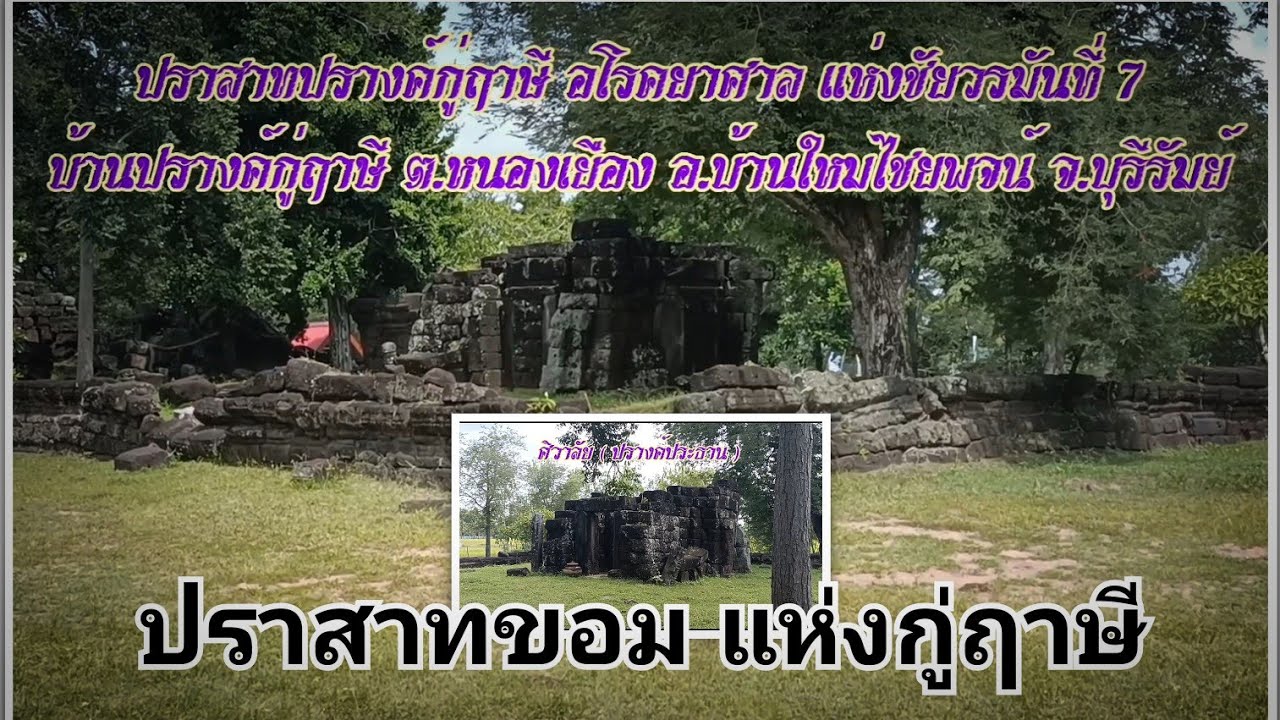
 Click to Access the Navigation Map GPS
 Historical Sites and Monuments(14)
 Landmarks and Memorials(2)
 Art, Craft Centres, Tradition(6)
 Museums(3)
 Educational Places
 Museum for Study(1)
 Places of Worship
 Temple(74)
 Other Sacred Sites(5)
 Research and Development
 Royal Project(1)
 Suburban Living
 Village, Community(3)
 Nature and Wildlife
 National Parks and Marine Reserves(2)
 Mountain (Doi)(1)
 Dam, Reservoir, Lake(14)
 River, Canal(1)
 Bays and Beaches(1)
 Other natural attractions(2)
 Entertainment and Agricultural
 Animal camps and shows(1)
 Stadium(2)
 Farms, Parks and Ecotourism(2)
 Waterpark(2)
 Travel Articles, Recipes
 Travel Review, Food Review(1)


