
lovethailand home >Northeastern Travel Attractions >Buri Ram Travel Attractions >Prakhon Chai >Chorakhe Mak > Kuti Ruesi Ban Nong Bua Lai
TL;DR: Kuti Ruesi Ban Nong Bua Lai is located at Ban Nong Bua Lai, Moo 7, Chorakhe Mak Subdistrict, Prakhon Chai District, Buriram Province, open Visits Are Recommended During Local Community Office Days, hours Daytime Visits Are Recommended.
Kuti Ruesi Ban Nong Bua Lai
Open Days: Visits Are Recommended During Local Community Office Days
Opening Hours: Daytime Visits Are Recommended
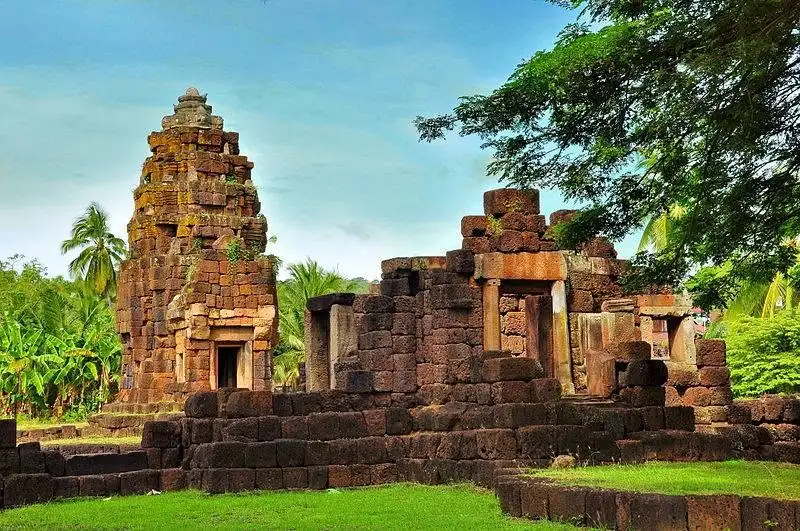
Kuti Ruesi Ban Nong Bua Lai, also known as Prasat Nong Bua Rai or Prasat Nong Kong, is a small but highly meaningful Khmer archaeological site near the foot of Phanom Rung in Buriram Province. Located in Ban Nong Bua Lai, Chorakhe Mak Subdistrict, Prakhon Chai District, about 2.8 km south of the base of Phanom Rung, the site features a laterite sanctuary tower, an eastern entrance, 3 false doors, a lintel showing a seated Buddha in meditation above a kirtimukha, a laterite enclosure wall, and the nearby Nong Bua Rai or Sa Phleng water landscape. It is an important place for understanding Bayon-period Mahayana Buddhist healing sanctuaries around Phanom Rung.
Kuti Ruesi Ban Nong Bua Lai is a small Khmer archaeological site in Ban Nong Bua Lai, Moo 7, Chorakhe Mak Subdistrict, Prakhon Chai District, Buriram Province. In some references, the site is also called Prasat Nong Bua Rai, Kuti Ruesi Nong Bua Rai, or Prasat Nong Kong. Although the monument is much smaller than Phanom Rung Historical Park or Prasat Mueang Tam, it is an important piece of the cultural landscape surrounding Phanom Rung. The site helps explain how ancient Khmer religious, medical, travel, and community networks operated around this sacred volcanic mountain.
The monument is located about 2.8 km south of the foot of Phanom Rung along the Phanom Rung – Prakhon Chai route. This location places it within the same cultural zone as Phanom Rung, Prasat Mueang Tam, Kuti Ruesi Ban Khok Mueang, Prasat Ban Bu, Baray Mueang Tam, and the ancient communities around Ban Khok Mueang. Together, these sites show that the area around Phanom Rung was not simply a route to a mountain temple. It was a complex sacred landscape made up of temples, hospitals, rest houses, reservoirs, communities, and ancient routes.
Kuti Ruesi Ban Nong Bua Lai is especially important because it belongs to the category of Arokayasala, or Khmer healing sanctuary, associated with the Bayon period and the reign of King Jayavarman VII. In the Khmer world, an Arokayasala was more than a medical facility. It combined healing, worship, ritual, water, and royal religious policy in one place. These healing sanctuaries usually included a main tower, library-like building, enclosure wall, entrance gateway, pond, and Mahayana Buddhist iconography.
The main sanctuary tower is built of laterite and has a square plan with recessed corners. It is about 5 meters wide and faces east, the most important direction for entry in Khmer sacred architecture. The eastern side has the true entrance, while the north, south, and west sides were made as false doors. In Khmer architecture, false doors are not merely decorative. They help balance the form of the shrine and express symbolic directions around the sacred center.
The lintel above the porch doorway is carved with a seated Buddha in meditation above the head of a kirtimukha, also known as kala. The kirtimukha holds garlands in both hands. This image is one of the most important pieces of evidence at the site because it reflects Mahayana Buddhist belief during the Bayon period. The seated Buddha represents calm, meditation, and spiritual realization, while the kirtimukha serves as a protective face often found in Khmer art. Together, the composition marks the sanctuary as a protected Buddhist sacred space.
The upper part of the tower is shaped in 4 receding lotus-like tiers. Each tier has stone antefixes or decorative elements carved with patterns and figures. This architectural form shows that the tower was not a plain laterite structure. It once had a meaningful vertical design that rose from the earthly level toward the sacred realm. The decorative stone elements softened the heavy appearance of laterite and gave the small sanctuary an elegant sacred presence.
The enclosure wall of the monument is made of laterite. Its eastern gate was constructed as a gateway aligned with the eastern entrance of the main tower. This alignment shows the ordered plan of the sacred compound. Visitors would have entered from the east, passed through the gateway, and moved toward the main sanctuary. The enclosure separated the sacred interior from the ordinary landscape outside.
Along the left side of the route near the monument is an earthen embankment about 2 meters high and 3 – 4 meters wide, extending for at least 1 km. On the ridge are traces of small building foundations in 2 or 3 sections. These remains suggest that the area around the monument was once part of a broader ancient landscape rather than a single isolated shrine. The embankment may relate to boundary features, water management, ancient routes, or former structures associated with the sanctuary.
Not far from the embankment is a large water body known as Nong Bua Rai, Nong Bua Lai, or Sa Phleng. This water landscape is essential for understanding the site. Water was central to Khmer sacred architecture and healing sanctuaries. It served practical needs, ritual purification, symbolic fertility, and community life. The presence of a large pond near the monument shows that the builders chose a location closely connected with water, settlement, and ritual function.
The Fine Arts Department registered Kuti Ruesi Nong Bua Lai as an archaeological site in the Royal Gazette, Volume 99, Section 75, dated March 8, 1935, and later defined its protected boundary in Volume 99, Section 155, dated October 21, 1982. The protected area covers 1 rai, 3 ngan, and 71 square wah. This registration confirms the site’s national historical importance and underlines the need for careful visitation and conservation.
Within the broader history of Khmer architecture, Kuti Ruesi Ban Nong Bua Lai helps explain the public religious infrastructure of King Jayavarman VII. His reign is well known for the construction of Mahayana Buddhist sanctuaries, hospitals, and travelers’ rest houses across the Khmer realm. These sites show that royal power was expressed not only through grand temples but also through networks designed to care for people, support movement, and connect communities.
Religiously, the site reflects the rise of Mahayana Buddhism in the Bayon period. The seated Buddha lintel is especially important because it distinguishes the site from Phanom Rung and Prasat Mueang Tam, where Hindu imagery is more prominent. Visiting all 3 sites together allows travelers to see the religious development of Buriram’s Khmer heritage: Hindu mountain and lowland sanctuaries alongside Mahayana Buddhist healing sanctuaries from the Jayavarman VII period.
The site also shows how healing and religion were connected in the ancient world. An Arokayasala was not a hospital separated from belief in the modern sense. It was a place where physical healing, spiritual protection, water, worship, and royal merit were closely linked. Travelers, local residents, or the sick may have come to such a place to rest, pray, use water, and seek both physical and spiritual well-being.
When visiting Kuti Ruesi Ban Nong Bua Lai, it is best to begin by observing the overall layout. Notice the main tower, the eastern orientation, the enclosure wall, and the surrounding landscape. Then look more closely at the laterite masonry, recessed corners, true entrance, false doors, lintel, and upper tower form. This approach helps visitors understand that the monument is not merely a ruin but a carefully planned sacred structure.
The atmosphere here is quiet and local. Travelers familiar with the grandeur of Phanom Rung may initially see this site as small, but its meaning is substantial. It represents a more intimate layer of history: healing, rest, community life, and the support systems behind the great sanctuaries. For this reason, Kuti Ruesi Ban Nong Bua Lai is valuable for travelers who want to understand Buriram beyond famous landmarks.
The site is ideal for visitors interested in Khmer temples, Bayon art, Mahayana Buddhism, Arokayasala healing sanctuaries, and the ancient routes around Phanom Rung. A half-day itinerary can include Phanom Rung, Kuti Ruesi Ban Nong Bua Lai, and Prasat Mueang Tam. A full-day route can add Prasat Ban Bu, Kuti Ruesi Ban Khok Mueang, Baray Mueang Tam, and Wat Khao Angkhan for a deeper view of the Phanom Rung cultural landscape.
For photography, the site is best captured through quiet architectural details: the laterite tower, eastern doorway, false doors, lintel area, and the surrounding landscape. Morning or late afternoon light gives the laterite blocks more texture and depth. Visitors should take photographs respectfully without climbing on the structure or touching fragile architectural parts.
Getting There is easiest by private car, rental car, or hired local vehicle. From the foot of Phanom Rung, follow the Phanom Rung – Prakhon Chai route south for about 2.8 km. Travelers coming from Prasat Mueang Tam can also connect conveniently to the Nong Bua Lai area because it lies within Chorakhe Mak Subdistrict. From Buriram city, drive toward Prakhon Chai District, then continue to the Phanom Rung and surrounding archaeological route.
Visitors should dress respectfully, move carefully, and be considerate of the local community around the monument. Since this is a small archaeological site rather than a large historical park, visitors should avoid loud behavior, littering, stepping on architectural bases, moving stones, or touching carved elements. Every laterite block and sandstone piece is part of an archaeological record that cannot be replaced.
Seen together with Phanom Rung, Prasat Mueang Tam, and the archaeological sites around Ban Khok Mueang, Kuti Ruesi Ban Nong Bua Lai becomes an essential piece of the Phanom Rung cultural landscape. Phanom Rung represents the mountain sanctuary, Mueang Tam represents the lowland temple and community landscape, while Nong Bua Lai represents healing, rest, and care within the same network. A visit here therefore expands the traveler’s view from monumental temples to the lived systems that supported them.
Kuti Ruesi Ban Nong Bua Lai is a small site with deep meaning. Its value does not come from monumental size, but from its stillness, age, architectural evidence, and position in the map of Khmer civilization. Standing before the small laterite tower near Phanom Rung allows visitors to imagine ancient travelers, patients, worshippers, and local communities who once moved through this landscape many centuries ago.
| Name | Kuti Ruesi Ban Nong Bua Lai |
| Alternative Names | Prasat Nong Bua Rai, Kuti Ruesi Nong Bua Rai, Prasat Nong Kong |
| Location | Ban Nong Bua Lai, Moo 7, Chorakhe Mak Subdistrict, Prakhon Chai District, Buriram Province |
| Address | Moo 7, Ban Nong Bua Lai, Chorakhe Mak Subdistrict, Prakhon Chai District, Buriram 31140, Thailand |
| Coordinates | 14.531896, 102.963329 |
| Highlights | Laterite Sanctuary Tower With Recessed Corners, Seated Buddha Lintel Above Kirtimukha, Laterite Enclosure Wall, And The Nearby Nong Bua Rai Or Sa Phleng Water Landscape Near Phanom Rung |
| History | Bayon-Style Khmer Art, 18th Buddhist Century, Reign Of King Jayavarman VII, Related To Mahayana Buddhism And Arokayasala Healing Sanctuaries |
| Name Origin | Named After Ban Nong Bua Lai Or Nong Bua Rai, A Local Community And Water Landscape Near The Foot Of Phanom Rung |
| Distinctive Features | Square Laterite Tower With Recessed Corners, About 5 M Wide, Facing East, With A True Eastern Entrance And False Doors On The North, South, And West Sides |
| Main Areas / Zones | 1. Main Laterite Sanctuary Tower 2. True Eastern Entrance 3. False Doors On The North, South, And West Sides 4. Lintel Showing A Seated Buddha Above Kirtimukha 5. Four-Tier Lotus-Like Tower Top 6. Laterite Enclosure Wall And Eastern Gateway 7. Earthen Embankment And Small Building Foundations 8. Nong Bua Rai Or Sa Phleng Water Area Nearby |
| Key Evidence | Mahayana Buddhist Lintel With Seated Buddha, Kirtimukha Holding Garlands, Stone Antefixes On The Tower Top, Laterite Enclosure Wall, And Earthwork Near Nong Bua Rai |
| Registration | Registered By The Fine Arts Department In The Royal Gazette, Volume 99, Section 75, On March 8, 1935, With Protected Boundary Defined On October 21, 1982, Covering 1 Rai, 3 Ngan, And 71 Square Wah |
| Travel Information | About 2.8 Km South Of The Foot Of Phanom Rung Along The Phanom Rung – Prakhon Chai Route. Best Reached By Private Car, Rental Car, Or Hired Local Vehicle. |
| Current Status | Important Archaeological Site Within The Cultural Landscape Around Phanom Rung And Prasat Mueang Tam |
| Open Days | Visits Are Recommended During Local Community Office Days |
| Opening Hours | Daytime Visits Are Recommended |
| Facilities | Local Community Area Near The Monument, Walking Access To The Site, And Nearby Community Shops Along The Route |
| Caretaker | The Fine Arts Department, Through The Regional Archaeology Unit And Phanom Rung Historical Park Area Responsibility |
| Main Contact Number | Phanom Rung Historical Park, Tel. 044-666-251, 044-666-252 |
| Official Website / Official Page | Phanom Rung Historical Park, Fine Arts Department |
| Nearby Tourist Attractions | 1. Phanom Rung Historical Park, About 3 Km 2. Prasat Mueang Tam, About 8 Km 3. Kuti Ruesi Ban Khok Mueang, About 8 Km 4. Baray Mueang Tam, About 9 Km 5. Prasat Ban Bu, About 13 Km 6. Wat Khao Angkhan, About 18 Km 7. Lam Nang Rong Dam, About 30 Km |
| Nearby Restaurants | 1. NATEE Cafe’ Buriram, About 9 Km, Tel. 098-197-8004 2. Ran Laang Wang Prakhon Chai, About 18 Km, Tel. 084-605-4324, 099-170-9199 3. Sobhlasta Restaurant At Eireann Boutique Hotel, About 19 Km, Tel. 087-493-9919, 044-666-199 4. Le Loft Bar & Restaurant, About 28 Km, Tel. 094-310-9913 5. Steve & Lek Restaurant, About 28 Km |
| Nearby Accommodations | 1. Hotel De L’amour Buriram, About 18 Km, Tel. 098-102-7809, 044-651-555 2. Eireann Boutique Hotel, About 19 Km, Tel. 087-493-9919, 044-666-199 3. Sohground Boutique Resort, About 20 Km, Tel. 080-488-3183 4. Phanomrungpuri Hotel, About 30 Km, Tel. 044-632-222, 086-336-6618 5. Alvarez Hotel Buriram, About 60 Km, Tel. 044-611-555 |
Frequently Asked Questions (FAQ)
Q: Where Is Kuti Ruesi Ban Nong Bua Lai Located?
A: It is located in Ban Nong Bua Lai, Moo 7, Chorakhe Mak Subdistrict, Prakhon Chai District, Buriram Province, about 2.8 km south of the foot of Phanom Rung.
Q: Why Is Kuti Ruesi Ban Nong Bua Lai Important?
A: It is an Arokayasala, or Khmer healing sanctuary, from the reign of King Jayavarman VII. It reflects Mahayana Buddhist belief, healing practice, and the sacred landscape around Phanom Rung.
Q: What Are The Main Highlights Of The Site?
A: The highlights include the laterite sanctuary tower, eastern entrance, 3 false doors, the lintel showing a seated Buddha above kirtimukha, and the laterite enclosure wall.
Q: How Is The Site Related To Phanom Rung?
A: It lies close to the foot of Phanom Rung and forms part of the same cultural landscape, helping explain the network of sanctuaries, healing sites, water features, and ancient routes around the mountain.
Q: Is There An Admission Fee?
A: It is not managed like a large ticketed historical park. Visitors should enter respectfully and follow local site guidelines.
Q: What Nearby Places Can Be Visited Together With This Site?
A: Nearby places include Phanom Rung Historical Park, Prasat Mueang Tam, Kuti Ruesi Ban Khok Mueang, Baray Mueang Tam, Prasat Ban Bu, and Wat Khao Angkhan.
Q: How Can Travelers Get There?
A: Follow the Phanom Rung – Prakhon Chai route south from the foot of Phanom Rung for about 2.8 km. A private car, rental car, or hired local vehicle is the most convenient option.
Q: What Should Visitors Be Careful About?
A: Visitors should dress respectfully, avoid climbing on the monument, not move stones, not scratch the laterite or sandstone, and keep the community area clean.
 Category: ●Art, Culture and Heritage
 Group: ●Historical Sites and Monuments
Last Update : 3 MonthAgo
 Last Update : 3 MonthAgo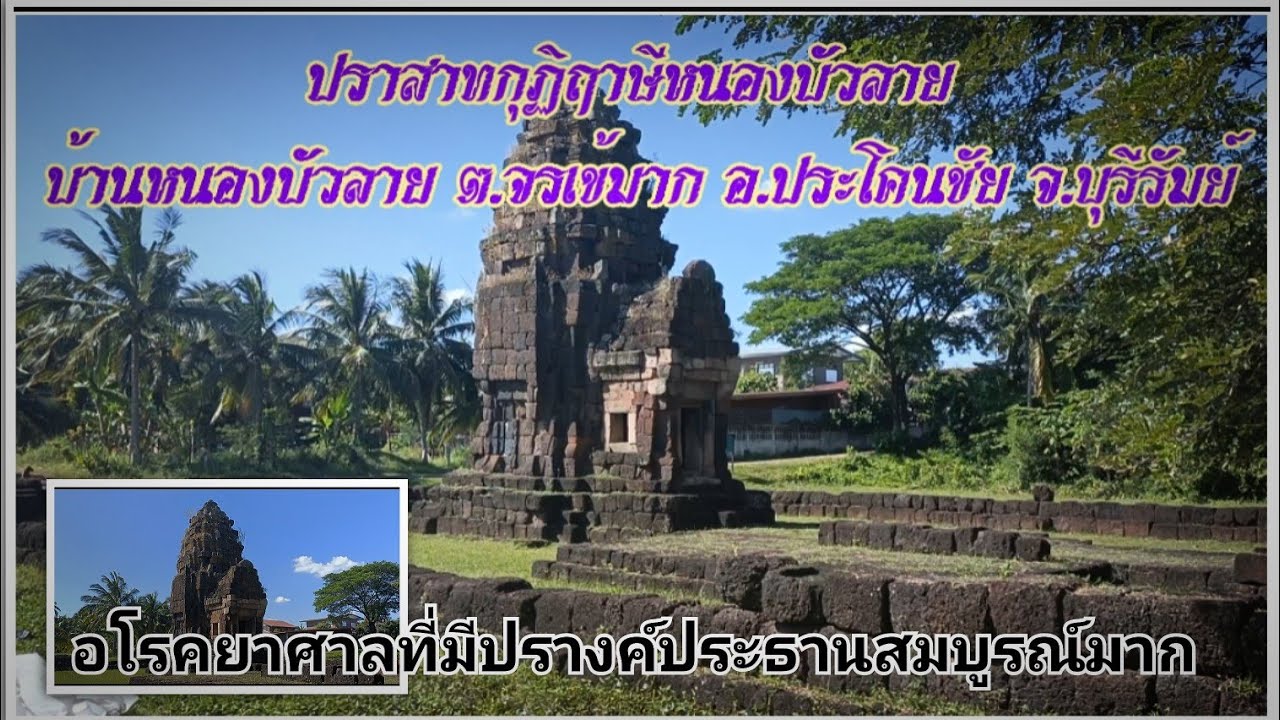
 Click to Access the Navigation Map GPS
Kuti Ruesi Ban Nong Bua Lai Map
Recommend
 Historical Sites and Monuments(14)
 Landmarks and Memorials(2)
 Art, Craft Centres, Tradition(6)
 Museums(3)
 Educational Places
 Museum for Study(1)
 Places of Worship
 Temple(74)
 Other Sacred Sites(5)
 Suburban Living
 Village, Community(3)
 Nature and Wildlife
 National Parks and Marine Reserves(2)
 Mountain (Doi)(1)
 Dam, Reservoir, Lake(14)
 River, Canal(1)
 Bays and Beaches(1)
 Other natural attractions(2)
 Entertainment and Agricultural
 Animal camps and shows(1)
 Stadium(2)
 Farms, Parks and Ecotourism(2)
 Waterpark(1)


