
lovethailand home >Northeastern Travel Attractions >Buri Ram Travel Attractions >Muang Buri Ram >Samet > Wat Klang Phra Aram Luang
TL;DR: Wat Klang Phra Aram Luang is located at Lak Mueang Road, Nai Mueang Subdistrict, Mueang Buriram District, Buriram Province, open Daily, hours 06.00 – 18.00.
Wat Klang Phra Aram Luang
Open Days: Daily
Opening Hours: 06.00 – 18.00
Wat Klang Phra Aram Luang, Buriram, commonly known as Wat Klang Buriram, is one of the oldest and most important temples in Buriram city. Located on Lak Mueang Road in Nai Mueang Subdistrict, Mueang Buriram District, the temple stands near the Buriram City Pillar Shrine and within the historic center of the city. For visitors who want to understand Buriram beyond football, motorsport, and famous Khmer temples, Wat Klang is an essential starting point because it brings together Buddhist faith, local history, sacred water, royal temple status, and the memory of the city in one place.
The temple is closely associated with a historical story from the Thonburi period. According to local tradition, Chao Phraya Maha Kasatsuek, who later became King Rama I, led an army to suppress the rebellious ruler of Nang Rong and stopped to rest in this area. At that time, there was a large pond at the site. Today, this pond is respected as a sacred pond within Wat Klang Buriram. This story gives the temple deep historical meaning and links it with the early formation of Buriram’s local identity.
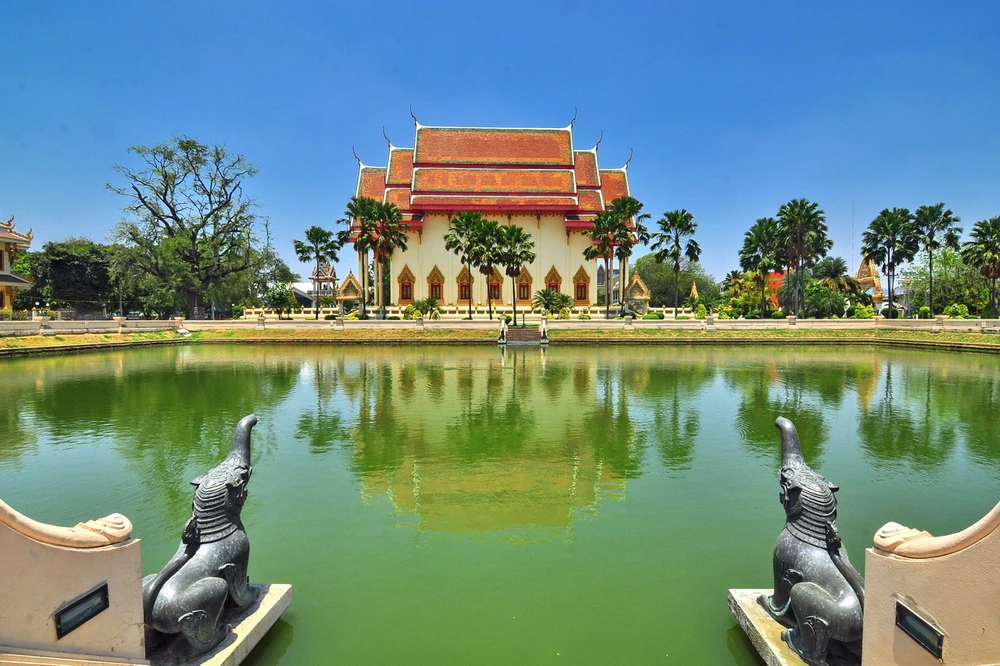
The sacred pond inside the temple, often referred to as Sra Singto, is one of the most memorable features of Wat Klang. It is located near the main ordination hall and forms a beautiful visual setting with the temple architecture reflected on the water. The pond is not only a scenic element. It is part of Buriram’s historical and spiritual landscape. For local people, sacred water represents purity, auspiciousness, memory, and connection with important ceremonies. For travelers, it helps explain why Wat Klang is more than an ordinary city temple.
Water has strong meaning in Thai culture. It is connected with blessing, cleansing, fertility, merit, and state ceremonies. The sacred pond at Wat Klang therefore carries both religious and civic significance. Visitors should treat this area respectfully, avoiding littering, careless behavior, or inappropriate photography. It is a place where local history and belief come together, and it remains an important symbol for the people of Buriram.
Wat Klang was elevated to the status of a third-class royal temple, or Phra Aram Luang, in 1990. It was the first royal temple in Buriram Province. This status reflects the temple’s long-standing importance, both as a Buddhist religious site and as a center of civic and spiritual life. As a royal temple, Wat Klang plays an important role in Buddhist ceremonies, provincial religious activities, merit-making events, and public traditions throughout the year.
The temple belongs to the Maha Nikaya order of Thai Buddhism and is an important center for the monastic community in Buriram Province. The current abbot is Phra Tham Wachirasutaphon, also known as Suphot Chotiyano, Pali Grade 5. He is a senior monk with a significant role in Buddhist education, ecclesiastical administration, and religious activities in Buriram. This means that Wat Klang is not only a tourist attraction. It is an active temple with monks, devotees, Buddhist learning, ceremonies, and daily religious life.
The main ordination hall, or ubosot, is one of the most important structures in the temple. It is large, elegant, and architecturally impressive. Inside the ubosot is Luang Pho To, the principal Buddha image, which is highly respected by local worshippers. Visitors come to pay respect, make merit, pray, and reflect quietly before the Buddha image. Luang Pho To represents the living faith of Buriram people and gives the temple a calm, devotional atmosphere.
The architecture of the ubosot reflects the beauty of Thai Buddhist temple design in Southern Isan. The elevated base, layered roof, decorated gable, and rhythmic windows create a dignified appearance. When seen from across the sacred pond, the building appears reflected on the water, creating one of the most beautiful views of the temple. This image of the ordination hall and the pond together is one of the reasons Wat Klang is so recognizable in Buriram.
Wat Klang is also important because of its location near the Buriram City Pillar Shrine. In Thai urban culture, temples and city pillars often form the spiritual core of a town. The temple represents Buddhist faith and moral life, while the city pillar represents the protective spirit and symbolic foundation of the city. At Wat Klang, visitors can easily understand how religion, civic belief, and city identity are connected in Buriram’s historic center.
The name “Wat Klang” means the central temple, and the name reflects both location and function. The temple stands in the heart of Buriram city and has long served as a central place for worship, public ceremonies, Buddhist learning, and community gathering. Generations of local people have come here for merit-making, candle processions, Buddhist holy days, family ceremonies, and moments of personal devotion. The word “central” therefore refers not only to geography but also to spiritual importance.
Religious activities continue throughout the year at Wat Klang. Important Buddhist days such as Makha Bucha, Visakha Bucha, Asalha Bucha, Buddhist Lent, and the end of Buddhist Lent bring local people to the temple for merit-making, chanting, sermons, candle offerings, and evening circumambulation. The temple is also connected with city-level Buddhist events organized by monks, local authorities, and the community. These regular activities keep the temple alive and meaningful.
The Buddhist Lent candle tradition is one example of Wat Klang’s continuing role in Buriram city. Candle-casting activities, candle-carving demonstrations, religious ceremonies, and candle offerings have been organized at or through the temple as part of the city’s Buddhist calendar. These events combine faith, art, community participation, and public culture. They show that Wat Klang is not a silent monument of the past but an active religious and cultural space.
The temple also has an educational role. Like many important Thai temples, Wat Klang is connected with Buddhist study, religious teaching, and activities that support moral learning. It serves as a place where Buddhist knowledge, monastic discipline, local religious leadership, and community life meet. This educational function reflects the traditional role of Thai temples as centers of learning, not only places for rituals.
Visitors can explore the temple in several main areas. The first is the ordination hall and Luang Pho To, the principal Buddha image. The second is the sacred pond or Sra Singto, which connects the temple to local historical memory. The third includes the temple halls, monks’ residences, monastic offices, and areas used for ceremonies and religious activities. Seeing these areas together helps visitors understand that Wat Klang is at once a royal temple, a working monastery, a sacred place, and a historical landmark.
The ubosot and Luang Pho To area should be visited with respect. Visitors should remove their shoes before entering, dress modestly, speak quietly, and avoid disturbing worshippers. Photography should be done carefully and respectfully. The Buddha image is not a decorative object, but a sacred focus of devotion. For international travelers, this is an important point to remember when visiting any active Buddhist temple in Thailand.
The sacred pond area is suitable for slow walking and observation. It is one of the best places to understand the temple’s connection with the story of Chao Phraya Maha Kasatsuek and the early history of Buriram. Visitors should not enter the pond area inappropriately, throw objects into the water, or treat the site as merely a photo spot. The pond is respected as a sacred place by local people.
The ceremonial and monastic areas reveal the daily life of the temple. Visitors may see monks performing duties, laypeople making merit, temple staff preparing for ceremonies, or local people visiting quietly. These areas may not be as visually dramatic as the ubosot and pond, but they are essential to understanding how a Thai temple functions every day. A temple is not only architecture; it is a living institution.
For travelers, Wat Klang is easy to include in a Buriram city itinerary. It is very close to the City Pillar Shrine and within a short distance of Sro Krao Walking Street, Buriram Railway Station, the King Rama I Monument, the Southern Isan Cultural Center, Khao Kradong Forest Park, Chang Arena, and Chang International Circuit. This makes it a convenient cultural stop for visitors staying in the city center.
For those interested in history, Wat Klang should be visited before other major Buriram attractions. It gives context to the city itself. Buriram is not only known for Phanom Rung Historical Park, Muang Tam Sanctuary, football, or motorsport. It also has a historic urban core shaped by temples, sacred water, city beliefs, Buddhist institutions, and local memory. Starting at Wat Klang helps visitors see Buriram as a city with many layers of history.
For international visitors, Wat Klang provides a clear introduction to Thai Buddhist culture at the city level. In one temple compound, travelers can see an ordination hall, a revered Buddha image, a sacred pond, royal temple status, monastic life, and links to a historical military story. This helps foreign travelers understand that Thai temples are not only religious buildings; they are social, historical, and cultural centers.
The temple is also suitable for cultural photography. Good angles include the ordination hall reflected in the pond, the lion figures near the water, the decorated gable of the ubosot, and the temple grounds. However, photography should always be respectful. Visitors should not climb on religious structures, move objects, interrupt ceremonies, or pose in ways that disrespect Buddha images or sacred places.
Getting to Wat Klang is simple because it is located in central Buriram. Travelers arriving by train can continue from Buriram Railway Station by local transport. Those staying in the city center can reach the temple quickly by car, motorcycle taxi, tuk-tuk, or local ride service. Drivers should head toward Lak Mueang Road and the Buriram City Pillar Shrine. The temple is in a well-known central area of the city.
Getting There from Buriram Railway Station, travel toward Lak Mueang Road and the City Pillar Shrine. From the King Rama I Monument, drive through the city center toward Lak Mueang Road. From Chang Arena or Khao Kradong Forest Park, return toward central Buriram and continue to the City Pillar Shrine area. A private car, hired vehicle, or local transport is the most convenient option for combining Wat Klang with other attractions in the city.
Wat Klang is open daily from 06.00 to 18.00 and does not charge an admission fee. Visitors can come to pay respect, see the ordination hall, observe the sacred pond, and walk through the temple grounds. Group visits, filming, research visits, or educational trips should contact the temple in advance, especially if the visit requires access to specific areas or guidance from temple staff.
What makes Wat Klang Buriram memorable is its balance between age, status, faith, and city life. It is an old temple with a story from the Thonburi period. It is a royal temple and the first of its kind in Buriram Province. It is home to a sacred pond and a respected Buddha image. It is also an active temple where people still make merit, attend ceremonies, and connect with Buddhism in everyday life.
Overall, Wat Klang Phra Aram Luang is one of the most important cultural and religious landmarks in Buriram city. It brings together the story of Chao Phraya Maha Kasatsuek, the sacred pond, royal temple status, the main ordination hall, Luang Pho To, and the spiritual life of the city. A visit here gives travelers peace, historical context, religious insight, and a deeper understanding of Buriram’s identity.
| Name | Wat Klang Phra Aram Luang, Buriram |
| Thai Name | วัดกลางบุรีรัมย์ / วัดกลาง พระอารามหลวง |
| Location | Lak Mueang Road, Nai Mueang Subdistrict, Mueang Buriram District, Buriram Province |
| Address | 29/8 Lak Mueang Road, Nai Mueang Subdistrict, Mueang Buriram District, Buriram Province 31000, Thailand |
| Highlights | An old city temple of Buriram, the first royal temple in the province, known for its beautiful ordination hall, Luang Pho To Buddha image, and Sra Singto sacred pond |
| History / Period | Associated with a local historical account from the Thonburi period, when Chao Phraya Maha Kasatsuek stopped his army near a large pond in this area. The temple was elevated to royal temple status in 1990 |
| Abbot / Caretaker | Phra Tham Wachirasutaphon (Suphot Chotiyano, Pali Grade 5), abbot of Wat Klang Phra Aram Luang / Managed by the monastic community of Wat Klang Phra Aram Luang |
| Distinctive Features | A third-class royal temple of the Maha Nikaya order, located in central Buriram near the City Pillar Shrine and serving as an important center for Buddhist and provincial religious activities |
| Key Objects / Important Features | Main ordination hall, Luang Pho To principal Buddha image, Sra Singto sacred pond, temple halls, monastic offices, and ceremonial areas |
| Name Origin | The name “Wat Klang” means the central temple, reflecting its location in the heart of Buriram city and its long-standing role as a spiritual center of the community |
| Main Areas / Zones | Ordination Hall And Luang Pho To Zone Sra Singto Sacred Pond Zone Merit-Making And Religious Activity Zone Monastic Office And Temple Activity Area Area Connected With The City Pillar Shrine And Historic City Core |
| Traditions / Important Activities | Buddhist holy day merit-making, Makha Bucha, Visakha Bucha, Asalha Bucha, Buddhist Lent candle activities, candle offerings, evening circumambulation, and provincial Buddhist ceremonies |
| Travel Information | Travel to central Buriram and head to Lak Mueang Road. The temple is near the Buriram City Pillar Shrine and not far from Buriram Railway Station. It is accessible by private car, hired vehicle, or local city transport |
| Current Status | Open And Operating As A Royal Temple And Buddhist Center Of Buriram City |
| Open Days | Daily |
| Opening Hours | 06.00 – 18.00 |
| Fees | No Admission Fee |
| Facilities | Parking area, prayer area, ordination hall, temple halls, religious activity spaces, and nearby restaurants, markets, and city services |
| Main Contact Number | 044-621-688, 044-611-296 |
| Nearby Tourist Attractions | 1. Buriram City Pillar Shrine, about 0.1 km 2. Sro Krao Walking Street, about 0.4 km 3. Buriram Railway Station, about 1.2 km 4. King Rama I Monument, about 1.5 km 5. Southern Isan Cultural Center, Buriram Rajabhat University, about 2 km 6. Chang Arena, about 6 km 7. Khao Kradong Forest Park, about 7 km |
| Nearby Restaurants | 1. Yentafo Chao Kao BAAC By Phat, about 0.2 km, Tel. 095-616-4472, 082-133-8799 2. Suki Desu Bakery Buriram, about 1.5 km, Tel. 090-995-6765 3. Chef Plus Cafe’ & Bistro, about 2 km, Tel. 095-604-1487 4. La Lom Buriram, about 2 km, Tel. 091-014-1936, 090-290-2021 5. The Tower Cafe & Hangout, about 5 km, Tel. 044-666-305 6. Baan Chay Nam Buriram Restaurant, about 5 km, Tel. 044-620-713, 096-336-5141, 089-722-9169 |
| Nearby Accommodations | 1. QOO Hotel Buriram, about 1 km, Tel. 044-602-561, 098-592-2654 2. Grand Hotel Buriram, about 1 km, Tel. 096-559-1597 3. Klim Hotel Buriram, about 1.2 km, Tel. 044-601-989 4. La Viva Hotel Buriram, about 1.4 km, Tel. 044-613-979, 097-334-5058 5. Hotel Agnes Buriram, about 2 km, Tel. 092-594-9666 6. Chill D Resort Buriram, about 3 km, Tel. 044-110-724, 064-942-9254 |
Frequently Asked Questions (FAQ)
Q: Where is Wat Klang Phra Aram Luang located?
A: Wat Klang Phra Aram Luang is located on Lak Mueang Road, Nai Mueang Subdistrict, Mueang Buriram District, Buriram Province, near the Buriram City Pillar Shrine in the city center.
Q: Why is Wat Klang Buriram important?
A: It is an old city temple associated with a historical story from the Thonburi period, when Chao Phraya Maha Kasatsuek stopped his army near a large pond in this area. It was also the first temple in Buriram Province to be elevated to royal temple status in 1990.
Q: What is Sra Singto at Wat Klang?
A: Sra Singto is the sacred pond inside Wat Klang. It is connected with the temple’s historical story and is respected as a sacred water source by local people.
Q: Who is the abbot of Wat Klang Phra Aram Luang?
A: The abbot is Phra Tham Wachirasutaphon, also known as Suphot Chotiyano, Pali Grade 5, a senior monk with an important role in Buriram’s Buddhist community.
Q: What are the opening days and hours?
A: The temple is open daily from 06.00 to 18.00.
Q: Is there an admission fee?
A: No. Wat Klang Phra Aram Luang does not charge an admission fee.
Q: How should visitors dress when visiting Wat Klang?
A: Visitors should dress modestly, behave respectfully, speak quietly, remove shoes before entering sacred buildings, and avoid touching religious objects without permission.
Q: What nearby places can be visited after Wat Klang?
A: Nearby places include the Buriram City Pillar Shrine, Sro Krao Walking Street, King Rama I Monument, Southern Isan Cultural Center, Chang Arena, and Khao Kradong Forest Park.
 Category: ●Places of Worship
 Group: ●Temple
Last Update : 1 WeekAgo
 Last Update : 1 WeekAgo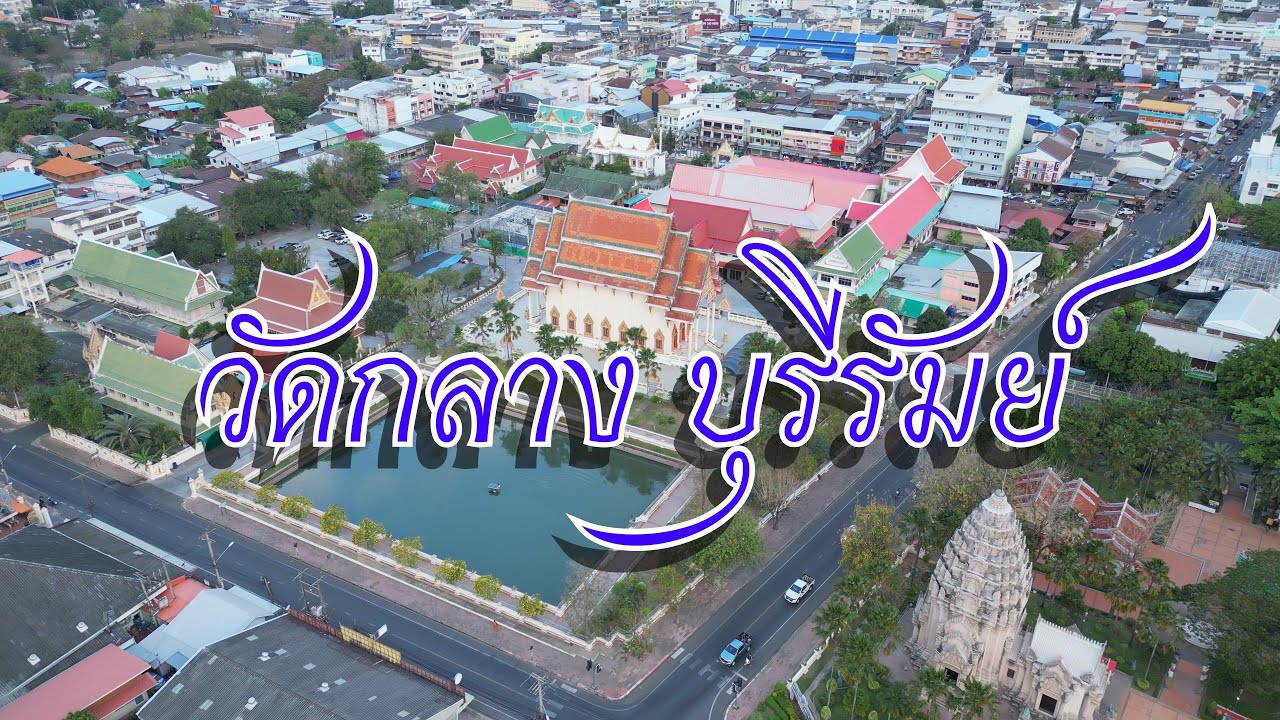
 Click to Access the Navigation Map GPS
Wat Klang Phra Aram Luang Map
Recommend

 Art, Culture and Heritage
 Historical Sites and Monuments(14)
 Landmarks and Memorials(2)
 Art, Craft Centres, Tradition(6)
 Museums(3)
 Educational Places
 Museum for Study(1)
Temple(74)
Museum for Study(1)
Temple(74)
 Other Sacred Sites(5)
 Suburban Living
 Village, Community(3)
 Nature and Wildlife
 National Parks and Marine Reserves(2)
 Mountain (Doi)(1)
 Dam, Reservoir, Lake(14)
 River, Canal(1)
 Bays and Beaches(1)
 Other natural attractions(2)
 Entertainment and Agricultural
 Animal camps and shows(1)
 Stadium(2)
 Farms, Parks and Ecotourism(2)
 Waterpark(1)


