
lovethailand home >Northeastern Travel Attractions >Buri Ram Travel Attractions >Muang Buri Ram >Nai Muang > Buriram Provincial Cultural Center
TL;DR: Buriram Provincial Cultural Center is located at Inside Buriram Rajabhat University, Jira Road, Nai Mueang Subdistrict, Mueang Buri Ram District, Buri Ram Province, open Monday–Sunday (Closed On Public Holidays), hours 08.30 – 16.30.
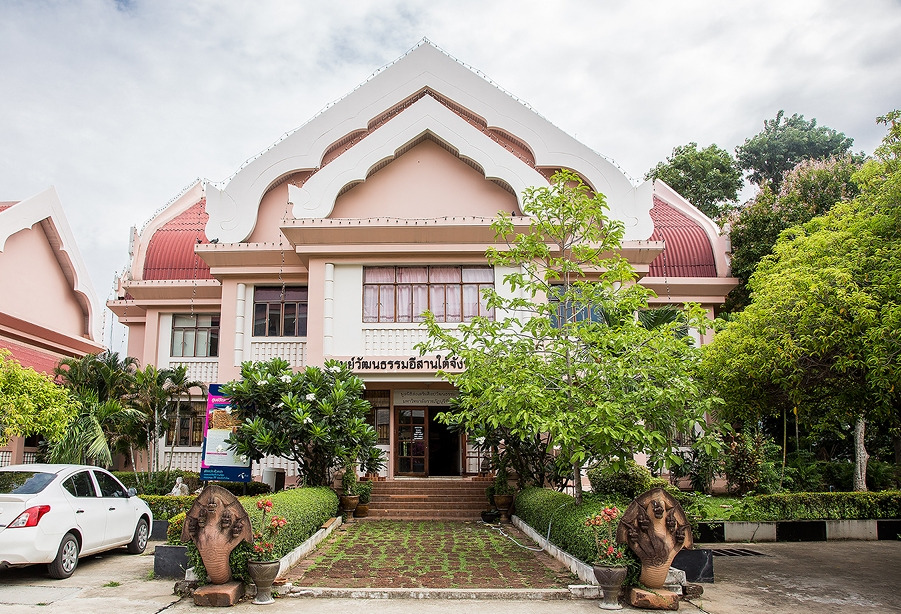
Buriram Provincial Cultural Center
Open Days: Monday–Sunday (Closed On Public Holidays)
Opening Hours: 08.30 – 16.30
Buriram Provincial Cultural Center, officially known as the Lower Northeastern Cultural Center in Buri Ram Province, is located inside Buriram Rajabhat University on Jira Road, Nai Mueang Subdistrict, Mueang Buri Ram District. It is one of the most important cultural learning centers in the province, collecting and displaying archaeological objects, historical artifacts, art objects, local tools, traditional textiles, ethnic heritage, and evidence related to the history and culture of Buri Ram and the lower northeastern region of Thailand. For travelers who want to understand Buri Ram beyond its famous Khmer temples, football stadium, racing circuit, and modern attractions, this cultural center is one of the best places to begin.
The center helps visitors see that Buri Ram is not only the home of Phanom Rung Historical Park or a destination for sports tourism. It is also a province with deep historical layers, ancient communities, Khmer cultural influence, volcanic landscapes, Ban Kruat ceramic kilns, local textiles, elephant-related traditions, and several ethnic groups that have shaped the identity of southern Isan over many generations. A visit here gives travelers the background needed to understand the province in a more meaningful way before continuing to archaeological sites, temples, local markets, or community attractions.
Buriram Provincial Cultural Center is suitable for general travelers, students, teachers, researchers, families, and anyone interested in local history. The displays do not present old objects as isolated items. Instead, they connect artifacts with geography, belief systems, craftsmanship, ethnic identity, and everyday life. Visitors can explore how people in the lower northeastern region lived, worked, believed, dressed, made tools, created ceramics, related to elephants, and interacted with surrounding cultural influences. This makes the center both a museum and a cultural gateway to Buri Ram.
The province officially opened the center on 16 April 1993. Its origin is linked to an academic seminar on the history and culture of the lower northeastern region held in 1982. After that, the idea of creating a provincial cultural hall was developed and later became the Lower Northeastern Cultural Center inside Buriram Rajabhat University. The main cultural hall is a two-storey building whose architectural form was inspired by Phanom Rung stone temple, blending ancient Khmer-style inspiration with modern design. This architectural character gives the building a strong sense of place and reflects Buri Ram’s identity as a province closely connected to Khmer heritage.
As soon as visitors enter the center, they can sense that the exhibitions are designed to explain the wider cultural region of southern Isan, not only Buri Ram in isolation. The lower northeastern region includes areas around the Mun River basin, the Khorat Plateau, and related cultural landscapes associated with provinces such as Nakhon Ratchasima, Buri Ram, Surin, Si Sa Ket, Ubon Ratchathani, and parts of Yasothon, Roi Et, Maha Sarakham, Khon Kaen, and Chaiyaphum. These areas contain dense ancient settlements, numerous archaeological remains, and strong traces of Khmer cultural influence seen in sanctuaries, inscriptions, sculptures, ceramics, and ritual objects.
The lower floor begins with exhibitions on geography and the physical environment of southern Isan. These displays explain the landscape of Buri Ram, volcanic origins, mineral resources, and the natural conditions that shaped human settlement. Understanding geography is essential because Buri Ram contains both plains and ancient volcanic areas. The land influenced where people lived, how communities developed, what resources they used, and how routes connected with neighboring regions. After seeing this section, visitors can appreciate places such as Phanom Rung, Khao Kradong, and other historical sites with a clearer sense of environmental context.
Another important section on the lower floor presents ancient communities in Buri Ram and archaeological objects from different periods, including prehistoric, Dvaravati, and Lopburi periods. These displays help visitors understand that Buri Ram has been inhabited and culturally active for a long time. Pottery, tools, religious objects, and other artifacts show how local societies developed, how they received external cultural influences, and how they created their own forms of material culture. Instead of seeing artifacts as silent objects, visitors can read them as evidence of settlement, belief, craftsmanship, and exchange.
The Ban Kruat ceramics section is one of the highlights of the center. Ban Kruat District in Buri Ram is known for ancient ceramic kilns, and the ceramics found in the area are approximately 800 to 1,200 years old. These objects are linked to the broader Khmer cultural sphere and demonstrate advanced ceramic production in the region. The center also displays a kiln model so visitors can understand the production process, not only the finished vessels. This section is especially valuable for travelers who plan to visit archaeological sites because it shows that Buri Ram was not only a religious landscape but also a place of skilled production and technology.
The exhibition on elephants and the Kui or Suai people is another major feature. It presents the deep connection between local communities and elephants in southern Isan. Visitors can see equipment used in elephant catching, ritual objects of traditional elephant handlers, symbolic items, and materials related to elephant culture. This section shows that elephants were not merely animals of labor or symbols of power. They were part of belief systems, ceremonies, local knowledge, occupations, and community identity. For many visitors, this display provides a deeper understanding of the relationship between humans and elephants in the lower northeastern region.
The elephant skeleton from Satuek District is one of the memorable objects in the center. It gives physical form to the story of elephants and local communities, especially the Kui or Suai people whose way of life has long been associated with elephants. For children, the display is visually understandable and helps connect natural history with cultural history. For adults, it reveals how local wisdom, ritual knowledge, and animal relationships were embedded in everyday life. This makes the elephant section one of the most accessible and meaningful parts of the museum.
On the upper floor, the exhibitions move deeper into belief, religion, rituals, textiles, and community life. A remarkable feature is the mural painting under the prang-like upper structure, depicting the twelve-month traditions or Heet Sip Song of southern Isan. These paintings show that local traditions are not isolated annual festivals. They are part of a complete cultural system connected to Buddhism, seasons, agriculture, family life, merit-making, and community relationships. Visitors can therefore see how ritual time shaped the social life of people in this region.
The religion and belief section displays stone Buddha images, bronze Buddha images, bronze deities, and other objects related to spiritual life in southern Isan. This section helps visitors understand the mixture of Buddhism, Brahman-Hindu influence, and local beliefs that shaped the cultural landscape. Such knowledge is useful when visiting Khmer sanctuaries such as Phanom Rung and Prasat Muang Tam, where religious symbolism is an essential part of the architecture. By seeing the objects in the cultural center first, travelers can later interpret temples and ancient sites with greater confidence.
The textile and way-of-life exhibition introduces the beauty and cultural meaning of local weaving. One of the important textile identities of Buri Ram is the red-bordered tube skirt known as pha sin tin daeng. The center also displays ikat patterns, ritual textiles, and cloth used in everyday life. Textiles in this context are not simply clothing. They are cultural language. Patterns, colors, techniques, and usage reflect identity, status, occasion, gender, age, and community values. This section allows travelers to appreciate local weaving beyond its visual beauty.
The exhibition on the four local ethnic groups—Thai Lao, Thai Khmer, Thai Suai, and Thai Khorat—is central to understanding Buri Ram’s identity. The province has long been shaped by cultural diversity. This diversity appears in language, food, dress, ritual, music, belief, and daily life. The center shows that Buri Ram’s cultural identity was not created by one single group, but by generations of interaction, coexistence, adaptation, and exchange among different communities. For foreign travelers, this is one of the clearest ways to understand the complexity of local Thai culture outside Bangkok.
The Buri Ram history room helps visitors follow the development of the province from ancient times to the formation of the historic town known as Mueang Pae and the later province of Buri Ram. The displays include stories linked to the movement of Somdet Chao Phraya Maha Kasatsuek, who later became King Rama I, and the historical development of the town. A low-relief ceramic artwork depicting the gathering of people and the establishment of Mueang Pae helps make local history more visible and easier to understand.
In addition to the main exhibitions, the center includes a cultural library and local information center. This area contains printed materials, documents, media, and information related to history, archaeology, arts, culture, traditions, literature, artifacts, and cultural objects. It is valuable for students, researchers, teachers, and writers who need a structured starting point for studying Buri Ram or southern Isan. The center therefore functions not only as a museum for sightseeing, but also as a research and learning facility.
The building itself deserves attention. Its design draws inspiration from Phanom Rung stone temple and adapts that inspiration into a modern cultural building. This makes the center visually connected to Buri Ram’s ancient Khmer heritage. Travelers who visit the center before going to Phanom Rung or Prasat Muang Tam will notice how the modern building echoes ancient architectural forms. Starting a trip here can make later visits to archaeological sites more meaningful.
For travelers with limited time, a visit of about 1 to 2 hours is enough to cover the main exhibitions. A practical route is to start on the lower floor with geography, ancient communities, artifacts, and ceramics, then continue to the upper floor for elephants and the Suai people, religious beliefs, textiles, ethnic groups, and Buri Ram history. Visitors who enjoy reading exhibition details should allow more time, as the center contains many layers of information that can connect directly to later travel around the province.
The center is also suitable for families. Children can easily engage with displays such as model village scenes, elephant-related objects, musical instruments, animal-catching tools, pottery, and the elephant skeleton. Adults can spend time reading historical and archaeological explanations in greater detail. For school groups, the center works especially well as a pre-field-trip learning space before visiting historical parks, temples, or local communities. It gives students a framework for understanding real places outside the museum.
Travelers who enjoy photography should follow the museum’s rules and behave respectfully. Objects should not be touched, flash photography should be avoided where restricted, and other visitors should not be disturbed. This is an educational and cultural space, so the best way to experience it is to walk slowly, read the information, observe details, and allow the objects to connect with the wider history of the province.
Because the center is located in Buri Ram city, it is easy to combine with other nearby attractions. King Rama I Monument is located close to the university area, while Buri Ram City Pillar Shrine, Buriram Castle, the botanical garden area, Chang Arena, and Khao Kradong Forest Park can be included in the same day depending on travel time. A good itinerary is to start the morning at the cultural center, continue to nearby city landmarks, enjoy lunch in town, and visit Buriram Castle or Khao Kradong in the afternoon.
Getting There is convenient by private car, taxi, or local ride-hailing service. From Buri Ram Railway Station, travelers can head toward Jira Road and continue to Buriram Rajabhat University. From Buri Ram Airport, use Highway 219 and Highway 288 toward the city, then connect to the main roads leading to the university. Travelers coming from Nakhon Ratchasima can use Highway 226 to reach Buri Ram city and then continue to Jira Road. Since the center is inside a university campus, visitors should park in designated areas and follow campus regulations.
For group visits, it is best to contact the Office of Arts and Culture at Buriram Rajabhat University in advance. Advance coordination helps make the visit more organized, especially for schools, universities, research groups, or official delegations. Groups can also plan specific learning themes, such as Ban Kruat ceramics, elephants and the Kui people, Khmer cultural influence, southern Isan textiles, or ethnic diversity in Buri Ram.
There is no admission fee, making the center accessible to the public, students, and travelers. This free admission is important because cultural knowledge should be available beyond classrooms and academic circles. The center allows residents and visitors to understand local history through real objects, structured exhibitions, and an environment designed for learning. It is one of the most useful cultural stops in Buri Ram city for anyone who wants context before exploring the province more widely.
The best time to visit is in the morning or early afternoon, allowing enough time to explore both floors without rushing. If travelers want to continue sightseeing afterward, they can visit King Rama I Monument, the City Pillar Shrine, Buriram Castle, or Khao Kradong Forest Park. This route gives visitors a balanced day of history, culture, food, city landmarks, and local scenery.
What makes Buriram Provincial Cultural Center especially valuable is that it connects many other travel experiences in the province. After seeing the Ban Kruat ceramics display, travelers can better understand the importance of ceramic kiln sites. After learning about Khmer cultural influence, Phanom Rung and Prasat Muang Tam become easier to interpret. After seeing the elephant and Suai exhibition, the relationship between humans and elephants in southern Isan becomes clearer. After seeing local textiles, visitors can appreciate Buri Ram fabrics with more cultural awareness.
The center is also a good introduction to Thai culture at a local level. Thailand is culturally diverse, and each region has its own history, language, beliefs, foodways, textiles, and artistic traditions. Southern Isan is strongly shaped by Thai Lao, Thai Khmer, Thai Suai, and Thai Khorat communities. The exhibitions make these identities easier to understand and show how cultural diversity has become part of Buri Ram’s character.
For foreign travelers, the center is particularly useful because it explains that Thai culture is not limited to central Thai traditions or Bangkok-based images. Southern Isan has strong connections with ancient Khmer civilization, local ethnic groups, weaving traditions, elephant culture, Buddhist and Brahman-Hindu influences, and community-based rituals. Visiting the center before going to Phanom Rung Historical Park gives international visitors the background needed to understand the meaning behind the architecture, sculptures, and sacred landscape of the region.
Travelers interested in cultural tourism should pay attention to small details throughout the exhibitions. A tool used in elephant catching can explain an entire knowledge system. A textile pattern can reveal identity and ritual meaning. A ceramic vessel can show technology and trade. A musical instrument can reflect local entertainment and ceremonial life. The strength of this cultural center lies not only in its large objects, but also in the many everyday items that quietly explain how people lived and thought.
Buriram Provincial Cultural Center is therefore one of the most meaningful cultural attractions in Buri Ram city. It is not only a place that stores ancient objects and art objects, but a place that explains the identity of the province in a broad and accessible way. It connects past and present, classroom learning and real travel, academic knowledge and visitor experience, local people and outside travelers. After visiting, travelers will not remember only the objects on display; they will see Buri Ram with deeper understanding as a land of history, craftsmanship, ethnic diversity, belief, and living cultural heritage.
| Name | Buriram Provincial Cultural Center / Lower Northeastern Cultural Center In Buri Ram Province |
| Location | Inside Buriram Rajabhat University, Jira Road, Nai Mueang Subdistrict, Mueang Buri Ram District, Buri Ram Province |
| Address | Buriram Rajabhat University, Nai Mueang Subdistrict, Mueang Buri Ram District, Buri Ram 31000, Thailand |
| Map Search | Buri Ram Northeast Culture Center, Buriram Rajabhat University |
| Highlights | A cultural learning center displaying archaeological objects, historical artifacts, Ban Kruat ceramics, southern Isan ways of life, elephants and the Suai people, local textiles, religion and belief, ethnic diversity, and Buri Ram history |
| History | The center grew from an academic seminar on the history and culture of southern Isan in 1982. It was officially opened by Buri Ram Province on 16 April 1993 |
| Name Origin | The name Lower Northeastern Cultural Center reflects its role as a learning center for the history, archaeology, local life, and culture of southern Isan, especially Buri Ram and related cultural communities |
| Distinctive Features | A two-storey cultural hall inspired by Phanom Rung stone temple architecture and adapted into a modern cultural building, with exhibitions on southern Isan history and culture |
| Travel Information | Accessible by private car, taxi, or local ride-hailing service. From Buri Ram Railway Station, head toward Jira Road and continue to Buriram Rajabhat University. From Buri Ram Airport, use Highway 219 and Highway 288 toward the city, then connect to the university area |
| Current Status | Open To The Public, Travelers, Students, Researchers, And Cultural Visitors |
| Open Days | Monday–Sunday (Closed On Public Holidays) |
| Opening Hours | 08.30 – 16.30 |
| Fees | No Admission Fee |
| Facilities | Parking Area, Restrooms, Cultural Library, Local Information Center, Souvenir Room, And Indoor Exhibition Areas |
| Main Areas / Zones | Lower Floor: Geography Of Southern Isan And Buri Ram Province Lower Floor: Ancient Communities And Artifacts From Prehistoric, Dvaravati, And Lopburi Periods Lower Floor: Ban Kruat Ancient Ceramics And Phanom Rung-Related Displays Lower Floor: Elephant Skeleton Display Related To The Suai People Of Satuek District Lower Floor: Cultural Library, Local Information Center, Souvenir Room, And Artifact Storage Area Upper Floor: Mural Paintings Of The Heet Sip Song Traditions Of Southern Isan Upper Floor: Elephants And The Suai People, Religion And Belief, Textiles And Local Life, Buri Ram Kilns And Ceramics, Four Local Ethnic Groups, And Buri Ram History |
| Caretaker | Office Of Arts And Culture, Buriram Rajabhat University |
| Main Contact Number | 044-611221 Ext. 7601, 088-595-2464 |
| culture@bru.ac.th | |
| Official Website / Official Page | cul.bru.ac.th And The Official Facebook Page Of The Lower Northeastern Cultural Center In Buri Ram Province |
| Nearby Tourist Attractions | 1. King Rama I Monument, About 1 km 2. Buriram City Pillar Shrine, About 1 km 3. Buriram Castle, About 3 km 4. Buriram Castle Botanical Garden, About 3 km 5. Khao Kradong Forest Park, About 6 km |
| Nearby Restaurants | 1. Osteria Italia, About 1 km, Tel. 044-634653 2. Bella Italia, About 1 km, Tel. 065-809-0098 3. London Steak Buriram, About 1 km, Tel. 044-115213 4. Lab To Daeng Buriram, About 1 km, Tel. 063-359-0605 5. Slainte Bar & Restaurant, About 1 km, Tel. 065-230-2786 |
| Nearby Accommodations | 1. La Viva Hotel, About 1 km, Tel. 044-613979 2. Best Western Royal Buriram Hotel, About 1 km, Tel. 044-666600 3. Buritel Hotel, About 1 km, Tel. 044-612688 4. Tulip Boutique Hotel Buriram, About 1 km, Tel. 044-612032 5. B2 Buriram Boutique And Budget Hotel, About 2 km, Tel. 044-110866 |
Frequently Asked Questions (FAQ)
Q: Where is Buriram Provincial Cultural Center located?
A: Buriram Provincial Cultural Center, also known as the Lower Northeastern Cultural Center, is located inside Buriram Rajabhat University on Jira Road, Nai Mueang Subdistrict, Mueang Buri Ram District, Buri Ram Province.
Q: What can visitors see inside Buriram Provincial Cultural Center?
A: Visitors can see archaeological objects, historical artifacts, Ban Kruat ceramics, exhibitions on southern Isan geography, ancient communities, elephants and the Suai people, religion and belief, local textiles, four ethnic groups, and the history of Buri Ram.
Q: What are the opening days and hours?
A: The center is open Monday to Sunday from 08.30 to 16.30 and is closed on public holidays.
Q: Is there an admission fee?
A: No. The center does not charge an admission fee.
Q: How long should visitors spend at the center?
A: Visitors should allow about 1 to 2 hours to explore both floors. Those who want to read the exhibition details carefully should allow more time.
Q: Who should visit Buriram Provincial Cultural Center?
A: The center is suitable for history lovers, cultural travelers, families, students, researchers, and visitors who want to understand Buri Ram before exploring Phanom Rung Historical Park or other important sites in the province.
Q: Should group visitors contact the center in advance?
A: Yes. School groups, university groups, research groups, and official delegations should contact the Office of Arts and Culture at Buriram Rajabhat University in advance to organize the visit properly.
Q: What nearby attractions can visitors combine with the center?
A: Nearby attractions include King Rama I Monument, Buriram City Pillar Shrine, Buriram Castle, Buriram Castle Botanical Garden, and Khao Kradong Forest Park.
Tel : 044611221
 Tel : 044611221
 Category: ●Art, Culture and Heritage
 Group: ●Art, Craft Centres, Tradition
Last Update : 3 MonthAgo
 Last Update : 3 MonthAgo
 Click to Access the Navigation Map GPS
Buriram Provincial Cultural Center Map
Recommend

 Historical Sites and Monuments(14)
 Landmarks and Memorials(2)
Art, Craft Centres, Tradition(6)
Landmarks and Memorials(2)
Art, Craft Centres, Tradition(6)
 Museums(3)
 Educational Places
 Museum for Study(1)
 Places of Worship
 Temple(74)
 Other Sacred Sites(5)
 Suburban Living
 Village, Community(3)
 Nature and Wildlife
 National Parks and Marine Reserves(2)
 Mountain (Doi)(1)
 Dam, Reservoir, Lake(14)
 River, Canal(1)
 Bays and Beaches(1)
 Other natural attractions(2)
 Entertainment and Agricultural
 Animal camps and shows(1)
 Stadium(2)
 Farms, Parks and Ecotourism(2)
 Waterpark(1)


