
lovethailand home >Northeastern Travel Attractions >Buri Ram Travel Attractions >Ban Kruat >Non Charoen > Ban Kruat Ancient Kiln Sites
TL;DR: Ban Kruat Ancient Kiln Sites is located at Ban Kruat Wittayakhan School Around Kilometer Markers 21 – 22 On Highway 2075, Ban Kruat District, Buriram Province, With Related Kiln, open Monday – Friday, hours 08.30 – 16.30.

Ban Kruat Ancient Kiln Sites
Open Days: Monday – Friday
Opening Hours: 08.30 – 16.30
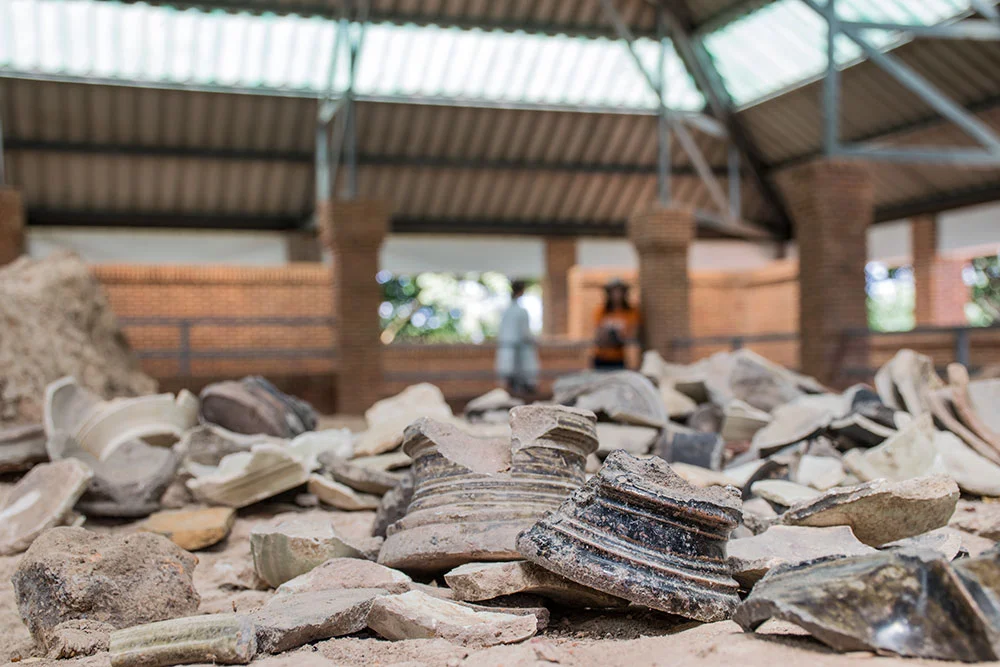
Ban Kruat Ancient Kiln Sites in Buriram Province are among the most important Khmer ceramic production areas in lower northeastern Thailand. The main learning point is at Ban Kruat Wittayakhan School, with related kiln sites such as Sawai Kiln and Nai Chian Kiln located nearby. These ancient kilns date broadly from the 14th to 19th Buddhist centuries, with key production activity associated with the 15th to 18th Buddhist centuries. The area produced Khmer stoneware, brown-glazed and green-glazed ceramics, bowls, jars, pots, and other vessels that were distributed to ancient cities across the Khmer cultural network.
Ban Kruat Ancient Kiln Sites are located in Ban Kruat District, Buriram Province. The main cultural learning center is inside Ban Kruat Wittayakhan School, around kilometer markers 21 – 22 on Highway 2075, about 66 km from Buriram city. Archaeologists have surveyed and found numerous ancient kilns and ceramic remains in the district, making Ban Kruat one of the most important centers of Khmer ceramic production in lower northeastern Thailand.
The significance of Ban Kruat Ancient Kiln Sites does not lie only in the discovery of old kilns. The area reveals evidence of large-scale ceramic production, including stoneware, glazed ceramics, bowls, jars, pots, kiln supports, kiln wall fragments, and broken vessels from the firing process. These discoveries show that Ban Kruat was not a minor rural settlement in the past. It was a production zone with technical knowledge, labor organization, and exchange networks connected to ancient towns in the Khmer cultural sphere.
The kilns and ceramics from Ban Kruat are generally dated to around the 14th to 19th Buddhist centuries. Fine Arts Department studies place the main period of Khmer ceramic kiln activity in the area around the 15th to 18th Buddhist centuries. This was a period when Khmer cultural influence was strong across lower northeastern Thailand. The large number of kiln sites found in Ban Kruat indicates that the area played a major role in the production and distribution of ceramic goods.
Ancient kiln sites in Ban Kruat are often located on large natural earthen mounds with round or oval forms. Around these mounds, archaeologists commonly find stoneware fragments, green and brown glazed ceramic sherds, small clay kiln supports, and large fired-clay pieces believed to be parts of kiln walls. These traces help distinguish ceramic kiln sites from iron-smelting sites, where slag, tuyères, and other metallurgical remains are normally found.
One important type of evidence is the small clay support known in Thai as kee met. These small hand-shaped clay balls, often 2 – 5 cm in diameter, were placed under or between vessels during firing. They created space between ceramic pieces and prevented glaze from fusing vessels together. The presence of many kiln supports shows that Ban Kruat ceramics were produced in an organized way, not simply as household pottery on a small scale.
Ban Kruat ceramics are widely known as Khmer ceramics or Buriram ceramics. Many pieces are high-fired stoneware with brown or green glaze. These glazes were created through mineral mixtures and firing conditions inside the kiln. The finished ceramics were strong, practical, and visually distinctive. They were used for storing water, food, dry goods, liquids, ritual materials, and everyday household items.
The Ban Kruat ceramic industry was large and extended into surrounding areas. Archaeological evidence shows that kiln activity was not limited to one kiln or one village. It formed a network of production sites that shared clay sources, fuel, labor, technical knowledge, and firing methods. Ban Kruat ceramic products have been found at several ancient cities and Khmer-related sites across Thailand, indicating a wider exchange system.
The Fine Arts Department excavated and studied 2 major ancient kilns: Sawai Kiln and Nai Chian Kiln. Sawai Kiln is about 5 km from Ban Kruat town, while Nai Chian Kiln is about 10 km away. These 2 sites are important examples of excavated kiln remains where visitors can understand the structure of ancient ceramic production more clearly. Roofed protective structures at some kiln sites also help preserve the remains and make them easier to study.
Sawai Kiln is a key site for understanding the physical structure of an ancient Khmer ceramic kiln in Ban Kruat. Nai Chian Kiln provides another important point of comparison, confirming that ceramic production in Ban Kruat was distributed across several locations. Visiting both sites helps travelers see the wider production network rather than thinking of Ban Kruat ceramics as the product of a single kiln.
Examples of excavated ceramics can be viewed at the Ban Kruat District Cultural Center inside Ban Kruat Wittayakhan School, often referred to in older local descriptions as the Ban Kruat Art Hall. The center displays archaeological objects, especially glazed pottery from Ban Kruat kilns. It is a useful starting point because visitors can first see the ceramic forms, glaze colors, and variety of products before visiting the actual kiln sites in the surrounding area.
Ban Kruat Wittayakhan School has played an important role in preserving and presenting the history of Ban Kruat ceramics. Because the cultural center is located within a school, local heritage is directly connected with education. Students can learn from real archaeological objects, while visitors can see how a local community helps protect the material remains of its own past.
Ban Kruat ceramics are valuable both artistically and technologically. Some vessels have simple forms designed for practical daily use, while others show carefully controlled glaze and elegant shapes. This variety suggests that ancient producers understood different needs and markets. Some vessels may have been used in households, some in rituals, some as trade goods, and some as valued objects within ancient communities.
Producing high-fired stoneware required knowledge of clay selection, clay preparation, shaping, drying, glazing, kiln loading, temperature control, and firing atmosphere. A successful firing was not easy. If temperature, airflow, or stacking was wrong, vessels could crack, warp, fuse together, or become unusable. The Ban Kruat kiln sites therefore preserve evidence of advanced craft knowledge and long technical experience.
Ceramic sherds found at kiln sites are extremely important. Some are broken pieces from failed firings. Some show incomplete glaze. Some preserve marks from clay supports. To a casual visitor they may look like small fragments, but to archaeologists they provide information about firing technology, vessel types, production sequences, kiln dates, and connections with other ceramic production areas.
Ban Kruat Ancient Kiln Sites also expand the way visitors understand Khmer civilization in lower northeastern Thailand. Many people know Khmer culture through stone temples such as Phanom Rung, Prasat Mueang Tam, and Phimai, but Ban Kruat reveals another side of that civilization: production, technology, trade, and everyday material culture. The kilns show how people made containers, stored goods, traded products, and supported daily life beyond monumental temple architecture.
When connected with Ban Kruat Stone Quarry, the ancient kiln sites make Ban Kruat District especially important. The stone quarry shows how sandstone for temple construction was extracted and prepared, while the kiln sites show how ceramics were produced. Together, they reveal Ban Kruat as a production landscape within the Khmer cultural world, not merely a transit area between larger monuments.
For cultural travelers, the kiln sites are ideal for a deeper Buriram itinerary. Visitors can begin at the Ban Kruat District Cultural Center to view ceramic examples, then continue to Sawai Kiln and Nai Chian Kiln, and finally connect with Ban Kruat Stone Quarry or Khmer temples in the district. This route shows production of ceramics, quarrying of stone, and construction of religious sites within one region.
To understand Ban Kruat ceramics more fully, visitors should observe vessel shapes, glaze colors, firing marks, and possible functions. Bowls may relate to eating and serving. Jars and pots may relate to storage. Some vessel forms may have been used in ritual or trade. Looking at ceramics through function helps turn them from display objects into evidence of real ancient lives.
The kiln sites are also regionally important because Ban Kruat ceramic products have been found in many ancient settlements associated with Khmer culture. This distribution shows exchange networks and movement of goods. A single vessel can therefore reveal information about production origin, trade route, cultural preference, and relationships among ancient towns.
Conservation of ancient kilns is essential because kiln remains are usually more fragile than stone monuments. They are made of fired earth, clay, and archaeological layers that can be damaged easily by walking, digging, or moving fragments. Visitors should stay on appropriate paths, avoid collecting sherds, avoid touching fragile materials unnecessarily, and respect the school and local community that help care for the site.
A typical visit may take 45 minutes to 1 hour at the cultural center. If travelers also visit Sawai Kiln and Nai Chian Kiln, they should allow about half a day. A slower visit gives time to compare the displayed ceramics with the actual production sites and understand how clay, fire, skill, and labor created Ban Kruat ceramics.
Getting There is easiest by private car, rental car, or hired local vehicle. From Buriram city, travel toward Prakhon Chai and Ban Kruat District, then continue on Highway 2075 to Ban Kruat Wittayakhan School around kilometer markers 21 – 22. From there, travelers can continue to Sawai Kiln, Nai Chian Kiln, Ban Kruat Stone Quarry, and other nearby Khmer heritage sites. Because the kiln sites are spread across different points, private transport is the most practical option.
A good route begins at Ban Kruat District Cultural Center, where visitors can learn about the ceramic forms and history. Then continue to Sawai Kiln and Nai Chian Kiln to see the production sites. With more time, add Ban Kruat Stone Quarry, Prasat Thong or Prasat Ta Jia, Prasat Thamo, and Prasat Nong Hong. This itinerary gives a rounded picture of Ban Kruat as a district of kilns, stone resources, Khmer temples, and borderland heritage.
During the annual Ban Kruat Thousand-Year Pottery Festival, the district brings its ceramic heritage into contemporary cultural life. The event often includes exhibitions, cultural performances, and activities that celebrate local identity. This shows that Ban Kruat ceramics are not only archaeological objects but also a living part of the district’s cultural memory.
Ban Kruat Ancient Kiln Sites therefore reveal a different but essential side of Khmer civilization. They are not grand stone temples, but they show the production base that supported ancient communities, trade, and everyday life. The kilns bring together clay, water, fire, skill, labor, and exchange. For travelers who want to understand Buriram deeply, this site is one of the most important places to see.
In the end, Ban Kruat Ancient Kiln Sites turn broken ceramic fragments into historical evidence. Every sherd, kiln support, fired-clay wall fragment, and excavated kiln preserves the technical ability of ancient people. If stone temples represent faith and royal power, Ban Kruat kilns represent labor, knowledge, economy, and the material culture that sustained ancient Khmer society in lower northeastern Thailand.
| Name | Ban Kruat Ancient Kiln Sites |
| Alternative Names | Ban Kruat Ancient Ceramic Kilns, Buriram Ceramic Kiln Sites, Ban Kruat Khmer Kilns |
| Location | Ban Kruat Wittayakhan School Around Kilometer Markers 21 – 22 On Highway 2075, Ban Kruat District, Buriram Province, With Related Kiln Sites Such As Sawai Kiln And Nai Chian Kiln Nearby |
| Address | Ban Kruat Wittayakhan School, 144 Moo 4, Prasat Subdistrict, Ban Kruat District, Buriram 31180, Thailand |
| Coordinates | 14.445506, 103.158907 |
| Highlights | Major Khmer Ceramic Production Area With Ancient Kilns, Stoneware, Brown-Glazed Ceramics, Green-Glazed Ceramics, Kiln Supports, Bowls, Jars, Pots, And Ban Kruat Ceramic Displays |
| History | Broadly Dated To The 14th – 19th Buddhist Centuries, With Major Khmer Ceramic Production Activity Associated With The 15th – 18th Buddhist Centuries |
| Significance | Evidence Of Large-Scale Khmer Ceramic Production In Ban Kruat District, Supplying Vessels For Ancient Communities, Towns, And Regional Exchange Networks |
| Distinctive Features | Ancient Kilns On Earthen Mounds, Stoneware Sherds, Kiln Supports, Fired-Clay Kiln Wall Fragments, And High-Fired Glazed Ceramic Production |
| Main Areas / Zones | 1. Ban Kruat District Cultural Center At Ban Kruat Wittayakhan School 2. Ban Kruat Ceramic Display Area 3. Sawai Kiln 4. Nai Chian Kiln 5. Scattered Ancient Kiln Areas In Ban Kruat District 6. Kiln Support And Ceramic Sherd Learning Points 7. Connection Route To Ban Kruat Stone Quarry 8. Ban Kruat Thousand-Year Pottery Festival Area |
| Key Evidence | Ancient Kiln Remains, Khmer Ceramic Sherds, Brown-Glazed Vessels, Green-Glazed Vessels, Kiln Supports, Fired-Clay Kiln Wall Fragments, Bowls, Jars, Pots, And Ban Kruat Pottery Displays |
| Travel Information | Located Around Kilometer Markers 21 – 22 On Highway 2075, About 66 Km From Buriram City. Best Reached By Private Car, Rental Car, Or Hired Local Vehicle. |
| Current Status | Archaeological, Ceramic, And Local History Learning Site In Ban Kruat District |
| Open Days | Monday – Friday |
| Opening Hours | 08.30 – 16.30 |
| Fees | No Admission Fee |
| Facilities | School-Based Display Area, Ceramic Learning Center, Parking Area, Some Information Displays, And Local Shops In Ban Kruat Town |
| Caretaker | Ban Kruat District Cultural Center, Ban Kruat Wittayakhan School, Together With Local Authorities And The Fine Arts Department For Archaeological Information |
| Main Contact Number | Ban Kruat Wittayakhan School, Tel. 044-679-098 Ban Kruat District Cultural Center, Tel. 092-276-9979, 065-265-5191 Fine Arts Office 10 Nakhon Ratchasima, Tel. 044-471-518 |
| Nearby Tourist Attractions | 1. Ban Kruat District Cultural Center, Ban Kruat Wittayakhan School, About 0 Km 2. Sawai Kiln, About 5 Km 3. Nai Chian Kiln, About 10 Km 4. Ban Kruat Stone Quarry Site, About 12 Km 5. Prasat Thong Or Prasat Ta Jia, About 9 Km 6. Prasat Thamo, About 18 Km 7. Prasat Nong Hong, About 35 Km 8. Prasat Mueang Tam, About 36 Km 9. Phanom Rung Historical Park, About 40 Km |
| Nearby Restaurants | 1. RINTR Plus Cafe Bar Restaurant Ban Kruat, About 2 Km, Tel. 081-966-1766 2. Coco Cool Cafe’ Ban Kruat, About 2 Km, Tel. 064-778-7799 3. PunThai Coffee 2445 Road Ban Kruat, About 3 Km, Tel. 098-282-1651 4. First Da & Ped Ban Kruat, About 4 Km, Tel. 098-597-1641 5. SMiNi Cafe Ban Kruat, About 3 Km |
| Nearby Accommodations | 1. Wanasin Resort Ban Kruat, About 2 Km, Tel. 044-679-295, 080-354-6956 2. Ban Kruat Garden Resort, About 3 Km, Tel. 044-679-263, 086-250-4186 3. King Kruat Resort Ban Kruat, About 4 Km, Tel. 089-846-1177 4. Ruean Mai Resort, Prasat Subdistrict, About 8 Km, Tel. 083-374-2046 5. Phromsuk Resort, Prasat Subdistrict, About 8 Km, Tel. 081-955-5025 6. Sutirak Resort, Prasat Subdistrict, About 9 Km, Tel. 084-958-8740 |
Frequently Asked Questions (FAQ)
Q: Where Are Ban Kruat Ancient Kiln Sites Located?
A: They are centered around Ban Kruat Wittayakhan School in Ban Kruat District, Buriram Province, around kilometer markers 21 – 22 on Highway 2075, with related kiln sites such as Sawai Kiln and Nai Chian Kiln nearby.
Q: Why Are Ban Kruat Ancient Kiln Sites Important?
A: They are important because they reveal large-scale Khmer ceramic production in lower northeastern Thailand, including stoneware, glazed pottery, and vessels distributed through ancient exchange networks.
Q: How Old Are Ban Kruat Ceramics?
A: The ancient kilns and ceramics are broadly dated to around the 14th – 19th Buddhist centuries, with major Khmer ceramic production associated with the 15th – 18th Buddhist centuries.
Q: What Are Sawai Kiln And Nai Chian Kiln?
A: Sawai Kiln and Nai Chian Kiln are 2 important ancient kiln sites excavated and studied by the Fine Arts Department. They are located about 5 km and 10 km from Ban Kruat town respectively.
Q: Where Can Visitors See Ban Kruat Ceramic Finds?
A: Visitors can see examples of Ban Kruat pottery and glazed ceramics at the Ban Kruat District Cultural Center inside Ban Kruat Wittayakhan School.
Q: What Are The Opening Hours?
A: The Ban Kruat District Cultural Center is open Monday to Friday from 08.30 to 16.30 and does not charge an admission fee.
Q: What Nearby Places Can Be Visited Together With The Kiln Sites?
A: Nearby places include Sawai Kiln, Nai Chian Kiln, Ban Kruat Stone Quarry Site, Prasat Thong, Prasat Thamo, Prasat Nong Hong, Prasat Mueang Tam, and Phanom Rung Historical Park.
Q: What Should Visitors Be Careful About?
A: Visitors should dress respectfully, avoid collecting ceramic fragments, avoid digging or disturbing kiln remains, and follow the rules of the school, local community, and archaeological site areas.
 Category: ●Art, Culture and Heritage
 Group: ●Historical Sites and Monuments
Last Update : 4 MonthAgo
 Last Update : 4 MonthAgo
 Click to Access the Navigation Map GPS
Ban Kruat Ancient Kiln Sites Map
Recommend
 Historical Sites and Monuments(14)
 Landmarks and Memorials(2)
 Art, Craft Centres, Tradition(6)
 Museums(3)
 Educational Places
 Museum for Study(1)
 Places of Worship
 Temple(74)
 Other Sacred Sites(5)
 Research and Development
 Royal Project(1)
 Suburban Living
 Village, Community(3)
 Nature and Wildlife
 National Parks and Marine Reserves(2)
 Mountain (Doi)(1)
 Dam, Reservoir, Lake(14)
 River, Canal(1)
 Bays and Beaches(1)
 Other natural attractions(2)
 Entertainment and Agricultural
 Animal camps and shows(1)
 Stadium(2)
 Farms, Parks and Ecotourism(2)
 Waterpark(2)
 Travel Articles, Recipes
 Travel Review, Food Review(1)


