
lovethailand home >Northeastern Travel Attractions >Buri Ram Travel Attractions >Ban Kruat >Prasat > Ban Kruat Stone Quarry Site
TL;DR: Ban Kruat Stone Quarry Site is located at Around Wat Pa Tham Silaram Or Wat Pa Lan Hin Tat, And Sai Tri 3 – Sai Tri 4 Villages, Prasat Subdistrict, Ban Kruat District, Buriram, open Daily, hours 08.00 – 17.00.

Ban Kruat Stone Quarry Site
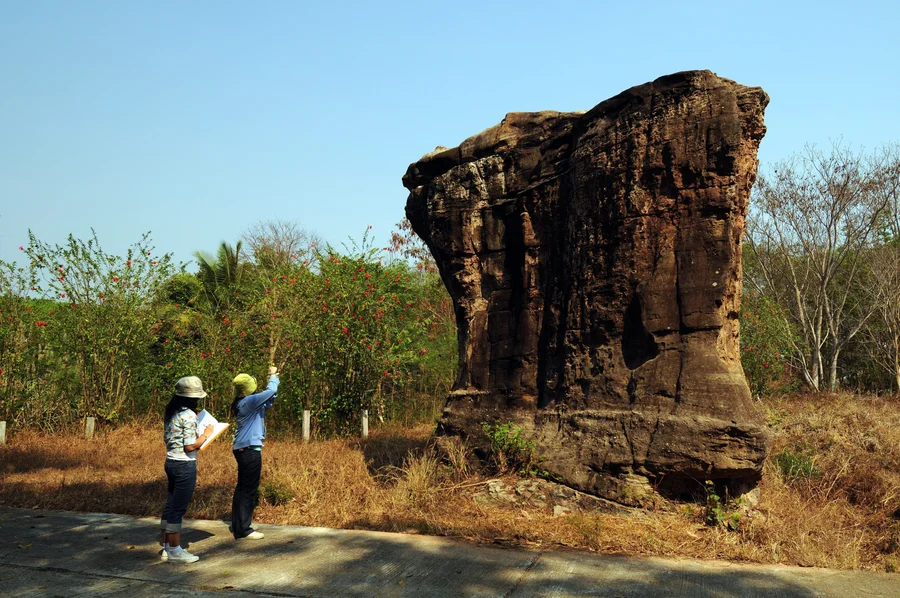
Open Days: Daily
Opening Hours: 08.00 – 17.00
Ban Kruat Stone Quarry Site in Buriram Province is a major ancient sandstone quarry in Ban Kruat District, located around Wat Pa Tham Silaram, also known locally as Wat Pa Lan Hin Tat, and the Sai Tri 3 – Sai Tri 4 villages in Prasat Subdistrict near the Thai – Cambodian border. The site preserves visible traces of ancient Khmer stone-working techniques, including rows of chisel holes, long quarrying grooves, separated sandstone blocks, and rectangular stone slabs. It is one of the most important places for understanding where the sandstone used in major Khmer sanctuaries of lower northeastern Thailand, including Phanom Rung and Prasat Mueang Tam, may have originated.
Ban Kruat Stone Quarry Site is located in Ban Kruat District, Buriram Province, around Wat Pa Tham Silaram, a site also known in local tourism sources as Wat Pa Lan Hin Tat, and the Sai Tri 3 and Sai Tri 4 villages of Prasat Subdistrict. The area lies close to the Thai – Cambodian border, about 7 km from Ban Kruat town. Travelers can reach the site by following the Ban Kruat – Ta Phraya route on Highway 224 around kilometer marker 146, then turning off the main road for about 3 km on a concrete road leading toward the quarry and temple area.
This ancient quarry is one of the most important archaeological landscapes in Buriram because it reveals the beginning of the Khmer stone-building process. Many travelers visit Phanom Rung and Prasat Mueang Tam to admire the completed sanctuaries, but Ban Kruat Stone Quarry shows the earlier stage: where the sandstone was selected, cut, shaped, lifted, and prepared before being transported to construction sites. A visit here transforms the way travelers understand Khmer temples. The stone blocks seen in elegant lintels, door frames, pathways, and walls once began as natural sandstone in a quarry landscape like this.
The quarry area covers more than 4,600 rai around Khao Kloi and Khao Krachiao. The landscape consists of sandstone hills, broad stone platforms, and scattered stone blocks of different sizes. Some rocks remain attached to the natural stone bed, while others show clear cutting grooves. In several areas, rectangular sandstone blocks can still be seen where they were cut or lifted but never removed. The site therefore feels like an open-air workshop of the ancient Khmer world, preserving real traces of stone extraction rather than reconstructed displays.
The most striking evidence is the long rows of chisel marks on the stone surface. These marks show where ancient craftsmen prepared the rock for splitting. Some stones display deep grooves where the rock was cut into long lines before being divided into smaller blocks. Others show rectangular forms that had already been separated from the bedrock. These traces make it clear that Khmer builders did not quarry stone randomly. They used a planned process of measuring, marking, grooving, splitting, trimming, and preparing blocks for transport.
The quarrying process likely began with the selection of a suitable rock face. Craftsmen then leveled or prepared the surface, marked the desired block size, and cut long grooves with pointed tools. Wedges or chisels were then used to separate the block from the rock bed. Once the stone reached the desired size, the underside was detached and the block was shaped into a rectangular form. This required knowledge of stone quality, tool control, labor organization, and careful planning, because each block was heavy and had to fit a specific function in a temple structure.
The sandstone from Ban Kruat was suitable for Khmer architecture because it was strong, dense, and could be shaped into regular blocks. In Khmer temples, stone blocks had to fit closely together without depending on modern mortar. For this reason, the flatness and accuracy of each block were extremely important. Ancient craftsmen had to cut and polish the stone carefully before it could be used in walls, platforms, door frames, columns, lintels, or carved decorative elements.
Small holes found on some stones are also important. They may have helped ancient workers grip, lift, hold, or adjust the stone during cutting, polishing, or assembly. Large sandstone blocks could not be moved easily by human strength alone. Grooves, holes, and prepared surfaces allowed the craftsmen to control each block more effectively during extraction, finishing, and transportation.
The relationship between Ban Kruat Stone Quarry and Phanom Rung is especially meaningful. Phanom Rung Historical Park is built largely with sandstone, and the Ban Kruat quarry area lies within a plausible cultural and geographic route connected to the Phanom Rung region. After blocks were cut, they may have been moved down slopes toward natural waterways or seasonal streams, then transported by labor, animals, sledges, carts, rafts, or other traditional systems. The construction of a Khmer sanctuary therefore required not only religious devotion and skilled carving, but also quarry workers, transport laborers, engineers, organizers, and a large support network.
Compared with finished sanctuaries such as Phanom Rung and Prasat Mueang Tam, Ban Kruat Stone Quarry represents the origin point of Khmer architecture. Phanom Rung and Mueang Tam show stone after it became sacred architecture. The quarry shows stone before it became a temple. Visiting all these places together gives travelers a complete understanding of the process: natural sandstone, quarrying, shaping, transporting, building, and finally carving sacred imagery into temple architecture.
The atmosphere of the site is quiet, shaded, and natural. Visitors can walk along the stone platforms and observe quarrying marks, cut grooves, separated blocks, and natural rock surfaces. Some parts are shaded by trees, making the area comfortable for slow exploration. However, the ground can be uneven, and stone surfaces may be rough or slippery after rain. Comfortable walking shoes are strongly recommended.
Ban Kruat Stone Quarry is also valuable as a geological and landscape site. Khao Kloi and Khao Krachiao reveal the natural sandstone terrain of lower northeastern Thailand. Visitors can observe how stone layers, rock platforms, natural slopes, drainage channels, and vegetation interact in one landscape. The site is therefore meaningful not only for archaeology, but also for geology, ancient technology, craft history, and environmental learning.
Historically, the quarry shows that Khmer temple construction required a highly organized resource system. Builders had to know where good stone could be found, how to cut it, how many workers were needed, how the stone would be moved, and which blocks would be used for which parts of the temple. A major Khmer sanctuary was not only an artistic and religious achievement. It was also a logistical achievement involving material selection, labor management, transport planning, and advanced craftsmanship.
For travelers interested in Khmer art, visiting Ban Kruat Stone Quarry changes the way they see temples. When they later stand before a lintel, column, doorway, or sandstone pathway at Phanom Rung or Prasat Mueang Tam, they can imagine that the stone may have once been part of a natural rock bed in a quarry landscape like this. It was cut, shaped, moved, polished, assembled, and finally transformed into sacred architecture. This awareness adds human labor and technical intelligence to the beauty of Khmer art.
The entrance area is associated with Wat Pa Lan Hin Tat, or Wat Pa Tham Silaram in some travel descriptions. The temple and nearby community help maintain a calm, respectful atmosphere around the site. Visitors should dress modestly, speak quietly, and follow local guidance. Because the area is close to the Thai – Cambodian border and forested land, visitors should stay on recommended routes and avoid driving or walking beyond the advised area without local guidance.
Important zones to observe include the natural sandstone platforms, rows of chisel marks, long cutting grooves, rectangular stone blocks, exposed stone faces, possible natural drainage or transport-related slopes, and groups of large sandstone blocks. Walking slowly and comparing these different traces helps visitors understand the sequence of quarrying more clearly.
The best time to visit is in the morning or late afternoon. Softer side light makes the chisel marks, grooves, and stone textures easier to see and photograph. Midday visits are possible, but visitors should bring drinking water, a hat, and shoes suitable for walking on uneven rock. Avoid stepping on wet stone surfaces after rain, as they can be slippery.
Getting There is easiest by private car, rental car, or hired local vehicle. From Ban Kruat town, follow the Ban Kruat – Ta Phraya route on Highway 224 to around kilometer marker 146, then turn off the main road for about 3 km along a concrete road. From Buriram city, travelers can drive toward Prakhon Chai and continue to Ban Kruat, or combine the quarry with Phanom Rung, Prasat Mueang Tam, Prasat Thong, and other Khmer heritage sites in southern Buriram.
The site is suitable for history-focused travelers, students, archaeology enthusiasts, geology learners, and anyone who wants to understand how Khmer temples were made. A normal visit may take 45 minutes to 1 hour, but travelers who want to study cutting marks, take photographs, or listen to local explanations should allow more time.
Visitors should not scratch the rocks, hit the stones with hard objects, move stone fragments, collect pieces of sandstone, or leave waste in the forested area. Every stone and every cutting trace is archaeological evidence. If stones are moved or damaged, part of the historical information is lost.
In the wider travel context of Buriram, Ban Kruat Stone Quarry completes the story of Khmer stone temples. Many visitors know the finished masterpieces of Phanom Rung and Prasat Mueang Tam, but fewer have seen the source landscape where the stone was extracted. This quarry allows travelers to follow the story from natural rock to sacred architecture, making the heritage route richer and more complete.
Ban Kruat Stone Quarry is therefore not simply a stone field in a forest. It is an open-air archive of ancient Khmer craftsmanship. The chisel marks, grooves, cut blocks, and unfinished stone forms preserve the labor, intelligence, and technical skill of unnamed craftsmen who helped create some of the greatest stone sanctuaries in northeastern Thailand. Walking through this site is a way to see the hidden foundation of Khmer architecture before it became a temple.
| Name | Ban Kruat Stone Quarry Site |
| Alternative Names | Ban Kruat Ancient Stone Quarry, Ban Kruat Sandstone Quarry, Lan Hin Tat Ban Kruat |
| Location | Around Wat Pa Tham Silaram Or Wat Pa Lan Hin Tat, And Sai Tri 3 – Sai Tri 4 Villages, Prasat Subdistrict, Ban Kruat District, Buriram Province |
| Address | Sai Tri 3 And Sai Tri 4 Villages, Prasat Subdistrict, Ban Kruat District, Buriram 31180, Thailand |
| Highlights | A Major Ancient Sandstone Quarry With Rows Of Chisel Marks, Cutting Grooves, Separated Stone Blocks, And Rectangular Sandstone Slabs Related To Khmer Temple Construction |
| History | Believed To Have Been Used Around The 10th To 13th Centuries, Corresponding To The 15th – 18th Buddhist Centuries, During The Ancient Khmer Cultural Period |
| Area | More Than 4,600 Rai Around Khao Kloi And Khao Krachiao Near The Thai – Cambodian Border |
| Significance | A Key Source Landscape For Understanding The Sandstone Used In Major Khmer Sanctuaries In Lower Northeastern Thailand, Including Phanom Rung And Prasat Mueang Tam |
| Distinctive Features | Sandstone Hills And Rock Platforms With Visible Traces Of Quarrying, Grooving, Cutting, Splitting, Lifting, And Preparing Rectangular Blocks |
| Main Areas / Zones | 1. Natural Sandstone Platforms 2. Rows Of Chisel Marks 3. Long Cutting Grooves 4. Rectangular Sandstone Blocks 5. Khao Kloi Area 6. Khao Krachiao Area 7. Walking Route For Quarry Traces And Nature 8. Wat Pa Tham Silaram Or Wat Pa Lan Hin Tat Area |
| Key Evidence | Chisel Holes, Stone-Cutting Grooves, Separated Sandstone Blocks, Unmoved Rectangular Stone Slabs, And Quarrying Traces Showing The Process Of Preparing Stone For Temple Construction |
| Travel Information | About 7 Km From Ban Kruat Town. Follow The Ban Kruat – Ta Phraya Route On Highway 224 Around Kilometer 146, Then Turn Off The Main Road For About 3 Km On A Concrete Road. |
| Current Status | Historical, Natural, And Archaeological Attraction In Ban Kruat District, Buriram Province |
| Open Days | Daily |
| Opening Hours | 08.00 – 17.00 |
| Facilities | Parking Area Around The Temple, Walking Route, Shaded Natural Area, Rest Spots, And Community Shops Along Nearby Routes |
| Caretaker | Wat Pa Lan Hin Tat Area And Sai Tri Community, Together With Local Authorities In Ban Kruat District; The Fine Arts Department Provides Heritage And Archaeological Oversight |
| Main Contact Number | Wat Pa Lan Hin Tat, Tel. 085-668-3710 Fine Arts Office 10 Nakhon Ratchasima, Tel. 044-471-518 |
| Nearby Tourist Attractions | 1. Wat Pa Lan Hin Tat, About 0 Km 2. Prasat Thong Or Prasat Ta Jia, Ban Kruat District, About 9 Km 3. Ban Kruat Ancient Kiln Sites, About 12 Km 4. Prasat Thamo, About 18 Km 5. Prasat Nong Hong, Non Din Daeng District, About 35 Km 6. Prasat Mueang Tam, About 36 Km 7. Phanom Rung Historical Park, About 40 Km |
| Nearby Restaurants | 1. RINTR Plus Cafe Bar Restaurant Ban Kruat, About 8 Km, Tel. 081-966-1766, 061-363-9874 2. Coco Cool Cafe’ Ban Kruat, About 8 Km, Tel. 064-778-7799 3. PunThai Coffee 2445 Road Ban Kruat, About 9 Km, Tel. 098-282-1651 4. First Da & Ped Ban Kruat, About 10 Km, Tel. 098-597-1641 5. SMiNi Cafe Ban Kruat, About 9 Km |
| Nearby Accommodations | 1. Ruean Mai Resort, Prasat Subdistrict, About 6 Km, Tel. 083-374-2046 2. Wanasin Resort Ban Kruat, About 8 Km, Tel. 044-679-295 3. Ban Kruat Garden Resort, About 8 Km, Tel. 044-679-263, 086-250-4186 4. King Kruat Resort Ban Kruat, About 9 Km, Tel. 089-846-1177 5. Phromsuk Resort, Prasat Subdistrict, About 9 Km, Tel. 081-955-5025 6. Sutirak Resort, Prasat Subdistrict, About 10 Km, Tel. 084-958-8740 |
Frequently Asked Questions (FAQ)
Q: Where Is Ban Kruat Stone Quarry Site Located?
A: It is located around Wat Pa Tham Silaram or Wat Pa Lan Hin Tat and the Sai Tri 3 – Sai Tri 4 villages in Prasat Subdistrict, Ban Kruat District, Buriram Province, near the Thai – Cambodian border.
Q: Why Is Ban Kruat Stone Quarry Important?
A: It is an ancient sandstone quarry believed to have supplied stone blocks for Khmer sanctuaries in lower northeastern Thailand, including Phanom Rung and Prasat Mueang Tam.
Q: What Can Visitors See At The Quarry?
A: Visitors can see rows of chisel marks, long cutting grooves, separated sandstone blocks, rectangular stone slabs, natural sandstone platforms, and traces of ancient stone-working techniques.
Q: What Are The Opening Hours?
A: The site is open daily from 08.00 to 17.00.
Q: How Can Travelers Get There?
A: From Ban Kruat town, follow the Ban Kruat – Ta Phraya route on Highway 224 around kilometer marker 146, then turn off the main road for about 3 km on a concrete road.
Q: What Nearby Places Can Be Visited Together With The Quarry?
A: Nearby places include Prasat Thong, Ban Kruat ancient kiln sites, Prasat Thamo, Prasat Nong Hong, Prasat Mueang Tam, and Phanom Rung Historical Park.
Q: Who Should Visit Ban Kruat Stone Quarry?
A: It is suitable for history travelers, Khmer heritage enthusiasts, students, archaeology learners, geology enthusiasts, and anyone interested in how ancient stone temples were built.
Q: What Should Visitors Be Careful About?
A: Visitors should stay on recommended routes, avoid climbing on large stones, never move or collect stone fragments, avoid scratching rock surfaces, and dress respectfully because the site is connected with a temple and local community area.
 Category: ●Art, Culture and Heritage
 Group: ●Historical Sites and Monuments
Last Update : 3 MonthAgo
 Last Update : 3 MonthAgo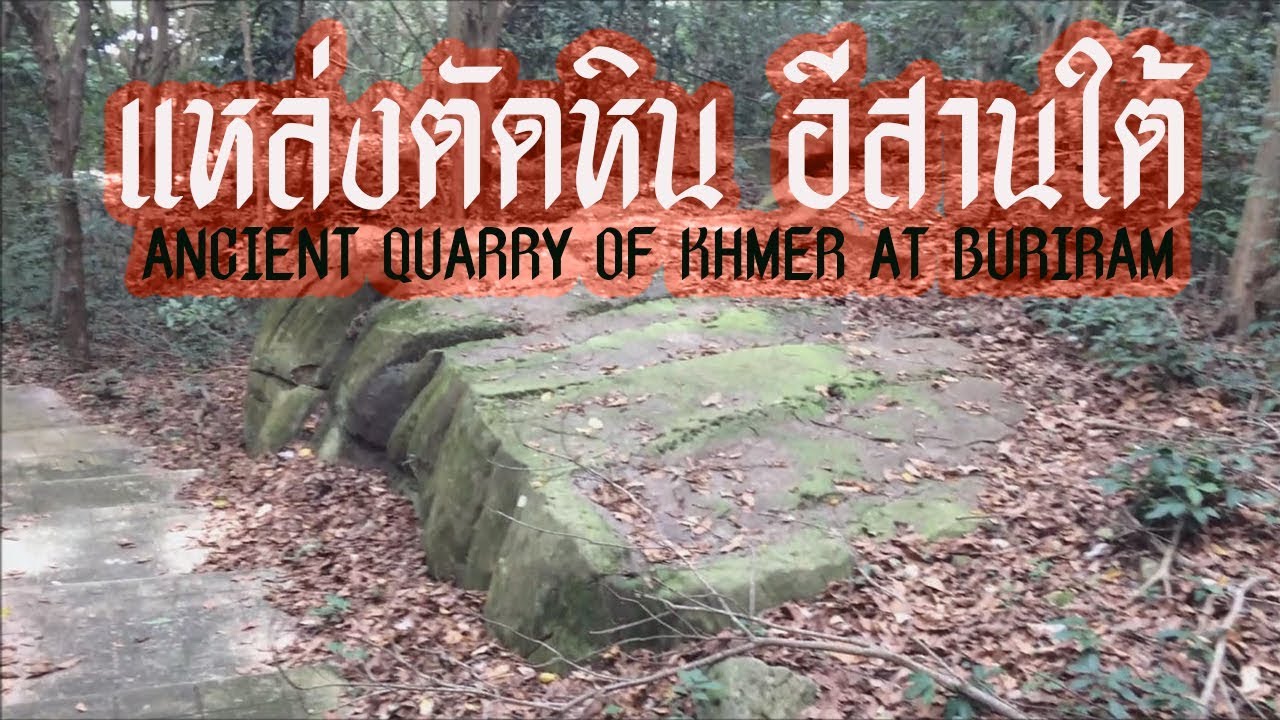
 Click to Access the Navigation Map GPS
Ban Kruat Stone Quarry Site Map
Recommend
 Historical Sites and Monuments(14)
 Landmarks and Memorials(2)
 Art, Craft Centres, Tradition(6)
 Museums(3)
 Educational Places
 Museum for Study(1)
 Places of Worship
 Temple(74)
 Other Sacred Sites(5)
 Suburban Living
 Village, Community(3)
 Nature and Wildlife
 National Parks and Marine Reserves(2)
 Mountain (Doi)(1)
 Dam, Reservoir, Lake(14)
 River, Canal(1)
 Bays and Beaches(1)
 Other natural attractions(2)
 Entertainment and Agricultural
 Animal camps and shows(1)
 Stadium(2)
 Farms, Parks and Ecotourism(2)
 Waterpark(1)


