
lovethailand home >Northeastern Travel Attractions >Buri Ram Travel Attractions >Muang Buri Ram >Samet > Kradong Reservoir
TL;DR: Kradong Reservoir is located at In Front Of Khao Kradong Volcano Forest Park, Samet Subdistrict, Mueang Buriram District, Buriram Province, open Daily, hours 08.00 – 18.00.

Kradong Reservoir
Open Days: Daily
Opening Hours: 08.00 – 18.00
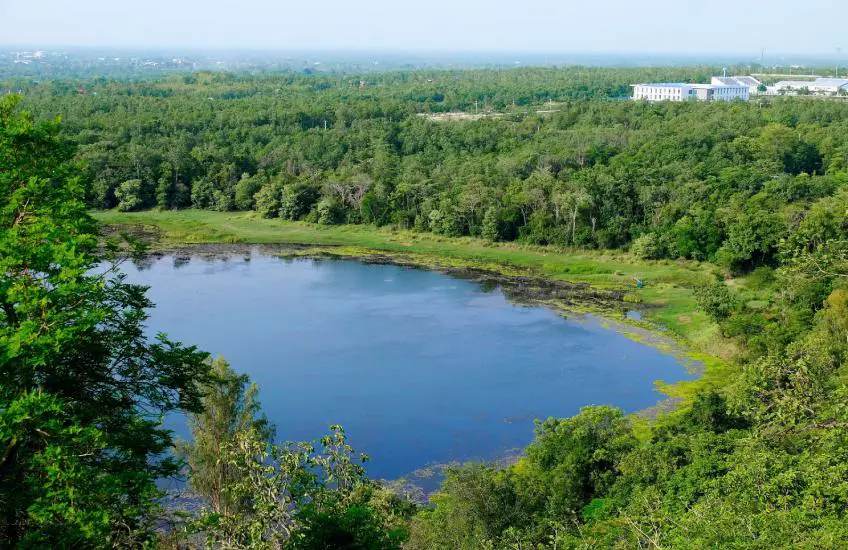
Kradong Reservoir, also known as Wutthisawat Reservoir, is a peaceful nature and recreation area in Buriram Province. It is located in front of Khao Kradong Volcano Forest Park in Samet Subdistrict, Mueang Buriram District. The reservoir is known for its calm water, relaxing lakeside atmosphere, dry dipterocarp woodland, waterbirds, and a clear view of Phra Suphattharabophit, the large Buddha image on the summit of Khao Kradong. For foreign travelers, this is an easy and quiet stop that can be combined naturally with a visit to the extinct volcano, the crater, the Buddha image, and other nearby Buriram attractions.
Kradong Reservoir is especially suitable for travelers who want to experience a softer and more local side of Buriram. While Khao Kradong itself is famous for its extinct volcanic crater, the large Buddha image, and the hilltop viewpoint, the reservoir at the foot of the hill offers a slower atmosphere. Visitors can walk near the water, sit and relax, take photographs, watch birds, and enjoy the view of the volcanic hill from below. From the entrance area of Khao Kradong, a left-hand road leads in the direction of Bunyanuwat Scout Camp and nearby recreation areas, connecting visitors to the reservoir zone.
The most distinctive feature of Wutthisawat Reservoir is the way it visually connects water, forest, and volcanic landscape. On one side, the broad water surface creates an open and refreshing view. On another side, the wooded slopes of Khao Kradong rise above the landscape. From the lakeside, visitors can see Phra Suphattharabophit standing high on the summit. This view gives the reservoir a special identity. It is not only a body of water but also a scenic foreground to one of Buriram’s best-known sacred and geological landmarks.
The reservoir is part of the wider Khao Kradong area, which has long been important as a public natural space for Buriram. Khao Kradong was developed as a recreation area and a place for studying nature, geology, history, and Buddhism. Wutthisawat Reservoir plays an important role at the lower section of the volcanic hill. It supports wildlife habitat, local recreation, water storage, and nature-based tourism. The area is connected with Khao Kradong Non-Hunting Area, making it more than an ordinary local pond.
Wutthisawat Reservoir covers approximately 40 rai and was originally described as an old pond. It later underwent dredging and landscape improvement to increase water storage, reduce siltation, and restore its role as a habitat and feeding area for wildlife. The improved lakeside environment also supports recreation, exercise, and nature tourism. For visitors, this means the reservoir functions as both a practical water source and a scenic public space near the entrance to one of Buriram’s most popular natural attractions.
The area around the reservoir has an interesting wetland-edge ecosystem. Open water, shoreline vegetation, aquatic plants, and dry dipterocarp woodland create habitat for local wildlife. Bird species associated with the reservoir include watercock, little egret, little grebe, white-browed crake, pheasant-tailed jacana, little cormorant, bronze-winged jacana, and lesser whistling duck. These birds use the reservoir and surrounding vegetation for feeding, resting, and shelter. Travelers interested in casual birdwatching can enjoy the area without leaving Buriram city far behind.
The best times to visit are early morning and late afternoon. In the morning, the temperature is more comfortable, the light is soft, and birds may be more active near the water. In the late afternoon, the reservoir becomes a pleasant place to rest, enjoy the breeze, photograph reflections on the water, and look toward the Buddha image on Khao Kradong. On clear days, the view combines water, forest, sky, and the volcanic hill in one frame, making the area suitable for peaceful landscape photography.
For families, Kradong Reservoir is a convenient stop because it does not require a long walk or a difficult climb. Visitors can relax at the lakeside, take photographs, and then continue to Khao Kradong Forest Park. Elderly visitors and children can enjoy the atmosphere by the water, while more active travelers can later drive or walk up to the summit area to pay respect to Phra Suphattharabophit and explore the volcanic crater, lava suspension bridge, and Khao Kradong Stone Sanctuary.
The reservoir offers a different experience from the upper area of Khao Kradong. The summit is more suitable for Buddhist worship, city views, and geological exploration, while the reservoir is better for resting, watching waterbirds, and enjoying a quiet open landscape. Having both areas close together makes Khao Kradong a more complete destination. Visitors can experience sacred space on the hill and natural relaxation at the water’s edge within the same trip.
Wutthisawat Reservoir is also useful as an environmental learning site near the city. The calm water surface may appear simple, but it supports many living things. Birds, squirrels, tree shrews, snakes, turtles, and other small animals use the wider Khao Kradong protected area. The reservoir is part of this habitat system. Keeping the area clean and quiet is therefore important, not only for visitor comfort but also for the health of local wildlife.
After visiting the hilltop area of Khao Kradong, the reservoir is a good place to rest. Travelers who have climbed the Naga staircase, walked around the crater, or taken photos near the Buddha image can return to the lower area and enjoy the water view. Seeing Phra Suphattharabophit from below gives the visit a sense of continuity: the sacred landmark remains visible even after leaving the summit.
The reservoir is also a simple but attractive photography location. Its key elements include open water, resting pavilions, trees, sky, the volcanic hill, and the Buddha image at the summit. Photographers can capture wide landscape views or smaller details such as water reflections, birds along the shore, lakeside paths, and the distant outline of Khao Kradong. Morning light creates a calm mood, while afternoon light adds warmth and depth to the scene.
Visitors should approach the area as a natural recreation site rather than a heavily developed tourist attraction. It is best enjoyed slowly and quietly. Drinking water, sun protection, and comfortable walking shoes are useful, especially during the hot season. Those who want to observe birds or wildlife should use binoculars or a zoom lens instead of approaching animals closely. This helps prevent disturbance and allows wildlife to behave naturally.
Getting There is easy from Buriram city. Take Highway 219 on the Buriram–Prakhon Chai route for about 7 km toward Khao Kradong Volcano Forest Park. From the entrance area of Khao Kradong, take the left-hand road leading toward Bunyanuwat Scout Camp and nearby recreation areas. Private car, rental car, or motorcycle is the most convenient way to visit because travelers can combine the reservoir, Khao Kradong, and nearby attractions in the same day.
A practical one-day Buriram itinerary can begin at Kradong Reservoir in the morning, when the atmosphere is cooler and quieter. After enjoying the water view and taking photos, visitors can continue to Khao Kradong Forest Park to pay respect to Phra Suphattharabophit and explore the extinct volcanic crater. Later in the day, the route can continue to Chang Arena, Buriram Castle, Chang International Circuit, or Wat Pa Khao Noi. This combination gives travelers a balanced view of Buriram: nature, Buddhism, geology, sport, and modern city identity.
Travelers who want to camp or hold recreational activities should contact Khao Kradong officers before visiting. The reservoir is part of a protected natural area, so activities should follow the rules set by the caretakers. Checking in advance helps ensure safety and prevents negative impacts on wildlife and the environment. This is especially important for group activities, overnight stays, or camping plans.
Visitors should avoid littering, feeding wildlife, disturbing waterbirds, making loud noises near bird habitats, or entering restricted areas. Swimming or water activities should only be done where permitted by local officers. During the rainy season or after rain, some lakeside surfaces may be slippery, so visitors should walk carefully. Responsible behavior helps keep the reservoir clean, safe, and suitable for both people and wildlife.
Kradong Reservoir, or Wutthisawat Reservoir, is therefore a worthwhile stop for travelers who want a quiet nature experience near Buriram city. Its charm comes from its location in front of Khao Kradong, its view of Phra Suphattharabophit, its open water, and its role as a habitat for birds and wildlife. It may not require a long visit, but it adds depth to a Khao Kradong trip by showing the calmer lakeside side of the same volcanic landscape.
| Name | Kradong Reservoir Or Wutthisawat Reservoir |
| Location | In Front Of Khao Kradong Volcano Forest Park, Samet Subdistrict, Mueang Buriram District, Buriram Province |
| Address | Samet Subdistrict, Mueang Buriram District, Buriram 31000, Thailand |
| Highlights | Open Water, Lakeside Relaxation, View Of Phra Suphattharabophit On Khao Kradong, Resident And Migratory Waterbirds, Dry Dipterocarp Woodland, And Connection To Khao Kradong Volcano Forest Park |
| History / Importance | A reservoir at the foot of Khao Kradong, originally described as an old pond covering about 40 rai. It serves as a water source, recreation area, and wildlife habitat within Khao Kradong Non-Hunting Area |
| Name Origin | The name Kradong Reservoir refers to its location in front of Khao Kradong, while Wutthisawat Reservoir is another name for the same water body |
| Distinctive Features | A peaceful lakeside area suitable for relaxation, exercise, birdwatching, nature photography, and viewing Khao Kradong from the lower landscape |
| Birds And Wildlife | Watercock, Little Egret, Little Grebe, White-Browed Crake, Pheasant-Tailed Jacana, Little Cormorant, Bronze-Winged Jacana, Lesser Whistling Duck, And Small Wildlife In The Khao Kradong Protected Area |
| Travel Information | From Buriram City, Take Highway 219 On The Buriram–Prakhon Chai Route For About 7 km Toward Khao Kradong Volcano Forest Park. From The Entrance Area, Take The Left-Hand Road Toward Bunyanuwat Scout Camp And Nearby Recreation Areas |
| Current Status | Open To Visitors As A Recreation, Exercise, Nature Tourism, And Wildlife Habitat Area Within Khao Kradong Non-Hunting Area |
| Open Days | Daily |
| Opening Hours | 08.00 – 18.00 |
| Facilities | Parking Area, Toilets, Shops, Food, Lakeside Resting Areas, Viewpoints, And Recreation Areas As Designated By Officers |
| Main Areas / Zones | Reservoir Surface, Lakeside Rest Area, Phra Suphattharabophit Viewpoint, Dry Dipterocarp Woodland, Birdwatching Area, Resting Pavilions, Recreation Area, And Access Route To Khao Kradong Volcano Forest Park |
| Caretaker | Khao Kradong Non-Hunting Area, Department Of National Parks, Wildlife And Plant Conservation |
| Main Contact Number | 044-637-349 |
| Official Website / Official Page | Khao Kradong Volcano Non-Hunting Area, Buriram Province Official Page |
| Nearby Tourist Attractions | 1. Khao Kradong Volcano Forest Park, About 1 km, Tel. 044-637-349 2. Phra Suphattharabophit, About 2 km 3. Khao Kradong Volcanic Crater, About 2 km 4. Chang Arena, About 5 km 5. Buriram Castle, About 5 km 6. Chang International Circuit, About 6 km 7. Wat Pa Khao Noi, About 8 km |
| Nearby Restaurants | 1. Tawandang Saengduan Na Buriram, About 3 km 2. The Library Cafe Buriram, About 5 km, Tel. 098-103-5331 3. Ao Thai Seafood Buriram, About 7 km, Tel. 089-721-3336, 083-966-1166, 044-111-116 4. Ped Yang Khu Mueang Buriram Branch, About 7 km, Tel. 061-651-2131 5. Baan Chay Nam Buriram, About 9 km, Tel. 044-620-713 6. Song Phi Nong Dinosaur Buriram, About 10 km, Tel. 081-264-4862 |
| Nearby Accommodations | 1. Modena By Fraser Buriram, About 5 km, Tel. 044-118-188 2. Amari Buriram United, About 5 km, Tel. 044-111-444 3. The Crystal Hotel Buriram, About 6 km, Tel. 044-634-678 4. Cresco Hotel Buriram, About 7 km, Tel. 044-634-901 5. Fortune Hotel Buriram, About 7 km, Tel. 044-163-800 To 805 |
Frequently Asked Questions (FAQ)
Q: Where is Kradong Reservoir located?
A: Kradong Reservoir, also known as Wutthisawat Reservoir, is located in front of Khao Kradong Volcano Forest Park in Samet Subdistrict, Mueang Buriram District, Buriram Province.
Q: What makes Kradong Reservoir interesting?
A: It offers open water views, a peaceful lakeside atmosphere, a view of Phra Suphattharabophit on Khao Kradong, resident and migratory waterbirds, and dry dipterocarp woodland around the reservoir.
Q: Can visitors see Phra Suphattharabophit from Kradong Reservoir?
A: Yes. From the lakeside area, visitors can see Phra Suphattharabophit on the summit of Khao Kradong, making it one of the most distinctive viewpoints of the reservoir.
Q: What activities are suitable at Kradong Reservoir?
A: The reservoir is suitable for relaxing, walking, photography, birdwatching, enjoying the view, exercising, and resting before or after visiting Khao Kradong Volcano Forest Park.
Q: How can travelers get to Kradong Reservoir?
A: From Buriram city, take Highway 219 toward Khao Kradong Volcano Forest Park for about 7 km. From the entrance area, take the left-hand road toward Bunyanuwat Scout Camp and nearby recreation areas.
Q: What bird species can be seen around Kradong Reservoir?
A: Birds associated with the area include watercock, little egret, little grebe, white-browed crake, pheasant-tailed jacana, little cormorant, bronze-winged jacana, and lesser whistling duck.
Q: Can visitors camp or hold recreational activities at the reservoir?
A: Recreational activities should follow the rules set by local officers. Travelers who want to camp or organize activities should contact Khao Kradong Non-Hunting Area before visiting.
Q: What is the best time to visit Kradong Reservoir?
A: Morning and late afternoon are the best times to visit because the weather is more comfortable, the light is better for photography, and the lakeside atmosphere is calmer.
 Category: ●Nature and Wildlife
 Group: ●Dam, Reservoir, Lake
Last Update : 3 MonthAgo
 Last Update : 3 MonthAgo
 Click to Access the Navigation Map GPS
 Art, Culture and Heritage
 Historical Sites and Monuments(14)
 Landmarks and Memorials(2)
 Art, Craft Centres, Tradition(6)
 Museums(3)
 Educational Places
 Museum for Study(1)
 Places of Worship
 Temple(74)
 Other Sacred Sites(5)
 Suburban Living
 Village, Community(3)
 National Parks and Marine Reserves(2)
 Mountain (Doi)(1)
Dam, Reservoir, Lake(14)
Mountain (Doi)(1)
Dam, Reservoir, Lake(14)
 River, Canal(1)
 Bays and Beaches(1)
 Other natural attractions(2)
 Entertainment and Agricultural
 Animal camps and shows(1)
 Stadium(2)
 Farms, Parks and Ecotourism(2)
 Waterpark(1)


