
lovethailand home >Northeastern Travel Attractions >Buri Ram Travel Attractions >Muang Buri Ram >Nai Muang > Southern Isan Cultural Center
TL;DR: Southern Isan Cultural Center is located at Inside Buriram Rajabhat University, Jira Road, Nai Mueang Subdistrict, Mueang Buriram District, Buriram Province, open Daily, Except Public Holidays, hours 09.00 – 16.30.
Southern Isan Cultural Center
Open Days: Daily, Except Public Holidays
Opening Hours: 09.00 – 16.30
The Southern Isan Cultural Center, also known as the Lower Northeastern Cultural Centre, is located inside Buriram Rajabhat University on Jira Road, Nai Mueang Subdistrict, Mueang Buriram District, Buriram Province. It is one of the most important cultural learning centers in Buriram, preserving and presenting the history, archaeology, art, local wisdom, and everyday life of Southern Isan. For travelers who want to understand Buriram beyond Phanom Rung Historical Park, football, motorsport, or modern city attractions, this center is one of the best places to begin.
The center brings together archaeological objects, art objects, local artifacts, traditional tools, ethnic displays, historical narratives, and exhibitions related to the culture of Thailand’s lower Northeast. Its displays cover ancient settlements in Buriram, local history, elephants and the Suay or Kui people, religion and belief, textiles and ways of life, Buriram kilns and ceramics, traditional households, livelihood tools, and Isan musical instruments. Walking through the center is like reading the cultural map of Southern Isan through real objects, models, murals, maps, and carefully arranged exhibitions.
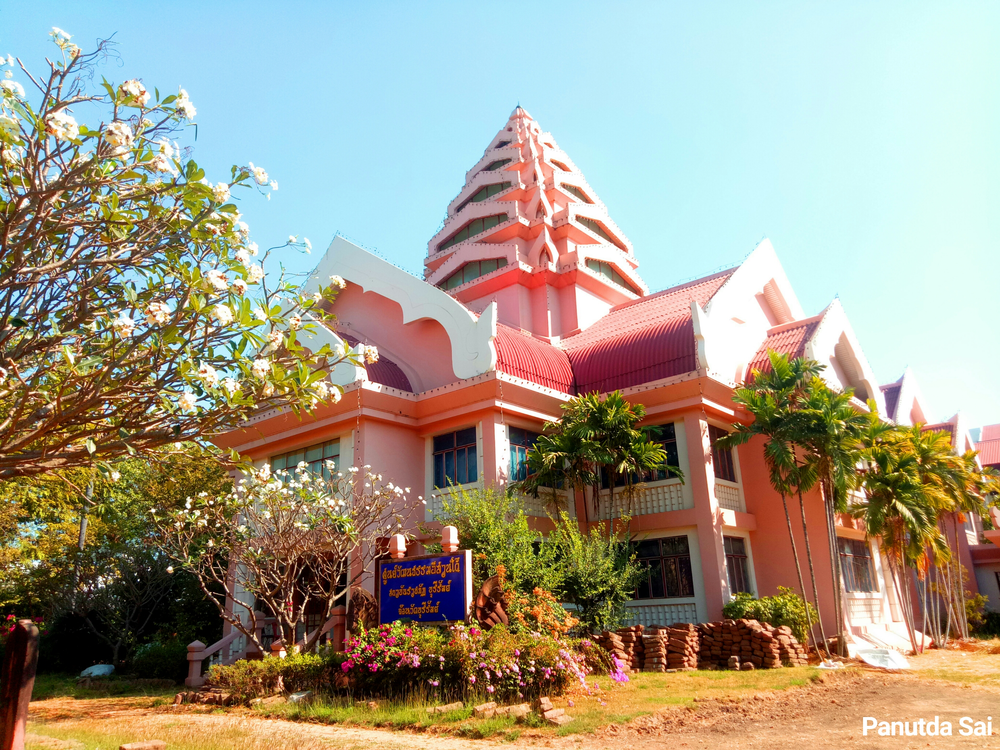
The first thing visitors notice is the building itself. The Southern Isan Cultural Center is a two-storey structure that blends modern design with inspiration from Khmer-style architecture, especially Phanom Rung, the most iconic historical monument of Buriram Province. Its pale-colored walls, red roofs, and distinctive upper structure give the building a symbolic quality. Before visitors even enter the exhibition halls, the architecture communicates that this is a place connected with the cultural roots of the region.
The center was established in 1982 to collect, preserve, study, and share knowledge about the history and culture of Southern Isan. This region is culturally rich and geographically important. It includes areas around the Mun River basin, the Khorat Plateau, and zones that once received strong influence from ancient Khmer civilization. Buriram Province contains many archaeological remains, including ancient communities, sandstone sanctuaries, Hindu and Buddhist sculptures, ceramics, kiln sites, and local craft traditions. The cultural center plays an important role in making these materials understandable to the public.
The center is managed by the Office of Arts and Culture at Buriram Rajabhat University. Its role is not limited to tourism. It also functions as an educational center, a cultural archive, a research resource, and a place for academic and cultural activities. The Office of Arts and Culture works to preserve Southern Isan heritage, promote local art and culture, continue traditional knowledge, support research, and develop cultural learning resources. For this reason, the center is both a museum and a university-based cultural knowledge hub.
The geographical exhibition provides an important foundation for understanding Southern Isan. Culture is never separate from landscape. The lower Northeast is shaped by volcanic landforms, fertile soils, water sources, rice fields, ancient routes, and settlement patterns. The exhibition helps visitors see why Buriram became an area with dense ancient communities and rich cultural evidence. Understanding the land helps visitors understand the people who lived on it.
The exhibition on ancient settlements in Buriram Province shows that the area’s history did not begin only with stone sanctuaries. Before the great Khmer monuments, many communities had already lived in this region. Archaeological objects such as pottery, tools, ornaments, and ritual items reveal the development of village life, social networks, and cultural change over time. This section helps visitors understand Buriram as a layered historical landscape rather than a province defined by a single period.
The Buriram history exhibition explains the formation and development of the province, including the story of Mueang Pae and the historical process that led to modern Buriram. This section connects local history with broader Thai history and helps visitors understand how Buriram became an important province in Southern Isan. It also shows that the identity of Buriram was shaped by many communities, historical events, and cultural influences.
The exhibition on elephants and the Suay or Kui people is one of the most distinctive parts of the center. The Kui people of the lower Northeast have long been associated with elephants, elephant-catching knowledge, ritual specialists, and beliefs surrounding elephant culture. Objects such as ceremonial ropes, tools used by elephant specialists, and ritual items help visitors understand that elephants were not simply animals of power. They were part of a cultural world involving skill, belief, status, and community identity.
The religion and belief section displays objects connected with Buddhism, Brahmanism-Hinduism, and local belief systems. Buddha images, bronze objects, Hindu sculptures, and sacred artifacts show how different religious traditions coexisted and influenced the region. This section is especially useful for travelers planning to visit Phanom Rung Historical Park, Muang Tam Sanctuary, or other Khmer-influenced sites, because it provides the religious and artistic context needed to understand those monuments more deeply.
The textile and way-of-life exhibition reveals the beauty of Southern Isan craft traditions. Textiles are not merely clothing. They express identity, social meaning, belief, aesthetic taste, and local skill. Mudmee patterns, weaving techniques, colors, and fabric forms show the knowledge of weavers and the role of women, families, and communities in preserving craft traditions. This section helps visitors see that cultural beauty is often embedded in everyday objects.
The Buriram kiln and ceramic room is one of the most important exhibitions for understanding the technological and economic history of the province. Ban Kruat District in Buriram is well known for ancient ceramic kiln sites and Buriram glazed ceramics associated with Khmer cultural influence. The exhibition includes information about ancient kiln forms, pottery production, glazed ceramics, and the technological knowledge needed to transform clay, fire, and minerals into durable vessels and objects.
Buriram ceramics are important because they show that Southern Isan was not only a religious or political landscape. It was also a production zone with specialized craft knowledge. Ceramic vessels and kiln remains reveal information about raw materials, firing techniques, design, usage, and possible distribution networks. For visitors interested in archaeology, craft, or ancient technology, this section offers one of the clearest introductions to Buriram’s ceramic heritage.
The exhibitions on the everyday life of Buriram people bring history closer to human experience. The center presents the lives of different local groups, including Thai-Lao, Thai-Khmer, Thai-Suay or Kui, and Thai-Khorat communities. Models and reconstructed scenes show village life, children herding buffalo, food gathering, fishing, hunting, household work, farming, and local tools. These displays remind visitors that history is not only about kings, temples, and monuments. It is also about ordinary people and the knowledge they used every day.
The reconstructed Isan kitchen, or “Ruean Fai,” is especially valuable for understanding food culture. Traditional kitchens were often separated from the main house and used firewood or charcoal as fuel. Their walls were made to allow ventilation, and their utensils were designed for steaming sticky rice, boiling, roasting, pounding, and preparing local ingredients. The kitchen display helps visitors understand that Isan food comes from a full cultural system involving houses, tools, ingredients, fire, family labor, and seasonal knowledge.
The livelihood tools and animal-trapping tools displayed at the center explain how people in the past interacted with nature. Fish traps, bird traps, frog traps, and other local tools reflect a deep understanding of animal behavior, water flow, seasonal cycles, and local ecosystems. Although many such tools are no longer used in the same way today, they remain important as museum objects because they preserve knowledge about subsistence, resource use, and rural technology before modern markets and machines changed daily life.
Isan musical instruments complete the cultural picture. Music is part of entertainment, ritual, communication, identity, and community celebration. Instruments such as the khaen, wot, pong lang, and other local instruments are connected with festivals, merit-making events, performances, and social life. Seeing these instruments helps visitors understand that Southern Isan culture includes not only work and belief but also sound, rhythm, joy, and performance.
One of the most memorable features inside the building is the mural that presents the twelve-month cycle of Isan traditions, often associated with the concept of “Heet Sip Song.” The mural helps visitors understand how communities organize cultural time through merit-making, rituals, Buddhist observances, agricultural seasons, and local beliefs. It transforms the calendar into a cultural story and shows how religion, season, and community obligation are woven together.
For visitors interested in archaeological objects, the center displays materials from several periods, including prehistoric artifacts, Dvaravati-related objects, Lopburi or Khmer-influenced objects, sculptures, ceramics, jars, and stone or bronze items. These objects help explain the continuity and transformation of culture in Buriram. They also show how the province was connected with broader religious, artistic, and technological developments in mainland Southeast Asia.
A visit to the Southern Isan Cultural Center should not be rushed. The exhibitions contain many layers of information related to archaeology, history, art, anthropology, ethnicity, geography, food culture, folk knowledge, and local traditions. Visitors who take time to observe the displays carefully will gain a much deeper understanding of Buriram as a cultural landscape. The province becomes more than a destination; it becomes a layered story of people, objects, beliefs, craft, and place.
The center is also an excellent starting point for a Buriram travel itinerary. After learning the historical and cultural background here, visitors can continue to Phanom Rung Historical Park, Muang Tam Sanctuary, Ban Kruat kiln sites, Khao Kradong Forest Park, or local communities with better understanding. Seeing the context first makes later visits to monuments and communities more meaningful.
For students, the center is a valuable learning space outside the classroom. Its objects and displays connect with subjects such as Thai history, local history, social studies, art, geography, anthropology, and cultural studies. Seeing sculptures, pottery, traditional tools, textiles, musical instruments, and models makes learning more concrete than reading from a textbook alone.
For researchers and cultural travelers, the center offers many possible themes for deeper study. These include Buriram history, Kui or Suay elephant culture, Ban Kruat ceramics, Khmer-influenced art, textile traditions, Isan food culture, local livelihoods, museum interpretation, and the role of universities in cultural preservation. Because it is located within Buriram Rajabhat University, the center connects museum practice with academic work.
The center is easy to reach because it is located in Buriram city, inside Buriram Rajabhat University on Jira Road. It is not far from hotels, restaurants, the railway station, the King Rama I Monument, Chang Arena, and Khao Kradong Forest Park. Even travelers with limited time can visit the center as part of a half-day route in Buriram city.
The Southern Isan Cultural Center does not charge an admission fee. It is open daily except on public holidays from 09.00 to 16.30. Group visits should contact the center in advance to coordinate the visit. General visitors can contact 044-611-221 ext. 7601 or 088-595-2464. Older travel information also lists 0-4461-1221 ext. 159 for inquiries.
Getting There is straightforward from Buriram city. Take Jira Road to Buriram Rajabhat University. The center is located inside the university grounds and is easy to recognize by its distinctive architecture. From Buriram Airport, take Highway 219 and Highway 288 toward the city, then continue to Jira Road and Buriram Rajabhat University. From Nakhon Ratchasima, travelers can use Highway 226 and connect to Highway 218 toward Buriram city. A private car, taxi, or local ride service is the most convenient option, but visitors arriving by train or bus can continue from central Buriram to the university by local transport.
The center works well as either the first or last stop of a Buriram city itinerary. If visited in the morning, it provides background knowledge before continuing to the King Rama I Monument, Khao Kradong Forest Park, Chang Arena, or Chang International Circuit. If visited in the afternoon, it offers a calm indoor cultural stop before dinner in Buriram city.
Visitors should behave respectfully inside the center. Dress appropriately, do not touch display objects without permission, avoid flash photography near fragile items, and keep noise low. Since the center is both a museum and a university learning space, respectful behavior helps preserve the quality of the experience for other visitors and future students.
For international travelers, the Southern Isan Cultural Center is especially useful because it explains the relationships among Thai, Lao, Khmer, Kui or Suay, and Khorat cultural elements in the same region. Visitors who know Buriram only from football, motorsport, or Khmer temples will discover a broader world of local history, elephants, textiles, ceramics, foodways, music, ritual, and everyday life.
Overall, the Southern Isan Cultural Center is one of the best places to understand Buriram and the lower Northeast in depth. It does not simply display old objects; it explains how geography, people, religion, craft, belief, and daily life created the cultural identity of Southern Isan. Anyone who wants to know Buriram beyond its famous landmarks should include this center in their itinerary.
| Name | Southern Isan Cultural Center |
| Alternative English Name | Lower Northeastern Cultural Centre |
| Thai Name | ศูนย์วัฒนธรรมอีสานใต้ |
| Location | Inside Buriram Rajabhat University, Jira Road, Nai Mueang Subdistrict, Mueang Buriram District, Buriram Province |
| Address | Buriram Rajabhat University, 439 Jira Road, Nai Mueang Subdistrict, Mueang Buriram District, Buriram Province 31000, Thailand |
| Highlights | A major cultural learning center presenting Southern Isan history, archaeology, art, local wisdom, Buriram ceramics, elephants and the Suay or Kui people, religion and belief, textiles, local livelihoods, and Isan musical instruments |
| History / Period | Established in 1982 to collect, preserve, study, and present the history, archaeology, and culture of Southern Isan as an educational and research resource |
| Caretaker / Managing Organization | Office of Arts and Culture, Buriram Rajabhat University. Assistant Professor Dr. Asok Thaichanrarak is listed as Director of the Office of Arts and Culture on the unit website |
| Distinctive Features | The building is inspired by Phanom Rung architecture and blends Southern Isan cultural design with modern architectural form. Exhibitions are arranged across several cultural and historical themes |
| Key Objects | Khmer-influenced artifacts, Ban Kruat pottery and glazed ceramics, sculptures, Buddha images, bronze objects, jars, folk tools, animal-trapping tools, lifestyle models, and Isan musical instruments |
| Name Origin | The name reflects the center’s role in preserving, studying, and presenting the culture of Southern Isan, including Buriram, Surin, Si Sa Ket, Nakhon Ratchasima, Ubon Ratchathani, and nearby cultural areas |
| Main Areas / Zones | Southern Isan Geography And Buriram Landscape Zone Ancient Settlements Of Buriram Zone Buriram History Zone Elephants And The Suay / Kui People Zone Religion And Belief Zone Textiles And Ways Of Life Zone Buriram Kilns And Ceramics Room Buriram Local Life And Traditional Kitchen Zone Livelihood Tools And Animal-Trapping Tools Zone Isan Musical Instruments Zone Heet Sip Song Mural Hall |
| Travel Information | From Buriram city, take Jira Road to Buriram Rajabhat University. The center is located inside the university. From Buriram Airport, use Highway 219 and 288 toward the city, then continue to Jira Road and Buriram Rajabhat University |
| Current Status | Open And Operating |
| Open Days | Daily, Except Public Holidays |
| Opening Hours | 09.00 – 16.30 |
| Fees | No Admission Fee |
| Facilities | Parking area, exhibition building, library, artifact storage room, souvenir room, and learning spaces within the university |
| Main Contact Number | 044-611-221 Ext. 7601, 088-595-2464, 0-4461-1221 Ext. 159 |
| culture@bru.ac.th | |
| Official Website / Official Page | Office of Arts and Culture, Buriram Rajabhat University website and Southern Isan Cultural Center Buriram Facebook page |
| Nearby Tourist Attractions | 1. King Rama I Monument, about 2 km 2. Buriram City Pillar Shrine, about 2 km 3. Buriram Railway Station, about 2 km 4. Khao Kradong Forest Park, about 7 km 5. Chang Arena, about 6 km 6. Chang International Circuit, about 7 km |
| Nearby Restaurants | 1. Unique Cafe’ Buriram Rajabhat Area, about 1 km 2. Chef Plus Cafe’ & Bistro, about 2 km, Tel. 083-077-7800, 095-604-1487 3. Suki Desu Bakery Buriram, about 3 km, Tel. 090-995-6765 4. ROCKET COFFEE Buriram, about 3 km, Tel. 089-665-6411 5. La Lom Buriram, about 3 km, Tel. 091-014-1936, 090-290-2021 6. The Tower Cafe & Hangout, about 5 km, Tel. 044-666-305 |
| Nearby Accommodations | 1. QOO Hotel Buriram, about 1 km, Tel. 044-602-561, 098-592-2654 2. La Viva Hotel Buriram, about 2 km, Tel. 044-613-979 3. Chill D Resort Buriram, about 3 km, Tel. 044-110-724 4. Hotel Agnes Buriram, about 1 km, Tel. 092-594-9666 5. Best Western Royal Buriram Hotel, about 2 km, Tel. 044-666-600, 098-585-2046 6. B2 Buriram Boutique & Budget Hotel, about 3 km, Tel. 052-009-161, 088-263-2897 |
Frequently Asked Questions (FAQ)
Q: Where is the Southern Isan Cultural Center located?
A: It is located inside Buriram Rajabhat University on Jira Road, Nai Mueang Subdistrict, Mueang Buriram District, Buriram Province 31000, Thailand.
Q: What can visitors see at the Southern Isan Cultural Center?
A: Visitors can see exhibitions on Southern Isan geography, ancient settlements, Buriram history, elephants and the Suay or Kui people, religion and belief, textiles, Buriram ceramics, local livelihoods, traditional tools, and Isan musical instruments.
Q: What are the opening days and hours?
A: The center is open daily except on public holidays from 09.00 to 16.30.
Q: Is there an admission fee?
A: No. The Southern Isan Cultural Center does not charge an admission fee.
Q: Who manages the Southern Isan Cultural Center?
A: The center is managed by the Office of Arts and Culture, Buriram Rajabhat University, which works on preserving and promoting Southern Isan art, culture, traditions, and local wisdom.
Q: How can visitors get to the Southern Isan Cultural Center?
A: From Buriram city, take Jira Road to Buriram Rajabhat University. The center is located inside the university. Visitors arriving from Buriram Airport can take Highway 219 and 288 toward the city, then continue to Jira Road.
Q: Who should visit the Southern Isan Cultural Center?
A: It is suitable for students, teachers, researchers, cultural travelers, international visitors, and anyone interested in Buriram history, archaeology, ethnic groups, art, religion, ceramics, music, and Southern Isan ways of life.
Q: What nearby attractions can be visited after the Southern Isan Cultural Center?
A: Nearby places include the King Rama I Monument, Buriram City Pillar Shrine, Khao Kradong Forest Park, Chang Arena, Chang International Circuit, and, with more time, Phanom Rung Historical Park and Muang Tam Sanctuary.
 Category: ●Educational Places
 Group: ●Museum for Study
Last Update : 3 MonthAgo
 Last Update : 3 MonthAgo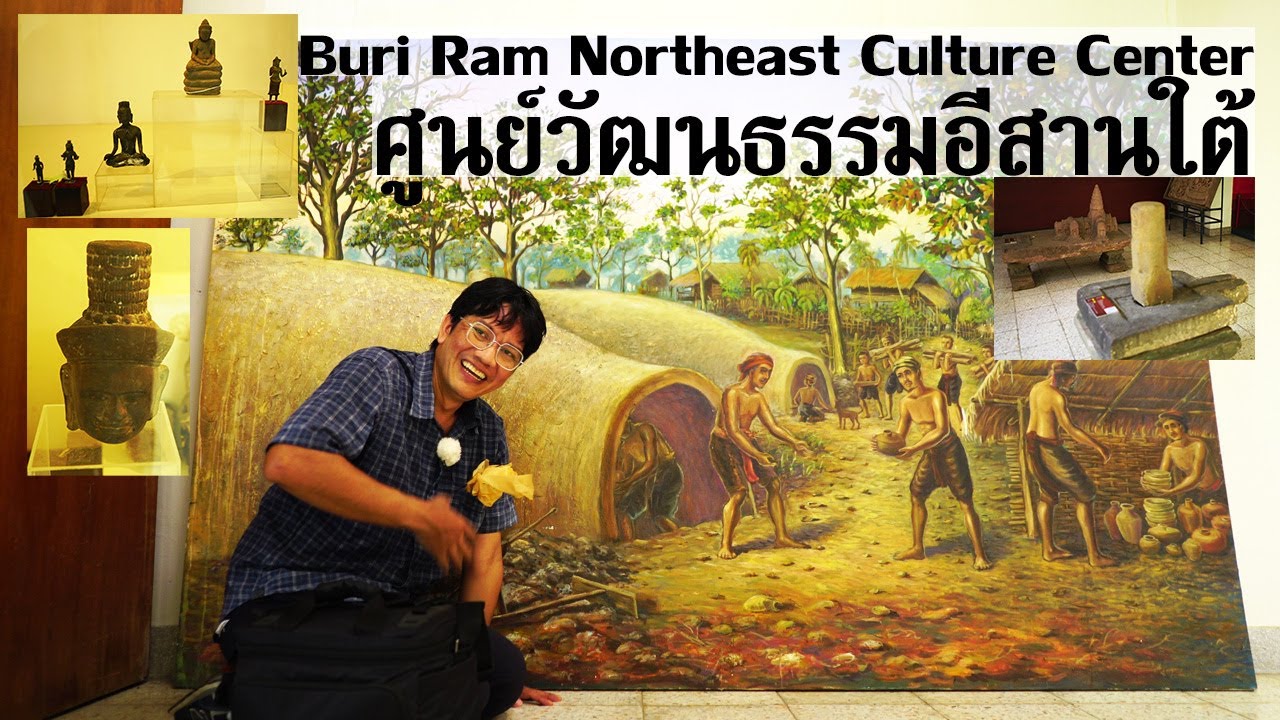
 Click to Access the Navigation Map GPS
Southern Isan Cultural Center Map
Recommend

 Art, Culture and Heritage
 Historical Sites and Monuments(14)
 Landmarks and Memorials(2)
 Art, Craft Centres, Tradition(6)
 Museums(3)
Museum for Study(1)
Museums(3)
Museum for Study(1)
 Places of Worship
 Temple(74)
 Other Sacred Sites(5)
 Suburban Living
 Village, Community(3)
 Nature and Wildlife
 National Parks and Marine Reserves(2)
 Mountain (Doi)(1)
 Dam, Reservoir, Lake(14)
 River, Canal(1)
 Bays and Beaches(1)
 Other natural attractions(2)
 Entertainment and Agricultural
 Animal camps and shows(1)
 Stadium(2)
 Farms, Parks and Ecotourism(2)
 Waterpark(1)


