
lovethailand home >Northeastern Travel Attractions >Buri Ram Travel Attractions >Phutthaisong >Mafueang > Phra Chao Yat Wat Hong
TL;DR: Phra Chao Yat Wat Hong is located at Ban Sisa Raet, Ma Fueang Subdistrict, Phutthaisong District, Buri Ram Province, open Daily, hours 06.00 – 18.00.
Phra Chao Yat Wat Hong
Open Days: Daily
Opening Hours: 06.00 – 18.00
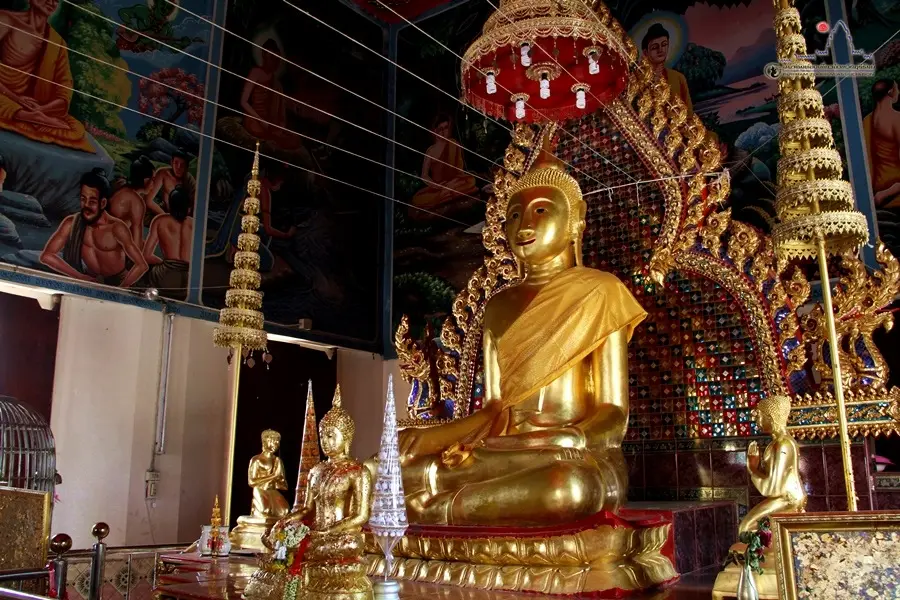
Phra Chao Yai at Wat Hong is one of the most revered Buddha images in Phutthaisong District, Buri Ram Province. Enshrined at Wat Hong, also known locally as Wat Sisa Raet, the laterite Buddha image is 1.6 meters wide across the lap and 2 meters high. It is strongly associated with Lao-Lan Xang artistic influence, local Isan faith, vows, prayers, and the annual gilding festival held from the 14th waxing moon to the 1st waning moon of the 3rd lunar month. For foreign travelers, this is a meaningful place to understand rural Buddhist devotion in northeastern Thailand.
Phra Chao Yai at Wat Hong is a sacred Buddha image deeply respected by the people of Phutthaisong District in Buri Ram Province. The image is enshrined at Wat Hong, also called Wat Sisa Raet, in Ban Sisa Raet, Ma Fueang Subdistrict. The name “Phra Chao Yai” is often translated literally as “the Great Buddha,” but in the Isan language context, the word “yai” does not refer only to physical size. It expresses spiritual greatness, sacred power, and deep communal reverence. This is why local people and visitors continue to come here to pay respect, make vows, ask for protection, and strengthen their moral intentions.
Wat Hong is located not far from Phutthaisong Market, making it relatively convenient for travelers exploring the northern part of Buri Ram Province. From Phutthaisong Market, travelers can drive to the main intersection, turn right toward the route to Phayakkhaphum Phisai for about 1 kilometer, and then turn right again onto the smaller road leading to the temple for about 2 kilometers. The temple is suitable for a short cultural visit, a merit-making stop, or a meaningful local pilgrimage route in Phutthaisong District.
Phra Chao Yai is a Buddha image in the posture of subduing Mara. It is made of laterite, with a lap width of 1.6 meters and a height of 2 meters. The image reflects local Lao-Lan Xang artistic influence, which spread widely across northeastern Thailand and the Mekong region. Its form is calm, modest, and powerful. Unlike highly polished royal-style images, Phra Chao Yai carries the character of local craftsmanship. The laterite material gives the image a strong, ancient, and grounded appearance, connecting it closely with the religious art of rural Isan.
The artistic value of Phra Chao Yai lies in its simplicity and spiritual presence. The face is serene, the seated posture is stable, and the overall form conveys stillness rather than grandeur. For travelers interested in Buddhist art, this image shows how local craftsmen expressed faith through available materials and regional artistic traditions. The image is not admired only as an object of art, but as a living sacred presence that continues to receive worship from local people.
Local accounts and cultural records describe Phra Chao Yai as an old Buddha image associated with Lao and Lan Xang artistic influence. Some local traditions connect the image with the late Ayutthaya period, while current cultural classifications often place the image within an older regional Buddhist art context. What matters most for visitors is that the image has been preserved, worshipped, and passed down through generations. Its importance is not limited to academic dating; it lives through the faith of the community.
The most famous belief surrounding Phra Chao Yai concerns vows and moral promises. Local people believe that vows made before the Buddha image should be kept seriously. Stories are told of those who broke their vows and later faced misfortune, which has strengthened the reputation of the image as a powerful witness to truth. Many people come to Phra Chao Yai to make a vow to stop drinking alcohol, give up addictive substances, quit gambling, or leave harmful habits behind. In this sense, the sacred image also works as a moral force that helps people commit to self-improvement.
Visitors often bring flowers, incense, candles, garlands, and offerings according to their personal faith. Some come to pray for family well-being, health, protection, or a peaceful life. Others return to offer thanks after a wish has been fulfilled. The atmosphere around the Buddha image is therefore filled with visible signs of devotion. This makes Wat Hong more than a temple that preserves an old image; it is a living spiritual place where people continue to express faith, gratitude, and personal transformation.
The legends of Wat Hong and Ban Sisa Raet add further cultural depth to the site. One story tells of the discovery of Phra Chao Yai in an area connected with a large rhinoceros. Another tells of hunters who followed a swan into the forest and discovered Phra Chao Yai, old stupa remains, rhinoceros horn, and rhinoceros bones. These stories are associated with the names Wat Hong, meaning Swan Temple, and Wat Sisa Raet, meaning Rhinoceros Head Temple. For foreign travelers, these legends show how local sacred places in Thailand often blend Buddhism, nature, animal symbolism, memory, and community identity.
Under the base of Phra Chao Yai, important religious objects have also been mentioned, including leaf-shaped votive tablets, bronze Buddha images, and a Buddha image carved from rhinoceros horn. These objects add to the significance of the temple as a place of religious memory. Votive tablets are often connected with the wish to preserve Buddhism, while bronze images and rare carved objects reflect the devotional culture of the region. Together, they make Wat Hong an important local sacred site rather than a simple village temple.
The main area of the temple is the hall where Phra Chao Yai is enshrined. This is where worshippers come to bow, pray, apply gold leaf, and make vows. The atmosphere is calm and respectful. Visitors should dress modestly, speak softly, and avoid touching sacred objects without permission. Since the image is both old and deeply revered, respectful conduct is essential. The experience is most meaningful when visitors approach the site not only as a tourist attraction, but as a sacred place belonging to the community.
Wat Hong also has other spaces that support religious life and community gatherings, including offering areas, pavilions, gathering spaces, and areas used during the annual festival. These areas become especially active during the Phra Chao Yai gilding festival in the 3rd lunar month. During the event, local residents, pilgrims, and visitors from nearby provinces come to worship, make merit, apply gold leaf, and take part in cultural activities. The temple becomes a lively center of faith and community identity.
The annual Phra Chao Yai gilding festival is held from the 14th waxing moon to the 1st waning moon of the 3rd lunar month. This is the most important time of year for devotees of Phra Chao Yai. The event includes merit-making, worship, offerings, gilding, and local cultural activities. Families often attend together, and many people return to their hometown during this period. The festival is not only a religious event, but also a way for the community to pass memories, beliefs, and traditions from one generation to the next.
For cultural travelers, Phra Chao Yai at Wat Hong offers a rich experience of Isan Buddhism. The temple is not dominated by grand architecture or commercial tourism. Its strength lies in the continuity of faith, local legends, the old laterite Buddha image, and the role it plays in people’s everyday lives. Visitors can understand how a Buddha image becomes a center of morality, social memory, and spiritual confidence for a rural community.
The temple is also valuable for those interested in local art. Phra Chao Yai is an example of a Buddha image made from laterite, a material that gives the figure a firm and earthy character. Its Lao-Lan Xang influence reflects the historical cultural connections between northeastern Thailand and the Mekong region. The image demonstrates that Buddhist art in local communities does not need to be large or ornate to be powerful. Its value comes from age, craftsmanship, faith, and continued worship.
The belief in vows at Phra Chao Yai is especially important to understand. Visitors should not treat this custom casually. Those who do not intend to keep a vow should simply pay respect and pray for general blessings. In local culture, a vow made before the sacred image is a serious moral commitment. This belief has made the temple a place where people come to change their lives, especially by giving up alcohol, addictive substances, gambling, or other harmful behaviors.
Getting There is easiest by private car. From Phutthaisong Market, drive to the main intersection and turn right onto the route toward Phayakkhaphum Phisai for about 1 kilometer. Then turn right onto the road leading to Wat Hong for about 2 kilometers. Travelers coming from Buri Ram city can drive toward Phutthaisong District and use navigation to reach Ma Fueang Subdistrict and Ban Sisa Raet. Daytime travel is recommended because local roads and signs are easier to follow.
Those traveling by public transport can first arrive in Phutthaisong town and then arrange local transport to Wat Hong. Since the temple is not directly on a major road, private transport, a hired car, or a local vehicle is more convenient. Travelers visiting as a family or in a group will find private car travel more flexible, especially if they plan to visit nearby restaurants, local markets, or other attractions in Phutthaisong District.
The best time to visit is in the morning, when the weather is cooler and the temple atmosphere is calm. Visitors who want to experience the major annual event should come during the 3rd lunar month festival, but they should expect larger crowds. Those who prefer quiet worship should visit on weekdays or outside the festival period. Comfortable clothing, respectful dress, and easy-to-remove shoes are recommended.
Temple etiquette should be observed carefully. Visitors should cover shoulders and knees, remove shoes where required, speak quietly, and avoid disturbing people who are praying or making vows. Ancient objects and sacred areas should not be touched. Photography should be done respectfully, especially around the Buddha image and worshippers. These simple practices help protect the sacred atmosphere of the temple.
The area around Wat Hong has several local restaurants, cafés, and small accommodations in Phutthaisong District. Visitors can find grilled chicken, Isan food, coffee, bakery items, and casual dining within a short driving distance. Local resorts and small hotels are available for travelers who wish to stay overnight, especially during the annual festival. Advance booking is recommended during important religious events.
In summary, Phra Chao Yai at Wat Hong is a meaningful destination for anyone who wants to experience the living faith of rural Isan. The Buddha image may not be the largest in physical size, but its greatness lies in the depth of devotion surrounding it. It represents sacred belief, moral commitment, local art, community memory, and Buddhist continuity. For travelers visiting Buri Ram, this is an important spiritual site that reveals a quieter, more intimate side of the province beyond its famous historical parks and major attractions.
| Name | Phra Chao Yai At Wat Hong / Wat Hong Or Wat Sisa Raet |
| Location | Ban Sisa Raet, Ma Fueang Subdistrict, Phutthaisong District, Buri Ram Province |
| Address | Ma Fueang Subdistrict, Phutthaisong District, Buri Ram Province 31120, Thailand |
| Coordinates | 15.546425, 103.018017 |
| Highlights | A sacred laterite Buddha image, 1.6 meters wide across the lap and 2 meters high, associated with Lao-Lan Xang artistic influence, vows, moral promises, and prayers for protection from harmful habits |
| History | An old local Buddha image made of laterite and strongly revered by the Ban Sisa Raet and Phutthaisong communities for generations |
| Name Origin | The Isan name Phra Chao Yai refers to spiritual greatness and sacredness. The names Wat Hong and Wat Sisa Raet are connected with local legends of a swan, rhinoceros remains, and the discovery of sacred objects. |
| Distinctive Features | A laterite Buddha image in the posture of subduing Mara, respected for vows, truthfulness, and prayers to give up alcohol, addictions, gambling, and other harmful habits |
| Important Sacred Objects | Leaf-shaped votive tablets, bronze Buddha images, and a Buddha image carved from rhinoceros horn found under the base of Phra Chao Yai |
| Main Areas / Zones | 1. Phra Chao Yai Worship Hall 2. Worship, Gilding, And Prayer Area 3. Vow-Making Area For Giving Up Harmful Habits 4. Annual Phra Chao Yai Festival Area 5. Pavilions And Pilgrim Reception Area 6. Temple Courtyard And Community Activity Area |
| Abbot / Caretaker | Phra Maha Sathaporn Charudhammo |
| Important Activities | Annual Phra Chao Yai gilding festival from the 14th waxing moon to the 1st waning moon of the 3rd lunar month, worship, gold-leaf offering, vow-making, and prayers to give up harmful habits |
| Current Status | Active Buddhist temple and major sacred site of Phutthaisong District, Buri Ram Province |
| Open Days | Daily |
| Opening Hours | 06.00 – 18.00 |
| Fees | No Admission Fee |
| Facilities | Parking area, worship area, pavilions, offering point, festival area, and toilets |
| Official Website / Official Page | Facebook: Wat Hong |
| Travel Information | From Phutthaisong Market, drive to the main intersection and turn right toward Phayakkhaphum Phisai for about 1 km. Then turn right again and continue about 2 km to Wat Hong. Private car or local transport is recommended. |
| Nearby Tourist Attractions | 1. Pattaya Noi Phutthaisong, about 1 km 2. Wat Maneechan, about 3 km 3. Phutthaisong Market, about 3 km 4. Wat Pa Nong Bua Rong, about 12 km 5. Khlong Phang Chu, Na Pho District, about 10 km |
| Nearby Restaurants | 1. Kai Yang Yai Nan Phutthaisong, about 1 km 2. PunThai Coffee Beside Thai Food Phutthaisong, about 4 km, Tel. 092-282-7118 3. Lucas Egg Tart Phutthaisong, about 4 km, Tel. 090-952-7817, 085-634-2451 4. Hom Laeng Isan Food And Jim Jum Phutthaisong, about 4 km, Tel. 099-413-5396 5. Bypass Pub&Restaurant Phutthaisong, about 7 km, Tel. 081-877-8347 |
| Nearby Accommodations | 1. Rung Arun Resort, Ma Fueang Subdistrict, about 3 km, Tel. 083-384-1652 2. Baan Suan Samran Hotel, Phutthaisong, about 4 km, Tel. 086-871-3301 3. Boonmanee Resort, Phutthaisong, about 5 km, Tel. 081-725-7249 4. Ruean Phet Sawoei Resort, Phutthaisong, about 5 km, Tel. 089-580-0148 5. Plai Na Resort, Phutthaisong, about 5 km, Tel. 084-181-4592 6. Phufa Resort, Phutthaisong, about 7 km, Tel. 091-662-2646 |
Frequently Asked Questions (FAQ)
Q: Where is Phra Chao Yai at Wat Hong located?
A: Phra Chao Yai is enshrined at Wat Hong, also known as Wat Sisa Raet, in Ban Sisa Raet, Ma Fueang Subdistrict, Phutthaisong District, Buri Ram Province.
Q: Why is it called Phra Chao Yai?
A: In the Isan language context, Phra Chao Yai means a Buddha image of great sacredness and spiritual importance, not simply a physically large image.
Q: What are the main features of Phra Chao Yai?
A: It is a laterite Buddha image in the posture of subduing Mara, 1.6 meters wide across the lap and 2 meters high, with local Lao-Lan Xang artistic influence.
Q: What is Phra Chao Yai especially known for?
A: It is especially known for vows, moral promises, protection prayers, and the belief that people can make sincere commitments to give up harmful habits such as alcohol, drugs, and gambling.
Q: When is the annual Phra Chao Yai gilding festival held?
A: The annual festival is held from the 14th waxing moon to the 1st waning moon of the 3rd lunar month every year.
Q: What are the opening hours of Wat Hong?
A: Wat Hong is open daily from 06.00 to 18.00.
Q: Is there an admission fee?
A: No. There is no admission fee, but visitors may make merit or offer donations according to their faith.
Q: How can travelers get to Phra Chao Yai at Wat Hong?
A: From Phutthaisong Market, drive to the main intersection, turn right toward Phayakkhaphum Phisai for about 1 km, then turn right again and continue about 2 km to Wat Hong.
 Category: ●Places of Worship
 Group: ●Other Sacred Sites
Last Update : 3 MonthAgo
 Last Update : 3 MonthAgo
 Click to Access the Navigation Map GPS
Phra Chao Yat Wat Hong Map
Recommend

 Art, Culture and Heritage
 Historical Sites and Monuments(14)
 Landmarks and Memorials(2)
 Art, Craft Centres, Tradition(6)
 Museums(3)
 Educational Places
 Museum for Study(1)
 Temple(74)
Other Sacred Sites(5)
Temple(74)
Other Sacred Sites(5)
 Suburban Living
 Village, Community(3)
 Nature and Wildlife
 National Parks and Marine Reserves(2)
 Mountain (Doi)(1)
 Dam, Reservoir, Lake(14)
 River, Canal(1)
 Bays and Beaches(1)
 Other natural attractions(2)
 Entertainment and Agricultural
 Animal camps and shows(1)
 Stadium(2)
 Farms, Parks and Ecotourism(2)
 Waterpark(1)


