
lovethailand home >Northeastern Travel Attractions >Buri Ram Travel Attractions >Muang Buri Ram >Nai Muang > The King Rama I Monument
TL;DR: The King Rama I Monument is located at Nai Mueang Subdistrict, Mueang Buriram District, Buriram Province 31000, On The Route Toward Prakhon Chai District, open Daily, hours Open 24 Hours.
The King Rama I Monument
Open Days: Daily
Opening Hours: Open 24 Hours
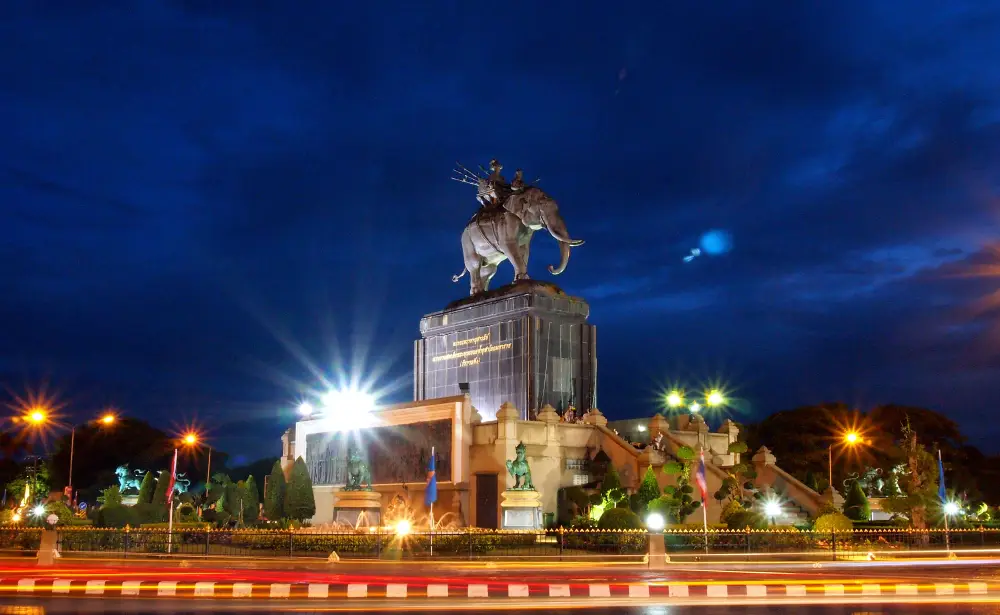
The King Rama I Monument in Buriram Province is one of the most important landmarks in the city of Buriram. Located in the city center on the route toward Prakhon Chai District, the monument is a popular place for visitors to pay respect, take photographs, and begin learning about the historical origins of Buriram. It was built in 1996 to honor King Rama I, also known as King Phutthayotfa Chulalok the Great, the first monarch of the Chakri Dynasty. Long before he ascended the throne, he was known as Somdet Chao Phraya Maha Kasatsuek, a great military leader whose campaign in the lower northeastern region became closely connected with the founding of Buriram. The bronze statue is one and a half times life-size. It depicts the king in traditional warrior attire according to ancient royal military custom, seated on a war elephant, symbolizing leadership, courage, military skill, and the deep gratitude of the people of Buriram.
This monument is significant not only as a historical memorial but also as a civic symbol, a place of reverence, and a gateway into the story of Buriram. For travelers, it is an ideal starting point for understanding that Buriram is not only a province of Khmer stone sanctuaries, football culture, racing events, and modern tourism. It is also a city with a foundation story connected to Siamese military history, local settlement, royal administration, and the transformation of a former frontier area into a major province in the lower northeast of Thailand.
The monument stands at an important traffic circle in Buriram city. Its position links the city center with roads leading toward Prakhon Chai District and several major attractions, including Chang Arena, Buriram Castle, Khao Kradong Forest Park, Prasat Muang Tam, and Phanom Rung Historical Park. Because of this location, the monument is more than a roadside statue. It functions as a historical threshold to the city. Travelers entering or passing through Buriram often recognize the commanding image of King Rama I on a war elephant rising above the roundabout, creating one of the most memorable urban scenes in the province.
The deep meaning of the monument comes from the founding history of Buriram. According to the historical narrative recorded in the chronicles, in 1778 King Taksin of Thonburi ordered Somdet Chao Phraya Maha Kasatsuek to lead an army to suppress Phraya Nang Rong, who had allied with Chao O and Chao In of Champasak. During the military campaign, Somdet Chao Phraya Maha Kasatsuek found an abandoned settlement in the Huai Chorakhe Mak basin. The area had a good strategic location, though malaria and dense forest conditions had discouraged people from living in the central area. Communities existed around it, and the site was later reorganized into a new town.
Somdet Chao Phraya Maha Kasatsuek gathered people and established the settlement as Mueang Pae. He appointed the son of the ruler of Phutthaisaman, who had accompanied the campaign, as the town governor. This governor later received the title Phraya Nakhon Phakdi. In time, Mueang Pae was renamed Mueang Buriram. The name Buriram carries the sense of a pleasant or joyful city. This historical account explains why the monument is so important to the province. It is not merely a bronze statue on a pedestal. It represents the beginning of the city, the collective memory of Buriram, and the gratitude of local people toward the figure associated with its founding.
The image of King Rama I seated on a war elephant is powerful and symbolic. In traditional royal and military culture, the war elephant represented strength, authority, royal dignity, and victory. The warrior attire reflects Somdet Chao Phraya Maha Kasatsuek’s role as a military leader before becoming king. The monument’s design therefore directly corresponds with the historical episode of military movement, suppression of unrest, and the establishment of Buriram as an organized town. Every major visual element of the monument communicates this connection between leadership, warfare, and state formation.
The bronze material gives the statue a sense of permanence, weight, and dignity. In daylight, visitors can observe the surface of the metal, the details of the royal warrior costume, the posture of the king, and the form of the elephant. At night, the lighting around the monument changes the atmosphere. The statue becomes more dramatic and solemn, standing out against the moving lights of the city. Many visitors therefore stop by during the day for worship and historical appreciation, and again in the evening for photographs.
The monument base is elevated and includes an area where people can pay respect in an orderly way. Standing in front of the monument, visitors naturally look upward toward the royal figure, creating a sense of reverence. The surrounding area functions as a civic reference point where local residents arrange meetings, give directions, and identify the city center. For travelers, it is a convenient first stop before continuing to other destinations in and around Buriram.
In terms of urban landscape, the King Rama I Monument works like a symbolic center of Buriram. Because it stands in a roundabout, it can be seen from several directions. Modern Buriram is now known for sport, tourism, hotels, restaurants, and major events, yet this monument continues to remind visitors of the city’s historical roots. It connects the story of the past with the movement and growth of the present-day city.
Visitors should begin by paying respect to the monument, then take time to observe the details around the base and the surrounding space. Important features include the king’s posture on the war elephant, the warrior costume, the elevated base, the sculptural elements, and the monument’s position at a major urban junction. A slow visit reveals that this is not merely a photo stop. It is a compact introduction to the history of Buriram Province.
The worship area is suitable for quiet reflection and respectful homage. Visitors may bring garlands or flowers if they wish. They should keep the area orderly, avoid disturbing others who come to pay respect, and avoid parking or standing in places that obstruct traffic. Since the monument is located near a busy roundabout and main road, safety should always be considered, especially during peak traffic hours.
The monument clearly shows the relationship between royal history and local history. Buriram did not emerge in isolation. Its founding is connected with military campaigns, regional administration, frontier settlement, and the consolidation of Siamese authority in the lower northeastern region during the late Thonburi and early Rattanakosin periods. The story of Somdet Chao Phraya Maha Kasatsuek discovering the abandoned settlement and organizing it as Mueang Pae brings together geography, local communities, governance, and state security in one historical moment.
The Huai Chorakhe Mak basin mentioned in the founding story helps explain the landscape of early Buriram. A river basin offered water, farming potential, and settlement opportunities. At the same time, forest conditions and disease once made some areas difficult to inhabit. The establishment of Mueang Pae therefore involved both strategic judgment and social organization. Over time, that settlement developed into Buriram, one of the most important provinces of the lower northeast.
Seen through this historical lens, the King Rama I Monument is a point where many layers of history meet: the abandoned settlement, the communities around the basin, the military campaign of Somdet Chao Phraya Maha Kasatsuek, the establishment of Mueang Pae, the appointment of Phraya Nakhon Phakdi, and the later name Buriram. These layers make the monument a place of memory that deserves more than a passing glance.
For visitors from other provinces, the monument is a practical and meaningful beginning to a Buriram itinerary. It is easy to reach, does not require much time, and helps provide context before visiting other places such as Khao Kradong Forest Park, Buriram Castle, Chang Arena, Prasat Muang Tam, and Phanom Rung Historical Park. Beginning a trip here allows travelers to understand Buriram through history, city life, sport, culture, and Khmer heritage in a more complete way.
During the daytime, the main advantage of visiting is the ability to see the details clearly. Natural light reveals the bronze surface, the warrior costume, the elephant, and the monument base. It is ideal for visitors who want to study the artistic and historical details. In the evening and at night, the atmosphere becomes more dramatic. The lighting around the monument makes it stand out against the city, creating one of the best night photography spots in central Buriram.
Photography should be done with respect and safety. Popular angles include the front of the base, the surrounding plaza, and night views that include the lights around the roundabout. Visitors should avoid blocking people who come to pay respect and should not step into unsafe traffic areas for photographs. The best images can be taken from safe public spaces around the monument.
The area around the monument is close to restaurants, cafés, hotels, and major city attractions. A relaxed itinerary could begin with paying respect at the monument, continue to the Buriram City Pillar Shrine, then go to Buriram Castle or Chang Arena, and end with Khao Kradong Forest Park or dinner in the city. This route gives travelers a balanced experience of history, urban identity, sport, and local lifestyle in one day.
For travelers interested in the Chakri Dynasty, this monument is a valuable learning point. King Rama I is often remembered as the founder of Bangkok and the first monarch of the Chakri Dynasty, but his earlier role as Somdet Chao Phraya Maha Kasatsuek was equally important. His military leadership, regional campaigns, and work in organizing towns helped shape the stability of Siam. The Buriram story is one part of that wider royal biography and shows his historical importance before the establishment of Rattanakosin.
For local residents, the monument is a source of civic pride. Many people in Buriram have grown up seeing the royal statue at the center of the city. It serves as a landmark, a meeting point, a symbol of home, and a place of reverence. This emotional connection makes the monument more than a work of public art. It is part of everyday life and part of Buriram’s identity.
The surrounding urban landscape also makes the monument interesting to observe. Roads, businesses, hotels, transport services, and nearby attractions show how Buriram has grown from a historical town into a modern tourism and sports city. Yet in the middle of this movement, the King Rama I Monument remains steady as a symbolic anchor. It connects memory with development and gives the city a clear historical center.
The monument is suitable for many types of visitors: history lovers, families, travelers passing through the city, football fans visiting Buriram for matches, people heading toward Prakhon Chai, and photographers looking for a recognizable landmark. A visit does not take long, but it provides more historical meaning than an ordinary sightseeing stop.
To make the visit more meaningful, travelers should read about the founding of Buriram before or after paying respect. Knowing that Buriram was once Mueang Pae and that its founding is linked to Somdet Chao Phraya Maha Kasatsuek makes the image of the king on a war elephant much more powerful. The warrior attire, elephant, base, and central location all relate directly to the province’s historical story.
The monument is accessible throughout the day because it is a public urban landmark and there is no admission fee. The best times to visit are morning, late afternoon, and evening. Morning offers a quiet atmosphere for paying respect. Late afternoon is cooler and comfortable. Night is especially attractive for photography because of the monument lighting. Visitors arriving by car should be careful around the roundabout and use safe parking areas nearby.
From within Buriram city, the monument is easy to reach on the main route toward Prakhon Chai District. From Buriram Railway Station or Buriram Bus Terminal, visitors can use local transport, taxi services, songthaews, or private vehicles to reach the monument. Travelers staying in the city can include it as the first stop in the morning or as a brief evening visit before returning to their hotel.
Because the monument stands near a busy road and roundabout, visitors should be careful when walking, crossing streets, or taking photographs. Do not stop vehicles in unsafe areas, do not stand in traffic lanes, and keep children close. During the day, sun protection may be useful because parts of the worship area are exposed. At night, choose photo spots that do not disturb traffic or other visitors.
The King Rama I Monument in Buriram is therefore significant in history, art, civic memory, and contemporary tourism. It tells the origin story of the city in a concise but powerful way. Anyone arriving in Buriram should stop here at least once to pay respect and understand the beginning of the province through the image of King Rama I seated on a war elephant, standing as a central symbol of Buriram’s pride and identity.
| Name | King Rama I Monument, Buriram / King Phutthayotfa Chulalok The Great Monument |
| Location | Nai Mueang Subdistrict, Mueang Buriram District, Buriram Province 31000, On The Route Toward Prakhon Chai District |
| Address | X4P3+MVC, Nai Mueang Subdistrict, Mueang Buriram District, Buriram Province 31000, Thailand |
| Highlights | Bronze statue of King Rama I, one and a half times life-size, dressed as a traditional warrior and seated on a war elephant, serving as a major landmark in central Buriram |
| History / Period | Built in 1996 to honor King Rama I, the first monarch of the Chakri Dynasty, who played an important role in the founding of Buriram when he was Somdet Chao Phraya Maha Kasatsuek |
| Historical Background | In 1778, King Taksin ordered Somdet Chao Phraya Maha Kasatsuek to lead an army to suppress Phraya Nang Rong. During the campaign, he found an abandoned settlement in the Huai Chorakhe Mak basin, gathered people, established Mueang Pae, and the town later became Buriram. |
| Distinctive Features | The king is depicted on a war elephant, symbolizing military leadership, courage, and his role before ascending the throne as King Rama I |
| Main Areas / Zones | 1. Royal Statue On A War Elephant 2. Monument Base And Sculptural Elements 3. Front Worship Plaza 4. Roundabout Viewing Area 5. Daytime And Night Photography Spots 6. City Route Connecting To Prakhon Chai District |
| Travel Information | Located in Buriram city on the route toward Prakhon Chai District. It is accessible by private car, local transport, songthaew, or taxi from Buriram Railway Station and Buriram Bus Terminal. |
| Current Status | Public civic landmark and important place of reverence in Buriram city, open to residents and travelers daily |
| Open Days | Daily |
| Opening Hours | Open 24 Hours |
| Fees | No Admission Fee |
| Facilities | Worship Area, Photography Area, Sidewalks Around The Roundabout, Nearby Restaurants, Hotels, Shops, And City Transport Services |
| Caretaker / Related Local Authority | Buriram City Municipality |
| Main Contact Number | 044-602-345 Buriram City Municipality |
| Official Website / Official Page | buriramcity.go.th |
| Nearby Tourist Attractions | 1. Buriram City Pillar Shrine, About 2 km 2. Buriram Castle, About 4 km, Tel. 093-559-5588 3. Phanom Rung Stone Castle Replica, About 4 km 4. Chang Arena, About 5 km 5. Khao Kradong Forest Park, About 7 km, Tel. 044-637-349 |
| Nearby Restaurants | 1. Slainte Bar & Restaurant, About 1 km, Tel. 065-230-2786 2. London Steak Buriram Branch 1, About 1 km, Tel. 044-115-213 3. Osteria Italia, About 2 km, Tel. 044-634-653 4. Tumkratoei Buriram, About 2 km, Tel. 044-110-893 5. Octopus’s Garden Salad Muek Café, About 3 km, Tel. 064-361-3975 |
| Nearby Accommodations | 1. SNOW HOUSE Buriram, About 2 km, Tel. 090-258-3030 2. Green@Buriram Hotel, About 2 km, Tel. 044-666-086 3. Cresco Hotel Buriram, About 4 km, Tel. 044-634-901 4. Modena By Fraser Buriram, About 4 km, Tel. 044-118-188 5. Amari Buriram United, About 5 km, Tel. 044-111-444 |
Frequently Asked Questions (FAQ)
Q: Where is the King Rama I Monument in Buriram located?
A: It is located in Buriram city, Nai Mueang Subdistrict, Mueang Buriram District, on the route toward Prakhon Chai District. It is one of the city’s most recognizable landmarks.
Q: When was the King Rama I Monument in Buriram built?
A: The monument was built in 1996 to honor King Rama I, the first monarch of the Chakri Dynasty, who is closely associated with the founding of Buriram.
Q: Why is King Rama I connected with Buriram?
A: Before becoming king, he was Somdet Chao Phraya Maha Kasatsuek. During a military campaign in the lower northeast, he gathered people and established Mueang Pae, which later became Buriram.
Q: What is special about the monument’s design?
A: The bronze statue is one and a half times life-size and depicts King Rama I in traditional warrior attire seated on a war elephant, symbolizing leadership and military achievement.
Q: Is there an admission fee to visit the monument?
A: No. The monument is a public landmark and can be visited without an admission fee.
Q: What is the best time to visit?
A: Morning is good for paying respect in a quiet atmosphere, while late afternoon and evening are better for photography because the weather is cooler and the monument lighting is attractive.
Q: What nearby attractions can visitors combine with the monument?
A: Nearby places include Buriram City Pillar Shrine, Buriram Castle, Chang Arena, Khao Kradong Forest Park, and the route toward Prakhon Chai District.
Q: What should visitors be careful about when taking photographs?
A: Visitors should be careful around the roundabout, use safe public spaces for photography, avoid obstructing traffic, and respect people who come to pay homage.
 Category: ●Art, Culture and Heritage
 Group: ●Landmarks and Memorials
Last Update : 4 MonthAgo
 Last Update : 4 MonthAgo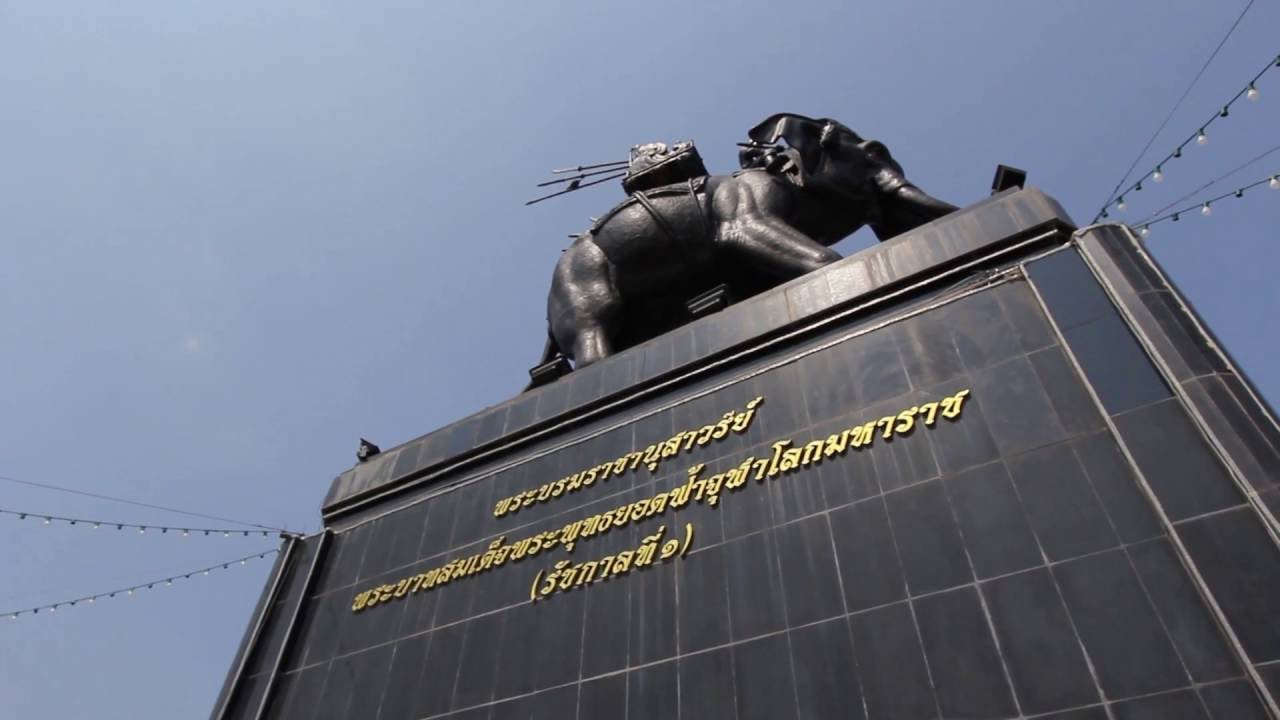
 Click to Access the Navigation Map GPS
The King Rama I Monument Map
Recommend

 Historical Sites and Monuments(14)
Landmarks and Memorials(2)
Historical Sites and Monuments(14)
Landmarks and Memorials(2)
 Art, Craft Centres, Tradition(6)
 Museums(3)
 Educational Places
 Museum for Study(1)
 Places of Worship
 Temple(74)
 Other Sacred Sites(5)
 Research and Development
 Royal Project(1)
 Suburban Living
 Village, Community(3)
 Nature and Wildlife
 National Parks and Marine Reserves(2)
 Mountain (Doi)(1)
 Dam, Reservoir, Lake(14)
 River, Canal(1)
 Bays and Beaches(1)
 Other natural attractions(2)
 Entertainment and Agricultural
 Animal camps and shows(1)
 Stadium(2)
 Farms, Parks and Ecotourism(2)
 Waterpark(2)
 Travel Articles, Recipes
 Travel Review, Food Review(1)


