
lovethailand home >Northeastern Travel Attractions >Buri Ram Travel Attractions >Prakhon Chai >Chorakhe Mak > Prasat Hin Mueang Tam
TL;DR: Prasat Hin Mueang Tam is located at Ban Khok Mueang, Chorakhe Mak Subdistrict, Prakhon Chai District, Buriram Province, open Daily, hours 07.00 – 18.00.
Prasat Hin Mueang Tam
Open Days: Daily
Opening Hours: 07.00 – 18.00
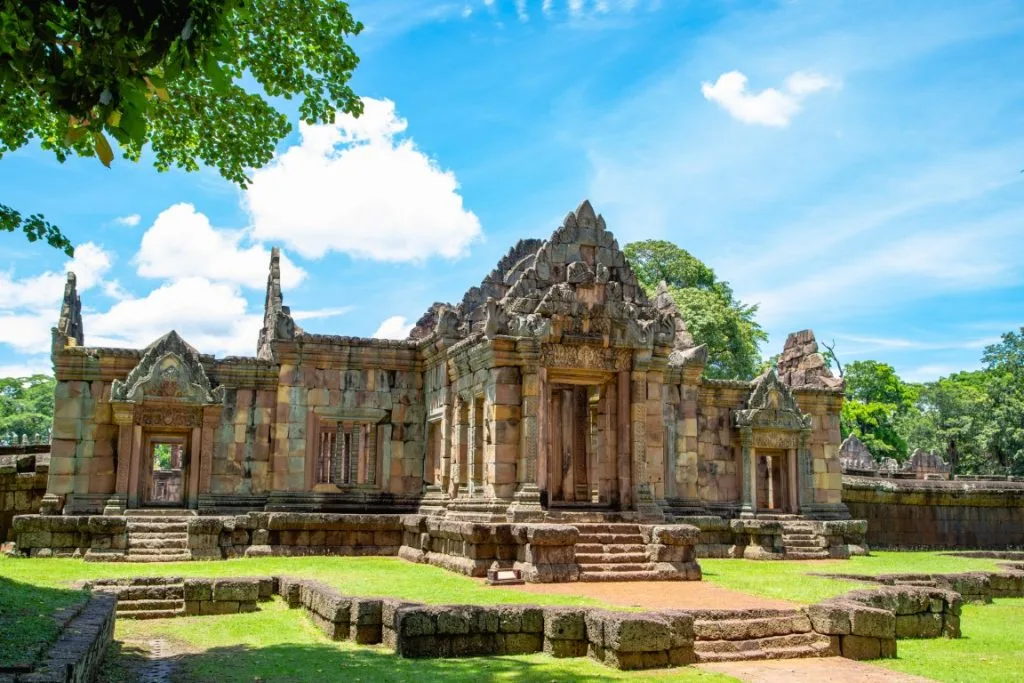
Prasat Hin Mueang Tam is one of Buriram’s most beautiful Khmer sanctuaries, located in Chorakhe Mak Subdistrict, Prakhon Chai District, about 8 km from Phanom Rung Historical Park. Its highlights include 5 brick towers, 4 L-shaped ponds framed by 5-headed Naga balustrades, sandstone gateways, a laterite outer wall, an inner gallery, and Hindu relief carvings that reflect the Khleang and Baphuon styles of ancient Khmer art.
Prasat Hin Mueang Tam is located at Ban Khok Mueang, Chorakhe Mak Subdistrict, Prakhon Chai District, Buriram Province. It is one of the most impressive Khmer sanctuaries in northeastern Thailand and one of the essential historic sites to visit together with Phanom Rung Historical Park. Although its name means “lower city” or “lowland town,” the artistic, architectural, and historical value of this sanctuary is exceptionally high. The site preserves a refined sacred layout with brick towers, sandstone gateways, an inner gallery, a laterite outer enclosure, 4 symbolic ponds, and beautifully carved Hindu imagery.
The exact construction date and builder of Prasat Hin Mueang Tam are not recorded in a surviving inscription, but its architectural and artistic evidence places the sanctuary within the ancient Khmer cultural sphere. The monument shows clear features of the Baphuon style, dated roughly to 1007 – 1082 CE in the Thai Buddhist calendar range of around B.E. 1550 – 1625, together with elements of the earlier Khleang style, around B.E. 1508 – 1555. These stylistic features indicate that the sanctuary was built around the 10th to 12th centuries as a Hindu religious site, most likely connected with the worship of Shiva and other Hindu deities.
The name Mueang Tam is usually understood through its landscape. The sanctuary stands on the lowland plain below Phanom Rung, while Prasat Phanom Rung rises dramatically on the summit of an extinct volcano. This contrast helps travelers understand the relationship between the 2 major sites. Phanom Rung represents a mountain sanctuary associated with Mount Kailasa, the cosmic abode of Shiva, while Mueang Tam represents a lowland religious center closely connected with settlement, water, agriculture, and community life. Visiting both places together provides a much clearer picture of the sacred landscape of ancient Buriram.
The location of Prasat Mueang Tam is historically significant because it lies near a large ancient settlement zone. Archaeological research in the surrounding area has revealed ancient communities such as Ban Khok Mueang, Khok Yai Khan, and Khok Salong Tong. Finds from these areas include pottery, daily utensils, brown-glazed ceramics, and green-glazed wares. These artifacts show that the sanctuary was not an isolated temple standing alone in the landscape. It was part of a living community with settlement, production, exchange, religious practice, and social organization.
As visitors enter the sanctuary, one of the first things they notice is the balanced and elegant plan. Prasat Mueang Tam is enclosed by 2 walls. The outer wall is built of laterite, while the inner enclosure is made of sandstone and forms a continuous narrow rectangular gallery known in Thai as rabiang khot. Both enclosure systems have gateways aligned on the 4 cardinal directions. This arrangement creates a carefully ordered sequence of movement: from the outside world, through water and enclosure, through gateways and galleries, and finally toward the central group of towers, the sacred heart of the monument.
The main sanctuary consists of 5 brick towers built on a single laterite base. They are arranged in 2 rows: 3 towers in the front row and 2 towers in the rear row. The principal tower, the largest of the group, stands in the center of the front row. Today, only its base remains, while the other towers are also incomplete. Even in their present condition, however, the arrangement clearly shows the original architectural intention. Each tower has a real entrance only on the east side, while the other sides have false doors, a common feature in Khmer sacred architecture. The principal tower also had an additional front porch, emphasizing the eastern axis of worship.
Excavations around the principal tower uncovered an important lintel from the porch doorway. The carving shows a deity holding a blue lotus, seated above a kala face and surrounded by female attendants. The pediment shows Indra riding the three-headed elephant Airavata, while another lintel shows a seated deity above kala. These carvings are not merely decorative. They are visual expressions of Hindu cosmology, divine protection, fertility, sacred power, and the transition from the human world into the world of the gods.
Fragments of stucco decoration were also found around the tower bases, showing that the brick towers were once plastered and ornamented with elaborate molded designs. What visitors see today is the surviving core of the structure, but in its original condition the sanctuary would have had plastered surfaces, decorative stucco, carved sandstone elements, ritual objects, and ceremonial life. The present ruins therefore invite visitors to imagine the original completeness of the monument while appreciating the authentic remains that still survive.
Two of the subsidiary towers still preserve lintels above their eastern entrances. One lintel shows Shiva holding Uma on his lap while seated on Nandi, the sacred bull. This image reflects the importance of Shiva within the religious meaning of the sanctuary. Another lintel depicts Varuna, a Hindu deity associated with water and cosmic order. These carvings show how the sanctuary integrated architecture, image, direction, and belief into one coherent sacred program.
Excavations also found a sandstone tower finial carved in the form of a lotus. In Indian and Khmer religious symbolism, the lotus represents purity, sacred emergence, and the relationship between water, creation, and divinity. This discovery helps visitors understand that the towers once rose higher and were crowned by symbolic architectural elements, not simply by the brick bases visible today.
In front of the tower group stand 2 brick vihara-like buildings facing the side towers. These buildings complete the symmetry of the sanctuary plan and suggest that ritual activity took place in a sequence, rather than at a single point. The sanctuary had spaces for approach, preparation, offering, movement, and worship. This careful organization is one of the reasons Prasat Mueang Tam is considered one of the most beautifully planned Khmer sanctuaries in Thailand.
The gateways are among the most rewarding parts of the site to study closely. Most of them are built of sandstone and decorated with carved pediments, lintels, attached columns, and door frames. The reliefs include Hindu stories and floral scroll patterns often called lai phan phrueksa in Thai. These plant-based designs represent more than ornament. They express abundance, growth, vitality, and the sacred energy that surrounds the religious space.
Between the inner and outer enclosure walls lies a wide laterite-paved courtyard. At the 4 corners are large L-shaped ponds following the line of the walls. The ponds are edged with laterite blocks arranged like steps descending toward the bottom, while the upper rims are formed by sandstone Naga bodies. At the corners, the Naga heads rise with 5 hoods. These 5-headed Nagas are relatively plain and unadorned, yet their form is powerful, calm, and deeply symbolic.
The 4 ponds are one of the defining features of Prasat Mueang Tam. Water in Hindu sacred architecture is associated with purification, fertility, cosmic balance, and the separation between ordinary space and sacred space. When the towers, walls, sky, and trees are reflected in the water, the sanctuary becomes visually and symbolically complete. Morning and late afternoon light make this area especially beautiful, as the Naga balustrades and the still water create one of the most memorable scenes in Buriram.
The Naga in Khmer art functions as a guardian, a water symbol, and a bridge between the human world and the sacred realm. At Prasat Mueang Tam, the use of Naga bodies as pond borders and 5-headed Naga figures at the corners shows how artistic design, hydraulic symbolism, and religious belief were integrated into the sanctuary landscape. Visitors should take time to walk around the ponds and observe the relationship between laterite steps, sandstone Naga forms, gateways, and the central towers.
Another reason Prasat Mueang Tam is so rewarding is that it can be viewed from many angles. Visitors can walk through the gateways, look across the ponds, move along the inner gallery, and view the central towers from different perspectives. The contrast of materials is also important. Sandstone was used for carved and refined elements, laterite for strong structural foundations and walls, brick for the tower bodies, and stucco for decorative details. Together, these materials reveal the technical and artistic sophistication of ancient Khmer builders.
Prasat Mueang Tam is also a key place for understanding the wider Khmer cultural route through lower northeastern Thailand. The sanctuary lies on a cultural corridor linking Angkor in present-day Cambodia with the Phanom Dong Rak mountain range, the Ta Muean group of temples in Surin, Prasat Mueang Tam, Phanom Rung, and Prasat Phimai in Nakhon Ratchasima. This route reflects the movement of people, religious ideas, artistic styles, construction knowledge, and political relationships in the ancient Khmer world.
Compared with Phanom Rung, Prasat Mueang Tam offers a different but complementary experience. Phanom Rung impresses visitors with its monumental mountain setting, long processional axis, and association with Mount Kailasa. Mueang Tam, by contrast, offers calm lowland beauty, a precise architectural plan, water symbolism, Naga-framed ponds, and a strong connection to the surrounding community. Travelers with limited time can visit both in half a day, but those who enjoy history, art, and photography should allow at least 1 to 2 hours for Mueang Tam alone.
The best time to visit is in the morning or late afternoon. The light is softer, the weather is more comfortable, and the ponds, gateways, Naga figures, and brick towers are better for photography. Midday visits are possible, but parts of the site are open and sunny, so travelers should bring a hat, drinking water, sunscreen, and comfortable walking shoes. Photographers should walk around the sanctuary instead of taking only front-view pictures, because the reflections, gateways, and side angles offer many distinctive compositions.
For art lovers, the lintels and pediments deserve careful attention. The images of Shiva and Uma, Indra on Airavata, Varuna, kala faces, Naga forms, and floral scrolls all communicate Hindu ideas about divinity, protection, direction, water, fertility, and cosmic order. The sanctuary is therefore valuable not only for casual sightseeing but also for students, researchers, cultural travelers, and foreign visitors who want to understand Khmer heritage in Thailand more deeply.
The sanctuary also remains closely connected with Ban Khok Mueang community. Houses, roads, local temples, and everyday life exist close to the monument, giving the area a peaceful and approachable atmosphere. This relationship between ancient architecture and local life makes Prasat Mueang Tam different from remote ruins. It feels like a living cultural landscape where the past remains visible within the present.
Prasat Mueang Tam is under the care of the Fine Arts Department through Phanom Rung Historical Park. Visitors should respect all conservation rules. Do not climb on the stone structures, touch or scratch the carvings, move stones or archaeological fragments, or leave waste in the area. The ponds, laterite courtyards, sandstone gateways, and carved elements are all irreplaceable historical evidence that must be preserved carefully.
Getting There is easiest by private car, rental car, or hired vehicle. Prasat Mueang Tam is about 8 km from Phanom Rung Historical Park on a paved road. From Buriram city, travelers can drive toward Prakhon Chai District and continue to Chorakhe Mak Subdistrict and Ban Khok Mueang. The distance from Buriram city is about 60 km. From Nang Rong, travelers can easily combine Phanom Rung, Mueang Tam, and Wat Khao Angkhan in one day. Public transport directly to the sanctuary is limited, so a rental car or hired car with driver is the most practical option.
A good itinerary is to visit Prasat Mueang Tam early in the morning, when the light is gentle and the atmosphere is quiet, then continue to Phanom Rung. Travelers can also start at Phanom Rung and come down to Mueang Tam afterward. This route helps visitors understand the connection between a mountain sanctuary and a lowland sanctuary. With more time, it is worth adding Baray Mueang Tam, Kuti Ruesi Ban Khok Mueang, and nearby community areas to understand the full cultural landscape around the monument.
Prasat Hin Mueang Tam is therefore much more than a beautiful photo spot in Buriram. It is a major Hindu sanctuary of the ancient Khmer world, a lesson in architecture, water symbolism, sandstone carving, and the relationship between sacred monuments and local communities. A careful walk through the site reveals a deeper layer of Buriram: not only a modern sports city, but also a historic land connected to Khmer civilization and the cultural memory of lower northeastern Thailand.
| Name | Prasat Hin Mueang Tam |
| Location | Ban Khok Mueang, Chorakhe Mak Subdistrict, Prakhon Chai District, Buriram Province |
| Address | Chorakhe Mak Subdistrict, Prakhon Chai District, Buriram 31140, Thailand |
| Coordinates | Ban Khok Mueang Area, Chorakhe Mak Subdistrict, Prakhon Chai District, Buriram Province |
| Highlights | A Lowland Khmer Sanctuary With 5 Brick Towers, 4 Naga-Framed Ponds, Sandstone Gateways, An Inner Gallery, And Hindu Relief Carvings |
| History | Khleang And Baphuon Style Khmer Art, Dating Around The 10th To 12th Centuries, Built As A Hindu Religious Sanctuary |
| Name Origin | The Name Mueang Tam Refers To Its Lowland Location Below Phanom Rung, Which Stands On A Mountain Summit |
| Distinctive Features | 5 Brick Towers On A Single Base, Arranged In 2 Rows With 3 Towers In Front And 2 Behind. The Main Tower Stands In The Center Of The Front Row, With Real Entrances Facing East And False Doors On Other Sides. |
| Main Areas / Zones | 1. Five Brick Towers 2. Main Tower And Front Porch 3. Two Brick Vihara Buildings 4. Inner Sandstone Gallery 5. Outer Laterite Wall 6. Four Directional Gateways 7. Four Ponds With 5-Headed Naga Balustrades 8. Laterite Courtyard Between The Inner And Outer Enclosures |
| Key Evidence | Lintels Showing A Deity Holding A Lotus Above Kala, Indra On Airavata, Shiva With Uma On Nandi, Varuna, Stucco Fragments, And A Sandstone Lotus-Shaped Tower Finial |
| Travel Information | About 8 Km From Phanom Rung Historical Park On A Paved Road. Best Reached By Private Car, Rental Car, Or Hired Vehicle From Buriram City, Nang Rong, Or Prakhon Chai. |
| Current Status | Open To Visitors And Protected As An Important Archaeological Site Under The Fine Arts Department |
| Open Days | Daily |
| Opening Hours | 07.00 – 18.00 |
| Fees | Thai Visitors 20 THB, Foreign Visitors 120 THB. Combined Ticket For Phanom Rung And Mueang Tam: Thai Visitors 30 THB, Foreign Visitors 250 THB. |
| Facilities | Visitor Service Area, Parking, Restrooms, Walking Routes, Information Signs, Rest Areas, And Photo Spots |
| Caretaker | The Fine Arts Department, Through Phanom Rung Historical Park |
| Main Contact Number | Phanom Rung Historical Park, Tel. 044-666-251 |
| Official Website / Official Page | Phanom Rung Historical Park, Fine Arts Department |
| Nearby Tourist Attractions | 1. Baray Mueang Tam, About 0.6 Km 2. Kuti Ruesi Ban Khok Mueang, About 0.9 Km 3. Phanom Rung Historical Park, About 8 Km 4. Prasat Hin Ban Bu, About 13 Km 5. Wat Khao Angkhan, About 22 Km 6. Lam Nang Rong Dam, About 35 Km |
| Nearby Restaurants | 1. NATEE Cafe’ Buriram, About 13 Km, Tel. 098-197-8004 2. Ran Laang Wang Prakhon Chai, About 16 Km, Tel. 084-605-4324, 099-170-9199 3. Sobhlasta Restaurant At Eireann Boutique Hotel, About 17 Km, Tel. 087-493-9919, 044-666-199 4. Le Loft Bar & Restaurant, About 25 Km, Tel. 094-310-9913 5. Steve & Lek Restaurant, About 25 Km |
| Nearby Accommodations | 1. Hotel De L’amour Buriram, About 16 Km, Tel. 098-102-7809, 044-651-555 2. Eireann Boutique Hotel, About 17 Km, Tel. 087-493-9919, 044-666-199 3. Sohground Boutique Resort, About 18 Km, Tel. 080-488-3183 4. Phanomrungpuri Hotel, About 28 Km, Tel. 044-632-222, 086-336-6618 5. Alvarez Hotel Buriram, About 58 Km, Tel. 044-611-555 |
Frequently Asked Questions (FAQ)
Q: Where Is Prasat Hin Mueang Tam Located?
A: Prasat Hin Mueang Tam is located at Ban Khok Mueang, Chorakhe Mak Subdistrict, Prakhon Chai District, Buriram Province, about 8 km from Phanom Rung Historical Park.
Q: What Was Prasat Hin Mueang Tam Built For?
A: It was built as a Hindu religious sanctuary. Many carvings and architectural elements are connected with Shiva, Hindu deities, and ancient Khmer cosmology.
Q: What Are The Main Highlights Of Prasat Hin Mueang Tam?
A: The highlights include 5 brick towers, 4 ponds with 5-headed Naga balustrades, sandstone gateways, an inner gallery, and Hindu lintel carvings.
Q: What Are The Opening Hours Of Prasat Hin Mueang Tam?
A: The sanctuary is open daily from 07.00 to 18.00.
Q: How Much Is The Admission Fee?
A: The admission fee is 20 THB for Thai visitors and 120 THB for foreign visitors. A combined ticket for Phanom Rung and Mueang Tam costs 30 THB for Thai visitors and 250 THB for foreign visitors.
Q: When Is The Best Time To Visit Prasat Hin Mueang Tam?
A: Morning and late afternoon are the best times to visit because the weather is cooler, the light is softer, and the ponds, Naga sculptures, gateways, and brick towers are more photogenic.
Q: Can Travelers Visit Prasat Hin Mueang Tam And Phanom Rung On The Same Trip?
A: Yes. The 2 sites are only about 8 km apart and are usually visited together as one of the most important Khmer heritage routes in Buriram.
Q: How Can Travelers Get To Prasat Hin Mueang Tam?
A: The easiest way is by private car, rental car, or hired vehicle from Buriram city, Nang Rong, or Prakhon Chai. The road from Phanom Rung to Mueang Tam is paved and convenient.
 Category: ●Art, Culture and Heritage
 Group: ●Historical Sites and Monuments
Last Update : 3 MonthAgo
 Last Update : 3 MonthAgo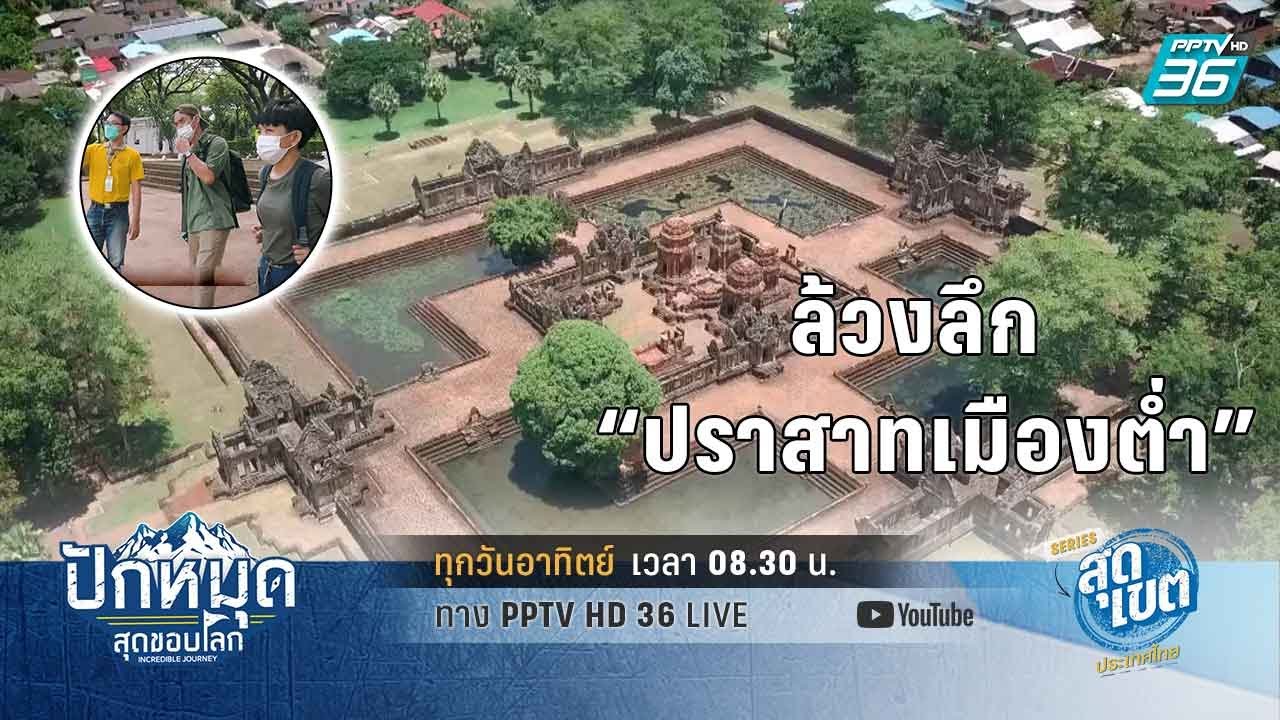
 Click to Access the Navigation Map GPS
Prasat Hin Mueang Tam Map
Recommend
 Historical Sites and Monuments(14)
 Landmarks and Memorials(2)
 Art, Craft Centres, Tradition(6)
 Museums(3)
 Educational Places
 Museum for Study(1)
 Places of Worship
 Temple(74)
 Other Sacred Sites(5)
 Suburban Living
 Village, Community(3)
 Nature and Wildlife
 National Parks and Marine Reserves(2)
 Mountain (Doi)(1)
 Dam, Reservoir, Lake(14)
 River, Canal(1)
 Bays and Beaches(1)
 Other natural attractions(2)
 Entertainment and Agricultural
 Animal camps and shows(1)
 Stadium(2)
 Farms, Parks and Ecotourism(2)
 Waterpark(1)


