
lovethailand home >Northeastern Travel Attractions >Buri Ram Travel Attractions >Non Din Daeng >Non Din Daeng > Nong Hong Sanctuary (Prasat Nong Hong)
TL;DR: Nong Hong Sanctuary (Prasat Nong Hong) is located at Ban Non Din Daeng, Non Din Daeng Subdistrict, Non Din Daeng District, Buriram Province 31260, Thailand, open Daily, hours Open 24 Hours.
Nong Hong Sanctuary (Prasat Nong Hong)
Open Days: Daily
Opening Hours: Open 24 Hours
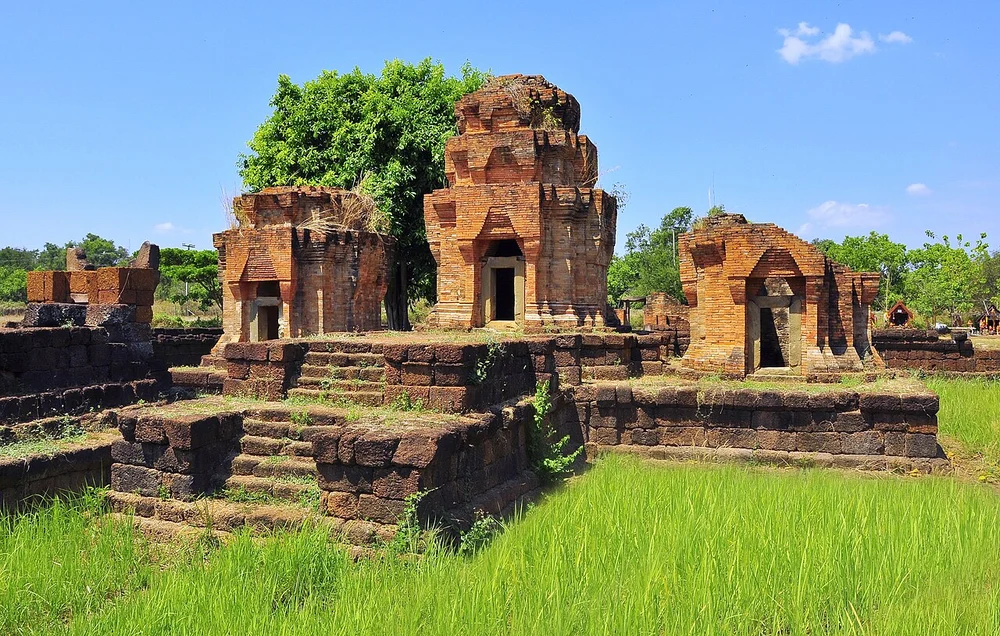
Prasat Nong Hong in Buriram Province is a small Khmer sanctuary with a historical value far greater than its physical size. Located in Ban Non Din Daeng, Non Din Daeng Subdistrict, Non Din Daeng District, the site consists of 3 brick towers standing on a shared laterite base, facing east toward the sacred entrance axis. The towers are arranged from north to south, surrounded by laterite walls, gateways, a laterite library building, and a U-shaped moat. Architecturally and artistically, Prasat Nong Hong belongs to the Baphuon style of ancient Khmer art and dates to around the late 16th Buddhist century to the early 17th Buddhist century. It is one of the most meaningful cultural stops for travelers interested in Khmer heritage, Hindu iconography, archaeological landscapes, and the lesser-known historical routes of southern Buriram.
Prasat Nong Hong stands near Lam Nang Rong Dam, an important landmark of Non Din Daeng District. The surrounding area lies north of the Phanom Dong Rak mountain range, a geographical corridor strongly connected with Khmer civilization in the lower northeastern region of Thailand. Travelers approaching the dam will find the ruins on the left side of the dam ridge. This location makes the site ideal for a combined trip that includes both an ancient Khmer sanctuary and a scenic reservoir landscape. The setting is quiet, open, and strongly tied to the local community rather than to large-scale commercial tourism.
Although Prasat Nong Hong is compact, its historical and artistic importance is substantial. The site is composed of 3 brick prangs built on a continuous laterite foundation. The central tower is the main sanctuary and is larger than the 2 flanking towers to the north and south. This layout reflects the symbolic hierarchy of Hindu religious architecture, where the central shrine functions as the ritual and cosmological focus of the site. The arrangement of the 3 towers also gives visitors a clear visual understanding of how Khmer sanctuaries used symmetry, alignment, and sacred space to express religious meaning.
Each tower has a square plan with indented corners, a form commonly found in Khmer religious architecture. The towers face east and have a real entrance on the eastern side, while the other 3 sides are false doors. This east-facing orientation is significant because the east is associated with light, renewal, auspiciousness, and sacred access. When visitors walk toward the monument from the eastern front, they are following the original ceremonial axis that once guided worshippers into the religious space.
One of the most fascinating aspects of Prasat Nong Hong is the group of carved lintels that once decorated the doorways of the 3 towers. These lintels were finely carved in the Baphuon style of Khmer art. The northern tower was associated with a lintel showing Vishnu riding Garuda above a kala face holding garland strands, surrounded by vegetal motifs. The central tower had a lintel depicting Indra riding the three-headed elephant Airavata. The southern tower was associated with a lintel showing Yama riding a buffalo. These images reveal the rich Hindu symbolism of the sanctuary and make Prasat Nong Hong an important site for understanding Khmer sculpture in Thailand.
The lintels of Prasat Nong Hong are not merely decorative architectural fragments. They are visual documents of belief, ritual, and artistic skill. Images of deities riding their vehicles, such as Vishnu on Garuda, Indra on Airavata, and Yama on a buffalo, reflect a Hindu cosmological system in which divine powers protect, regulate, and sustain the universe. When these images are read together with the layout of the 3 towers, the sanctuary becomes more than a brick structure. It becomes a carefully planned sacred space filled with layered religious meaning.
In front of the central tower, a projecting walkway extends outward, with steps at the front and on both sides. This feature emphasizes the status of the central tower as the main sanctuary. The walkway appears to draw the visitor or worshipper from the outer approach into the central sacred point of the monument. When viewed together with the east-facing orientation, this architectural axis demonstrates how the builders created a controlled and meaningful movement into the ritual space.
Another important feature is the laterite library building, or bannalai, located in front of the tower group and facing toward the southern tower. Banalai buildings are commonly found in Khmer temple complexes. Although the term is often translated as “library,” such buildings may have served broader ritual or sacred functions, including the storage of religious objects or items used in ceremonies. At Prasat Nong Hong, the bannalai helps complete the architectural plan and shows that the site followed established Khmer religious design principles.
The entire group of buildings is enclosed by a laterite wall with gateways at the front and rear. This enclosure is not only a boundary wall; it is also a symbolic threshold between the ordinary outside world and the sacred interior. Passing through the wall, visitors enter a defined religious space. The wall helps preserve the layout of the monument and makes the plan easier to understand. It also reinforces the idea that Khmer temples were designed as ordered sacred landscapes, not as isolated buildings.
A U-shaped moat surrounds the sanctuary area. Water features were important in Khmer and Hindu religious landscapes. In Hindu cosmology, a temple can represent Mount Meru, the cosmic mountain at the center of the universe, while surrounding water may symbolize the cosmic ocean. The U-shaped moat at Prasat Nong Hong therefore adds symbolic depth to the site. It also connects the ancient monument with the modern landscape of Lam Nang Rong Dam nearby, giving visitors a strong sense of how sacred architecture and water environments have long been linked in this region.
The materials used at Prasat Nong Hong are also worth observing closely. The towers are built of brick, while the shared base, enclosure wall, and library building are built of laterite. Brick allowed the builders to shape the towers into vertical sacred forms with indented corners, while laterite provided a durable and stable foundation. This combination shows the technical knowledge of Khmer builders, who selected materials according to function, structure, and visual effect.
Laterite has a reddish-brown color and a porous surface, giving the base and walls a rugged, grounded appearance. Brick has a different visual quality, creating a more refined form for the towers. The contrast between brick and laterite makes Prasat Nong Hong especially interesting for visitors who want to study ancient construction techniques. Even though the site is small, it clearly shows how different materials worked together in Khmer architecture.
The dating of Prasat Nong Hong is based on its architectural form and artistic style, especially the Baphuon characteristics found in its decorative elements. Baphuon art is known for motifs such as kala faces, garland strands, vegetal ornament, and deities shown with their vehicles. The dating to the late 16th Buddhist century and the early 17th Buddhist century places Prasat Nong Hong within an important period of Khmer cultural influence in the lower northeastern region of Thailand.
Compared with larger Khmer sites in Buriram, such as Phanom Rung Historical Park and Prasat Muang Tam, Prasat Nong Hong may appear modest. Its advantage, however, is that visitors can easily understand the complete layout within a compact area. The relationship between the 3 towers, the shared laterite base, the central walkway, the bannalai, the enclosure wall, the gateways, and the moat can be observed without needing a long walk. This makes the site particularly useful for travelers who want to understand the basic structure of a Khmer sanctuary in a clear and accessible way.
Prasat Nong Hong has also gained wider attention because of the repatriation story of the Yama Riding a Buffalo lintel. This important lintel was illegally removed from Thailand and taken abroad for many decades before being returned through the efforts of the Thai government, scholars, civil society, and cooperation from the United States. This story connects Prasat Nong Hong not only with local history but also with national efforts to protect and reclaim Thailand’s cultural heritage.
The story of the Yama Riding a Buffalo lintel helps visitors understand why archaeological preservation matters. A single carved stone can carry information about religion, art, architecture, political history, and the movement of cultural objects across borders. Seeing the original site gives context to the lintel’s meaning. Even when important objects are preserved or displayed under official care elsewhere, visiting the monument itself allows travelers to understand the place where the object once belonged.
From a religious perspective, Prasat Nong Hong was clearly connected with Hindu belief. The deities represented on the lintels reflect the sacred order of the Hindu cosmos. Vishnu, Indra, and Yama each hold specific roles in mythological and cosmological systems. Their presence on different towers suggests a symbolic program linked to divine protection, direction, ritual meaning, and the sacred power of the site. The temple was not simply a local shrine; it was a carefully constructed expression of cosmic order.
The image of Vishnu riding Garuda on the northern tower represents the preserving power of Vishnu and the strength of Garuda, his divine vehicle. The image of Indra riding Airavata on the central tower reflects power, rain, sky, and divine authority. Its placement on the central and largest tower reinforces the importance of the main sanctuary. The image of Yama riding a buffalo on the southern tower evokes themes of death, judgment, law, and cosmic balance. Together, these images create one of the most meaningful iconographic programs among small Khmer sites in Buriram.
The kala face, garland strands, and vegetal motifs carved on the lintels are also important features of Khmer art. Kala is often associated with protective and consuming power at sacred thresholds. Its hands holding garlands and the surrounding plant motifs create a sense of movement, vitality, and sacred abundance. Although carved in stone, the lintel designs seem alive through the rhythm of their lines and the precision of their details. These artistic elements show the skill of Baphuon-period craftsmen.
Today, Prasat Nong Hong is best experienced as a quiet open-air archaeological site. It is not a heavily commercialized tourist attraction and does not have the large facilities of major historical parks. Its appeal lies in its calm atmosphere, its proximity to Lam Nang Rong Dam, and its strong connection to local space. Visitors should bring drinking water, sun protection, and comfortable walking shoes, especially when visiting during the late morning or afternoon, as the area is exposed to sunlight.
A good way to explore the site is to begin by viewing the 3 towers from the eastern front. This angle clearly shows the north-south arrangement and the east-facing orientation. Then observe the shared laterite base, the projecting walkway in front of the central tower, the bannalai building, the enclosure wall, the gateways, and the U-shaped moat. Walking in this order helps visitors understand the architectural plan more effectively than moving randomly through the site.
For photography, Prasat Nong Hong is especially attractive in the morning and late afternoon. Low-angle light brings out the warm tones of brick and laterite, highlighting the texture of the stones and the structure of the towers. A medium-distance photograph from the front can capture all 3 towers and their relationship with the base. A view along the central walkway can emphasize the architectural axis and the importance of the main sanctuary.
Responsible behavior is essential when visiting the site. Visitors should not climb on the base or walls, touch fragile brickwork unnecessarily, move stones or objects, or write on any surface. Although the structures may appear solid, ancient brick and laterite can be fragile after centuries of weathering. Respectful travel helps protect the site for future generations and supports the ongoing preservation of Thailand’s cultural heritage.
Prasat Nong Hong is well placed for a wider cultural and nature route. Nearby Lam Nang Rong Dam and Lam Nang Rong Beach are suitable for relaxation after visiting the ruins. Travelers with more time can continue to Wat Khao Phra Angkhan, Phanom Rung Historical Park, and Prasat Muang Tam. This makes Prasat Nong Hong a meaningful stop in a full-day route through Buriram’s Khmer heritage and southern district landscapes.
Non Din Daeng District is characterized by reservoirs, rural roads, mountain-edge landscapes, and cultural routes that link historical sites with local communities. Visiting Prasat Nong Hong should therefore not be seen as a quick photo stop only. It is an opportunity to understand how geography, water, local settlement, and ancient sacred architecture exist together in one landscape. This relationship between place and history is one of the most rewarding aspects of the visit.
For families, Prasat Nong Hong is a useful outdoor learning site. Children and young travelers can see 3 ancient towers, compare brick and laterite construction, learn why the towers face east, and understand how carved lintels tell stories about Hindu deities. The site makes history tangible. Instead of reading about Khmer art only in books, visitors can stand among the remains of the architecture and connect ideas with a real place.
For international travelers, Prasat Nong Hong offers a valuable perspective on Khmer heritage in Thailand beyond the most famous sites. It shows that Khmer civilization was not represented only by large mountain temples or national-level attractions. Smaller sanctuaries were scattered across villages and local landscapes, each with its own story, environment, and cultural importance. Visiting Prasat Nong Hong adds depth to any journey through Buriram.
The name “Nong Hong” evokes a connection with water and the image of a hong, or swan-like mythical bird, which carries cultural resonance in Indian and Southeast Asian traditions. While the documentary explanation of the name requires specific local evidence, the name has become closely attached to the place and its community memory. Today, “Prasat Nong Hong” is easily remembered as the small 3-tower Khmer ruin near Lam Nang Rong Dam.
Travelers should allow at least 30 minutes to 1 hour for the visit if they want to walk around, take photographs, and observe the architectural details carefully. If the trip includes Lam Nang Rong Dam, Lam Nang Rong Beach, and nearby restaurants, half a day is more appropriate. Travelers continuing to Phanom Rung and Prasat Muang Tam should plan a full-day itinerary, as the distance between these heritage sites requires additional travel time.
Getting There is simple if following the route to Lam Nang Rong Dam. From Non Din Daeng town, head toward the dam. As you approach the dam ridge, Prasat Nong Hong will be on the left side of the ridge area. The site is most convenient by private car. Travelers using online maps should search for “Prasat Nong Hong” or “ปราสาทหนองหงส์” and check the route before departure, as the dam area includes smaller local roads and several turns.
From Buriram city, travelers can drive toward Prakhon Chai or Lahan Sai and continue to Non Din Daeng District through the main local roads. From Nakhon Ratchasima or nearby western provinces, routes through Soeng Sang or connecting roads toward Non Din Daeng can be used. It is advisable to check road conditions, travel time, and fuel stops in advance, especially when combining Prasat Nong Hong with Phanom Rung, Prasat Muang Tam, or accommodations in nearby districts.
The best time to visit is in the morning or late afternoon. The light is better for viewing the details of brick and laterite, the temperature is more comfortable, and photographs are more attractive. During the rainy season, the landscape around the dam and the surrounding area can be green and scenic, but visitors should be careful of slippery ground and wear suitable shoes. During the hot season, water and sun protection are strongly recommended.
Prasat Nong Hong is suitable for travelers who want to experience Buriram more deeply than only visiting the major sites. It is quieter and smaller, but it contains strong artistic and historical details. Its Baphuon-style lintels, 3 brick towers, shared laterite base, bannalai, enclosure wall, U-shaped moat, and repatriated lintel story make the site rich in meaning. A visit offers knowledge, calmness, and a stronger understanding of Thailand’s cultural heritage at the local level.
Overall, Prasat Nong Hong deserves a place on the itinerary of anyone interested in Khmer history and cultural travel. The monument may not be large, but its story is dense and memorable. From the 3 brick towers and false doors to the laterite base, library building, moat, Baphuon art, and Yama Riding a Buffalo lintel, every element contributes to the significance of the site. Prasat Nong Hong is more than a small ruin near a dam. It is a page of history, art, belief, and cultural preservation in Thailand.
| Name | Prasat Nong Hong |
| Location | Ban Non Din Daeng, Non Din Daeng Subdistrict, Non Din Daeng District, Buriram Province 31260, Thailand |
| Address | 15/1 Moo 9, Non Din Daeng Subdistrict, Non Din Daeng District, Buriram Province 31260, Thailand |
| Highlights | Three brick Khmer towers on a shared laterite base, Baphuon-style art, bannalai, laterite enclosure wall, gateways, U-shaped moat, and the story of the Yama Riding a Buffalo lintel |
| History / Period | Hindu Khmer sanctuary in the Baphuon style, dating to around the late 16th Buddhist century to the early 17th Buddhist century |
| Distinctive Features | The 3 towers have square plans with indented corners, face east, and include one real entrance with 3 false doors on the other sides |
| Key Evidence | Lintels depicting Vishnu riding Garuda, Indra riding Airavata, and Yama riding a buffalo, along with excavated artifacts and the remaining architectural plan |
| Main Areas / Zones | 1. Central Main Tower 2. Northern Tower 3. Southern Tower 4. Shared Laterite Base 5. Projecting Walkway In Front Of The Central Tower 6. Laterite Banalai 7. Laterite Enclosure Wall 8. Front And Rear Gateways 9. U-Shaped Moat |
| Travel Information | Use the same route as Lam Nang Rong Dam. As you approach the dam ridge, Prasat Nong Hong is located on the left side of the ridge area. Private car travel is the most convenient option. |
| Current Status | Open-air archaeological site near Lam Nang Rong Dam, suitable for historical and cultural visits |
| Open Days | Daily |
| Opening Hours | Open 24 Hours |
| Facilities | Accessible by car, located near the road and Lam Nang Rong Dam; suitable for a short to medium cultural stop. Sun protection and drinking water are recommended. |
| Caretaker / Related Authority | The Fine Arts Department, through the 10th Regional Office of Fine Arts, Nakhon Ratchasima |
| Main Contact Number | 044-471-518, 10th Regional Office of Fine Arts, Nakhon Ratchasima |
| Official Website / Official Page | finearts.go.th/fad10 |
| Nearby Tourist Attractions | 1. Lam Nang Rong Dam, About 2 km, Tel. 044-606-336 2. Lam Nang Rong Beach, About 2 km 3. Khao Viewpoint, About 4 km 4. Wat Khao Phra Angkhan, About 27 km, Tel. 093-529-5671 5. Phanom Rung Historical Park, About 33 km, Tel. 044-666-251 6. Prasat Muang Tam, About 33 km, Tel. 044-666-251 |
| Nearby Restaurants | 1. Lap Uan Ubon Restaurant, About 400 m, Tel. 044-606-259 2. Pirum Restaurant And Coffee, About 1 km, Tel. 092-541-7889 3. Krua Aep Zaep Non Din Daeng, About 2 km, Tel. 098-196-1632 4. Krua Khun Ya Phochana, About 2 km, Tel. 081-725-2944 5. Preecha Pla Phao Lam Nang Rong Dam, About 2 km, Tel. 099-502-7489 |
| Nearby Accommodations | 1. Mukda Accommodation, About 400 m, Tel. 086-596-9951 2. Nonthong Resort & Hotel, About 1 km, Tel. 087-088-8636 3. DOO KHAO, About 6 km, Tel. 088-899-8247 4. Pakham Gardens Resort, About 12 km, Tel. 092-714-4899 5. Aromdee Hotel, About 14 km, Tel. 093-512-7760 |
Frequently Asked Questions (FAQ)
Q: Where is Prasat Nong Hong located?
A: Prasat Nong Hong is located in Ban Non Din Daeng, Non Din Daeng Subdistrict, Non Din Daeng District, Buriram Province, near Lam Nang Rong Dam.
Q: Why is Prasat Nong Hong important?
A: It is a Hindu Khmer sanctuary in the Baphuon style, dating to around the late 16th Buddhist century to the early 17th Buddhist century. It is also linked to the important Yama Riding a Buffalo lintel.
Q: What can visitors see at Prasat Nong Hong?
A: Visitors can see 3 brick towers on a shared laterite base, a laterite bannalai, enclosure wall, gateways, a U-shaped moat, and the clear layout of a Khmer religious site.
Q: How is Prasat Nong Hong connected to the Yama Riding a Buffalo lintel?
A: The Yama Riding a Buffalo lintel is an important lintel from Prasat Nong Hong. It was illegally taken abroad for many decades before being returned to Thailand, making the site significant for both art history and cultural heritage preservation.
Q: How can travelers get to Prasat Nong Hong?
A: Use the same route as Lam Nang Rong Dam. As you approach the dam ridge, the ruins are on the left side of the ridge area. Traveling by private car is the most convenient option.
Q: What is the best time to visit Prasat Nong Hong?
A: Morning and late afternoon are the best times because the weather is more comfortable and the light is ideal for viewing and photographing the brick and laterite structures.
Q: What attractions can be visited together with Prasat Nong Hong?
A: Nearby places include Lam Nang Rong Dam, Lam Nang Rong Beach, Wat Khao Phra Angkhan, Phanom Rung Historical Park, and Prasat Muang Tam.
Q: What should visitors prepare before visiting Prasat Nong Hong?
A: Visitors should dress respectfully, bring drinking water and sun protection, avoid climbing or touching the ancient structures, and help keep the site clean.
 Category: ●Art, Culture and Heritage
 Group: ●Historical Sites and Monuments
Last Update : 3 MonthAgo
 Last Update : 3 MonthAgo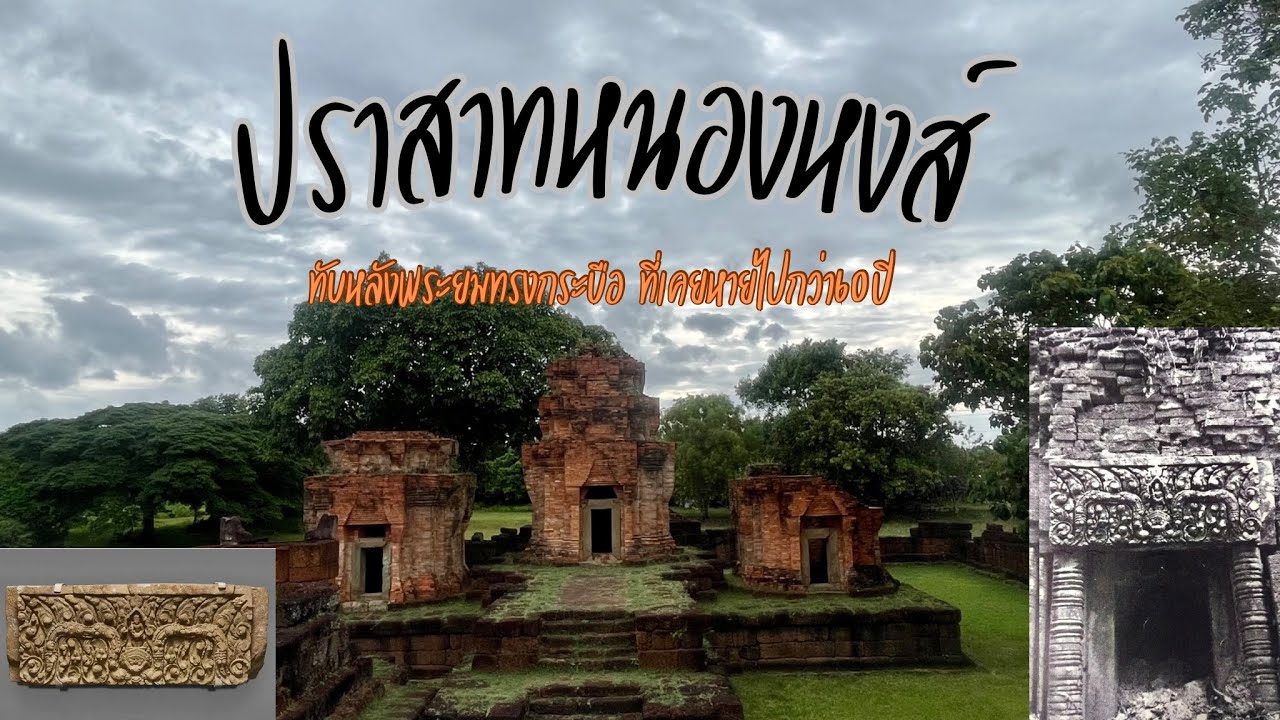
 Click to Access the Navigation Map GPS
Nong Hong Sanctuary (Prasat Nong Hong) Map
Recommend
 Historical Sites and Monuments(14)
 Landmarks and Memorials(2)
 Art, Craft Centres, Tradition(6)
 Museums(3)
 Educational Places
 Museum for Study(1)
 Places of Worship
 Temple(74)
 Other Sacred Sites(5)
 Suburban Living
 Village, Community(3)
 Nature and Wildlife
 National Parks and Marine Reserves(2)
 Mountain (Doi)(1)
 Dam, Reservoir, Lake(14)
 River, Canal(1)
 Bays and Beaches(1)
 Other natural attractions(2)
 Entertainment and Agricultural
 Animal camps and shows(1)
 Stadium(2)
 Farms, Parks and Ecotourism(2)
 Waterpark(1)


