
lovethailand home >Northeastern Travel Attractions >Buri Ram Travel Attractions >Ban Mai Chaiyapot >Ku Suan Taeng > Prang Ku Suan Taeng
TL;DR: Prang Ku Suan Taeng is located at Ban Dong Yang, Ku Suan Taeng Subdistrict, Ban Mai Chaiyaphot District, Buriram Province, west of Ku Suan Taeng Phitthayakhom School, open Daily, hours Daytime Visits Are Recommended.
Prang Ku Suan Taeng
Open Days: Daily
Opening Hours: Daytime Visits Are Recommended
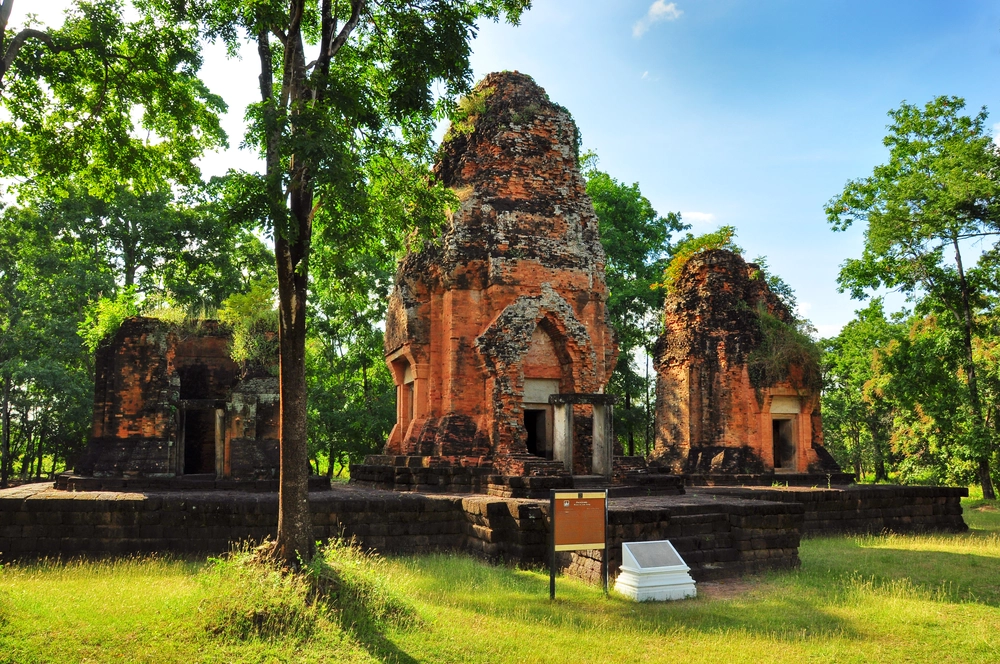
Prang Ku Suan Taeng is an important Khmer sanctuary in Ban Dong Yang, Ku Suan Taeng Subdistrict, Ban Mai Chaiyaphot District, Buriram Province. Located west of Ku Suan Taeng Phitthayakhom School, the site consists of 3 brick sanctuary towers arranged along a north-south axis on a single laterite base, all facing east. It also includes 2 laterite bannalai buildings, traces of a U-shaped moat, and a sacred baray to the southeast. The sanctuary dates to around the 17th Buddhist century and belongs to the Angkor Wat style of Khmer art. Its remarkable lintels show major Hindu mythological scenes, including Shiva Nataraja, Vishnu Anantasayin, Vamana-Trivikrama, the Churning of the Ocean of Milk, and Indra on Airavata. Today, the original lintels are preserved at the National Museum Bangkok and Phimai National Museum.
Prang Ku Suan Taeng is located in Ban Dong Yang, Ku Suan Taeng Subdistrict, Ban Mai Chaiyaphot District, Buriram Province. It is one of the most important Khmer archaeological sites in northern Buriram and offers a different perspective from the better-known monuments of southern Buriram, such as Phanom Rung and Prasat Mueang Tam. Although smaller in scale, Ku Suan Taeng preserves a strong sense of local heritage, Khmer sacred architecture, Hindu mythology, and living community memory.
The name Ku Suan Taeng carries both local language and cultural meaning. In northeastern Thai usage, the word “ku” refers to a sanctuary tower or ancient shrine, while Suan Taeng is the local place name. The site is therefore known as the sanctuary of Suan Taeng. For the people of Ban Dong Yang and Ku Suan Taeng Subdistrict, this monument is not simply an archaeological ruin. It is a treasured local landmark and a focus of annual ritual, community identity, and historical pride.
The most distinctive feature of Prang Ku Suan Taeng is its group of 3 brick towers standing in a north-south line on the same laterite base. All 3 towers face east, the direction of ritual entry in Khmer sacred architecture. Each tower has one true entrance on the east side, while the other 3 sides are false doors. This layout reflects the Khmer architectural concern with sacred orientation, ceremonial movement, and visual balance on all sides of the sanctuary tower.
The central tower is the main sanctuary. It is larger than the 2 flanking towers and remains in comparatively good condition. Its plan is square, with a slightly projecting entrance porch on the east. The false door areas on the other 3 sides project outward and were supported by sandstone slabs. This gives the central tower depth and architectural rhythm. Even without all of its original upper parts, the tower still shows the careful planning and religious significance of the sanctuary.
The northern and southern towers are smaller but follow the same sacred orientation. Both have a single eastern entrance, while the other sides are solid or treated as false doors. The presence of 3 towers on one base suggests a carefully organized religious program. The Fine Arts Department has interpreted the 3 towers as possibly dedicated to the Hindu Trimurti: the northern tower to Vishnu, the southern tower to Brahma, and the central tower to Shiva.
This Trimurti interpretation gives Prang Ku Suan Taeng particular religious importance. Shiva, Vishnu, and Brahma are major deities in Hindu belief. A sanctuary arranged around these 3 divine functions would have expressed a cosmic order through architecture. The central position of Shiva also corresponds well with the important Shiva Nataraja lintel once associated with the main tower.
The towers were built mainly of brick, while the shared base was made of laterite. Sandstone was used for elements requiring strength or fine carving, including door frames, lintels, lotus finials, pediment supports, and decorative architectural pieces. This combination of brick, laterite, and sandstone reflects the technical knowledge of Khmer builders. Brick formed the body of the towers, laterite supported the base, and sandstone carried sacred imagery and precise architectural details.
Several sandstone architectural fragments remain around the front area of the towers, including lotus-base elements, roof finial parts, and antefix-like pieces carved with 6-headed Naga forms. These fragments show that the original sanctuary was far more elaborate than what remains today. The towers would once have had decorative upper elements, symbolic motifs, and sandstone details that gave the brick architecture a richer sacred appearance.
In front of the towers are 2 laterite bannalai buildings. In Khmer religious architecture, a bannalai is often associated with sacred texts, ritual objects, or auxiliary ceremonial functions. The presence of 2 bannalai structures shows that Ku Suan Taeng was not merely a group of 3 towers. It was a planned sacred compound with additional ritual architecture.
The site also preserves traces of a U-shaped moat, leaving the eastern side open as the approach. To the southeast lies a baray, or sacred reservoir, associated with the sanctuary. Water was an important element in Khmer sacred landscapes. It served practical, ritual, and symbolic functions, representing purification, fertility, and the ordering of sacred space. The moat and baray therefore form part of the meaning of Prang Ku Suan Taeng as a religious landscape, not just a cluster of buildings.
The age of Ku Suan Taeng can be studied through its lintels, which belong to the Angkor Wat style of Khmer art and date to around the 17th Buddhist century. The Angkor Wat style is known for balanced compositions, refined carving, and rich Hindu mythological scenes. These lintels make Prang Ku Suan Taeng one of the important Khmer sanctuaries in Buriram for understanding how Angkorian art and religion spread into lower northeastern Thailand.
One of the major lintel themes is Vamana-Trivikrama, a form of Vishnu. In this myth, Vishnu appears as a dwarf Brahmin and then expands to stride across the 3 worlds: the underworld, the human world, and the heavens. The image represents divine power, cosmic order, and Vishnu’s role in restoring balance. It also shows how Hindu mythology was translated into sacred stone carving at Khmer sanctuaries.
The Shiva Nataraja lintel is another key piece. It shows Shiva as the cosmic dancer. In Hindu thought, Shiva’s dance represents creation, preservation, destruction, rhythm, and cosmic transformation. The presence of this image is especially meaningful for the central tower, which is interpreted as the tower dedicated to Shiva. It gives the sanctuary a strong Shaivite dimension.
The Churning of the Ocean of Milk, or Kurma Avatara, is another major lintel subject. This myth shows gods and demons churning the cosmic ocean to obtain the nectar of immortality, with Vishnu taking the form of a tortoise to support Mount Mandara. The scene is one of the most important Hindu cosmological stories in Khmer art. It expresses cooperation, conflict, renewal, and the restoration of cosmic balance.
The Vishnu Anantasayin lintel from Ku Suan Taeng is especially important because of its history. It depicts Vishnu reclining on the serpent Ananta in the cosmic ocean, a scene associated with the time before creation. The lintel was stolen from Ku Suan Taeng in 1964 and later returned to Thailand on July 24, 1970. Today, it is displayed at the National Museum Bangkok, while other important lintels from the site are preserved at Phimai National Museum.
This connection between the archaeological site and national museums makes Ku Suan Taeng important in 2 ways. At the site, visitors can see the original architectural setting: the towers, laterite base, brick walls, and sacred landscape. In the museums, visitors can see the original sculpted lintels that once completed the sanctuary. To understand Ku Suan Taeng fully, both the surviving monument and the museum-held sculptures should be considered together.
Archaeological work by the Fine Arts Department in 1994 revealed additional evidence, including laterite bases built in a later phase, 4 image bases, fragments of sculpted hands, foot fragments, arm fragments, grinding stones, pottery sherds, roof tiles, and other architectural remains. These finds show that the site continued to be used and altered over time. It was not a static monument frozen at the moment of construction.
The Fine Arts Department describes Ku Suan Taeng as a Hindu sanctuary dating to around the 17th Buddhist century, with continued use into the 18th Buddhist century. This later use may reflect religious and political changes in the Khmer world, especially when Mahayana Buddhism became more influential during the reign of Jayavarman VII. Like many Khmer sanctuaries, Ku Suan Taeng likely experienced reuse, adaptation, and reinterpretation across generations.
Prang Ku Suan Taeng was officially registered as an ancient monument on March 8, 1935. Its protected area covers 5 rai, 2 ngan, and 42 square wah. This legal protection confirms its national heritage value. Visitors should therefore treat the monument carefully: do not climb on the brick towers, do not move stones, do not scratch brick or laterite surfaces, and do not disturb architectural fragments.
The atmosphere of Ku Suan Taeng is quiet and local. It is not a large historical park with extensive visitor infrastructure. Instead, it is a community-based archaeological site that preserves the relationship between an ancient Khmer sanctuary and the modern village around it. This makes the experience more intimate. Visitors can walk around the towers, observe brick textures, laterite bases, sandstone fragments, and the surrounding village landscape.
The annual ritual ceremony of Prang Ku Suan Taeng gives the monument a living role in the present. Local people traditionally performed offerings to sacred powers before the agricultural season. The ceremony includes Buddhist merit-making, ritual offerings, and local cultural activities. Over time, it has also become connected with the Bun Bang Fai rocket tradition and prayers for seasonal rain and agricultural fertility.
This living tradition is important because it shows how an ancient Hindu sanctuary has been reinterpreted within modern local religious life. The community connects the monument with Buddhism, guardian spirits, agricultural belief, and local identity. In this way, Ku Suan Taeng is not only an archaeological site but also a place where cultural memory continues to be renewed.
A normal visit should take at least 45 minutes to 1 hour. Visitors should walk around all 3 towers, observe the shared laterite base, look at the bannalai buildings, identify the moat traces, and consider the location of the baray. Those interested in art history should spend additional time studying the Angkor Wat style, the lost lintels, and the relationship between the site and the National Museum Bangkok and Phimai National Museum.
The best time to visit is in the morning or late afternoon. Softer side light helps reveal the texture of brick, laterite, and sandstone. It is also better for photographing the 3 towers along the north-south line. During midday, the site can be hot, so visitors should bring a hat, drinking water, and comfortable walking shoes.
Getting There can be done by several routes. From Buriram city, take Highway 219 toward Phayakkhaphum Phisai for about 70 km, then turn left onto Highway 202 toward Prathai for about 40 km. A side road on the left leads to Ku Suan Taeng, about 1.5 km from the main road. Another route is to travel from Buriram through Khu Mueang and Phutthaisong on Highway 2074, then turn left onto Highway 202 for about 20 km. Around kilometer markers 10 – 11, turn left toward Ku Suan Taeng for about 1.3 km.
Private car, rental car, or hired local transport is the most convenient way to reach the site because public transport access is limited. Travelers can combine Ku Suan Taeng with Ban Dong Yang community, local agricultural attractions, Phutthaisong, Khu Mueang, and northern Buriram routes for a deeper cultural itinerary.
Visitors should avoid climbing on the towers, stepping on loose sandstone fragments, scratching brick or laterite, moving lotus-base stones, Naga antefixes, or other architectural pieces. Every fragment at the site is part of the archaeological record. Even a small stone or brick piece may help specialists understand the original form of the sanctuary.
Prang Ku Suan Taeng is therefore a highly worthwhile stop for travelers interested in Khmer art and Buriram heritage. It preserves the clear form of a 3-tower Hindu sanctuary, carries a remarkable history of nationally important lintels, and remains part of a living community tradition. If Phanom Rung represents the grandeur of a mountain sanctuary and Mueang Tam represents a refined lowland temple, Ku Suan Taeng represents a community sanctuary where ancient Khmer architecture, Hindu mythology, museum history, and local ritual life meet in one place.
A visit to Prang Ku Suan Taeng is more than a visit to 3 brick towers. It is an encounter with architecture, sacred orientation, sculptural history, stolen and returned art, water landscape, and community ritual. It shows that Khmer heritage in Buriram is not concentrated only around the famous southern monuments, but extends into many local communities, each with its own historical voice and cultural identity.
| Name | Prang Ku Suan Taeng |
| Alternative Names | Ku Suan Taeng, Prasat Ku Suan Taeng |
| Location | Ban Dong Yang, Ku Suan Taeng Subdistrict, Ban Mai Chaiyaphot District, Buriram Province, west of Ku Suan Taeng Phitthayakhom School |
| Address | Ban Dong Yang, Moo 2, Ku Suan Taeng Subdistrict, Ban Mai Chaiyaphot District, Buriram 31120, Thailand |
| Coordinates | 15.566800, 102.828413 |
| Highlights | Three Brick Khmer Towers On One Laterite Base, Facing East, With Major Angkor Wat-Style Lintels Showing Shiva Nataraja, Vishnu Anantasayin, Vamana-Trivikrama, The Churning Of The Ocean Of Milk, And Indra On Airavata |
| History | Hindu Khmer Sanctuary In Angkor Wat Style, Dating To Around The 17th Buddhist Century, With Continued Use Into The 18th Buddhist Century, Associated With The Reign Of Suryavarman II And The Hindu Trimurti Concept |
| Name Origin | The Northeastern Thai Word “Ku” Refers To A Sanctuary Tower Or Ancient Shrine. Suan Taeng Is The Local Place Name Of The Area. |
| Distinctive Features | Three Brick Towers Arranged North To South On One Laterite Base. The Central Tower Is Larger And Comparatively Well Preserved, With A Slight Eastern Porch. The Northern And Southern Towers Are Smaller. All Have A True Eastern Door And False Doors On The Other Sides. |
| Main Areas / Zones | 1. Central Main Sanctuary Tower 2. Northern Tower 3. Southern Tower 4. Shared Laterite Base 5. Two Laterite Bannalai Buildings In Front 6. Traces Of A U-Shaped Moat 7. Sacred Baray To The Southeast 8. Annual Ritual Area For The Ku Suan Taeng Ceremony 9. Ban Dong Yang Community Around The Monument |
| Key Evidence | Shiva Nataraja Lintel, Vishnu Anantasayin Lintel, Vamana-Trivikrama Lintel, Churning Of The Ocean Of Milk Lintel, Indra On Airavata Lintel, Lotus Finial Elements, Six-Headed Naga Antefixes, Image Bases, And Sculptural Fragments Found During Archaeological Work |
| Important Lintel Collections | The Vishnu Anantasayin Lintel From Ku Suan Taeng Is Displayed At The National Museum Bangkok. Other Important Lintels From The Site Are Preserved At Phimai National Museum. |
| Registration | Registered As An Ancient Monument By The Fine Arts Department On March 8, 1935, Covering 5 Rai, 2 Ngan, And 42 Square Wah |
| Local Tradition | The Annual Ku Suan Taeng Ritual Ceremony Includes Buddhist Merit-Making, Offerings To Sacred Powers, And Activities Connected With Bun Bang Fai And Rain-Praying Traditions Before The Farming Season |
| Travel Information | From Buriram, Take Highway 219 Toward Phayakkhaphum Phisai, Then Turn Onto Highway 202 Toward Prathai Before Entering The Ku Suan Taeng Side Road. Another Route Is Through Khu Mueang And Phutthaisong, Then Onto Highway 202 Around Kilometer Markers 10 – 11. |
| Current Status | Important Ancient Monument Of Ku Suan Taeng Subdistrict, Used As A Learning Site For Khmer Art, Hindu Religion, And Ban Dong Yang Community Tradition |
| Open Days | Daily |
| Opening Hours | Daytime Visits Are Recommended |
| Fees | No Admission Fee |
| Facilities | Roadside And Community Parking, Walking Access To The Monument, Open-Air Archaeological Area, Some Shaded Areas, Nearby School And Community Area, Local Shops, And Restaurants In Ban Mai Chaiyaphot Or Phutthaisong Districts |
| Caretaker | The Fine Arts Department Through Fine Arts Office 10 Nakhon Ratchasima, Together With Ku Suan Taeng Subdistrict Administrative Organization And Ban Dong Yang Community |
| Main Contact Number | Ku Suan Taeng Subdistrict Administrative Organization, Tel. 044-666-656 Ku Suan Taeng Phitthayakhom School, Tel. 044-680-018 Phimai National Museum, Tel. 044-471-167 |
| Nearby Tourist Attractions | 1. Ban Dong Yang Community, About 1 Km 2. Khun Thatsanee Vineyard, Ban Mai Chaiyaphot District, About 15 Km, Tel. 082-091-1294 3. Kru Chalong Date Palm Garden, About 18 Km, Tel. 087-247-0489 4. Phutthaisong District And Old Community Area, About 25 Km 5. Play La Ploen Flora Park, Khu Mueang District, About 58 Km |
| Nearby Restaurants | 1. Rongna Phanit, About 2 Km, Tel. 092-456-6124 2. Ban Mai Sahaphan, About 12 Km, Tel. 089-849-6432 3. Kai Yang Khao Suan Kwang Km.0, About 13 Km, Tel. 096-150-7406 4. Tam Tiao Pan Ban Mai Chaiyaphot Branch, About 16 Km, Tel. 098-696-9510 5. Jok Rong Tiam, About 17 Km, Tel. 089-796-3228 6. Bypass Restaurant Phutthaisong, About 25 Km, Tel. 081-877-8347 |
| Nearby Accommodations | 1. Thatsanee Resort, Ban Mai Chaiyaphot District, About 13 Km, Tel. 088-516-5307 2. Ban Kaew Resort, Ban Mai Chaiyaphot District, About 14 Km, Tel. 090-036-7359 3. Plai Na Resort, Phutthaisong District, About 25 Km, Tel. 081-407-9065 4. Phu Fa Resort, Phutthaisong District, About 27 Km, Tel. 091-662-2646 5. Bed Box Hostel, Prathai District, About 32 Km, Tel. 088-226-6266 6. VicaWorld Sports Resort, Prathai District, About 35 Km, Tel. 061-063-3199 |
Frequently Asked Questions (FAQ)
Q: Where Is Prang Ku Suan Taeng Located?
A: Prang Ku Suan Taeng is located in Ban Dong Yang, Ku Suan Taeng Subdistrict, Ban Mai Chaiyaphot District, Buriram Province, west of Ku Suan Taeng Phitthayakhom School.
Q: Why Is Prang Ku Suan Taeng Important?
A: It is a Hindu Khmer sanctuary in the Angkor Wat style, dating to around the 17th Buddhist century, with 3 brick towers and several major lintels showing Hindu mythological scenes.
Q: Which Deities Were Worshipped At Prang Ku Suan Taeng?
A: The 3 towers are interpreted as possibly dedicated to the Hindu Trimurti: the northern tower to Vishnu, the southern tower to Brahma, and the central tower to Shiva.
Q: What Are The Important Lintels From Prang Ku Suan Taeng?
A: Important lintels include Shiva Nataraja, Vishnu Anantasayin, Vamana-Trivikrama, the Churning of the Ocean of Milk, Indra on Airavata, and a deity seated above kala.
Q: Where Is The Vishnu Anantasayin Lintel From Ku Suan Taeng Now?
A: The Vishnu Anantasayin lintel from Ku Suan Taeng is displayed at the National Museum Bangkok, while other important lintels from the site are preserved at Phimai National Museum.
Q: Is There An Admission Fee?
A: No. There is no admission fee, but visitors should dress respectfully and follow proper ancient-monument etiquette.
Q: Is There A Local Tradition Related To Prang Ku Suan Taeng?
A: Yes. The annual Ku Suan Taeng ritual ceremony includes merit-making, offerings, and cultural activities connected with Bun Bang Fai and rain-praying traditions before the farming season.
Q: What Should Visitors Be Careful About?
A: Visitors should not climb on the towers, move sandstone fragments, scratch brick or laterite surfaces, or leave waste in the archaeological and community area.
 Category: ●Art, Culture and Heritage
 Group: ●Historical Sites and Monuments
Last Update : 3 MonthAgo
 Last Update : 3 MonthAgo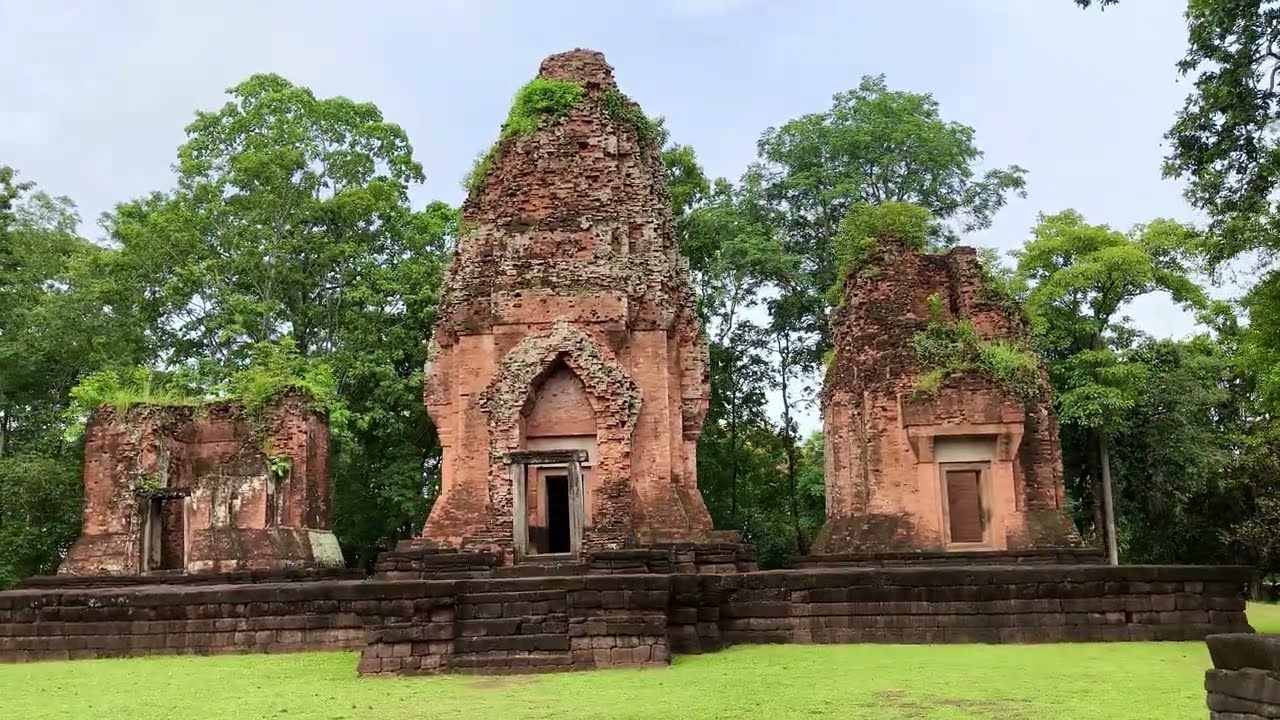
 Click to Access the Navigation Map GPS
Prang Ku Suan Taeng Map
Recommend
 Historical Sites and Monuments(14)
 Landmarks and Memorials(2)
 Art, Craft Centres, Tradition(6)
 Museums(3)
 Educational Places
 Museum for Study(1)
 Places of Worship
 Temple(74)
 Other Sacred Sites(5)
 Suburban Living
 Village, Community(3)
 Nature and Wildlife
 National Parks and Marine Reserves(2)
 Mountain (Doi)(1)
 Dam, Reservoir, Lake(14)
 River, Canal(1)
 Bays and Beaches(1)
 Other natural attractions(2)
 Entertainment and Agricultural
 Animal camps and shows(1)
 Stadium(2)
 Farms, Parks and Ecotourism(2)
 Waterpark(1)


