
lovethailand home >Northeastern Travel Attractions >Buri Ram Travel Attractions >Huai Rat >Huai Rat > Wat Chaeng Samorathet
TL;DR: Wat Chaeng Samorathet is located at Moo 10, Huai Rat Subdistrict, Huai Rat District, Buri Ram 31000, open Daily, hours 08.00 – 17.00.
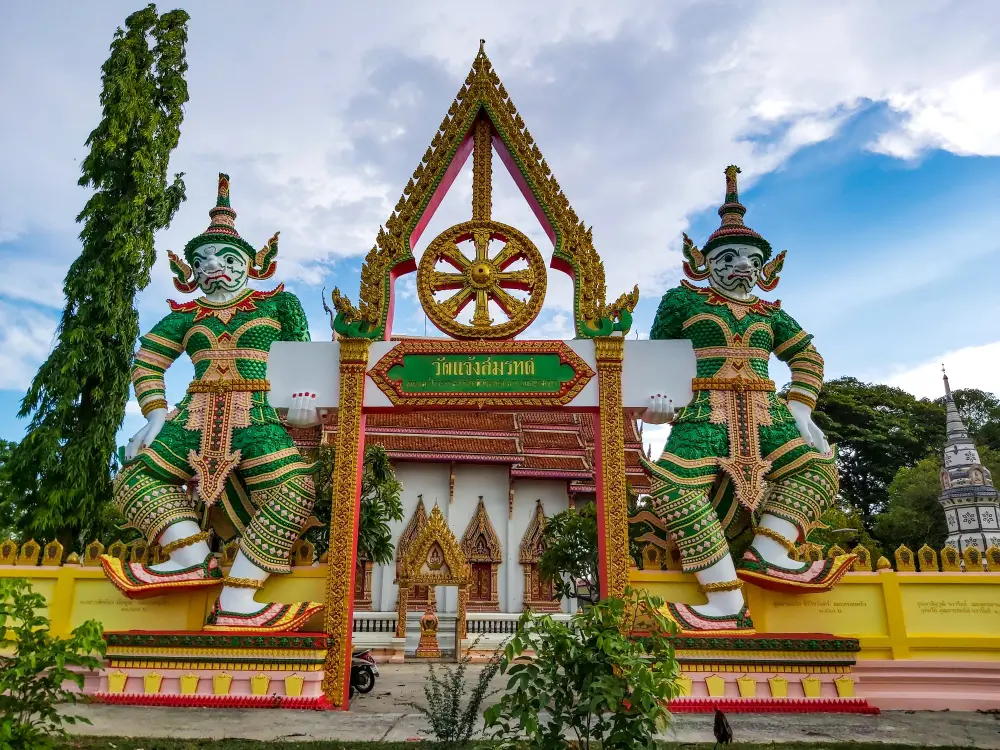
Wat Chaeng Samorathet
Open Days: Daily
Opening Hours: 08.00 – 17.00
Wat Chaeng Samorathet is located in Moo 10, Huai Rat Subdistrict, Huai Rat District, Buri Ram Province. It is a historic Buddhist temple with a long and meaningful role in the religious life of Huai Rat community. The temple was established on 19 March 1821 and received its royal grant of Wisungkhamsima on 10 October 1841. Today, the temple is under the care of Phra Khru Khanti Thammophas as abbot, with 20 resident monks and 1 novice. The temple grounds cover 13 rai, 2 ngan, and 70 square wah, making it an important local Buddhist center for worship, education, Dhamma practice, and community activities.
Wat Chaeng Samorathet is not only an old temple in a historical sense. It remains an active temple where Buddhist practice continues to serve local people. The temple runs a Sunday Buddhist Studies Center, holds Sunday temple-based Dhamma practice activities, and provides moral and ethical training for students. These functions make the temple a living educational and spiritual space, not merely a place of ritual. For foreign travelers, the temple offers a clear example of how Buddhism supports both faith and learning in rural Buri Ram.
The temple is located in Huai Rat District, a district close to Buri Ram city and surrounded by several temples and cultural communities. A visit to Wat Chaeng Samorathet can be combined with nearby places such as Wat Prasat Sung, Wat Rat Rangsan, Wat Sanuan Nok, Ban Sanuan Nok Silk Tourism Village, and Buri Ram city. This makes the temple suitable for a half-day or full-day cultural route focused on Buddhist heritage, local education, and community life.
The establishment of Wat Chaeng Samorathet on 19 March 1821 places the temple in the early Rattanakosin period. A temple founded in this period usually reflects a community with strong Buddhist faith and a need for a central place of worship, learning, ordination, and merit-making. In rural Thailand, a temple was not simply a religious building. It was a social institution that helped organize community life, teach moral values, and create a shared spiritual identity.
The royal grant of Wisungkhamsima on 10 October 1841 is another essential part of the temple’s identity. In Thai Buddhism, Wisungkhamsima is the sacred boundary used for formal Sangha acts, especially ordination. Receiving this boundary means that the temple had gained proper religious status and could conduct important monastic ceremonies according to Buddhist discipline. For visitors who want to understand Thai temple culture, this detail helps explain why the temple is historically significant.
The temple’s land area of 13 rai, 2 ngan, and 70 square wah allows it to support many religious and educational functions. The grounds include areas for worship, merit-making, Dhamma practice, Sunday Buddhist education, student training, temple ceremonies, and community gatherings. The size of the temple grounds supports both everyday worship and larger activities such as Buddhist holy day events, Kathin ceremonies, robe offerings, ordinations, and moral training programs.
The presence of 20 resident monks and 1 novice gives Wat Chaeng Samorathet a strong monastic life. Resident monks help maintain chanting, merit-making, sermons, Dhamma teaching, meditation activities, and community ceremonies. A temple with many resident monks can support both daily religious life and larger educational projects. This makes Wat Chaeng Samorathet an active center of Buddhist learning and practice for people in Huai Rat.
Phra Khru Khanti Thammophas, the abbot of Wat Chaeng Samorathet, plays an important role in maintaining the temple’s religious and educational activities. As abbot, he oversees temple administration, monastic life, Buddhist ceremonies, Sunday Dhamma practice, and moral training for students. The leadership of an abbot is especially important in a community temple because the temple’s strength depends on both monastic discipline and the ability to work with local people.
The Sunday Buddhist Studies Center is one of the most important features of Wat Chaeng Samorathet. In Thailand, temples have historically served as places of learning, and Sunday Buddhist education continues that tradition in a modern form. Children, students, and local people can learn Buddhist principles, moral conduct, respect, discipline, mindfulness, and basic Dhamma in a temple setting. This helps connect younger generations with Buddhism in a practical and accessible way.
The Sunday temple-based Dhamma practice activity also gives the temple strong contemporary relevance. Sunday is a practical day for families, students, and working people to come to the temple. Participants can chant, listen to Dhamma, meditate, practice mindfulness, and reflect on their conduct. The activity helps make the temple a place of mental rest and ethical training for the community, especially in a time when daily life can be fast and stressful.
Moral and ethical training for students is another key role of Wat Chaeng Samorathet. Such training may include lessons on gratitude, honesty, discipline, compassion, respect for elders, responsibility, and peaceful coexistence. These values are basic but important. By providing this training in a temple environment, the temple helps strengthen both individual character and community well-being. This makes Wat Chaeng Samorathet important not only for religion but also for social development.
On Buddhist holy days and important festivals, the temple becomes a gathering place for local Buddhists. Villagers come to offer food, take precepts, listen to sermons, make merit, and join temple ceremonies. These activities connect people across generations. Children see adults making merit, elders meet their community, and families spend meaningful time together in a peaceful religious setting.
Kathin and robe-offering ceremonies are important seasonal events at Thai temples. At Wat Chaeng Samorathet, such ceremonies support the temple’s upkeep and strengthen the relationship between villagers, monks, former residents, and supporters. Temple events are not only religious acts. They also renew social relationships and help keep the community connected with its spiritual center.
Wat Chaeng Samorathet is suitable for travelers who want to understand local Buddhism beyond famous landmarks. It is valuable for those interested in old temples, Wisungkhamsima, Sunday Buddhist education, student moral training, and meditation activities. The temple is not defined by commercial tourism or large-scale spectacle. Its value comes from continuity, education, monastic life, and the sincere role it plays for Huai Rat community.
In cultural travel terms, Wat Chaeng Samorathet can serve as a starting point for exploring Huai Rat District. The temple combines history, active Buddhist practice, education, and community service. Nearby places such as Wat Prasat Sung, Wat Rat Rangsan, Wat Sanuan Nok, and Ban Sanuan Nok Silk Tourism Village allow visitors to see different aspects of the district, from sacred legends and old temples to silk weaving and village culture.
Wat Prasat Sung is one of the most meaningful nearby temples. It is known for Luang Pho Ong Dam, the revered black Buddha image, as well as local legends connected with Luang Ta Phu, the Bodhi tree, and Hin Sila Saksit. Visiting Wat Chaeng Samorathet together with Wat Prasat Sung helps travelers understand two different temple identities in Huai Rat: one centered on education and long historical continuity, and another known for sacred local legends.
Wat Rat Rangsan is another nearby community temple in Huai Rat Subdistrict. It has complete monastic facilities and an important role in local religious administration. A route that combines Wat Chaeng Samorathet, Wat Rat Rangsan, and Wat Prasat Sung gives travelers a broader view of Buddhist life in the district, from old temple history to monastic administration and sacred community belief.
Ban Sanuan Nok Silk Tourism Village adds a cultural dimension to the trip. The village is known for silk weaving, mulberry cultivation, silkworm raising, silk reeling, Mudmee patterning, traditional houses, an old market, Ram Trot performance, and local food. Combining Wat Chaeng Samorathet with Ban Sanuan Nok allows visitors to experience both Buddhist heritage and living community culture in the same district.
Getting There from Buri Ram city, travel toward Huai Rat District and continue to Huai Rat Subdistrict, Moo 10. Private car, motorcycle, or locally arranged transport is recommended. When using navigation apps, search for Wat Chaeng Samorathet, Huai Rat Subdistrict, Huai Rat District, Buri Ram Province. Including the subdistrict, district, and province is important because there are temples with similar names in other parts of Thailand.
Visitors should allow about 45 minutes to 1 hour for a general visit. Those who want to join Sunday Dhamma practice or observe the Sunday Buddhist Studies Center should allow more time and dress modestly. A calm visit may include paying respect, making merit, walking quietly around the temple grounds, observing the educational atmosphere, and continuing to nearby temples or Ban Sanuan Nok afterward.
Respectful behavior is important because Wat Chaeng Samorathet is an active religious and educational site. Visitors should dress modestly, speak quietly, avoid disturbing monks, novices, students, and meditation participants, and take photographs only in appropriate areas. If a class, sermon, chanting session, or student training activity is taking place, visitors should keep a respectful distance.
Food options are available in Huai Rat District and Buri Ram city. Mona Cafe Huai Rat is a nearby option for food, drinks, and coffee. Local food can also be arranged through Ban Sanuan Nok community, while Buri Ram city offers more restaurant choices such as The Tower Cafe & Hangout, Bamboo Bar Buriram, and Muang Pizza Buriram. Planning food stops in advance is practical because rural restaurants may be spread out.
Accommodation options are available near Huai Rat and in Buri Ram city. Baan Sanuan Resort and Ban Sanuan Nok community homestays are suitable for travelers who want to stay close to local culture and the silk tourism route. Those who prefer city hotels can stay at Best Western Royal Buriram Hotel, The Sita Princess Buriram, or Ray Hotel Buriram. The best choice depends on whether the trip focuses on Huai Rat community culture or broader travel around Buri Ram Province.
Overall, Wat Chaeng Samorathet is a valuable Buddhist temple with historical, educational, religious, and community significance. It was established in 1821, received Wisungkhamsima in 1841, covers 13 rai, 2 ngan, and 70 square wah, and remains active under the care of Phra Khru Khanti Thammophas with 20 monks and 1 novice. Its Sunday Buddhist Studies Center, Sunday Dhamma practice, and student moral training make it an important living temple for Huai Rat District, Buri Ram Province.
| Name | Wat Chaeng Samorathet |
| Location | Moo 10, Huai Rat Subdistrict, Huai Rat District, Buri Ram 31000 |
| Address | Moo 10, Huai Rat Subdistrict, Huai Rat District, Buri Ram Province, Thailand |
| Highlights | A historic Buddhist temple established on 19 March 1821, granted Wisungkhamsima on 10 October 1841, with a Sunday Buddhist Studies Center, Sunday Dhamma practice, and student moral training activities |
| History | Wat Chaeng Samorathet was established on 19 March 1821 and received its royal grant of Wisungkhamsima on 10 October 1841. It has long served as an important Buddhist temple of Huai Rat community |
| Temple Land | 13 rai, 2 ngan, and 70 square wah |
| Wisungkhamsima | Granted on 10 October 1841 |
| Distinctive Features | An active community temple with many resident monks, 1 novice, a Sunday Buddhist Studies Center, Sunday Dhamma practice, and moral training for students |
| Main Activities | Sunday Buddhist Studies Center, Sunday Dhamma practice, student moral and ethical training, Buddhist holy day merit-making, Kathin ceremony, robe offering, and important Buddhist festival activities |
| Traditions / Rituals | Chanting, Dhamma listening, meditation, Sunday practice, food offerings, Buddhist holy day merit-making, Kathin ceremony, robe offering, ordination ceremonies, memorial merit-making, and youth training |
| Travel Information | From Buri Ram city, travel toward Huai Rat District, then continue to Huai Rat Subdistrict and Moo 10. Private car, motorcycle, or locally arranged transport is recommended. Search with the full temple name, subdistrict, district, and province |
| Current Status | An active Buddhist temple and community center for religious education, Dhamma practice, and moral training in Huai Rat District |
| Open Days | Daily |
| Opening Hours | 08.00 – 17.00 |
| Facilities | Merit-making area, Buddha worship area, Dhamma practice area, temple courtyard, student moral training space, Sunday Buddhist Studies Center activity space, and community religious activity area |
| Main Areas / Zones | Buddhist worship area, Sunday Dhamma practice area, Sunday Buddhist Studies Center area, student training area, temple courtyard, and ceremony area |
| Abbot / Caretaker | Phra Khru Khanti Thammophas |
| Resident Monks | 20 monks |
| Novices | 1 novice |
| Entrance Fee | Free Admission |
| Local Administrative Contact | Huai Rat Subdistrict Municipality, Tel. 044-696-170 |
| Nearby Tourist Attractions | 1. Wat Prasat Sung And Luang Pho Ong Dam, about 6 km 2. Wat Rat Rangsan, Huai Rat Subdistrict, about 5 km 3. Ban Sanuan Nok Silk Tourism Village, about 7 km 4. Wat Sanuan Nok, Sanuan Subdistrict, about 7 km 5. Buri Ram City, about 15 km |
| Nearby Restaurants | 1. Mona Cafe Huai Rat, about 5 km, Tel. 093-027-8299 2. Ban Sanuan Nok Local Food Service, about 7 km, Tel. 085-411-4435, 094-979-2887 3. The Tower Cafe & Hangout Buriram, about 15 km, Tel. 044-666-305 4. Bamboo Bar Buriram, about 16 km, Tel. 044-625-577 5. Muang Pizza Buriram, about 16 km, Tel. 044-612-032, 062-138-9432 |
| Nearby Accommodations | 1. Baan Sanuan Resort, about 7 km, Tel. 044-666-776, 084-496-8579 2. Ban Sanuan Nok Community Homestay, about 7 km, Tel. 085-411-4435, 094-979-2887 3. Best Western Royal Buriram Hotel, about 15 km, Tel. 044-666-600, 098-585-2046 4. The Sita Princess Buriram, about 16 km, Tel. 087-050-4864, 098-291-6649 5. Ray Hotel Buriram, about 17 km, Tel. 044-110-767 |
Frequently Asked Questions (FAQ)
Q: Where is Wat Chaeng Samorathet located?
A: Wat Chaeng Samorathet is located in Moo 10, Huai Rat Subdistrict, Huai Rat District, Buri Ram Province 31000.
Q: When was Wat Chaeng Samorathet established?
A: Wat Chaeng Samorathet was established on 19 March 1821 and is one of the historic Buddhist temples of Huai Rat District.
Q: When did Wat Chaeng Samorathet receive Wisungkhamsima?
A: The temple received its royal grant of Wisungkhamsima on 10 October 1841, an important marker of its formal Buddhist status.
Q: Who is the abbot of Wat Chaeng Samorathet?
A: The abbot of Wat Chaeng Samorathet is Phra Khru Khanti Thammophas.
Q: How many monks and novices reside at Wat Chaeng Samorathet?
A: Wat Chaeng Samorathet has 20 resident monks and 1 novice.
Q: What activities is Wat Chaeng Samorathet known for?
A: The temple is known for its Sunday Buddhist Studies Center, Sunday Dhamma practice, and moral and ethical training for students.
Q: What are the opening days and opening hours of Wat Chaeng Samorathet?
A: The temple is open daily from 08.00 to 17.00. It is suitable for worship, merit-making, Buddhist learning, and Dhamma practice.
Q: What nearby places can visitors combine with Wat Chaeng Samorathet?
A: Visitors can combine the trip with Wat Prasat Sung, Wat Rat Rangsan, Ban Sanuan Nok Silk Tourism Village, Wat Sanuan Nok, and Buri Ram city.
 Category: ●Places of Worship
 Group: ●Temple
Last Update : 3 MonthAgo
 Last Update : 3 MonthAgo
 Click to Access the Navigation Map GPS
Wat Chaeng Samorathet Map
Recommend

 Art, Culture and Heritage
 Historical Sites and Monuments(14)
 Landmarks and Memorials(2)
 Art, Craft Centres, Tradition(6)
 Museums(3)
 Educational Places
 Museum for Study(1)
Temple(74)
Museum for Study(1)
Temple(74)
 Other Sacred Sites(5)
 Suburban Living
 Village, Community(3)
 Nature and Wildlife
 National Parks and Marine Reserves(2)
 Mountain (Doi)(1)
 Dam, Reservoir, Lake(14)
 River, Canal(1)
 Bays and Beaches(1)
 Other natural attractions(2)
 Entertainment and Agricultural
 Animal camps and shows(1)
 Stadium(2)
 Farms, Parks and Ecotourism(2)
 Waterpark(1)


