
lovethailand home >Northeastern Travel Attractions >Buri Ram Travel Attractions >Huai Rat >Sam Waeng > Wat Pa Lelai (Wat Ban Mai)
TL;DR: Wat Pa Lelai (Wat Ban Mai) is located at Ban Mai, Moo 2, Sam Waeng Subdistrict, Huai Rat District, Buri Ram 31000, open Daily, hours 08.00 – 17.00.
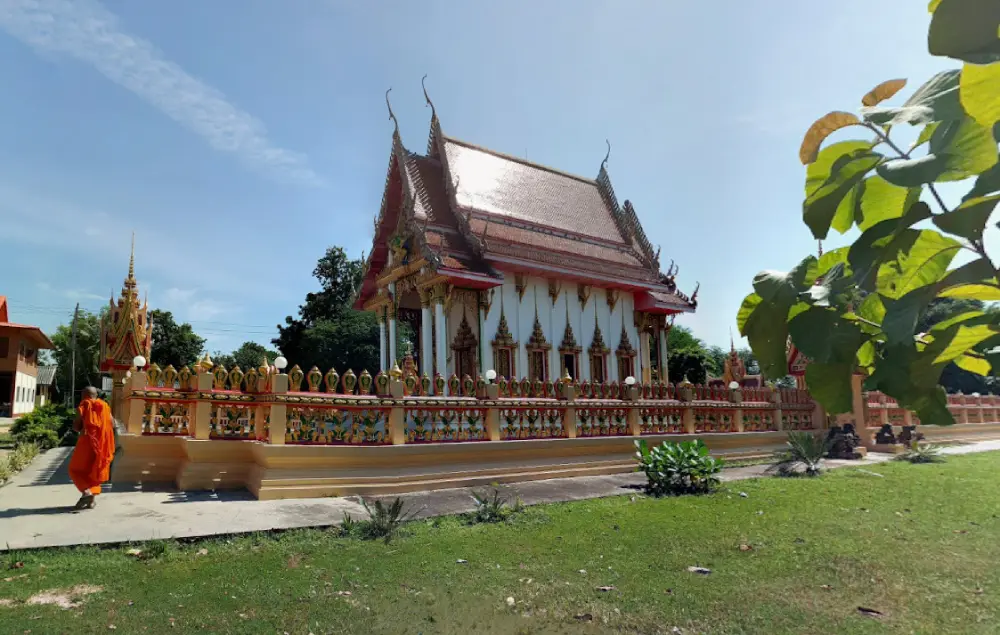
Wat Pa Lelai (Wat Ban Mai)
Open Days: Daily
Opening Hours: 08.00 – 17.00
Wat Pa Lelai (Wat Ban Mai) is located in Ban Mai, Moo 2, Sam Waeng Subdistrict, Huai Rat District, Buri Ram Province. It is a historic local Buddhist temple under the Mahanikaya order and one of the meaningful religious and educational sites of the Ban Mai community. The temple was originally established in 1781 as a monastic residence before gradually developing into a full temple. Today, it occupies 20 rai, 2 ngan, and 20 square wah of land. It received its royal grant of Wisungkhamsima according to the Prime Minister’s Office announcement dated 28 April 1980, which was published in the Royal Gazette, Volume 97, Part 82, on 27 May 1980. Later, on 15 July 1999, the temple was elevated to the status of an educational park by the Department of Religious Affairs under the Ministry of Education.
For foreign travelers, Wat Pa Lelai is best understood as a quiet local temple with deep historical roots rather than a large commercial tourist attraction. Its value lies in its long continuity, its connection with Ban Mai village, its role in Buddhist practice, and its recognition as an educational park. Visitors who come here can experience rural Buddhist life in Buri Ram, pay respect, make merit, observe the calm temple grounds, and understand how a community temple continues to serve both spiritual and educational roles.
The temple is also widely known as Wat Ban Mai because it stands in Ban Mai village. This local name makes the temple familiar to people in the area and helps distinguish it from other temples with similar names elsewhere in Thailand. The name Wat Pa Lelai carries a Buddhist and forest-temple feeling, suggesting calmness, shade, and religious reflection. Together, the two names reflect both the temple’s spiritual identity and its close relationship with the local community.
Wat Pa Lelai began as a monastic residence, a form of Buddhist settlement commonly found in rural Thailand in earlier periods. Such places often developed when villagers invited monks to stay, practice, teach, and serve the spiritual needs of the settlement. Over time, as the community grew and support increased, the monastic residence developed into a full temple with proper religious facilities. This history shows that Wat Pa Lelai grew from community faith rather than from tourism planning.
Local historical accounts also mention the older name Wat Pa Lelai Phrai Chum Pathum Mek, a name that evokes a shaded forest temple environment. The temple has also long been called Wat Ban Mai because it was located in a village that was considered new at the time. Local memory connects the foundation of the temple with Mae Nu Thap, associated with the Intharakamhaeng family line, who played a role in establishing the temple. The story also mentions the invitation of Luang Pho Miat to inspect the area and choose a suitable location for the temple. The present Ban Mai forest area was selected because it was considered appropriate for a sacred place.
This origin story is important because it shows that the temple site was chosen with care. In rural Thai communities, a temple location is never just a piece of land. It becomes a spiritual center, a meeting point, a place of learning, and a shared space for the village. Wat Pa Lelai therefore helped shape Ban Mai community by giving people a place to worship, learn, gather, and maintain Buddhist values across generations.
The temple’s land area of 20 rai, 2 ngan, and 20 square wah allows it to support a complete range of religious and community activities. The grounds include important monastic structures such as the ordination hall, sermon hall, monk residences, crematorium, temple courtyard, shaded areas, and a pond. In rural communities, such features are not only religious facilities. They also support social life, ceremonies, village meetings, funerary rites, community merit-making, and quiet reflection.
The royal grant of Wisungkhamsima on 28 April 1980 marks a major stage in the temple’s development. In Thai Buddhism, Wisungkhamsima is the sacred boundary required for formal Sangha acts, especially ordination. Receiving this boundary means that the temple gained formal recognition for important monastic ceremonies. The publication of the announcement in the Royal Gazette on 27 May 1980 confirms the temple’s official Buddhist status and gives the temple strong historical documentation.
The elevation of Wat Pa Lelai to an educational park on 15 July 1999 added another important dimension to the temple. An educational park is a place where religion, morality, culture, community knowledge, and environment can be learned together. For local people, students, and visitors, the temple is therefore not only a place to pray. It is also a place to learn about Buddhism, community history, temple traditions, and the relationship between spiritual life and village life.
The educational role of the temple is especially meaningful for young people. Learning in a temple environment is different from learning in a classroom. Visitors and students can see monks, villagers, religious ceremonies, shaded grounds, sacred spaces, and community activities in a real setting. This makes Wat Pa Lelai a living classroom where Buddhist values such as respect, calmness, mindfulness, gratitude, and community responsibility can be experienced directly.
Inside the temple, important monastic buildings include an ordination hall, sermon hall, monk residences, and crematorium. These facilities allow the temple to support religious activities throughout the life cycle of the community. Villagers come here for merit-making, Buddhist holy day observances, ordination ceremonies, Kathin ceremonies, robe offerings, funerals, memorial merit-making, and other family and village rituals. Wat Pa Lelai therefore remains an active temple used by the community, not only a historical name.
The temple environment is known for its trees, shade, and pond. Such natural features are important in rural temples because they support peace, reflection, and everyday usefulness. In the past, temple ponds were often important water sources for communities, while trees created a cool and respectful atmosphere. The calm surroundings of Wat Pa Lelai make it suitable for worship, meditation, quiet walking, and cultural learning.
Wat Pa Lelai is also connected with a local story about ancient bronze Buddha images. Local accounts mention that 4 bronze Buddha images were created together and offered to 4 temples: Wat Mueang Pho, Wat Chaeng Samorathet, Wat Khok Lek, and Wat Pa Lelai. The image associated with Wat Pa Lelai is no longer present, but the story remains important because it links several temples in the same cultural landscape. It shows that temples in Huai Rat and nearby areas share religious memory and local faith networks.
Wat Khok Lek, located in Sam Waeng Subdistrict, is therefore a meaningful nearby place for visitors interested in this story. A trip that connects Wat Pa Lelai with Wat Khok Lek helps travelers understand that temple history is often regional rather than isolated. One temple may preserve a name, another may preserve an image, and another may preserve oral memory. Together, these sites create a wider religious map of local Buri Ram.
The list of abbots associated with Wat Pa Lelai also reflects long-term continuity. Historical names include Phra Athikan Miat, Phra Athikan Suk, Phra Athikan Mao, Phra Athikan Phrom, Phra Athikan Khong Dhammasaro, Phra Khru Sangwon Anuyut or Luang Pu Ta Dhammaniyako, and Phra Khru Wimon Issaratham or Luang Pho Mao Issaro. These names show how temple leadership has passed from generation to generation and how each monastic figure helped preserve the temple through changing periods.
Phra Khru Sangwon Anuyut, known as Luang Pu Ta Dhammaniyako, remains an important former monk associated with Wat Pa Lelai. He is remembered by disciples and local people as an older respected monk of Buri Ram. His connection gives the temple another layer of spiritual significance. Visitors who are interested in local Buddhist teachers will find that Wat Pa Lelai is not only important for its age but also for the memory of revered monks connected with the temple.
The current abbot of Wat Pa Lelai is Phra Khru Wimon Issaratham. The temple has 8 resident monks, confirming that it remains an active Buddhist temple. Resident monks support daily and seasonal religious activities such as merit-making, Buddhist holy day ceremonies, sermons, ordinations, funerary rites, Kathin ceremonies, and community rituals. The temple continues to serve the real spiritual needs of Ban Mai and the surrounding area.
Wat Pa Lelai is also listed as a provincial meditation practice center, giving it an additional role in Dhamma training and mental cultivation. For visitors who want a calm temple experience, this role is significant. The temple’s open grounds, shade, pond, and quiet setting make it suitable for reflection and mindful travel. It is a place to slow down rather than rush through.
Sam Waeng Subdistrict is part of Huai Rat District, which is conveniently connected with Buri Ram city and nearby cultural communities. Travelers can include Wat Pa Lelai in a local Buddhist and cultural route. A meaningful route may begin with worship at Wat Pa Lelai, continue to Wat Khok Lek, Wat Chaeng Samorathet, Wat Prasat Sung, or Ban Sanuan Nok Silk Tourism Village, and then end with a meal or overnight stay in Buri Ram city.
Ban Sanuan Nok Silk Tourism Village is a nearby cultural community that complements a visit to Wat Pa Lelai. The village is known for silk production, mulberry cultivation, silkworm raising, silk reeling, dyeing, weaving, local food, Ram Trot performance, old houses, and an old market. Visiting the temple together with the village allows travelers to see both Buddhist heritage and living community culture in Huai Rat District.
From a historical perspective, Wat Pa Lelai clearly shows the development of Buddhism at the community level. It began as a monastic residence in 1781, developed into a temple, received Wisungkhamsima in 1980, and became an educational park in 1999. Each stage reflects the growth of the temple and its continuing importance to the community. This makes the temple valuable not only to local people but also to cultural travelers who want to understand the deeper story of Buri Ram.
Wat Pa Lelai is suitable for travelers who are interested in peaceful temple visits, old Buddhist sites, rural history, Buddhist education, meditation centers, and the relationship between temples and village life. It is not a place defined by crowds or commercial tourism. Its charm lies in continuity, calmness, shade, community faith, and the temple’s ability to remain meaningful across more than two centuries.
Getting There from Buri Ram city, travel toward Huai Rat District, then continue to Sam Waeng Subdistrict and Ban Mai Moo 2. The distance from Buri Ram city is about 20–22 km, depending on the starting point and route. Private car, motorcycle, or locally arranged transport is recommended. When using navigation apps, search for Wat Pa Lelai, Ban Mai, Sam Waeng Subdistrict, Huai Rat District, Buri Ram Province to avoid confusion with similarly named temples in other provinces.
Visitors should allow at least 30 minutes to 1 hour for the temple. This gives enough time to pay respect, make merit, walk around the temple grounds, and appreciate the shaded atmosphere. Those who want a fuller cultural trip can combine the temple with Wat Khok Lek, Wat Chaeng Samorathet, Wat Prasat Sung, Ban Sanuan Nok Silk Tourism Village, or Buri Ram city. A half-day route is practical from Buri Ram city, while a full-day route is suitable for visitors who want deeper community learning.
Food options can be found in Huai Rat and Buri Ram city. Mona Cafe in Huai Rat is a convenient nearby stop for food, drinks, and coffee. Travelers can also arrange local food through Ban Sanuan Nok community or continue to Buri Ram city for more restaurant choices such as The Tower Cafe & Hangout, Bamboo Bar Buriram, and Muang Pizza Buriram. Planning food stops in advance is useful because village restaurants may be spread out.
Accommodation is available near Huai Rat and in Buri Ram city. Baan Sanuan Resort and Ban Sanuan Nok community homestays are suitable for travelers who want to stay near the cultural community and silk route. Those who prefer city hotels can choose Best Western Royal Buriram Hotel, The Sita Princess Buriram, or Ray Hotel Buriram. The best option depends on whether the trip focuses on village culture or broader provincial travel.
Visitors should dress modestly, speak quietly, and respect monks and local worshippers. Wat Pa Lelai is an active temple with resident monks and regular religious activities. Photography should be done appropriately, especially around monastic areas, ceremonies, or people making merit. If an area appears private or restricted, visitors should ask a monk or caretaker before entering. Respectful behavior helps preserve the dignity of the temple and makes the visit more meaningful.
Overall, Wat Pa Lelai (Wat Ban Mai) is a layered Buddhist site with religious, historical, educational, and community value. It began as a monastic residence in 1781, became a recognized temple, received Wisungkhamsima, was elevated as an educational park, and continues today under the care of resident monks. For foreign travelers, it offers a quiet and authentic way to understand how Buddhism, local memory, education, and village life remain connected in rural Buri Ram.
| Name | Wat Pa Lelai (Wat Ban Mai) |
| Location | Ban Mai, Moo 2, Sam Waeng Subdistrict, Huai Rat District, Buri Ram 31000 |
| Address | Ban Mai, Moo 2, Sam Waeng Subdistrict, Huai Rat District, Buri Ram Province, Thailand |
| Highlights | A historic local Buddhist temple founded in 1781 as a monastic residence, with 20 rai, 2 ngan, and 20 square wah of land, Wisungkhamsima granted in 1980, and educational park status granted in 1999 |
| History | Wat Pa Lelai was first established as a monastic residence in 1781, later developed into a full temple under the Mahanikaya order, and has continued to serve Ban Mai community for more than two centuries |
| Name Origin | The temple is also known as Wat Ban Mai because it is located in Ban Mai village. The name Wat Pa Lelai carries a Buddhist forest-temple association and reflects the temple’s calm setting |
| Distinctive Features | The temple includes an ordination hall, sermon hall, monk residences, crematorium, shaded trees, and a pond that has long been meaningful to the local community |
| Wisungkhamsima | Granted according to the Prime Minister’s Office announcement dated 28 April 1980 and published in the Royal Gazette, Volume 97, Part 82, on 27 May 1980 |
| Educational Park | Elevated as an educational park by the Department of Religious Affairs, Ministry of Education, on 15 July 1999 |
| Important Former Abbots | Phra Athikan Miat, Phra Athikan Suk, Phra Athikan Mao, Phra Athikan Phrom, Phra Athikan Khong Dhammasaro, and Phra Khru Sangwon Anuyut (Luang Pu Ta Dhammaniyako) |
| Traditions / Rituals | Buddhist holy day merit-making, Kathin ceremony, robe offering, ordination ceremonies, memorial merit-making, meditation practice, and important Buddhist festival activities |
| Travel Information | From Buri Ram city, travel toward Huai Rat District, then continue to Sam Waeng Subdistrict and Ban Mai Moo 2. The distance is about 20–22 km. Private car, motorcycle, or locally arranged transport is recommended |
| Current Status | An active local Buddhist temple under the Mahanikaya order, with resident monks, educational park status, and meditation-practice role |
| Open Days | Daily |
| Opening Hours | 08.00 – 17.00 |
| Facilities | Ordination hall, sermon hall, monk residences, crematorium, temple courtyard, merit-making area, meditation area, shaded trees, and pond |
| Main Areas / Zones | Buddhist worship area, ordination hall, sermon hall, monastic residence area, meditation area, temple courtyard, pond area, and educational park area |
| Abbot / Caretaker | Phra Khru Wimon Issaratham |
| Resident Monks | 8 monks |
| Temple / Meditation Center Contact | 081-265-0065 |
| Local Administrative Contact | Sam Waeng Municipality, Tel. 044-696-159 |
| Nearby Tourist Attractions | 1. Wat Khok Lek, Sam Waeng Subdistrict, about 4 km 2. Wat Chaeng Samorathet, Huai Rat Subdistrict, about 8 km 3. Wat Prasat Sung And Luang Pho Ong Dam, Huai Rat District, about 10 km 4. Ban Sanuan Nok Silk Tourism Village, about 14 km 5. Buri Ram City, about 22 km |
| Nearby Restaurants | 1. Mona Cafe Huai Rat, about 9 km, Tel. 093-027-8299 2. Ban Sanuan Nok Local Food Service, about 14 km, Tel. 085-411-4435, 094-979-2887 3. The Tower Cafe & Hangout Buriram, about 22 km, Tel. 044-666-305 4. Bamboo Bar Buriram, about 23 km, Tel. 044-625-577 5. Muang Pizza Buriram, about 23 km, Tel. 044-612-032, 062-138-9432 |
| Nearby Accommodations | 1. Baan Sanuan Resort, about 14 km, Tel. 084-496-8579 2. Ban Sanuan Nok Community Homestay, about 14 km, Tel. 085-411-4435, 094-979-2887 3. Best Western Royal Buriram Hotel, about 22 km, Tel. 044-666-600 4. The Sita Princess Buriram, about 23 km 5. Ray Hotel Buriram, about 24 km |
Frequently Asked Questions (FAQ)
Q: Where is Wat Pa Lelai (Wat Ban Mai) located?
A: Wat Pa Lelai (Wat Ban Mai) is located in Ban Mai, Moo 2, Sam Waeng Subdistrict, Huai Rat District, Buri Ram Province 31000.
Q: When was Wat Pa Lelai established?
A: Wat Pa Lelai was established in 1781 as a monastic residence before later developing into a full local Buddhist temple under the Mahanikaya order.
Q: When did Wat Pa Lelai receive Wisungkhamsima?
A: The temple received its royal grant of Wisungkhamsima according to the Prime Minister’s Office announcement dated 28 April 1980, published in the Royal Gazette on 27 May 1980.
Q: Why is Wat Pa Lelai important as an educational site?
A: The temple was elevated as an educational park by the Department of Religious Affairs, Ministry of Education, on 15 July 1999, giving it an important role in Buddhist, moral, cultural, and community learning.
Q: Who is the current abbot of Wat Pa Lelai?
A: The current abbot of Wat Pa Lelai is Phra Khru Wimon Issaratham.
Q: What are the opening days and opening hours of Wat Pa Lelai?
A: The temple is open daily from 08.00 to 17.00. It is suitable for worship, merit-making, meditation, and learning about an old temple in Sam Waeng Subdistrict.
Q: What nearby places can visitors combine with Wat Pa Lelai?
A: Visitors can combine the trip with Wat Khok Lek, Wat Chaeng Samorathet, Wat Prasat Sung and Luang Pho Ong Dam, Ban Sanuan Nok Silk Tourism Village, and Buri Ram city.
Q: How can travelers get to Wat Pa Lelai?
A: From Buri Ram city, travel toward Huai Rat District, then continue to Sam Waeng Subdistrict and Ban Mai Moo 2. A private car, motorcycle, or locally arranged transport is recommended.
 Category: ●Places of Worship
 Group: ●Temple
Last Update : 3 MonthAgo
 Last Update : 3 MonthAgo
 Click to Access the Navigation Map GPS
Wat Pa Lelai (Wat Ban Mai) Map
Recommend

 Art, Culture and Heritage
 Historical Sites and Monuments(14)
 Landmarks and Memorials(2)
 Art, Craft Centres, Tradition(6)
 Museums(3)
 Educational Places
 Museum for Study(1)
Temple(74)
Museum for Study(1)
Temple(74)
 Other Sacred Sites(5)
 Suburban Living
 Village, Community(3)
 Nature and Wildlife
 National Parks and Marine Reserves(2)
 Mountain (Doi)(1)
 Dam, Reservoir, Lake(14)
 River, Canal(1)
 Bays and Beaches(1)
 Other natural attractions(2)
 Entertainment and Agricultural
 Animal camps and shows(1)
 Stadium(2)
 Farms, Parks and Ecotourism(2)
 Waterpark(1)


