
lovethailand home >Northeastern Travel Attractions >Buri Ram Travel Attractions >Huai Rat >Ta Sao > Wat Ban Ta Sao
TL;DR: Wat Ban Ta Sao is located at No. 1, Ban Ta Sao, Moo 1, Ta Sao Subdistrict, Huai Rat District, Buri Ram 31000, open Daily, hours 08.00 – 17.00.

Wat Ban Ta Sao
Open Days: Daily
Opening Hours: 08.00 – 17.00
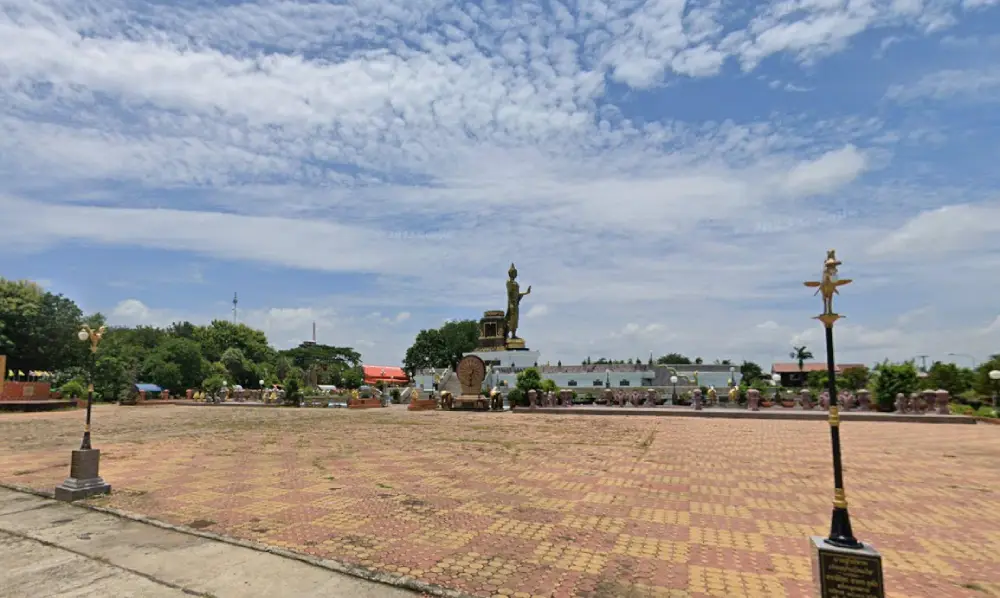
Wat Ban Ta Sao is located at No. 1, Ban Ta Sao, Moo 1, Ta Sao Subdistrict, Huai Rat District, Buri Ram Province. It is a local Buddhist temple under the Mahanikaya order and has long served as the spiritual center of Ban Ta Sao community. The temple was established in 1897 and occupies 29 rai of land. Its monastic buildings include 1 monk residence, built as a half-concrete, half-wooden structure. For travelers who want to explore a quieter and more local side of Buri Ram, Wat Ban Ta Sao offers a meaningful glimpse into rural Buddhist life, temple history, and community faith in Huai Rat District.
The importance of Wat Ban Ta Sao lies not only in its function as a place of worship but also in its long continuity as a community temple. The temple has a recorded line of abbots from the early 20th century to the modern period, showing that Ban Ta Sao has maintained a stable Buddhist identity for generations. A visit to the temple is therefore not just a visit to a religious site. It is also a way to understand how a rural Thai community has preserved its temple, its faith, and its social memory over time.
The temple boundary is clearly described in local temple history. To the north, it borders a rural development road and the village. To the south, it borders a rural development road. To the east, it also borders a rural development road. To the west, it borders land formerly associated with Mr. Kim Namitram. These boundary details show how closely the temple is connected with the village landscape. Wat Ban Ta Sao is not isolated from the community; it stands among roads, homes, and daily routes used by local people.
This relationship between temple and local roads is important in rural Thailand. Community temples need to be accessible because they support many social and religious events, including Buddhist holy day merit-making, Kathin ceremonies, robe offerings, ordinations, funerals, and family merit-making rituals. Wat Ban Ta Sao has long functioned as a shared space where villagers gather for both religious and communal purposes. The temple therefore connects home, road, village, and Buddhism in a very practical way.
Wat Ban Ta Sao was established in 1897, a period when temples in rural northeastern Thailand were central to education, moral training, and community organization. A temple founded in this period usually emerged from the shared effort of villagers, monks, and lay supporters who wanted a spiritual center for the settlement. In that sense, Wat Ban Ta Sao reflects the growth of Ban Ta Sao itself. The temple helped shape the community by providing a place for worship, learning, social gathering, and the transmission of Buddhist values.
The recorded abbots of Wat Ban Ta Sao include Phra Lu from 1905 to 1910, Phra Sun from 1910 to 1952, followed by Phra Sot, Phra La, Phra Thet, Phra Wan, Phra Lam, Phra Bun, and Phra Khru Suwimon Punyakon, who became an important figure in the temple’s later history from 1955 onward. This sequence of abbots helps visitors understand that the temple has been managed and cared for through many generations. Each abbot represents a period of temple leadership, monastic care, and community support.
Phra Khru Suwimon Punyakon is an important former monastic figure in the history of Wat Ban Ta Sao. His name is closely associated with the temple’s administration from 1955 onward, a period when the temple also developed its role in Buddhist education. In many local temples in northeastern Thailand, monks like him helped maintain both religious practice and learning. His name remains important because it reflects the temple’s long-term development and the memory of monastic leadership within Ban Ta Sao community.
The current abbot of Wat Ban Ta Sao is Phra Maha Chamlong Chantapanyo. As the temple’s present caretaker, he oversees religious activities and supports the temple’s continuing role in the local Buddhist community. The presence of an active abbot allows the temple to continue serving villagers through merit-making, Buddhist ceremonies, religious guidance, and community events. Wat Ban Ta Sao therefore remains a living temple rather than a historic site preserved only in records.
One of the temple’s important educational roles is the presence of a Phra Pariyattidhamma school in the Dhamma studies section, opened in 1955. This detail is significant because it shows that Wat Ban Ta Sao has not only supported ritual life but also Buddhist learning. Phra Pariyattidhamma education helps monks, novices, and learners understand Buddhist teachings, discipline, morality, meditation, wisdom, and the principles of living according to the Dhamma.
The temple’s educational role also reflects the older function of temples in Thai society. Before modern schooling became widely available in rural areas, temples often served as learning centers where children and young people gained literacy, discipline, moral values, and religious knowledge. Even though society has changed, this educational heritage remains part of the identity of Wat Ban Ta Sao. The temple should therefore be understood as a place of worship and a local learning institution.
The monastic residence at Wat Ban Ta Sao, built as a half-concrete and half-wooden building, reflects the practical architecture of rural community temples. Such buildings combine durability with local warmth and simplicity. They are not designed for grand tourism display but for actual monastic use. This makes the temple feel authentic and grounded in village life. Visitors who appreciate local temple architecture will find this simplicity meaningful.
The temple’s 29-rai land area allows it to support both religious activities and community gatherings. The grounds include Buddhist worship areas, monastic space, temple courtyard, merit-making areas, and places for village events. A temple of this size can welcome villagers during larger ceremonies and can also maintain a peaceful atmosphere on ordinary days. The open space supports reflection, community life, and the temple’s long-term development.
Ta Sao Subdistrict is one of the subdistricts in Huai Rat District, Buri Ram Province. The local population is mainly Buddhist, and important religious sites in the subdistrict include Wat Ban Ta Sao, Wat Ban Makham, and Wat Pa Sanuan. The presence of several temples in one subdistrict shows the strength of Buddhist faith in the area. Wat Ban Ta Sao is part of this local temple network and remains an important religious center for Ban Ta Sao village.
Wat Ban Ta Sao is suitable for travelers who want to make merit, pay respect, and learn about an old community temple in Huai Rat District. It is not a large commercial tourist attraction. Its value lies in its history, its educational role, its monastic continuity, and its close connection with local life. Visitors can experience the quiet atmosphere of a rural temple and see how Buddhism continues to shape community identity in Buri Ram.
On Buddhist holy days and important religious occasions, villagers come to the temple to offer food, take precepts, listen to sermons, and make merit. These activities keep the temple alive as a real community space. Merit-making is not only an individual act of faith. It also helps families, relatives, and neighbors maintain social bonds. Wat Ban Ta Sao therefore continues to support both spiritual life and community cohesion.
Kathin ceremonies, robe offerings, ordinations, funerals, and memorial merit-making activities also show the temple’s importance throughout the life cycle of the community. Local people relate to the temple not only during festivals but also during personal and family events. The temple becomes a place for joy, grief, gratitude, remembrance, and shared responsibility. This is one of the reasons rural temples remain so important in Thai society.
For visitors interested in community history, Wat Ban Ta Sao is a useful starting point for understanding Ta Sao Subdistrict. The temple history includes its founding year, land area, boundaries, monastic residence, Dhamma school, and abbot succession. These details turn the temple into a living archive of the community. Travelers can learn from both the written history and the physical setting of the temple.
Travel to Wat Ban Ta Sao is most convenient by private car, motorcycle, or locally arranged transport. The temple is located in Ta Sao Subdistrict, north of the central part of Huai Rat District. Visitors coming from Buri Ram city should plan their time carefully and use navigation with the full temple name and location. Searching for Wat Ban Ta Sao, Ta Sao Subdistrict, Huai Rat District, Buri Ram Province helps avoid confusion with similarly named places.
Getting There from Buri Ram city or Huai Rat District, travel toward Ta Sao Subdistrict and Ban Ta Sao Moo 1. A private car or motorcycle is recommended because local public transport is limited. Travelers who start in the morning can visit the temple, continue to nearby temples in Ta Sao Subdistrict, and then extend the route to Ban Sanuan Nok Silk Tourism Village or Buri Ram city.
Nearby places that can be combined with Wat Ban Ta Sao include Wat Ban Makham, Wat Pa Sanuan, Wat Prasat Sung with Luang Pho Ong Dam, Ban Sanuan Nok Silk Tourism Village, and Buri Ram city. This route is suitable for travelers who want to combine temple visits with community culture. Starting at Wat Ban Ta Sao provides a calm religious beginning before continuing to nearby cultural and local sites.
Wat Ban Makham and Wat Pa Sanuan are temples within Ta Sao Subdistrict and are suitable companion sites for those who want to understand the local Buddhist landscape. Visiting several temples in the same subdistrict helps travelers see how each village has its own religious center, while all temples together form a wider network of faith across the area. This makes a simple temple route meaningful for cultural travelers.
Wat Prasat Sung and Luang Pho Ong Dam are also worthwhile for visitors exploring Huai Rat District. Wat Prasat Sung is associated with local Buddhist devotion and is one of the better-known religious stops in the district. Combining Wat Ban Ta Sao with Wat Prasat Sung allows travelers to see different types of local temples: one with a long community and educational history, and another connected with a revered Buddha image.
Ban Sanuan Nok Silk Tourism Village adds a strong cultural dimension to the route. This community is known for mulberry cultivation, silkworm raising, silk reeling, Mudmee patterning, silk weaving, Ram Trot performance, old houses, an old market, and local food traditions. Traveling from Wat Ban Ta Sao to Ban Sanuan Nok allows visitors to experience both religious heritage and living community culture in Huai Rat District.
Food options around Ta Sao Subdistrict are local and may be spread out along village roads. Travelers should plan meals in advance. Options can include local food arranged through Ban Sanuan Nok community, Mona Cafe in Huai Rat, or restaurants and cafés in Buri Ram city such as The Tower Cafe & Hangout, Bamboo Bar Buriram, and Muang Pizza Buriram. This makes it practical to combine a temple visit with a relaxed meal or coffee stop.
Accommodation options are available near Huai Rat and in Buri Ram city. Baan Sanuan Resort and Ban Sanuan Nok community homestays are suitable for travelers who want to stay near the cultural community and silk tourism route. Those who prefer city-style hotels can choose accommodation in Buri Ram city, such as Best Western Royal Buriram Hotel, The Sita Princess Buriram, or Ray Hotel Buriram. The best choice depends on whether the trip focuses on community culture or broader provincial travel.
Visitors should dress modestly, speak quietly, and respect the temple as an active religious site. Photography should be done appropriately, especially around monastic areas, religious ceremonies, or people making merit. If visitors are unsure whether an area is open to the public, they should ask a monk or caretaker before entering. Respectful behavior helps preserve the dignity of the temple and makes the visit more meaningful.
Wat Ban Ta Sao is suitable for visitors interested in old temples in Buri Ram, local Buddhist education, rural temple history, and the relationship between temples and village life. Its value is not based on grand tourist decoration but on continuity: the 1897 founding, the 29-rai temple land, the recorded line of abbots, the Phra Pariyattidhamma school, and the ongoing role of the temple in Ban Ta Sao community.
Overall, Wat Ban Ta Sao is a valuable community temple with religious, historical, educational, and social importance. It was established in 1897, stands on 29 rai of land, has a half-concrete, half-wooden monastic residence, preserves a long history of temple leadership, and continues to serve as a Buddhist center for local people. For foreign travelers, the temple offers a quiet and authentic way to understand how Buddhism remains part of daily life in rural Buri Ram.
| Name | Wat Ban Ta Sao |
| Location | No. 1, Ban Ta Sao, Moo 1, Ta Sao Subdistrict, Huai Rat District, Buri Ram 31000 |
| Address | Ban Ta Sao, Moo 1, Ta Sao Subdistrict, Huai Rat District, Buri Ram Province, Thailand |
| Highlights | An old local Buddhist temple in Ta Sao Subdistrict, established in 1897, with 29 rai of temple land and a Dhamma studies school opened in 1955 |
| History | Wat Ban Ta Sao was established in 1897 under the Mahanikaya order and has long served as the spiritual center of Ban Ta Sao community |
| Temple Boundary | North: rural development road and village; South: rural development road; East: rural development road; West: land formerly associated with Mr. Kim Namitram |
| Distinctive Features | A 29-rai community temple with a half-concrete, half-wooden monk residence and an important role in religion, education, and local community life |
| Monastic Buildings | 1 monk residence, built as a half-concrete and half-wooden structure |
| Education | Phra Pariyattidhamma school in the Dhamma studies section, opened in 1955 |
| Historical Abbots | Phra Lu, 1905–1910; Phra Sun, 1910–1952; Phra Sot; Phra La; Phra Thet; Phra Wan; Phra Lam; Phra Bun; and Phra Khru Suwimon Punyakon, an important former monastic figure in the temple history |
| Traditions / Rituals | Buddhist holy day merit-making, Kathin ceremony, robe offering, ordination ceremonies, memorial merit-making, and important Buddhist festival activities |
| Travel Information | From Buri Ram city or Huai Rat District, travel toward Ta Sao Subdistrict and Ban Ta Sao Moo 1. Private car, motorcycle, or locally arranged transport is recommended. Search with the full temple name, subdistrict, district, and province |
| Current Status | An active local Buddhist temple under the Mahanikaya order and the religious center of Ban Ta Sao community |
| Open Days | Daily |
| Opening Hours | 08.00 – 17.00 |
| Facilities | Temple courtyard, religious activity areas, merit-making space, monk residence, and community activity space |
| Main Areas / Zones | Buddhist worship area, monk residence area, merit-making area, temple courtyard, ceremony area, and community activity area |
| Abbot / Caretaker | Phra Maha Chamlong Chantapanyo |
| Important Former Monk | Phra Khru Suwimon Punyakon, an important former monastic figure in the administrative history of Wat Ban Ta Sao |
| Local Administrative Contact | Ta Sao Subdistrict Administrative Organization, Tel. 044-110-494, 044-666-490 |
| Nearby Tourist Attractions | 1. Wat Ban Makham, Ta Sao Subdistrict, about 8 km 2. Wat Pa Sanuan, Ban Kham, Ta Sao Subdistrict, about 12 km 3. Wat Prasat Sung And Luang Pho Ong Dam, Huai Rat District, about 22 km 4. Ban Sanuan Nok Silk Tourism Village, about 25 km 5. Buri Ram City, about 34 km |
| Nearby Restaurants | 1. Local Food Service In Ban Sanuan Nok Community, about 25 km, Tel. 094-979-2887 2. Mona Cafe Huai Rat, about 24 km, Tel. 093-027-8299 3. The Tower Cafe & Hangout Buriram, about 34 km, Tel. 044-666-305 4. Bamboo Bar Buriram, about 35 km, Tel. 044-625-577, 089-426-9053 5. Muang Pizza Buriram, about 35 km, Tel. 044-612-032, 062-138-9432 |
| Nearby Accommodations | 1. Baan Sanuan Resort, about 25 km, Tel. 044-666-776, 084-496-8579 2. Ban Sanuan Nok Community Homestay, about 25 km, Tel. 094-979-2887 3. Best Western Royal Buriram Hotel, about 34 km, Tel. 044-666-600 4. The Sita Princess Buriram, about 35 km, Tel. 087-050-4864, 098-291-6649 5. Ray Hotel Buriram, about 36 km |
Frequently Asked Questions (FAQ)
Q: Where is Wat Ban Ta Sao located?
A: Wat Ban Ta Sao is located at No. 1, Ban Ta Sao, Moo 1, Ta Sao Subdistrict, Huai Rat District, Buri Ram Province 31000.
Q: When was Wat Ban Ta Sao established?
A: Wat Ban Ta Sao was established in 1897 and is an old local Buddhist temple under the Mahanikaya order.
Q: How large is Wat Ban Ta Sao?
A: The temple occupies 29 rai of land and is surrounded by rural development roads and village land.
Q: Who is the current abbot of Wat Ban Ta Sao?
A: The current abbot of Wat Ban Ta Sao is Phra Maha Chamlong Chantapanyo.
Q: Why is Wat Ban Ta Sao important for Buddhist education?
A: The temple has a Phra Pariyattidhamma school in the Dhamma studies section, opened in 1955, showing its role as a Buddhist learning center.
Q: What are the opening days and opening hours of Wat Ban Ta Sao?
A: The temple is open daily from 08.00 to 17.00. It is suitable for worship, merit-making, and learning about a local Buddhist temple in Ta Sao Subdistrict.
Q: What nearby places can visitors combine with Wat Ban Ta Sao?
A: Visitors can combine the trip with Wat Ban Makham, Wat Pa Sanuan, Wat Prasat Sung and Luang Pho Ong Dam, Ban Sanuan Nok Silk Tourism Village, and Buri Ram city.
Q: How can travelers get to Wat Ban Ta Sao?
A: From Buri Ram city or Huai Rat District, travel toward Ta Sao Subdistrict and Ban Ta Sao Moo 1. A private car, motorcycle, or locally arranged transport is recommended.
 Category: ●Places of Worship
 Group: ●Temple
Last Update : 3 MonthAgo
 Last Update : 3 MonthAgo
 Click to Access the Navigation Map GPS
 Art, Culture and Heritage
 Historical Sites and Monuments(14)
 Landmarks and Memorials(2)
 Art, Craft Centres, Tradition(6)
 Museums(3)
 Educational Places
 Museum for Study(1)
Temple(74)
Museum for Study(1)
Temple(74)
 Other Sacred Sites(5)
 Suburban Living
 Village, Community(3)
 Nature and Wildlife
 National Parks and Marine Reserves(2)
 Mountain (Doi)(1)
 Dam, Reservoir, Lake(14)
 River, Canal(1)
 Bays and Beaches(1)
 Other natural attractions(2)
 Entertainment and Agricultural
 Animal camps and shows(1)
 Stadium(2)
 Farms, Parks and Ecotourism(2)
 Waterpark(1)


