
lovethailand home >Northeastern Travel Attractions >Buri Ram Travel Attractions >Nong Hong >Sa Kaeo > Wat Phra That Mongkhon Wanaram
TL;DR: Wat Phra That Mongkhon Wanaram is located at Ban Sa Kaeo, Sa Kaeo Subdistrict, Nong Hong District, Buri Ram 31240, open Daily, hours 08.00 – 17.00.
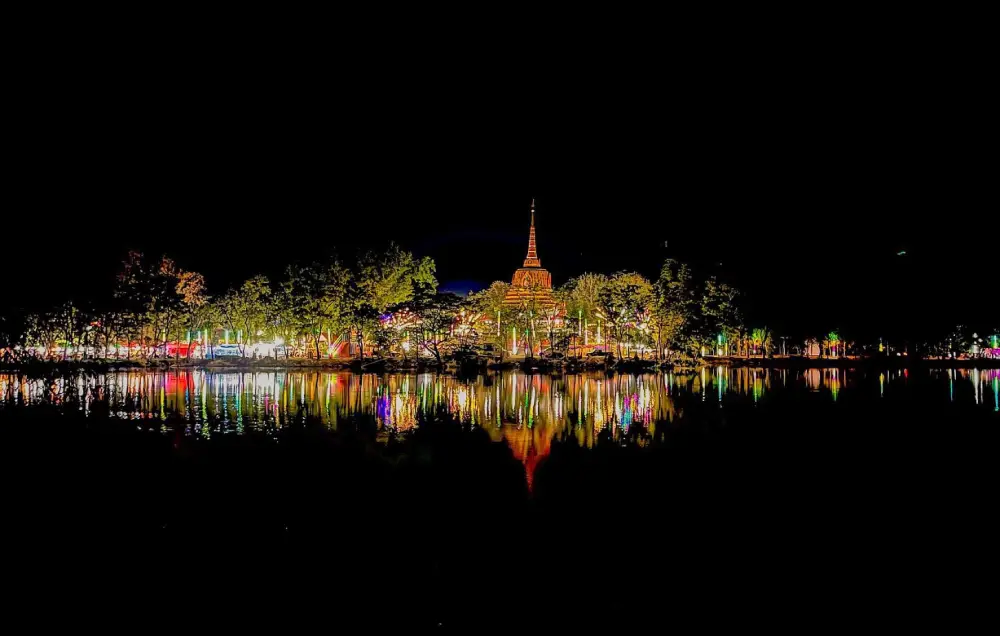
Wat Phra That Mongkhon Wanaram
Open Days: Daily
Opening Hours: 08.00 – 17.00
Wat Phra That Mongkhon Wanaram is located in Ban Sa Kaeo, Sa Kaeo Subdistrict, Nong Hong District, Buri Ram Province. It is an important community Buddhist temple and a meaningful spiritual landmark of Nong Hong District. The temple is especially notable because it is the only temple in the district whose name includes the word “Phra That,” a term closely associated with Buddhist sacred relics and places of deep devotion. For travelers, this temple offers a quiet and sincere experience of local Buddhism, village culture, and community faith in lower northeastern Thailand.
Wat Phra That Mongkhon Wanaram is not a large commercial tourist site. Its appeal comes from its calm atmosphere, shady temple grounds, and living role as a place of worship for local people. Visitors come here to make merit, pay respect, pray, rest their minds, and experience the slower rhythm of a rural temple in Buri Ram. The temple is also known as a place for training youth, school students, and university students, making it not only a religious space but also a place of moral learning and community education.
The temple stands in Sa Kaeo Subdistrict, an area that forms part of the cultural and everyday life of Nong Hong District. The surrounding district includes local communities, small restaurants, cafés, accommodations, public water areas, and nearby cultural sites. This makes Wat Phra That Mongkhon Wanaram a practical stop for travelers who want to combine merit-making with a half-day or full-day local route around Nong Hong. A visit here is best approached slowly and respectfully, with attention to the temple’s role in the community rather than only to sightseeing.
The word “Phra That” in the temple’s name gives Wat Phra That Mongkhon Wanaram a distinctive identity. In Thai Buddhist culture, Phra That is associated with sacred relics, Buddhist devotion, and important religious places. Because this temple is recognized as the only temple in Nong Hong District with “Phra That” in its name, it carries a special sense of reverence for local Buddhists. Travelers who are interested in Buddhist culture will find that the name itself already points to the temple’s spiritual importance.
The name “Mongkhon Wanaram” also has a gentle meaning. “Mongkhon” suggests auspiciousness and blessing, while “Wanaram” evokes the image of a peaceful monastery connected with trees, shade, and calm surroundings. Together, the name creates the impression of an auspicious and peaceful temple where visitors can come for reflection, devotion, and inner quiet. This meaning corresponds well with the actual atmosphere of the temple, which is known for being quiet, shady, and suitable for religious practice.
Wat Phra That Mongkhon Wanaram is a local Buddhist temple under the Mahanikaya tradition and serves as a community religious center in Sa Kaeo Subdistrict. Local temples like this are essential to rural Thai life. They support Buddhist ceremonies, ordination, merit-making, funerary rites, Kathin ceremonies, Buddhist holy days, and local gatherings. The temple therefore remains part of everyday life rather than a place separated from the community. For foreign travelers, this is an important point: the temple should be seen as a living place of faith.
The current abbot of Wat Phra That Mongkhon Wanaram is Phra Khru Pariyattiwarothai Attamanto. Under the care of the abbot and resident monks, the temple continues to function as a place for Buddhist practice and community activities. The presence of resident monks gives the temple an active religious rhythm. Visitors may see local people coming to make merit, offer food, receive blessings, or participate in activities connected with Buddhist holy days. This living monastic presence is part of the temple’s identity.
One of the most important roles of the temple is its function as a training place for young people, students, and learners. In Thai society, temples have long served as spaces for moral education, not only for monks but also for laypeople. At Wat Phra That Mongkhon Wanaram, this role continues through activities that help young people learn discipline, respect, gratitude, mindfulness, and community responsibility. For travelers, this aspect makes the temple more meaningful than a simple place of worship. It is also a learning center rooted in Buddhist values.
Training youth within a temple environment has lasting cultural value. Young people who enter the temple learn not only through formal instruction but also through atmosphere, example, and participation. They observe monks, see villagers making merit, learn how to behave respectfully in sacred spaces, and understand that Buddhism remains part of everyday community life. This kind of learning is difficult to separate from place. The calm surroundings of Wat Phra That Mongkhon Wanaram help create the right setting for moral and spiritual development.
The temple also has a significant connection with the celebration of its Phra That. In late 2011, Wat Phra That Mongkhon Wanaram held a Phra That celebration connected with the Department of Religious Affairs under the Ministry of Culture. This event emphasized the importance of the temple beyond the immediate village level. It brought together faith, culture, and community participation, reinforcing the temple’s identity as an important religious and cultural site in Nong Hong District.
Another important religious tradition associated with the temple is the annual worship of the Buddha relics and gilding of Luang Pho Than Chai. This event is known in Nong Hong District and is usually associated with the early part of February. For local Buddhists, worshipping the Buddha relics is a deeply meaningful act of devotion, while gilding Luang Pho Than Chai reflects the Thai Buddhist practice of making merit, expressing faith, and asking for blessings. These traditions give the temple a strong seasonal and cultural identity.
Luang Pho Than Chai is an important sacred image for local worshippers. In many parts of Thailand, the name Than Chai is associated with quick fulfillment, timely success, and auspicious blessings. At Wat Phra That Mongkhon Wanaram, the devotion to Luang Pho Than Chai is connected with the temple’s wider religious life and annual ceremony. Visitors who come to pay respect often do so with a calm and sincere attitude, praying for success, protection, good fortune, and peace of mind.
During the annual event, the temple becomes a gathering place for local people, families, elders, young people, and visitors from nearby communities. The temple atmosphere becomes livelier, with merit-making, worship, offerings, and community participation. Such events show how a rural temple can function as both a religious and social center. The ceremony helps maintain connections between generations and gives younger people a chance to experience local Buddhist culture in a real communal setting.
On ordinary days, the temple offers a different but equally valuable experience. The grounds are calm, quiet, and suitable for reflection. Visitors can walk slowly, pay respect, sit quietly, and appreciate the shaded environment. There is no need to rush. The value of Wat Phra That Mongkhon Wanaram lies in its peacefulness and sincerity. It is a place where travelers can step away from crowded attractions and experience the soft, living presence of Buddhism in a rural Thai community.
For foreign visitors, Wat Phra That Mongkhon Wanaram offers a useful example of how local temples continue to shape Thai community life. In large tourist cities, temples are often seen mainly as architectural landmarks. In a district like Nong Hong, however, the temple remains closely linked to people’s lives. It supports ceremonies, education, moral training, local festivals, and everyday merit-making. Visiting this temple can therefore deepen a traveler’s understanding of Thailand beyond famous monuments and major tourist routes.
The temple also reflects the quieter side of Buri Ram Province. Buri Ram is widely known for Khmer heritage sites, sports tourism, and major provincial attractions. Yet smaller temples in rural districts reveal another layer of the province: local devotion, Buddhist learning, community gatherings, and village identity. Wat Phra That Mongkhon Wanaram is part of this deeper cultural landscape. It is especially suitable for travelers who enjoy meaningful cultural stops rather than fast-paced sightseeing.
Visitors can combine the temple with nearby places around Nong Hong District. Nong Sa Kaeo and the King Rama IX 80th Birthday Anniversary Park are close to the district area and suitable for a relaxed stop after visiting the temple. Mueang Fai Museum and the ancient Mueang Fai area are also worthwhile for travelers who want to understand the broader history and archaeology of the district. These nearby sites make the temple part of a wider cultural route rather than a single isolated stop.
Mueang Fai Museum helps travelers understand the historical depth of the Nong Hong area. The museum presents local objects, archaeological materials, and stories of ancient settlement in the district. When combined with Wat Phra That Mongkhon Wanaram, the trip reveals both present-day Buddhist devotion and the deeper local history of the area. This combination is recommended for travelers interested in cultural routes, local museums, and the historical roots of community life in Buri Ram.
The ancient Mueang Fai area and its old moat landscape also add context to a visit. These places are not large commercial attractions, but they are meaningful for travelers who enjoy learning from local landscapes. They show that Nong Hong District has more cultural depth than many visitors may expect. By connecting the temple, museum, public water areas, and old community sites, travelers can create a compact but meaningful cultural itinerary within the district.
Getting There is easiest by private car, motorcycle, or locally arranged transport. From Nong Hong town, travel toward Sa Kaeo Subdistrict and Ban Sa Kaeo. The temple is located within the local community area. Travelers coming from Buri Ram city should start early if they want to visit the temple and nearby attractions in one day. When using navigation apps, search for the full name Wat Phra That Mongkhon Wanaram, Sa Kaeo Subdistrict, Nong Hong District, Buri Ram Province to avoid confusion with similarly named temples elsewhere.
Visitors should allow at least 30 minutes to 1 hour for the temple itself. Those who wish to visit nearby attractions, cafés, restaurants, or accommodations in Nong Hong should allow a half day or more. Morning is a good time to visit because the weather is usually more comfortable, the temple atmosphere is calm, and travelers still have enough time to continue to Nong Sa Kaeo, Mueang Fai Museum, or other nearby places.
Respectful behavior is important when visiting the temple. Visitors should dress modestly, keep their voices low, avoid intrusive photography, and respect monks and local worshippers. If an area appears private or restricted, visitors should ask politely before entering. This temple is an active religious place, not a theme attraction. A respectful attitude will make the visit more meaningful and will help preserve the dignity of the temple and the comfort of the local community.
Food and drink options can be found around Sa Kaeo Subdistrict and Nong Hong town. Nearby choices include Ma Home Cafe & Restaurant, Jungle Cafe, PunThai Coffee, Na’Bong COFFEE BAR, and Mark Cafe in Mueang Fai. These places make it easy for travelers to plan a relaxed temple visit followed by a meal or coffee stop. Local restaurants listed by the municipality also help visitors experience the ordinary food culture of the district.
Accommodation around Nong Hong is generally simple and practical, mostly in the form of small resorts and local guesthouse-style stays. Nearby options include Pumaka Resort, Aioon Resort, Nong Sao La Resort, Phuean Nimit Resort, and Mangkorn Resort. Travelers planning to stay overnight should contact accommodations in advance, especially during temple festivals, local events, or public holidays. Staying overnight can be useful for those who want to continue exploring Nong Hong and nearby districts the following day.
The main value of Wat Phra That Mongkhon Wanaram lies in the way it brings together sacred identity, moral education, community life, and peaceful religious practice. The temple has the symbolic importance of Phra That, the devotional presence of Luang Pho Than Chai, the educational role of a youth training place, and the living leadership of its abbot and resident monks. These elements make it a meaningful local temple rather than a simple stop on a map.
For cultural travelers, the temple provides a quiet introduction to the spiritual life of Nong Hong District. It shows how local temples continue to serve communities through ceremonies, training, festivals, and everyday merit-making. It also helps visitors see Buri Ram from a more intimate perspective. Instead of only focusing on famous historical parks or sports landmarks, travelers can experience the faith and community values that remain strong in rural parts of the province.
Wat Phra That Mongkhon Wanaram is therefore suitable for travelers who want to pay respect at a peaceful temple, learn about local Buddhist culture, visit a meaningful community religious site, and explore Nong Hong District at a slower pace. The temple may not be crowded or grand in the conventional tourist sense, but its quiet atmosphere, sacred name, connection to Luang Pho Than Chai, and role in youth training make it a worthwhile and respectful stop in Buri Ram.
A visit to Wat Phra That Mongkhon Wanaram becomes most rewarding when travelers understand its broader context. It is a temple of faith, a place of learning, a community gathering space, and a symbol of local devotion in Sa Kaeo Subdistrict. For those passing through Nong Hong District, it offers a calm place to pause, make merit, and experience the living cultural heart of a rural Thai community.
| Name | Wat Phra That Mongkhon Wanaram |
| Location | Ban Sa Kaeo, Sa Kaeo Subdistrict, Nong Hong District, Buri Ram 31240 |
| Address | Sa Kaeo Subdistrict, Nong Hong District, Buri Ram Province, Thailand |
| Coordinates | 14.850000, 102.688333 |
| Highlights | The only temple in Nong Hong District with the name “Phra That”; a quiet and shady community temple that also serves as a training place for youth, school students, and university students |
| History | Wat Phra That Mongkhon Wanaram is a community Buddhist temple in Sa Kaeo Subdistrict, Nong Hong District, Buri Ram. It is known for religious activities, youth training, and a Phra That celebration connected with the Department of Religious Affairs under the Ministry of Culture in late 2011 |
| Name Origin | The name combines “Phra That,” which carries sacred Buddhist meaning, with “Mongkhon Wanaram,” suggesting an auspicious and peaceful monastery |
| Distinctive Features | A peaceful local temple suitable for worship, merit-making, quiet reflection, and learning about the role of a rural temple as a youth training place |
| Traditions / Rituals | Annual worship of the Buddha relics and gilding of Luang Pho Than Chai in early February, along with Buddhist holy day activities and local merit-making ceremonies |
| Travel Information | From Nong Hong town, travel toward Sa Kaeo Subdistrict and Ban Sa Kaeo. Private car, motorcycle, or locally arranged transport is recommended. Travelers from Buri Ram city should start in the morning if visiting nearby attractions on the same day |
| Current Status | An active community Buddhist temple with resident monks and ongoing religious and community activities in Sa Kaeo Subdistrict |
| Open Days | Daily |
| Opening Hours | 08.00 – 17.00 |
| Facilities | Religious activity areas, temple grounds, shaded areas, and youth training activity space |
| Main Areas / Zones | Buddhist worship area, Phra That area, Luang Pho Than Chai worship area, religious activity area, and youth training space |
| Abbot / Caretaker | Phra Khru Pariyattiwarothai Attamanto |
| Resident Monks | 5 monks |
| Local Administrative Contact | Nong Hong Subdistrict Municipality, Tel. 044-669-098, 044-669-225 |
| Nearby Tourist Attractions | 1. Nong Sa Kaeo, Nong Hong Municipality, about 2 km 2. King Rama IX 80th Birthday Anniversary Park, Nong Hong District, about 2 km 3. Mueang Fai Museum, about 12 km 4. Ancient Mueang Fai And Old Moat Area, about 14 km 5. Wat Non Ngio, Huai Hin Subdistrict, about 12 km |
| Nearby Restaurants | 1. Ma Home Cafe & Restaurant, about 2 km, Tel. 085-863-7547 2. Jungle Cafe Nong Hong Buri Ram Branch, about 2 km, Tel. 087-460-4149 3. PunThai Coffee Road 4050 Nong Hong Buri Ram, about 2 km, Tel. 061-386-7833 4. Na’Bong COFFEE BAR, about 2 km, Tel. 081-725-7192 5. Mark Cafe, Mueang Fai Subdistrict, about 13 km, Tel. 095-619-9505 |
| Nearby Accommodations | 1. Pumaka Resort, Sa Kaeo Subdistrict, about 5 km, Tel. 065-683-7688 2. Aioon Resort, Sa Kaeo Subdistrict, about 2 km, Tel. 085-611-9478 3. Nong Sao La Resort, Sa Kaeo Subdistrict, about 2 km 4. Phuean Nimit Resort, Thai Samakkhi Subdistrict, about 11 km, Tel. 083-372-2991 5. Mangkorn Resort, Thai Samakkhi Subdistrict, about 12 km |
Frequently Asked Questions (FAQ)
Q: Where is Wat Phra That Mongkhon Wanaram located?
A: Wat Phra That Mongkhon Wanaram is located in Ban Sa Kaeo, Sa Kaeo Subdistrict, Nong Hong District, Buri Ram Province 31240.
Q: What are the opening days and opening hours of Wat Phra That Mongkhon Wanaram?
A: The temple is open daily from 08.00 to 17.00. It is suitable for worship, merit-making, and quiet cultural visits.
Q: Why is Wat Phra That Mongkhon Wanaram important?
A: It is the only temple in Nong Hong District with the name “Phra That.” It is a community religious center, a youth training place, and a temple associated with the annual worship of the Buddha relics and gilding of Luang Pho Than Chai.
Q: Who is the current abbot of Wat Phra That Mongkhon Wanaram?
A: The current abbot is Phra Khru Pariyattiwarothai Attamanto.
Q: What important tradition is associated with the temple?
A: The important annual tradition is the worship of the Buddha relics and gilding of Luang Pho Than Chai, a ceremony valued by Buddhists in Nong Hong District.
Q: Who should visit Wat Phra That Mongkhon Wanaram?
A: The temple is suitable for travelers who want to make merit, visit a peaceful local temple, learn about community Buddhism, and explore religious culture in Nong Hong District.
Q: What nearby attractions can visitors combine with Wat Phra That Mongkhon Wanaram?
A: Visitors can combine the trip with Nong Sa Kaeo, King Rama IX 80th Birthday Anniversary Park, Mueang Fai Museum, ancient Mueang Fai and the old moat area, and Wat Non Ngio.
Q: How can travelers get to Wat Phra That Mongkhon Wanaram?
A: From Nong Hong town, travel toward Sa Kaeo Subdistrict and Ban Sa Kaeo. A private car, motorcycle, or locally arranged transport is recommended.
 Category: ●Places of Worship
 Group: ●Temple
Last Update : 2 MonthAgo
 Last Update : 2 MonthAgo
 Click to Access the Navigation Map GPS
Wat Phra That Mongkhon Wanaram Map
Recommend

 Art, Culture and Heritage
 Historical Sites and Monuments(14)
 Landmarks and Memorials(2)
 Art, Craft Centres, Tradition(6)
 Museums(3)
 Educational Places
 Museum for Study(1)
Temple(74)
Museum for Study(1)
Temple(74)
 Other Sacred Sites(5)
 Suburban Living
 Village, Community(3)
 Nature and Wildlife
 National Parks and Marine Reserves(2)
 Mountain (Doi)(1)
 Dam, Reservoir, Lake(14)
 River, Canal(1)
 Bays and Beaches(1)
 Other natural attractions(2)
 Entertainment and Agricultural
 Animal camps and shows(1)
 Stadium(2)
 Farms, Parks and Ecotourism(2)
 Waterpark(1)


