
lovethailand home >Northeastern Travel Attractions >Buri Ram Travel Attractions >Nong Hong >Muang Fai > Wat Khok Prasat (Mueang Fai)
TL;DR: Wat Khok Prasat (Mueang Fai) is located at Moo 5, Ban Khok Prasat, Mueang Fai Subdistrict, Nong Hong District, Buri Ram 31240, open Daily, hours 08.00 – 17.00.
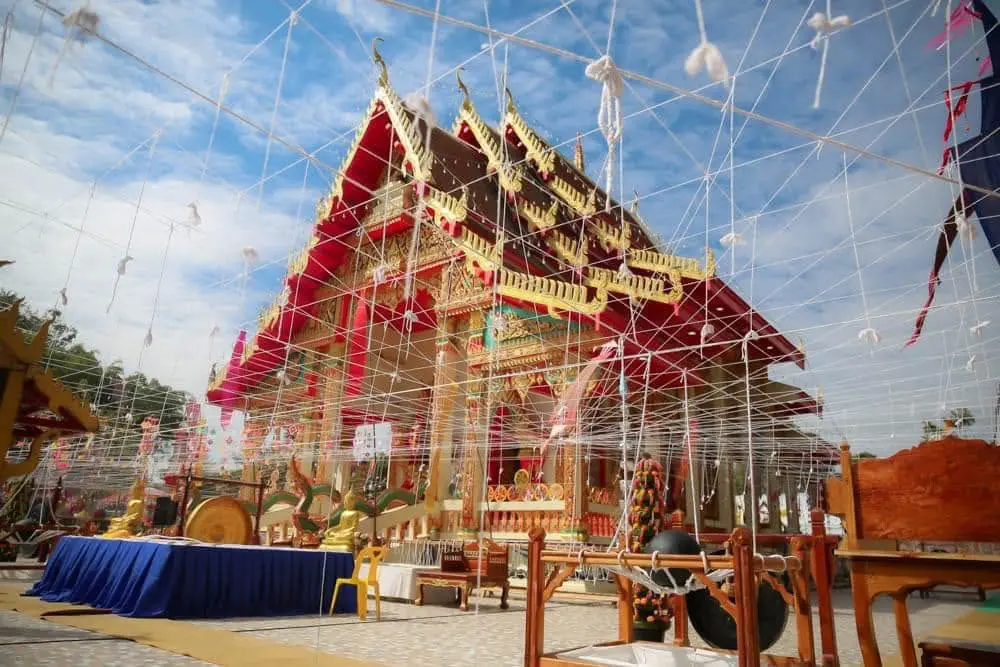
Wat Khok Prasat (Mueang Fai)
Open Days: Daily
Opening Hours: 08.00 – 17.00
Wat Khok Prasat (Mueang Fai) in Mueang Fai Subdistrict, Nong Hong District, Buri Ram Province, is a local Buddhist temple with deep religious and cultural meaning for the Ban Khok Prasat community. Today, the temple remains an active place of worship and a community-based cultural space. It is also associated with the Thai Cultural Community Bond Project of Mueang Fai Subdistrict, making it an important destination for travelers who want to understand local Buddhism, village culture, and the historical landscape of Mueang Fai beyond the more widely known attractions of Buri Ram.
The temple is located in Moo 5, Ban Khok Prasat, Mueang Fai Subdistrict, Nong Hong District, Buri Ram 31240. The surrounding area is a quiet rural community in lower northeastern Thailand, where temple life, local faith, and everyday village culture remain closely connected. Wat Khok Prasat is not a commercialized tourist attraction. Its value lies in its living role as a community temple, a place for merit-making, Buddhist ceremonies, remembrance of respected monks, and cultural activities that continue to bind the local community together.
For travelers interested in cultural tourism, Wat Khok Prasat should be understood together with the wider story of Mueang Fai. Mueang Fai is not merely a rural subdistrict; it is an area with archaeological traces, ancient moats, old community memories, religious objects, and cultural traditions. Visiting this temple therefore offers more than a simple stop for worship. It gives travelers a gateway into the layered history of Nong Hong District and the cultural identity of Buri Ram’s lower Isan communities.
The name “Khok Prasat” reflects the relationship between landscape and local memory. In Thai, “khok” often refers to a raised mound or higher ground, while “prasat” is associated with an ancient sanctuary or a remembered sacred structure. Although the present temple functions primarily as a contemporary Buddhist temple, the name preserves the community’s memory of an older cultural landscape. For foreign travelers, this name helps explain why the temple is linked not only with Buddhism but also with the historical imagination of the Mueang Fai area.
Wat Khok Prasat is a community temple under the Mahanikaya order. As a local temple, it has long served the people of Ban Khok Prasat through daily religious practice, Buddhist holy days, ordination ceremonies, merit-making events, funerary rites, Kathin ceremonies, and other community gatherings. The temple is therefore not a silent historical site but a living religious space. People come here to make merit, pay respect, receive blessings, remember former teachers, and participate in the rhythms of Buddhist community life.
One of the most important figures connected with Wat Khok Prasat is Phra Khru Winit Thammathon, widely remembered by local followers as Luang Pu Amnuay. He was a former abbot of the temple and remains deeply respected by many disciples. Although he has passed away, his memory continues to shape the spiritual atmosphere of the temple. Many visitors come not only to see the place but also to pay respect to the faith and devotion associated with Luang Pu Amnuay, whose legacy still lives in the stories and hearts of local people.
The present abbot of Wat Khok Prasat is Phra Khru Panya Thammathon. The temple remains active, with resident monks and ongoing religious activities. This living monastic presence is important for travelers to understand. Wat Khok Prasat is not a preserved monument separated from local life; it is a functioning temple where monks, villagers, and visitors continue to interact through Buddhist practice. The atmosphere is calm, respectful, and rooted in the everyday religious life of the community.
The temple’s role as a site associated with the Thai Cultural Community Bond Project of Mueang Fai Subdistrict adds another layer of importance. The project reflects the idea that a temple can serve not only as a place of worship but also as a cultural center for the community. Wat Khok Prasat was selected because it is considered an old and meaningful local place, valued by residents and Buddhists, and surrounded by traditions that remain important to the community. This makes the temple a useful place for travelers who want to observe how religion and culture are preserved at the village level.
To understand Wat Khok Prasat more deeply, travelers should also learn about ancient Mueang Fai. The Mueang Fai area contains traces of an old settlement with moats and earthen embankments, as well as archaeological objects found across the local landscape. These remains show that the area was inhabited and used over different historical periods. The temple stands within this cultural environment, so its identity is shaped not only by present-day Buddhist practice but also by the long memory of settlement, faith, and community life in Mueang Fai.
Mueang Fai Museum is one of the best nearby places to visit after Wat Khok Prasat. The museum presents local archaeological objects, Buddha images, pottery fragments, tools, and stories related to the ancient community. Its architecture also reflects the atmosphere of a Khmer-style sanctuary, fitting the cultural landscape of lower Isan. A visit to the museum helps foreign travelers understand why Mueang Fai is significant and why a local temple such as Wat Khok Prasat should be seen as part of a larger cultural route rather than as an isolated religious site.
One of the important stories associated with Mueang Fai is the discovery of Luang Pho Prathan Phon, a stone Buddha image found in the area on 24 March 1970. The image became an important focus of faith for local people and is closely tied to the cultural memory of the community. Such stories show how archaeology, Buddhism, and local belief are intertwined in Mueang Fai. For travelers, this connection makes the area particularly meaningful because it reveals how sacred objects continue to shape local identity long after their discovery.
Mueang Fai is also connected with several local ethnic and cultural groups, including Khmer, Thai Doeng or Thai Korat, Suay, and Lao communities. This diversity contributes to the area’s rich cultural character. Language, dress, food, ritual, and local belief all contribute to the identity of Mueang Fai. Wat Khok Prasat stands within this multi-layered cultural setting, making it a meaningful destination for travelers interested in the everyday cultural life of northeastern Thailand.
During Buddhist festivals and local ceremonies, temples such as Wat Khok Prasat become gathering places for villagers, elders, families, young people, and those returning to their hometown. Merit-making is both a religious act and a social act. It strengthens family ties, village identity, and community continuity. Travelers who visit during Buddhist holy days, the rainy-season retreat period, Kathin season, or local merit-making events may see the temple at its most active, with villagers coming together in a way that reveals the living role of the temple in rural Isan society.
The atmosphere of Wat Khok Prasat is best experienced slowly. Visitors can pay respect to the Buddha images, make merit, remember Luang Pu Amnuay, and observe the calm rhythm of a village temple. This is not a place designed for rapid sightseeing. Its appeal lies in its quietness, sincerity, and close connection to local people. Foreign travelers should visit with a respectful attitude, dress modestly, keep their voices low, and avoid disturbing monks or local residents who come for religious purposes.
For travelers interested in local history, Wat Khok Prasat can be the starting point for a one-day cultural route in Nong Hong District. A good route begins at the temple for worship and local spiritual context, continues to Mueang Fai Museum for archaeology and historical interpretation, and then moves on to ancient Mueang Fai and the old moat area to understand the physical landscape of the former settlement. This route allows visitors to connect temple, community, museum, and archaeological landscape into one coherent cultural experience.
Getting There is easiest by private car, motorcycle, or locally arranged transport. From Nong Hong town, travel toward Mueang Fai Subdistrict and continue to Ban Khok Prasat using local roads. Travelers using navigation apps should search for Wat Khok Prasat together with the terms Mueang Fai and Nong Hong, as there are other places with similar names in Buri Ram Province. Confirming the subdistrict and district before departure helps prevent confusion and makes the journey smoother.
Visitors should allow at least 30 minutes to 1 hour for the temple itself. Those who want to understand the wider Mueang Fai story should allow additional time for Mueang Fai Museum, ancient Mueang Fai, Nong Sa Kaeo, and nearby community attractions. The route is suitable for travelers who enjoy local temples, rural culture, archaeology, and slow travel rather than highly commercial attractions. Morning visits are recommended for a more comfortable pace and better light for photography around the village and surrounding landscape.
Nong Hong District has local restaurants, cafés, and small accommodations in and around Mueang Fai, Sa Kaeo, and Thai Samakkhi subdistricts. Travelers can plan to eat in Nong Hong town after visiting the temple or stop at a nearby café in Mueang Fai before continuing to the museum. Accommodation in the district is generally simple and practical, suitable for travelers who want to stay overnight and continue exploring Nong Hong, Nang Rong, or other parts of Buri Ram the following day.
Travelers should remember that Wat Khok Prasat is a community temple. Facilities are basic and should be used respectfully. Visitors should avoid entering restricted areas, taking intrusive photographs, or behaving as if the temple were a theme attraction. The best way to experience the temple is to observe quietly, ask politely when uncertain, and respect the religious and community functions of the place. This approach allows visitors to appreciate the temple’s real value while supporting respectful cultural tourism.
The cultural importance of Wat Khok Prasat lies in the way it connects past and present. Its past is remembered through Luang Pu Amnuay, local faith, and the cultural memory of Ban Khok Prasat. Its present continues through the current abbot, resident monks, Buddhist ceremonies, and community activities. Its future depends on the continued care of local people and the respectful interest of visitors. This makes the temple a living cultural site rather than a static monument.
When seen together with Mueang Fai Museum and the ancient town of Mueang Fai, Wat Khok Prasat helps travelers understand a deeper side of Buri Ram. The province is widely known for Khmer temples and sports tourism, but places like Wat Khok Prasat reveal another layer: village faith, Buddhist memory, local archaeology, and community-based cultural preservation. For travelers who want a more meaningful and less crowded experience, this temple is a valuable stop in Nong Hong District.
Wat Khok Prasat (Mueang Fai) is therefore suitable for visitors who are interested in local temples, Buddhist faith, revered monks, ancient communities, and cultural routes in Buri Ram. The temple’s value cannot be understood from a quick photo alone. It is found in the relationship between the temple, Luang Pu Amnuay, Ban Khok Prasat, the Thai Cultural Community Bond Project, Mueang Fai Museum, and the long memory of people in Nong Hong District. A visit here is a quiet but meaningful journey into the cultural heart of Mueang Fai.
| Name | Wat Khok Prasat (Mueang Fai) |
| Location | Moo 5, Ban Khok Prasat, Mueang Fai Subdistrict, Nong Hong District, Buri Ram 31240 |
| Address | Ban Khok Prasat, Mueang Fai Subdistrict, Nong Hong District, Buri Ram Province, Thailand |
| Coordinates | 14.823121, 102.751194 |
| Highlights | A meaningful community temple of Ban Khok Prasat, associated with Luang Pu Amnuay and the Thai Cultural Community Bond Project of Mueang Fai Subdistrict |
| History | The temple was officially established on 20 December 1990 and stands within the wider cultural landscape of Mueang Fai, an area associated with ancient settlement traces, moats, archaeological objects, and historical periods ranging from late prehistory to Dvaravati and the era of King Jayavarman VII |
| Name Origin | The name Khok Prasat reflects a raised local landscape and the community memory of ancient sacred structures in the Mueang Fai area |
| Distinctive Features | A living lower Isan community temple with strong local faith connected to Phra Khru Winit Thammathon, also known as Luang Pu Amnuay, a former abbot deeply respected by his followers |
| Travel Information | Travel from Nong Hong town toward Mueang Fai Subdistrict and continue to Ban Khok Prasat by local roads. Private car, motorcycle, or locally arranged transport is recommended. Search with the full terms Wat Khok Prasat, Mueang Fai, Nong Hong to avoid confusion with similarly named temples in Buri Ram |
| Current Status | An active community Buddhist temple and religious center of Ban Khok Prasat, Mueang Fai Subdistrict |
| Open Days | Daily |
| Opening Hours | 08.00 – 17.00 |
| Facilities | Religious activity areas, temple grounds, and community activity space |
| Main Areas / Zones | Buddhist worship area, religious activity area, community activity area, and space connected with the Thai Cultural Community Bond Project of Mueang Fai Subdistrict |
| Abbot / Caretaker | Phra Khru Panya Thammathon |
| Local Administrative Contact | Mueang Fai Subdistrict Administrative Organization, Tel. 044-110-471 |
| Nearby Tourist Attractions | 1. Mueang Fai Museum, about 5 km 2. Ancient Mueang Fai And Old Moat Area, about 7 km 3. Nong Sa Kaeo, Nong Hong Municipality, about 12 km 4. King Rama IX 80th Birthday Anniversary Park, Nong Hong District, about 12 km 5. Wat Non Ngio, Huai Hin Subdistrict, about 22 km |
| Nearby Restaurants | 1. Mark Cafe, Mueang Fai Subdistrict, about 6 km, Tel. 095-619-9505 2. Ma Home Cafe & Restaurant, Nong Hong District, about 12 km, Tel. 085-863-7547 3. PunThai Coffee, Road 4050, Nong Hong, Buri Ram, about 13 km, Tel. 061-386-7833 4. Olan Restaurant, Nong Hong District, about 12 km 5. Lo Lap Koi Restaurant, Nong Hong District, about 12 km |
| Nearby Accommodations | 1. Pumaka Resort, Ban Nong Chik, Mueang Fai Subdistrict, about 9 km 2. Aioon Resort, Ban Mai Krasang, Sa Kaeo Subdistrict, about 12 km, Tel. 085-611-9478 3. Nong Sao La Resort, Sa Kaeo Subdistrict, about 13 km, Tel. 083-372-2991 4. Mangkorn Resort, Thai Samakkhi Subdistrict, about 20 km, Tel. 080-053-2818 5. S.P. House Resort, Huai Hin Subdistrict, about 23 km, Tel. 063-163-6953 |
Frequently Asked Questions (FAQ)
Q: Where is Wat Khok Prasat (Mueang Fai) located?
A: Wat Khok Prasat (Mueang Fai) is located in Moo 5, Ban Khok Prasat, Mueang Fai Subdistrict, Nong Hong District, Buri Ram Province 31240.
Q: What are the opening days and opening hours of Wat Khok Prasat (Mueang Fai)?
A: The temple is open daily from 08.00 to 17.00. It is suitable for worship, merit-making, and quiet cultural visits.
Q: Why is Wat Khok Prasat (Mueang Fai) important?
A: It is an important community temple of Mueang Fai, associated with Luang Pu Amnuay, local Buddhist faith, and the Thai Cultural Community Bond Project of Mueang Fai Subdistrict.
Q: Who is the current abbot of Wat Khok Prasat (Mueang Fai)?
A: The current abbot is Phra Khru Panya Thammathon. The former abbot remembered with deep local respect is Phra Khru Winit Thammathon, also known as Luang Pu Amnuay.
Q: How is Wat Khok Prasat connected with Mueang Fai?
A: The temple stands in Mueang Fai Subdistrict, an area associated with ancient settlement traces, moats, archaeological objects, Mueang Fai Museum, and local cultural traditions.
Q: What nearby attractions can visitors combine with Wat Khok Prasat?
A: Visitors can combine the trip with Mueang Fai Museum, ancient Mueang Fai and the old moat area, Nong Sa Kaeo, King Rama IX 80th Birthday Anniversary Park, and Wat Non Ngio.
Q: How can travelers get to Wat Khok Prasat (Mueang Fai)?
A: Travel from Nong Hong town toward Mueang Fai Subdistrict and continue to Ban Khok Prasat. A private car, motorcycle, or locally arranged transport is recommended. Use the full search terms Mueang Fai and Nong Hong to avoid confusion with similarly named temples.
Q: How should visitors behave at Wat Khok Prasat?
A: Visitors should dress modestly, keep their voices low, respect monks and worshippers, avoid entering restricted areas, and ask local people politely if they are unsure where they may visit.
 Category: ●Places of Worship
 Group: ●Temple
Last Update : 2 MonthAgo
 Last Update : 2 MonthAgo
 Click to Access the Navigation Map GPS
Wat Khok Prasat (Mueang Fai) Map
Recommend

 Art, Culture and Heritage
 Historical Sites and Monuments(14)
 Landmarks and Memorials(2)
 Art, Craft Centres, Tradition(6)
 Museums(3)
 Educational Places
 Museum for Study(1)
Temple(74)
Museum for Study(1)
Temple(74)
 Other Sacred Sites(5)
 Suburban Living
 Village, Community(3)
 Nature and Wildlife
 National Parks and Marine Reserves(2)
 Mountain (Doi)(1)
 Dam, Reservoir, Lake(14)
 River, Canal(1)
 Bays and Beaches(1)
 Other natural attractions(2)
 Entertainment and Agricultural
 Animal camps and shows(1)
 Stadium(2)
 Farms, Parks and Ecotourism(2)
 Waterpark(1)


