
lovethailand home >Northeastern Travel Attractions >Buri Ram Travel Attractions >Nong Ki >Don Arang > Wat Don Arang
TL;DR: Wat Don Arang is located at Don Arang, Moo 4, Don Arang Subdistrict, Nong Ki District, Buriram Province, Thailand, open Daily, hours 08.00 – 17.00.

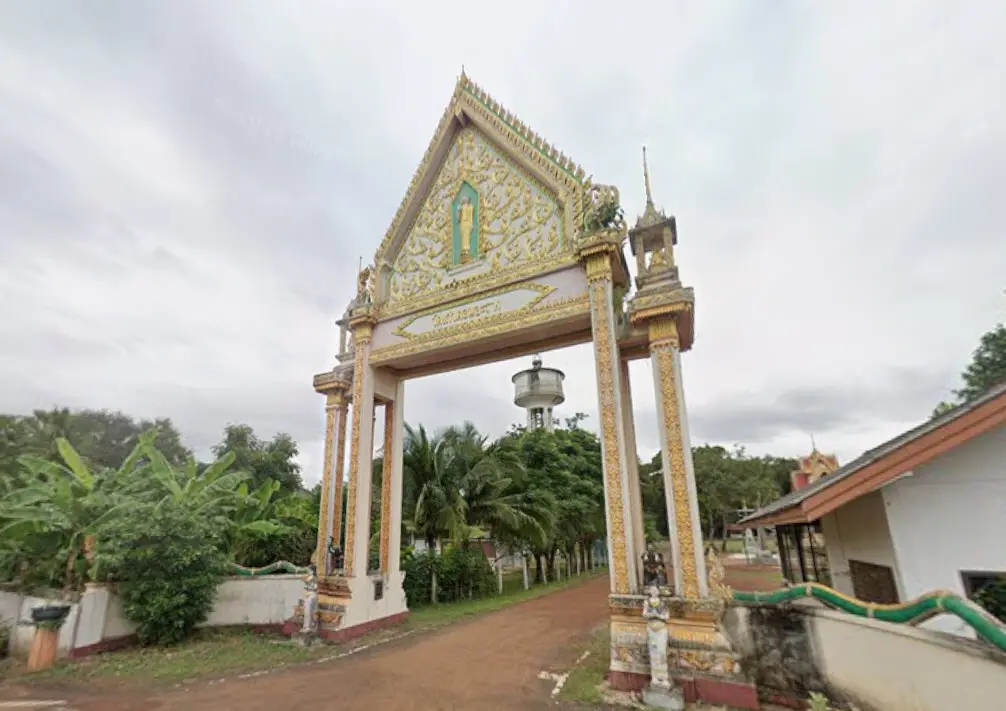
Wat Don Arang
Open Days: Daily
Opening Hours: 08.00 – 17.00
Wat Don Arang, also connected in local history with Wat Pa Samakkhi Tham, is located in Don Arang, Moo 4, Don Arang Subdistrict, Nong Ki District, Buriram Province. The temple is an important religious site for the Don Arang community and is closely associated with forest-monastic practice, village faith, and the memory of respected meditation monks. It was initiated by Mr. Singthong Khantiwong, the village headman of Ban Don Arang Moo 1 at that time, together with local villagers. On the monastic side, Luang Pu Mun Thitasilo and Phra Ajarn Si Techawalo played major roles in establishing Wat Pa Samakkhi Tham as a place for monks to reside and practice Dhamma.
The history of Wat Don Arang is meaningful because the temple did not begin as a large formal complex. It began from local faith, donated land, monastic discipline, and the wish of villagers to create a peaceful place for the Sangha. This kind of beginning is common in many forest temples in northeastern Thailand. A temple is first supported by people who believe that a quiet monastic residence will benefit both monks and the community. Over time, the place becomes a center of faith, merit-making, remembrance, and spiritual practice.
Several villagers donated land for the establishment of the monastic residence. Mr. Thong Suparak donated 15 rai, Mr. Bunphoem Udomkaeo donated 15 rai, and Mr. Chantha Chimchan donated 2 rai and 3 ngan. Together, these donations created a large enough area for a forest-style temple, monastic dwellings, meditation space, and religious activities. In a rural community, land is one of the most valuable family resources. Donating land for a temple therefore shows deep faith and a strong commitment to the common good.
The donated land became the foundation of Wat Pa Samakkhi Tham. The name Samakkhi Tham can be understood as Dhamma through unity or unity in Dhamma. This name fits the temple’s history very well. The temple was created through the unity of the village headman, local people, land donors, and forest monks. Their cooperation did not end with construction. It continued through temple maintenance, merit-making, support for monks, annual ceremonies, and the preservation of the temple as a spiritual refuge for Don Arang.
Luang Pu Mun Thitasilo is central to the temple’s memory. Although local history explains that he did not formally serve as abbot and allowed Phra Ajarn Si Techawalo to take that role instead, his connection with the temple gives Wat Don Arang a special place in the faith of many devotees. Luang Pu Mun is respected for his forest-monk discipline, meditation practice, and spiritual influence. For visitors who follow Thai forest-monk traditions, this connection makes Wat Don Arang especially meaningful.
Phra Ajarn Si Techawalo was another important monk in the early history of the temple. When Luang Pu Mun did not take the abbacy directly, Phra Ajarn Si became the monk responsible for temple leadership. Establishing a forest temple requires patience and discipline. The early monks had to care for the land, create simple monastic facilities, coordinate with villagers, maintain the temple atmosphere, and preserve conditions suitable for Dhamma practice. Phra Ajarn Si therefore represents an important stage in the temple’s formation.
The recorded line of monks connected with the temple includes Luang Pu Mun Thitasilo, Phra Ajarn Si Techawalo, Phra Ajarn Bunlom Chanthawongso, Phra Ajarn Sukit Kalyano, Phra Ajarn Tula Kovito, and Phra Ajarn Sawat Sutthachitto. This sequence shows the continuity of monastic care at Wat Don Arang. A temple with such a lineage should be understood not only through its buildings, but through the monks who maintained its spirit, discipline, and relationship with the community over time.
The atmosphere of Wat Don Arang is best appreciated as a forest temple. Visitors should not expect a large tourist-style temple with elaborate architecture. The value of the temple lies in quietness, simplicity, Dhamma practice, forest-monastic memory, and the faith of local people. A visit should be slow and respectful. Paying respect to Buddha images, remembering the teachers of the temple, walking quietly, and observing the calm environment are the most appropriate ways to experience the site.
Don Arang Subdistrict is part of Nong Ki District in Buriram Province. The area includes villages, local roads, community temples, and rural landscapes. Wat Don Arang belongs to a wider network of local temples in the district, including Wat Dong Yen, Wat Tham Samrit, Wat Pa Nong Oi Chang, Wat Kao Nong Ki, and Wat Nong Ki. These temples show different aspects of local Buddhism: some are community temples, some are forest-style temples, and some are connected with specific teachers or village traditions.
For Thai devotees, the connection with Luang Pu Mun Thitasilo gives the temple a strong spiritual dimension. People may visit to pay respect, make merit, and remember the discipline of forest monks. Visitors should behave with particular care in places associated with respected teachers. Speak quietly, avoid inappropriate poses, do not disturb monks or worshippers, and keep the atmosphere suitable for contemplation. Respect is more important than photography at this kind of temple.
Wat Don Arang also explains how rural communities create temples through cooperation. The village headman initiated the effort, villagers supported it, landowners donated land, and monks gave the place religious direction. This process shows that a temple is not only a religious structure. It is a social achievement created by faith, generosity, leadership, and shared responsibility. The temple is therefore part of the history of Don Arang community itself.
For visitors interested in Buddhist practice, Wat Don Arang should be understood through the values of simplicity, restraint, and mindfulness. Forest temples often emphasize quiet surroundings, modest facilities, and mental training. The experience is different from visiting a famous scenic attraction. The best way to visit is to slow down, pay respect, and allow the temple’s calmness to shape the visit. The less one rushes, the more one can understand the temple’s meaning.
Important temple activities include Buddhist holy days, Kathin, robe-offering ceremonies, merit-making events, and community religious occasions. These events help maintain the relationship between monks and villagers. A forest temple can continue only when monks preserve Dhamma practice and laypeople continue to support the Sangha with faith. Wat Don Arang is therefore a living example of the connection between monastic discipline and community devotion.
Wat Don Arang is suitable for visitors who want a quiet temple route in Nong Ki District. It can be combined with nearby temples in Don Arang Subdistrict, including Wat Dong Yen, Wat Tham Samrit, and Wat Pa Nong Oi Chang. Visitors with more time can continue to Wat Kao Nong Ki, Wat Nong Ki, Nong Ki Municipal Fresh Market, Hat Prasat Thong Nong Ki, and Phutara Green Park. This route offers a mix of forest temples, community temples, local food, markets, and rural travel.
Families can also learn from Wat Don Arang. Children can learn about land donation, community cooperation, forest monks, and respectful temple behavior. Adults can make merit and explain how temples are built through generosity and shared faith. Elderly visitors can pay respect to revered teachers and rest in a calm temple setting. A family visit to this temple can become a meaningful cultural lesson rather than only a short stop.
Visitors should dress modestly and behave calmly. Clothing should be appropriate for a Buddhist religious site. Avoid loud conversation, littering, inappropriate photography, and entering monks’ private areas without permission. If ceremonies, meditation, or merit-making activities are taking place, visitors should give priority to monks and local worshippers. A forest temple is especially sensitive to noise and disturbance, so respectful conduct is essential.
The best time to visit Wat Don Arang is in the morning or late afternoon. Morning is suitable for worship, merit-making, and a peaceful beginning to the day. Late afternoon is suitable for a quiet walk after the heat has eased. Visitors who come during Buddhist festivals or temple merit-making events may see the temple in a more active role, but should still preserve the calm atmosphere of the place.
Getting There is possible by private car, motorcycle, local taxi, or hired vehicle. From Nong Ki District, travel toward Don Arang Subdistrict and Moo 4 by local roads. Travelers coming from Buriram city or Nakhon Ratchasima can first reach Nong Ki District by the main route, then continue into Don Arang Subdistrict. The temple is suitable for a quiet merit-making stop or a route focused on forest temples and local Buddhist history.
A practical half-day route can begin at Wat Don Arang, then continue to Wat Dong Yen, Wat Tham Samrit, Wat Pa Nong Oi Chang, and local food stops in Don Arang or Nong Ki town. A full-day route can continue to Wat Kao Nong Ki, Wat Nong Ki, Nong Ki Municipal Fresh Market, Hat Prasat Thong, Phutara Green Park, or Phanom Rung Historical Park. This makes Wat Don Arang a meaningful starting point for exploring the Buddhist and community landscape of Nong Ki.
Food options are available both near Don Arang and in Nong Ki town. A local option near Don Arang is Kuai Chap Kru Khao Don Arang, while Nong Ki town has cafés, local Thai food, pizza, and restaurant options near the main road. Accommodation is mostly found in Nong Ki and nearby subdistricts, including local resorts and small hotels. Staying in Nong Ki makes it easier to visit Wat Don Arang in the morning or late afternoon when the temple is quietest.
For foreign travelers, Wat Don Arang is a strong example of a rural forest temple shaped by community faith. Thai temples are not only places with Buddha images or architecture. They are places where land donation, teacher devotion, meditation, village leadership, and community support come together. With a Thai companion or local guide, visitors can better understand the roles of Luang Pu Mun Thitasilo, Phra Ajarn Si Techawalo, the land donors, and the continuing line of temple caretakers.
The charm of Wat Don Arang lies in sincerity. It was not created as a mass tourism destination. It was created as a place for monks to reside, practice, and serve as a spiritual refuge for the village. The names of the land donors and the sequence of monks connected with the temple make its history concrete and personal. Visitors who appreciate quiet cultural travel, local faith, and forest-monastic tradition will find this temple especially meaningful.
In summary, Wat Don Arang in Don Arang, Moo 4, Don Arang Subdistrict, Nong Ki District, Buriram Province, is a temple connected with the founding of Wat Pa Samakkhi Tham. It was initiated by Mr. Singthong Khantiwong and local villagers, with Luang Pu Mun Thitasilo and Phra Ajarn Si Techawalo as the key monastic figures. The temple was built on donated land from Mr. Thong Suparak, Mr. Bunphoem Udomkaeo, and Mr. Chantha Chimchan, totaling 32 rai and 3 ngan. Its monastic lineage includes Luang Pu Mun, Phra Ajarn Si, Phra Ajarn Bunlom, Phra Ajarn Sukit, Phra Ajarn Tula, and Phra Ajarn Sawat Sutthachitto. Wat Don Arang is suitable for worship, merit-making, quiet reflection, remembrance of forest-monk teachers, and learning about the power of local faith in rural Buriram.
| Name | Wat Don Arang / Wat Pa Samakkhi Tham, Don Arang |
| Location | Don Arang, Moo 4, Don Arang Subdistrict, Nong Ki District, Buriram Province, Thailand |
| Address | Moo 4, Don Arang Subdistrict, Nong Ki District, Buriram 31210, Thailand |
| Highlights | Forest-style Buddhist temple connected with Luang Pu Mun Thitasilo, Phra Ajarn Si Techawalo, local village faith, donated land, and the founding history of Wat Pa Samakkhi Tham |
| History | Initiated by Mr. Singthong Khantiwong, village headman of Ban Don Arang Moo 1 at that time, together with local villagers. Luang Pu Mun Thitasilo and Phra Ajarn Si Techawalo were the key monastic figures in founding Wat Pa Samakkhi Tham |
| Name Origin | Wat Don Arang is named after the Don Arang community. Wat Pa Samakkhi Tham reflects the unity of villagers, land donors, community leaders, and forest monks in establishing the temple |
| Lay Founder | Mr. Singthong Khantiwong, village headman of Ban Don Arang Moo 1 at that time, together with Don Arang villagers |
| Monastic Founders | Luang Pu Mun Thitasilo and Phra Ajarn Si Techawalo were important forest monks in the founding of Wat Pa Samakkhi Tham |
| Land Donors | 1. Mr. Thong Suparak donated 15 rai 2. Mr. Bunphoem Udomkaeo donated 15 rai 3. Mr. Chantha Chimchan donated 2 rai and 3 ngan |
| Total Donated Land | 32 rai and 3 ngan for the monastic residence |
| Monastic Lineage / Caretakers | 1. Luang Pu Mun Thitasilo 2. Phra Ajarn Si Techawalo 3. Phra Ajarn Bunlom Chanthawongso 4. Phra Ajarn Sukit Kalyano 5. Phra Ajarn Tula Kovito 6. Phra Ajarn Sawat Sutthachitto |
| Current Abbot / Caretaker According To Wat Pa Samakkhi Tham History | Phra Ajarn Sawat Sutthachitto |
| Distinctive Features | A quiet forest temple suitable for worship, merit-making, remembrance of forest-monk teachers, and learning about the temple’s foundation through community faith |
| Travel Information | Travel from Nong Ki District toward Don Arang Subdistrict and Moo 4 by local roads. Private car, motorcycle, local taxi, or hired vehicle is recommended |
| Current Status | Open as a Buddhist temple and forest-monastic site of Don Arang community, serving merit-making, teacher remembrance, and local Buddhist faith |
| Open Days | Daily |
| Opening Hours | 08.00 – 17.00 |
| Facilities | Worship area, pavilion, merit-making area, forest-temple grounds, monks’ residence area, annual merit-making space, and parking area |
| Main Areas / Zones | 1. Buddha Image And Worship Area 2. Forest-Monk Teacher Remembrance Area 3. Pavilion And Merit-Making Area 4. Meditation And Dhamma Practice Area 5. Monks’ Residence Area 6. Kathin, Robe-Offering, And Annual Merit-Making Area 7. Quiet Forest-Temple Grounds 8. Visitor Service And Parking Area |
| Official Website / Information Source | Wat Don Arang information on LoveThailand.org and Don Arang temple information in the nationwide Kathin project database |
| Nearby Tourist Attractions | 1. Wat Dong Yen, Don Arang, about 3 km 2. Wat Tham Samrit, Don Arang, about 4 km 3. Wat Pa Nong Oi Chang, about 6 km 4. Wat Kao Nong Ki, about 16 km 5. Wat Nong Ki, about 16 km 6. Nong Ki Municipal Fresh Market, about 16 km 7. Hat Prasat Thong Nong Ki, about 18 km 8. Phutara Green Park, about 20 km 9. Wat Welu Nakhara Ram, Mueang Phai, about 22 km 10. Phanom Rung Historical Park, about 65 km |
| Nearby Restaurants | 1. Kuai Chap Kru Khao Don Arang, about 2 km, Tel. 081-8785375 2. Rich Restaurant, about 16 km 3. Jungle Cafe Nong Ki, Buriram Branch, about 17 km, Tel. 095-6593725 4. Jimmy Craft Pizza Nong Ki, about 17 km, Tel. 088-5950201 5. Ahan Tam Sang PTT Nong Ki, about 18 km, Tel. 081-7187896 6. Phutara Green Park, about 20 km, Tel. 064-9684683, 044-119990 7. S.K. Restaurant & Kha Napha Homestay, about 21 km, Tel. 044-110584, 065-6491811 |
| Nearby Accommodations | 1. Si Rung Resort 2, about 13 km, Tel. 083-1253713 2. Somchainuek Resort, about 13 km, Tel. 087-2397721 3. Rainbow Resort, about 14 km, Tel. 086-9872117 4. NK Resort, about 16 km, Tel. 044-653299 5. Si Rung Resort, about 16 km, Tel. 081-2667090 6. Naraya Resort, about 16 km, Tel. 085-1681879 7. Mai Ngam Resort, about 16 km, Tel. 085-4365262 8. Nong Ki Resort, about 17 km, Tel. 044-641083 |
Frequently Asked Questions (FAQ)
Q: Where is Wat Don Arang located?
A: Wat Don Arang is located in Don Arang, Moo 4, Don Arang Subdistrict, Nong Ki District, Buriram Province, Thailand.
Q: How is Wat Don Arang connected with Luang Pu Mun Thitasilo?
A: Luang Pu Mun Thitasilo was one of the key forest monks involved in founding Wat Pa Samakkhi Tham in Don Arang, together with Phra Ajarn Si Techawalo and local villagers.
Q: Who initiated the establishment of Wat Don Arang?
A: Mr. Singthong Khantiwong, the village headman of Ban Don Arang Moo 1 at that time, initiated the effort with local villagers, while Luang Pu Mun Thitasilo and Phra Ajarn Si Techawalo led the monastic side.
Q: Who donated land for Wat Don Arang?
A: The land donors were Mr. Thong Suparak, who donated 15 rai; Mr. Bunphoem Udomkaeo, who donated 15 rai; and Mr. Chantha Chimchan, who donated 2 rai and 3 ngan.
Q: Who are the monks in the recorded lineage of Wat Don Arang?
A: The recorded lineage includes Luang Pu Mun Thitasilo, Phra Ajarn Si Techawalo, Phra Ajarn Bunlom Chanthawongso, Phra Ajarn Sukit Kalyano, Phra Ajarn Tula Kovito, and Phra Ajarn Sawat Sutthachitto.
Q: What are the opening hours of Wat Don Arang?
A: Wat Don Arang is open daily from 08.00 to 17.00. Morning and late afternoon are suitable times for worship and a quiet visit.
Q: What kind of visit is Wat Don Arang suitable for?
A: The temple is suitable for worship, merit-making, remembrance of forest-monk teachers, quiet reflection, and learning about a temple founded through local faith and land donation.
Q: What nearby places can be visited with Wat Don Arang?
A: Nearby places include Wat Dong Yen, Wat Tham Samrit, Wat Pa Nong Oi Chang, Wat Kao Nong Ki, Wat Nong Ki, Nong Ki Municipal Fresh Market, Hat Prasat Thong Nong Ki, Phutara Green Park, and Phanom Rung Historical Park.
 Category: ●Places of Worship
 Group: ●Temple
Last Update : 3 MonthAgo
 Last Update : 3 MonthAgo
 Click to Access the Navigation Map GPS
 Art, Culture and Heritage
 Historical Sites and Monuments(14)
 Landmarks and Memorials(2)
 Art, Craft Centres, Tradition(6)
 Museums(3)
 Educational Places
 Museum for Study(1)
Temple(74)
Museum for Study(1)
Temple(74)
 Other Sacred Sites(5)
 Suburban Living
 Village, Community(3)
 Nature and Wildlife
 National Parks and Marine Reserves(2)
 Mountain (Doi)(1)
 Dam, Reservoir, Lake(14)
 River, Canal(1)
 Bays and Beaches(1)
 Other natural attractions(2)
 Entertainment and Agricultural
 Animal camps and shows(1)
 Stadium(2)
 Farms, Parks and Ecotourism(2)
 Waterpark(1)


