
lovethailand home >Northeastern Travel Attractions >Buri Ram Travel Attractions >Nong Ki >Muang Pai > Wat Welu Nakhara Ram
TL;DR: Wat Welu Nakhara Ram is located at Moo 1, Ban Nong Prue, Mueang Phai Subdistrict, Nong Ki District, Buriram Province, Thailand, open Daily, hours 08.00 – 17.00.
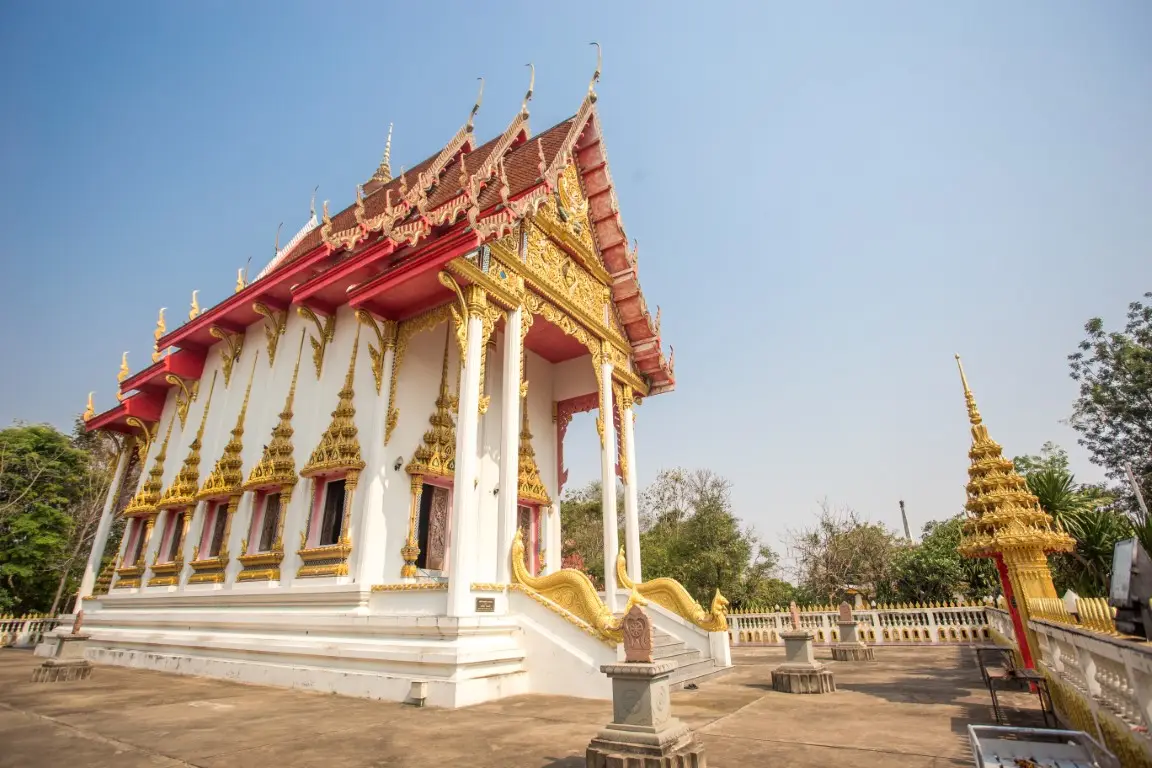
Wat Welu Nakhara Ram
Open Days: Daily
Opening Hours: 08.00 – 17.00
Wat Welu Nakhara Ram is a community Buddhist temple in Moo 1, Ban Nong Prue, Mueang Phai Subdistrict, Nong Ki District, Buriram Province. The temple was established in 1977 and was formerly known as Wat Ban Nong Prue. It began through the effort of Phra Bunma Kalyano, who encouraged local villagers with Buddhist faith to help build monastic structures and create a temple for the community. Today, Wat Welu Nakhara Ram is meaningful not only as a place of worship, but also as a village center for Buddhist learning, youth moral education, meditation, and community merit-making.
The history of Wat Welu Nakhara Ram reflects the way many rural Thai temples are created. They often begin from local need, collective faith, and the leadership of a monk who understands the community. In Ban Nong Prue, villagers needed a temple close to home for merit-making, Buddhist ceremonies, funerals, ordinations, annual festivals, Dhamma learning, and community gatherings. Phra Bunma Kalyano became the key figure who brought this faith together and led the construction of the temple’s early monastic buildings.
The temple was officially established on October 26, 1977, and received its royal consecrated boundary on August 25, 1998. In Thai Buddhism, the consecrated boundary is very important because it defines the sacred area where formal monastic acts, especially ordination, can be performed. This milestone shows the temple’s development from a community religious space into a fully recognized Buddhist temple with proper ritual status. For local people, this was an important step in the growth of the temple and the religious life of the village.
The original name Wat Ban Nong Prue connects the temple directly with the village. It shows that the temple began as the spiritual center of Ban Nong Prue before becoming known as Wat Welu Nakhara Ram. The name change did not separate the temple from the community. Instead, it reflects the growth of the temple from a village religious site into a more established Buddhist institution with wider educational and meditation roles. The temple still remains strongly connected with the people of Ban Nong Prue and Mueang Phai Subdistrict.
The first abbot of the temple was Phra Bunma Kalyano. His importance lies not only in being the first abbot, but also in being the pioneer who led the temple’s early construction. He invited villagers to help create the temple, build monastic facilities, and establish a place where people could make merit and practice Buddhism close to home. In a rural community, such a monk is not only a religious leader, but also a community organizer, a moral guide, and a key person in local development.
Earlier temple information identifies Phra Khru Welu Nakhara Nurak as the abbot associated with the temple’s Buddhist Sunday center and provincial meditation role. More recent Kathin information identifies the current abbot as Phra Khru Praphat Kitchathon Kitchasaro. This continuity of monastic leadership is important because temples depend on abbots and resident monks to maintain religious practice, care for temple grounds, support community activities, and guide laypeople in Buddhist life.
One of the most important features of Wat Welu Nakhara Ram is its Buddhist Sunday Center. This center gives the temple an educational role beyond normal ceremonies. Children, youth, and local people can learn basic Buddhist teachings, chanting, temple manners, respect for elders, moral conduct, and the value of living with mindfulness. A Buddhist Sunday Center is especially meaningful in a village temple because it allows young people to learn Dhamma outside normal school hours in a real temple environment.
The Buddhist Sunday Center helps connect religion with everyday education. Children do not only learn about Buddhism as information. They experience it through practice: paying respect to Buddha images, chanting, listening to Dhamma, helping with temple activities, and observing how monks and laypeople work together. These experiences help shape discipline, humility, generosity, and respect for community life. This makes Wat Welu Nakhara Ram an important moral learning space for Ban Nong Prue.
The temple also has an important role as a provincial meditation center. This gives Wat Welu Nakhara Ram significance beyond the village level. A meditation center allows people to practice chanting, mindfulness, sitting meditation, walking meditation, and Dhamma reflection in a calm temple environment. For people facing stress or daily responsibilities, a community temple with a meditation role offers a practical place for mental training and spiritual rest.
Wat Welu Nakhara Ram therefore has 2 important identities. The first is its identity as a village temple created by local faith. The second is its identity as a learning and meditation space. These 2 roles complement each other. The temple supports traditional merit-making and ceremonies, while also helping people develop Buddhist understanding and inner calm. This makes the temple valuable for both local residents and visitors interested in living Buddhism in rural Thailand.
The temple grounds include worship areas, pavilions, merit-making areas, community activity spaces, monks’ residence areas, the Buddhist Sunday Center, and meditation-related spaces. These areas allow the temple to serve many groups: monks, lay supporters, children, youth, meditation practitioners, families, and travelers. Visitors should understand the temple as an active community space, not as a tourist site separated from local life.
The atmosphere of Wat Welu Nakhara Ram is simple and local. It does not depend on grandeur or large-scale tourism. Its value comes from the story of its founding, the faith of villagers, the leadership of monks, the Sunday Buddhist learning program, and the meditation role of the temple. Visitors who appreciate quiet cultural travel will find the temple meaningful because it shows how Buddhism works at the community level.
Mueang Phai Subdistrict has several temples serving different villages, including Wat Na Chan, Wat Sa Kham, Wat Pa Phawana Ram, Wat Khok Krachai, and others nearby. This network of temples shows that Buddhism is deeply connected with local settlement patterns in Nong Ki District. Each temple supports its own village, while also participating in wider Buddhist activities. Wat Welu Nakhara Ram is one important part of this local temple network.
For local families, the temple is connected with life from childhood to old age. Children may first encounter the temple through the Buddhist Sunday Center. Adults make merit, support Kathin and robe-offering ceremonies, and join community activities. Elderly people come to pray, listen to Dhamma, and rest their minds. This intergenerational role makes the temple a living cultural and spiritual space, not only a place with religious buildings.
Important activities at Wat Welu Nakhara Ram include Buddhist holy days, Magha Puja, Visakha Puja, Asalha Puja, Buddhist Lent, the end of Buddhist Lent, Kathin, robe-offering ceremonies, chanting, Dhamma listening, Buddhist Sunday Center activities, and meditation practice. These activities help people return to the temple throughout the year and keep the community connected through Buddhist faith and shared merit-making.
A respectful visit should begin with paying respect to Buddha images or the main worship area. After that, visitors can walk calmly through the pavilions, activity areas, Buddhist Sunday Center zone, and meditation-related areas. If children, youth, or meditation practitioners are participating in activities, visitors should avoid disturbing them. Because this is an active temple, the needs of monks, local worshippers, and activity participants should always come first.
Visitors should dress modestly and behave respectfully. Clothing should be suitable for a Buddhist religious site. Avoid loud conversation, inappropriate posing near Buddha images, entering monks’ private areas without permission, or photographing people without consent. Since the temple has educational and meditation functions, keeping a quiet and respectful manner is especially important.
The best time to visit Wat Welu Nakhara Ram is in the morning or late afternoon. Morning is suitable for worship and a peaceful start to the day, while late afternoon is comfortable for walking around the temple after the heat has eased. Visitors interested in Buddhist Sunday Center activities or meditation programs should check with the temple before traveling so that the visit fits the temple’s activity schedule.
Getting There is convenient by private car, motorcycle, local taxi, or hired vehicle. From Nong Ki District, travel toward Mueang Phai Subdistrict and Ban Nong Prue by local roads. Travelers coming from Buriram city or Nakhon Ratchasima can first reach Nong Ki District by the main route, then continue into Mueang Phai Subdistrict. The temple can be included in a local temple route around Nong Ki.
A practical half-day route can begin at Wat Welu Nakhara Ram, then continue to Wat Na Chan, Wat Sa Kham, Wat Pa Phawana Ram, Wat Khok Krachai, and Nong Ki town center. Travelers with more time can continue to Nong Ki Municipal Fresh Market, Hat Prasat Thong Nong Ki, Phutara Green Park, Wat Khu Khat Noi, or Phanom Rung Historical Park. This route combines village temples, local food, markets, and major cultural attractions.
For families, Wat Welu Nakhara Ram is a useful cultural stop. Children can learn about temple manners, Buddhist Sunday education, chanting, and the role of monks in the community. Elderly visitors can worship and rest quietly. Adults can make merit and learn how a village temple grows through shared faith. A short visit can therefore become a meaningful learning experience for all ages.
For foreign travelers, Wat Welu Nakhara Ram is a strong example of a rural Isan temple with multiple roles. It is a place of worship, a community center, a Buddhist Sunday learning space, and a meditation center. With a Thai companion or local guide, visitors can better understand the original name Wat Ban Nong Prue, the role of Phra Bunma Kalyano, the meaning of a consecrated boundary, and why temples remain important in Thai villages.
The charm of Wat Welu Nakhara Ram lies in its authenticity. It is not defined by age of several centuries or grand tourist architecture. Its value comes from its founding in 1977, the faith of Ban Nong Prue villagers, its development into a recognized temple, and its continuing role in Buddhist education and meditation. The temple shows how Buddhism continues to grow with local communities in modern Thailand.
In summary, Wat Welu Nakhara Ram in Moo 1, Mueang Phai Subdistrict, Nong Ki District, Buriram Province, is a community Buddhist temple established in 1977. It was formerly known as Wat Ban Nong Prue and was founded through the leadership of Phra Bunma Kalyano and the faith of local villagers. The temple received its royal consecrated boundary on August 25, 1998. Today, it is led by Phra Khru Praphat Kitchathon Kitchasaro according to recent Kathin information and remains important for worship, Buddhist Sunday education, meditation practice, and community merit-making in Ban Nong Prue.
| Name | Wat Welu Nakhara Ram |
| Location | Moo 1, Ban Nong Prue, Mueang Phai Subdistrict, Nong Ki District, Buriram Province, Thailand |
| Address | Moo 1, Mueang Phai Subdistrict, Nong Ki District, Buriram 31210, Thailand |
| Highlights | Community Buddhist temple of Ban Nong Prue, formerly Wat Ban Nong Prue, founded through the faith of Phra Bunma Kalyano and local villagers, with a Buddhist Sunday Center and provincial meditation role |
| History | Established on October 26, 1977, and received its royal consecrated boundary on August 25, 1998 |
| Name Origin | The former name Wat Ban Nong Prue came from the village where the temple was founded. The current name Wat Welu Nakhara Ram reflects the temple’s growth into a Buddhist learning and meditation center |
| Founding Monk | Phra Bunma Kalyano led the construction and invited villagers with Buddhist faith to help build the temple’s monastic facilities |
| Community Characteristics | Ban Nong Prue and Mueang Phai Subdistrict are rural communities in Nong Ki District where the temple serves as a center for merit-making, Buddhist education, youth activities, and village traditions |
| Educational Role | The temple has a Buddhist Sunday Center for Dhamma learning, chanting, Buddhist manners, moral education, and youth development |
| Meditation Role | The temple has a provincial meditation role, supporting chanting, meditation, Dhamma listening, and mental training for Buddhist practitioners |
| Main Activities | Buddhist holy days, Magha Puja, Visakha Puja, Asalha Puja, Buddhist Lent, end of Buddhist Lent, Kathin, robe-offering ceremonies, Buddhist Sunday Center activities, and meditation practice |
| Travel Information | Travel from Nong Ki District toward Mueang Phai Subdistrict and Ban Nong Prue. Private car, motorcycle, local taxi, or hired vehicle is recommended |
| Current Status | Open as an active Mahanikaya community Buddhist temple with resident monks and continuing religious activities for Ban Nong Prue |
| Open Days | Daily |
| Opening Hours | 08.00 – 17.00 |
| Facilities | Worship area, pavilion, merit-making area, activity courtyard, monks’ residence area, Buddhist Sunday Center, meditation area, and parking area |
| Main Areas / Zones | 1. Buddha Image And Worship Area 2. Pavilion And Merit-Making Area 3. Temple Activity Courtyard 4. Buddhist Sunday Center 5. Meditation And Dhamma Practice Area 6. Monks’ Residence Area 7. Buddhist Holy Day And Community Activity Area 8. Community Service And Annual Merit-Making Area |
| First Abbot | Phra Bunma Kalyano |
| Current Abbot / Caretaker | Phra Khru Praphat Kitchathon Kitchasaro, Abbot of Wat Welu Nakhara Ram |
| Important Monk Connected With The Meditation Center | Phra Khru Welu Nakhara Nurak is associated with the temple’s earlier meditation center role and older temple information |
| Official Website / Information Source | Wat Welu Nakhara Ram information on LoveThailand.org, Sangha database information, Thai temple database information, and nationwide Kathin project information |
| Nearby Tourist Attractions | 1. Wat Na Chan, Mueang Phai, about 3 km 2. Wat Sa Kham, Mueang Phai, about 4 km 3. Wat Pa Phawana Ram, about 5 km 4. Wat Khok Krachai, about 6 km 5. Wat Kao Nong Ki, about 9 km 6. Nong Ki Municipal Fresh Market, about 9 km 7. Hat Prasat Thong Nong Ki, about 11 km 8. Phutara Green Park, about 13 km 9. Wat Khu Khat Noi, about 20 km 10. Phanom Rung Historical Park, about 58 km |
| Nearby Restaurants | 1. Rich Restaurant, about 9 km 2. Jungle Cafe Nong Ki, Buriram Branch, about 10 km, Tel. 095-6593725 3. Jimmy Craft Pizza Nong Ki, about 10 km, Tel. 088-5950201 4. Ahan Tam Sang PTT Nong Ki, about 12 km, Tel. 081-7187896 5. Phutara Green Park, about 13 km, Tel. 064-9684683, 044-119990 6. S.K. Restaurant & Kha Napha Homestay, about 14 km, Tel. 044-110584, 065-6491811 |
| Nearby Accommodations | 1. NK Resort, about 9 km, Tel. 044-653299 2. Si Rung Resort, about 9 km, Tel. 081-2667090 3. Naraya Resort, about 9 km, Tel. 085-1681879 4. Thanaphon Mansion, about 9 km, Tel. 081-5935356 5. Nong Ki Resort, about 10 km, Tel. 044-641083 6. Si Rung Resort 2, about 12 km, Tel. 083-1253713 7. Somchainuek Resort, about 12 km, Tel. 087-2397721 8. Rainbow Resort, about 14 km, Tel. 086-9872117 |
Frequently Asked Questions (FAQ)
Q: Where is Wat Welu Nakhara Ram located?
A: Wat Welu Nakhara Ram is located in Moo 1, Ban Nong Prue, Mueang Phai Subdistrict, Nong Ki District, Buriram Province, Thailand.
Q: What was the former name of Wat Welu Nakhara Ram?
A: The temple was formerly known as Wat Ban Nong Prue before it became known as Wat Welu Nakhara Ram.
Q: When was Wat Welu Nakhara Ram established?
A: The temple was established on October 26, 1977, and received its royal consecrated boundary on August 25, 1998.
Q: Who founded Wat Welu Nakhara Ram?
A: Phra Bunma Kalyano led the temple’s construction and invited local villagers with Buddhist faith to help build the monastic facilities.
Q: Who is the current abbot of Wat Welu Nakhara Ram?
A: Recent Kathin information identifies the current abbot as Phra Khru Praphat Kitchathon Kitchasaro. Older temple information also records Phra Khru Welu Nakhara Nurak as an important monk connected with the temple’s meditation role.
Q: What are the main roles of Wat Welu Nakhara Ram?
A: The temple is a spiritual center for Ban Nong Prue, a Buddhist Sunday learning center, and a meditation center supporting chanting, Dhamma learning, and mental training.
Q: What are the opening hours of Wat Welu Nakhara Ram?
A: The temple is open daily from 08.00 to 17.00. Morning and late afternoon are suitable times for worship, merit-making, and a calm visit.
Q: What nearby places can be visited with Wat Welu Nakhara Ram?
A: Nearby places include Wat Na Chan, Wat Sa Kham, Wat Pa Phawana Ram, Wat Khok Krachai, Wat Kao Nong Ki, Nong Ki Municipal Fresh Market, Hat Prasat Thong Nong Ki, Phutara Green Park, and Phanom Rung Historical Park.
 Category: ●Places of Worship
 Group: ●Temple
Last Update : 3 MonthAgo
 Last Update : 3 MonthAgo
 Click to Access the Navigation Map GPS
Wat Welu Nakhara Ram Map
Recommend

 Art, Culture and Heritage
 Historical Sites and Monuments(14)
 Landmarks and Memorials(2)
 Art, Craft Centres, Tradition(6)
 Museums(3)
 Educational Places
 Museum for Study(1)
Temple(74)
Museum for Study(1)
Temple(74)
 Other Sacred Sites(5)
 Suburban Living
 Village, Community(3)
 Nature and Wildlife
 National Parks and Marine Reserves(2)
 Mountain (Doi)(1)
 Dam, Reservoir, Lake(14)
 River, Canal(1)
 Bays and Beaches(1)
 Other natural attractions(2)
 Entertainment and Agricultural
 Animal camps and shows(1)
 Stadium(2)
 Farms, Parks and Ecotourism(2)
 Waterpark(1)


