
lovethailand home >Northeastern Travel Attractions >Buri Ram Travel Attractions >Nong Ki >Thung Kraten > Wat Sa Khut Rat Sattha Phon
TL;DR: Wat Sa Khut Rat Sattha Phon is located at Ban Sa Khut, Thung Kraten Subdistrict, Nong Ki District, Buriram Province, Thailand, open Daily, hours 08.00 – 17.00.
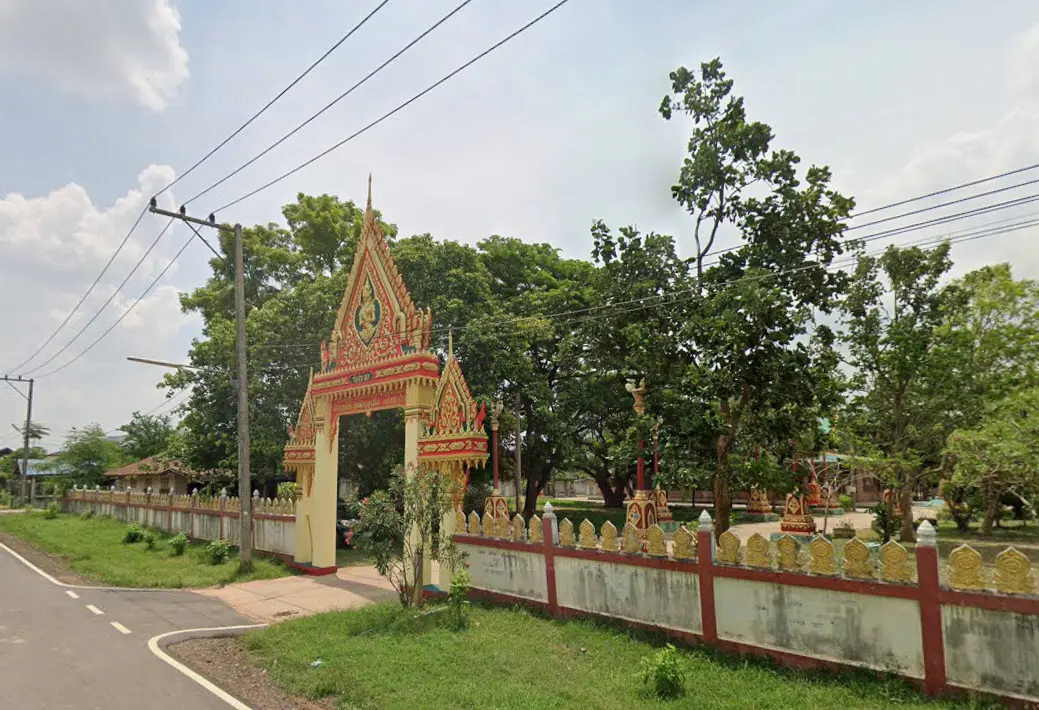
Wat Sa Khut Rat Sattha Phon
Open Days: Daily
Opening Hours: 08.00 – 17.00
Wat Sa Khut Rat Sattha Phon, also known in Sangha databases as Wat Sa Khut, is a community Buddhist temple in Ban Sa Khut, Thung Kraten Subdistrict, Nong Ki District, Buriram Province. The temple was built in 1957 and covers an area of 17 rai, 2 ngan, and 96 square wah. It is an important religious center for the people of Ban Sa Khut and nearby communities. For foreign travelers who want to understand everyday Buddhism in rural Isan, this temple offers a clear example of how a local Thai temple serves worship, education, tradition, and community life at the village level.
Ban Sa Khut is part of Thung Kraten Subdistrict, a rural area of Nong Ki District. The local way of life is closely connected with agriculture, especially rice farming, vegetable cultivation, fruit growing, and livestock raising. Wat Sa Khut Rat Sattha Phon stands within this agricultural setting. It is not a temple separated from daily life, but a place where villagers gather for merit-making, Buddhist holy days, annual ceremonies, family rituals, and community activities. The temple therefore reflects the close relationship between Buddhism and rural life in Buriram.
The temple was originally built in 1957 and was officially established as a temple on March 31, 1986. This formal establishment gave the temple a recognized position within the Thai Buddhist system. For a village community, official temple status is important because it allows the temple to function as a stable religious institution. It supports resident monks, Buddhist ceremonies, community merit-making, and the long-term religious life of local people.
In some older public descriptions, the official establishment date appears as November 31, 1986. Since November has only 30 days, the date used here follows the Sangha database record: March 31, 1986. This correction preserves the historical meaning of the temple while ensuring that the date is accurate. The key historical point remains clear: Wat Sa Khut Rat Sattha Phon began as a community temple in 1957 and became formally established in 1986.
The first abbot recorded in the temple history was Phra Rahat Katapunyo. His name represents the early period of temple administration and the beginning of organized monastic leadership at the temple. Current Kathin information identifies the present abbot as Phra Athikan Sanom Charuwangso. The abbot’s role is important in a village temple because he oversees monastic life, religious ceremonies, temple maintenance, merit-making activities, and the relationship between monks and lay supporters.
Wat Sa Khut Rat Sattha Phon has a pre-school child training center inside the temple. This is one of the most important features of the site. In many Thai communities, temples support not only religious practice, but also early childhood care, moral training, and community education. A child training center within a temple helps children grow up near Buddhist values, community discipline, respect for elders, and shared public space. It also strengthens the relationship between families, monks, teachers, and local leaders.
This educational role makes the temple more than a place visited only on Buddhist holy days. It is part of the daily structure of the village. Children, parents, and community members become familiar with the temple as a safe and meaningful space. Through this setting, young children can absorb basic manners, calm behavior, respect, and a sense of belonging. The temple therefore contributes to both spiritual life and social development in Ban Sa Khut.
Thung Kraten Subdistrict is a Buddhist community with several temples and monastic places serving different villages. Wat Sa Khut Rat Sattha Phon is one of these important religious centers. Each temple supports its local village, while also participating in the wider Buddhist life of the subdistrict. This network of temples allows people in different communities to access merit-making, Dhamma activities, annual ceremonies, and support from monks close to home.
The local culture of Thung Kraten includes regional language, Buddhist festivals, and community traditions. Local people use Thai Nang Rong or Thai Boeng speech, with a tone related to Thai Korat. Important traditions include Songkran, Buddhist Lent, Loy Krathong, New Year merit-making, and major Buddhist holy days. Wat Sa Khut Rat Sattha Phon is naturally connected with these traditions because temples are the main places where villagers gather, make merit, listen to Dhamma, and maintain community identity.
Important temple activities include Buddhist holy day observances, Magha Puja, Visakha Puja, Asalha Puja, Buddhist Lent, the end of Buddhist Lent, Kathin, robe-offering ceremonies, and local merit-making events. These activities are not only religious rituals. They are moments when families return to the temple, villagers work together, monks teach Dhamma, and the community renews its shared values. This is why the temple is described as the spiritual center of the Buddhist people of Ban Sa Khut.
The agricultural character of the area gives the temple a calm and practical identity. Rural temples in Isan often function according to the rhythm of farming seasons. After periods of work in the fields, people gather at temples for merit-making, festivals, and rest. Wat Sa Khut Rat Sattha Phon belongs to this pattern of village life. It gives people a place to pause, pray, offer food to monks, dedicate merit to ancestors, and reconnect with neighbors.
Visitors should understand Wat Sa Khut Rat Sattha Phon as a living community temple rather than a large tourist landmark. Its value lies in the way villagers actually use it. The temple has worship areas, pavilions, activity spaces, monks’ residence areas, and the child training center. These spaces support real community life. A respectful visitor will see that the temple’s meaning comes from daily use, local faith, and the cooperation between monks and laypeople.
The temple is suitable for worship, merit-making, offering alms, learning about village temple life, and observing the relationship between Buddhism and rural education. It is also suitable as part of a local route around Thung Kraten and Nong Ki District. Nearby places include Wat Mai Sa Khut, Wat Chai Mongkhon in Thung Kraten, Thung Kraten Reservoir, Nong Ki Municipal Fresh Market, Wat Kao Nong Ki, Hat Prasat Thong Nong Ki, Phutara Green Park, and other temples in Nong Ki.
A visit should begin with paying respect at the main worship area. After that, visitors can walk calmly around the pavilions, activity areas, and temple grounds. If the child training center or community events are active, visitors should avoid disturbing children, monks, teachers, or villagers. Because this is an active community temple, the needs of local people and temple users should always come first.
Visitors should dress modestly and behave calmly inside the temple. Clothing should be suitable for a Buddhist religious place. Avoid loud conversation, littering, entering monks’ private areas without permission, or taking photographs in ways that disturb religious activities. If photographing children, community activities, or ceremonies, permission should be requested first. Respectful behavior helps protect the calm atmosphere of the temple.
The best time to visit Wat Sa Khut Rat Sattha Phon is in the morning or late afternoon. Morning is suitable for worship, merit-making, and a peaceful start to the day. Late afternoon is comfortable for walking around the temple grounds after the heat has eased. On Buddhist holy days or festival periods, the temple may be more active, allowing visitors to see the living role of the temple in the village.
Getting There is convenient by private car, motorcycle, local taxi, or hired vehicle. From Nong Ki District, travel toward Thung Kraten Subdistrict and Ban Sa Khut by local roads. Travelers coming from Buriram city or Nakhon Ratchasima can use the main road to Nong Ki District, then continue into Thung Kraten Subdistrict. The temple can be included as a short merit-making stop or as part of a half-day route around Nong Ki.
A practical half-day route can begin at Wat Sa Khut Rat Sattha Phon, then continue to Wat Mai Sa Khut, Wat Chai Mongkhon, Thung Kraten Reservoir, and Nong Ki town center. Travelers with more time can continue to Nong Ki Municipal Fresh Market, Hat Prasat Thong Nong Ki, Phutara Green Park, Wat Kao Nong Ki, or Phanom Rung Historical Park. This route combines village temples, local water resources, markets, food, and cultural sites.
For families, Wat Sa Khut Rat Sattha Phon is a useful place for children and adults to learn about community temples. Children can learn temple manners and understand how a temple supports early childhood care. Elderly visitors can come to worship and rest. Adults can make merit and observe the temple’s community role. A short visit can therefore become a meaningful cultural learning experience.
For foreign travelers, this temple helps explain a major feature of Thai Buddhism: the temple as a village center. In Thailand, a local temple is not only a sacred place. It can also support education, ceremonies, social gatherings, moral training, and community identity. Wat Sa Khut Rat Sattha Phon shows this clearly through its religious activities, child training center, and continuing role as the spiritual center of Ban Sa Khut.
The charm of Wat Sa Khut Rat Sattha Phon lies in its sincerity. It is not designed as a mass tourism destination. It is a working temple where villagers make merit, monks reside, children learn, and annual traditions continue. Visitors who appreciate quiet cultural travel and real community life will find that the temple offers a meaningful view of rural Buddhism in Buriram.
In summary, Wat Sa Khut Rat Sattha Phon in Ban Sa Khut, Thung Kraten Subdistrict, Nong Ki District, Buriram Province, is a community Buddhist temple built in 1957 and formally established on March 31, 1986. The temple covers 17 rai, 2 ngan, and 96 square wah. Its first abbot was Phra Rahat Katapunyo, and its current abbot is Phra Athikan Sanom Charuwangso. The temple has a pre-school child training center and remains the spiritual center of the Buddhist people of Ban Sa Khut. It is suitable for worship, merit-making, learning about village temple life, and inclusion in a local travel route around Thung Kraten and Nong Ki.
| Name | Wat Sa Khut Rat Sattha Phon / Wat Sa Khut |
| Location | Ban Sa Khut, Thung Kraten Subdistrict, Nong Ki District, Buriram Province, Thailand |
| Address | Moo 21, Thung Kraten Subdistrict, Nong Ki District, Buriram 31210, Thailand |
| Highlights | Community Buddhist temple of Ban Sa Khut, built in 1957, with a pre-school child training center, local Buddhist activities, and a continuing role as the spiritual center of the village |
| History | Built in 1957 and formally established as a temple on March 31, 1986. It is a Mahanikaya community temple in Thung Kraten Subdistrict |
| Name Origin | The name Wat Sa Khut Rat Sattha Phon is connected with Ban Sa Khut and the faith of local people. Wat Sa Khut is the name used in Sangha and Kathin databases |
| Temple Area | 17 rai, 2 ngan, and 96 square wah |
| Community Characteristics | Ban Sa Khut is a rural village in Thung Kraten Subdistrict. The area has an agricultural way of life and uses the temple as a center for Buddhist ceremonies, traditions, and community activities |
| Educational Role | The temple has 1 pre-school child training center, supporting early childhood care, manners, moral values, and community learning |
| Main Activities | Buddhist holy days, Magha Puja, Visakha Puja, Asalha Puja, Buddhist Lent, end of Buddhist Lent, Kathin, robe-offering ceremonies, local merit-making events, and community traditions of Ban Sa Khut |
| Travel Information | Travel from Nong Ki District toward Thung Kraten Subdistrict and Ban Sa Khut by local roads. Private car, motorcycle, local taxi, or hired vehicle is recommended |
| Current Status | Open as an active community Buddhist temple with resident monks and continuing religious activities for Ban Sa Khut |
| Open Days | Daily |
| Opening Hours | 08.00 – 17.00 |
| Facilities | Worship area, pavilion, merit-making space, activity courtyard, parking area, monks’ residence area, and pre-school child training center |
| Main Areas / Zones | 1. Buddha Image And Worship Area 2. Pavilion And Merit-Making Area 3. Temple Activity Courtyard 4. Pre-School Child Training Center 5. Area For Local Traditions And Buddhist Holy Day Activities 6. Monks’ Residence Area 7. Community Service And Annual Merit-Making Area |
| First Abbot | Phra Rahat Katapunyo |
| Current Abbot / Caretaker | Phra Athikan Sanom Charuwangso, Abbot of Wat Sa Khut |
| Official Website / Information Source | Wat Sa Khut Rat Sattha Phon information on LoveThailand.org, Sangha database information for Wat Sa Khut, and Wat Sa Khut information in the nationwide Kathin project database |
| Nearby Tourist Attractions | 1. Wat Mai Sa Khut, about 2 km 2. Wat Chai Mongkhon (Thung Kraten), about 4 km 3. Thung Kraten Reservoir, about 5 km 4. PT Nong Ki Station, Entrance To Wat Sa Khut, about 5 km 5. Nong Ki Municipal Fresh Market, about 8 km 6. Wat Kao Nong Ki, about 8 km 7. Hat Prasat Thong Nong Ki, about 10 km 8. Phutara Green Park, about 11 km 9. Wat Khu Khat Noi, about 18 km 10. Phanom Rung Historical Park, about 60 km |
| Nearby Restaurants | 1. Jungle Cafe Nong Ki, Buriram Branch, about 8 km, Tel. 095-6593725 2. Jimmy Craft Pizza Nong Ki, about 8 km, Tel. 088-5950201 3. Rich Restaurant, about 8 km 4. Ahan Tam Sang PTT Nong Ki, about 10 km, Tel. 081-7187896 5. Phutara Green Park, about 11 km, Tel. 064-9684683, 044-119990 6. S.K. Restaurant & Kha Napha Homestay, about 12 km, Tel. 044-110584, 065-6491811 |
| Nearby Accommodations | 1. Sri Prasat Hotel, about 5 km 2. Rainbow Resort, about 5 km, Tel. 086-9872117 3. Si Rung Resort 2, about 6 km, Tel. 083-1253713 4. Somchainuek Resort, about 6 km, Tel. 087-2397721 5. NK Resort, about 8 km, Tel. 044-653299 6. Si Rung Resort, about 8 km, Tel. 081-2667090 7. Naraya Resort, about 8 km, Tel. 085-1681879 8. Nong Ki Resort, about 9 km, Tel. 044-641083 |
Frequently Asked Questions (FAQ)
Q: Where is Wat Sa Khut Rat Sattha Phon located?
A: Wat Sa Khut Rat Sattha Phon is located in Ban Sa Khut, Thung Kraten Subdistrict, Nong Ki District, Buriram Province, Thailand.
Q: When was Wat Sa Khut Rat Sattha Phon built?
A: The temple was built in 1957 and was formally established as a temple on March 31, 1986.
Q: What are the main highlights of Wat Sa Khut Rat Sattha Phon?
A: The main highlights include its role as the community temple of Ban Sa Khut, its pre-school child training center, local Buddhist activities, and its importance as the spiritual center of the village.
Q: Who is the abbot of Wat Sa Khut Rat Sattha Phon?
A: The current abbot of Wat Sa Khut is Phra Athikan Sanom Charuwangso. The first abbot recorded in the temple history was Phra Rahat Katapunyo.
Q: What are the opening hours of Wat Sa Khut Rat Sattha Phon?
A: The temple is open daily from 08.00 to 17.00. Morning and late afternoon are suitable times for worship and a calm visit.
Q: Does Wat Sa Khut Rat Sattha Phon have a child training center?
A: Yes. The temple has 1 pre-school child training center, supporting early childhood care, basic manners, moral values, and community learning.
Q: What kind of visit is Wat Sa Khut Rat Sattha Phon suitable for?
A: The temple is suitable for worship, merit-making, learning about village temple life, and including in a local route around Thung Kraten and Nong Ki District.
Q: What nearby places can be visited with Wat Sa Khut Rat Sattha Phon?
A: Nearby places include Wat Mai Sa Khut, Wat Chai Mongkhon, Thung Kraten Reservoir, Nong Ki Municipal Fresh Market, Wat Kao Nong Ki, Hat Prasat Thong Nong Ki, Phutara Green Park, Wat Khu Khat Noi, and Phanom Rung Historical Park.
 Category: ●Places of Worship
 Group: ●Temple
Last Update : 3 MonthAgo
 Last Update : 3 MonthAgo
 Click to Access the Navigation Map GPS
Wat Sa Khut Rat Sattha Phon Map
Recommend

 Art, Culture and Heritage
 Historical Sites and Monuments(14)
 Landmarks and Memorials(2)
 Art, Craft Centres, Tradition(6)
 Museums(3)
 Educational Places
 Museum for Study(1)
Temple(74)
Museum for Study(1)
Temple(74)
 Other Sacred Sites(5)
 Suburban Living
 Village, Community(3)
 Nature and Wildlife
 National Parks and Marine Reserves(2)
 Mountain (Doi)(1)
 Dam, Reservoir, Lake(14)
 River, Canal(1)
 Bays and Beaches(1)
 Other natural attractions(2)
 Entertainment and Agricultural
 Animal camps and shows(1)
 Stadium(2)
 Farms, Parks and Ecotourism(2)
 Waterpark(1)


