
lovethailand home >Northeastern Travel Attractions >Buri Ram Travel Attractions >Lam Plai Mat >Ban Yang > Wat Nong Krathum
TL;DR: Wat Nong Krathum is located at Moo 5, Ban Yang Subdistrict, Lam Plai Mat District, Buriram Province, open Daily, hours 08.00 – 17.00.
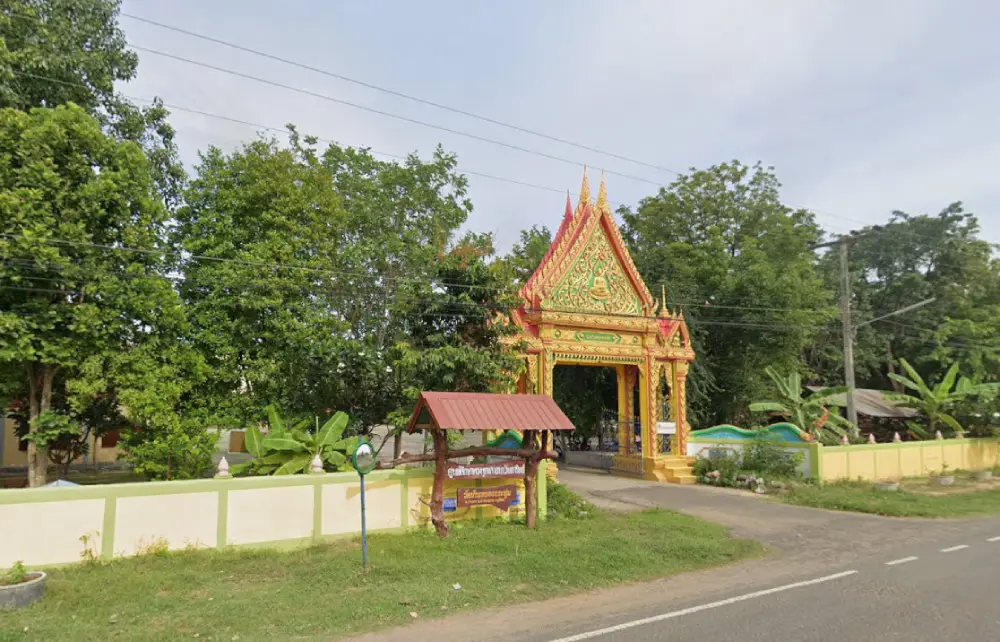
Wat Nong Krathum
Open Days: Daily
Opening Hours: 08.00 – 17.00
Wat Nong Krathum is located in Moo 5, Ban Yang Subdistrict, Lam Plai Mat District, Buriram Province. It is a local Buddhist temple that reflects the everyday role of Buddhism in a rural Isan community. The temple is not a large tourist landmark, but it is meaningful as a living community temple where villagers make merit, join Buddhist ceremonies, support seasonal religious activities, and maintain the relationship between the temple, local school, families, and the wider Ban Yang community.
For foreign travelers who want to understand Buriram beyond famous Khmer sanctuaries, sports venues, and major tourist attractions, Wat Nong Krathum offers a quieter and more grounded experience. This is a place where Buddhism is part of daily life. Visitors can observe how a village temple functions as a spiritual center, a social meeting place, and a cultural anchor for the people who live around it.
Wat Nong Krathum is classified as a local Buddhist temple in Ban Yang Subdistrict. The current abbot is Phra Khru Witoon Thamma Phirom, and the temple has 6 resident monks. The role of the abbot and monks is central to the life of the temple. They maintain the temple grounds, conduct Buddhist ceremonies, support merit-making activities, and serve as spiritual guides for local residents.
The name Wat Nong Krathum reflects the way many rural Thai places are named after their natural surroundings. The word “nong” often refers to a pond, wetland, or low-lying water source, while “krathum” is associated with a local tree. Together, the name suggests a village landscape shaped by water, trees, settlement, and memory. Even when detailed written history is limited, place names like this preserve clues about the local environment and the way the community understands its own landscape.
In rural Isan society, temples often serve more than a religious function. They are places for funerals, ordinations, Kathin ceremonies, robe-offering events, Buddhist Lent activities, merit-making days, and community gatherings. Wat Nong Krathum plays this kind of role for Ban Yang. It provides a shared space where villagers meet, give offerings, listen to sermons, and take part in the seasonal rhythm of Buddhist life.
The temple is also connected with Wat Nong Krathum School, a local school in Moo 5, Ban Yang Subdistrict. The school teaches from early childhood level to lower secondary level. This relationship between temple and school is important in Thai community life. In many rural areas, temples historically supported education, moral training, and community learning. At Wat Nong Krathum, this connection helps show how Buddhism, education, and local identity continue to overlap.
For visitors, the main value of Wat Nong Krathum lies in its atmosphere. The temple is peaceful, modest, and suitable for quiet merit-making. It is not a place to rush through. Travelers should come with a respectful attitude, spend time observing the temple space, and appreciate the role that a small local temple plays in maintaining faith and community continuity.
The temple grounds generally include worship areas, a temple hall, monks’ quarters, open space for ceremonies, and areas used during community merit-making events. On ordinary days, the atmosphere is calm and simple. During important Buddhist occasions, such as Kathin, Buddhist Lent, the end of Buddhist Lent, and major holy days, the temple becomes more active as local families gather to make merit together.
Kathin is one of the important annual merit-making activities associated with the temple. The temple appears in recent Kathin records, showing that it continues to participate in the seasonal cycle of Buddhist giving. Kathin ceremonies are significant because they bring villagers together to support the temple, offer robes to monks, and strengthen community cooperation.
Wat Nong Krathum can also be visited as part of a broader cultural route in Ban Yang Subdistrict. Nearby places include Wat Nong Tat, Wat Pho Yoi, Ban Yang community, Lam Plai Mat Railway Station, Khlong Plai Mat, Wat Chaeng Talat Pho, and Play La Ploen in Khu Mueang District. This route is suitable for travelers who want to explore temples, local communities, and the quieter cultural side of Buriram.
Unlike major tourist temples, Wat Nong Krathum is best appreciated as a real village temple. It has value because it continues to function in the daily life of local people. Visitors should not expect a highly commercialized destination. Instead, they will find a temple that reflects ordinary faith, community cooperation, and the continuing importance of Buddhism in rural Isan.
Travelers should dress modestly when visiting Wat Nong Krathum. Shoulders and knees should be covered, voices should be kept low, and shoes should be removed where required. Visitors should not enter private areas of the monks’ residence, touch temple objects without permission, or disturb ceremonies. These simple manners help maintain the respectful atmosphere of the temple.
A visit to Wat Nong Krathum is especially suitable for cultural travelers, families, and visitors who want to learn from real community settings. Parents traveling with children can use the temple visit to explain the role of Buddhist temples in Thai villages: places for worship, education, ceremonies, community support, and moral learning. This makes the temple a useful educational stop as well as a religious site.
Getting There is most convenient by private car or rental car. From Lam Plai Mat town, travel toward Ban Yang Subdistrict and Moo 5, Ban Nong Krathum, about 12 km away. From Buriram city, travel toward Lam Plai Mat District and continue to Ban Yang Subdistrict, about 45 km in total. When using online maps, search for “Wat Nong Krathum, Ban Yang Subdistrict, Lam Plai Mat District, Buriram Province” to avoid confusion with temples of the same name in other places.
The best time to visit is in the morning or late afternoon, when the weather is more comfortable and the temple atmosphere is calm. Visitors who want to observe community merit-making may come during Buddhist holy days or major Buddhist festivals. Those who prefer a quiet visit should come on regular weekdays, when they can spend more time paying respect and observing the temple grounds peacefully.
For photography, Wat Nong Krathum offers simple documentary-style scenes of a rural Isan temple: temple halls, open grounds, worship areas, and community activities during merit-making events. Photography should always be done with care. Visitors should avoid photographing monks, worshippers, or rituals at close range without permission.
Wat Nong Krathum helps travelers see a deeper layer of Buriram. The province is widely known for historical parks, Khmer ruins, football, and motorsport, but local temples like this show the everyday cultural foundation of the province. They reveal how faith, education, village life, and seasonal Buddhist traditions continue to shape local identity.
In summary, Wat Nong Krathum in Moo 5, Ban Yang Subdistrict, Lam Plai Mat District, Buriram Province is a meaningful local Buddhist temple for visitors who want to experience rural Isan culture. With Phra Khru Witoon Thamma Phirom as abbot and 6 resident monks, the temple continues to serve as a place of worship, merit-making, religious ceremonies, and community connection. It is a quiet but valuable stop for travelers exploring the cultural side of Lam Plai Mat and Ban Yang.
| Name | Wat Nong Krathum |
| Location | Moo 5, Ban Yang Subdistrict, Lam Plai Mat District, Buriram Province |
| Address | Ban Yang Subdistrict, Lam Plai Mat District, Buriram Province 31130, Thailand |
| Highlights | A local Buddhist temple in Ban Yang community, reflecting the relationship between temple, school, village life, and Buddhist merit-making traditions |
| Distinctive Features | A peaceful community temple used for worship, Buddhist ceremonies, seasonal merit-making, and local religious activities |
| Temple Type | Local Buddhist temple |
| Community Importance | A spiritual and social center for Buddhist ceremonies, merit-making, and community gatherings in Moo 5, Ban Yang Subdistrict |
| Educational Connection | Wat Nong Krathum School is located in the same community area and teaches from early childhood to lower secondary level, reflecting the link between temple, school, and village life |
| Travel Information | About 12 km from Lam Plai Mat town via Ban Yang Subdistrict; best reached by private car or rental car |
| Current Status | An active local Buddhist temple and community religious center in Ban Yang Subdistrict |
| Open Days | Daily |
| Opening Hours | 08.00 – 17.00 |
| Facilities | Worship area, temple hall, religious ceremony area, and parking space within the temple grounds |
| Main Areas / Zones | Worship area, temple hall, monks’ residence area, temple courtyard, merit-making area, and community ceremony space |
| Abbot / Caretaker | Phra Khru Witoon Thamma Phirom |
| Resident Monks | 6 monks |
| Annual / Religious Activities | Kathin, robe-offering ceremonies, Buddhist holy days, Buddhist Lent, end of Buddhist Lent, and local merit-making events |
| Nearby Tourist Attractions | 1. Wat Nong Krathum School, Same Community Area 2. Wat Nong Tat, Ban Yang Subdistrict, About 5 km 3. Wat Pho Yoi, Ban Yang, About 6 km 4. Ban Yang Community, About 6 km 5. Lam Plai Mat Railway Station, About 12 km 6. Khlong Plai Mat, About 13 km 7. Wat Chaeng Talat Pho, About 13 km 8. Play La Ploen, Khu Mueang District, About 35 km |
| Nearby Restaurants | 1. Jacky Cafe’ Lam Plai Mat, About 12 km, Tel. 064-974-8087 2. i want cafe Lam Plai Mat, About 12 km, Tel. 097-335-9366 3. Kinnara Cafe’, About 14 km, Tel. 094-514-3880 4. Suan Ahan Lao Rim Tang, Lam Plai Mat District, About 14 km 5. Play La Pirom At Play La Ploen Boutique Resort, About 35 km, Tel. 087-799-4936, 087-798-1039 |
| Nearby Accommodations | 1. Thanaphat Place Lam Plai Mat, About 12 km, Tel. 095-194-7955 2. Play La Ploen Boutique Resort, About 35 km, Tel. 087-797-6425 3. Ban Sanuan Resort, About 32 km 4. Paradise Resort Buriram, About 45 km 5. Diamond Grand Hotel Buriram, About 45 km |
Frequently Asked Questions (FAQ)
Q: Where is Wat Nong Krathum located?
A: Wat Nong Krathum is located in Moo 5, Ban Yang Subdistrict, Lam Plai Mat District, Buriram Province, Thailand.
Q: What is Wat Nong Krathum known for?
A: It is known as a peaceful local Buddhist temple that serves as a religious and community center for Ban Yang Subdistrict.
Q: Who is the abbot of Wat Nong Krathum?
A: The abbot is Phra Khru Witoon Thamma Phirom.
Q: What are the opening hours of Wat Nong Krathum?
A: Wat Nong Krathum is open daily from 08.00 to 17.00.
Q: Is Wat Nong Krathum suitable for foreign travelers?
A: Yes. It is suitable for travelers interested in rural Buddhist temples, Isan community life, local merit-making traditions, and the cultural side of Buriram Province.
Q: How can visitors travel to Wat Nong Krathum?
A: The most convenient way is by private car or rental car from Lam Plai Mat town toward Ban Yang Subdistrict and Moo 5, Ban Nong Krathum, about 12 km away.
Q: What nearby places can be visited with Wat Nong Krathum?
A: Nearby places include Wat Nong Tat, Wat Pho Yoi, Ban Yang Community, Lam Plai Mat Railway Station, Khlong Plai Mat, Wat Chaeng Talat Pho, and Play La Ploen.
Q: What Buddhist activities are associated with Wat Nong Krathum?
A: The temple is associated with Kathin, robe-offering ceremonies, Buddhist holy days, Buddhist Lent, the end of Buddhist Lent, and local merit-making events.
 Category: ●Places of Worship
 Group: ●Temple
Last Update : 3 MonthAgo
 Last Update : 3 MonthAgo
 Click to Access the Navigation Map GPS
 Art, Culture and Heritage
 Historical Sites and Monuments(14)
 Landmarks and Memorials(2)
 Art, Craft Centres, Tradition(6)
 Museums(3)
 Educational Places
 Museum for Study(1)
Temple(74)
Museum for Study(1)
Temple(74)
 Other Sacred Sites(5)
 Suburban Living
 Village, Community(3)
 Nature and Wildlife
 National Parks and Marine Reserves(2)
 Mountain (Doi)(1)
 Dam, Reservoir, Lake(14)
 River, Canal(1)
 Bays and Beaches(1)
 Other natural attractions(2)
 Entertainment and Agricultural
 Animal camps and shows(1)
 Stadium(2)
 Farms, Parks and Ecotourism(2)
 Waterpark(1)


