
lovethailand home >Northeastern Travel Attractions >Buri Ram Travel Attractions >Muang Buri Ram >Nai Muang > Wat Inthara Wanaram
TL;DR: Wat Inthara Wanaram is located at Nai Mueang Subdistrict, Mueang Buri Ram District, Buri Ram Province, open Daily, hours 08.00 – 17.00.
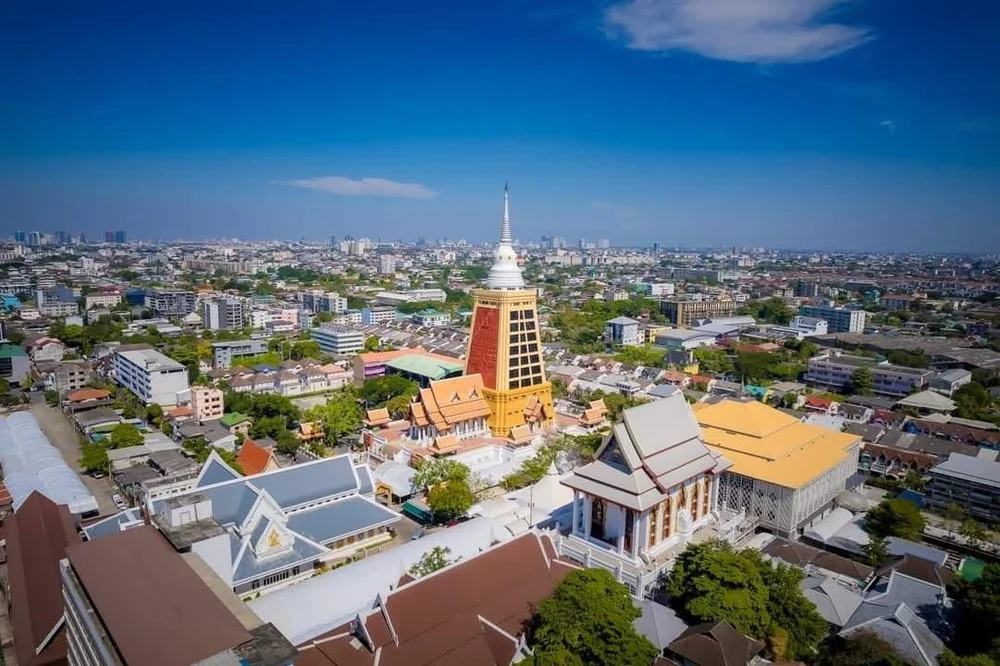
Wat Inthara Wanaram
Open Days: Daily
Opening Hours: 08.00 – 17.00
Wat Inthara Wanaram in Nai Mueang Subdistrict, Mueang Buri Ram District, Buri Ram Province, is a Maha Nikaya community temple with deep roots in meditation practice. Formerly known as Pimon Thammaram Vipassana Meditation Centre and locally called “Wat Pa Nong Prue,” it is now recognized as Buri Ram Provincial Meditation Practice Centre No. 5. The temple is known for morning and evening chanting, meditation, alms-giving on Buddhist holy days, Dhamma talks, and year-round Vipassana meditation based on the Four Foundations of Mindfulness. It is a meaningful destination for travelers seeking a quiet Buddhist temple, meditation practice, and a reflective cultural experience in Buri Ram city.
Wat Inthara Wanaram is located in Nai Mueang Subdistrict, Mueang Buri Ram District, Buri Ram Province. It is a Maha Nikaya Buddhist temple that plays an important role in religious practice, meditation training, and Buddhist ceremonies for local people in Buri Ram city. The temple was formerly called Pimon Thammaram Vipassana Meditation Centre, while local residents commonly know it as “Wat Pa Nong Prue.” These older names reveal the temple’s identity clearly. It began with a strong connection to meditation and still carries the quiet atmosphere of a forest-style temple, even though it is now located within an accessible urban area.
Wat Inthara Wanaram is used for Buddhist ceremonies, merit-making, chanting, meditation, Dhamma listening, and religious observances throughout the year. Its importance does not come from being a large tourist landmark or a visually dramatic attraction. Instead, its value lies in its calm function as a spiritual refuge for people in the city. It is a place where local residents can return to Buddhist practice, where visitors can slow down, and where the daily rhythm of temple life continues quietly in the middle of Buri Ram.
Historically, Wat Inthara Wanaram is associated with Ban Nong Prue on Bulamduan Road, Moo 7. Earlier temple records identify the site in I-san Subdistrict, Mueang Buri Ram District, while several contemporary sources and community references place its present setting in Nai Mueang Subdistrict, Mueang Buri Ram District, Buri Ram Province. The temple land covers 69 rai, 3 ngan, and 46 square wa. Its historical boundaries include private land to the north and east, the Khao Kradong railway line to the south, and a public road to the west. This large temple area allows space for ceremonial buildings, monks’ residences, meditation areas, and religious activities.
The temple was officially established on 23 June 1966. Mr. In Maniwan donated the land for the temple, while Mr. Subin Intharakamhaeng applied for permission to build it. The name “Wat Inthara Wanaram” was formed from the name of the land donor and the family name of the person who requested permission to establish the temple. This origin shows that the temple was created through the faith and support of laypeople in the community. It has therefore been connected to local devotion from the very beginning.
Wat Inthara Wanaram received its royal grant of consecrated boundary in 1981. The consecrated boundary measures 23 metres wide and 43 metres long. This is significant because it formally allows the ubosot to be used for important monastic acts according to Buddhist monastic discipline. The ubosot itself measures 23 metres by 43 metres and was built in 1976. The sermon hall measures 12.50 metres by 28 metres and was built in 1962 as a wooden structure. The temple also includes many monks’ residences, a multipurpose pavilion, funeral halls, a dining hall, a meditation hall, and a library. These structures show that the temple has long supported worship, residence, learning, and meditation.
The temple’s known abbots include Phra Khru Sangwon Yanakoson, who served from 1968 to 1991, followed by Phra Khru Inthawananurak from 1992 onward. Phra Khru Inthawananurak has been closely associated with the temple’s continued role as a meditation centre and forest-style temple within the city. Under this continuity of monastic leadership, Wat Inthara Wanaram has preserved the atmosphere of Buddhist training, chanting, Dhamma teaching, and mindfulness practice despite the growth of the surrounding urban area.
One of the most important roles of Wat Inthara Wanaram is its recognition as Buri Ram Provincial Meditation Practice Centre No. 5. Provincial meditation practice centres are established to encourage people to visit temples, practise Dhamma, observe Buddhist holy days, and deepen their understanding of Buddhist teachings. Wat Inthara Wanaram therefore serves as an important place for people who want to train mindfulness, practise meditation, and apply Buddhist principles to daily life. This role sets it apart from many ordinary community temples.
The temple’s key activities include Dhamma training, morning and evening chanting, sitting meditation, alms-giving on every Buddhist holy day, Dhamma talks, and Vipassana meditation based on the Four Foundations of Mindfulness throughout the year. These are not occasional symbolic activities; they form the living rhythm of the temple. Visitors can sense that meditation practice is central to the temple’s identity, whether through the sound of chanting, the quietness of the meditation spaces, or the presence of local people coming to practise on Buddhist holy days.
The Four Foundations of Mindfulness are an important Buddhist framework for Vipassana meditation. They involve mindful observation of the body, feelings, mind, and mental phenomena. Through this practice, meditators gradually learn to see physical and mental experiences clearly as they arise and pass away. Practising in a calm temple environment helps visitors and practitioners step away from the distractions of urban life and return to direct awareness. This is why Wat Inthara Wanaram is especially suitable for those who want more than a sightseeing stop. It is a place for inner reflection.
Morning and evening chanting help create discipline and calmness in the mind. The rhythm of chanting allows practitioners to settle their attention, regulate breathing, and prepare the mind for meditation. Sitting meditation then supports concentration and awareness. When these practices are repeated regularly, the temple becomes a place where city residents can slow down and reconnect with Buddhist practice without needing to travel far from Buri Ram city.
Alms-giving on Buddhist holy days reflects the close relationship between monks and lay Buddhists. On these days, local residents come to the temple to make merit, offer food, listen to Dhamma, observe precepts, and cultivate generosity. At Wat Inthara Wanaram, Buddhist holy days are meaningful moments when the temple becomes more active and the community gathers around shared faith. Alms-giving is not only an act of offering food; it is also a practice of mindfulness, gratitude, and moral cultivation.
Dhamma talks are another key activity at the temple. Monks at the temple take turns giving sermons, allowing listeners to receive different perspectives on Buddhist practice. These teachings may cover morality, concentration, wisdom, impermanence, mindful living, and ways to reduce suffering in everyday life. Dhamma talks help connect Buddhist teachings with ordinary human experience, making the temple a place of learning as well as ritual.
The atmosphere of Wat Inthara Wanaram is peaceful and suited to meditation. The local name “Wat Pa Nong Prue” suggests an older connection with a forest-temple environment and a quieter landscape. Although the temple is now part of the city, its use and character still emphasize simplicity, restraint, and contemplation. Visitors should respect this atmosphere by speaking softly, avoiding disruptive photography, and giving space to those who are chanting, meditating, or attending Dhamma activities.
For travelers interested in the cultural side of Buri Ram, Wat Inthara Wanaram offers a perspective that differs from the province’s more famous attractions. Buri Ram is often associated with Khmer temples, sports venues, volcanic hills, and large public landmarks. This temple reveals another side of the city: the continuing role of Buddhist practice in daily life. It shows that Buri Ram is not only a destination for history and sports, but also a place where meditation and temple life remain part of the urban community.
A typical visit to Wat Inthara Wanaram may take around 45 minutes to 1 hour for worship, quiet walking, and observing the temple atmosphere. Visitors who plan to join chanting, listen to Dhamma, or participate in meditation should allow more time and visit according to the temple’s activity schedule. Buddhist holy days are especially meaningful because the temple is more active with alms-giving, Dhamma listening, and meditation practice. Those who prefer a quieter visit may come on ordinary weekdays in the morning or afternoon.
From a historical perspective, the temple’s buildings help tell its story. The large ubosot built in 1976 serves as an important space for monastic acts and religious ceremonies. The sermon hall built in 1962 reflects the temple’s role in teaching and community gathering. The many monks’ residences show that the temple has long supported monastic life, while the meditation hall and library reinforce its connection to practice and learning. These elements make Wat Inthara Wanaram a temple with both practical and spiritual depth.
The temple’s names also carry cultural meaning. Its former name, Pimon Thammaram Vipassana Meditation Centre, points to its meditation roots. The local name, Wat Pa Nong Prue, reflects community memory and a forest-style identity. The official name, Wat Inthara Wanaram, preserves the names of those who helped establish the temple. Understanding these layers helps visitors see that the temple was not created without context. It was shaped by land donation, community support, religious purpose, and long-term Buddhist practice.
Wat Inthara Wanaram can also be used as a starting point for a Buri Ram city itinerary. After paying respect and spending quiet time at the temple, travelers can continue to the King Rama I Monument, Buri Ram City Pillar Shrine, Buri Ram Railway Station, Buriram Rajabhat University, Chang Arena, Buriram Castle, Chang International Circuit, or Khao Kradong Forest Park. This route combines faith, city culture, sports landmarks, and natural scenery within one day.
Getting There is convenient from central Buri Ram. Visitors starting from Buri Ram Railway Station or the city centre can use Niwat Road or nearby city roads to reach the temple area. The temple is accessible by private car, motorcycle, local taxi, or ride-hailing service. Travelers can search for Wat Inthara Wanaram or use the coordinates 15.00099, 103.10857 in a navigation app. Since the temple is in an urban area, allow a little extra travel time during morning and evening traffic.
Visitors coming from Buri Ram Bus Terminal can hire local transport to the temple. The journey is short because the temple is within the city. Those planning to continue to Chang Arena, Buriram Castle, or Khao Kradong Forest Park may place Wat Inthara Wanaram at the beginning of the day. Starting with a quiet temple visit in the morning gives the trip a peaceful rhythm before moving on to busier attractions later in the day.
Proper conduct is especially important at Wat Inthara Wanaram because of its role as a provincial meditation practice centre. Visitors should dress modestly, covering shoulders and knees, remove shoes before entering sacred buildings, speak quietly, and avoid treating the temple merely as a photo location. When chanting, meditation, or Dhamma talks are taking place, visitors should move respectfully and avoid disturbing participants.
Those who wish to join meditation activities should prepare both body and mind. Clothing should be simple and appropriate, preferably white or modest in colour when joining formal practice. Accessories that may disturb meditation should be avoided. It is helpful to understand basic practices such as chanting, sitting meditation, walking meditation, and observing precepts before participating. Meditation at the temple is not a casual tourist activity; it is a form of self-training that requires sincerity, patience, and respect.
On Buddhist holy days, Wat Inthara Wanaram has a clearer rhythm of merit-making. Local people may come for alms-giving, Dhamma listening, and meditation. This is an excellent time for visitors who want to see living Buddhist practice in an urban community. However, visitors should arrive on time, behave simply, and respect the flow of temple activities. Food offerings should be clean, appropriate, and prepared with care.
During major Buddhist days such as Makha Bucha Day, Visakha Bucha Day, Asalha Bucha Day, Buddhist Lent, the End of Buddhist Lent, and the Kathin season, the temple becomes a meaningful space for worship and Dhamma practice. These activities help preserve Buddhist traditions within the everyday life of Buri Ram city. They also show how a temple can continue to unite people through faith, generosity, and shared moral practice.
The main attraction of Wat Inthara Wanaram is not visual spectacle but authentic use. The temple does not try to impress visitors with dramatic scenery or large-scale tourism facilities. Instead, it offers the real atmosphere of a working meditation temple. Visitors can see where monks live, where laypeople make merit, where chanting takes place, and where meditators train the mind. This simplicity is the temple’s true strength.
For cultural travelers, Wat Inthara Wanaram is suitable for those interested in forest-style temples, meditation centres, urban Buddhist life, and the spiritual culture of Buri Ram. Visitors should approach the temple as a place of learning rather than only a place for photographs. Reading its history, observing the meditation spaces, listening to the chanting atmosphere, and seeing people visit on Buddhist holy days all help explain how the temple continues to serve the community.
The area around the temple is close to restaurants, cafés, and accommodations in Buri Ram city. After worship or morning meditation, visitors can easily continue to Thai restaurants, steak restaurants, Isan food shops, cafés, and local dining places. Those staying overnight can choose hotels around Niwat Road, Chira Road, Thani Road, the railway station area, or the city centre depending on budget and travel plans.
For out-of-town travelers, Wat Inthara Wanaram is a useful stop for balancing a Buri Ram itinerary. If a trip is filled with stadiums, Khmer ruins, volcanic hills, and photo spots, a visit to this temple adds calmness and spiritual depth. Travelers do not need to be serious meditators to benefit from the temple. A short moment of worship, quiet sitting, or simply listening to the temple atmosphere can help create a more meaningful journey.
Wat Inthara Wanaram is also suitable for respectful cultural storytelling. It has a complete narrative: a former meditation centre, the local name Wat Pa Nong Prue, the official temple name connected with the founders, its role as a provincial meditation practice centre, Buddhist holy day activities, and Vipassana meditation based on the Four Foundations of Mindfulness. These elements make the temple more than a map point. It is a living Buddhist place with history, practice, and community relevance.
In summary, Wat Inthara Wanaram is an important temple in Buri Ram city with religious, historical, and meditative value. It grew from the roots of Pimon Thammaram Vipassana Meditation Centre and Wat Pa Nong Prue into a recognized Maha Nikaya temple with a consecrated boundary and the role of Buri Ram Provincial Meditation Practice Centre No. 5. Visitors will find a temple that is not flashy, but deeply meaningful: a place of chanting, mindfulness, alms-giving, Dhamma listening, and year-round meditation practice. It is one of the most suitable temples in Buri Ram for those who want to understand the quieter and more contemplative side of the city.
| Name | Wat Inthara Wanaram |
| Location | Nai Mueang Subdistrict, Mueang Buri Ram District, Buri Ram Province |
| Address | Niwat Road / Ban Nong Prue Area, Buri Ram City, Nai Mueang Subdistrict, Mueang Buri Ram District, Buri Ram Province 31000, Thailand |
| Coordinates | 15.00099, 103.10857 |
| Highlights | Maha Nikaya community temple, Buri Ram Provincial Meditation Practice Centre No. 5, morning and evening chanting, meditation, alms-giving on Buddhist holy days, Dhamma talks, and year-round Vipassana practice based on the Four Foundations of Mindfulness |
| History | Officially established on 23 June 1966. The land was donated by Mr. In Maniwan, and Mr. Subin Intharakamhaeng applied for permission to build the temple. The temple received its royal grant of consecrated boundary in 1981. |
| Former Name / Local Name | Formerly known as Pimon Thammaram Vipassana Meditation Centre and locally called Wat Pa Nong Prue |
| Name Origin | The name Wat Inthara Wanaram comes from Mr. In Maniwan, the land donor, and the Intharakamhaeng family name of Mr. Subin Intharakamhaeng, who requested permission to establish the temple. |
| Distinctive Features | A calm meditation temple in Buri Ram city that preserves a forest-temple atmosphere and is suitable for worship, chanting, meditation, Dhamma listening, and mindful practice |
| Travel Information | From central Buri Ram, use Niwat Road or nearby city roads to reach the temple. It is accessible by private car, motorcycle, local taxi, or ride-hailing service. |
| Current Status | An active community temple open for worship, merit-making, Buddhist holy day activities, and meditation practice |
| Open Days | Daily |
| Opening Hours | 08.00 – 17.00 |
| Fees | No Admission Fee |
| Facilities | Parking area, ubosot, sermon hall, meditation hall, dining hall, monks’ residences, multipurpose pavilion, funeral halls, and library |
| Main Areas / Zones | 1. Buddhist Ceremonial Zone And Ubosot 2. Sermon Hall 3. Meditation Hall 4. Chanting And Dhamma Training Area 5. Sitting Meditation And Vipassana Practice Area 6. Dining Hall 7. Monks’ Residences 8. Multipurpose Pavilion And Funeral Halls 9. Library 10. Buddhist Holy Day Alms-Giving Area |
| Abbot / Caretaker | Phra Khru Inthawananurak |
| Main Activities | Dhamma training, morning and evening chanting, sitting meditation, alms-giving on every Buddhist holy day, Dhamma talks, and Vipassana meditation based on the Four Foundations of Mindfulness throughout the year |
| Official Website / Official Page | Facebook Page: Wat Inthara Wanaram / Wat Pa Nong Prue, Mueang Buri Ram |
| Nearby Tourist Attractions | 1. Buri Ram Railway Station, about 1 km 2. King Rama I Monument, about 2 km 3. Buri Ram City Pillar Shrine, about 2 km 4. Buriram Rajabhat University, about 3 km 5. Chang Arena, about 5 km 6. Buriram Castle, about 5 km 7. Chang International Circuit, about 6 km 8. Khao Kradong Forest Park, about 8 km |
| Nearby Restaurants | 1. Jing Nam Kha Mu, about 2 km, Tel. 044-620-713, 096-336-5141, 095-353-5169 2. London Steak Buriram, about 2 km, Tel. 044-115-213, 096-315-5075 3. Baan Chay Nam Restaurant, about 3 km, Tel. 044-620-713, 089-722-9169, 096-336-5141 4. Unique Cafe' Buriram Rajabhat University, about 3 km, Tel. 064-449-4464 5. Chef Plus Cafe' & Bistro, about 3 km, Tel. 095-604-1487 6. Song Phi Nong Dinosaur Buriram Restaurant, about 7 km, Tel. 081-264-4862, 086-258-8850 |
| Nearby Accommodations | 1. Ray Hotel Buriram, about 1 km 2. Niwat Hotel, about 1 km, Tel. 044-611-640 3. Grand Hotel, about 1 km, Tel. 044-611-089 4. Charoensin Place, about 1 km, Tel. 044-611-559 5. The S Hotel Buriram, about 2 km, Tel. 044-111-135 6. Alvarez Hotel, about 2 km, Tel. 044-611-555-7 7. Laviva Hotel Buriram, about 2 km, Tel. 044-613-979 |
Frequently Asked Questions (FAQ)
Q: Where is Wat Inthara Wanaram located?
A: Wat Inthara Wanaram is located in Nai Mueang Subdistrict, Mueang Buri Ram District, Buri Ram Province, around the Ban Nong Prue and Niwat Road area in Buri Ram city.
Q: What was the former name of Wat Inthara Wanaram?
A: The temple was formerly known as Pimon Thammaram Vipassana Meditation Centre and is locally called Wat Pa Nong Prue.
Q: Why is Wat Inthara Wanaram important?
A: It is a Maha Nikaya community temple and Buri Ram Provincial Meditation Practice Centre No. 5, known for chanting, meditation, Dhamma talks, alms-giving on Buddhist holy days, and Vipassana practice based on the Four Foundations of Mindfulness.
Q: Who is the abbot of Wat Inthara Wanaram?
A: The abbot of Wat Inthara Wanaram is Phra Khru Inthawananurak.
Q: What are the opening hours of Wat Inthara Wanaram?
A: The temple is open daily from 08.00 to 17.00. Visitors who want to join meditation or Buddhist holy day activities should visit during the temple’s activity schedule.
Q: Is there an admission fee for Wat Inthara Wanaram?
A: No. There is no admission fee. Visitors may enter for worship, merit-making, and appropriate Buddhist activities.
Q: What type of travelers should visit Wat Inthara Wanaram?
A: The temple is suitable for travelers interested in meditation temples, forest-style temples in the city, Buddhist holy day practice, Dhamma listening, and quiet cultural travel in Buri Ram city.
Q: What nearby attractions can be combined with Wat Inthara Wanaram?
A: Visitors can combine the temple with Buri Ram Railway Station, King Rama I Monument, Buri Ram City Pillar Shrine, Buriram Rajabhat University, Chang Arena, Buriram Castle, Chang International Circuit, and Khao Kradong Forest Park.
 Category: ●Places of Worship
 Group: ●Temple
Last Update : 2 MonthAgo
 Last Update : 2 MonthAgo
 Click to Access the Navigation Map GPS
Wat Inthara Wanaram Map
Recommend

 Art, Culture and Heritage
 Historical Sites and Monuments(14)
 Landmarks and Memorials(2)
 Art, Craft Centres, Tradition(6)
 Museums(3)
 Educational Places
 Museum for Study(1)
Temple(74)
Museum for Study(1)
Temple(74)
 Other Sacred Sites(5)
 Suburban Living
 Village, Community(3)
 Nature and Wildlife
 National Parks and Marine Reserves(2)
 Mountain (Doi)(1)
 Dam, Reservoir, Lake(14)
 River, Canal(1)
 Bays and Beaches(1)
 Other natural attractions(2)
 Entertainment and Agricultural
 Animal camps and shows(1)
 Stadium(2)
 Farms, Parks and Ecotourism(2)
 Waterpark(1)


