
lovethailand home >Northeastern Travel Attractions >Buri Ram Travel Attractions >Muang Buri Ram >Sawai Chuek > Wat Pho Thong (Sawai Chik)
TL;DR: Wat Pho Thong (Sawai Chik) is located at Sawai Chik Subdistrict, Mueang Buri Ram District, Buri Ram Province, open Daily, hours 08.00 – 17.00.
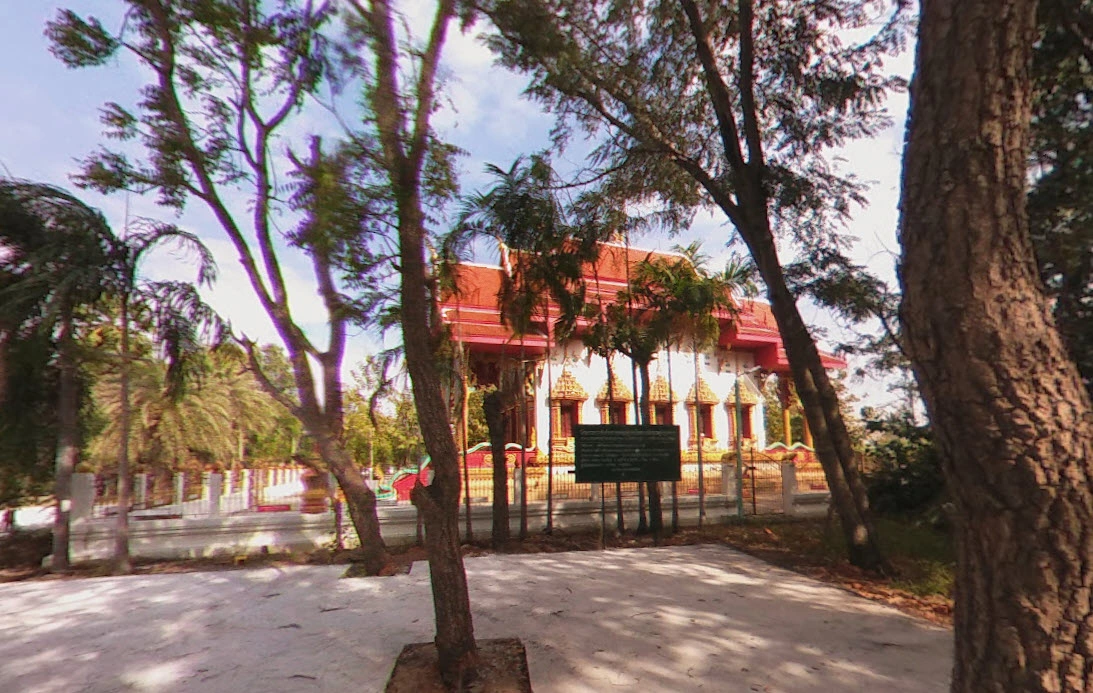
Wat Pho Thong (Sawai Chik)
Open Days: Daily
Opening Hours: 08.00 – 17.00
Wat Pho Thong (Sawai Chik) in Sawai Chik Subdistrict, Mueang Buri Ram District, Buri Ram Province, is an old community temple with notable historical, architectural, and spiritual value. Located about 10 km from Buri Ram city along Highway 226, the Buri Ram–Surin route, the temple is easy to include in a short cultural trip from the provincial town. Its most important highlight is an old sim, or traditional northeastern ordination hall, preserved within the temple compound. This small brick-and-plaster structure reflects the local architectural character of the lower northeastern region and remains one of the clearest cultural traces of the Sawai Chik community.
Wat Pho Thong (Sawai Chik) is not merely a place where local people perform Buddhist ceremonies. It is also a cultural learning site that helps visitors understand the relationship between a temple, a village, and the everyday life of people in Sawai Chik. The temple’s history is connected with the gathering of local villagers, the relocation from an older temple area, and the establishment of the present temple in a place once surrounded by many large Bodhi trees. This natural and religious setting eventually shaped the name Wat Pho Thong Sawai Chik, by which the temple is still known today.
The appeal of Wat Pho Thong lies in its identity as an old temple with visible architectural evidence. The old sim faces east, following the traditional orientation often seen in Thai Buddhist sacred architecture. It is built of brick and plaster, with a wooden roof structure, a two-tiered roof covered with corrugated metal sheets, one entrance at the front and one at the rear, beautifully carved wooden doors, and a small window opening on each side wall. These details make the old sim an important example of local craftsmanship, combining simplicity, devotion, and careful workmanship in one modest religious building.
The old sim at Wat Pho Thong is not large when compared with modern ordination halls or major temple buildings, but its value lies in its age, form, and role as evidence of community history. A structure like this shows how temples in the past were built mainly to support Buddhist practice and ritual life. Local materials, village artisanship, Buddhist beliefs, and community faith all shaped the building. The brick-and-plaster walls, wooden roof framework, two-layered roof, and small side windows allow visitors to study the development of local temple architecture in the lower northeastern region of Thailand.
Inside the old sim is a chukchi base, the raised pedestal traditionally used for enshrining Buddha images. The current principal Buddha image is a newer image placed there after the original one was lost. The original principal image was a bronze Buddha in meditation posture under a ceremonial umbrella. It was stolen in 1993, together with many wooden Buddha images. This incident is part of the temple’s cultural history and represents a serious loss of religious heritage for the temple and the community. At the same time, it increases the importance of the remaining objects inside the sim, as they continue to testify to the faith and artistic life of the past.
The remaining wooden Buddha images inside the sim include one large image and 2 to 3 smaller images. Although they are now in a severely damaged condition, they remain culturally significant. Wooden Buddha images are an important form of local religious art found in many village temples across northeastern Thailand. They are not only objects of worship, but also expressions of local craftsmanship, the devotion of donors, and the community’s use of available materials to create sacred representations of the Buddha. Their survival inside the old sim adds depth to the meaning of Wat Pho Thong.
The old sim and the remaining wooden Buddha images make Wat Pho Thong an appropriate destination for travelers interested in local architecture, community history, and the conservation of Thai temple heritage. A temple like this may not appear grand in the way that famous ancient monuments do, but it has a distinct charm rooted in quietness, authenticity, and community memory. Visitors should therefore see Wat Pho Thong as more than a place to photograph an old building. Each part of the sim, from the walls and doors to the windows, pedestal, and remaining wooden images, carries traces of time and local devotion.
Local history connects the founding of Wat Pho Thong with Nai Sila, Nang Chaek, and Phra Rerai, together with support from the people of Ban Sawai Chik Yai. The community originally had a temple in the Nong Ta Chen area, known as Wat Khok Ban, before the temple was moved and established as the present Wat Pho Thong Sawai Chik. The area where the village was located had many large Bodhi trees, giving rise to the name Wat Pho Thong. The name therefore connects the temple with both the natural landscape of the village and the symbolic meaning of the Bodhi tree in Buddhism.
The name “Pho Thong” carries a graceful symbolic meaning. “Pho” refers to the Bodhi tree, which is deeply connected with the enlightenment of the Buddha, while “Thong” means gold, suggesting beauty, prosperity, and auspiciousness. When used as the name of a temple in a community once known for its large Bodhi trees, Wat Pho Thong becomes a name that combines nature, faith, and Buddhist symbolism in a single expression.
Wat Pho Thong Sawai Chik is an old temple closely tied to the development of the Sawai Chik community. Local records describe the temple’s long history and its royal grant of consecrated boundary land during the late Buddhist era of the 25th century. This long continuity has made the temple a spiritual center for local people over many generations. Annual merit-making events, community ceremonies, and Buddhist practices in Sawai Chik have therefore long used Wat Pho Thong as an important gathering place.
The peaceful atmosphere of Wat Pho Thong is another reason to visit. The temple grounds have trees that provide shade, quiet spaces for reflection, and a pond within the compound. This setting matches the character of a village temple that does not rely on grand decoration, but instead offers calmness, familiarity, and a close relationship with the surrounding natural environment. Visitors can make merit, view the old sim, and take time to rest from the pace of the city.
At present, Wat Pho Thong remains an active community temple rather than a historical place left only for observation. The religious buildings continue to support monks and local residents. The temple is used for ceremonies, merit-making, sermons, and local traditions. This living role allows visitors to experience both the past through the old sim and the present through ongoing Buddhist activities in the same space.
The current abbot of Wat Pho Thong is Phra Athikan Somchai Khantitharo, whose appointment as abbot of Wat Pho Thong, Sawai Chik, was celebrated at the temple in 2024. The continued presence of an abbot and resident monks helps the temple maintain its role as a spiritual center of the community. Their responsibilities include supporting Buddhism, caring for temple buildings, organizing merit-making activities, and preserving the old sim, which is one of the temple’s most important cultural assets.
Religious events at Wat Pho Thong follow the rhythm of a northeastern Thai community temple. These include Buddhist holy days, annual merit-making, Kathin robe-offering ceremonies, Sangha offerings, Buddhist festival days, and local events organized through cooperation among villagers. Such activities keep the relationship between the temple and the community strong. The temple is therefore not only a residence for monks, but also a place where villagers meet, make merit, preserve traditions, and pass on Buddhist values to younger generations.
A visit to Wat Pho Thong should be approached with both faith and conservation awareness. Visitors who come to see the old sim should dress modestly, behave respectfully, and avoid touching damaged parts of the building or old Buddha images unnecessarily. Old religious objects and historic architecture are fragile. Photography should be done with respect. Visitors should not climb on structures, move objects, disturb worship areas, or interrupt monks and local people performing religious activities.
The old sim at Wat Pho Thong is a good example of cultural heritage that deserves wider recognition in community-based tourism. Buri Ram is often remembered for Phanom Rung Historical Park, Prasat Mueang Tam, sports stadiums, and motorsport venues, but around the provincial city there are also old temples and local artworks worth studying. Wat Pho Thong Sawai Chik opens another perspective on Buri Ram: a province of old communities, local faith, and village craftsmanship that still leaves visible traces today.
Compared with large Khmer monuments, the old sim at Wat Pho Thong may seem modest, but this modesty is precisely its charm. The building reflects the life of ordinary villagers rather than royal or monumental art. The carved doors, small windows, layered roof, and internal pedestal all show the community’s effort to create a sacred place using the resources and skills available locally. This makes the sim especially valuable for those who appreciate the history of local Buddhist architecture.
Visitors interested in cultural photography can learn a great deal from Wat Pho Thong, but photography should be done appropriately. Since the sim faces east, the morning light is often suitable for viewing and photographing the old building. The aged walls, carved wooden doors, and shaded temple grounds can communicate the atmosphere of the place well. However, visitors should avoid disturbing worship areas, using flash in a way that may affect old objects, or staging inappropriate photographs that reduce the dignity of the sacred space.
For travelers looking for a short route from Buri Ram city, Wat Pho Thong is a very practical destination. The journey takes only a short time along Highway 226, the Buri Ram–Surin route. The road is straightforward and suitable for private cars, rental cars, and motorcycles. Visitors can spend around 30 minutes to 1 hour at the temple before returning to the city or continuing to other attractions nearby.
Getting There from Buri Ram city to Wat Pho Thong (Sawai Chik) is simple. Take Highway 226, the Buri Ram–Surin route, toward Sawai Chik Subdistrict. The distance is about 10 km. The temple is located in Village No. 2, Ban Sawai Chik, on the Buri Ram–Sawai Chik Road, Sawai Chik Subdistrict, Mueang Buri Ram District. Travelers using digital navigation can search for “Wat Pho Thong Sawai Chik” or use the coordinates 14.907331, 103.143652. Since the route passes local communities and village junctions, careful driving is recommended.
From Buri Ram Railway Station or Buri Ram Bus Terminal, visitors can reach the temple conveniently by private car, rental car, or hired local vehicle. The distance from the city is not far. Travelers without their own vehicle should arrange a hired car or local transport that can wait for the return trip, as the temple is located outside the central city area. Having transport available makes it easier to continue to other attractions after the temple visit.
The best time to visit Wat Pho Thong is in the morning or late afternoon, when the weather is not too hot and the light is suitable for viewing the old sim. Those who want a quiet visit should avoid major merit-making days or crowded ceremonies, unless they specifically intend to join the community event. On ordinary days, visitors will have more time to observe the details of the old building.
Before visiting, travelers should prepare modest clothing, drinking water, and some cash for merit-making according to personal faith. Those interested in studying the old sim should allow enough time and walk slowly. Many details of the old building are easy to miss at first glance, including brickwork, door design, window openings, raised base elements, and the interior arrangement. Careful observation helps visitors appreciate the temple more deeply.
Proper etiquette is important when visiting an old temple. Visitors should avoid entering restricted areas or private monastic zones, should not speak loudly, should not touch wooden Buddha images or old religious objects, should not place personal belongings on the chukchi base, and should not use the sim as a backdrop for inappropriate photographs. The sim is a sacred building historically used for Buddhist monastic acts and should always be treated with respect.
The area around Wat Pho Thong can be linked with several attractions in Buri Ram city. After visiting the old sim, travelers can return to the city to visit Buri Ram City Pillar Shrine, the King Rama I Monument, Buri Ram Night Bazaar, or local restaurants. With more time, the route can continue to Khao Kradong Forest Park, Wat Phra Phutthabat Khao Kradong, Chang Arena, Buri Ram Castle, and Chang International Circuit within the same day.
Buri Ram City Pillar Shrine is a suitable stop for those who want to continue a spiritual route near the city. After viewing the old sim at Wat Pho Thong, visitors can return to town to pay respect at the city pillar shrine, which is a sacred center of belief for the people of Buri Ram. This route allows travelers to experience both community-level faith and city-level sacred traditions in one trip.
The King Rama I Monument is another important landmark in Buri Ram city and is ideal for travelers who want to combine local history with an old temple visit. The monument is connected with the history of Buri Ram’s founding and is located within practical reach from Wat Pho Thong. A half-day route can include Wat Pho Thong, the City Pillar Shrine, and the King Rama I Monument.
Khao Kradong Forest Park and Wat Phra Phutthabat Khao Kradong are good additions for travelers who want to include nature and volcanic landscape in the trip. Buri Ram is known for extinct volcanoes and sandstone heritage, so combining Wat Pho Thong with Khao Kradong gives visitors a day that includes local temple art, natural scenery, and a viewpoint.
For visitors interested in Buri Ram’s modern image as a sports city, Chang Arena, Buri Ram Castle, and Chang International Circuit can also be added to the itinerary. Starting the day with the old sim and Buddhist worship, then ending with sports and modern leisure areas, reveals multiple sides of Buri Ram: old temples, community faith, local history, nature, and contemporary identity.
For food, Wat Pho Thong is close to Sawai Chik and not far from Buri Ram city, giving travelers several choices. The Fad Pizza Sawai Chik and Wua Daeng Cafe Sawai Chik are convenient options in the same subdistrict. Those who want more variety or comfortable restaurants in town can return to Buri Ram city for Klim Kitchen, London Steak Buriram, Baan Chay Nam Buriram, or Miles Cafe’ Buriram.
For accommodation, central Buri Ram is the most convenient base. It provides easy access to Wat Pho Thong and offers many hotel options for solo travelers, families, groups of friends, and visitors planning onward trips to Phanom Rung, Prasat Mueang Tam, Khao Kradong, or the Chang Arena area. During football matches, major events, festivals, or long holidays, booking accommodation in advance is recommended.
Wat Pho Thong is suitable for many types of visitors. Elderly travelers can come for worship and merit-making because the temple is not far from the city. People interested in local history can study the old sim and the story of the temple’s relocation. Those interested in folk architecture can observe the brick-and-plaster structure and carved doors. Families can bring children to learn about old temples and the value of conserving religious heritage.
For writers, researchers, and cultural travelers, Wat Pho Thong offers many points of interest: the relocation from the Nong Ta Chen area, the name connected with Bodhi trees, the old sim aged more than 200 years, local architectural forms, remaining wooden Buddha images, the theft of the bronze Buddha and many wooden images in 1993, and the temple’s current role as a spiritual center of the Sawai Chik community. These elements make Wat Pho Thong an important source for understanding community temples in the lower northeastern region.
The significance of Wat Pho Thong also shows that cultural heritage is not found only in large monuments or famous tourist sites. Small community temples can hold deep historical value. If visitors look carefully, one old sim can tell stories of community life, belief, craftsmanship, time, loss, and the continued effort to preserve local faith.
Overall, Wat Pho Thong (Sawai Chik) is an old temple near Buri Ram city that is well worth visiting, especially for those interested in northeastern local temples, old sim architecture, wooden Buddha images, community history, and slow cultural travel. It may not be a large tourist attraction, but it has genuine value through the surviving traces of the past and its continuing role in the local community.
A visit to Wat Pho Thong offers worship, old architecture, community history, and an understanding of the fragility of cultural heritage. Visitors who come with respect will find beauty in the temple’s simplicity and will discover stories that add cultural depth to a trip in Buri Ram beyond the province’s better-known landmarks.
| Name | Wat Pho Thong (Sawai Chik) |
| Location | Sawai Chik Subdistrict, Mueang Buri Ram District, Buri Ram Province |
| Address | No. 1/1, Buri Ram–Sawai Chik Road, Village No. 2, Sawai Chik Subdistrict, Mueang Buri Ram District, Buri Ram Province 31000, Thailand |
| Coordinates | 14.907331, 103.143652 |
| Temple Type | Private Buddhist Temple |
| Highlights | An old sim aged more than 200 years inside Wat Pho Thong Sawai Chik. It is a brick-and-plaster structure with a wooden roof frame, two-tiered roof, and beautifully carved wooden doors. |
| History | An old community temple of Sawai Chik, historically connected with an earlier temple in the Nong Ta Chen area known as Wat Khok Ban before being relocated to the present site as Wat Pho Thong Sawai Chik. |
| Name Origin | The name is connected with the village area where many large Bodhi trees once stood, giving rise to the name Wat Pho Thong Sawai Chik. |
| Distinctive Features | A lower northeastern Thai community temple with an old sim, remaining damaged wooden Buddha images, and a peaceful shaded atmosphere suitable for worship and study of local Buddhist architecture. |
| Important Objects Inside The Sim | A chukchi base, a new Buddha image, one large carved wooden Buddha image, and 2–3 smaller wooden Buddha images. The original bronze Buddha image in meditation posture under a ceremonial umbrella was stolen in 1993. |
| Travel Information | From Buri Ram city, take Highway 226, the Buri Ram–Surin route, toward Sawai Chik Subdistrict. The distance is about 10 km. A private car, rental car, motorcycle, or hired local vehicle is recommended. |
| Current Status | Open as a community temple for Buddhist ceremonies, merit-making, worship, and visits to the old sim inside the temple compound. |
| Open Days | Daily |
| Opening Hours | 08.00 – 17.00 |
| Fees | No Admission Fee |
| Facilities | Worship area, religious activity area, parking space inside the temple, shaded areas, and a pond within the temple grounds. |
| Main Areas / Zones | Old Sim, New Ordination Hall, Worship Area, Ceremonial Hall, Monastic Area, Shaded Temple Grounds, and Temple Pond. |
| Abbot / Caretaker | Phra Athikan Somchai Khantitharo |
| Nearby Tourist Attractions | 1. Buri Ram City Pillar Shrine, About 10 km 2. King Rama I Monument, About 11 km 3. Buri Ram Night Bazaar, About 11 km 4. Khao Kradong Forest Park, About 17 km 5. Wat Phra Phutthabat Khao Kradong, About 17 km 6. Chang Arena, About 18 km 7. Buri Ram Castle, About 18 km 8. Chang International Circuit, About 19 km |
| Nearby Restaurants | 1. The Fad Pizza Sawai Chik, About 2 km, Tel. 098-097-7687 2. Wua Daeng Cafe Sawai Chik, About 4 km, Tel. 093-523-4423 3. Klim Kitchen, About 11 km, Tel. 044-601-989 4. London Steak Buriram, About 12 km, Tel. 044-115-213 5. Baan Chay Nam Buriram, About 13 km, Tel. 044-620-713 6. Miles Cafe’ Buriram, About 14 km, Tel. 063-803-9365 |
| Nearby Accommodations | 1. Buritel Hotel, About 11 km, Tel. 044-612-688 2. HOP INN Buriram, About 12 km, Tel. 02-080-2222 3. The Sita Princess Buriram Hotel, About 13 km, Tel. 080-797-3300 4. Fortune Hotel Buriram, About 15 km, Tel. 095-207-9250 5. Cresco Hotel Buriram, About 16 km, Tel. 044-634-901 6. Modena By Fraser Buriram, About 16 km, Tel. 044-118-188 7. Amari Buriram United, About 16 km, Tel. 044-111-444 |
Frequently Asked Questions (FAQ)
Q: Where is Wat Pho Thong (Sawai Chik) located?
A: Wat Pho Thong is located at No. 1/1, Buri Ram–Sawai Chik Road, Village No. 2, Sawai Chik Subdistrict, Mueang Buri Ram District, Buri Ram Province. It is about 10 km from Buri Ram city along Highway 226, the Buri Ram–Surin route.
Q: Why is Wat Pho Thong important?
A: Wat Pho Thong is an old community temple in Sawai Chik. Its old sim, aged more than 200 years, is an important example of lower northeastern local Buddhist architecture and community history.
Q: What are the distinctive features of the old sim at Wat Pho Thong?
A: The old sim is a brick-and-plaster building facing east. It has a wooden roof structure, a two-tiered roof, corrugated metal roofing, one entrance at the front and one at the rear, beautifully carved doors, and one small window opening on each side.
Q: What important objects are inside the old sim?
A: Inside the old sim are a chukchi base, a new Buddha image, and remaining carved wooden Buddha images. The original bronze Buddha in meditation posture under a ceremonial umbrella was stolen together with many wooden images in 1993.
Q: Who is the abbot of Wat Pho Thong?
A: The abbot of Wat Pho Thong Sawai Chik is Phra Athikan Somchai Khantitharo.
Q: What are the opening days and hours of Wat Pho Thong?
A: The temple is open daily from 08.00 to 17.00 for merit-making, worship, and visits to the old sim.
Q: Is there an admission fee to visit Wat Pho Thong?
A: No. There is no admission fee. Visitors may make donations according to their faith and should help maintain the temple’s peace and cleanliness.
Q: Which nearby attractions can be visited together with Wat Pho Thong?
A: Nearby attractions include Buri Ram City Pillar Shrine, the King Rama I Monument, Buri Ram Night Bazaar, Khao Kradong Forest Park, Wat Phra Phutthabat Khao Kradong, Chang Arena, Buri Ram Castle, and Chang International Circuit.
 Category: ●Places of Worship
 Group: ●Temple
Last Update : 2 MonthAgo
 Last Update : 2 MonthAgo
 Click to Access the Navigation Map GPS
Wat Pho Thong (Sawai Chik) Map
Recommend

 Art, Culture and Heritage
 Historical Sites and Monuments(14)
 Landmarks and Memorials(2)
 Art, Craft Centres, Tradition(6)
 Museums(3)
 Educational Places
 Museum for Study(1)
Temple(74)
Museum for Study(1)
Temple(74)
 Other Sacred Sites(5)
 Suburban Living
 Village, Community(3)
 Nature and Wildlife
 National Parks and Marine Reserves(2)
 Mountain (Doi)(1)
 Dam, Reservoir, Lake(14)
 River, Canal(1)
 Bays and Beaches(1)
 Other natural attractions(2)
 Entertainment and Agricultural
 Animal camps and shows(1)
 Stadium(2)
 Farms, Parks and Ecotourism(2)
 Waterpark(1)


