
lovethailand home >Northeastern Travel Attractions >Buri Ram Travel Attractions >Phutthaisong >Mafueang > Wat Hong
TL;DR: Wat Hong is located at Ban Si Sa Raet, Mafueng Subdistrict, Phutthaisong District, Buriram Province, open Daily, hours 06.00 – 18.00.
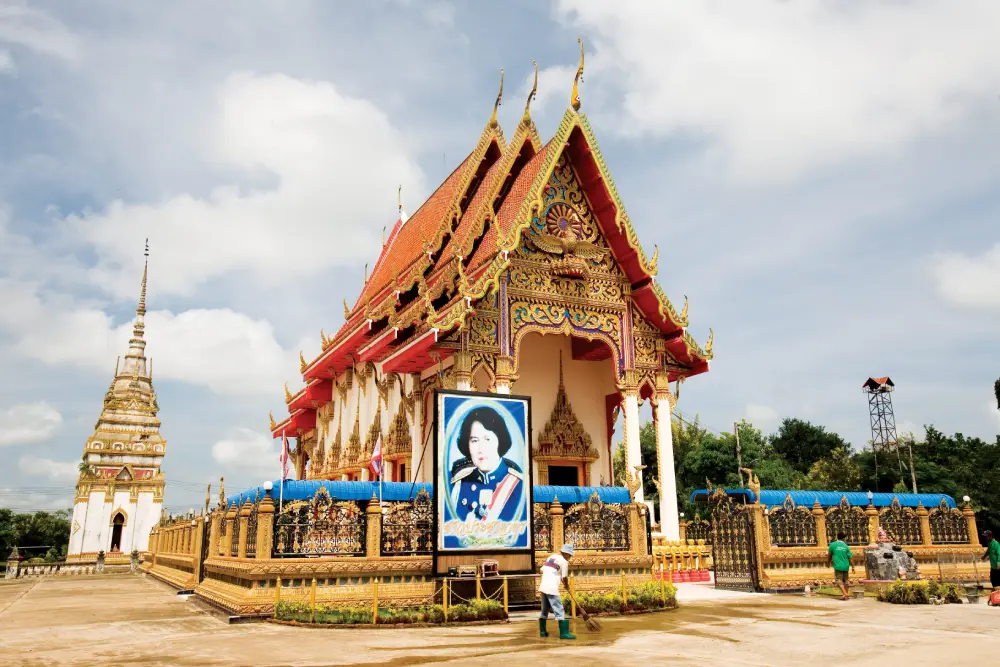
Wat Hong
Open Days: Daily
Opening Hours: 06.00 – 18.00
Wat Hong, also known locally as Wat Si Sa Raet, is located in Ban Si Sa Raet, Mafueng Subdistrict, Phutthaisong District, Buriram Province. This temple is one of the most meaningful cultural and spiritual landmarks in the northern part of Buriram, especially for travelers who want to experience a local Buddhist temple with a strong community legend. The heart of the temple is Phra Chao Yai, a sacred Buddha image deeply revered by local residents, pilgrims, and visitors from nearby provinces.
Wat Hong is not simply a quiet village temple. It is a place where Buddhist faith, local memory, folk legend, and archaeological traces meet in one landscape. Visitors who come here usually do not visit only to take photographs or make a quick stop. They come to pay respect to Phra Chao Yai, to learn about the story of Ban Si Sa Raet, to observe the way local people maintain their religious traditions, and to understand why this temple has remained important to the Phutthaisong community for generations.
Phra Chao Yai at Wat Hong is a Buddha image in the subduing Mara posture. The image is approximately 1.6 metres across the lap and around 2 metres high. It is made of laterite and carries artistic characteristics associated with the Lan Xang tradition or Lao-influenced craftsmanship in the Isan region. Its calm expression, solid form, and long-standing presence give the image a solemn atmosphere. For local devotees, Phra Chao Yai is not merely an old Buddha statue; it is a sacred presence that represents moral strength, truthful intention, and the power of faith.
The history of Wat Hong begins with a local legend. Around 1792 BE, Thao Si Pak, also known as Thao Si Pak Na, and his followers are said to have followed a large rhinoceros into the forested area that later became Ban Si Sa Raet. There they discovered an important Buddha image. The discovery encouraged people to settle in the area, although the site later declined with time. This early part of the legend explains why the name Si Sa Raet, meaning “rhinoceros head” in local memory, became linked with the village and the temple.
Another important part of the legend took place in 2200 BE. Two hunters followed a swan into the forest and found Phra Chao Yai, remains of an old chedi, a rhinoceros horn, and rhinoceros bones. These discoveries convinced people that the area had once been a sacred and significant place. They invited others to settle there, named the village Ban Si Sa Raet, and built a temple called Wat Hong. The name Wat Hong is connected to the swan in the legend, while the name Wat Si Sa Raet is connected to the rhinoceros remains found in the area.
In 2513 BE, a small prang about 70 centimetres high was discovered within the area of the Phra Chao Yai viharn. This discovery gives Wat Hong another layer of historical interest. Although the prang is small, it is significant because it shows that the temple area contains older religious traces beyond the present-day buildings. For cultural travelers, this makes Wat Hong a useful place for understanding how local legend, Buddhist devotion, and archaeological evidence can overlap in rural Buriram.
The main viharn housing Phra Chao Yai is the most important area of the temple. Devotees usually begin their visit by offering flowers, making a wai, praying quietly, applying gold leaf, or making a personal vow. The atmosphere inside the viharn is respectful and contemplative. The offerings around the Buddha image reflect the continuing faith of people who have traveled from the surrounding villages, nearby districts, and other provinces to pay respect.
Wat Hong is also well known for the belief in making vows before Phra Chao Yai. Many local people believe that any promise made before this sacred Buddha image must be made sincerely and responsibly. For this reason, people often come here to make a vow to stop drinking alcohol, quit drugs, give up gambling, or change behaviour that harms themselves or their families. This belief is not only about supernatural fear; at its deeper level, it reflects the use of Buddhist faith as a moral force for personal transformation.
For foreign travelers, this aspect of Wat Hong should be understood with cultural sensitivity. The temple is not a tourist attraction built around spectacle. It is an active place of devotion where belief, discipline, and personal responsibility are taken seriously. Visitors are welcome to observe and pay respect, but they should do so with proper manners. Speaking softly, dressing modestly, and avoiding disruptive photography inside the viharn are important parts of visiting the temple respectfully.
Another important tradition at Wat Hong is the annual Phra Chao Yai gilding festival. The event is held around the full moon of the third lunar month, usually falling in February or March. During this period, villagers and visitors gather to make merit, apply gold leaf to the sacred image, join Buddhist ceremonies, and take part in local religious activities. The festival is one of the clearest examples of how Wat Hong remains a living cultural site rather than only a historical temple.
Travelers who prefer a quiet experience may want to visit on a normal weekday or early in the morning. This allows more time to pay respect to Phra Chao Yai, walk around the temple area, and appreciate the atmosphere without large crowds. Those who want to experience a local temple festival should visit during the annual gilding event, when the temple becomes more vibrant and the collective faith of the community is visible through ceremonies, offerings, and local participation.
Wat Hong is currently a local Buddhist temple in Mafueng Subdistrict. The abbot is Phra Maha Sathaporn Charuthammo, and the temple continues to serve both the religious life of the community and the needs of visitors who come to worship Phra Chao Yai. The temple is also associated with merit-making activities, Kathin ceremonies, and Buddhist observances throughout the year.
From a travel perspective, Wat Hong works well as part of a cultural route in Phutthaisong and nearby districts. Visitors can combine the temple with Ku Suan Taeng, an ancient Khmer-style sanctuary in Ban Mai Chaiyaphot District, or with the silk weaving communities of Na Pho District. This creates a rich day trip that includes Buddhist devotion, Khmer archaeological heritage, and local textile craftsmanship.
The identity of Wat Hong is strongly tied to Ban Si Sa Raet. The village name, the temple name, the story of the rhinoceros, the swan, the old chedi, and Phra Chao Yai all belong to the same cultural landscape. This is what makes the temple different from many ordinary travel stops. It shows how a community preserves memory through names, rituals, religious art, and annual traditions.
For history-oriented visitors, Wat Hong provides an interesting example of how oral tradition and physical evidence can support the identity of a place. The legend of the discovery in 1792 BE, the later resettlement in 2200 BE, and the discovery of the small prang in 2513 BE create a meaningful timeline. These details help visitors understand that the temple is not a random village shrine but a place shaped by repeated acts of discovery, devotion, and community rebuilding.
The artistic value of Phra Chao Yai also deserves attention. The image’s laterite material, calm posture, and Lao-influenced artistic character give it a distinctive appearance. While Buriram is widely known for Khmer stone sanctuaries such as Phanom Rung and Muang Tam, Wat Hong represents another layer of Buriram’s cultural identity: local Buddhist faith, Isan community memory, and the continuing importance of sacred images in everyday life.
Visitors should allow at least 45 minutes to 1 hour for a calm visit. This is enough time to pay respect, observe the viharn, walk through the main areas of the temple, and understand the story behind Phra Chao Yai. If visiting during the annual festival, more time should be allowed because the temple is busier and the surrounding roads may have more local traffic.
Getting There is easiest by private car or rental car. From Phutthaisong town, continue toward Mafueng Subdistrict and Ban Si Sa Raet. The temple can be included in a half-day or full-day cultural route. Travelers coming from Buriram city should allow around 1.5 to 2 hours of travel time, depending on road and traffic conditions. The temple area has space for visitors, and those traveling during festival periods should plan extra time for parking and local traffic.
In summary, Wat Hong in Ban Si Sa Raet, Mafueng Subdistrict, Phutthaisong District, Buriram Province is a highly meaningful destination for travelers interested in Buddhist faith, local legends, sacred art, and community-based culture. Phra Chao Yai is the spiritual heart of the temple, while the stories of the rhinoceros, the swan, the old chedi, and the small prang give the site a strong narrative identity. For visitors looking beyond Buriram’s famous stone sanctuaries, Wat Hong offers a deeper and quieter encounter with Isan cultural heritage.
| Name | Wat Hong, Also Known As Wat Si Sa Raet |
| Location | Ban Si Sa Raet, Mafueng Subdistrict, Phutthaisong District, Buriram Province |
| Address | Mafueng Subdistrict, Phutthaisong District, Buriram Province 31120, Thailand |
| Coordinates | 15.546425, 103.018017 |
| Highlights | Phra Chao Yai, a sacred Buddha image in the subduing Mara posture, and the local legend of the rhinoceros, the swan, the old chedi, the rhinoceros horn, and rhinoceros bones |
| History | Phra Chao Yai was first discovered around 1792 BE. In 2200 BE, two hunters followed a swan into the forest and found the Buddha image, remains of a chedi, a rhinoceros horn, and rhinoceros bones. The village of Ban Si Sa Raet and Wat Hong were later established. In 2513 BE, a small prang about 70 cm high was discovered in the Phra Chao Yai viharn area. |
| Name Origin | The name Wat Hong is linked to the swan in the local legend, while Wat Si Sa Raet and Ban Si Sa Raet are connected to the rhinoceros remains found in the area. |
| Distinctive Features | Phra Chao Yai is about 1.6 m across the lap and 2 m high. The image is made of laterite and shows artistic characteristics associated with Lan Xang or Lao-influenced craftsmanship in Isan. |
| Travel Information | Best reached by private car or rental car from Phutthaisong town toward Mafueng Subdistrict and Ban Si Sa Raet. The temple can be combined with nearby cultural and historical attractions. |
| Current Status | An active local Buddhist temple and pilgrimage site for Phra Chao Yai in Phutthaisong District, Buriram Province |
| Open Days | Daily |
| Opening Hours | 06.00 – 18.00 |
| Facilities | Temple parking area, worship area for Phra Chao Yai, gold-leaf offering area, and space for Buddhist ceremonies |
| Main Areas / Zones | Phra Chao Yai viharn, the original sacred Buddha image, the replica image for gold-leaf offerings, the chedi/old religious area, and the area where the small prang about 70 cm high was discovered |
| Abbot / Caretaker | Phra Maha Sathaporn Charuthammo |
| Official Website / Official Page | Facebook: Wat Hong |
| Annual Tradition | The Phra Chao Yai gilding festival is held around the full moon of the third lunar month, usually in February or March. |
| Nearby Tourist Attractions | 1. Wat Mani Chan, About 4 km 2. Bueng Sa Bua Phutthaisong, About 5 km 3. Wat Pa Nong Bua Rong, About 13 km 4. Na Pho Local Handicraft Center / Na Pho Silk Weaving Village, About 15 km 5. Prang Ku Suan Taeng, About 19 km 6. Prang Ku Ruesi, About 30 km |
| Nearby Restaurants | 1. Steak Dek Naew Phutthaisong Branch, About 3 km, Tel. 092-569-8997 2. Hom Laeng Isan Food And Jim Jum Phutthaisong, About 3 km, Tel. 099-413-5396 3. Krua Baifern At Baifern Greenville, About 3 km, Tel. 091-870-0587 4. Growth Cafe’ Bistro & Bar, About 4 km, Tel. 096-168-7699 5. Yummy Café, About 4 km, Tel. 083-241-3542 6. Bypass Pub & Restaurant Phutthaisong, About 4 km, Tel. 081-877-8347 |
| Nearby Accommodations | 1. Rung Arun Resort, About 3 km, Tel. 083-384-1652 2. Ban Suan Saen Suk Resort, About 4 km, Tel. 081-790-3041 3. Boonmanee Resort, About 4 km, Tel. 081-725-7249 4. Plai Na Resort, About 4 km, Tel. 084-181-4592 5. Baan Suan Samran Hotel, About 4 km, Tel. 086-871-3301 6. Pho Fa Rung Resort, About 4 km, Tel. 089-424-0367 |
Frequently Asked Questions (FAQ)
Q: Where is Wat Hong located?
A: Wat Hong is located in Ban Si Sa Raet, Mafueng Subdistrict, Phutthaisong District, Buriram Province, Thailand.
Q: Why is Phra Chao Yai at Wat Hong important?
A: Phra Chao Yai is a sacred Buddha image in the subduing Mara posture and is deeply respected by local people. It is connected with long-standing community legends and is the main spiritual focus of Wat Hong.
Q: What are the opening hours of Wat Hong?
A: Wat Hong is open daily from 06.00 to 18.00.
Q: When is the Phra Chao Yai gilding festival held?
A: The festival is held around the full moon of the third lunar month, usually in February or March each year.
Q: Is Wat Hong suitable for foreign travelers?
A: Yes. Wat Hong is suitable for travelers interested in Buddhist temples, local legends, Isan culture, sacred art, and community-based heritage in Buriram Province.
Q: How should visitors behave at Wat Hong?
A: Visitors should dress modestly, speak quietly, respect worshippers, avoid disruptive photography inside the viharn, and follow the temple’s guidelines.
Q: What nearby places can be visited with Wat Hong?
A: Nearby places include Wat Mani Chan, Bueng Sa Bua Phutthaisong, Na Pho Local Handicraft Center, Prang Ku Suan Taeng, and Prang Ku Ruesi.
 Category: ●Places of Worship
 Group: ●Temple
Last Update : 2 MonthAgo
 Last Update : 2 MonthAgo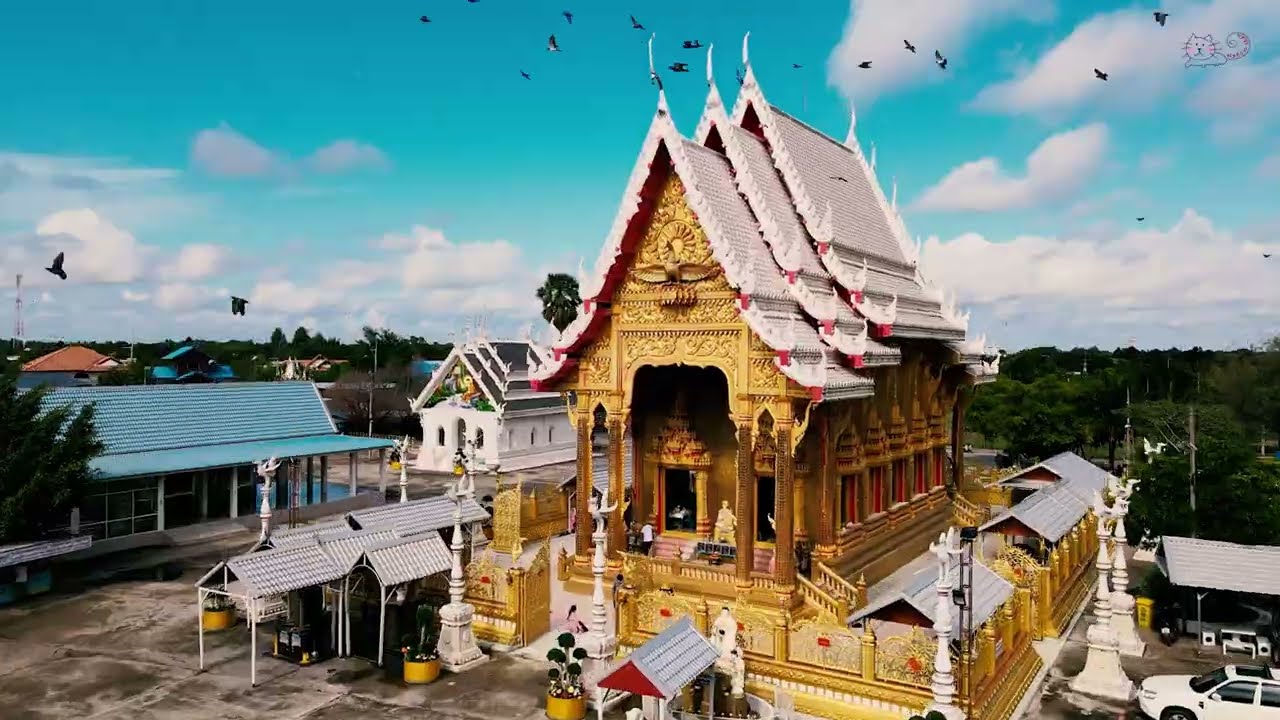
 Click to Access the Navigation Map GPS
 Art, Culture and Heritage
 Historical Sites and Monuments(14)
 Landmarks and Memorials(2)
 Art, Craft Centres, Tradition(6)
 Museums(3)
 Educational Places
 Museum for Study(1)
Temple(74)
Museum for Study(1)
Temple(74)
 Other Sacred Sites(5)
 Suburban Living
 Village, Community(3)
 Nature and Wildlife
 National Parks and Marine Reserves(2)
 Mountain (Doi)(1)
 Dam, Reservoir, Lake(14)
 River, Canal(1)
 Bays and Beaches(1)
 Other natural attractions(2)
 Entertainment and Agricultural
 Animal camps and shows(1)
 Stadium(2)
 Farms, Parks and Ecotourism(2)
 Waterpark(1)


