
lovethailand home >Northeastern Travel Attractions >Buri Ram Travel Attractions >Pa Kham >Khok Mamuang > Wat Pluem Phatthana
TL;DR: Wat Pluem Phatthana is located at Ban Pluem Phatthana, Village No. 7, Khok Mamuang Subdistrict, Pakham District, Buriram Province, open Daily, hours Daytime visits are recommended.
Wat Pluem Phatthana
Open Days: Daily
Opening Hours: Daytime visits are recommended
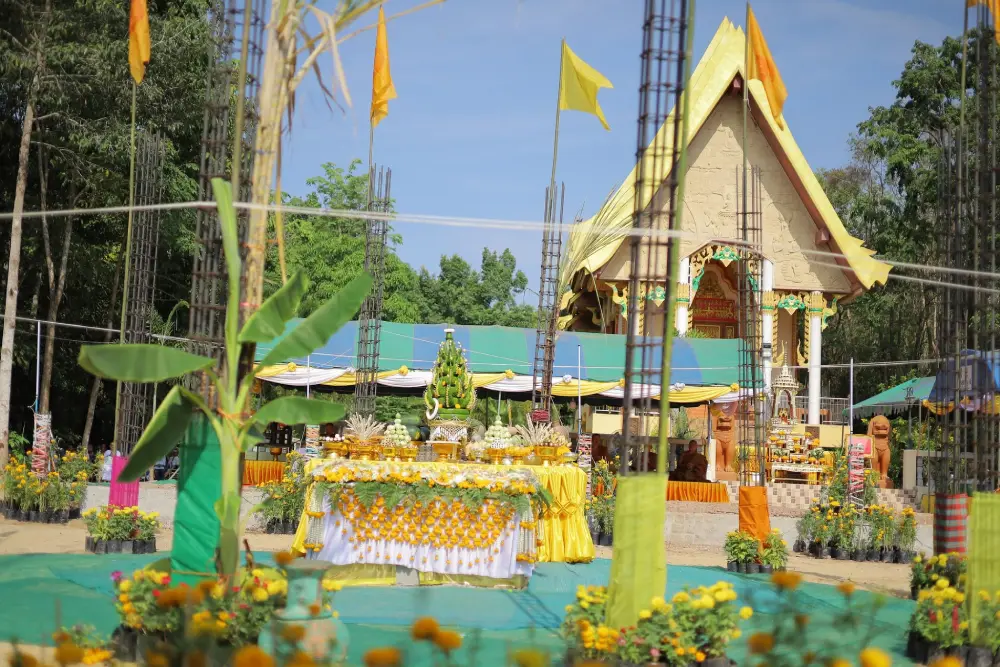
Wat Pluem Phatthana, located in Ban Pluem Phatthana, Village No. 7, Khok Mamuang Subdistrict, Pakham District, Buriram Province, is a community Buddhist temple with an important role in local religious life. The temple serves as a place for Buddhist ceremonies, merit-making on important holy days, community rituals, funeral and memorial merit-making, meditation practice, and moral training for young people. Its significance does not come from ancient ruins or grand historical architecture, but from its active role as a living spiritual center for the people of Ban Pluem Phatthana and nearby communities.
The temple is situated in a rural community of Pakham District, an area where village life, agriculture, Buddhist practice, and community cooperation remain closely connected. In this kind of local setting, a temple is more than a religious building. It is a shared space where villagers gather for merit-making, ceremonies, learning, reflection, and mutual support. Wat Pluem Phatthana represents this role clearly, as it continues to function as a center for both religious devotion and community life.
Wat Pluem Phatthana is also known as a meditation-oriented temple connected with the Wat Nong Pah Pong lineage. It has been referred to as Branch No. 29 of Wat Nong Pah Pong, the forest monastery tradition associated with Luang Pu Chah. This connection gives the temple a distinctive identity as a place of simplicity, discipline, mindfulness, and practical Dhamma training. Visitors who come here should understand the temple primarily as a place for calm practice rather than a commercial tourist attraction.
The first important role of Wat Pluem Phatthana is its function as a religious center for Buddhist holy days. On occasions such as Makha Bucha, Visakha Bucha, Asalha Bucha, Buddhist Lent, the end of Buddhist Lent, and regular Wan Phra observance days, villagers can come to make merit, offer food to monks, listen to Dhamma teachings, keep precepts, and take part in Buddhist ceremonies. Through these activities, the temple helps keep the Buddhist calendar alive within the everyday rhythm of the community.
The second role is its function as a place for community rituals and merit-making ceremonies. When local families hold memorial services, funeral rites, merit-making ceremonies, or other life-cycle rituals, the temple provides a proper religious setting where monks, families, relatives, and neighbors can gather. In this way, Wat Pluem Phatthana supports the community not only during joyful occasions but also during times of loss, remembrance, and spiritual reflection.
The third role is meditation practice. Wat Pluem Phatthana has been associated with annual meditation activities and religious gatherings linked with the forest monastery tradition. These activities often include chanting, Dhamma listening, sitting meditation, walking meditation, food offerings, and periods of quiet practice. For visitors seeking a peaceful place to slow down and reconnect with inner calm, the temple offers a meaningful rural environment shaped by Buddhist practice.
The fourth role is moral education for young people. In many Thai rural communities, the temple helps connect families, schools, and local society through ethical training. Wat Pluem Phatthana can serve as a place where children and young people learn respect, gratitude, discipline, responsibility, generosity, and mindfulness. By participating in temple activities, young people encounter Buddhist values not only as ideas but as part of lived community experience.
The abbot and resident monks play an important role in maintaining the religious life of the temple. Recent community information identifies Luang Pho Damrong Sujitto, also known as Phra Khru Phawanasarakun, as the abbot of Wat Pluem Phatthana. His role is closely connected with meditation activities, religious gatherings, and the continuity of the temple as a place of practice. A respected monastic leader helps the temple remain a strong spiritual center for local residents and visiting devotees.
The value of Wat Pluem Phatthana lies in its active and continuous use. It may not be a temple known for ancient Khmer objects or major archaeological remains like some other sites in Pakham District, but it is important because people still use it in everyday religious life. It is a place to make merit, rest the mind, listen to teachings, practice meditation, train young people, and strengthen community relationships.
Visitors will experience the atmosphere of a rural meditation temple in northeastern Thailand. The temple should be approached with calmness and respect. It is best suited for people who wish to pay respect to the Buddha, join a merit-making activity, listen to Dhamma, learn about the Wat Nong Pah Pong forest tradition, or spend quiet time in a village temple environment. It is not a place for loud sightseeing or casual entertainment.
The temple grounds generally include areas for religious ceremonies, a temple courtyard, monk residences, spaces used for meditation activities, and areas where villagers gather during major merit-making events. Like many community temples, the atmosphere changes with the occasion. On ordinary days, the temple is quiet and suitable for personal reflection. During annual meditation programs or important religious days, the temple becomes more active as monks, lay devotees, and villagers gather for practice and ceremonies.
Activities connected with Wat Pluem Phatthana include merit-making, food offerings, Dhamma talks, meditation retreats, annual practice events, and ceremonies honoring respected teachers. These activities give the temple a living rhythm. They also show that Buddhism in rural communities is not limited to rituals alone, but includes moral training, community unity, and inner cultivation through practice.
For travelers exploring Pakham District, Wat Pluem Phatthana adds a different dimension to the journey. Pakham is also home to historically important sites such as Wat Pho Yoi and Ban Khok Ngio Prasat, while nearby Non Din Daeng District has attractions such as Lam Nang Rong Dam and Nong Hong Sanctuary. By including Wat Pluem Phatthana in a route, visitors can see not only ancient history and natural scenery, but also the living Buddhist practice of the present-day community.
Travelers interested in meditation temples should visit with proper conduct. Dress respectfully, speak quietly, avoid disturbing monks or meditation practitioners, and keep the temple clean. Photography should be done with care, especially during religious activities. Visitors should remember that the temple is a sacred place for the community, not simply a location for sightseeing.
During annual meditation events, the temple becomes more active than usual. Such events may include chanting, Dhamma teaching, sitting meditation, walking meditation, offering food to monks, and paying respect to senior teachers. Visitors who wish to join an event should check the schedule from the temple’s Facebook page or local community channels before traveling, as dates and program details may change from year to year.
The name Ban Pluem Phatthana and Wat Pluem Phatthana shows the close relationship between the temple and the village. The temple is not separate from local life. It is part of the village landscape, agricultural community, and social support system. In rural Isan, temples often serve as places for meetings, ceremonies, moral education, and mutual aid. Wat Pluem Phatthana reflects this traditional role in a clear and meaningful way.
Visitors can combine Wat Pluem Phatthana with nearby places in a half-day or full-day trip. A practical route may begin with Wat Pluem Phatthana for merit-making and quiet reflection, continue to Wat Pho Yoi to see Khmer-period antiquities, then visit Ban Khok Ngio Prasat or extend the journey to Lam Nang Rong Dam and Nong Hong Sanctuary. This route allows travelers to experience religion, community, archaeology, and nature within the same area.
The surrounding area of Ban Pluem Phatthana and Khok Mamuang Subdistrict has a simple rural atmosphere. Visitors will see a quieter side of Buriram, away from large urban centers and major commercial attractions. The openness of the landscape, the agricultural setting, and the close connection between the temple and the village make this a suitable place for slow travel and cultural observation.
Getting There is most convenient by private car or rental car. Travelers can start from Buriram city or Nang Rong District and continue toward Pakham District. From Pakham, follow local roads to Khok Mamuang Subdistrict and Ban Pluem Phatthana, Village No. 7. Since the temple is located within a local community rather than a major tourist zone, travelers should check a map before departure.
The best time to visit is in the morning or late afternoon, when the weather is more comfortable for merit-making, walking around the temple, or spending quiet time in reflection. Those who wish to attend a meditation program, annual ceremony, or special religious event should check the schedule in advance. Temple activities are usually organized around specific dates and may differ from an ordinary visit.
Wat Pluem Phatthana is suitable for visitors interested in forest temples, meditation practice, community Buddhism, and local religious life in Buriram. A visit here helps travelers understand how Buddhism continues to support rural communities through merit-making, meditation, moral education, and spiritual care. It is a modest but meaningful temple for those who value calmness, sincerity, and lived religious practice.
In summary, Wat Pluem Phatthana is important not because of grandeur, but because of function, continuity, and faith. It is a place where villagers make merit, where young people learn values, where devotees practice meditation, and where the community gathers in times of both joy and sorrow. For travelers who want to understand Pakham District beyond historical sites, this temple offers a quiet and authentic view of Buddhism as part of everyday life.
Wat Pluem Phatthana should therefore be visited with the attitude of a learner. Through its quiet temple grounds, one can see the role of monks in guiding the community. Through its ceremonies, one can see cooperation among villagers. Through its meditation activities, one can see the value of mindfulness and inner discipline. Through its youth-oriented moral role, one can see how temples continue to shape ethical foundations in Thai rural society.
| Name | Wat Pluem Phatthana |
| Location | Ban Pluem Phatthana, Village No. 7, Khok Mamuang Subdistrict, Pakham District, Buriram Province |
| Address | Ban Pluem Phatthana, Village No. 7, Khok Mamuang Subdistrict, Pakham District, Buriram Province 31220, Thailand |
| Place Type | Community Buddhist Temple, Meditation Temple, and Wat Nong Pah Pong Branch Temple in Pakham District |
| Highlights | Buddhist ceremonies, merit-making, community rituals, meditation practice, and moral training for young people |
| Importance | A spiritual center for Ban Pluem Phatthana and nearby communities, supporting religious, social, meditation, and moral education activities |
| Distinctive Features | Quiet rural temple atmosphere suitable for merit-making, Dhamma listening, meditation practice, and learning about the Thai forest monastery tradition |
| Important Activities | Merit-making on Buddhist holy days, community ceremonies, memorial merit-making, Dhamma talks, sitting meditation, walking meditation, and annual meditation events |
| Main Areas / Zones | Ceremonial hall or religious activity area Temple courtyard for community merit-making Meditation practice area Monk residence area Quiet resting areas within the temple grounds |
| Facilities | Temple courtyard, religious hall, parking space within or near the temple, and areas used for merit-making and meditation activities depending on the occasion |
| Abbot / Caretaker | Luang Pho Damrong Sujitto, also known as Phra Khru Phawanasarakun |
| Travel Information | Travel by private car to Pakham District, Buriram Province, then continue to Khok Mamuang Subdistrict and Ban Pluem Phatthana, Village No. 7. Checking a map before departure is recommended. |
| Current Status | Open as a community Buddhist temple and meditation site in Ban Pluem Phatthana |
| Open Days | Daily |
| Opening Hours | Daytime visits are recommended |
| Official Website / Official Page | Facebook Page: Wat Ban Pluem, Branch No. 29 of Wat Nong Pah Pong |
| Nearby Tourist Attractions | 1. Ban Pluem Phatthana Agro-Tourism Area, about 1 km 2. Wat Pho Yoi, about 15 km 3. Ban Khok Ngio Prasat, about 18 km 4. Lam Nang Rong Dam, about 35 km 5. Nong Hong Sanctuary, about 36 km 6. We Fought Monument, about 37 km |
| Nearby Restaurants | 1. Wonder Cup Cafe, about 15 km 2. Kan Eng Restaurant, about 15 km 3. Le Loft Bar & Restaurant, about 16 km 4. Phaka Restaurant By Ratri Resort, about 20 km, Tel. 064-1588222 5. Khrua Lung Ter, about 20 km, Tel. 084-9323302 6. Nok Cafe, about 25 km, Tel. 064-4528297 |
| Nearby Accommodations | 1. Athome Pakham, about 15 km, Tel. 044-646053 2. Sawatdee Ratreesawat Resort, about 15 km, Tel. 089-5854858 3. Aromdee Resort, about 16 km 4. Sabaidee Resort Pakham, about 18 km, Tel. 096-8692259 5. Pakham Gardens Resort, about 22 km, Tel. 093-3804814 |
Frequently Asked Questions (FAQ)
Q: Where is Wat Pluem Phatthana located?
A: Wat Pluem Phatthana is located in Ban Pluem Phatthana, Village No. 7, Khok Mamuang Subdistrict, Pakham District, Buriram Province, Thailand.
Q: Why is Wat Pluem Phatthana important?
A: The temple is important as a community spiritual center for Buddhist ceremonies, merit-making, meditation practice, memorial rituals, and moral education for young people.
Q: Is Wat Pluem Phatthana connected with Wat Nong Pah Pong?
A: Yes. Wat Pluem Phatthana is known as Branch No. 29 of Wat Nong Pah Pong, giving it a strong connection with the Thai forest monastery tradition.
Q: Who is the abbot of Wat Pluem Phatthana?
A: The current abbot listed in recent community information is Luang Pho Damrong Sujitto, also known as Phra Khru Phawanasarakun.
Q: What type of visit is Wat Pluem Phatthana suitable for?
A: It is suitable for merit-making, paying respect to the Buddha, listening to Dhamma, meditation practice, and learning about rural Buddhist community life in Pakham District.
Q: Are there meditation activities at Wat Pluem Phatthana?
A: The temple is associated with annual meditation activities and Buddhist practice events. Visitors should check the current schedule from the temple or community page before traveling.
Q: What nearby places can be visited with Wat Pluem Phatthana?
A: Nearby places include Ban Pluem Phatthana Agro-Tourism Area, Wat Pho Yoi, Ban Khok Ngio Prasat, Lam Nang Rong Dam, Nong Hong Sanctuary, and We Fought Monument.
Q: How can travelers get to Wat Pluem Phatthana?
A: The easiest way is by private car. Travel to Pakham District in Buriram Province, then continue to Khok Mamuang Subdistrict and Ban Pluem Phatthana, Village No. 7. Checking a map before departure is recommended.
 Category: ●Places of Worship
 Group: ●Temple
Last Update : 3 MonthAgo
 Last Update : 3 MonthAgo
 Click to Access the Navigation Map GPS
Wat Pluem Phatthana Map
Recommend

 Art, Culture and Heritage
 Historical Sites and Monuments(14)
 Landmarks and Memorials(2)
 Art, Craft Centres, Tradition(6)
 Museums(3)
 Educational Places
 Museum for Study(1)
Temple(74)
Museum for Study(1)
Temple(74)
 Other Sacred Sites(5)
 Suburban Living
 Village, Community(3)
 Nature and Wildlife
 National Parks and Marine Reserves(2)
 Mountain (Doi)(1)
 Dam, Reservoir, Lake(14)
 River, Canal(1)
 Bays and Beaches(1)
 Other natural attractions(2)
 Entertainment and Agricultural
 Animal camps and shows(1)
 Stadium(2)
 Farms, Parks and Ecotourism(2)
 Waterpark(1)


