
lovethailand home >Northeastern Travel Attractions >Buri Ram Travel Attractions >Prakhon Chai >Prakhon Chai > Wat Pho
TL;DR: Wat Pho is located at East of Prakhon Chai Market, Prakhon Chai Subdistrict, Prakhon Chai District, Buri Ram Province, Thailand, open Daily, hours 08.00 – 17.00.
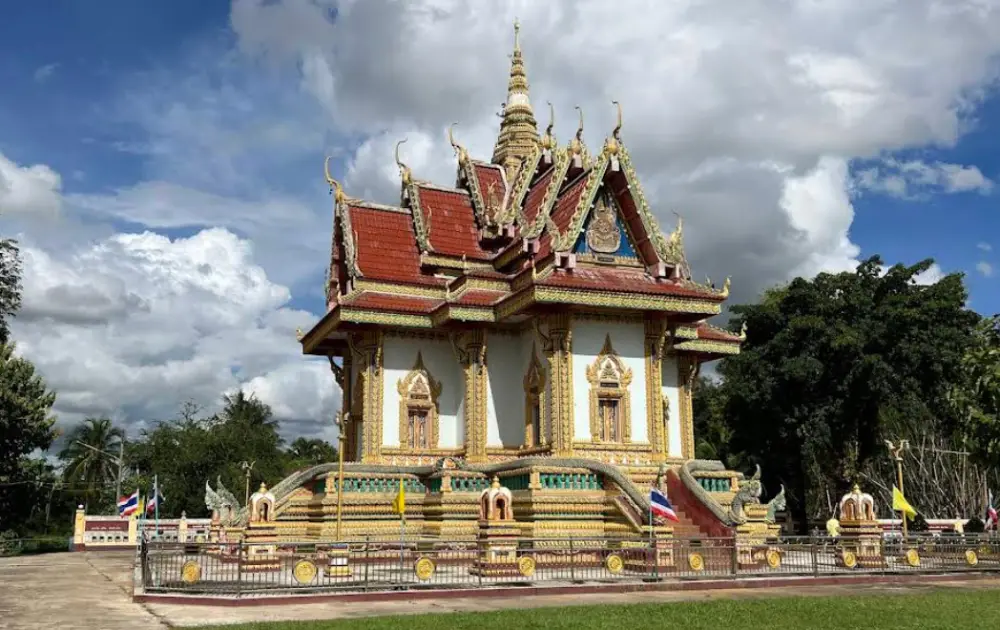
Wat Pho
Open Days: Daily
Opening Hours: 08.00 – 17.00
Wat Pho in Prakhon Chai Subdistrict, Prakhon Chai District, Buri Ram Province, is one of the oldest and most meaningful community temples in Prakhon Chai. Its history dates back to around 1787, and the temple received its consecrated boundary in 1797. As an old Buddhist temple located east of Prakhon Chai Market, Wat Pho reflects the close relationship between faith, local community life, and the long history of the former Talung town, now known as Prakhon Chai.
Wat Pho is historically important because it is considered one of the old temples of Prakhon Chai, second in age and significance after Wat Khon. Although there is no clear evidence identifying the person who first encouraged local Buddhists to build the temple, the temple has continued to serve the community for more than two centuries. For foreign travelers who want to understand Prakhon Chai beyond Phanom Rung and Prasat Muang Tam, Wat Pho offers a valuable insight into living Buddhist culture at the district level.
The temple is located on the eastern side of Prakhon Chai Market, in Moo 6, along Prab Ripu Road and the Satsana Anurak area of Prakhon Chai Subdistrict. This location is important because markets and temples often form the heart of old Thai towns. The market represents everyday trade and social life, while the temple represents spiritual life and community identity. At Wat Pho, these two dimensions of local life exist close together, making the temple a meaningful place for understanding the town.
Wat Pho began to develop around 1787 and received its consecrated boundary in 1797. In Thai Buddhism, a consecrated boundary, or wisungkhammasima, is essential for formal monastic acts. It allows the ordination hall area to be used for ceremonies such as ordination and other Sangha activities. This gives Wat Pho an important religious status and shows that the temple was recognized as a proper Buddhist institution very early in the history of the Prakhon Chai community.
In the past, Wat Pho had a wide temple area and a larger amount of land than it has today. Later, when Phra Khru Prasit Chaiwat became the abbot, he restored and developed the temple by building several permanent structures, including monks’ residences, a sermon hall, and other temple facilities. These developments helped make Wat Pho a suitable place for monks, novices, laymen, and laywomen to practice Buddhism, make merit, and participate in community religious activities.
The Thai word “sappaya” is useful for understanding Wat Pho. It refers to an environment that supports spiritual practice: calm, suitable, comfortable, and appropriate for religious life. Through the restoration work led by Phra Khru Prasit Chaiwat, Wat Pho became a more suitable place for Buddhist practice. The creation of residences, a sermon hall, and useful temple spaces allowed the temple to continue serving both monks and laypeople effectively.
Phra Khru Prasit Chaiwat also encouraged lay supporters to help purchase additional land for the temple. This shows the strong relationship between the temple and the community. Many Thai temples grow not only through official support, but also through the faith and generosity of local people. Wat Pho is a clear example of a temple that developed through cooperation between monastic leadership and lay devotion.
Today, Wat Pho has an area of slightly more than 7 rai and remains an active community temple. It is used as a residence for monks, a place for Buddhist ceremonies, and a center for local merit-making. The current abbot is Phra Baidika Nopphon Khantithammo. The temple is classified as a local Buddhist temple and has monks in residence, showing that Wat Pho continues to play an active role in the religious life of Prakhon Chai.
Wat Pho is not a large commercial tourist attraction. Its value lies in its long history, community atmosphere, religious continuity, and location within the old town area of Prakhon Chai. Visitors can experience the quiet dignity of a temple that still functions in daily Buddhist life. This makes Wat Pho especially meaningful for travelers who want to see a real Thai community temple rather than only famous monuments or staged attractions.
The temple grounds include worship areas, monks’ residences, a sermon hall, and spaces used for community religious activities. These structures are important because they show how a Thai temple supports both monastic and lay life. Monks live and practice in the temple, while local people come to make merit, listen to sermons, participate in ceremonies, and support temple activities.
Wat Pho is also part of a network of old temples in Prakhon Chai. When visited together with Wat Khon, Wat Champa, Wat Chai Mongkhon, and Wat Ta Dan, it helps travelers understand the Buddhist landscape of the district more fully. Each temple tells a different part of Prakhon Chai’s story. Wat Khon is known for its great age and old ordination hall, Wat Champa for its monastic leadership, Wat Chai Mongkhon for its old wooden ordination hall, Wat Ta Dan for local sacred beliefs, and Wat Pho for its long community role near the market.
Religious activities at Wat Pho include merit-making, offerings to monks, Buddhist holy day observances, robe-offering ceremonies, Buddhist Lent activities, and community events. The temple is also connected with local candle procession traditions during the Buddhist Lent period. These events show that Wat Pho is not only a historical site, but a living religious space where local people continue to gather and practice Buddhism.
For foreign visitors, Wat Pho is a useful place to understand how Thai Buddhism works at the local level. In Thailand, temples are not only places where people worship Buddha images. They are also social centers, educational spaces, moral training grounds, community gathering places, and sites of memory. Wat Pho reflects all of these functions in the context of Prakhon Chai town.
A visit to Wat Pho should be slow and respectful. Travelers can begin by paying respect in the main worship area, then take time to observe the sermon hall, residences, temple courtyard, and the general atmosphere. The temple is best appreciated not through a single photo spot, but through its history, layout, and continuing role in community life.
Visitors should dress respectfully when visiting Wat Pho. Shoulders and knees should be covered, shoes should be removed before entering sacred spaces, and voices should be kept low. Photography should be done carefully, especially when monks, worshippers, or religious ceremonies are present. Since Wat Pho is an active community temple, respectful conduct is essential.
The best time to visit Wat Pho is in the morning or late afternoon, when the weather is more comfortable. Morning visits are suitable for quiet merit-making, while late afternoon visits work well for travelers exploring other cultural sites in Prakhon Chai. During Buddhist holy days or local temple events, visitors may see a livelier atmosphere with local residents coming together for merit-making and ceremonies.
Getting There is convenient by private car, rental car, or local transport. From Buri Ram city, travel south toward Prakhon Chai District and enter the market area of Prakhon Chai. Wat Pho is located east of Prakhon Chai Market, around Prab Ripu Road and Satsana Anurak Lane. Travelers without a private car can take public transport to Prakhon Chai and then hire local transport to the temple.
Wat Pho can be included in a cultural route through Prakhon Chai. Travelers may begin at Wat Pho, continue to Wat Khon, Wat Champa, Wat Chai Mongkhon, and Wat Ta Dan, then visit Phra Phuttha Prakhon Chai Maha Ming Mongkhon, Prasat Muang Tam, Kok Muang Hermitage, and Phanom Rung Historical Park. This route combines living Buddhist temples with the ancient Khmer heritage of southern Buri Ram.
Prakhon Chai is a rewarding district for travelers who want to explore beyond the main landmarks. While Phanom Rung and Prasat Muang Tam are famous for ancient stone architecture, the old temples within Prakhon Chai town show the living Buddhist culture of the local community. Wat Pho adds depth to this cultural landscape because it stands close to the market and continues to serve the town as an active temple.
The area around Wat Pho has local restaurants, cafés, and accommodations, making it practical for travelers. Visitors can stop for a meal before or after visiting the temple, then continue to nearby attractions. Staying overnight in Prakhon Chai is also convenient for those who want to visit Prasat Muang Tam and Phanom Rung without rushing back to Buri Ram city.
Wat Pho is especially suitable for travelers interested in old temples, local Buddhist culture, community history, and the relationship between temples and markets in Thai towns. It may not be the most famous temple in Buri Ram, but it plays an important role in explaining the identity of Prakhon Chai. Its long history, consecrated boundary, restoration under Phra Khru Prasit Chaiwat, and continuing religious role make it one of the important old temples of the district.
In cultural terms, Wat Pho shows that local heritage is not always monumental. Some of the most meaningful places are temples that continue to serve their communities quietly over many generations. Wat Pho has existed since the late 18th century, has received formal religious recognition, has been restored by committed monastic leadership, and remains active today. These layers give the temple historical, religious, and social value.
For visitors who want a deeper understanding of southern Buri Ram, Wat Pho should be included in a Prakhon Chai itinerary. The temple helps connect the story of the old town, local Buddhist practice, community merit-making, and the wider cultural route toward Phanom Rung. A visit here allows travelers to see Prakhon Chai not only as a gateway to ancient monuments, but as a living town with its own Buddhist heritage and community identity.
| Name | Wat Pho |
| Location | East of Prakhon Chai Market, Prakhon Chai Subdistrict, Prakhon Chai District, Buri Ram Province, Thailand |
| Address | Moo 6, Prab Ripu Road / Satsana Anurak Lane, Prakhon Chai Subdistrict, Prakhon Chai District, Buri Ram 31140, Thailand |
| Highlights | One of the oldest temples in Prakhon Chai after Wat Khon, established around 1787 and granted its consecrated boundary in 1797 |
| History | Established around 1787. The original founder is not clearly recorded. The temple received its consecrated boundary in 1797 and was later restored and developed under Phra Khru Prasit Chaiwat |
| Distinctive Features | Old community temple near Prakhon Chai Market, with monks’ residences, sermon hall, temple facilities, and spaces suitable for merit-making and Buddhist practice |
| Temple Area | Slightly more than 7 rai |
| Important Elements | Worship area, sermon hall, monks’ residences, temple courtyard, and community religious activity spaces |
| Travel Information | Accessible by private car, rental car, or local transport from Buri Ram city to Prakhon Chai District. The temple is located east of Prakhon Chai Market and can be combined with nearby old temples and cultural attractions |
| Current Status | Open as an active local Buddhist temple |
| Open Days | Daily |
| Opening Hours | 08.00 – 17.00 |
| Facilities | Worship area, merit-making space, sermon hall, monks’ residences, temple courtyard, and community religious activity areas |
| Main Areas / Zones | Worship area, sermon hall, monks’ residences, temple courtyard, and community ceremony areas |
| Abbot / Caretaker | Phra Baidika Nopphon Khantithammo |
| Resident Monks | 9 monks |
| Main Contact Number | 093-549-4902 |
| Official Website / Official Page | Facebook: Wat Pho, Prakhon Chai District, Buri Ram |
| Nearby Tourist Attractions | 1. Wat Khon, about 1 km 2. Wat Champa, about 1 km 3. Wat Chai Mongkhon, about 2 km 4. Nong Ra Sae San Lake Park, about 3 km 5. Phra Phuttha Prakhon Chai Maha Ming Mongkhon, about 11 km 6. Prasat Muang Tam, about 18 km 7. Kok Muang Hermitage, about 18 km 8. Phanom Rung Historical Park, about 22 km |
| Nearby Restaurants | 1. Chai Rad Na, about 1 km, Tel. 091-336-0108 2. Panarin Roasted Duck Noodles Prakhonchai Angtia, about 1 km, Tel. 095-636-5497, 081-869-6175 3. Goody n’ Bakey, about 2 km, Tel. 094-297-8999 4. LuckyCafe, about 2 km, Tel. 094-025-7497 5. Jungle Cafe Prakhon Chai, about 3 km, Tel. 062-414-5461 6. Laang Wang Prakhon Chai, about 4 km, Tel. 084-605-4324 |
| Nearby Accommodations | 1. Prakhon Chai Resort Hotel, about 2 km, Tel. 044-671-288, 081-955-9089 2. Hotel de l’amour Buriram, about 3 km, Tel. 044-651-555, 098-102-7809 3. Eireann Boutique Hotel, about 3 km, Tel. 044-666-199, 087-493-9919 4. Sohground Boutique Resort, about 4 km, Tel. 080-488-3183 5. Baan Khok Muang Homestay, about 18 km, Tel. 088-193-8840 |
Frequently Asked Questions (FAQ)
Q: Where is Wat Pho in Prakhon Chai located?
A: Wat Pho is located east of Prakhon Chai Market in Prakhon Chai Subdistrict, Prakhon Chai District, Buri Ram Province, Thailand.
Q: When was Wat Pho established?
A: Wat Pho was established around 1787 and received its consecrated boundary in 1797.
Q: Why is Wat Pho important?
A: Wat Pho is one of the oldest temples in Prakhon Chai after Wat Khon. It remains an active community temple used for merit-making, Buddhist ceremonies, and local religious life.
Q: Who is the abbot of Wat Pho?
A: The abbot of Wat Pho is Phra Baidika Nopphon Khantithammo.
Q: What are the opening hours of Wat Pho?
A: Wat Pho is open daily from 08.00 to 17.00.
Q: What is the main highlight of Wat Pho?
A: The main highlight is its long history as an old community temple near Prakhon Chai Market, with religious spaces, a sermon hall, monks’ residences, and areas suitable for merit-making and Buddhist practice.
Q: What nearby attractions can be visited with Wat Pho?
A: Nearby attractions include Wat Khon, Wat Champa, Wat Chai Mongkhon, Nong Ra Sae San Lake Park, Phra Phuttha Prakhon Chai Maha Ming Mongkhon, Prasat Muang Tam, Kok Muang Hermitage, and Phanom Rung Historical Park.
Q: What should visitors wear when visiting Wat Pho?
A: Visitors should dress respectfully, cover shoulders and knees, remove shoes in sacred areas, keep quiet, and behave respectfully inside the temple grounds.
 Category: ●Places of Worship
 Group: ●Temple
Last Update : 2 MonthAgo
 Last Update : 2 MonthAgo
 Click to Access the Navigation Map GPS
 Art, Culture and Heritage
 Historical Sites and Monuments(14)
 Landmarks and Memorials(2)
 Art, Craft Centres, Tradition(6)
 Museums(3)
 Educational Places
 Museum for Study(1)
Temple(74)
Museum for Study(1)
Temple(74)
 Other Sacred Sites(5)
 Suburban Living
 Village, Community(3)
 Nature and Wildlife
 National Parks and Marine Reserves(2)
 Mountain (Doi)(1)
 Dam, Reservoir, Lake(14)
 River, Canal(1)
 Bays and Beaches(1)
 Other natural attractions(2)
 Entertainment and Agricultural
 Animal camps and shows(1)
 Stadium(2)
 Farms, Parks and Ecotourism(2)
 Waterpark(1)


