
lovethailand home >Northeastern Travel Attractions >Buri Ram Travel Attractions >Prakhon Chai >Prakhon Chai > Wat Champa
TL;DR: Wat Champa is located at Prakhon Chai Subdistrict, Prakhon Chai District, Buri Ram Province, Thailand, open Daily, hours 08.00 – 17.00.

Wat Champa
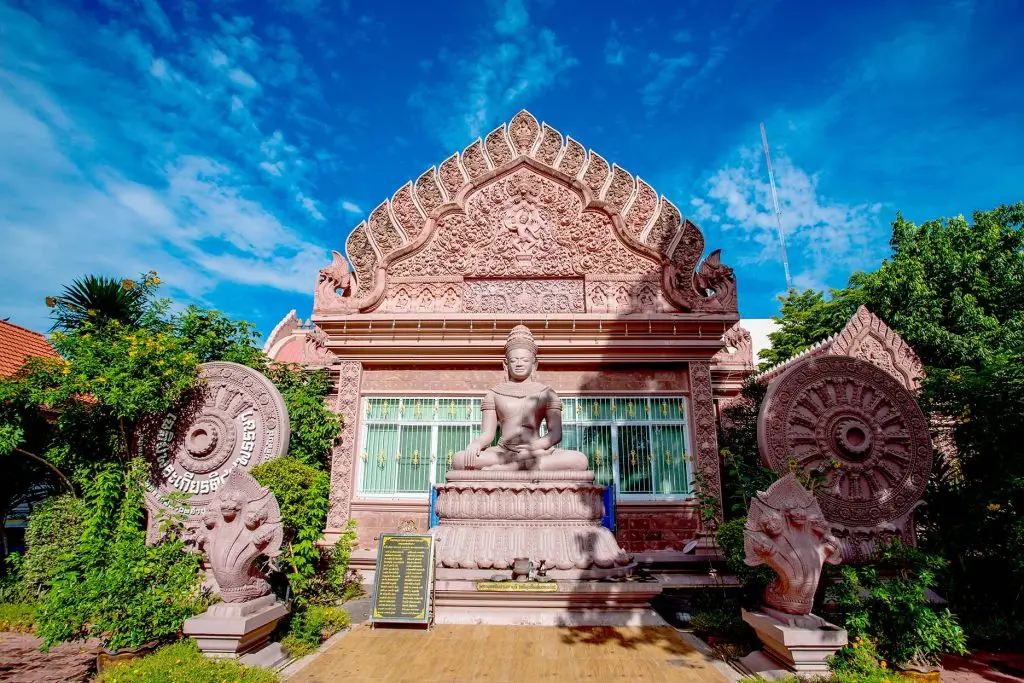
Open Days: Daily
Opening Hours: 08.00 – 17.00
Wat Champa in Prakhon Chai Subdistrict, Prakhon Chai District, Buri Ram Province, is one of the old community temples associated with the former town of Talung, now known as Prakhon Chai. Established around 1807, the temple has served local Buddhist communities for nearly two centuries and remains an active religious center in southern Buri Ram. For travelers who want to understand Prakhon Chai beyond Phanom Rung and Prasat Muang Tam, Wat Champa offers an important view into local Buddhist life, monastic leadership, and community heritage.
Wat Champa was established around 1807 at Moo 2, Prakhon Chai Subdistrict, in the historical area of Talung District, Buri Ram Province, which was once part of Nakhon Ratchasima Monthon. Today, the area belongs to Prakhon Chai District. The temple is considered one of the older Buddhist temples in the district. Although no clear documentary evidence identifies the original founder, the temple has remained closely connected with local residents and the Buddhist community of Prakhon Chai for generations.
The temple received its consecrated boundary, known in Thai as wisungkhammasima, on 21 December 1979. This is an important religious status because it allows the temple to perform formal monastic acts within a properly designated sacred boundary. In Thai Buddhist tradition, an ordination boundary is highly significant. It marks the temple as a recognized place for important Sangha activities and confirms the temple’s continuing role in Buddhist religious life.
Wat Champa occupies an area of 6 rai and 1 square wah. The temple is not a large tourist complex, but it is meaningful because of its historical continuity and its position within Prakhon Chai town. It functions as a local temple where people make merit, attend Buddhist ceremonies, offer food to monks, join robe-offering events, and gather for community religious activities. This living role makes Wat Champa valuable for travelers who want to experience a real Thai community temple rather than a staged tourist attraction.
The historical identity of Wat Champa is linked with Prakhon Chai’s older name, Talung. Prakhon Chai is located in southern Buri Ram, an area rich in layered cultural history. Nearby attractions such as Prasat Muang Tam, Kok Muang Hermitage, and Phanom Rung Historical Park show the ancient Khmer heritage of the region, while Wat Champa represents the later Buddhist community layer that continues to shape local life today.
For foreign travelers, Wat Champa helps explain an important aspect of Thai culture: many temples are not only places for worship, but also centers of community memory, education, moral guidance, and social connection. In rural and district-level towns, temples often serve as the heart of the community. Wat Champa reflects this role clearly. Its importance is not measured only by architecture, but also by the continuity of faith and social participation around the temple.
The current abbot of Wat Champa is Phra Khru Siri Khanarak, also known as Phra Maha Phon Piyathammo. He plays an important role not only as the abbot of the temple but also within the wider Sangha administration of the Prakhon Chai area and Buri Ram Province. His position gives Wat Champa a broader religious significance beyond the immediate temple community.
The list of past abbots of Wat Champa includes Luang Pho So, Luang Pho Puat, Phra Khru Borihan Koson, Phra Khru Wilat Watcharakhun, Phra Khru Aphirak Satsanakit, and Phra Khru Siri Khanarak, also known as Phra Maha Phon Piyathammo. This succession of abbots shows the continuity of temple leadership across generations. In a Thai Buddhist temple, the abbot is responsible for monastic discipline, religious activities, temple maintenance, and the connection between monks and lay communities.
Because Wat Champa is an old community temple, its value is best understood through slow observation. Visitors should look at the temple grounds, worship spaces, activity areas, and overall atmosphere. It may not display the grandeur of a major historical park, but it carries the quiet dignity of a temple that has served the same community for a long time. This is the kind of place where local history is preserved through daily religious practice.
Wat Champa is suitable for travelers interested in local Buddhism, old temples in Buri Ram, community culture, and the history of Prakhon Chai. A visit here adds depth to a southern Buri Ram itinerary, especially when combined with Wat Khon, Wat Klang Prakhon Chai, Phra Phuttha Prakhon Chai Maha Ming Mongkhon, Prasat Muang Tam, Kok Muang Hermitage, and Phanom Rung Historical Park.
The temple is also useful for understanding how Buddhist temples coexist with the ancient Khmer cultural landscape of southern Isan. Prasat Muang Tam and Phanom Rung represent the monumental religious architecture of earlier periods, while Wat Champa represents the living Buddhist tradition of the local Thai community. Visiting both types of places gives travelers a more complete understanding of Buri Ram’s cultural identity.
Regular religious activities at Wat Champa include merit-making, food offerings to monks, Buddhist holy day observances, robe-offering ceremonies, Buddhist Lent activities, ordination-related events, and community merit-making. These activities keep the temple closely connected with local people. For visitors, seeing or respectfully observing these activities can provide insight into the social function of Thai Buddhism.
Wat Champa is also connected with the administrative history of the local Sangha. The presence of a respected abbot who holds an important role in the ecclesiastical structure makes the temple an important religious center in Prakhon Chai. This gives the temple a significance that goes beyond tourism. It remains part of the working religious network of the district.
For travelers, the best way to experience Wat Champa is to visit with a respectful and quiet attitude. Start by paying respect at the main worship area, then take time to observe the temple grounds and the community atmosphere. Avoid rushing. The value of a place like Wat Champa lies in its age, continuity, and local meaning, not in a single photo spot.
Visitors should dress appropriately when visiting Wat Champa. Shoulders and knees should be covered, shoes should be removed before entering sacred areas, and behavior should remain quiet and respectful. Photography should be done carefully, especially when monks, local worshippers, or ceremonies are present. Wat Champa is an active temple, so visitors should remember that it is first and foremost a religious place.
Getting There is convenient by private car, rental car, or local transport. From Buri Ram city, travel south toward Prakhon Chai District and enter the town area of Prakhon Chai. The temple is located in Prakhon Chai Subdistrict, making it easy to combine with other cultural attractions in the district. Travelers without a private car can take public transport to Prakhon Chai and then hire local transport to reach the temple.
A practical cultural route can begin at Wat Champa, followed by Wat Khon and other local temples in Prakhon Chai town. From there, travelers can continue to Phra Phuttha Prakhon Chai Maha Ming Mongkhon, Prasat Muang Tam, Kok Muang Hermitage, and Phanom Rung Historical Park. This route allows visitors to experience both living Buddhist temples and ancient Khmer monuments in a single journey.
Prakhon Chai is a good base for cultural travel in southern Buri Ram. The district has local restaurants, cafés, hotels, boutique accommodations, and homestays within reach of major historical attractions. Staying in Prakhon Chai allows travelers to visit Wat Champa and nearby sites without rushing back to Buri Ram city. This is especially useful for visitors who want to explore the district at a slower pace.
Wat Champa is particularly meaningful because it shows the continuity of local religious life. A temple established around 1807 and still active today represents generations of faith, care, monastic leadership, and community participation. The temple’s long history, consecrated boundary, list of abbots, and role in the local Sangha all make it an important part of Prakhon Chai’s cultural landscape.
For foreign visitors, Wat Champa is a reminder that Thailand’s cultural heritage is not limited to famous monuments. Local temples like Wat Champa preserve history through daily practice, merit-making, ceremonies, and the relationship between monks and laypeople. These quieter temples often provide a more intimate understanding of Thai culture than large tourist landmarks.
Wat Champa also pairs well with Wat Khon, another old temple in Prakhon Chai. Visiting both temples helps travelers understand the Buddhist heritage of the old town of Talung. Wat Khon is known for its historical character and old ordination hall, while Wat Champa is notable for its long community role and important monastic leadership. Together, they reveal the religious depth of Prakhon Chai more clearly.
When combined with Prasat Muang Tam and Phanom Rung, Wat Champa helps travelers see the wider cultural timeline of southern Buri Ram. The ancient stone sanctuaries reflect earlier religious and artistic traditions, while Wat Champa reflects the living Buddhist community that continues today. This connection between ancient monuments and active temples is one of the most rewarding aspects of traveling through Prakhon Chai.
Wat Champa is therefore recommended for travelers who appreciate old temples, local history, Buddhist culture, and meaningful cultural routes. It may not be the most famous attraction in Buri Ram, but it adds important depth to a journey through Prakhon Chai. A visit here allows travelers to understand the district through faith, community, and continuity rather than through monuments alone.
| Name | Wat Champa |
| Location | Prakhon Chai Subdistrict, Prakhon Chai District, Buri Ram Province, Thailand |
| Address | Moo 2, Prakhon Chai Subdistrict, Prakhon Chai District, Buri Ram 31140, Thailand |
| Highlights | An old community temple of the former Talung town, established around 1807, with an important role in Prakhon Chai’s Buddhist community |
| History | Established around 1807 in the former Talung District area. The temple received its consecrated boundary on 21 December 1979 |
| Distinctive Features | Old community temple, long line of abbots, active Buddhist activities, and strong connection with Prakhon Chai community life |
| Temple Area | 6 rai and 1 square wah |
| Line of Abbots | 1. Luang Pho So 2. Luang Pho Puat 3. Phra Khru Borihan Koson 4. Phra Khru Wilat Watcharakhun 5. Phra Khru Aphirak Satsanakit 6. Phra Khru Siri Khanarak, also known as Phra Maha Phon Piyathammo |
| Travel Information | Accessible by private car, rental car, or local transport from Buri Ram city to Prakhon Chai District. Travelers without a car can take public transport to Prakhon Chai and hire local transport to the temple |
| Current Status | Open as an active community Buddhist temple |
| Open Days | Daily |
| Opening Hours | 08.00 – 17.00 |
| Facilities | Worship areas, merit-making space, temple courtyard, and community religious activity areas |
| Main Areas / Zones | Worship area, Buddhist activity area, temple courtyard, and community religious space |
| Abbot / Caretaker | Phra Khru Siri Khanarak, also known as Phra Maha Phon Piyathammo |
| Official Website / Official Page | Facebook: Wat Champa, Prakhon Chai District, Buri Ram |
| Nearby Tourist Attractions | 1. Wat Khon, about 2 km 2. Nong Ra Sae San Lake Park, about 4 km 3. Phra Phuttha Prakhon Chai Maha Ming Mongkhon, about 12 km 4. Prasat Muang Tam, about 18 km 5. Kok Muang Hermitage, about 18 km 6. Phanom Rung Historical Park, about 22 km |
| Nearby Restaurants | 1. Chai Rad Na, about 2 km, Tel. 091-336-0108 2. Panarin Roasted Duck Noodles Prakhonchai Angtia, about 2 km, Tel. 095-636-5497, 081-869-6175 3. Jungle Cafe Prakhon Chai, about 3 km, Tel. 062-414-5461 4. Goody n’ Bakey, about 3 km 5. Laang Wang Prakhon Chai, about 4 km, Tel. 084-605-4324 |
| Nearby Accommodations | 1. Prakhon Chai Resort Hotel, about 2 km, Tel. 044-671-288, 081-955-9089 2. Hotel de l’amour Buriram, about 3 km, Tel. 044-651-555, 098-102-7809 3. Eireann Boutique Hotel, about 3 km, Tel. 044-666-199, 087-493-9919 4. Sohground Boutique Resort, about 4 km, Tel. 080-488-3183 5. Baan Kokmuang Homestay, about 18 km |
Frequently Asked Questions (FAQ)
Q: Where is Wat Champa located?
A: Wat Champa is located in Prakhon Chai Subdistrict, Prakhon Chai District, Buri Ram Province, Thailand.
Q: When was Wat Champa established?
A: Wat Champa was established around 1807 and received its consecrated boundary on 21 December 1979.
Q: Who is the abbot of Wat Champa?
A: The abbot of Wat Champa is Phra Khru Siri Khanarak, also known as Phra Maha Phon Piyathammo.
Q: Why is Wat Champa important?
A: Wat Champa is an old community temple of Prakhon Chai with a long Buddhist history, an important local religious role, and a strong connection with the local Sangha.
Q: What are the opening hours of Wat Champa?
A: Wat Champa is open daily from 08.00 to 17.00.
Q: What nearby attractions can be visited with Wat Champa?
A: Nearby attractions include Wat Khon, Nong Ra Sae San Lake Park, Phra Phuttha Prakhon Chai Maha Ming Mongkhon, Prasat Muang Tam, Kok Muang Hermitage, and Phanom Rung Historical Park.
Q: What type of travelers should visit Wat Champa?
A: Wat Champa is suitable for travelers interested in old temples, local Buddhist culture, Prakhon Chai history, and cultural routes in southern Buri Ram.
Q: What should visitors wear when visiting Wat Champa?
A: Visitors should dress respectfully, cover shoulders and knees, remove shoes in sacred areas, and keep quiet inside the temple grounds.
 Category: ●Places of Worship
 Group: ●Temple
Last Update : 3 MonthAgo
 Last Update : 3 MonthAgo
 Click to Access the Navigation Map GPS
Wat Champa Map
Recommend

 Art, Culture and Heritage
 Historical Sites and Monuments(14)
 Landmarks and Memorials(2)
 Art, Craft Centres, Tradition(6)
 Museums(3)
 Educational Places
 Museum for Study(1)
Temple(74)
Museum for Study(1)
Temple(74)
 Other Sacred Sites(5)
 Suburban Living
 Village, Community(3)
 Nature and Wildlife
 National Parks and Marine Reserves(2)
 Mountain (Doi)(1)
 Dam, Reservoir, Lake(14)
 River, Canal(1)
 Bays and Beaches(1)
 Other natural attractions(2)
 Entertainment and Agricultural
 Animal camps and shows(1)
 Stadium(2)
 Farms, Parks and Ecotourism(2)
 Waterpark(1)


