
lovethailand home >Northeastern Travel Attractions >Buri Ram Travel Attractions >Prakhon Chai >Chorakhe Mak > Wat Prasat Burapharam
TL;DR: Wat Prasat Burapharam is located at Moo 6, Tambon Chorakhe Mak, Amphoe Prakhon Chai, Buri Ram Province, open Daily, hours 08.00 – 17.00.
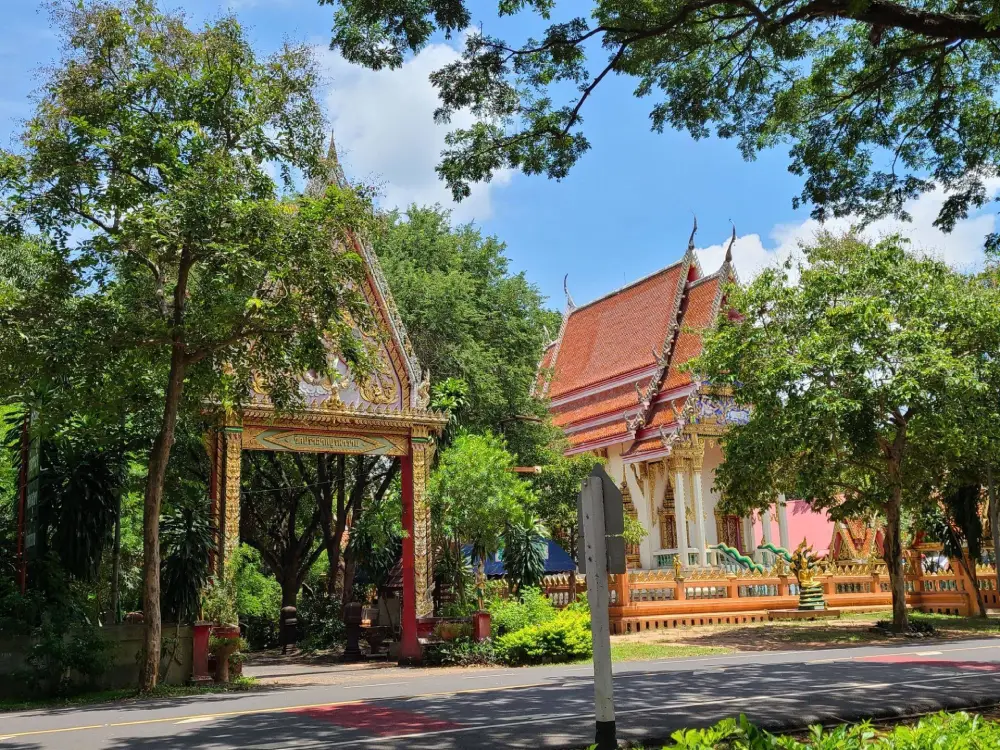
Wat Prasat Burapharam
Open Days: Daily
Opening Hours: 08.00 – 17.00
Wat Prasat Burapharam in Buri Ram Province is an important community Buddhist temple in Ban Khok Mueang, Tambon Chorakhe Mak, Amphoe Prakhon Chai. It is located within the nationally protected historical zone of Prasat Muang Tam, one of the most important Khmer heritage sites in Buri Ram. For travelers, this temple offers more than a simple merit-making stop. It represents the living relationship between a present-day Thai Buddhist temple, a local rural community, and an ancient cultural landscape that has been part of the area for around 1,000 years.
The temple is situated at Moo 6, Tambon Chorakhe Mak, Amphoe Prakhon Chai, Buri Ram Province, and covers an area of 14 rai, 1 ngan, and 35 square wah. Its location is especially meaningful because it stands very close to Prasat Muang Tam. This makes Wat Prasat Burapharam part of the wider cultural landscape of Ban Khok Mueang, where villagers continue to live beside ancient ruins, old water systems, community roads, and Buddhist religious spaces.
When people visit Ban Khok Mueang, they usually come for Prasat Muang Tam, Barai Muang Tam, Kuti Rishi Ban Khok Mueang, and the wider Phanom Rung-Muang Tam heritage route. Wat Prasat Burapharam adds another layer to that journey. While Prasat Muang Tam preserves the ancient Hindu-Khmer past, the temple shows the present-day Buddhist life of the community. Together, they allow visitors to see both the historical depth and the living culture of the area.
The history of Wat Prasat Burapharam is rooted in local faith and community generosity. The temple was permitted to be established around 1968, and official temple records state that it was legally established on 12 November 1969. It later received Wisungkhamsima, the formal boundary for Buddhist ordination ceremonies, in 1973. These milestones show that the temple has long held a formal role in Thai Buddhism and has served the local community for more than half a century.
A key figure in the foundation of the temple was Mr. Sangkhom Thongkun, a resident of Ban Khok Mueang and the son of Mr. Ngao and Mrs. Dam Thongkun. He donated land for the temple, creating a permanent Buddhist space for the community. In Thai society, donating land for a temple is considered a highly meaningful act of merit because it supports the continuation of Buddhism, community ceremonies, ordination, merit-making, and religious education for future generations.
In the early period, the temple was cared for by Luang Pho Buntham Khunasampanno, who was the monk responsible for supervising the temple at that time. His role is important because every newly established rural temple requires strong cooperation between monks, local donors, villagers, and supporters. The memory of Luang Pho Buntham remains part of the temple’s story because he helped guide the temple during its formative years.
The name “Wat Prasat Burapharam” reflects the temple’s location and cultural setting. The word “Prasat” connects the temple with Prasat Muang Tam and the Khmer heritage of the area. The word “Burapha” means east, which corresponds with the temple’s position to the east of Prasat Muang Tam. The name therefore carries both geographical and cultural meaning. It tells visitors that this temple is not isolated from the ancient sanctuary, but is part of the same historic landscape.
Prasat Muang Tam is a Khmer-style sanctuary believed to be around 1,000 years old. It is located in Ban Khok Mueang, Tambon Chorakhe Mak, Amphoe Prakhon Chai, and is part of the wider Khmer cultural route that connects the ancient world of Cambodia with northeastern Thailand. The sanctuary was built according to Hindu religious beliefs and is associated with the Phanom Rung group of monuments. Wat Prasat Burapharam is therefore special because it is a modern Buddhist temple standing beside a much older Hindu-Khmer religious site.
The landscape around the temple is especially important. This is not an isolated temple compound, but part of a living village beside an ancient monument. Nearby is Barai Muang Tam, a large ancient reservoir north of the sanctuary. Houses, community roads, local learning spaces, and tourism activities surround the area. Visitors who spend time at Wat Prasat Burapharam can therefore understand that Ban Khok Mueang is not merely an archaeological site. It is a living community where ancient heritage and daily life continue side by side.
As a Buddhist temple, Wat Prasat Burapharam is a community temple under the Mahanikaya order. Local people use it for merit-making on Buddhist holy days, ordination-related activities, Kathin ceremonies, robe offerings, memorial merit-making, and village events. The temple serves as a spiritual center for the people of Ban Khok Mueang. At the same time, travelers visiting Prasat Muang Tam can stop here to pay respect, make merit, and experience the living Buddhist culture of the area.
The current abbot and caretaker named in recent meditation and Parivasa practice announcements is Phra Athikan Bawornsak Paripunno. He is associated with the temple’s religious activities, including Parivasa practice and Dhamma practice events. This gives the temple an important role beyond ordinary community merit-making. It is also a place where monks and Buddhist practitioners gather for disciplined practice within the peaceful setting of Ban Khok Mueang.
Parivasa practice is an important monastic activity connected with Buddhist discipline. When Wat Prasat Burapharam hosts such events, the temple becomes a space of practice, silence, and spiritual discipline. Visitors should be mindful of this role. During practice periods, there may be many monks or lay practitioners within the temple grounds, so quiet manners and respectful behavior are especially important.
The temple grounds have the character of a local community temple near a heritage site. Important areas include the merit-making and worship area, temple halls or community activity spaces, practice areas, zones used for Parivasa or Dhamma events, and basic visitor facilities such as toilets. The temple is not designed as a large tourist attraction, but its simple atmosphere is part of its charm. It allows travelers to experience a genuine rural temple that remains connected to local life.
For visitors to Prasat Muang Tam, Wat Prasat Burapharam is worth visiting with respect. It helps visitors see that the area is not only an archaeological zone but also a real village. People live here, make merit here, organize Buddhist events here, and continue to build their lives around the cultural landscape. This makes the visit more meaningful than simply taking photographs of ancient stones.
Because the temple is located within the protected historical zone of Prasat Muang Tam, visitors should be careful to preserve both the temple and the archaeological environment. They should not litter, climb on ancient structures, damage temple property, or create noise that disturbs monks, villagers, or other visitors. A visit to this area is both a cultural experience and a responsibility to protect shared heritage.
Wat Prasat Burapharam is ideal for a half-day or full-day cultural route. Travelers can begin by paying respect at the temple, then walk or continue to Prasat Muang Tam, Barai Muang Tam, Kuti Rishi Ban Khok Mueang, and Prasat Ban Bu. With more time, they can continue to Phanom Rung Historical Park and Wat Khao Phra Angkhan. This route brings together a modern Buddhist temple, ancient Khmer architecture, an old reservoir system, and a living rural community.
Prasat Muang Tam is the closest major attraction. It is known for its balanced layout, laterite enclosure walls, sandstone elements, central sanctuary group, and L-shaped ponds at the four corners inside the compound. The carved stone details reflect Khmer art styles associated with the Khleang and Baphuon periods. Moving from Wat Prasat Burapharam to Prasat Muang Tam gives travelers a powerful transition from contemporary Buddhist life to an ancient sacred landscape.
Barai Muang Tam, also known locally as Thale Muang Tam, is another important place to visit. This large ancient reservoir helps visitors understand that Khmer settlements were not only about temples, but also about water management, agriculture, travel routes, and daily life. Seeing the barai after visiting the temple and sanctuary gives a clearer understanding of why this area was important in the past and remains important today.
Kuti Rishi Ban Khok Mueang is a smaller historical site located not far from Prasat Muang Tam. It is associated with ancient routes and religious infrastructure from the Khmer period. Travelers interested in history should include it in the same route because it shows that the area contains more than one major monument. Smaller sites help reveal the wider network of ancient culture around Ban Khok Mueang.
Prasat Ban Bu and Prasat Plai Bat 1 can also enrich the route for travelers with more time. These sites help connect the Muang Tam area with the broader heritage landscape of Phanom Rung and the surrounding ancient settlements. Together, they show that the cultural history of Buri Ram is spread across communities, hills, reservoirs, and temple sites rather than being limited to a single monument.
Phanom Rung Historical Park is one of the most important destinations in Buri Ram and can be combined with Wat Prasat Burapharam and Prasat Muang Tam. Located on an extinct volcano, Phanom Rung was built as a Hindu sanctuary dedicated to Shiva. A one-day route that includes Wat Prasat Burapharam, Prasat Muang Tam, and Phanom Rung allows travelers to see the relationship between community Buddhism, ancient Hindu-Khmer architecture, and the volcanic landscape of Buri Ram.
Ban Khok Mueang also offers community-based tourism experiences. Visitors may learn about local weaving, the Barai Phak Kut silk motif, mud-dyed textiles using local materials, cycling routes around the village, and the relationship between the villagers and the ancient sanctuary. A visit to Wat Prasat Burapharam can therefore be extended into a deeper cultural experience that includes both religious and community life.
The best time to visit is in the morning or early afternoon. Morning visits are especially pleasant because the weather is cooler and the light is suitable for walking around the temple and Prasat Muang Tam. Visitors should bring drinking water, a hat, and comfortable shoes, especially if they plan to walk around the sanctuary, barai, and nearby community areas. Weekdays are usually quieter than weekends and festival periods.
Visitors should dress modestly when entering the temple. Shoulders and knees should be covered, voices should be kept low, and respectful behavior is expected. Alcohol is not appropriate within temple grounds. Photography should be done respectfully, especially if monks, villagers, or practitioners are present. During Parivasa or Dhamma practice events, visitors should avoid disturbing participants and stay within public areas.
Getting There is easiest by private car. Travelers can drive to Prakhon Chai District and continue to Tambon Chorakhe Mak and Ban Khok Mueang. Since the temple is located close to Prasat Muang Tam, the sanctuary can be used as the main navigation point. From Buri Ram city, travelers can follow the Buri Ram-Prakhon Chai route and continue to Ban Khok Mueang. From Nang Rong or Chaloem Phra Kiat, travelers can connect from the Phanom Rung route down toward Prasat Muang Tam and Wat Prasat Burapharam.
Public transport is possible but less convenient. Travelers can first reach Prakhon Chai town, then use local transport or hire a vehicle to Ban Khok Mueang and Prasat Muang Tam. Because attractions in the area are spread out, a private car, rental car, or hired vehicle is the most practical option, especially for travelers who want to visit the temple, Prasat Muang Tam, Phanom Rung, and nearby sites on the same day.
Restaurants near the temple include local options around Ban Khok Mueang and Prakhon Chai town. Lang Wang Prakhon Chai is one of the closest better-known choices near the Prasat Muang Tam area. Other options in Prakhon Chai include Chai Rad Na, Laow Fun Prakhon Chai, Good View Prakhonchai, and local restaurants along the main roads. Travelers should plan meals around their route, especially if they are combining the temple with Phanom Rung and other historical sites.
Accommodation options include homestays in Ban Khok Mueang and hotels in Prakhon Chai town. Travelers who want to stay close to Prasat Muang Tam may choose Ban Khok Mueang Homestay or 239 Muang Tam Homestay. Those who prefer hotel-style facilities can stay at Hotel de l'amour, Prakhonchai Resort Hotel, or other accommodations in Prakhon Chai. Staying in this area makes it easier to visit Prasat Muang Tam, Phanom Rung, and nearby temples without returning to Buri Ram city each night.
Overall, Wat Prasat Burapharam is a valuable stop for anyone visiting Prasat Muang Tam and Ban Khok Mueang. It helps travelers understand the continuity of the area from ancient Khmer civilization to present-day Thai Buddhist community life. The temple is not merely a place near the sanctuary; it is part of the cultural story of Tambon Chorakhe Mak, where faith, village life, ancient monuments, water systems, and community memory remain closely connected.
For Thai visitors, the temple is suitable for merit-making, respectful worship, and learning about local history. For foreign travelers, it is an excellent example of how a modern Buddhist temple can coexist with an ancient Hindu-Khmer sanctuary. For cultural travelers, Wat Prasat Burapharam offers a meaningful bridge between spirituality, local life, and one of Buri Ram’s most important heritage landscapes.
| Name | Wat Prasat Burapharam |
| Location | Moo 6, Tambon Chorakhe Mak, Amphoe Prakhon Chai, Buri Ram Province |
| Address | Ban Khok Mueang, Tambon Chorakhe Mak, Amphoe Prakhon Chai, Buri Ram 31140, Thailand, near Prasat Muang Tam |
| Land Area | 14 rai, 1 ngan, 35 square wah |
| Highlights | A community Buddhist temple located within the nationally protected historical zone of Prasat Muang Tam, standing to the east of the ancient sanctuary and closely connected with Ban Khok Mueang community life |
| History | Permitted to be established around 1968. Official temple records state that it was legally established on 12 November 1969 and received Wisungkhamsima in 1973 |
| Land Donor | Mr. Sangkhom Thongkun of Ban Khok Mueang, son of Mr. Ngao and Mrs. Dam Thongkun, donated land for the temple |
| Early Caretaker Monk | Luang Pho Buntham Khunasampanno was the monk who supervised the temple during its early period |
| Name Origin | The name is connected with Prasat Muang Tam and the temple’s location east of the ancient sanctuary. “Burapha” means east |
| Distinctive Features | A living community temple within the Ban Khok Mueang heritage landscape, close to Prasat Muang Tam, Barai Muang Tam, and community-based tourism activities |
| Travel Information | Best reached by private car. Travel to Prakhon Chai District, continue to Tambon Chorakhe Mak and Ban Khok Mueang, and use Prasat Muang Tam as the main navigation point |
| Current Status | Active community Buddhist temple and historical tourism stop near Prasat Muang Tam |
| Open Days | Daily |
| Opening Hours | 08.00 – 17.00 |
| Fees | No standard tourist admission fee |
| Facilities | 3 toilets, merit-making area, temple hall or community activity area, Dhamma practice area, and parking space according to temple conditions |
| Main Areas / Zones | Worship and merit-making area Temple hall or community activity space Dhamma practice and Parivasa practice area Visitor service area Community link area between Ban Khok Mueang and Prasat Muang Tam |
| Abbot / Caretaker | Phra Athikan Bawornsak Paripunno |
| Main Contact Number | 098-210-5216 |
| Main Temple Activities | Parivasa practice, Dhamma practice, community merit-making, Kathin ceremony, robe offering, and Buddhist activities on important occasions |
| Nearby Tourist Attractions | 1. Prasat Muang Tam, about 0.3 km 2. Barai Muang Tam, about 0.6 km 3. Kuti Rishi Ban Khok Mueang, about 1 km 4. Prasat Ban Bu, about 4 km 5. Prasat Plai Bat 1, about 8 km 6. Phanom Rung Historical Park, about 10 km 7. Wat Khao Phra Angkhan, about 22 km |
| Nearby Restaurants | 1. Lang Wang Prakhon Chai, about 1 km, Tel. 084-605-4324 2. Khanom Chin Saifa, about 1 km 3. Krua Anong, about 6 km 4. Chai Rad Na, about 17 km, Tel. 091-336-0108 5. Laow Fun Prakhon Chai, about 17 km, Tel. 091-020-4464 6. Good View Prakhonchai Restaurant, about 17 km, Tel. 095-159-9142 |
| Nearby Accommodations | 1. 239 Muang Tam Homestay, about 1 km 2. Ban Khok Mueang Homestay, about 1 km 3. Hotel de l'amour, about 17 km, Tel. 044-651-555, 098-102-7809 4. Prakhonchai Resort Hotel, about 17 km, Tel. 044-671-288, 081-955-9089 5. Ban Klang Jai Guesthouse & Resort, about 18 km, Tel. 089-847-8852 |
Frequently Asked Questions (FAQ)
Q: Where is Wat Prasat Burapharam located?
A: Wat Prasat Burapharam is located at Moo 6, Tambon Chorakhe Mak, Amphoe Prakhon Chai, Buri Ram Province, near Prasat Muang Tam in Ban Khok Mueang.
Q: Why is Wat Prasat Burapharam important?
A: It is a community Buddhist temple located within the nationally protected historical zone of Prasat Muang Tam, linking present-day Buddhist faith with an ancient Khmer heritage landscape.
Q: Who donated the land for Wat Prasat Burapharam?
A: Mr. Sangkhom Thongkun of Ban Khok Mueang donated the land for the temple, while Luang Pho Buntham Khunasampanno supervised the temple during its early period.
Q: Who is the current abbot of Wat Prasat Burapharam?
A: Recent Parivasa practice announcements identify Phra Athikan Bawornsak Paripunno as the abbot of Wat Prasat Burapharam.
Q: What are the opening hours of Wat Prasat Burapharam?
A: The temple is open daily from 08.00 to 17.00 and is suitable for merit-making and visiting together with Prasat Muang Tam.
Q: Is there an admission fee?
A: There is no standard tourist admission fee. Visitors may make donations according to their faith.
Q: What nearby attractions can be visited on the same route?
A: Nearby attractions include Prasat Muang Tam, Barai Muang Tam, Kuti Rishi Ban Khok Mueang, Prasat Ban Bu, Phanom Rung Historical Park, and Wat Khao Phra Angkhan.
Q: How should visitors behave at Wat Prasat Burapharam?
A: Visitors should dress modestly, keep quiet, avoid littering, respect monks and practitioners, and protect both the temple grounds and the Prasat Muang Tam heritage area.
 Category: ●Places of Worship
 Group: ●Temple
Last Update : 1 WeekAgo
 Last Update : 1 WeekAgo
 Click to Access the Navigation Map GPS
Wat Prasat Burapharam Map
Recommend

 Art, Culture and Heritage
 Historical Sites and Monuments(14)
 Landmarks and Memorials(2)
 Art, Craft Centres, Tradition(6)
 Museums(3)
 Educational Places
 Museum for Study(1)
Temple(74)
Museum for Study(1)
Temple(74)
 Other Sacred Sites(5)
 Suburban Living
 Village, Community(3)
 Nature and Wildlife
 National Parks and Marine Reserves(2)
 Mountain (Doi)(1)
 Dam, Reservoir, Lake(14)
 River, Canal(1)
 Bays and Beaches(1)
 Other natural attractions(2)
 Entertainment and Agricultural
 Animal camps and shows(1)
 Stadium(2)
 Farms, Parks and Ecotourism(2)
 Waterpark(1)


