
lovethailand home >Northeastern Travel Attractions >Buri Ram Travel Attractions >Ban Kruat >Nong Mai Ngam > Wat Sophon Wanaram
TL;DR: Wat Sophon Wanaram is located at Moo 10, Nong Mai Ngam Subdistrict, Ban Kruat District, Buri Ram Province, Thailand, open Daily, hours 08.00 – 17.00.
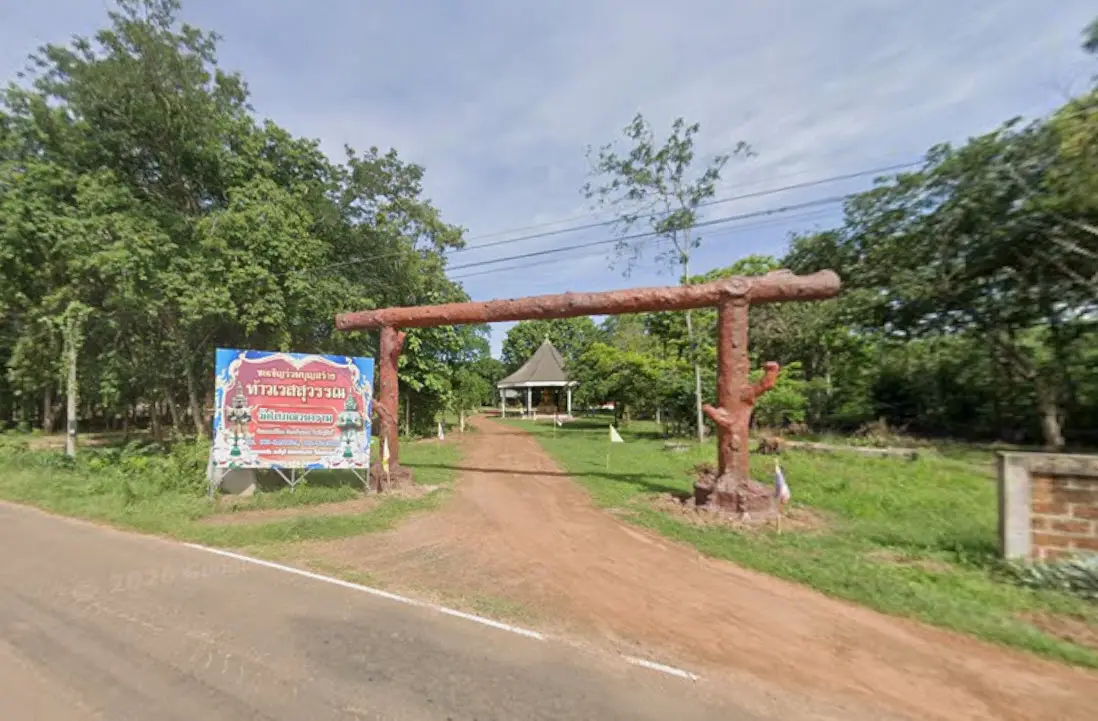
Wat Sophon Wanaram
Open Days: Daily
Opening Hours: 08.00 – 17.00
Wat Sophon Wanaram is located in Nong Mai Ngam Subdistrict, Ban Kruat District, Buri Ram Province. It is an important community temple known for its peaceful forest-like atmosphere, beautiful ordination hall, white jade Buddha image, and role as a provincial meditation practice center. The temple was originally known as “Buddhasathan Lan Tham,” or a Buddhist Dhamma ground, before it developed into Wat Sophon Wanaram. It was founded in 1992 under the leadership of Phra Khru Phatchara Kittisophon, received permission to build a temple on 22 February 2000, received permission to be formally established as a temple on 22 February 2001, and received its consecrated boundary on 11 February 2009.
The history of Wat Sophon Wanaram is meaningful because it began not as a grand ancient temple, but as a Dhamma-oriented place created for religious practice, learning, and community faith. The former name, Buddhasathan Lan Tham, clearly shows the original intention of the site. It was meant to be a place for listening to the Dhamma, practicing meditation, developing moral discipline, and providing a calm environment for Buddhist learning. Even after becoming a formal temple, this original spirit remains visible in its peaceful setting and strong meditation role.
The name “Sophon Wanaram” carries a beautiful meaning. “Sophon” suggests beauty, refinement, and dignity, while “Wanaram” refers to a monastery connected with forest or woodland. Together, the name expresses the character of a graceful temple surrounded by nature. This identity matches the temple’s real atmosphere, as the temple has planted trees across about 20 rai of land, creating a shaded and peaceful environment for worshippers and visitors.
The 20-rai planted forest is one of the most important features of Wat Sophon Wanaram. Trees are not only decorative elements here. They help create a cool, calm, and mindful environment. In Buddhist practice, natural surroundings can support stillness and awareness. Walking through a shaded temple landscape, listening to the wind, and sitting quietly under trees can help visitors slow down and become more attentive to their own mind. This makes the temple especially suitable for meditation and reflective visits.
Wat Sophon Wanaram reflects the close relationship between Buddhism and nature. Many important moments in the life of the Buddha occurred in natural settings, and Thai Buddhist culture has long respected forests as places of retreat, simplicity, and inner training. At Wat Sophon Wanaram, the planted forest helps visitors experience this connection directly. The temple is not only a place for rituals, but also a place where nature supports spiritual practice.
Phra Khru Phatchara Kittisophon Kittikhuno, Dr., is the key figure associated with the foundation and development of Wat Sophon Wanaram. He serves as the abbot of the temple, Ecclesiastical Subdistrict Chief of Nong Mai Ngam, and Deputy Ecclesiastical District Chief of Ban Kruat. His role has shaped the temple from its early beginning as a Dhamma ground into a complete Buddhist temple with an ordination hall, sacred boundary, meditation facilities, and a strong community role.
The abbot’s leadership is important because Wat Sophon Wanaram is not only a local village temple. It also has a wider role within the Sangha administration of Ban Kruat District. As a temple guided by a senior monk who holds local ecclesiastical responsibilities, Wat Sophon Wanaram serves both the people of Nong Mai Ngam and the broader Buddhist community in Ban Kruat. It supports merit-making, religious ceremonies, meditation, and the preservation of local Buddhist practice.
The temple’s formal development followed several important stages. It began as Buddhasathan Lan Tham in 1992. It received permission to build a temple on 22 February 2000. It was permitted to be formally established as a temple by the National Office of Buddhism on 22 February 2001. It then received its consecrated boundary on 11 February 2009. These stages show how a local Dhamma space gradually became a fully recognized Buddhist temple.
The granting of a consecrated boundary is especially significant in Thai Buddhism. A consecrated boundary allows the ordination hall area to be used for formal monastic acts such as ordination and important Sangha ceremonies. When Wat Sophon Wanaram received its consecrated boundary in 2009, it gained a complete religious status for formal Buddhist practice. This marked an important milestone in the temple’s development.
The ordination hall is one of the most important structures at Wat Sophon Wanaram. It is known for its beauty and serves as the main sacred building of the temple. Inside the ordination hall is a white jade Buddha image enshrined as the principal Buddha image. This sacred image is respected by local villagers and visitors. The white color of the Buddha image suggests purity, calmness, and clarity, making it a powerful focus for worship and meditation.
The white jade Buddha image is the spiritual heart of the ordination hall. Visitors usually begin by paying respect to the Buddha image, calming the mind, and making a wish or prayer for well-being. The appearance of the image encourages a sense of serenity. In a temple designed for Dhamma practice, the principal Buddha image is not only a sacred object. It is a reminder of wisdom, compassion, and inner clarity.
Wat Sophon Wanaram is also recognized as a provincial meditation practice center in Buri Ram Province. This role gives the temple special importance for people interested in meditation, mindfulness, and practical Buddhist training. A meditation center must provide a suitable environment for mental development, and Wat Sophon Wanaram is well suited to this purpose because of its peaceful grounds, forested area, ordination hall, and long-standing Dhamma orientation.
Meditation at a temple like Wat Sophon Wanaram is supported by both place and atmosphere. The shaded grounds help reduce distraction. The trees create a quiet rhythm. The ordination hall provides a sacred center. The temple’s overall setting allows practitioners to focus on breathing, walking meditation, chanting, listening to the Dhamma, and observing the mind. Even visitors who do not join a formal retreat can still experience a sense of calm during a short visit.
For the people of Nong Mai Ngam, Wat Sophon Wanaram functions as a spiritual center of the community. It supports Buddhist ceremonies, merit-making, holy day observances, Kathin, robe-offering activities, and local religious gatherings. The temple connects monks, laypeople, families, elders, and young people through shared religious life. This makes it a living community temple, not merely a quiet place for visitors.
Wat Sophon Wanaram is suitable for travelers who prefer peaceful temples rather than crowded tourist attractions. Visitors can begin by paying respect to the white jade Buddha image inside the ordination hall, then walk quietly through the shaded temple grounds. The experience is best appreciated slowly. The value of the temple lies not only in seeing its buildings, but in feeling the stillness of the place.
Ban Kruat District is culturally rich, with ancient kiln sites, stone-cutting sites, local museums, reservoirs, temples, and archaeological attractions. Wat Sophon Wanaram adds a Buddhist and natural dimension to this district. While many travelers know Ban Kruat for ancient ceramics and historical sites, this temple shows the living spiritual side of the area. It connects local faith, forest atmosphere, meditation practice, and contemporary Buddhist development.
Wat Sophon Wanaram can be included in a wider cultural route through Ban Kruat District. Visitors may combine it with Wat Ban Kruat, Wat Pa Ban Kruat, Ban Kruat District Museum, Ban Kruat Cultural Center, Ban Kruat stone-cutting site, Mekha Reservoir, Wat Pa Phra Sabai, Nai Chian Ancient Kiln Site, and Sawai Ancient Kiln Site. This route allows travelers to see Buddhism, archaeology, ceramics, nature, and local community life in one district.
Unlike older temples that trace their history back more than a century, Wat Sophon Wanaram represents a modern stage of Buddhist development in Ban Kruat. It began in 1992 as a Dhamma ground and later became a formal temple with an ordination hall and consecrated boundary. This makes it especially interesting because it shows that Buddhist temple culture in Thailand continues to grow and adapt to the needs of modern communities.
Visitors should behave respectfully when entering Wat Sophon Wanaram. Shoulders and knees should be covered, shoes should be removed before entering sacred areas, and voices should be kept low. Since the temple is a meditation practice center, visitors should avoid loud behavior and should not disturb monks, worshippers, or meditation practitioners. Photography should be done carefully and respectfully.
The best time to visit is in the morning or late afternoon. Morning visits are suitable for merit-making, prayer, and quiet reflection, while late afternoon visits allow visitors to enjoy the softer light and cooler atmosphere of the planted forest. The temple is especially pleasant for those who want to take a calm break from travel and reconnect with a quieter state of mind.
Getting There is convenient by private car, rental car, or local transport. From Buri Ram city, travel toward Ban Kruat District and continue to Nong Mai Ngam Subdistrict. The temple is located in Moo 10 of Nong Mai Ngam. Travelers without a private vehicle can first reach Ban Kruat town and then hire local transport to the temple. Because it lies within the Ban Kruat cultural area, it can be combined with nearby temples, museums, kiln sites, and natural attractions.
Restaurants and accommodations are mainly found in Ban Kruat town. Visitors can plan a meal before or after visiting the temple. Cafés, local restaurants, Thai food restaurants, coffee shops, and small resorts are available within a practical driving distance. Staying overnight in Ban Kruat is useful for travelers who want to explore the temple together with ancient kiln sites, Wat Pa Phra Sabai, Mekha Reservoir, and the Ban Kruat stone-cutting site.
For foreign travelers, Wat Sophon Wanaram offers a clear example of a contemporary Thai Buddhist temple that combines nature, meditation, community faith, and formal monastic development. It shows that Thai Buddhism is not only preserved in ancient monuments. It continues through new temples, planted forests, meditation centers, and local monks who guide their communities in religious practice.
Wat Sophon Wanaram is therefore recommended for visitors interested in peaceful temples, meditation practice, forest-like temple grounds, white jade Buddha images, and the spiritual life of Ban Kruat District. Its 20-rai planted forest, beautiful ordination hall, white jade principal Buddha image, and role as a provincial meditation center make it one of the meaningful Buddhist sites in southern Buri Ram.
In summary, Wat Sophon Wanaram is a temple that grew from Buddhasathan Lan Tham into a recognized Buddhist temple with a consecrated boundary, ordination hall, white jade Buddha image, planted forest, and provincial meditation role. It reflects the faith of Nong Mai Ngam community, the leadership of Phra Khru Phatchara Kittisophon, and the continued development of Buddhism in Ban Kruat District. For travelers seeking calm, meaning, and a deeper view of local Thai Buddhism, this temple is a valuable stop.
| Name | Wat Sophon Wanaram |
| Former Name | Buddhasathan Lan Tham |
| Location | Moo 10, Nong Mai Ngam Subdistrict, Ban Kruat District, Buri Ram Province, Thailand |
| Address | Moo 10, Nong Mai Ngam Subdistrict, Ban Kruat District, Buri Ram 31180, Thailand |
| Highlights | A peaceful temple with a 20-rai planted forest, beautiful ordination hall, white jade Buddha image, and status as Buri Ram Provincial Meditation Practice Center No. 35 |
| History | Founded in 1992 under Phra Khru Phatchara Kittisophon as Buddhasathan Lan Tham. Permission to build the temple was granted on 22 February 2000. Permission to establish the temple was granted by the National Office of Buddhism on 22 February 2001. The temple received its consecrated boundary on 11 February 2009 |
| Monastic Affiliation | Local Buddhist Temple, Mahanikaya Order |
| Distinctive Features | A meditation-oriented temple with a shaded forest atmosphere, peaceful environment, and strong role in local Buddhist practice |
| Planted Forest Area | About 20 rai within the temple grounds |
| Important Elements | Ordination hall, white jade Buddha image, meditation area, planted forest, temple courtyard, and community Buddhist activity areas |
| Principal Buddha Image | White jade Buddha image enshrined as the principal Buddha image inside the ordination hall |
| Meditation Status | Buri Ram Provincial Meditation Practice Center No. 35 |
| Abbot / Caretaker | Phra Khru Phatchara Kittisophon Kittikhuno, Dr., Abbot of Wat Sophon Wanaram, Ecclesiastical Subdistrict Chief of Nong Mai Ngam, and Deputy Ecclesiastical District Chief of Ban Kruat |
| Resident Monks | 8 monks |
| Travel Information | Accessible by private car, rental car, or local transport from Buri Ram city to Ban Kruat District, then onward to Nong Mai Ngam Subdistrict. Travelers without a car can first reach Ban Kruat town and then hire local transport to the temple |
| Current Status | Open as a local Buddhist temple, meditation temple, and community religious activity space of Nong Mai Ngam |
| Open Days | Daily |
| Opening Hours | 08.00 – 17.00 |
| Facilities | Ordination hall, white jade Buddha image worship area, meditation area, planted forest, temple courtyard, merit-making space, and community activity areas |
| Main Areas / Zones | Ordination Hall And White Jade Buddha Image Zone Meditation Practice Zone 20-Rai Shaded Forest Zone Temple Courtyard And Merit-Making Zone Community Buddhist Activity Zone Provincial Meditation Practice Center Zone |
| Related Information | Wat Sophon Wanaram information is available through Thai Sangha and local temple databases |
| Nearby Tourist Attractions | 1. Wat Nong Mai Ngam, about 2 km 2. Wat Ban Kruat, about 15 km 3. Wat Pa Ban Kruat, about 15 km 4. Ban Kruat District Museum, about 15 km 5. Ban Kruat Cultural Center, about 15 km 6. Prasat Thong, about 16 km 7. Ban Kruat Stone-Cutting Site / Wat Pa Lan Hin Tat, about 18 km 8. Mekha Reservoir, about 20 km 9. Wat Pa Phra Sabai / 3,000-Year Prehistoric Museum, about 22 km 10. Nai Chian Ancient Kiln Site, about 25 km 11. Sawai Ancient Kiln Site, about 27 km |
| Nearby Restaurants | 1. Coco Cool Cafe’, about 15 km, Tel. 064-778-7799 2. RINTR Plus Cafe Bar Restaurant, about 15 km, Tel. 081-966-1766 3. Jungle Cafe Ban Kruat, about 15 km, Tel. 096-798-1138 4. PunThai Coffee 2445 Road Ban Kruat, about 15 km, Tel. 098-282-1651 5. Tieow Yok Sod by Khon-La-Yum PTT Ban Kruat, about 16 km, Tel. 061-267-1998 6. Pen Tor Ban Kruat, about 18 km, Tel. 098-119-9064, 096-389-2911 |
| Nearby Accommodations | 1. Wanasin Resort, about 15 km, Tel. 044-115-225, 080-354-6956 2. Ban Kruat Garden Resort, about 16 km, Tel. 044-679-263 3. Muang Sut Bungalow, about 18 km, Tel. 089-832-1875 4. Mekha Resort, about 20 km, Tel. 084-828-9224 5. I Din Resort Ban Kruat, about 21 km, Tel. 080-004-0870, 089-925-5453 6. Fresh Garden Resort, about 24 km, Tel. 061-038-4295 |
Frequently Asked Questions (FAQ)
Q: Where is Wat Sophon Wanaram located?
A: Wat Sophon Wanaram is located in Moo 10, Nong Mai Ngam Subdistrict, Ban Kruat District, Buri Ram Province, Thailand.
Q: What was the former name of Wat Sophon Wanaram?
A: The temple was formerly called Buddhasathan Lan Tham. It was founded in 1992 under the leadership of Phra Khru Phatchara Kittisophon.
Q: When did Wat Sophon Wanaram receive its consecrated boundary?
A: Wat Sophon Wanaram received its consecrated boundary on 11 February 2009.
Q: Who is the abbot of Wat Sophon Wanaram?
A: The abbot is Phra Khru Phatchara Kittisophon Kittikhuno, Dr., who also serves as Ecclesiastical Subdistrict Chief of Nong Mai Ngam and Deputy Ecclesiastical District Chief of Ban Kruat.
Q: What is the main highlight of Wat Sophon Wanaram?
A: The main highlights are the beautiful ordination hall, the white jade Buddha image, the 20-rai planted forest, and the temple’s role as Buri Ram Provincial Meditation Practice Center No. 35.
Q: What are the opening hours of Wat Sophon Wanaram?
A: Wat Sophon Wanaram is open daily from 08.00 to 17.00.
Q: What attractions can be visited together with Wat Sophon Wanaram?
A: Nearby attractions include Wat Ban Kruat, Wat Pa Ban Kruat, Ban Kruat District Museum, Ban Kruat Cultural Center, Ban Kruat Stone-Cutting Site, Mekha Reservoir, Wat Pa Phra Sabai, Nai Chian Ancient Kiln Site, and Sawai Ancient Kiln Site.
Q: How should visitors behave at Wat Sophon Wanaram?
A: Visitors should dress respectfully, keep quiet, remove shoes in sacred areas, avoid disturbing meditation practitioners, and behave respectfully throughout the temple grounds.
 Category: ●Places of Worship
 Group: ●Temple
Last Update : 1 WeekAgo
 Last Update : 1 WeekAgo
 Click to Access the Navigation Map GPS
 Art, Culture and Heritage
 Historical Sites and Monuments(14)
 Landmarks and Memorials(2)
 Art, Craft Centres, Tradition(6)
 Museums(3)
 Educational Places
 Museum for Study(1)
Temple(74)
Museum for Study(1)
Temple(74)
 Other Sacred Sites(5)
 Suburban Living
 Village, Community(3)
 Nature and Wildlife
 National Parks and Marine Reserves(2)
 Mountain (Doi)(1)
 Dam, Reservoir, Lake(14)
 River, Canal(1)
 Bays and Beaches(1)
 Other natural attractions(2)
 Entertainment and Agricultural
 Animal camps and shows(1)
 Stadium(2)
 Farms, Parks and Ecotourism(2)
 Waterpark(1)


