
lovethailand home >Northeastern Travel Attractions >Buri Ram Travel Attractions >Ban Kruat >Ban Kruat > Wat Pa Ban Kruat
TL;DR: Wat Pa Ban Kruat is located at Ban Kruat Subdistrict, Ban Kruat District, Buri Ram Province, Thailand, open Daily, hours 08.00 – 17.00.
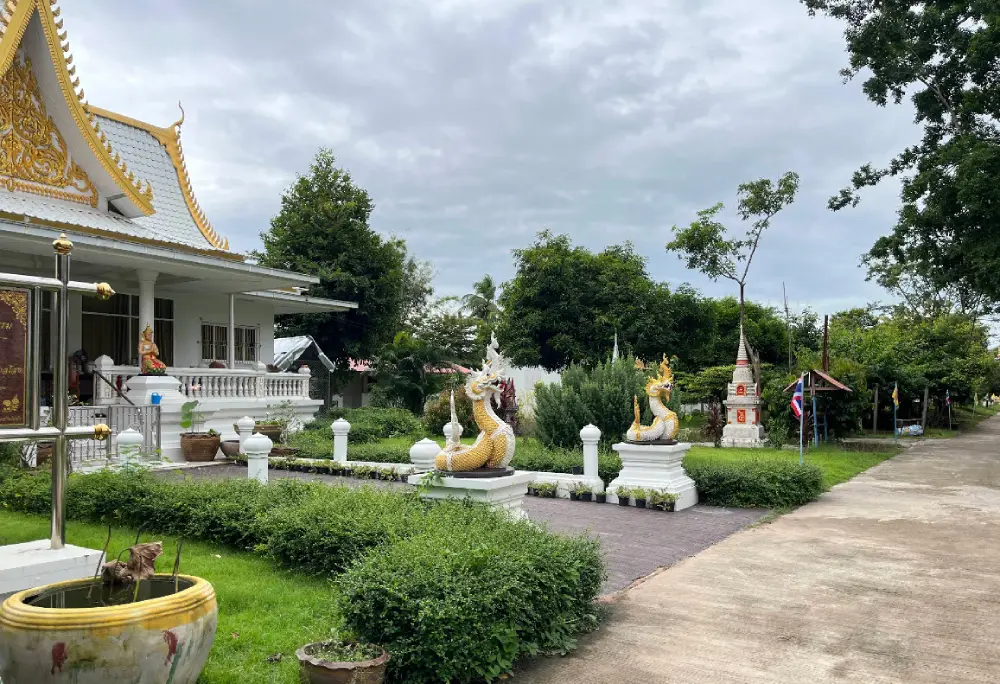
Wat Pa Ban Kruat
Open Days: Daily
Opening Hours: 08.00 – 17.00
Wat Pa Ban Kruat, located at 156 Moo 1, Ban Kruat Subdistrict, Ban Kruat District, Buri Ram Province, is an important community temple with a strong role in Buddhist education, child development, moral training, and local religious life. The temple is the location of the Sunday Buddhist Study Center of Ban Kruat District and also houses an early childhood development center under the care of Ban Kruat Panyawat Subdistrict Municipality. For visitors who want to understand how Thai temples support local communities beyond ordinary worship, Wat Pa Ban Kruat is a valuable place to visit.
Wat Pa Ban Kruat is located in the central area of Ban Kruat District, one of the culturally rich districts of southern Buri Ram. Ban Kruat is known for ancient kiln sites, traditional ceramics, local cultural heritage, borderland communities, and historical routes connected with both Thai and Khmer cultural landscapes. In this setting, Wat Pa Ban Kruat represents the living Buddhist side of the district. It is not only a temple for ceremonies, but also a community institution that supports education, family life, youth development, and Buddhist practice.
One of the most important roles of Wat Pa Ban Kruat is its function as the Sunday Buddhist Study Center of Ban Kruat District. In Thai society, Sunday Buddhist schools help children and young people learn the basic teachings of Buddhism, moral conduct, Thai manners, respect, gratitude, discipline, and mindfulness. These schools are not only about memorizing Buddhist doctrine. They help young learners understand how religious values can be applied in daily life, family relationships, and community living.
The temple also houses an early childhood development center under the supervision of Ban Kruat Panyawat Subdistrict Municipality. This gives the temple a close relationship with local families and young children. It means that the temple is connected to life from an early age, providing a calm and culturally rooted environment where children can grow within a community setting. This reflects a long-standing Thai idea that temples are not separate from society, but function as places of learning, care, and moral formation.
The main annual religious activity at Wat Pa Ban Kruat is the Parivasa Kamma meditation and practice retreat. This annual event is an important part of the temple’s identity. Parivasa Kamma is associated with monastic discipline, self-training, careful conduct, and serious Buddhist practice. For monks and practitioners, the retreat provides an opportunity to live with greater restraint, reflect on the Dhamma, practice meditation, and strengthen inner discipline. For lay supporters, the event is a chance to make merit, support the Sangha, and participate in a meaningful Buddhist tradition.
The current abbot of Wat Pa Ban Kruat is Phra Khru Sunthon Kitwichan, who also serves as Deputy Ecclesiastical District Chief of Ban Kruat. His role is important because the abbot must oversee monastic administration, temple activities, Buddhist education, community coordination, and the maintenance of temple buildings. The presence of an abbot with district-level responsibility also shows that Wat Pa Ban Kruat has an important position within the local Sangha structure.
The physical development of Wat Pa Ban Kruat is clearly reflected in its major religious buildings. The ordination hall was built in 2002. It is 21 meters wide and 36 meters long, designed in an applied Thai architectural style with reinforced concrete, a tiled roof, lighting, fans, and a boundary wall. The total construction cost was 5,400,000 baht. This ordination hall is the main sacred building of the temple and is used for important Buddhist ceremonies and monastic acts.
In Thai Buddhist temples, the ordination hall is one of the most sacred buildings. It is used for formal Sangha acts such as ordination and other monastic ceremonies. Although the ordination hall at Wat Pa Ban Kruat is a modern structure, its applied Thai style keeps a clear connection with traditional Buddhist architecture. Its scale also shows the strength of community faith and the temple’s ability to support significant religious activities.
The sermon hall, or sala kan parian, was built in 2003. It is 17 meters wide and 21 meters long. The building is designed in an applied Thai style, with a concrete lower floor and a wooden upper floor. The construction cost was 500,000 baht. The sermon hall is highly important because it is used for Dhamma talks, community meetings, religious events, teaching activities, and merit-making ceremonies. It functions as both a religious learning space and a community gathering hall.
The sermon hall supports many activities at Wat Pa Ban Kruat, including Buddhist teaching, Sunday school activities, community meetings, and major merit-making events. During Buddhist holy days and annual temple activities, this building becomes one of the most active spaces in the temple. It helps connect monks, laypeople, students, parents, and local supporters in a shared religious and educational environment.
The funeral and memorial pavilion, or sala thammasangwet, was built in 2005. It is 12.70 meters wide and 21 meters long and was designed in an applied Thai style. This pavilion serves an important community function because it supports funeral rites, memorial ceremonies, and merit-making for the deceased. Its presence shows that Wat Pa Ban Kruat supports the community throughout all stages of life, from early childhood education to adult religious practice and final rites.
When viewed as a whole, Wat Pa Ban Kruat has a complete community temple structure. It has an ordination hall for sacred monastic acts, a sermon hall for teaching and community gatherings, a funeral pavilion for memorial ceremonies, a Sunday Buddhist Study Center for youth education, and an early childhood development center for young children. These elements show that the temple functions as a living social institution rather than a place used only for occasional ceremonies.
Wat Pa Ban Kruat is especially meaningful because it shows how Buddhism continues to support local life in practical ways. Children come to learn, families bring young children to the development center, monks teach the Dhamma, laypeople make merit, and the community gathers for ceremonies. A temple like this is not defined only by buildings. It is defined by the relationships it maintains between monks, families, students, elders, and local residents.
The annual Parivasa Kamma retreat strengthens the temple’s identity as a place of serious Buddhist practice. Organizing such an event requires cooperation among monks, temple committees, lay supporters, and the wider community. Food, accommodation, ritual spaces, and quiet practice areas must be prepared carefully. The continued organization of this annual retreat shows the depth of local faith and the temple’s ability to maintain important Buddhist traditions.
For visitors, Wat Pa Ban Kruat is suitable for worship, merit-making, observing community Buddhist life, and learning about how temples support local education. A visit can begin with paying respect in the main worship area, then walking calmly to see the ordination hall, sermon hall, funeral pavilion, and educational areas. Because the temple is active and used by monks, students, children, and local worshippers, visitors should move quietly and respectfully.
Wat Pa Ban Kruat also helps travelers understand Ban Kruat District in a broader cultural context. Many visitors know Ban Kruat for ancient kiln sites, ceramics, stone-cutting sites, archaeological areas, and local cultural traditions. Wat Pa Ban Kruat adds the living Buddhist dimension to this picture. When combined with local museums and historical sites, the temple helps show both the past and present of Ban Kruat.
Nearby cultural attractions include Ban Kruat District Museum, Ban Kruat Cultural Center, Prasat Thong, Ban Kruat stone-cutting site, Mekha Reservoir, Wat Pa Phra Sabai, Nai Chian ancient kiln site, and Sawai ancient kiln site. Together, these places create a meaningful route for travelers interested in local history, archaeology, ceramics, Buddhist culture, and the southern Buri Ram cultural landscape.
A typical visit to Wat Pa Ban Kruat may take around 30 minutes to one hour. However, visitors who come during a Sunday Buddhist school activity, temple ceremony, or Parivasa Kamma retreat may want to spend more time observing the temple atmosphere. Morning visits are suitable for merit-making and quiet worship, while late afternoon visits work well for travelers returning from local cultural sites in Ban Kruat District.
Visitors should dress respectfully when entering the temple. Shoulders and knees should be covered, shoes should be removed before entering sacred areas, and voices should be kept low. Since the temple includes educational and child development spaces, visitors should avoid disturbing classes, children, or training activities. Photography should be done respectfully, especially around children, monks, and religious ceremonies.
Getting There is convenient by private car, rental car, or local transport. From Buri Ram city, travel toward Ban Kruat District and continue into Ban Kruat Subdistrict. The temple is located at 156 Moo 1 in the community area. Travelers without a private car can take public transport to Ban Kruat town and then hire local transport to the temple. Because the temple is located in the district center, it can be combined easily with nearby museums, restaurants, and accommodations.
A half-day cultural route can begin at Wat Pa Ban Kruat for worship and an introduction to community Buddhist education. Travelers can then continue to Ban Kruat District Museum and Ban Kruat Cultural Center to learn about local history and ceramics. If time allows, the route can continue to the stone-cutting site, ancient kiln sites, or Wat Pa Phra Sabai, which houses a prehistoric museum. This route offers a balanced view of Buddhism, local education, archaeology, and Ban Kruat cultural identity.
For foreign travelers, Wat Pa Ban Kruat is useful because it explains the community role of Thai temples. Many Thai temples are not only places for worshipping Buddha images. They also function as Sunday schools, child development centers, moral training spaces, community halls, funeral ceremony sites, and centers of local identity. Wat Pa Ban Kruat is a clear example of a temple that remains deeply integrated into everyday community life.
The temple’s buildings also show systematic development. The ordination hall supports sacred ceremonies, the sermon hall supports Dhamma teaching and community gatherings, the funeral pavilion supports memorial rites, the Sunday Buddhist Study Center supports moral education, and the early childhood development center supports young children and families. Together, these areas show how one temple can serve many social and spiritual needs.
Wat Pa Ban Kruat should be included in a cultural itinerary for Ban Kruat District. It may not be famous for ancient artifacts or stone monuments, but it is valuable as a living community temple. Its importance comes from education, religious practice, child development, annual meditation retreats, and the continued leadership of the local Sangha. For travelers who want to understand Ban Kruat through faith and community life, this temple is an important stop.
In summary, Wat Pa Ban Kruat is one of the important Buddhist centers of Ban Kruat District in Buri Ram Province. It serves as the district’s Sunday Buddhist Study Center, houses an early childhood development center, organizes the annual Parivasa Kamma retreat, and contains important temple buildings such as the ordination hall, sermon hall, and funeral pavilion. A visit here provides insight into how a Thai temple can support spiritual practice, education, family life, and community identity at the same time.
| Name | Wat Pa Ban Kruat |
| Location | Ban Kruat Subdistrict, Ban Kruat District, Buri Ram Province, Thailand |
| Address | 156 Moo 1, Ban Kruat Subdistrict, Ban Kruat District, Buri Ram 31180, Thailand |
| Coordinates | 14.43681, 103.10087 |
| Highlights | An important community temple of Ban Kruat District, serving as the Sunday Buddhist Study Center, an early childhood development center, and a venue for the annual Parivasa Kamma Buddhist practice retreat |
| Distinctive Features | A local Buddhist temple with roles in religious education, child development, meditation practice, annual merit-making, and community religious activities |
| Annual Religious Activity | Annual Parivasa Kamma Buddhist practice retreat |
| Learning Centers Inside The Temple | Sunday Buddhist Study Center of Ban Kruat District and an early childhood development center under Ban Kruat Panyawat Subdistrict Municipality |
| Ordination Hall | Built in 2002, 21 meters wide and 36 meters long, applied Thai architectural style, reinforced concrete structure, tiled roof, lighting, fans, and boundary wall. Total construction cost: 5,400,000 baht |
| Sermon Hall | Built in 2003, 17 meters wide and 21 meters long, applied Thai style, concrete lower floor and wooden upper floor. Total construction cost: 500,000 baht |
| Funeral And Memorial Pavilion | Built in 2005, 12.70 meters wide and 21 meters long, applied Thai style, used for memorial ceremonies and community funeral rites |
| Travel Information | Accessible by private car, rental car, or local transport from Buri Ram city to Ban Kruat District. The temple is located at 156 Moo 1 in Ban Kruat Subdistrict. Travelers without a car can reach Ban Kruat town first and then hire local transport |
| Current Status | Open as a local Buddhist temple, Sunday Buddhist Study Center, and community religious activity space |
| Open Days | Daily |
| Opening Hours | 08.00 – 17.00 |
| Facilities | Ordination hall, sermon hall, funeral and memorial pavilion, worship area, merit-making area, Buddhist study area, early childhood development area, temple courtyard, and community activity space |
| Main Areas / Zones | Ordination Hall Zone Sermon Hall Zone Funeral And Memorial Pavilion Zone Sunday Buddhist Study Center Zone Early Childhood Development Center Zone Parivasa Kamma And Practice Area Temple Courtyard And Community Activity Zone |
| Abbot / Caretaker | Phra Khru Sunthon Kitwichan, Deputy Ecclesiastical District Chief of Ban Kruat |
| Resident Monks | 11 monks |
| Legal Entity Registration Number | 0-9940-02171-67-3 |
| Nearby Tourist Attractions | 1. Ban Kruat District Museum, about 1 km 2. Ban Kruat Cultural Center, about 1 km 3. Prasat Thong, about 2 km 4. Ban Kruat Stone-Cutting Site / Wat Pa Lan Hin Tat, about 10 km 5. Mekha Reservoir, about 10 km 6. Wat Pa Phra Sabai / 3,000-Year Prehistoric Museum, about 12 km 7. Nai Chian Ancient Kiln Site, about 13 km 8. Sawai Ancient Kiln Site, about 15 km |
| Nearby Restaurants | 1. Coco Cool Cafe’, about 1 km, Tel. 064-778-7799 2. RINTR Plus Cafe Bar Restaurant, about 2 km, Tel. 081-966-1766 3. Jungle Cafe Ban Kruat, about 2 km, Tel. 096-798-1138 4. PunThai Coffee 2445 Road Ban Kruat, about 2 km, Tel. 098-282-1651 5. Tieow Yok Sod by Khon-La-Yum PTT Ban Kruat, about 3 km, Tel. 061-267-1998 6. Pen Tor Ban Kruat, about 5 km, Tel. 098-119-9064, 096-389-2911 |
| Nearby Accommodations | 1. Ban Kruat Garden Resort, about 2 km, Tel. 044-679-263, 086-250-4186 2. Wanasin Resort, about 3 km, Tel. 044-679-295 3. Muang Sut Bungalow, about 4 km, Tel. 089-832-1875 4. Mekha Resort, about 6 km, Tel. 084-828-9224 5. I Din Resort Ban Kruat, about 8 km, Tel. 080-004-0870, 089-925-5453 6. Fresh Garden Resort, about 12 km, Tel. 061-038-4295 |
Frequently Asked Questions (FAQ)
Q: Where is Wat Pa Ban Kruat located?
A: Wat Pa Ban Kruat is located at 156 Moo 1, Ban Kruat Subdistrict, Ban Kruat District, Buri Ram Province 31180, Thailand.
Q: Why is Wat Pa Ban Kruat important?
A: Wat Pa Ban Kruat is important as a community Buddhist temple, the Sunday Buddhist Study Center of Ban Kruat District, an early childhood development center, and the venue for the annual Parivasa Kamma Buddhist practice retreat.
Q: Who is the abbot of Wat Pa Ban Kruat?
A: The abbot is Phra Khru Sunthon Kitwichan, who also serves as Deputy Ecclesiastical District Chief of Ban Kruat.
Q: When was the ordination hall built?
A: The ordination hall was built in 2002. It is 21 meters wide and 36 meters long, designed in an applied Thai style with reinforced concrete, a tiled roof, lighting, fans, and a boundary wall.
Q: What is the main annual activity at Wat Pa Ban Kruat?
A: The main annual activity is the Parivasa Kamma Buddhist practice retreat, which supports meditation, discipline, and serious Buddhist practice.
Q: What are the opening hours of Wat Pa Ban Kruat?
A: Wat Pa Ban Kruat is open daily from 08.00 to 17.00.
Q: What attractions can be visited together with Wat Pa Ban Kruat?
A: Nearby attractions include Ban Kruat District Museum, Ban Kruat Cultural Center, Prasat Thong, Ban Kruat Stone-Cutting Site, Mekha Reservoir, Wat Pa Phra Sabai, Nai Chian Ancient Kiln Site, and Sawai Ancient Kiln Site.
Q: How should visitors behave at Wat Pa Ban Kruat?
A: Visitors should dress respectfully, keep quiet, remove shoes in sacred areas, avoid disturbing teaching or child development spaces, and behave respectfully toward monks, children, and worshippers.
 Category: ●Places of Worship
 Group: ●Temple
Last Update : 1 MonthAgo
 Last Update : 1 MonthAgo
 Click to Access the Navigation Map GPS
 Art, Culture and Heritage
 Historical Sites and Monuments(14)
 Landmarks and Memorials(2)
 Art, Craft Centres, Tradition(6)
 Museums(3)
 Educational Places
 Museum for Study(1)
Temple(74)
Museum for Study(1)
Temple(74)
 Other Sacred Sites(5)
 Suburban Living
 Village, Community(3)
 Nature and Wildlife
 National Parks and Marine Reserves(2)
 Mountain (Doi)(1)
 Dam, Reservoir, Lake(14)
 River, Canal(1)
 Bays and Beaches(1)
 Other natural attractions(2)
 Entertainment and Agricultural
 Animal camps and shows(1)
 Stadium(2)
 Farms, Parks and Ecotourism(2)
 Waterpark(1)


