
lovethailand home >Northeastern Travel Attractions >Buri Ram Travel Attractions >Khu Muang >Pa Khiap > Wat Ban Chot
TL;DR: Wat Ban Chot is located at Ban Chot, Moo 5, Pakhiap Subdistrict, Khu Mueang District, Buri Ram Province, open Daily For General Merit-Making And Worship, hours Please Contact The Temple In Advance Before Visiting The Ubosot Interior Or.

Wat Ban Chot
Open Days: Daily For General Merit-Making And Worship
Opening Hours: Please Contact The Temple In Advance Before Visiting The Ubosot Interior Or Joining Specific Ceremonies
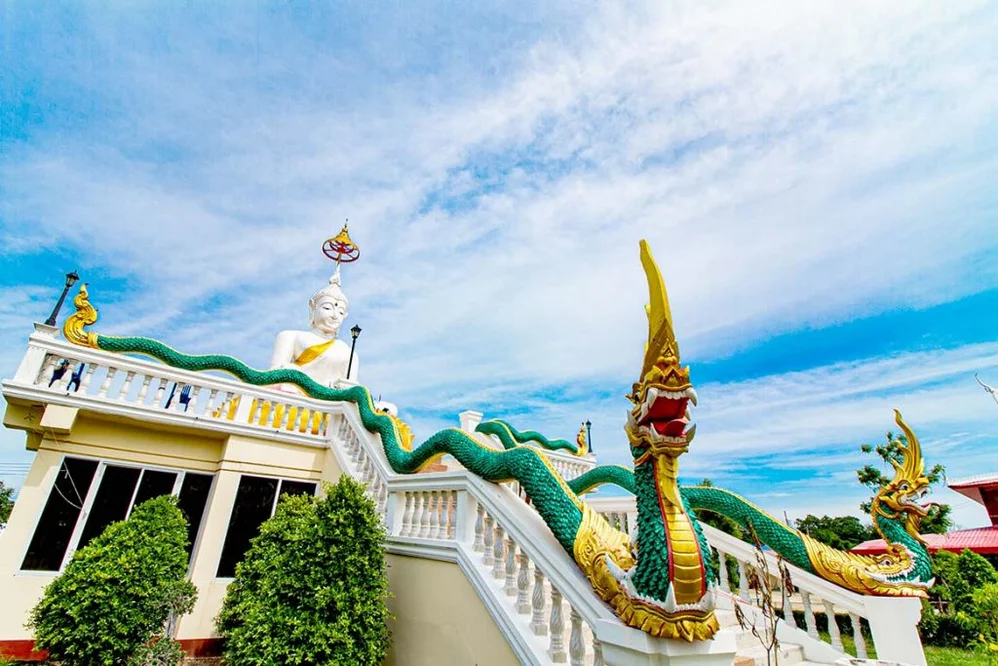
Wat Ban Chot is located at 119 Ban Chot, Moo 5, Pakhiap Subdistrict, Khu Mueang District, Buri Ram Province. It is a Maha Nikaya community temple formerly known as Wat Rat Bamrung. The temple received its royal grant of consecrated boundary on 12 June 1997, with a consecrated area measuring 28 metres wide and 57 metres long. Its ubosot serves as the religious centre for ordination, morning and evening chanting, Buddhist ceremonies, and meditation practice for monks and local residents. For foreign travelers, Wat Ban Chot offers a quiet and authentic look at how a rural Thai temple supports community faith, Buddhist practice, and village life in northern Buri Ram.
Wat Ban Chot is an important community temple in Ban Chot, Moo 5, Pakhiap Subdistrict, Khu Mueang District, Buri Ram Province. Located at house number 119 in the village area, the temple belongs to the Maha Nikaya order of Thai Buddhism and continues to serve as a spiritual centre for local residents. Although Wat Ban Chot is not a large-scale tourist attraction, its value lies in its living role as a village temple. It is used for merit-making, Buddhist ceremonies, chanting, meditation, ordination, and community gatherings throughout the year.
The temple was formerly known as Wat Rat Bamrung. This earlier name carries a meaningful sense of local support, as it suggests a temple sustained by the people of the community. Over time, the temple came to be known as Wat Ban Chot, following the name of the village where it stands. This change strengthens the connection between the temple and the identity of Ban Chot. When people refer to Wat Ban Chot, they are not only referring to a Buddhist temple, but also to the shared memory, faith, and cooperation of the village itself.
According to the temple history, Wat Ban Chot was built in 1996 and received its royal grant of consecrated boundary on 12 June 1997. The consecrated boundary measures 28 metres wide and 57 metres long. In Thai Buddhism, a royal grant of consecrated boundary is highly important because it establishes the sacred area where monks may perform formal monastic acts according to Buddhist discipline. This means that the temple is able to conduct important ceremonies such as ordination within its own ubosot.
The ubosot is the most important religious building at Wat Ban Chot. It is the place where monks perform formal monastic acts, including ordination and other essential Buddhist rites. It is also a place where local Buddhists may gather for chanting, meditation, and religious activities. For the community, the ubosot is more than a building. It is the sacred heart of the temple and a symbol of the village’s ability to maintain complete Buddhist religious life within its own community.
The importance of the ubosot can be understood through the activities that take place there. Ordination connects young men, families, monks, relatives, and villagers to Buddhist tradition. Morning and evening chanting maintain the daily rhythm of monastic life. Laypeople come to the temple for chanting, meditation, worship, and merit-making. Through these activities, Buddhism remains close to daily life. Wat Ban Chot therefore helps preserve both religious practice and community identity in a direct and practical way.
Wat Ban Chot is located in Pakhiap Subdistrict, an area with meaningful cultural and historical surroundings in Khu Mueang District. Nearby areas include old communities, archaeological sites, and local cultural landscapes connected with Ban Pakhiap and Ban Chot. A visit to Wat Ban Chot can therefore be understood as more than a stop at a village temple. It is an entry point into a wider rural landscape where Buddhism, local history, and community life are closely connected.
In many rural communities in northeastern Thailand, the temple has long served as the centre of village life. It is a place for worship, learning, ceremonies, seasonal festivals, and social gathering. Wat Ban Chot continues this role. It supports Buddhist holy day activities, Kathin ceremonies, robe-offering events, ordinations, merit-making, and rituals related to important moments in community life. The temple is therefore meaningful not only for monks, but also for families, elders, children, and villagers who use it as a shared spiritual space.
The known abbots in the temple’s history include Phra Hong Panyawaro, Phra Sombun Siripanyo, and Phra Khru Weerasuthammaphon. Current temple database information identifies Phra Khru Weerasuthammaphon Suwiro as the abbot of Wat Ban Chot. The continuity of monastic leadership is essential for a rural temple, because the life of the temple depends on both monks who maintain Buddhist practice and lay supporters who help preserve the temple as a community institution.
The role of an abbot in a community temple extends beyond leading rituals. The abbot also guides spiritual life, oversees temple order, supports community activities, and helps maintain the relationship between monks and laypeople. Wat Ban Chot therefore reflects a common but important structure of Thai village Buddhism: monks and villagers working together to sustain a living place of faith.
The main activities at Wat Ban Chot include ceremonies in the ubosot, morning and evening chanting, ordination, Buddhist holy day merit-making, meditation practice, and community religious events. On ordinary days, the temple atmosphere is quiet and suitable for worship. On Buddhist holy days or during annual festivals, the temple becomes more active as villagers gather to offer food, listen to Dhamma, chant, and make merit together.
Buddhist holy days are especially meaningful at a temple like Wat Ban Chot. Local people may bring food offerings, observe precepts, listen to sermons, and spend time in the temple. These practices help maintain Buddhist values in everyday life. Having a temple close to home makes merit-making and Dhamma practice accessible to the community without requiring people to travel to large temples or meditation centres far away.
Kathin and robe-offering ceremonies are also important parts of temple life. The Kathin ceremony takes place after the Buddhist Lent period and brings together villagers, families, relatives, and supporters who wish to help sustain the temple. Such ceremonies are not only religious events but also social gatherings that strengthen community bonds. When visiting during a temple festival, travelers can see the lively side of rural Buddhist faith, including cooperation, food sharing, and collective merit-making.
Morning and evening chanting help maintain the rhythm of the temple. The sound of chanting, the quiet movement of monks, and the calm atmosphere of the temple grounds create a sense of continuity even when no large ceremony is taking place. Visitors who come on an ordinary day may experience the temple in its most peaceful form. This is suitable for those who prefer quiet cultural travel and want to see a working temple without crowds.
Wat Ban Chot is best appreciated as a rural community temple rather than a landmark designed for mass tourism. Its beauty lies in simplicity, religious function, and community meaning. The ubosot, the consecrated boundary, the temple pavilions, and the village atmosphere all help tell the story of how local people built and maintained their own sacred space. Travelers interested in cultural depth should approach the temple as a place of learning, not only as a place to take photographs.
Geographically, Wat Ban Chot can be connected with several cultural and historical sites in Khu Mueang District. Nearby places include the ancient Ban Pakhiap community, Non Samrong archaeological area, Wat Song Siri Nawat, and Play La Ploen Buri Ram. This makes the temple a useful stop in a route that combines local temples, archaeology, rural culture, and modern learning attractions within the same day.
The ancient Ban Pakhiap community gives additional context to the wider area. Ban Pakhiap is known for archaeological traces, including moats, earthworks, and cultural evidence connected with ancient settlement in the Mun River basin. The nearby Non Samrong archaeological area has also been studied for its sema stone patterns associated with Dvaravati Buddhist culture. Visiting Wat Ban Chot together with these places helps travelers see both a living village temple and the older historical landscape of Khu Mueang.
For those interested in Buddhism, Wat Ban Chot offers a clear example of a temple developed through local faith into a place with a recognized ubosot and consecrated boundary. The ubosot is not merely a ritual building. It represents the religious completeness of the community. With a proper consecrated area, local residents can organize ordinations, religious ceremonies, and important Buddhist rites in their own village temple.
Wat Ban Chot also helps visitors understand the relationship between village and temple in Thai society. Because the temple carries the same name as the village, it is closely tied to local identity. Ban Chot has Wat Ban Chot as its spiritual centre. Villagers support the temple, join ceremonies, and use it for religious and community purposes. In this sense, the temple functions as the heart of the village rather than a separate institution.
A typical visit to Wat Ban Chot may take around 30 minutes to 1 hour. Visitors can pay respect, observe the ubosot, walk through the temple grounds, and experience the quiet village atmosphere. Those wishing to join a ceremony or enter the ubosot interior should contact the temple in advance or visit during times when monks and local residents are present. Because the temple is an active religious site, respectful behaviour is essential.
Visitors should dress modestly. Shoulders and knees should be covered, shoes should be removed before entering sacred buildings, and voices should be kept low. Travelers should not climb on temple structures or touch religious objects without permission. Photography should be done carefully, especially if monks are chanting, ceremonies are taking place, or villagers are using the temple for religious activities.
Getting to Wat Ban Chot is easiest by private car or rental car because the temple is located in a rural part of Khu Mueang District. From Buri Ram city, travel toward Khu Mueang District, then continue to Pakhiap Subdistrict and Ban Chot. The distance from Buri Ram city is about 50 km, depending on the route and starting point. From Khu Mueang town, the journey is shorter and can be combined with other nearby attractions.
Getting There by navigation app is straightforward. Search for Wat Ban Chot, Pakhiap Subdistrict, Khu Mueang District, Buri Ram Province, or use the coordinates 15.4155, 103.05527. During the rainy season, travelers should check road conditions and allow extra time. Some rural roads may be narrow or shared with agricultural vehicles, so careful driving and respect for the local community are important.
Wat Ban Chot can be combined with Wat Song Siri Nawat and the ancient Ban Pakhiap community in a meaningful cultural route. Travelers may begin with worship at Wat Ban Chot, continue to Wat Song Siri Nawat to see the historical context of the area, then visit Non Samrong archaeological area or Play La Ploen Buri Ram in the afternoon. This route suits travelers who want to understand Buri Ram beyond its major city landmarks.
The journey through Pakhiap Subdistrict and Khu Mueang District also reveals the rural landscape of northern Buri Ram. Travelers will see villages, fields, local roads, and the slower pace of countryside life. These surroundings help explain why temples remain central to rural communities. A temple like Wat Ban Chot stands among real homes and daily life, making it a living spiritual place rather than a staged attraction.
Travelers who plan to stay overnight can choose accommodation in Khu Mueang District or near Play La Ploen Buri Ram. Dining options are available in Khu Mueang town and nearby areas, including the original Ped Yang Khu Mueang roast duck restaurant, Huan Ya Thuad Restaurant, CALM Cafe', O-Ang Noodle Jar and Som Tam, and Play La Pirom Restaurant. It is useful to plan meal times and check opening hours, especially when traveling on rural routes.
Wat Ban Chot is most suitable for travelers interested in community temples, local history, Buddhist practice, and cultural routes in Khu Mueang District. It may not be the right destination for those looking for a large tourist attraction with extensive facilities, but it is valuable for visitors who want to see how a real rural temple functions in everyday Thai life. The temple should be visited with the intention to worship, learn, and respect the community’s sacred space.
The strength of Wat Ban Chot is that it tells a complete community story through its former name, its ubosot, its consecrated boundary, and its abbots. From Wat Rat Bamrung to Wat Ban Chot, from the temple’s construction in 1996 to its royal grant of consecrated boundary in 1997, the temple reflects the determination of local people to establish a religious centre for their own village. This makes it an important part of the cultural landscape of Pakhiap Subdistrict.
From a cultural perspective, Wat Ban Chot represents the role of a Thai rural temple in preserving values such as generosity, gratitude, cooperation, and respect. Temple festivals, ordinations, chanting, and merit-making activities allow children and young people to learn Buddhist traditions through direct experience. The temple therefore helps preserve both religion and community culture at the same time.
As a faith-based travel destination, Wat Ban Chot offers a quiet stop in northern Buri Ram. Travelers can use it as a reflective pause between archaeological sites, village areas, and modern attractions in Khu Mueang. Even a short visit for worship and observation can add cultural depth to the journey, especially when combined with nearby temples and historical sites.
Wat Ban Chot does not need to compete with large tourist attractions. Its value lies in authenticity. It is a temple that local people still use, a place where monks and villagers remain closely connected, and a sacred space that continues to serve its original purpose. Visitors who pay attention to details such as the temple’s former name, the ubosot, the consecrated boundary, and community ceremonies will understand why village temples are essential to Thai society.
In summary, Wat Ban Chot is a Maha Nikaya community temple in Ban Chot, Pakhiap Subdistrict, Khu Mueang District, Buri Ram Province. Formerly known as Wat Rat Bamrung, it was built in 1996 and received its royal consecrated boundary on 12 June 1997. Its ubosot remains the centre for ordination, chanting, meditation, and Buddhist ceremonies. For travelers seeking a quieter and more authentic side of Buri Ram, Wat Ban Chot is a meaningful stop on a cultural route through Khu Mueang District.
| Name | Wat Ban Chot |
| Location | Ban Chot, Moo 5, Pakhiap Subdistrict, Khu Mueang District, Buri Ram Province |
| Address | 119 Ban Chot, Moo 5, Pakhiap Subdistrict, Khu Mueang District, Buri Ram Province 31190, Thailand |
| Coordinates | 15.4155, 103.05527 |
| Highlights | Maha Nikaya community temple, formerly Wat Rat Bamrung, with an ubosot that received a royal consecrated boundary and serves as the centre for ordination, chanting, meditation, and Buddhist ceremonies in Ban Chot |
| History | Built in 1996, formerly known as Wat Rat Bamrung, and later renamed Wat Ban Chot after the village. The temple received its royal grant of consecrated boundary on 12 June 1997. |
| Consecrated Boundary | 28 metres wide and 57 metres long |
| Key Evidence | One ubosot with a royal consecrated boundary, used for monastic acts and Buddhist ceremonies such as ordination, morning and evening chanting, prayer, and meditation practice |
| Former Name | Wat Rat Bamrung |
| Name Origin / Community Context | The name Wat Ban Chot comes from Ban Chot, the village where the temple is located, reflecting the temple’s role as the spiritual centre of the community. |
| Distinctive Features | A rural community temple in Khu Mueang District that supports merit-making, local ceremonies, ordination, chanting, and meditation practice for residents of Pakhiap Subdistrict |
| Travel Information | From Buri Ram city, travel toward Khu Mueang District, then continue to Pakhiap Subdistrict and Ban Chot. The distance is about 50 km, and private car or rental car is recommended. |
| Current Status | An active community temple open for worship, merit-making, Buddhist ceremonies, and local religious activities in Ban Chot |
| Open Days | Daily For General Merit-Making And Worship |
| Opening Hours | Please Contact The Temple In Advance Before Visiting The Ubosot Interior Or Joining Specific Ceremonies |
| Facilities | Parking area, ubosot, pavilion, ceremony area, merit-making area, and community activity space during temple festivals |
| Main Areas / Zones | 1. Buddhist Ceremonial Zone And Ubosot 2. Consecrated Boundary Area 3. Morning And Evening Chanting Area For Monks 4. Prayer And Meditation Area For Laypeople 5. Pavilion And Ritual Area 6. Kathin And Robe-Offering Festival Area 7. Ban Chot Community Activity Area |
| Abbot / Caretaker | Phra Khru Weerasuthammaphon / Phra Khru Weerasuthammaphon Suwiro |
| Known Abbots In Temple History | 1. Phra Hong Panyawaro 2. Phra Sombun Siripanyo 3. Phra Khru Weerasuthammaphon |
| Main Activities | Ordination, morning and evening chanting, prayer, meditation practice, Buddhist holy day merit-making, Kathin ceremony, robe-offering events, and local Buddhist ceremonies |
| Website / Information Page | DMC.tv: Wat Ban Chot, Pakhiap Subdistrict, Khu Mueang District, Buri Ram Province |
| Nearby Tourist Attractions | 1. Ancient Ban Pakhiap Community, about 3 km 2. Non Samrong Archaeological Area, about 4 km 3. Wat Song Siri Nawat, Ban Pakhiap, about 4 km 4. Khu Mueang Town Area, about 17 km 5. Play La Ploen Buri Ram, about 24 km 6. Play La Ploen Flower Park, about 24 km 7. Buri Ram City, about 50 km |
| Nearby Restaurants | 1. Ped Yang Khu Mueang Original Branch, about 17 km, Tel. 093-484-8687, 044-699-230 2. Huan Ya Thuad Restaurant, Khu Mueang, about 18 km, Tel. 081-541-9294 3. CALM Cafe' Khu Mueang, about 18 km, Tel. 061-037-4837 4. O-Ang Noodle Jar, Som Tam And Fresh Coffee, about 18 km, Tel. 099-469-7578 5. Play La Pirom Restaurant At Play La Ploen, about 24 km, Tel. 087-799-4936, 087-798-1039 6. Café Amazon In Khu Mueang Area, about 18 km |
| Nearby Accommodations | 1. Phakphing Resort, Khu Mueang, about 18 km, Tel. 083-726-7111 2. Trakun T. Resort, Khu Mueang, about 18 km, Tel. 080-479-3618, 092-161-4629 3. Rapeepat Residential And Resort, about 20 km, Tel. 098-890-9544, 083-965-1511 4. Home D.D. Resort, Khu Mueang, about 22 km, Tel. 093-431-3891, 087-961-6118 5. Play La Ploen Buri Ram, about 24 km, Tel. 044-634-7368, 087-798-1039 6. Tommy Garden, Khu Mueang, about 18 km, Tel. 061-803-6721 |
Frequently Asked Questions (FAQ)
Q: Where is Wat Ban Chot located?
A: Wat Ban Chot is located at 119 Ban Chot, Moo 5, Pakhiap Subdistrict, Khu Mueang District, Buri Ram Province. It is a Maha Nikaya community temple and an important temple of Ban Chot village.
Q: What was the former name of Wat Ban Chot?
A: Wat Ban Chot was formerly known as Wat Rat Bamrung before being renamed after Ban Chot, the village where the temple is located.
Q: When did Wat Ban Chot receive its royal consecrated boundary?
A: Wat Ban Chot received its royal grant of consecrated boundary on 12 June 1997. The boundary measures 28 metres wide and 57 metres long.
Q: Why is Wat Ban Chot important?
A: The temple is the religious centre of Ban Chot community. Its ubosot is used for ordination, morning and evening chanting, Buddhist ceremonies, prayer, and meditation practice.
Q: Who is the abbot of Wat Ban Chot?
A: The abbot is Phra Khru Weerasuthammaphon / Phra Khru Weerasuthammaphon Suwiro, according to current temple database information.
Q: What type of travelers should visit Wat Ban Chot?
A: The temple is suitable for travelers interested in rural community temples, local Buddhist culture, merit-making traditions, and faith-based travel in Khu Mueang District, Buri Ram Province.
Q: How can travelers get to Wat Ban Chot from Buri Ram city?
A: From Buri Ram city, travel toward Khu Mueang District, then continue to Pakhiap Subdistrict and Ban Chot. The distance is about 50 km, and private car or rental car is recommended.
Q: What nearby places can be combined with Wat Ban Chot?
A: Visitors can combine the temple with the ancient Ban Pakhiap community, Non Samrong archaeological area, Wat Song Siri Nawat, Khu Mueang town, Play La Ploen Buri Ram, and Play La Ploen Flower Park.
 Category: ●Places of Worship
 Group: ●Temple
Last Update : 2 MonthAgo
 Last Update : 2 MonthAgo
 Click to Access the Navigation Map GPS
 Art, Culture and Heritage
 Historical Sites and Monuments(14)
 Landmarks and Memorials(2)
 Art, Craft Centres, Tradition(6)
 Museums(3)
 Educational Places
 Museum for Study(1)
Temple(74)
Museum for Study(1)
Temple(74)
 Other Sacred Sites(5)
 Suburban Living
 Village, Community(3)
 Nature and Wildlife
 National Parks and Marine Reserves(2)
 Mountain (Doi)(1)
 Dam, Reservoir, Lake(14)
 River, Canal(1)
 Bays and Beaches(1)
 Other natural attractions(2)
 Entertainment and Agricultural
 Animal camps and shows(1)
 Stadium(2)
 Farms, Parks and Ecotourism(2)
 Waterpark(1)


