
lovethailand home >Northeastern Travel Attractions >Buri Ram Travel Attractions >Khu Muang >Pa Khiap > Wat Song Siri Nawat
TL;DR: Wat Song Siri Nawat is located at Moo 1, Pakhiap Subdistrict, Khu Mueang District, Buri Ram Province, open Daily, hours Please Contact The Temple In Advance Before Visiting The Ubosot Interior Or.

Wat Song Siri Nawat
Open Days: Daily
Opening Hours: Please Contact The Temple In Advance Before Visiting The Ubosot Interior Or Archaeological Areas
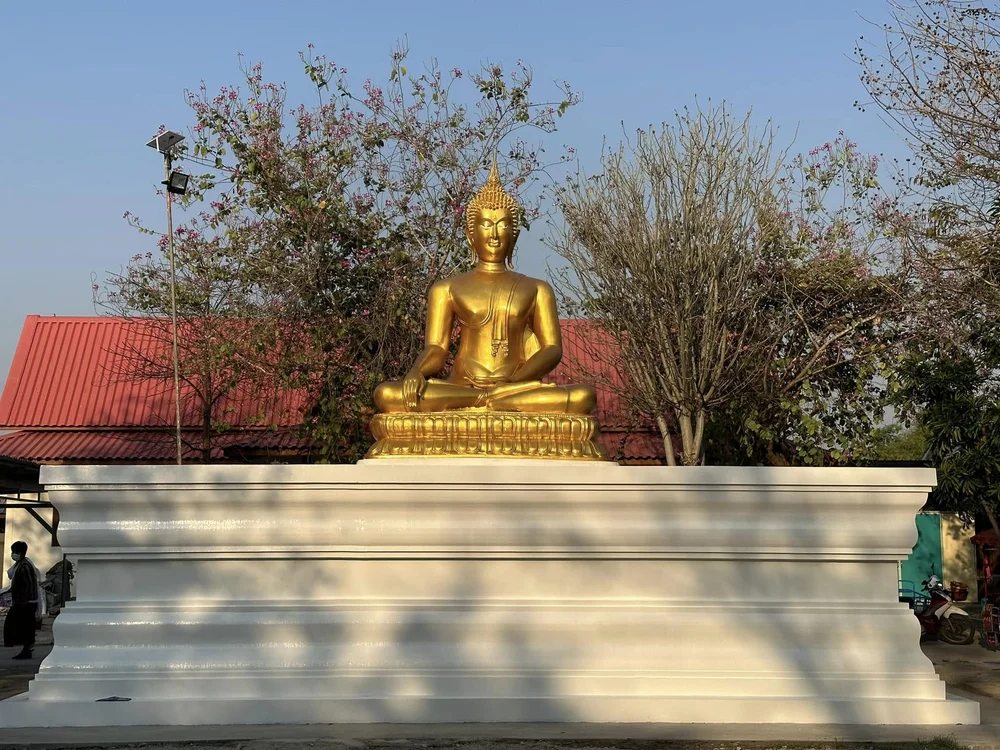
Wat Song Siri Nawat in Pakhiap Subdistrict, Khu Mueang District, Buri Ram Province, is a historic Maha Nikaya community temple founded in 1887. The temple is especially important for its ancient sandstone boundary stones, or bai sema, believed to be around 800 years old. These large stones were discovered during the construction of the ubosot and are now displayed near the temple’s ordination hall. The temple is also known for a large elephant statue associated with local beliefs about fortune, merit, and future success. For travelers interested in Buddhist heritage, ancient communities, local beliefs, and archaeological traces in Buri Ram, this temple offers a quiet and meaningful cultural experience.
Wat Song Siri Nawat is located in Moo 1, Pakhiap Subdistrict, Khu Mueang District, Buri Ram Province. It is a Maha Nikaya Buddhist temple with a long history and a close relationship with the Ban Pakhiap community. The temple was founded in 1887 and received its royal grant of consecrated boundary in 1937, with a boundary area measuring 8 metres wide and 25 metres long. These details show that Wat Song Siri Nawat is not a newly established temple, but a long-standing religious centre that has been part of the local community for more than a century.
The most distinctive feature of Wat Song Siri Nawat is the way it combines Buddhist faith, local history, and archaeology within the same temple compound. During the construction of the ubosot, villagers discovered a group of large ancient sandstone stones shaped like bai sema, or Buddhist boundary stones. Twelve sets of these stones are now preserved and displayed near the front of the ubosot and within important areas of the temple. They have become important evidence of the ancient settlement history of Ban Pakhiap and the long presence of Buddhist culture in this area.
The bai sema at Wat Song Siri Nawat are made of sandstone and shaped like traditional boundary stones. Some stones have rounded tops, while others have sharper or lotus-petal-like forms. Their significance is not limited to their size and age. In Buddhist tradition, bai sema mark the sacred boundary of an ordination hall, or sima, where monks perform important monastic acts. The discovery of many ancient sema stones in the temple and surrounding community therefore gives this area strong religious and archaeological value.
The wider Ban Pakhiap area is associated with an ancient settlement in the Mun River basin. Archaeological and cultural landscape information indicates the presence of moats, earthen embankments, and old settlement patterns that reflect the development of the community from early habitation to later Buddhist and cultural influence. Ban Pakhiap is therefore not merely a rural village, but a place where layers of history remain visible through old water systems, earthworks, archaeological traces, and the village temple.
The name Pakhiap is connected with local memory. Local accounts suggest that the village may once have been called Ban Phap Phiap, and that the pronunciation later changed into Ban Pakhiap. Although every stage of the name change cannot be fully confirmed, the story reflects how place names preserve community memory. Wat Song Siri Nawat is therefore not only a religious site but also a centre that connects the name of the village, the old settlement, and the faith of local people.
The ancient sema stones show that the temple area is connected with an older sacred landscape. Several stones found in the locality were placed around the ubosot, allowing the present-day temple to overlap with the memory of an earlier religious space. Displaying the stones in front of the ubosot is therefore more than simply preserving archaeological objects. It brings ancient sacred markers back into the living context of a Buddhist temple and local community.
These sandstone sema stones are believed to be around 800 years old and represent an important form of religious heritage in the lower northeastern region of Thailand. Sema stones are found in several ancient communities across Isan, especially in areas influenced by Dvaravati and Lopburi-period Buddhist culture. The group at Ban Pakhiap helps visitors understand how Buddhism, art, settlement, and sacred space developed in this part of Buri Ram Province.
Another well-known feature of Wat Song Siri Nawat is the large elephant statue inside the temple. Local people believe that offering an elephant statue to the revered monk or sacred figure of the temple can bring great fortune, prosperity, and future success. The large elephant statue at the temple was donated by Mr. Chek Priapsom, a resident of Ban Pakhiap. It is therefore not only a decorative sculpture but also an object of local faith and gratitude.
The belief surrounding the elephant statue should be understood within Thai cultural context. In Thailand and Southeast Asia, elephants are associated with strength, power, dignity, abundance, and auspiciousness. Offering an elephant figure to a temple is both a religious and symbolic act. Visitors should therefore view the statue respectfully, not merely as a photo spot, but as part of the living faith that connects the temple with the local community.
The temple received its original royal grant of consecrated boundary in 1937, and later records also indicate another royal grant connected with the temple in 2019. A consecrated boundary is important because it defines the sacred area of the ubosot where monastic acts can be performed correctly according to Buddhist discipline. The discovery of ancient sema stones during ubosot construction makes this area especially meaningful, as it connects present-day Buddhist practice with older archaeological evidence of sacred space.
The ubosot is one of the most important areas of Wat Song Siri Nawat because it brings together several layers of history. It is linked to the temple’s founding in 1887, the royal grant of consecrated boundary in 1937, the discovery of sandstone sema stones during construction, and the preservation of those stones as a learning resource for visitors today. Travelers should spend time slowly observing the area around the ubosot, the form of the sema stones, their placement, and their relationship with the present temple buildings.
As a cultural travel destination, Wat Song Siri Nawat offers more than a village temple visit. It helps travelers understand the lower northeastern region as an area with deep settlement history before the modern period. The sema stones and the ancient community traces of Ban Pakhiap show that Khu Mueang District has long been connected with settlement, water management, and Buddhist sacred spaces. For those interested in local history, this temple is an excellent starting point for understanding northern Buri Ram.
The atmosphere of Wat Song Siri Nawat is simple and community-based. Visitors will experience a real working temple used by local people for merit-making, Buddhist ceremonies, and community events. Its beauty is not based on commercial tourism or grand decoration. Instead, it lies in the authenticity of the place, the age of its archaeological objects, and the continuity of faith that local people continue to preserve.
Visitors should dress respectfully because the temple is still an active Buddhist site and a sacred place for the community. Shoulders and knees should be covered, voices should be kept low, and visitors should not climb on or touch the ancient sema stones unnecessarily. Although sandstone appears strong, these stones are centuries old. Viewing them carefully from an appropriate distance is an important part of responsible cultural travel.
The main areas of the temple include the Buddhist ceremonial zone and ubosot, the area where the sandstone sema stones are displayed, the large elephant statue, ceremonial halls, community activity areas, and information spaces related to the sema stones and the ancient Ban Pakhiap settlement. A visit should be slow and attentive, because the value of the temple lies in the details around the ubosot, the archaeological objects, and the local stories connected to them.
For history-minded travelers, the sema stones at Wat Song Siri Nawat should be understood together with the ancient Ban Pakhiap community. The surrounding area has traces of moats, embankments, and ancient settlement patterns that help explain why so many sema stones were found in and around the temple. Seeing the temple as part of a wider historical landscape makes the visit more meaningful. It is not an isolated monument but the heart of a larger cultural and archaeological area.
The sema stones and the elephant statue represent two different but connected forms of belief. The sema stones are religious and archaeological evidence from the past, while the elephant statue represents contemporary local faith. Together, they show how belief continues across time, from ancient Buddhist boundary markers to modern offerings made by villagers. This continuity makes Wat Song Siri Nawat a particularly interesting cultural site.
Wat Song Siri Nawat is suitable for travelers interested in old temples, ancient communities, Buddhist archaeology, sandstone sema stones, and deeper cultural routes in Buri Ram Province. Visitors familiar with Buri Ram through Khmer temples, sports stadiums, or volcanic landscapes will find another side of the province here: a quieter rural community with ancient Buddhist traces preserved within a local temple.
The best time to visit is in the morning or late afternoon, when the weather is more comfortable. Visitors who want to observe the sema stones and temple atmosphere should allow at least 45 minutes to 1 hour. Those seeking more detailed information or wishing to access specific areas of the ubosot or archaeological display should contact the temple in advance, especially if they are conducting study, photography, or educational visits.
Getting There to Wat Song Siri Nawat is most convenient by private car or rental car. From Buri Ram city, travel toward Khu Mueang District, then continue to Pakhiap Subdistrict and Ban Pakhiap. The distance from Buri Ram city is about 50 km, depending on the route and traffic conditions. Travelers starting from Khu Mueang town will have a shorter journey. Because the temple is located in a rural community area, private transport is more practical than relying on public transportation.
Visitors using a navigation app can search for Wat Song Siri Nawat, Ban Pakhiap, or Pakhiap Subdistrict in Khu Mueang District, Buri Ram Province. During the rainy season, it is useful to check road conditions and allow extra travel time. Some rural roads may be narrow or shared with local agricultural vehicles, so careful driving and respect for community traffic are important.
A practical travel route can combine Wat Song Siri Nawat with the ancient Ban Pakhiap community, Non Samrong archaeological area, Khu Mueang town, and Play La Ploen Buri Ram. This itinerary suits travelers who want to combine history, archaeology, temples, local culture, and a modern learning attraction in one day. It is best to visit the temple and archaeological sites in the morning, then continue to food stops or attractions with more facilities in the afternoon.
The Khu Mueang area has restaurants and accommodations that can serve as convenient stops during the journey. Local dining options include the original Ped Yang Khu Mueang roast duck restaurant, Play La Pirom at Play La Ploen, Huan Ya Thuad Restaurant, and cafés in Khu Mueang. Nearby accommodation options include Play La Ploen Buri Ram, Rapeepat Residential and Resort, Trakun T. Resort, Phakphing Resort, Home D.D. Resort, and other local stays. Travelers planning to stay overnight should book in advance, especially during holidays or temple festival periods.
Wat Song Siri Nawat is also suitable for educational visits. The sandstone sema stones and the ancient Ban Pakhiap context can be used to learn about history, art history, Buddhism, sacred boundaries, and heritage conservation. Students and cultural travelers can study how sema stones function in Buddhism, how they mark the boundary of the ubosot, and how ancient communities relate to modern temples.
The temple is worth visiting because its story is complete and layered. It was founded in 1887, received its royal consecrated boundary in 1937, preserved ancient sandstone sema stones discovered during ubosot construction, maintains local belief through the large elephant statue, and continues to serve as the spiritual centre of Ban Pakhiap. Together, these elements make the temple more than a place for merit-making. It is a living record of faith, community, and local history.
Visitors should approach Wat Song Siri Nawat with respect for both religion and archaeology. Worshipping, observing the sema stones, viewing the elephant statue, and walking through the temple grounds should be done quietly and carefully. If monks or local residents are present, polite questions may provide additional insights. Temples like this are valuable because their stories are carried not only by objects, but also by the people who care for them.
In summary, Wat Song Siri Nawat is one of the important temples in Khu Mueang District, combining Buddhist faith, archaeology, and community culture in a meaningful way. Its 800-year-old sandstone sema stones make it a valuable learning site for understanding Buddhist history in the lower northeast of Thailand, while the elephant statue reflects the living faith of the local community. For travelers seeking a deeper, quieter, and more culturally grounded experience in Buri Ram Province, Wat Song Siri Nawat is a destination that deserves a place on the itinerary.
| Name | Wat Song Siri Nawat |
| Location | Moo 1, Pakhiap Subdistrict, Khu Mueang District, Buri Ram Province |
| Address | Ban Pakhiap, Pakhiap Subdistrict, Khu Mueang District, Buri Ram Province 31190, Thailand |
| Highlights | Historic temple founded in 1887, ancient sandstone sema stones believed to be around 800 years old, 12 sets of boundary stones near the ubosot, and a large elephant statue linked to local beliefs about fortune and future success |
| History | Founded in 1887 and received its royal grant of consecrated boundary in 1937. The consecrated boundary measures 8 metres wide and 25 metres long. Later records also indicate another royal grant connected with the temple on 9 July 2019. |
| Key Evidence | Twelve sets of ancient sandstone bai sema, believed to be around 800 years old, discovered during ubosot construction and now displayed near the ubosot and key temple areas |
| Name Origin / Community Context | The temple is located in Ban Pakhiap, an ancient community area in Khu Mueang District. Local memory suggests that the village name may have developed from the older name Ban Phap Phiap. |
| Distinctive Features | A Maha Nikaya community temple with both religious importance and archaeological value from the sema stones of the ancient Ban Pakhiap settlement |
| Travel Information | From Buri Ram city, travel toward Khu Mueang District, then continue to Pakhiap Subdistrict and Ban Pakhiap. The distance is about 50 km, and private car or rental car is recommended. |
| Current Status | An active community temple open for merit-making, worship, and viewing the sandstone sema stones. Visitors should contact the temple in advance for detailed visits or access to specific areas. |
| Open Days | Daily |
| Opening Hours | Please Contact The Temple In Advance Before Visiting The Ubosot Interior Or Archaeological Areas |
| Facilities | Parking area, Buddhist ceremonial area, ubosot, pavilion, sema stone display area, and community temple grounds |
| Main Areas / Zones | 1. Buddhist Ceremonial Zone And Ubosot 2. Sandstone Sema Stones In Front Of The Ubosot 3. Sema Information Or Display Area 4. Large Elephant Statue 5. Pavilion And Ritual Area 6. Community Activity Area 7. Area Connected With The Ancient Ban Pakhiap Settlement |
| Abbot / Caretaker | Phra Khru Siri Bunsan |
| Main Contact Number | 086-246-8856 |
| Official Website / Official Page | Facebook Page: Wat Song Siri Nawat Ban Pakhiap-Lak Mueang |
| Nearby Tourist Attractions | 1. Ancient Ban Pakhiap Community, about 1 km 2. Non Samrong Archaeological Area, about 2 km 3. Khu Mueang Town Area, about 17 km 4. Play La Ploen Buri Ram, about 24 km 5. Play La Ploen Flower Park, about 24 km 6. Buri Ram City, about 50 km |
| Nearby Restaurants | 1. Ped Yang Khu Mueang Original Branch, about 17 km, Tel. 093-484-8687, 044-699-230 2. Huan Ya Thuad Restaurant, Khu Mueang, about 18 km, Tel. 081-541-9294 3. CALM Cafe' Khu Mueang, about 18 km, Tel. 061-037-4837 4. Play La Pirom Restaurant At Play La Ploen, about 24 km, Tel. 087-799-4936, 087-798-1039 5. Café Amazon In Khu Mueang Area, about 18 km 6. O-Ang Noodle Jar, Som Tam And Fresh Coffee, about 18 km |
| Nearby Accommodations | 1. Rapeepat Residential And Resort, about 20 km, Tel. 098-890-9544, 083-965-1511 2. Play La Ploen Buri Ram, about 24 km, Tel. 044-634-7368, 087-798-1039 3. Trakun T. Resort, Khu Mueang, about 18 km, Tel. 080-479-3618, 092-161-4629 4. Phakphing Resort, Khu Mueang, about 18 km, Tel. 083-726-7111 5. Home D.D. Resort, Khu Mueang, about 22 km, Tel. 093-431-3891, 087-961-6118 6. Thantawan Resort, Nong Khaman Subdistrict, about 24 km, Tel. 084-529-1479 |
Frequently Asked Questions (FAQ)
Q: Where is Wat Song Siri Nawat located?
A: Wat Song Siri Nawat is located in Ban Pakhiap, Moo 1, Pakhiap Subdistrict, Khu Mueang District, Buri Ram Province. It is a Maha Nikaya community temple and an important temple of Ban Pakhiap.
Q: Why is Wat Song Siri Nawat important?
A: The temple is important for both Buddhist worship and archaeology. It was founded in 1887 and preserves 12 sets of ancient sandstone sema stones believed to be around 800 years old.
Q: What are the sema stones at Wat Song Siri Nawat like?
A: They are large sandstone boundary stones shaped like traditional bai sema. Some stones show Buddhist-related forms and are displayed near the ubosot and other important temple areas.
Q: Who is the abbot of Wat Song Siri Nawat?
A: The abbot of Wat Song Siri Nawat is Phra Khru Siri Bunsan.
Q: What is the meaning of the elephant statue at Wat Song Siri Nawat?
A: The large elephant statue is connected with local belief that offering an elephant figure to the revered monk or sacred figure of the temple can bring fortune and future success. It was donated by Mr. Chek Priapsom, a resident of Ban Pakhiap.
Q: How can travelers get to Wat Song Siri Nawat from Buri Ram city?
A: From Buri Ram city, travel toward Khu Mueang District, then continue to Pakhiap Subdistrict and Ban Pakhiap. The distance is about 50 km, and private car or rental car is recommended.
Q: What type of travelers should visit Wat Song Siri Nawat?
A: The temple is suitable for travelers interested in old temples, Buddhist archaeology, sema stones, ancient communities, and deeper cultural routes in Khu Mueang District, Buri Ram Province.
Q: What nearby places can be combined with Wat Song Siri Nawat?
A: Visitors can combine the temple with the ancient Ban Pakhiap community, Non Samrong archaeological area, Khu Mueang town, Play La Ploen Buri Ram, and Play La Ploen Flower Park.
 Category: ●Places of Worship
 Group: ●Temple
Last Update : 1 MonthAgo
 Last Update : 1 MonthAgo
 Click to Access the Navigation Map GPS
Wat Song Siri Nawat Map
Recommend

 Art, Culture and Heritage
 Historical Sites and Monuments(14)
 Landmarks and Memorials(2)
 Art, Craft Centres, Tradition(6)
 Museums(3)
 Educational Places
 Museum for Study(1)
Temple(74)
Museum for Study(1)
Temple(74)
 Other Sacred Sites(5)
 Suburban Living
 Village, Community(3)
 Nature and Wildlife
 National Parks and Marine Reserves(2)
 Mountain (Doi)(1)
 Dam, Reservoir, Lake(14)
 River, Canal(1)
 Bays and Beaches(1)
 Other natural attractions(2)
 Entertainment and Agricultural
 Animal camps and shows(1)
 Stadium(2)
 Farms, Parks and Ecotourism(2)
 Waterpark(1)


