
lovethailand home >Northeastern Travel Attractions >Amnat Charoen Travel Attractions >Pathum Rachawongsa >Lue > Heet Sip Song Khong Sip Si
TL;DR: Heet Sip Song Khong Sip Si is located at Amnat Charoen Province, open Practiced Throughout The Year According To The Twelve-Month Isan Merit-Making, hours Depending On The Schedule Of Each Merit-Making Event, Temple, Community, And.
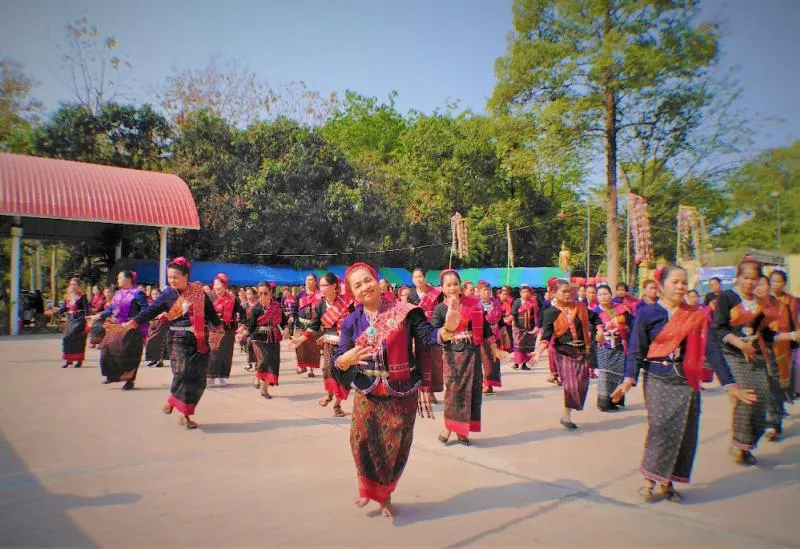
Heet Sip Song Khong Sip Si
Open Days: Practiced Throughout The Year According To The Twelve-Month Isan Merit-Making Cycle
Opening Hours: Depending On The Schedule Of Each Merit-Making Event, Temple, Community, And Local Authority In Amnat Charoen Province
Heet Sip Song Khong Sip Si Of Amnat Charoen Province is one of the most important cultural foundations of the Isan people in northeastern Thailand. In Amnat Charoen, local life has long been shaped by Buddhism, ancestral beliefs, spirits, deities, nature, agriculture, family relationships, and community values. These elements blend into a traditional cultural system known as “Heet Sip Song Khong Sip Si,” or the Twelve Monthly Traditions and the Fourteen Moral Codes. It remains visible in local rituals, temple activities, family customs, community ceremonies, and the moral framework of daily life.
The essence of Heet Sip Song Khong Sip Si is the ordering of life through custom, morality, respect, and social responsibility. Heet Sip Song refers to the cycle of merit-making traditions practiced across 12 months, while Khong Sip Si refers to 14 moral and social codes that guide relationships between rulers and people, elders and younger generations, parents and children, families and communities, farmers and the land, and Buddhist laypeople and the temple. Together, they form a complete cultural system that helps Isan communities live with balance, discipline, and shared values.
The word “Heet” is related to the Thai word “Reet,” meaning custom, tradition, or established practice. The term “Sip Song” means 12, referring to the 12 months of the year. Therefore, Heet Sip Song means the 12 monthly traditions that Isan people are expected to observe throughout the year. In traditional society, failing to follow important customs was regarded as “phit heet,” or violating the accepted way of life. This was not merely a personal matter but a social concern because custom functioned as a moral standard for the whole community.
Heet Sip Song was created through the wisdom of ancient Isan scholars and community elders who wanted people to gather regularly, at least once each month, for shared religious and social activities. These monthly traditions allowed villagers to meet, make merit, support the temple, exchange news, strengthen kinship, and pass values from older generations to younger ones. For this reason, Heet Sip Song is not simply a festival calendar. It is also a social learning system, a community-building mechanism, and a moral structure for rural Isan life.
Amnat Charoen Province, as part of the Isan cultural region, continues to preserve the meaning of Heet Sip Song Khong Sip Si through temple ceremonies, community festivals, family practices, and local cultural activities. Although modern life has changed the way people work, travel, and communicate, the core values remain strong: making merit, honoring Buddhism, respecting elders, remembering ancestors, living with nature, and maintaining harmony within the community.
The first month in the traditional cycle is Duean Ai, around December in the modern calendar. The associated merit-making event is Bun Khao Kam, a ceremony connected with monks who undertake monastic discipline and purification. Villagers support the monks with food, offerings, and necessary items. This tradition shows the close relationship between laypeople and Buddhism, as the community helps uphold monastic practice and supports the temple as the spiritual center of local life.
The second month is Duean Yi, associated with Bun Khun Lan, a rice-threshing-floor merit ceremony held after the harvest. This event honors rice, the rice spirit, and the forces of nature that support agricultural life. In Isan culture, rice is more than food. It is life, security, family well-being, and abundance. In Amnat Charoen, where agricultural traditions remain important, Bun Khun Lan reflects gratitude toward nature and the land.
The third month is Duean Sam, marked by Bun Khao Chi. Khao chi is grilled sticky rice, often prepared simply and offered to monks. This tradition demonstrates the beauty of simplicity in Isan culture. People do not need expensive offerings to make merit. Instead, they use food produced by their own labor and household resources as a sincere expression of faith.
The fourth month is Duean Si, associated with Bun Phra Wet, also known as the Mahachat sermon tradition. This ceremony centers on the story of Vessantara Jataka, a Buddhist tale about generosity, sacrifice, and moral perfection. Villagers gather at the temple to listen to sermons and make merit. Bun Phra Wet is culturally rich because it combines Buddhist teaching, oral performance, literature, community participation, and religious devotion.
The fifth month is Duean Ha, the time of Bun Songkran. Songkran is the Thai New Year festival, involving merit-making, bathing Buddha images, paying respect to elders, asking for blessings, and family reunions. In Amnat Charoen, Songkran is an important time when family members return home, younger people honor their elders, and communities renew social bonds through temple activities and traditional ceremonies.
The sixth month is Duean Hok, associated with Bun Bang Fai, or the rocket festival. This is a rain-seeking tradition connected with the agricultural cycle and older beliefs about the sky, rain, and supernatural powers. Bun Bang Fai shows the blending of indigenous beliefs and Buddhism in Isan culture. Villagers make merit at the temple while also participating in symbolic activities that ask for timely rainfall and agricultural abundance.
The seventh month is Duean Chet, marked by Bun Cham Ha. This tradition is a ritual of cleansing misfortune, illness, impurity, and negative forces from the village. In Isan belief, cleanliness is not only physical but also spiritual and communal. The ceremony gives people confidence, restores harmony, and strengthens the emotional well-being of the community.
The eighth month is Duean Paet, the time of Bun Khao Phansa, or the Buddhist Lent merit ceremony. Villagers offer candles, bathing cloths, and necessities to monks who begin the three-month rains retreat. Temples are central to community life, so this tradition supports monastic practice and encourages laypeople to observe moral discipline, make merit, and reduce harmful behavior during the Buddhist Lent period.
The ninth month is Duean Kao, associated with Bun Khao Pradap Din. This ceremony is performed to dedicate merit to deceased relatives and hungry spirits according to local belief. Villagers prepare food and offerings for ritual dedication. The tradition reflects gratitude toward ancestors and the belief that moral responsibility continues across generations.
The tenth month is Duean Sip, marked by Bun Khao Sak. This is a merit-making ceremony involving offerings arranged through lots or designated portions, often connected with dedicating merit to the departed. It emphasizes sharing, order, generosity, and the bond between the living and the dead.
The eleventh month is Duean Sip Et, the time of Bun Ok Phansa, marking the end of Buddhist Lent. People make merit, offer food to monks, listen to sermons, and join local temple activities. This event symbolizes the completion of the rains retreat and leads into the Kathin season of the following month.
The twelfth month is Duean Sip Song, associated with Bun Kathin. Kathin is a major Buddhist merit-making event in which laypeople offer robes to monks after the end of Buddhist Lent. It is one of the most important communal merit-making traditions because it supports the temple, strengthens social unity, and often brings people who live away from home back to their community.
In addition to Heet Sip Song, the people of Amnat Charoen have also shown interest in reviving the tradition of Long Khuang as a provincial cultural identity. Long Khuang was once a way of life practiced in household courtyards after the rice harvest. Young women gathered to spin cotton, prepare thread, or work with silk, while young men joined the gathering by playing the phin, blowing the khaen, and engaging in poetic courtship conversations.
Long Khuang is socially important because it provided a respectful space for young people to meet, learn manners, show artistic skill, and use local poetic language. The practice of “len sao” or “wao sao” was not casual flirting without form. It involved wit, rhythm, musical skill, and refined local expressions known as phaya khuea or phaya kiao. This makes Long Khuang a valuable cultural tradition that connects handicraft, music, language, courtship, and community etiquette.
Khong Sip Si completes the meaning of Heet Sip Song. If Heet Sip Song is the annual cycle of traditions, Khong Sip Si is the moral framework that guides social behavior. The word “Khong” means path, rule, or proper way. Khong Sip Si therefore refers to 14 moral codes that define appropriate conduct among rulers, nobles, common people, elders, parents, children, in-laws, farmers, monks, temples, and communities.
The first four codes concern social and administrative order. Heet Chao Khong Khun defines the relationship between the ruler and officials. Heet Thao Khong Phia refers to proper conduct between high-ranking leaders and senior officials. Heet Phrai Khong Nai describes the conduct of common people toward their superiors. Heet Ban Khong Mueang concerns the rules and order of the community and the state. These codes show that traditional Isan society valued responsibility, hierarchy, and moral conduct in governance.
The fifth to ninth codes concern family relationships: Heet Pu Khong Ya, Heet Pho Khong Mae, Heet Saphai Khong Khoei, Heet Pa Khong Lung, and Heet Luk Khong Lan. These codes define proper behavior between grandparents, parents, children, daughters-in-law, sons-in-law, aunts, uncles, and descendants. They show the importance of family structure in Isan culture. Everyone in the household has duties, and respect between generations is essential to social harmony.
The tenth code is Heet Thao Khong Kae, the proper conduct of elders. Elders are respected as community pillars, but they also carry responsibility. They must behave as good examples, guide younger generations, and pass on wisdom. This code shows that Khong Sip Si is not only about young people respecting elders; it also expects elders to live with dignity and moral responsibility.
The eleventh code is Heet Pi Khong Heet Duean, meaning the observance of customs throughout the year, directly linked to Heet Sip Song. The twelfth is Heet Rai Khong Na, concerning proper conduct in farming and agriculture. This shows that farming in Isan culture is not merely an economic activity but a way of life with customs, beliefs, and respect for nature. The thirteenth is Heet Wat Khong Song, guiding laypeople in their relationship with temples and monks. The fourteenth is Heet Chao Khong Mueang, the proper conduct of rulers and leaders.
When Heet Sip Song and Khong Sip Si are considered together, they reveal a complete cultural worldview. Heet Sip Song brings people together through monthly merit-making and seasonal ceremonies, while Khong Sip Si teaches people how to behave properly within family, community, religion, agriculture, and governance. This combination has helped Isan communities, including those in Amnat Charoen, maintain social unity and moral strength across generations.
For travelers and cultural learners, Heet Sip Song Khong Sip Si of Amnat Charoen provides a deeper understanding of Isan culture. The region’s traditions are not merely colorful festivals or outward rituals. Behind each event is a system of belief connected to Buddhism, agriculture, ancestors, social order, and community life. Learning about Heet Sip Song helps visitors understand why temples, rice fields, families, elders, and seasonal festivals remain so important in local identity.
Today, preserving Heet Sip Song Khong Sip Si does not mean freezing the past. It means keeping the core values alive in a changing world. Temples, schools, communities, cultural offices, and local authorities in Amnat Charoen can use these traditions as a foundation for education, community tourism, youth learning, cultural events, and provincial identity. The traditions remain meaningful when people continue to practice, explain, adapt, and pass them on.
Visitors who want to learn about Heet Sip Song Khong Sip Si in Amnat Charoen can begin in Mueang Amnat Charoen, local temples, community learning areas, and villages where monthly merit-making events are held. The best experience comes from joining temple activities, listening to local elders, observing seasonal ceremonies, and visiting during important months such as Bun Phra Wet, Songkran, Bun Bang Fai, Buddhist Lent, Bun Khao Pradap Din, Ok Phansa, or Kathin.
The charm of Heet Sip Song Khong Sip Si lies in the way tradition becomes part of everyday life. In Amnat Charoen, temples remain spiritual centers, families remain moral foundations, merit-making remains a social gathering, and nature remains central to livelihood. This gives the province a cultural warmth that is quiet, sincere, and deeply rooted.
Heet Sip Song Khong Sip Si is therefore an invaluable cultural heritage of Amnat Charoen and the wider Isan region. It helps people understand their roots, remember their duties toward family and community, respect Buddhism and nature, and maintain a moral bond with society. In a rapidly changing world, explaining and preserving these traditions for younger generations is a way to keep Isan identity alive with dignity and relevance.
| Name | Heet Sip Song Khong Sip Si Of Amnat Charoen Province |
| Location | Amnat Charoen Province |
| Learning Area | Mueang Amnat Charoen, Local Temples, Communities, Cultural Agencies, And Villages Across Amnat Charoen Province |
| Coordinates | 15.8657, 104.6258 |
| Highlights | Twelve monthly Isan merit-making traditions, fourteen moral codes, Buddhism, family values, community order, agriculture, local belief, and the Long Khuang tradition |
| History | An ancient Isan customary system passed down through generations and still visible in temple ceremonies, community life, family customs, and cultural activities in Amnat Charoen Province |
| Name Origin | Heet means custom or tradition, Sip Song means twelve months, Khong means proper path or code, and Sip Si means fourteen moral principles |
| Distinctive Features | A cultural system combining Buddhism, indigenous belief, family duties, community relationships, agriculture, and social ethics in Isan life |
| Travel Information | Start from Mueang Amnat Charoen and continue to temples, communities, or villages where monthly merit-making events are held; private car, rental car, or group travel is recommended |
| Current Status | Still practiced and preserved through temples, communities, families, monthly merit-making events, and local cultural revival activities in Amnat Charoen Province |
| Open Days | Practiced throughout the year according to the twelve-month Isan tradition cycle |
| Opening Hours | Depending on the schedule of each merit-making event, temple, community, and local authority |
| Main Areas / Zones | Temple And Ritual Zone, Community Activity Zone, Family And Kinship Zone, Farming And Rice-Field Ritual Zone, Long Khuang Learning Zone, Monthly Merit-Making Zone |
| Caretaker | Temples, Communities, Local Administrative Organizations, And Amnat Charoen Provincial Cultural Office |
| Official Website / Official Page | Amnat Charoen Provincial Cultural Office And Local Authorities In Amnat Charoen Province |
| Nearby Tourist Attractions | 1. Phra Mongkhon Ming Mueang Buddhist Park, About 5 km 2. Amnat Charoen City Pillar Shrine, About 2 km 3. Wat Tham Saeng Phet, About 20 km 4. Huai Si Tho Reservoir, About 15 km 5. Ming Mueang Chaloem Phrakiat Public Park, About 3 km |
| Nearby Restaurants | 1. Baan Banchuen, About 1 km 2. Som Tam Yai Phoeng, About 2 km 3. Ing Than Amnat Charoen, About 4 km 4. Je Daeng Kaeng Om, About 2 km 5. Mum Ocha Restaurant, About 2 km |
| Nearby Accommodations | 1. Faikid Hotel, About 2 km 2. Baan Ing Daan Hotel, About 3 km 3. Nakarin Hotel Amnat Charoen, About 2 km 4. Amnat Charoen Hotel, About 2 km 5. Hotels And Small Resorts In Mueang Amnat Charoen, About 3 km |
Frequently Asked Questions (FAQ)
Q: What is Heet Sip Song Khong Sip Si?
A: Heet Sip Song Khong Sip Si is the traditional Isan system of customs and moral codes. Heet Sip Song refers to 12 monthly merit-making traditions, while Khong Sip Si refers to 14 principles of proper conduct in society.
Q: What are the twelve traditions in Heet Sip Song?
A: They include Bun Khao Kam, Bun Khun Lan, Bun Khao Chi, Bun Phra Wet, Songkran, Bun Bang Fai, Bun Cham Ha, Buddhist Lent, Bun Khao Pradap Din, Bun Khao Sak, Ok Phansa, and Kathin.
Q: Why is Khong Sip Si important?
A: Khong Sip Si provides moral guidance for relationships among rulers, people, families, elders, farmers, temples, monks, and communities.
Q: Why was violating Heet considered serious in traditional Isan society?
A: Because Heet was a shared moral and social standard. Violating it meant failing to respect the customs that held the community together.
Q: How is the Long Khuang tradition related to Amnat Charoen culture?
A: Long Khuang was a post-harvest courtyard tradition where young men and women met through spinning cotton, silk work, music, khaen performance, phin playing, and poetic courtship language.
Q: Where can travelers learn about Heet Sip Song Khong Sip Si in Amnat Charoen?
A: Travelers can learn from local temples, communities, monthly merit-making events, cultural learning areas, and local cultural activities across Amnat Charoen Province.
Q: Is Heet Sip Song Khong Sip Si still practiced today?
A: Yes. It remains visible through temple ceremonies, family customs, community activities, local festivals, and cultural preservation efforts in Amnat Charoen.
Q: Who should study Heet Sip Song Khong Sip Si?
A: It is suitable for travelers and learners interested in Thai traditions, Isan culture, Buddhism, community life, local wisdom, and cultural tourism in Amnat Charoen Province.
 Category: ●Art, Culture and Heritage
 Group: ●Art, Craft Centres, Tradition
Last Update : 4 MonthAgo
 Last Update : 4 MonthAgo
 Historical Sites and Monuments(1)
Art, Craft Centres, Tradition(3)
Historical Sites and Monuments(1)
Art, Craft Centres, Tradition(3)
 Museums(1)
 Places of Worship
 Temple(30)
 Other Sacred Sites(7)
 Suburban Living
 Village, Community(3)
 Nature and Wildlife
 National Parks and Marine Reserves(3)
 Mountain (Doi)(5)
 Dam, Reservoir, Lake(5)
 Waterfalls(3)
 Caves(2)
 River, Canal(3)
 Other natural attractions(5)
 Entertainment and Agricultural
 Zoos and Aquariums(1)
 Farms, Parks and Ecotourism(4)
 Shopping
 Shopping and Night Market(1)


