
lovethailand home >Northeastern Travel Attractions >Amnat Charoen Travel Attractions >Chanu Man >Pa Ko > Fruit Gardens
TL;DR: Fruit Gardens, Amnat Charoen attractions : Entertainment and Agricultural, Farms, Parks and Ecotourism.
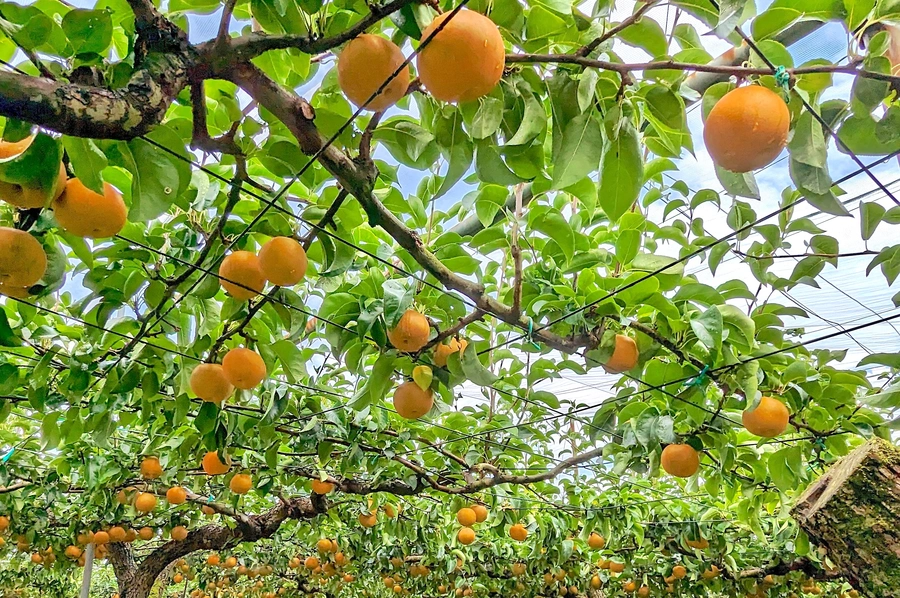
Fruit Gardens
Open Days: Advance contact is required before visiting
Opening Hours: Advance contact is required before visiting
The Fruit Gardens of Pa Ko Subdistrict in Amnat Charoen Province are community-based agro-tourism and economic crop areas in Chanuman District. These fruit gardens are cultivated by local farmers from Ban Huai Thom, Ban Huai Thom Noi, Ban Phithak Thai, and other villages within Pa Ko Subdistrict. Today, many farmers in the area grow fruit trees as household and community economic crops. The gardens reflect the agricultural potential of rural Amnat Charoen, where local people are developing fruit cultivation as a source of income, food, learning, and community-based travel.
Pa Ko Subdistrict is located in Chanuman District, Amnat Charoen Province. It is a rural area where agriculture remains central to local livelihoods. The fruit gardens here are not all large commercial orchards. Many are family farms and community orchards gradually developed by local farmers. The area includes jujube gardens, durian gardens, and other fruit-growing plots depending on soil, water, farmer experience, and market opportunities. This makes Pa Ko an interesting agricultural landscape with diverse crops and strong potential for agro-tourism.
The appeal of Pa Ko’s fruit gardens lies in their authenticity. These are working agricultural areas managed by local people. Visitors can see how fruit trees are planted, cared for, and harvested according to season. Each garden has its own character depending on the type of fruit, tree age, irrigation system, soil condition, and management style. For travelers, this creates a more meaningful experience than visiting a decorative garden, because the orchards are part of real household livelihoods and local economic development.
Jujube gardens are among the interesting fruit-growing examples in Pa Ko Subdistrict. Jujube is a familiar fruit in Thailand and can be sold in local and wider markets. With proper orchard management, farmers can control fruit quality, size, flavor, and harvest timing. Growing jujube requires pruning, watering, soil improvement, pest management, and careful harvest planning. It is a practical fruit crop for farmers who want to develop a reliable source of income from household land.
Durian gardens in Pa Ko also reflect the ambition and learning process of local farmers. Durian is a high-value fruit that requires careful management, especially in areas outside Thailand’s best-known durian-growing regions. Farmers must understand soil, water, climate, nutrients, tree health, and long-term care. The presence of durian gardens in Pa Ko shows that local farmers are willing to adapt, experiment, and apply new agricultural knowledge to develop economic crops suited to their own land.
Fruit cultivation is important to household economies because it can diversify income. When families grow several crops or have fruit available in different seasons, they reduce reliance on a single agricultural product. Fruit can be sold fresh, processed into local products, supplied to cafés or restaurants, and connected with agro-tourism activities. The development of fruit gardens therefore links agriculture, household income, food culture, tourism, and the image of Pa Ko Subdistrict as a productive rural community.
The fruit gardens are suitable for travelers who want to experience simple and meaningful agro-tourism. Walking through an orchard helps visitors see the work behind the fruit sold in markets. Every fruit comes from a long process: selecting varieties, preparing soil, planting, watering, pruning, protecting trees from pests, checking ripeness, and harvesting. Seeing these steps in real farming areas helps visitors appreciate the knowledge and labor of local farmers.
As agricultural learning spaces, Pa Ko’s fruit gardens offer more than fruit viewing or tasting. They reveal how farmers manage production under local conditions. Fruit growing requires seasonal planning, water management, soil care, market awareness, and long-term investment. It is both agricultural work and risk management. Visitors interested in farming can learn a great deal by observing the gardens and talking with local farmers or community coordinators.
Ban Huai Thom and nearby villages in Pa Ko Subdistrict play an important role in this agricultural landscape. Fruit gardens cultivated by Ban Huai Thom farmers reflect household-level use of land and local knowledge. Different fruit trees have different care cycles and harvest seasons, creating agricultural stories throughout the year. Not every garden operates as a full tourist attraction, but with advance coordination, visitors and study groups can learn about the overall fruit-growing culture of the area.
Visitors should contact garden owners, local farmers, or Pa Ko Subdistrict Administrative Organization before visiting. Fruit gardens are working farms and may be privately owned. There is no single entrance gate for all orchards. Advance coordination helps visitors know which garden is suitable for visiting, which fruits are in season, what guidelines should be followed, and whether the garden can support individual travelers or larger study groups.
Seasonality is essential when visiting fruit gardens. Jujube, durian, and other fruits have different growing and harvesting periods. A garden may be in a flowering stage, fruiting stage, harvest period, maintenance period, or resting period depending on the season. Visitors who want to see or taste fruit should check before traveling. Planning according to season gives a better experience and avoids disrupting agricultural work.
The atmosphere of Pa Ko’s fruit gardens is different from that of major tourist sites. The orchards feel local, practical, and connected to daily life. Paths, irrigation systems, tree rows, farming tools, and shaded areas are all part of the real agricultural environment. Travelers who enjoy rural photography can capture fruit trees, natural light, village landscapes, and the quiet character of Chanuman District, especially in the morning or late afternoon when the light is softer.
The gardens are also suitable for families. Children can learn where fruit comes from, how trees grow, and why farmers must care for them throughout the year. Seeing fruit on the tree creates a direct connection between food and its source. This kind of learning is often more memorable than classroom explanations because children can observe real trees, soil, and farming activity.
For study groups, Pa Ko’s fruit gardens can serve as useful case studies in household economic crops, orchard management, and rural income generation. Topics may include choosing fruit varieties suited to the area, water management, soil care, pruning, household labor, selling produce, processing, and connecting agriculture with community tourism. This makes the gardens valuable for students, agricultural groups, and visitors interested in local development.
Fruit gardens also contribute to the environment. Trees provide shade, reduce heat, increase moisture, and create small habitats for birds, insects, and other living things. With appropriate management, an orchard can function as both a food-producing area and a small green ecosystem within the community. This is an important part of agro-tourism: understanding that a farm is not only an economic space but also part of the local environment.
Pa Ko Subdistrict can connect fruit gardens with other attractions in Chanuman District. Travelers can visit orchards in the morning, stop at Klang Na Cafe or another local restaurant, then continue to Ban Nong Maeng Da Community Forest, Mekong viewpoints, Kaeng Khan Sung, or Kaeng Tang Lang in the afternoon. This route combines agriculture, food, community life, forest, and Mekong River scenery in one trip.
Klang Na Cafe, Suan Pho Sanan Butphakdi, is one of the convenient local stops in Pa Ko Subdistrict. Its location and rural atmosphere make it suitable for a meal or drink before or after visiting the fruit gardens. A café connected to fields and local agriculture helps complete the agro-tourism experience by giving travelers a comfortable stop while keeping the trip rooted in the agricultural character of the area.
Pa Ko Subdistrict also has bamboo gardens, palm gardens, and other agricultural areas. Together with fruit gardens, these places create a broader picture of a diverse farming community. Fruit gardens are especially important because they connect household income, seasonal food, local markets, and tourism potential. For visitors interested in community development, Pa Ko offers a useful example of how several economic crops can support a rural economy.
For international travelers, the fruit gardens of Pa Ko introduce a lesser-known side of Thailand. Many Thai fruits are internationally famous, but seeing them in a working orchard in Amnat Charoen helps visitors understand how fruit production is linked to family farmers, seasons, land, and local markets. A visit to the orchards explains Thai culture through food and agriculture in a clear and accessible way.
Visitors should follow proper etiquette when entering fruit gardens. Do not pick fruit without permission, enter closed areas, step on young plants, damage irrigation systems, or disturb agricultural equipment. If taking photos of people or using images commercially, ask permission first. Respectful behavior helps build trust between visitors and the community and makes it easier for farmers to welcome future travelers.
Before visiting, prepare comfortable walking shoes, clothes suitable for farm areas, a hat, drinking water, a camera, and small cash for local expenses. During the rainy season, the ground may be wet or muddy. During the hot season, sun protection is important. Good preparation makes walking through the orchards safer and more comfortable.
Visitors who want to buy fruit should ask the garden owner directly about what is available during the visit. Buying from the garden supports local farmers and gives travelers a clear connection to the source of the produce. However, fruit availability depends on season and harvest timing. If fruit is not ready, visitors should understand that orchards follow natural cycles and cannot provide produce year-round.
For accommodation and food, travelers can choose to stay in Chanuman District or return to Amnat Charoen city. If the trip focuses on fruit gardens, the Mekong River, Kaeng Khan Sung, and Kaeng Tang Lang, staying in Chanuman or nearby areas is practical. If travelers prefer city services and onward travel to other districts, Amnat Charoen city is a convenient base.
The main caretakers of the fruit gardens are the local farmers and orchard owners in Ban Huai Thom, Ban Huai Thom Noi, Ban Phithak Thai, and other areas of Pa Ko Subdistrict. Pa Ko Subdistrict Administrative Organization serves as the local public body that provides area information and tourism-related coordination. Visitors should contact the orchard owner or local authority before visiting to confirm suitable access and current garden conditions.
Getting There The fruit gardens are located within Pa Ko Subdistrict, Chanuman District, Amnat Charoen Province, about 36 km from Amnat Charoen provincial town. A private car or motorcycle is the most convenient option because orchards are spread across villages and community farming plots. Once in Pa Ko, visitors should coordinate with local farmers, orchard owners, or Pa Ko Subdistrict Administrative Organization to confirm the appropriate visiting point. The trip can be combined with Klang Na Cafe, Ban Huai Thom Bamboo Gardens, Pa Ko Palm Gardens, Ban Nong Maeng Da Community Forest, Mekong viewpoints, Kaeng Khan Sung, and Kaeng Tang Lang.
In summary, the fruit gardens of Pa Ko Subdistrict are meaningful agricultural learning areas that support household income, local farming knowledge, and community-based tourism in Amnat Charoen Province. Visitors can see diverse fruit cultivation, learn from local farmers, understand the relationship between fruit, income, and rural life, and connect the visit with other attractions in Chanuman District. These gardens are ideal for travelers who want an educational, authentic, and community-focused experience in northeastern Thailand.
| Name | Fruit Gardens, Pa Ko Subdistrict, Amnat Charoen Province |
| Location | Ban Huai Thom, Ban Huai Thom Noi, Ban Phithak Thai, and other areas within Pa Ko Subdistrict, Chanuman District, Amnat Charoen Province |
| Address | Pa Ko Subdistrict, Chanuman District, Amnat Charoen Province 37210, Thailand |
| Highlights | Community fruit gardens including jujube gardens, durian gardens, and other fruit-growing plots cultivated by local farmers as household and subdistrict economic crops |
| Distinctive Features | Real working orchards suitable for learning about fruit cultivation, orchard management, rural livelihoods, and agro-tourism in Chanuman District |
| Importance | Fruit gardens are economic crops for the subdistrict and local households, helping generate income, diversify farming, and support community tourism potential |
| Main Areas / Zones | 1. Jujube gardens in Ban Phithak Thai 2. Durian gardens in Ban Huai Thom Noi 3. Fruit gardens cultivated by Ban Huai Thom farmers 4. Fruit tree management learning areas 5. Seasonal harvest areas 6. Local produce sales areas 7. Route connection to bamboo gardens, palm gardens, and Pa Ko attractions |
| Main Activities | Fruit garden viewing, fruit cultivation learning, rural photography, seasonal produce buying, economic crop study, and community-based travel in Chanuman District |
| Travel Information | Located within Pa Ko Subdistrict, Chanuman District, about 36 km from Amnat Charoen provincial town. Private car or motorcycle is the most convenient option, and visitors should coordinate the exact visiting point before traveling. |
| Current Status | Community fruit-growing areas and agro-tourism resources of Pa Ko Subdistrict, Chanuman District, Amnat Charoen Province |
| Open Days | Advance contact is required before visiting |
| Opening Hours | Advance contact is required before visiting |
| Caretaker | Local orchard owners in Ban Huai Thom, Ban Huai Thom Noi, Ban Phithak Thai, and Pa Ko community, with Pa Ko Subdistrict Administrative Organization serving as the local information body |
| Local Contact | Pa Ko Subdistrict Administrative Organization, Tel. 0-4552-5830 |
| Nearby Tourist Attractions | 1. Klang Na Cafe, Suan Pho Sanan Butphakdi, Pa Ko Subdistrict, about 3 km 2. Ban Huai Thom Bamboo Gardens, about 5 km 3. Pa Ko Palm Gardens, about 5 km 4. Ban Nong Maeng Da Community Forest, about 8 km 5. Mekong Viewpoint, Chanuman District, about 18 km 6. Kaeng Khan Sung, Chanuman District, about 20 km 7. Kaeng Tang Lang, Chanuman District, about 22 km |
| Nearby Restaurants | 1. Klang Na Cafe, Pa Ko Subdistrict, about 3 km, Tel. 081-137-7037 2. Ban Ya Cafe Chanuman, about 18 km, Tel. 095-894-9255 3. Ban Suan Rim Khong Khrua Je Muk, about 20 km, Tel. 084-429-3646 4. Huen Coffee by the Mekong, Chanuman District, about 20 km 5. T&P Café&Coffee, Chanuman District, about 18 km |
| Nearby Accommodations | 1. Smile Resort Chanuman, about 16 km, Tel. 099-459-9333, 090-739-9399 2. Kaeng Tang Lang Resort, Chanuman District, about 22 km, Tel. 061-535-5198 3. Ramiarndao Boutique Place Hotel, Amnat Charoen, about 78 km, Tel. 081-067-4149, 093-390-9383 4. Baan Ing Daan Hotel, Amnat Charoen, about 79 km, Tel. 090-405-5504, 090-268-7597 5. Fai Kid Hotel, Amnat Charoen, about 80 km |
Frequently Asked Questions (FAQ)
Q: Where are the fruit gardens of Pa Ko located?
A: They are located within Pa Ko Subdistrict, Chanuman District, Amnat Charoen Province, including Ban Huai Thom, Ban Huai Thom Noi, Ban Phithak Thai, and other community orchard areas.
Q: What makes Pa Ko’s fruit gardens interesting?
A: They are community fruit gardens cultivated by local farmers as household and subdistrict economic crops, including jujube gardens, durian gardens, and other seasonal orchards.
Q: Can visitors enter the fruit gardens directly?
A: Visitors should contact the orchard owner, local farmers, or Pa Ko Subdistrict Administrative Organization before visiting because the orchards are working agricultural areas and may be privately owned.
Q: Is there an admission fee?
A: There is no confirmed standard admission fee for Pa Ko’s fruit gardens. Group visitors or study groups should contact the orchard owner or local authority before traveling.
Q: When is the best time to visit?
A: The best time depends on the fruit season. Visitors should call ahead to check which fruits are flowering, fruiting, or ready for harvest before traveling.
Q: Who should visit the fruit gardens?
A: The gardens are suitable for families, students, study groups, agriculture enthusiasts, community-based tourism visitors, and travelers who want to learn about economic crops in Amnat Charoen.
Q: How can travelers get there?
A: Travel from Amnat Charoen provincial town to Pa Ko Subdistrict in Chanuman District, about 36 km away. A private car or motorcycle is the most convenient option, and visitors should coordinate the exact visiting point in advance.
Q: What nearby attractions can be visited together with the fruit gardens?
A: Nearby places include Klang Na Cafe, Ban Huai Thom Bamboo Gardens, Pa Ko Palm Gardens, Ban Nong Maeng Da Community Forest, Mekong viewpoints, Kaeng Khan Sung, and Kaeng Tang Lang.
 Category: ●Entertainment and Agricultural
 Group: ●Farms, Parks and Ecotourism
Last Update : 3 MonthAgo
 Last Update : 3 MonthAgo
 Click to Access the Navigation Map GPS
 Art, Culture and Heritage
 Historical Sites and Monuments(1)
 Art, Craft Centres, Tradition(3)
 Museums(1)
 Places of Worship
 Temple(30)
 Other Sacred Sites(7)
 Suburban Living
 Village, Community(3)
 Nature and Wildlife
 National Parks and Marine Reserves(3)
 Mountain (Doi)(5)
 Dam, Reservoir, Lake(5)
 Waterfalls(3)
 Caves(2)
 River, Canal(3)
 Other natural attractions(5)
 Zoos and Aquariums(1)
Farms, Parks and Ecotourism(4)
Zoos and Aquariums(1)
Farms, Parks and Ecotourism(4)
 Shopping
 Shopping and Night Market(1)


