
lovethailand home >Northeastern Travel Attractions >Amnat Charoen Travel Attractions >Muang Amnat Charoen >Huay Rai > Wat Pa Non Phon Mueang
TL;DR: Wat Pa Non Phon Mueang is located at Mu 6, Ban Hua Na, Huai Rai Subdistrict, Mueang Amnat Charoen District, Amnat Charoen Province, open Daily, hours Morning To Evening.
Wat Pa Non Phon Mueang
Open Days: Daily
Opening Hours: Morning To Evening
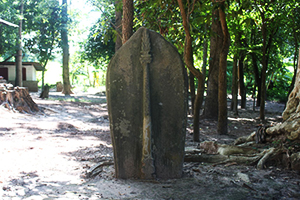
Wat Pa Non Phon Mueang in Amnat Charoen Province is a forest temple and sacred local site in Ban Hua Na, Mu 6, Huai Rai Subdistrict, Mueang Amnat Charoen District. The temple is known for an old local story that the area was once an ancient town. Villagers have long spoken of discoveries of old household objects, Buddha images, and many stone pillars of different sizes. Another story says that mysterious lights sometimes appear at night, and only people with great merit can see them.
Wat Pa Non Phon Mueang is suitable for travelers who want to experience a quieter and more local side of Amnat Charoen. It is not a large urban temple with grand architecture, but a forest temple connected with memory, faith, and community storytelling. Visitors come here for merit-making, worship, quiet reflection, and to learn about the beliefs of Ban Hua Na. The temple offers a meaningful experience for those interested in forest temples, local legends, sacred landscapes, and cultural routes around Mueang Amnat Charoen.
The name Non Phon Mueang suggests a place connected with an old settlement. In the Isan language context, “non” often refers to a mound or raised ground, while “phon mueang” gives the impression of a town or ancient community. Although much of the story survives through oral tradition, the name itself reflects how local people understand the area as a place with a deeper past. It is not remembered as ordinary land, but as a place with sacred traces and old stories.
The most important story associated with Wat Pa Non Phon Mueang is the belief that the area was once an ancient town. Local accounts mention the discovery of objects used in daily life, Buddha images, and many large and small stone pillars. These finds have strengthened the belief that the temple area may once have been a settlement, ritual space, or important sacred zone. For local people, such objects are not merely old things. They are signs that the land preserves memory from an earlier time.
The stone pillars mentioned in local stories are especially interesting. Large and small stone pillars can be understood by the community as markers of importance, boundary signs, or sacred remains from the past. Whether interpreted through history or belief, they give the place a sense of depth. Visitors should therefore avoid touching, moving, climbing, or collecting any old stones or objects found in the area, because such remains may carry cultural value and should stay in their original setting.
The discovery of Buddha images in the area also gives Wat Pa Non Phon Mueang a strong religious dimension. Buddha images symbolize devotion, Buddhist teaching, and the continuity of faith. When a place associated with an ancient town is also linked with Buddha images, it becomes more than an archaeological-interest site. It becomes a sacred landscape where religion, memory, and local identity come together.
Another distinctive story is the mysterious light said to appear at night. According to local belief, only people with merit can see this strange light. For the community, the light is not treated simply as a natural event, but as a sign of sacredness and hidden power. This belief gives the temple a spiritual atmosphere that continues to shape how people speak about and respect the place.
Such stories should be understood with respect. They are part of the cultural memory of Ban Hua Na and help explain why the temple area is treated as sacred. For travelers, listening to these stories is a way of understanding how rural communities preserve history through oral tradition, faith, and place-based belief. The temple becomes meaningful not only because of visible objects, but also because of the stories that continue to live among local people.
Wat Pa Non Phon Mueang is also valuable because of its quiet forest-temple atmosphere. The site is simple, calm, and closely connected with the local community. Visitors can make merit, pay respect, walk quietly, and experience a peaceful setting away from the busier parts of town. This kind of temple offers a form of travel that is slower and more reflective than mainstream sightseeing.
Getting There is easiest by private car, rental car, or local hired transport. The temple is about 3 km from Mu 6 Ban Hua Na, along the connecting route between Mu 6 and Mu 7 in Huai Rai Subdistrict. Travelers coming from Mueang Amnat Charoen can head toward Huai Rai Subdistrict and continue to Ban Hua Na before taking the local connecting road to the temple. Daytime travel is recommended because the route is easier to follow and local residents can help with directions if needed.
The best time to visit is in the morning or late afternoon. Morning is suitable for merit-making and quiet worship, while late afternoon offers softer light and a peaceful atmosphere for walking around the temple grounds. Although the temple is associated with stories of mysterious lights at night, visitors should not enter the area at night without a necessary reason or without local guidance. The belief should be respected as part of local culture rather than treated as a spectacle.
Visitors should dress modestly, keep noise low, avoid littering, and respect the forest temple environment. They should not dig the ground, collect old objects, move stones, or disturb any objects that may be connected with the temple’s local history. If visitors find pottery fragments, carved stones, old objects, or Buddha-image fragments, they should leave them in place and inform the temple or local community leaders.
Wat Pa Non Phon Mueang can be included in a cultural route around Huai Rai and Mueang Amnat Charoen. Nearby places include Wat Doi Sawan, Phra Mongkhon Ming Mueang, Amnat Charoen Clock Tower, Wat Pa Thewi Tham, and Huai Si Tho Reservoir. These destinations together show different aspects of the province, from hill temples and city landmarks to forest temples, local legends, and quiet natural areas.
For foreign travelers, Wat Pa Non Phon Mueang provides an intimate look at how local communities in northeastern Thailand connect faith, memory, and landscape. The temple may not have the fame of major tourist temples, but it has something equally meaningful: a living tradition of stories. The ancient-town legend, the accounts of Buddha images and stone pillars, and the belief in mysterious lights all help visitors understand how local sacred places are remembered and protected.
The value of Wat Pa Non Phon Mueang lies in its layered identity. It is a forest temple, a sacred site, a place of local memory, and a destination connected with stories of an ancient town. Visiting the temple is not only about seeing a place, but about listening to the way a community remembers its past. For travelers who want to understand Amnat Charoen beyond ordinary sightseeing routes, this temple offers a quiet and meaningful experience rooted in faith and local heritage.
| Name | Wat Pa Non Phon Mueang |
| Location | Mu 6, Ban Hua Na, Huai Rai Subdistrict, Mueang Amnat Charoen District, Amnat Charoen Province |
| Address | Ban Hua Na, Huai Rai Subdistrict, Mueang Amnat Charoen District, Amnat Charoen 37000, Thailand |
| Highlights | A sacred forest temple with local stories of an ancient town, discoveries of old objects, Buddha images, many stone pillars, and mysterious lights believed to be visible only to people with great merit |
| History / Local Legend | Local elders tell that the area was once an ancient town where household objects, Buddha images, and many stone pillars of different sizes were found |
| Key Evidence / Reported Finds | Old household objects, Buddha images, and large and small stone pillars reported in local accounts |
| Name Origin | The name Non Phon Mueang suggests a raised area or mound associated with an old town or ancient community memory |
| Distinctive Features | A quiet forest temple in Ban Hua Na with a sacred local atmosphere and stories linking the site to an ancient settlement |
| Travel Information | Located about 3 km from Mu 6 Ban Hua Na along the connecting road between Mu 6 and Mu 7 in Huai Rai Subdistrict |
| Current Status | Open as a forest temple and sacred local site of Ban Hua Na, Huai Rai Subdistrict, Mueang Amnat Charoen District |
| Open Days | Daily |
| Opening Hours | Morning To Evening |
| Main Areas / Zones | Merit-Making And Worship Area Forest Temple And Natural Area Area Connected With The Ancient-Town Legend Area Where Buddha Images, Stone Pillars, And Old Objects Are Said To Have Been Found Ban Hua Na Community Route Between Mu 6 And Mu 7 |
| Visitor Etiquette | Dress modestly, keep noise low, avoid littering, do not dig the ground, do not collect or move stones, Buddha images, or old objects, and visit during daylight hours |
| Nearby Tourist Attractions | 1. Wat Doi Sawan, about 8 km 2. Phra Mongkhon Ming Mueang / Buddha Park, about 12 km 3. Amnat Charoen Clock Tower, about 12 km 4. Wat Pa Thewi Tham / Wat Khao Dueai Kai, about 13 km 5. Huai Si Tho Reservoir, about 14 km |
| Nearby Restaurants | 1. Baan Pinto 1984, about 12 km, Tel. 061-463-4497 2. Kuay Jap Kung Amnat Charoen, about 12 km, Tel. 081-760-7660 3. Kuay Jap Kung By Kung, about 12 km, Tel. 095-602-2629 4. B'More Love Bakehouse & Café Amnat Charoen, about 13 km 5. Isan Thai Kan Eng, about 13 km |
| Nearby Accommodations | 1. Faikid Hotel, about 12 km 2. Ramiarndao Boutique Place, about 12 km 3. LJ The Emerald Hotel, about 12 km 4. Baan Ing Daan Hotel, about 13 km 5. Hotels And Resorts In Mueang Amnat Charoen, about 12 km |
Frequently Asked Questions (FAQ)
Q: Where is Wat Pa Non Phon Mueang located?
A: Wat Pa Non Phon Mueang is located in Mu 6, Ban Hua Na, Huai Rai Subdistrict, Mueang Amnat Charoen District, Amnat Charoen Province.
Q: What is Wat Pa Non Phon Mueang known for?
A: It is known for local stories of an ancient town, reported discoveries of old objects, Buddha images, stone pillars, and mysterious lights at night.
Q: What is the mysterious light story at Wat Pa Non Phon Mueang?
A: Local belief says that strange lights sometimes appear at night in the temple area and can be seen only by people with great merit.
Q: What ancient objects are associated with Wat Pa Non Phon Mueang?
A: Local accounts mention old household objects, Buddha images, and many large and small stone pillars found in the temple area.
Q: How can travelers get to Wat Pa Non Phon Mueang?
A: The temple is about 3 km from Mu 6 Ban Hua Na along the connecting road between Mu 6 and Mu 7 in Huai Rai Subdistrict.
Q: Who should visit Wat Pa Non Phon Mueang?
A: It is suitable for travelers interested in merit-making, forest temples, sacred local sites, ancient-town legends, and cultural travel in Amnat Charoen.
Q: When is the best time to visit Wat Pa Non Phon Mueang?
A: Morning or late afternoon is best because the weather is more comfortable and the forest temple atmosphere is peaceful.
Q: What nearby attractions can be visited with Wat Pa Non Phon Mueang?
A: Nearby attractions include Wat Doi Sawan, Phra Mongkhon Ming Mueang, Amnat Charoen Clock Tower, Wat Pa Thewi Tham, and Huai Si Tho Reservoir.
 Category: ●Places of Worship
 Group: ●Temple
Last Update : 3 MonthAgo
 Last Update : 3 MonthAgo
 Click to Access the Navigation Map GPS
 Art, Culture and Heritage
 Historical Sites and Monuments(1)
 Art, Craft Centres, Tradition(3)
 Museums(1)
Temple(30)
Museums(1)
Temple(30)
 Other Sacred Sites(7)
 Suburban Living
 Village, Community(3)
 Nature and Wildlife
 National Parks and Marine Reserves(3)
 Mountain (Doi)(5)
 Dam, Reservoir, Lake(5)
 Waterfalls(3)
 Caves(2)
 River, Canal(3)
 Other natural attractions(5)
 Entertainment and Agricultural
 Zoos and Aquariums(1)
 Farms, Parks and Ecotourism(4)
 Shopping
 Shopping and Night Market(1)


