
lovethailand home >Northeastern Travel Attractions >Amnat Charoen Travel Attractions >Pathum Rachawongsa >Na Pa Saeng > Phra That Na Pa Saeng
TL;DR: Phra That Na Pa Saeng is located at Wat Sutthikawat, Ban Winai Di, Moo 4, Na Pa Saeng Subdistrict, Pathum Ratchawongsa District, Amnat Charoen Province, open Daily, hours No Official Opening Hours Specified.
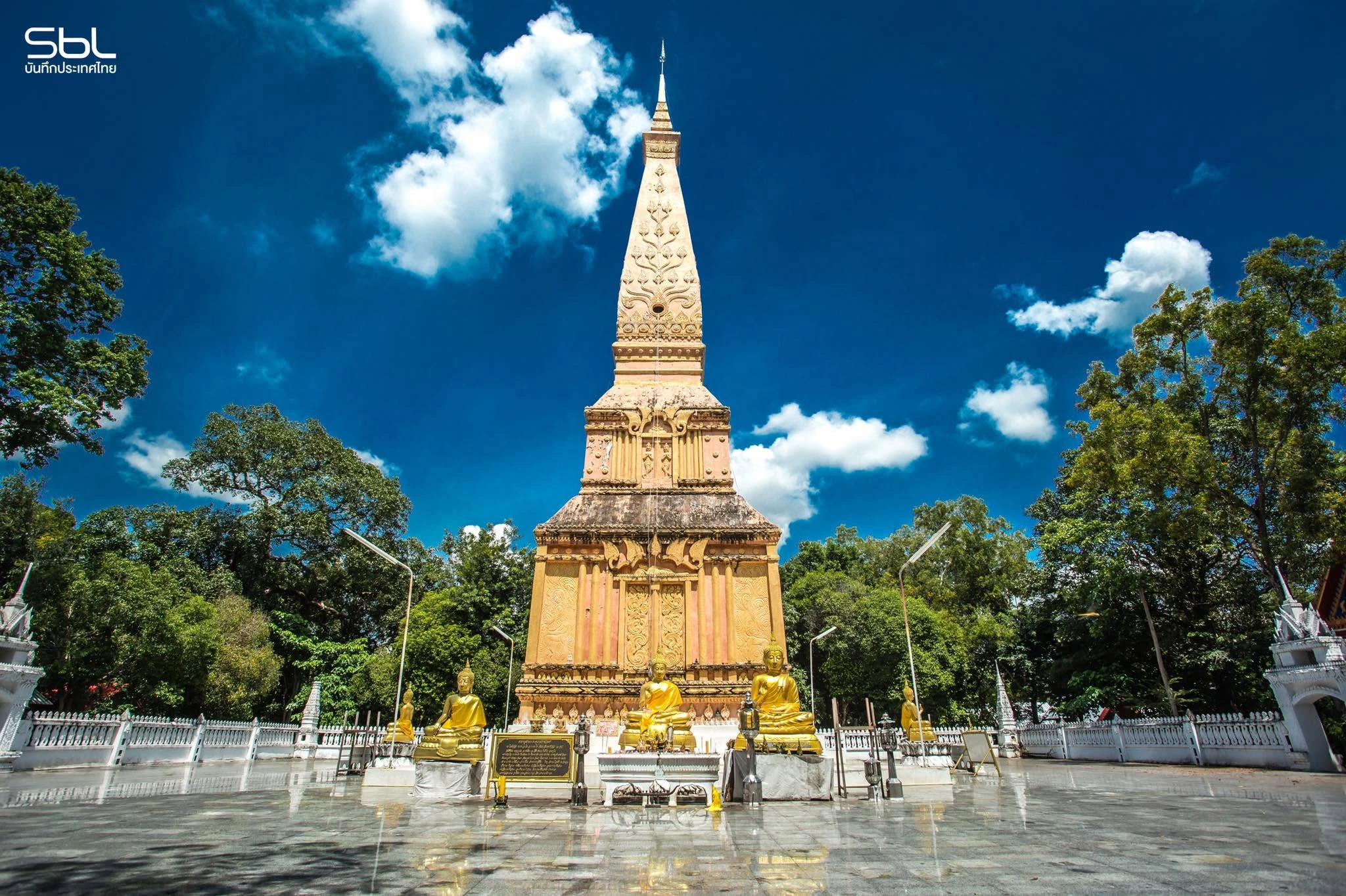
Phra That Na Pa Saeng
Open Days: Daily
Opening Hours: No Official Opening Hours Specified
Phra That Na Pa Saeng is an important Buddhist stupa in Amnat Charoen Province, located within Wat Sutthikawat at Ban Winai Di, Moo 4, Na Pa Saeng Subdistrict, Pathum Ratchawongsa District. This sacred stupa is widely known as a replica of the original Phra That Phanom and is one of the most meaningful religious landmarks in the local community. For Buddhist devotees, it is a place to pay respect, make merit, and reflect on the relics of the Buddha. For travelers, it offers a quiet and culturally rich experience in a rural part of Amnat Charoen, away from the busier city center.
The main highlight of Phra That Na Pa Saeng is its stupa form, which was modeled after the original Phra That Phanom, one of the most revered Buddhist monuments in northeastern Thailand. The stupa stands prominently inside Wat Sutthikawat and has become a spiritual symbol for people in Na Pa Saeng Subdistrict and nearby areas. Its presence reflects the deep influence of Phra That Phanom on Buddhist belief across the Isan region, where stupas are not only religious architecture but also centers of faith, memory, and community identity.
Phra That Na Pa Saeng was built in 1977 by Phra Khru Sutthiphatthanaphon, also known as Luang Pho Si Tha, a respected monk associated with the lineage of Phra Ajahn Mun Bhuridatto. His role in designing and leading the construction of the stupa is central to the story of this place. The stupa was created with the intention of giving the local community a sacred place for worship and merit-making, while also connecting the people of Na Pa Saeng with the wider Buddhist heritage of northeastern Thailand.
Inside Phra That Na Pa Saeng are 113 relics of the Buddha, enshrined in two locations: at the top of the stupa and in the middle section of the structure. This gives the stupa strong religious significance. Visitors who come to pay respect often do so with reverence, seeing the site as a place connected to the Buddha, the Triple Gem, and the accumulated merit of generations of devotees. The act of worship here is therefore more than a simple visit; it is a spiritual gesture of faith and mindfulness.
The stupa is about 30 meters high and can be seen clearly upon arriving at Ban Winai Di. Its form resembles Phra That Phanom, giving the place a distinctive identity. Because of this resemblance, many people also refer to Wat Sutthikawat as the temple of the Phra That Phanom replica. For travelers interested in Buddhist architecture, the site provides a valuable example of how a major regional sacred model can inspire a local monument and become deeply meaningful within a community.
Wat Sutthikawat is an old local temple and an important religious center for Ban Winai Di and Na Pa Saeng Subdistrict. In addition to the stupa, the temple includes worship areas and a viharn associated with Luang Pho Si Tha. Devotees who visit the temple often pay respect not only to the stupa but also to the memory of the monk who made the construction possible. This combination of the sacred stupa and the revered monk’s legacy gives the temple a layered spiritual atmosphere.
The story of Luang Pho Si Tha adds depth to the visit. As the monk who designed and supervised the construction of Phra That Na Pa Saeng, he is remembered with great respect by the local community. His body is kept in a glass coffin at the temple, and devotees continue to come to pay respect. For many visitors, the experience of worshipping at Phra That Na Pa Saeng and paying homage to Luang Pho Si Tha creates a strong sense of continuity between Buddhist relic worship and reverence for a local monk who devoted his life to the temple and community.
The atmosphere of Wat Sutthikawat is peaceful and simple, in the style of a rural Isan temple. It is not a heavily commercialized tourist attraction, and that is part of its value. Visitors can walk slowly around the stupa, make offerings, observe the temple grounds, and spend quiet time in reflection. The setting is suitable for travelers who appreciate sacred places with local character rather than crowded tourist sites.
In local belief, visiting Phra That Na Pa Saeng is associated with merit, auspiciousness, peace of mind, family well-being, and spiritual protection. Worshipping a stupa in Thai and Lao-Isan Buddhist culture is closely connected with reverence for the Buddha and the accumulation of merit. Visitors should therefore approach the place with respect and mindfulness, treating it as a living religious site rather than only a sightseeing stop.
The surrounding area of Na Pa Saeng and Ban Winai Di gives visitors a sense of rural Amnat Charoen. The route to the temple passes through local communities, agricultural areas, and village roads. This makes the journey itself part of the experience. Travelers can observe a quieter side of the province and understand how temples remain central to community life in northeastern Thailand.
Getting There from Amnat Charoen city center is most convenient by private car or hired local transport. Take Highway 202, Arun Prasert Road, on the Amnat Charoen-Pathum Ratchawongsa route toward Ban Sam Yaek Chomphu, about 22 to 27 km from the city. At the junction, turn right onto the Arun Prasert-Sok Yai or Ban Sam Yaek Chomphu-Ban Sok Yai route, then continue for about 5 to 6 km to Wat Sutthikawat at Ban Winai Di, Moo 4. Phra That Na Pa Saeng is located inside the temple grounds.
Travelers without a private vehicle can first reach Amnat Charoen town by long-distance bus and then hire local transport to Pathum Ratchawongsa District and Ban Winai Di. Because the temple is in a rural community area, it is advisable to arrange return transport in advance. This is especially important for travelers planning to visit in the late afternoon or combine the trip with other temples and attractions in the province.
The best time to visit is in the morning or late afternoon when the weather is more comfortable and the light is suitable for viewing the stupa. During the rainy season, visitors should check road and weather conditions before traveling. In the cool season and early hot season, the route is generally pleasant for temple visits and rural travel.
Visitors should dress modestly, speak quietly, avoid climbing on sacred structures, and help keep the temple grounds clean. Photography should be done respectfully, especially around worship areas, the stupa, and the viharn. If a ceremony or local religious activity is taking place, visitors should allow monks and local residents enough space to perform rituals peacefully.
Besides the main stupa, visitors may also pay respect inside the temple and at the area associated with Luang Pho Si Tha. Some parts of the temple may be reserved for monks or religious activities, so visitors should observe signs or ask for permission before entering specific areas. Respecting temple boundaries is essential because Wat Sutthikawat is both a sacred tourist site and an active place of Buddhist practice.
For those interested in the influence of Phra That Phanom, Phra That Na Pa Saeng is a particularly meaningful site. It shows how the spiritual prestige of Phra That Phanom has inspired local communities across Isan to create their own sacred landmarks. The stupa is therefore both a religious monument and a cultural expression of regional Buddhist identity.
A visit to Phra That Na Pa Saeng usually takes about 45 minutes to 1 hour. Travelers who want to study the history, take respectful photographs, and pay homage to Luang Pho Si Tha may wish to spend more time. A slow visit allows the atmosphere of the temple and the meaning of the stupa to be appreciated more deeply.
Phra That Na Pa Saeng is also suitable for travelers who want to explore Amnat Charoen beyond the city center. Located in Pathum Ratchawongsa District, it helps extend a religious travel route into local communities. Visitors with private vehicles can plan a route from Amnat Charoen city along Arun Prasert Road, through Ban Sam Yaek Chomphu, to Ban Winai Di, and then return to the city or continue to nearby districts.
Overall, Phra That Na Pa Saeng at Wat Sutthikawat is one of the most worthwhile Buddhist sites in Amnat Charoen Province. Its replica form of Phra That Phanom, the enshrinement of 113 Buddha relics, the story of Luang Pho Si Tha, and the peaceful rural temple atmosphere make it meaningful for Buddhist devotees, cultural travelers, and anyone interested in local Isan faith. A respectful visit here offers not only a chance to make merit, but also a deeper understanding of how Buddhist belief continues to shape community life in northeastern Thailand.
| Name | Phra That Na Pa Saeng |
| Location | Wat Sutthikawat, Ban Winai Di, Moo 4, Na Pa Saeng Subdistrict, Pathum Ratchawongsa District, Amnat Charoen Province |
| Address | Wat Sutthikawat, Ban Winai Di, Moo 4, Na Pa Saeng Subdistrict, Pathum Ratchawongsa District, Amnat Charoen Province 37110, Thailand |
| Highlights | A replica of the original Phra That Phanom in Amnat Charoen, enshrining 113 Buddha relics inside the stupa |
| History | Built in 1977 by Phra Khru Sutthiphatthanaphon, or Luang Pho Si Tha, a respected monk associated with the lineage of Phra Ajahn Mun Bhuridatto. The stupa was modeled after the original Phra That Phanom. |
| Name Origin | The name Na Pa Saeng comes from the subdistrict where the stupa is located, while Wat Sutthikawat is the temple at Ban Winai Di where the stupa is enshrined. |
| Distinctive Features | A stupa resembling Phra That Phanom, about 30 meters high, with Buddha relics enshrined at the top and middle sections |
| Travel Information | From Amnat Charoen, take Highway 202, Arun Prasert Road, toward Pathum Ratchawongsa District. Continue to Ban Sam Yaek Chomphu, about 22 to 27 km from the city, then turn right onto the Arun Prasert-Sok Yai / Ban Sam Yaek Chomphu-Ban Sok Yai route and continue for about 5 to 6 km to Wat Sutthikawat at Ban Winai Di. |
| Current Status | Open as a Buddhist worship site and important sacred landmark of Pathum Ratchawongsa District, Amnat Charoen Province |
| Open Days | Daily |
| Opening Hours | No Official Opening Hours Specified |
| Fees | No confirmed admission fee found |
| Facilities | Stupa worship area, viharn, merit-making area, temple walking area, and parking depending on temple conditions |
| Main Areas / Zones | Phra That Na Pa Saeng, Wat Sutthikawat, viharn, Luang Pho Si Tha worship area, temple courtyard, and religious activity area |
| Abbot / Key Founder | Phra Khru Sutthiphatthanaphon, or Luang Pho Si Tha, was the key monk who designed and led the construction of Phra That Na Pa Saeng. |
| Buddhist Sect | Maha Nikaya |
| Related Tradition / Ritual | Stupa worship, merit-making, paying respect to Buddha relics, and homage to Luang Pho Si Tha |
| Nearby Tourist Attractions | 1. Ban Sam Yaek Chomphu, about 6 km 2. Pathum Ratchawongsa District Center, about 12 km 3. Wat Phra Lao Thep Nimit, about 25 km 4. Buddha Park and Phra Mongkhon Ming Mueang, about 33 km 5. Amnat Charoen City Pillar Shrine / Ming Mueang Chaloem Phrakiat Park, about 35 km |
| Nearby Restaurants | 1. Local Restaurants in Pathum Ratchawongsa District, about 12 km 2. Community Restaurants around Ban Sam Yaek Chomphu, about 6 km 3. Baan Pinto 1984, about 32 km, Tel. 097-141-6966 4. Damnoen Saduak Amnat Charoen, about 34 km, Tel. 097-330-9666 5. Mum Ocha, about 34 km, Tel. 080-150-5666, 097-057-1678 |
| Nearby Accommodations | 1. Banna Resort Grand, Pathum Ratchawongsa District, about 12 km, Tel. 083-629-8797, 063-989-3454, 080-992-6529 2. NAWA Home Pathum Ratchawongsa, about 13 km, Tel. 081-265-9811 3. Phop Rak Residence, Na Wa, Pathum Ratchawongsa, about 13 km 4. Hotels in Amnat Charoen City Center, about 33 km 5. L.J. The Emerald Hotel Amnat Charoen, about 34 km |
Frequently Asked Questions (FAQ)
Q: Where is Phra That Na Pa Saeng located?
A: Phra That Na Pa Saeng is located inside Wat Sutthikawat at Ban Winai Di, Moo 4, Na Pa Saeng Subdistrict, Pathum Ratchawongsa District, Amnat Charoen Province.
Q: Why is Phra That Na Pa Saeng important?
A: It is a replica of Phra That Phanom in Amnat Charoen and enshrines 113 Buddha relics, making it an important sacred site for the local Buddhist community.
Q: Who built Phra That Na Pa Saeng?
A: It was built by Phra Khru Sutthiphatthanaphon, or Luang Pho Si Tha, who played an important role in designing and leading the construction of the stupa.
Q: When was Phra That Na Pa Saeng built?
A: Phra That Na Pa Saeng was built in 1977 and was modeled after the original Phra That Phanom.
Q: How can visitors travel from Amnat Charoen city to Phra That Na Pa Saeng?
A: Take Highway 202, Arun Prasert Road, toward Pathum Ratchawongsa District, continue to Ban Sam Yaek Chomphu, then turn right toward Ban Sok Yai and continue to Wat Sutthikawat at Ban Winai Di.
Q: Is there an admission fee?
A: No confirmed admission fee was found. Visitors may enter respectfully to worship and make merit.
Q: What is the best time to visit?
A: Morning and late afternoon are the best times because the weather is more comfortable and the light is suitable for viewing the stupa.
Q: What nearby places can be included in the same trip?
A: Nearby and connecting places include Ban Sam Yaek Chomphu, Pathum Ratchawongsa District Center, Wat Phra Lao Thep Nimit, Buddha Park and Phra Mongkhon Ming Mueang, and Amnat Charoen City Pillar Shrine.
 Category: ●Places of Worship
 Group: ●Other Sacred Sites
Last Update : 3 MonthAgo
 Last Update : 3 MonthAgo
 Click to Access the Navigation Map GPS
Phra That Na Pa Saeng Map

 Art, Culture and Heritage
 Historical Sites and Monuments(1)
 Art, Craft Centres, Tradition(3)
 Museums(1)
 Temple(30)
Other Sacred Sites(7)
Temple(30)
Other Sacred Sites(7)
 Suburban Living
 Village, Community(3)
 Nature and Wildlife
 National Parks and Marine Reserves(3)
 Mountain (Doi)(5)
 Dam, Reservoir, Lake(5)
 Waterfalls(3)
 Caves(2)
 River, Canal(3)
 Other natural attractions(5)
 Entertainment and Agricultural
 Zoos and Aquariums(1)
 Farms, Parks and Ecotourism(4)
 Shopping
 Shopping and Night Market(1)


