
lovethailand home >Northeastern Travel Attractions >Amnat Charoen Travel Attractions >Chanu Man >Pa Ko > Bamboo Garden
TL;DR: Bamboo Garden is located at Ban Huai Thom, Village No. 2, Pa Ko Subdistrict, Chanuman District, Amnat Charoen Province, open Daily, hours 08.00 – 17.00.
Bamboo Garden
Open Days: Daily
Opening Hours: 08.00 – 17.00
The Bamboo Gardens of Ban Huai Thom in Pa Ko Subdistrict, Amnat Charoen Province are an agro-tourism and local farming learning area in Chanuman District. The village is known as a model farming community for growing bamboo and selling bamboo shoots, an agricultural activity that can generate good income for local farmers. Bamboo is not only a common plant in rural Thailand. It is also an economic crop, a food source, a household material, and a cultural plant deeply connected with Thai daily life. For travelers interested in agriculture, community livelihoods, and rural northeastern Thailand, Ban Huai Thom offers a meaningful and authentic experience.
The bamboo gardens are located in Ban Huai Thom, Village No. 2, Pa Ko Subdistrict, Chanuman District, Amnat Charoen Province, about 36 km from the provincial town. The area represents the agricultural character of rural Isan, where farming remains closely tied to local livelihoods. Growing bamboo for bamboo shoots is a practical occupation because bamboo can be managed continuously, bamboo shoots can be harvested according to the growth cycle, and the produce can be sold fresh or processed into different types of food.
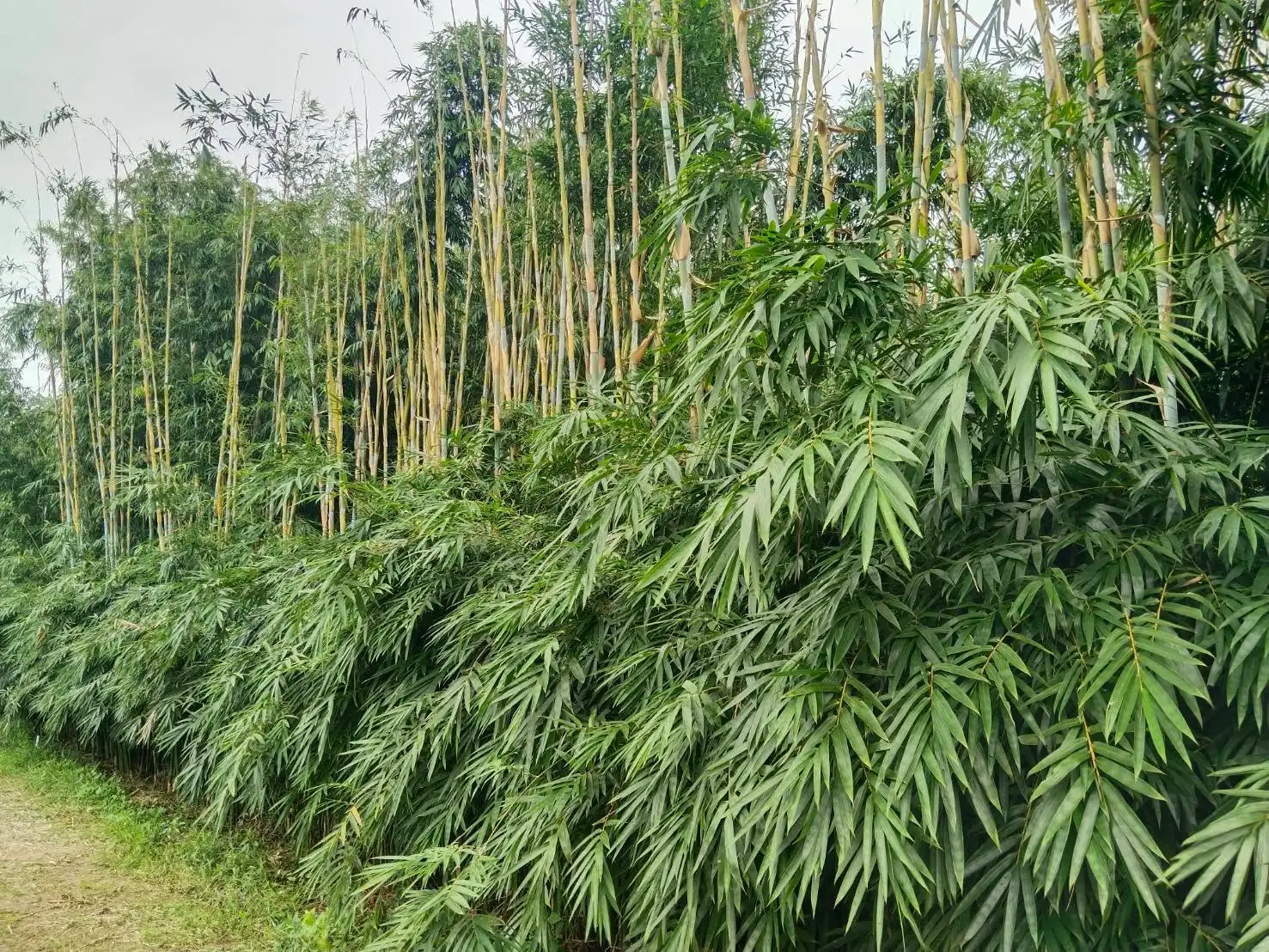
The charm of Ban Huai Thom’s bamboo gardens lies in their authenticity. These are working agricultural areas rather than decorative tourist gardens. Visitors can see bamboo clumps, young shoots, planting areas, and the rural environment that farmers care for in their everyday work. The atmosphere is calm, simple, and strongly connected to village life. This makes the gardens suitable for travelers who want to learn how bamboo is grown, how bamboo shoots are harvested, and how a familiar local plant can become an important source of income for farmers.
Bamboo has been important in Thai society for a long time. It is used for household tools, baskets, fences, construction materials, shade, handicrafts, and food. Bamboo shoots are widely used in northeastern Thai cuisine, including bamboo shoot curry, bamboo shoot soup, boiled bamboo shoots, fermented bamboo shoots, and many local dishes. Visiting a bamboo garden therefore helps travelers understand not only agriculture but also food culture, local materials, and the relationship between plants and daily life in rural Thailand.
Ban Huai Thom’s role as a model farming village for bamboo cultivation is significant. A model farming village is not just a place where crops are grown. It is a community with accumulated knowledge, experience, and practical methods that can be shared with others. Farmers in the village do not grow bamboo only for household use. They develop bamboo cultivation into income generation through bamboo shoot production. This requires knowledge of bamboo varieties, land preparation, planting distance, watering, soil improvement, clump management, shoot stimulation, and quality harvesting.
A bamboo garden has a different atmosphere from a fruit orchard or a flower garden. Bamboo grows in clumps, with tall culms, long narrow leaves, and natural shade. When planted in rows or groups, bamboo creates a cool and peaceful environment. The sound of bamboo leaves moving in the wind adds to the calm feeling of the garden. For photography lovers, bamboo clumps, narrow paths, and sunlight passing through bamboo leaves create beautiful rural scenes, especially in the morning and late afternoon.
Growing bamboo for bamboo shoots has several advantages. Once bamboo clumps are well established and properly maintained, they can provide repeated harvests. Unlike many seasonal crops, bamboo does not need to be replanted every season. Farmers can manage the clumps to produce shoots according to the season and market demand. Harvesting bamboo shoots requires experience because farmers must choose shoots of the right size and quality while keeping the bamboo clump healthy for future production.
Bamboo shoots can be sold fresh in local markets, supplied to restaurants, boiled, fermented, preserved, or used in traditional dishes. Demand for bamboo shoots continues because they are a familiar ingredient in Thai households. The development of bamboo as an economic crop in Ban Huai Thom shows how local resources can be used productively. A plant once seen mainly as part of everyday village life can become a steady source of household and community income when managed properly.
From an agro-tourism perspective, Ban Huai Thom’s bamboo gardens are suitable for visitors who want to see real farming rather than staged tourism. The value of the place lies in slow learning: walking through the garden, listening to farmers, observing planting patterns, and understanding how income from bamboo shoots is created through continuous care. This type of travel helps visitors appreciate agricultural labor and local knowledge.
Advance coordination is recommended before visiting. Although tourism information lists the garden as open daily from 08.00 to 17.00, bamboo gardens are community farming areas and may include several privately owned plots. Visitors should contact garden owners, local farmers, or Pa Ko Subdistrict Administrative Organization before traveling, especially for group visits, study trips, or photography in private areas. Coordination helps ensure a smooth visit and prevents disruption to farm work.
The bamboo gardens are valuable learning spaces for economic crop management. Visitors can learn about selecting bamboo varieties for shoot production, preparing soil, arranging planting distance, watering, adding organic matter, pruning old culms, keeping the clump open, and harvesting shoots at the right stage. This knowledge is useful for new farmers, students, agricultural groups, and anyone interested in farming as a main or supplementary occupation.
For families, a bamboo garden visit can be easy and educational. Children can observe the difference between bamboo culms, leaves, and bamboo shoots. They can learn where the bamboo shoots used in food come from and understand how a plant becomes food through planting, care, harvesting, and cooking. This creates a direct connection between food and its source, which is often difficult to see in urban life.
Bamboo also has an environmental dimension. It grows quickly, its roots help hold soil, and bamboo clumps provide shade and green space. When managed properly, bamboo gardens can help add moisture to the local environment, reduce heat in some areas, and create small habitats for insects, birds, and other living things. Learning about bamboo can therefore connect the topics of economy, household use, food, and environment.
Ban Huai Thom is located in Pa Ko Subdistrict, a rural area of Chanuman District. Chanuman is distinctive because it is the district of Amnat Charoen connected to the Mekong River landscape. A visit to the bamboo gardens can be combined with community and nature attractions in the district, such as Klang Na Cafe, fruit gardens in Pa Ko, Ban Nong Maeng Da Community Forest, Mekong viewpoints, Kaeng Khan Sung, and Kaeng Tang Lang. This creates a route that combines agriculture, local communities, forest, river scenery, and borderland life.
The main strength of Ban Huai Thom’s bamboo gardens is their ability to tell the story of the grassroots economy. Farmers who grow bamboo for bamboo shoots do not depend on a single one-time harvest. They use knowledge and garden management to create repeated income. Bamboo cultivation is therefore an example of how a familiar local plant can become an agricultural product when production, quality, and market connection are properly planned.
The best time to visit is in the morning or late afternoon. Morning weather is cooler and suitable for walking in the garden. Late afternoon light passing through bamboo leaves creates a beautiful atmosphere for photography. During the rainy season, visitors should wear suitable shoes because the ground may be wet or muddy. During the hot season, drinking water, a hat, and sun protection are recommended because parts of the garden may be exposed to sunlight.
Visitors should follow proper etiquette in agricultural areas. Do not cut bamboo shoots, cut bamboo culms, step on planting areas, harvest produce, or enter private areas without permission. If taking photos of people or publishing images, ask permission first. Responsible agro-tourism should respect the landowner and help the community feel that opening the area for learning is beneficial rather than burdensome.
For travelers interested in local food, the bamboo gardens offer a useful connection to northeastern Thai cuisine. Bamboo shoots are used in many Isan dishes, including bamboo shoot curry with yanang leaves, bamboo shoot soup, boiled bamboo shoots served with chili dip, and fermented bamboo shoots. Seeing bamboo shoots in their original farming environment helps visitors understand the source of an ingredient they may later taste in local restaurants.
The gardens are also suitable for study groups focused on sufficiency economy and income-generating agriculture. Bamboo can be developed in several ways: fresh shoots, processed bamboo shoots, bamboo culms, handicraft materials, and propagation material. With good management, a bamboo garden can provide multiple income channels for farming households. Learning from a model village is therefore useful for people seeking agricultural career ideas.
Culturally, bamboo has long been part of Thai village life. It has been used for houses, fences, farming tools, containers, musical instruments, and local ceremonies. Bamboo shoots are food, while bamboo clumps provide shade and natural windbreaks. Visiting a bamboo garden is therefore not only about seeing a plant. It is about understanding a plant that supports economic, culinary, practical, and cultural life in Thai communities.
For international travelers, Ban Huai Thom’s bamboo gardens are an excellent introduction to rural Thailand. Bamboo in the Thai context is not merely a decorative plant. It is connected to food, housing, tools, daily life, and farmer income. Bamboo shoots, or edible young bamboo, are common in many Asian dishes, and gardens like this are where that food begins. A visit can deepen the understanding of Thai ingredients and rural culture.
Getting to the bamboo gardens is most convenient by private car or motorcycle because Pa Ko Subdistrict is a rural area and the exact visiting point may be within a community farm plot. Travelers coming from Amnat Charoen town should allow time for the approximately 36 km journey. Upon reaching Ban Huai Thom, visitors should coordinate with local residents or the local authority to reach a suitable garden for visiting. Having a private vehicle also makes it easier to continue to other attractions in Chanuman District.
Nearby food stops can be included in the same route. Klang Na Cafe in Pa Ko Subdistrict is a convenient local stop, while Ban Ya Cafe Chanuman, Ban Suan Rim Khong Khrua Je Muk, and riverside cafés in Chanuman can be visited before or after the bamboo gardens. Travelers who want to stay close to the village atmosphere may stop in Pa Ko, while those who want Mekong River scenery can continue to Chanuman town.
Accommodation near the bamboo gardens is more limited than in Amnat Charoen city. Travelers who want to explore Chanuman and the Mekong River area can stay in Chanuman District, while those who prefer city services can return to Amnat Charoen town. The best option depends on the travel plan. If the trip focuses on the Mekong River, staying near Chanuman is more convenient. If the trip includes several districts, staying in the provincial town may be easier.
The main caretakers of the bamboo gardens are the farmers and garden owners in Ban Huai Thom and the Pa Ko community. Pa Ko Subdistrict Administrative Organization can provide local area information and initial coordination. Group visitors should provide the number of participants, purpose of the visit, and preferred time in advance so that the garden owners or community can prepare properly.
Before visiting, prepare comfortable walking shoes, clothing suitable for agricultural areas, a hat, drinking water, a camera, and small cash for local expenses. Study groups should prepare questions about bamboo cultivation, bamboo shoot harvesting, marketing, and garden management in order to gain the most from the visit. Good preparation makes the trip both enjoyable and educational.
Ban Huai Thom’s bamboo gardens are more than simple bamboo plots. They are a learning resource for economic crops, bamboo shoot income, and the productive use of local resources. The site is suitable for travelers who want to see real agricultural life in Amnat Charoen, understand how a local plant can support farmer income, and experience the rural atmosphere of Chanuman District in a simple but meaningful way.
Getting There The bamboo gardens are located in Ban Huai Thom, Village No. 2, Pa Ko Subdistrict, Chanuman District, Amnat Charoen Province, about 36 km from the provincial town. A private car or motorcycle is the most convenient way to travel. Once in Pa Ko Subdistrict, visitors should coordinate with local farmers, garden owners, or Pa Ko Subdistrict Administrative Organization to confirm the appropriate visiting point. The trip can be combined with Klang Na Cafe, fruit gardens in Pa Ko, Ban Nong Maeng Da Community Forest, Kaeng Khan Sung, Mekong viewpoints, and Kaeng Tang Lang.
| Name | Bamboo Gardens, Ban Huai Thom, Pa Ko Subdistrict, Amnat Charoen Province |
| Location | Ban Huai Thom, Village No. 2, Pa Ko Subdistrict, Chanuman District, Amnat Charoen Province |
| Address | Ban Huai Thom, Village No. 2, Pa Ko Subdistrict, Chanuman District, Amnat Charoen Province 37210, Thailand |
| Highlights | A bamboo-growing area in a model farming village where farmers grow bamboo for bamboo shoot production as an income-generating economic crop |
| Distinctive Features | A real community agricultural area suitable for learning about bamboo cultivation, bamboo shoot production, and income generation from local plants |
| Importance | Bamboo is an economic crop of Ban Huai Thom and Pa Ko Subdistrict, supporting income from fresh bamboo shoots, processed shoots, bamboo culms, and household uses |
| Main Areas / Zones | 1. Bamboo planting plots 2. Bamboo shoot harvesting areas 3. Bamboo clump management learning area 4. Rural agricultural photography area 5. Ban Huai Thom community area 6. Route connection to Pa Ko and Chanuman attractions |
| Main Activities | Bamboo garden viewing, bamboo shoot cultivation learning, rural photography, economic crop study, and community-based travel in Chanuman District |
| Travel Information | Located in Ban Huai Thom, Village No. 2, Pa Ko Subdistrict, Chanuman District, about 36 km from Amnat Charoen provincial town. Private car or motorcycle is the most convenient option. |
| Current Status | An agro-tourism and economic crop learning area of Ban Huai Thom, Pa Ko Subdistrict, Chanuman District, Amnat Charoen Province |
| Open Days | Daily |
| Opening Hours | 08.00 – 17.00 |
| Caretaker | Farmers and bamboo garden owners in Ban Huai Thom and the Pa Ko community, with Pa Ko Subdistrict Administrative Organization serving as the local information body |
| Local Contact | Pa Ko Subdistrict Administrative Organization, Tel. 0-4552-5830 |
| Nearby Tourist Attractions | 1. Klang Na Cafe, Suan Pho Sanan Butphakdi, Pa Ko Subdistrict, about 4 km 2. Fruit Gardens, Pa Ko Subdistrict, about 5 km 3. Ban Nong Maeng Da Community Forest, Pa Ko Subdistrict, about 8 km 4. Mekong Viewpoint, Chanuman District, about 18 km 5. Kaeng Khan Sung, Chanuman District, about 20 km 6. Kaeng Tang Lang, Chanuman District, about 22 km |
| Nearby Restaurants | 1. Klang Na Cafe, Pa Ko Subdistrict, about 4 km, Tel. 081-137-7037 2. Ban Ya Cafe Chanuman, about 18 km, Tel. 095-894-9255 3. Ban Suan Rim Khong Khrua Je Muk, about 20 km, Tel. 084-429-3646 4. Huen Coffee by the Mekong, Chanuman District, about 20 km 5. T&P Café&Coffee, Chanuman District, about 18 km |
| Nearby Accommodations | 1. Smile Resort Chanuman, about 16 km, Tel. 099-459-9333, 090-739-9399 2. Kaeng Tang Lang Resort, Chanuman District, about 22 km, Tel. 061-535-5198 3. Ramiarndao Boutique Place Hotel, Amnat Charoen, about 78 km, Tel. 081-067-4149, 093-390-9383 4. Baan Ing Daan Hotel, Amnat Charoen, about 79 km, Tel. 090-405-5504, 090-268-7597 5. Fai Kid Hotel, Amnat Charoen, about 80 km |
Frequently Asked Questions (FAQ)
Q: Where are the bamboo gardens of Ban Huai Thom located?
A: They are located in Ban Huai Thom, Village No. 2, Pa Ko Subdistrict, Chanuman District, Amnat Charoen Province, about 36 km from the provincial town.
Q: What makes Ban Huai Thom’s bamboo gardens interesting?
A: The area is known as a model farming village where farmers grow bamboo for bamboo shoot production, an economic crop that can generate good income.
Q: What are the opening hours?
A: The listed visiting hours are daily from 08.00 to 17.00. Visitors should coordinate with garden owners or local authorities before visiting.
Q: Can visitors harvest bamboo shoots by themselves?
A: Visitors should not harvest bamboo shoots or any produce without permission because the gardens are working agricultural areas owned by local farmers.
Q: Who should visit the bamboo gardens?
A: The gardens are suitable for agriculture enthusiasts, study groups, students, families, and travelers interested in community-based tourism and economic crops in Amnat Charoen.
Q: What should visitors prepare before going?
A: Comfortable walking shoes, a hat, drinking water, a camera, and clothes suitable for outdoor agricultural areas are recommended.
Q: What nearby attractions can be visited together with the bamboo gardens?
A: Nearby places include Klang Na Cafe, fruit gardens in Pa Ko, Ban Nong Maeng Da Community Forest, Mekong viewpoints, Kaeng Khan Sung, and Kaeng Tang Lang.
Q: Is there an admission fee?
A: There is no confirmed standard admission fee for Ban Huai Thom’s bamboo gardens. Group visitors or study groups should contact the garden owner or Pa Ko Subdistrict Administrative Organization before traveling.
 Category: ●Entertainment and Agricultural
 Group: ●Farms, Parks and Ecotourism
Last Update : 3 MonthAgo
 Last Update : 3 MonthAgo
 Click to Access the Navigation Map GPS
 Art, Culture and Heritage
 Historical Sites and Monuments(1)
 Art, Craft Centres, Tradition(3)
 Museums(1)
 Places of Worship
 Temple(30)
 Other Sacred Sites(7)
 Suburban Living
 Village, Community(3)
 Nature and Wildlife
 National Parks and Marine Reserves(3)
 Mountain (Doi)(5)
 Dam, Reservoir, Lake(5)
 Waterfalls(3)
 Caves(2)
 River, Canal(3)
 Other natural attractions(5)
 Zoos and Aquariums(1)
Farms, Parks and Ecotourism(4)
Zoos and Aquariums(1)
Farms, Parks and Ecotourism(4)
 Shopping
 Shopping and Night Market(1)


