
lovethailand home >Northeastern Travel Attractions >Amnat Charoen Travel Attractions >Chanu Man >Pa Ko > Wat Pa Ko Sila Lak (Tho)
TL;DR: Wat Pa Ko Sila Lak (Tho) is located at Ban Pa Ko Noi, Village No. 4, Pa Ko Subdistrict, Chanuman District, Amnat Charoen Province, open Daily, hours Daytime visits are recommended.
Wat Pa Ko Sila Lak (Tho)
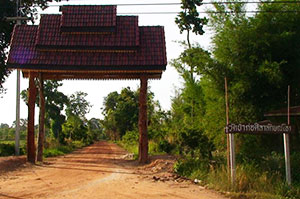
Open Days: Daily
Opening Hours: Daytime visits are recommended
Wat Pa Ko Sila Lak in Amnat Charoen Province is a local Buddhist temple in Ban Pa Ko Noi, Village No. 4, Pa Ko Subdistrict, Chanuman District. The temple began as a monastic residence serving the subdistrict and later developed into a community temple. Today, it remains an important spiritual center for people in Pa Ko Subdistrict, providing a place for merit-making, Buddhist ceremonies, prayer, and quiet reflection. Unlike large tourist temples, Wat Pa Ko Sila Lak is meaningful because of its close relationship with the local community and everyday Buddhist life.
The main value of Wat Pa Ko Sila Lak lies in its role as a spiritual anchor for local residents. People in the community visit the temple on Buddhist holy days, participate in merit-making activities, offer food to monks, listen to Dhamma teachings, and gather for important religious occasions. Ban Pa Ko Noi is a rural community with a calm and simple way of life, and the temple serves as a shared space where faith, culture, and community cooperation come together.
The name Wat Pa Ko Sila Lak reflects both the place and the symbolic character of the temple. “Pa Ko” is the name of the subdistrict where the temple is located, while “Sila Lak” suggests stone-like firmness, auspicious form, and spiritual stability. Together, the name gives the temple a strong local identity: a Buddhist temple of Pa Ko that stands as a steady source of faith for the community. For visitors, the name also signals the temple’s connection to the land, the village, and local belief.
Historically, Wat Pa Ko Sila Lak was first a monastic residence for the subdistrict before becoming an established temple. In rural communities, a monastic residence often plays an important role even before it develops into a full temple. It provides a place for monks to stay, for local people to make merit, and for the community to gather around Buddhist practice. The development from a monastic residence into a temple reflects the strength of local faith and the cooperation of villagers who wished to maintain a lasting Buddhist center in their area.
The temple is located in Village No. 4, Ban Pa Ko Noi, Pa Ko Subdistrict, Chanuman District. The route to the temple passes through a rural community landscape, giving visitors a chance to experience local roads, houses, agricultural areas, and the slower pace of life in northeastern Thailand. The temple is about 3 kilometers from the local community point, making it more suitable for visitors with private transport or local hired vehicles. The journey itself helps travelers understand the rural context in which the temple belongs.
Wat Pa Ko Sila Lak is suitable for visitors who wish to pray, make merit, and experience a quiet local temple. There is no need to expect grand monuments or major historical ruins here. The temple’s strength is its living community role. It continues to support Buddhist activities, local gatherings, and the spiritual needs of residents. This makes it valuable for cultural travelers who want to understand local Buddhism beyond famous landmarks.
From a cultural perspective, Wat Pa Ko Sila Lak clearly reflects the role of temples in rural Isan society. In many villages, a temple is not only a religious place but also a center for learning, ethics, cooperation, and memory. Children, adults, and elders often connect with the temple through different stages of life, from Buddhist holy day activities to seasonal merit-making ceremonies and community events. Temples like Wat Pa Ko Sila Lak help hold the social fabric of the village together.
Religious activities associated with Wat Pa Ko Sila Lak follow the rhythm of Buddhist life in rural northeastern Thailand. These include merit-making on Buddhist holy days, Buddhist Lent activities, candle offerings, the end of Lent, Kathin robe-offering ceremonies, forest robe offerings, and other Buddhist occasions. Such events keep the temple active as a living spiritual space. Villagers do not visit the temple only as worshippers; they also take part as members of a shared cultural community.
The atmosphere of Wat Pa Ko Sila Lak is best appreciated by travelers who value simplicity. It is not designed as a busy tourist attraction or a photography-focused destination. Instead, it represents the quiet meaning of a village temple. This makes it useful for cultural tourism because it allows visitors to see how Buddhism functions in everyday local life. A visit here offers a more intimate view of Amnat Charoen than a trip limited only to famous provincial landmarks.
Visitors should approach Wat Pa Ko Sila Lak with respect. Modest clothing is recommended, loud behavior should be avoided, and visitors should be mindful of monks, local worshippers, and community activities. If a ceremony or merit-making event is taking place during the visit, it is best to follow local guidance and observe politely. Because village temples are closely tied to local life, respectful behavior helps create a good experience for both visitors and residents.
For travelers exploring Chanuman District, Wat Pa Ko Sila Lak can be included in a route with nearby natural and cultural attractions. Possible stops include Kaeng Khan Sung, Kaeng Hin Khan, Kaeng Tang Lang, Wat Pa Phu Ma Rong, Wat Pa Khiri Wong Kot, and the Mekong riverside area of Chanuman. This type of route shows different sides of Amnat Charoen: local temples, rural villages, river scenery, and quiet natural attractions.
In terms of travel planning, Wat Pa Ko Sila Lak is best visited by private car, motorcycle, pickup truck, or local hired transport. Since the temple is in Ban Pa Ko Noi, Village No. 4, and about 3 kilometers from the community point, private transport gives visitors more flexibility. Travelers coming from outside the district or from Mueang Amnat Charoen should check the route in advance and prepare the destination name clearly.
Getting There begins by traveling to Chanuman District in Amnat Charoen Province, then continuing to Pa Ko Subdistrict and Ban Pa Ko Noi, Village No. 4. The temple is located in the Ban Pa Ko Noi area, about 3 kilometers from the local community point. Private cars, pickup trucks, motorcycles, and local hired transport are the most practical options. Visitors unfamiliar with the route should ask local residents or local authorities in Pa Ko Subdistrict for directions before departure.
The best time to visit Wat Pa Ko Sila Lak is in the morning or late afternoon, when the weather is more comfortable and the atmosphere is calm. Visiting on Buddhist holy days or during local religious events may allow travelers to observe the temple’s role in community life, but visitors should remain respectful and avoid disturbing ceremonies or worshippers.
Wat Pa Ko Sila Lak is a meaningful place because of its simplicity and sincerity. Its importance does not come from being a major landmark, but from being a spiritual home for people in Pa Ko Subdistrict. The temple grew from local faith and continues to function as a Buddhist center for the community. For travelers who want to understand Amnat Charoen at the local level, this temple offers a quiet and authentic perspective on rural Buddhist life.
| Name | Wat Pa Ko Sila Lak, also known as Wat Pa Ko Sila Lak (Kasem Sawat Thatsanaram) |
| Location | Ban Pa Ko Noi, Village No. 4, Pa Ko Subdistrict, Chanuman District, Amnat Charoen Province |
| Address | Village No. 4, Ban Pa Ko Noi, Pa Ko Subdistrict, Chanuman District, Amnat Charoen Province |
| Highlights | A local community temple serving as a spiritual center for people in Pa Ko Subdistrict, suitable for merit-making and quiet cultural visits |
| Distinctive Features | A peaceful rural temple in Ban Pa Ko Noi, closely connected with Buddhist activities and community life in Pa Ko Subdistrict |
| History | Formerly a monastic residence serving the subdistrict, later developed into a temple and became a spiritual center for local residents. |
| Name Origin | The name is linked to Pa Ko Subdistrict, while “Sila Lak” suggests firmness, auspicious form, and spiritual stability. |
| Main Areas / Zones | Worship area, merit-making area, Buddhist community activity space, and temple grounds used for local religious events |
| Travel Information | Travel to Chanuman District, continue to Pa Ko Subdistrict, and enter Ban Pa Ko Noi, Village No. 4. The temple is about 3 km from the community point and is best reached by private vehicle or local hired transport. |
| Current Status | A local Buddhist temple in Pa Ko Subdistrict, Chanuman District, Amnat Charoen Province |
| Open Days | Daily |
| Opening Hours | Daytime visits are recommended, especially morning or late afternoon. |
| Fees | No admission fee |
| Facilities | Worship and merit-making areas, temple grounds, and parking space within the temple area |
| Nearby Tourist Attractions | 1. Kaeng Khan Sung, about 20 km 2. Kaeng Hin Khan, about 22 km 3. Kaeng Tang Lang, about 24 km 4. Wat Pa Phu Ma Rong, about 35 km 5. Wat Pa Khiri Wong Kot, about 36 km |
| Nearby Restaurants | 1. Baan Suan Rim Khong Krua Jae Muk, about 22 km, Tel. 084-429-3646 2. Krua Mae Rampai Pla Khong, about 22 km 3. Rung Ratree Restaurant, about 23 km 4. Krua Lanna Pla Khong, about 23 km 5. Pun Pun Krua Pla Khong, about 24 km |
| Nearby Accommodations | 1. Smile Resort Chanuman Branch, about 18 km, Tel. 099-459-9333, 090-739-9399 2. Kaeng Tang Lang Resort, about 24 km, Tel. 061-535-5198 3. Kieng Khong Resort, about 25 km, Tel. 097-945-3665 4. Ingna Resort, about 20 km 5. Baan Rim Khong Resort, about 25 km |
Frequently Asked Questions (FAQ)
Q: Where is Wat Pa Ko Sila Lak located?
A: Wat Pa Ko Sila Lak is located in Ban Pa Ko Noi, Village No. 4, Pa Ko Subdistrict, Chanuman District, Amnat Charoen Province.
Q: Why is Wat Pa Ko Sila Lak important?
A: It is a community temple and a spiritual center for people in Pa Ko Subdistrict, used for merit-making and Buddhist activities.
Q: What was Wat Pa Ko Sila Lak originally?
A: It was formerly a monastic residence serving the subdistrict before developing into a temple in Village No. 4, Pa Ko Subdistrict.
Q: Is there an admission fee?
A: No. Visitors can enter the temple for worship and merit-making without an admission fee.
Q: What is the best time to visit Wat Pa Ko Sila Lak?
A: Morning and late afternoon are recommended because the weather is more comfortable and the temple atmosphere is calm.
Q: How can travelers get to Wat Pa Ko Sila Lak?
A: Travel to Chanuman District, continue to Pa Ko Subdistrict, and enter Ban Pa Ko Noi, Village No. 4. The temple is about 3 km from the community point and is best reached by private vehicle or local hired transport.
Q: What nearby places can visitors continue to after Wat Pa Ko Sila Lak?
A: Visitors can continue to Kaeng Khan Sung, Kaeng Hin Khan, Kaeng Tang Lang, Wat Pa Phu Ma Rong, and Wat Pa Khiri Wong Kot depending on available time.
 Category: ●Places of Worship
 Group: ●Temple
Last Update : 2 MonthAgo
 Last Update : 2 MonthAgo
 Art, Culture and Heritage
 Historical Sites and Monuments(1)
 Art, Craft Centres, Tradition(3)
 Museums(1)
Temple(30)
Museums(1)
Temple(30)
 Other Sacred Sites(7)
 Suburban Living
 Village, Community(3)
 Nature and Wildlife
 National Parks and Marine Reserves(3)
 Mountain (Doi)(5)
 Dam, Reservoir, Lake(5)
 Waterfalls(3)
 Caves(2)
 River, Canal(3)
 Other natural attractions(5)
 Entertainment and Agricultural
 Zoos and Aquariums(1)
 Farms, Parks and Ecotourism(4)
 Shopping
 Shopping and Night Market(1)


