
lovethailand home >Northeastern Travel Attractions >Amnat Charoen Travel Attractions >Chanu Man >Khok Kong > Wat Non Sila Museum
TL;DR: Wat Non Sila Museum, Amnat Charoen attractions : Art, Culture and Heritage, Museums.
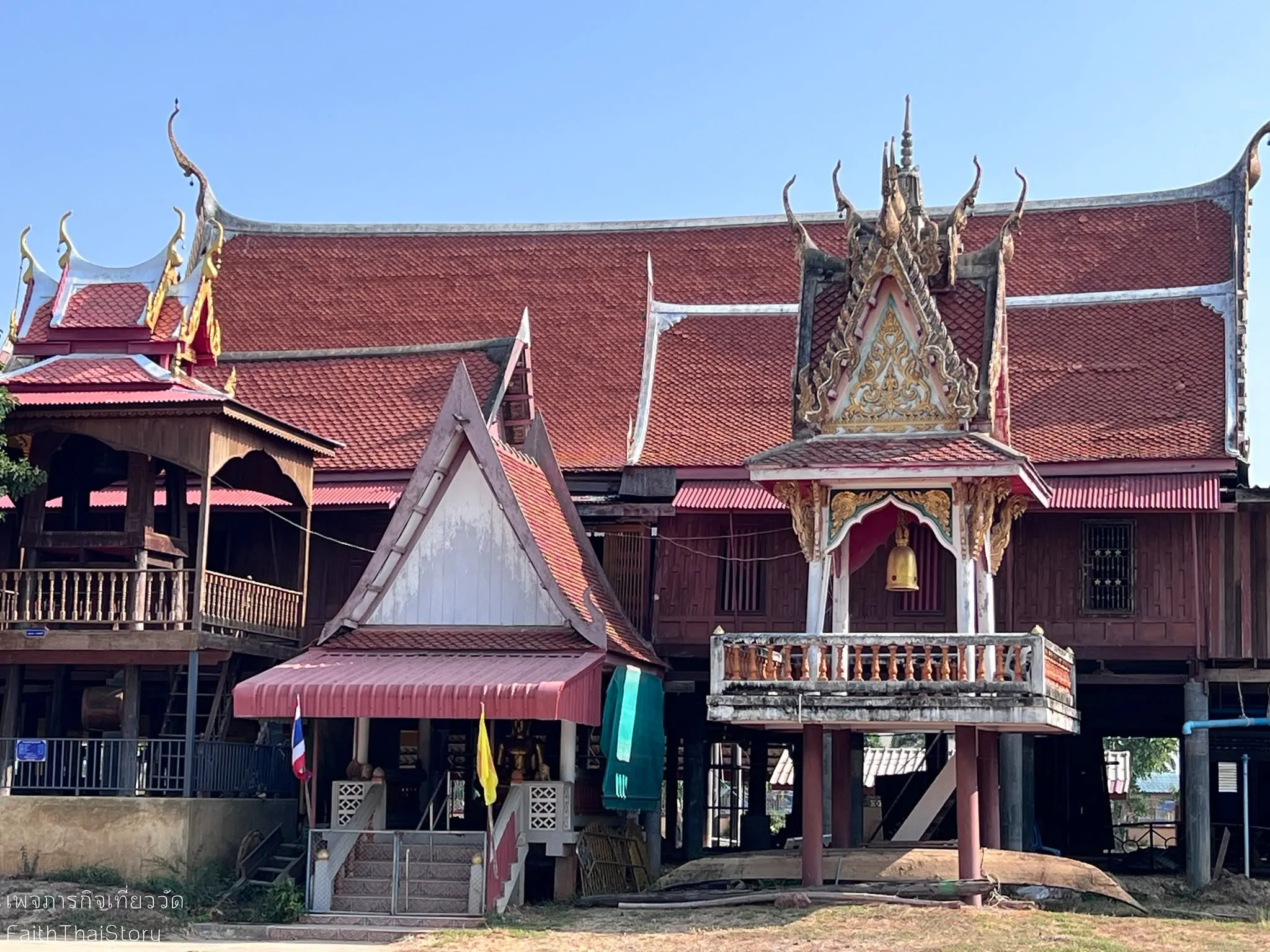
Wat Non Sila Museum
Open Days: Visits Should Be Arranged With The Temple And Local Community
Opening Hours: Visits Are Available According To The Temple And Community’s Availability
Wat Non Sila Museum In Amnat Charoen Province is a small local learning center in Khok Kong Subdistrict, Chanuman District, Amnat Charoen Province. It preserves and displays local handicrafts, traditional weaving tools, farming implements, household utensils, and historical objects connected with the everyday life of the community. This is not a large modern museum designed for mass tourism. Instead, it is a community-based museum that collects scattered local objects, organizes them into categories, and turns them into educational materials for younger generations, local residents, and cultural travelers.
The museum helps visitors answer an important question: how did people in this part of Isan live in the past? Through simple but meaningful objects, visitors can learn how villagers farmed, wove cloth, cooked, worked, stored household items, and passed down practical knowledge. The museum’s value lies not in luxury displays but in the authenticity of the objects. Each tool represents labor, memory, skill, and the local wisdom of people who lived closely with land, water, family, temple, and community.
Wat Non Sila Museum functions as a small cultural archive for the local community. The objects displayed inside are not merely old items. They are evidence of a way of life, records of practical knowledge, and tools for telling local history from the perspective of ordinary people. For the community, the museum is a place where elders can explain the past to younger generations. For visitors, it is a starting point for understanding Amnat Charoen beyond well-known temples and natural attractions.
Khok Kong Subdistrict is part of Chanuman District, an area connected with Mekong riverside culture, rural Isan life, agriculture, Buddhist temples, and community traditions. The farming tools, weaving equipment, and household objects preserved at Wat Non Sila reflect this cultural setting. They show how local people worked with natural resources, adapted tools to daily needs, and created a self-reliant way of life based on skill and cooperation.
In Isan society, temples have long been more than religious places. They have served as centers of education, community gatherings, moral instruction, local memory, and cultural preservation. The location of the museum within a temple is therefore meaningful. A temple is a familiar and respected space for villagers. When local objects are preserved inside this setting, they remain close to the people and the community that gave them meaning.
The weaving tools displayed at the museum are among the most culturally important objects. Traditional weaving is closely connected with women’s knowledge, family life, local economy, and household production. Weaving tools explain more than the making of cloth. They reveal patience, precision, craftsmanship, and the layered process behind each piece of textile, from preparing fiber and spinning thread to dyeing, setting up the loom, and weaving the final fabric.
When visitors see traditional weaving equipment, they can better understand that local textiles are not simply decorative products. They are the result of time, skill, inherited knowledge, and cultural taste. Patterns, colors, and materials reflect local identity and available resources. The display of weaving tools therefore helps Wat Non Sila Museum explain Isan handicraft knowledge in a tangible and accessible way.
Farming implements are another important group of objects in the museum. Rice farming has long been a foundation of Isan community life. Tools used for preparing fields, planting rice, harvesting, threshing, and storing grain reveal the relationship between people and the land. They remind visitors that a single grain of rice represents physical labor, seasonal knowledge, and close observation of nature.
Many traditional farming tools were made from locally available materials such as wood, iron, bamboo, rope, and other natural resources. Their design reflects practical experience and the ability of villagers to create tools suited to their environment. Displaying these tools allows the museum to tell not only the story of agriculture but also the story of local craftsmanship and problem-solving.
Household utensils displayed in the museum complete the picture of daily life. Some objects may look simple to modern visitors, but they once played important roles in cooking, storage, transportation, religious activities, and family routines. These items show how people lived with modest resources, used materials carefully, and relied on household skill rather than mass-produced goods.
Wat Non Sila Museum also plays an important role in building local pride. When people see the tools and objects used by their ancestors, they understand that their community has history, knowledge, skill, and cultural value. This sense of pride is essential for preservation. Communities protect their heritage most effectively when they recognize its meaning and feel connected to it.
Small local museums like Wat Non Sila Museum have a special strength that larger institutions cannot always provide: closeness to context. The objects here belong directly to the surrounding community. Visitors can connect them with nearby villages, temples, rice fields, families, and local memories. If a local elder or community guide explains the objects, the museum experience becomes even richer because the stories come from lived experience, not only from written labels.
Organizing the objects into categories is an important part of the museum’s educational role. When scattered historical objects are grouped into sections such as weaving tools, farming implements, household utensils, handicrafts, and community history, visitors can understand relationships between objects more clearly. They do not simply see old things. They see a system of life.
For students and young people, Wat Non Sila Museum is a valuable learning space outside the classroom. It makes local history and traditional culture visible and touchable. Children can see real tools, ask real questions, and connect them with stories from grandparents or community elders. This kind of learning helps young people understand the past as part of their own identity rather than as a distant subject in a textbook.
For travelers, the museum is best suited to those interested in cultural tourism, community tourism, local craftsmanship, and rural Isan life. Visitors should not expect a large commercial museum. Instead, they should approach it as a quiet community learning space where the value lies in observation, conversation, and attention to detail. The museum rewards visitors who take time to look closely at each object and imagine how it was once used.
Getting There is convenient from Chanuman District. Wat Non Sila Museum is approximately 20 km from Chanuman via the Chanuman–Nong Phue route. Private cars, rental cars, or local transport are suitable. Because this is a community-based learning center rather than a daily commercial attraction, visitors should coordinate with the temple or Khok Kong Subdistrict Municipality before traveling.
The Chanuman–Nong Phue route passes through rural communities and local landscapes. On the way, visitors can observe village life, agricultural areas, and the quiet rhythm of Chanuman District. This journey helps place the museum objects in context because the tools displayed inside are connected to the land, houses, fields, and community environment seen along the route.
Upon arriving at Wat Non Sila, visitors should behave respectfully because the museum is located within a temple area. Modest clothing, quiet behavior, and respect for local rules are recommended. Visitors should not touch displayed objects without permission and should ask before taking photographs in specific areas. Respecting the place is important because the museum preserves cultural materials that belong to the community.
To make the most of the visit, travelers should begin by observing the overall display area before studying each category of objects. Weaving tools explain local handicraft knowledge. Farming tools explain agricultural life. Household utensils explain domestic routines. Historical objects explain community memory. When viewed together, the museum becomes more than a collection of old items; it becomes a readable history of local life.
The museum can also be included in a wider community travel route in Khok Kong Subdistrict and Chanuman District. Visitors may combine it with Kaeng Bung Khiao, Mekong viewpoints, Ban Bung Khiao, and other nearby riverside or community attractions. This type of itinerary is suitable for travelers who want to understand local culture, handicrafts, agriculture, and Mekong-area rural life in one trip.
For school groups, students, or study tours, preparing questions in advance will make the visit more meaningful. Useful questions include: What was each weaving tool used for? How did traditional farming tools differ from modern equipment? What do household utensils reveal about resource use? Why should local communities preserve historical objects? These questions help transform a short visit into a deeper cultural learning experience.
From a cultural perspective, Wat Non Sila Museum is a good example of community-based preservation. The objects were not preserved because they were expensive. They were preserved because they carried memory, knowledge, and educational value. An ordinary tool from a house or rice field can become a powerful teaching object when it is placed in context and cared for properly.
Preserving local objects also helps communities understand change. When certain tools are no longer used in daily life, keeping them in a museum allows younger generations to see how people once worked, how technology changed labor, and how some forms of wisdom may still be adapted today. A local museum therefore does not simply store the past. It helps the community speak with the past in order to understand the present.
The charm of Wat Non Sila Museum lies in its simplicity and sincerity. The objects on display are closely connected to real village life. They are not separated from the people who used them. Every object can lead to basic but meaningful questions: How did people live? How did they work? How did they create tools? How did they pass knowledge to their children?
For Amnat Charoen Province, Wat Non Sila Museum is a small place with large cultural meaning. It enriches the province’s tourism identity by adding a community learning site to temples, natural attractions, and annual festivals. Through everyday tools and local handicrafts, visitors can understand the lives of ordinary people, which form the true foundation of local culture.
The museum is suitable for cultural travelers, students, teachers, local researchers, photographers, handicraft enthusiasts, textile learners, and visitors interested in rural Isan life. It should not be treated as a quick stop only. Taking time to observe the objects, understand their functions, and listen to local stories will make the experience more valuable.
Overall, Wat Non Sila Museum in Amnat Charoen Province is a meaningful local learning center that deserves continued preservation and support. It brings together folk handicrafts, historical objects, and community memory in one place. A visit here is not only about seeing old tools. It is about understanding the roots of life in Khok Kong Subdistrict and Chanuman District through the real objects once used by local people.
Wat Non Sila Museum shows that cultural heritage is not found only in major archaeological sites or national museums. It can also live in a small temple museum, in a loom, in a farming tool, in a household utensil, and in the memory of local people. Preserving such places means preserving community identity and passing local pride to future generations.
| Name | Wat Non Sila Museum, Amnat Charoen Province |
| Location | Wat Non Sila, Khok Kong Subdistrict, Chanuman District, Amnat Charoen Province |
| Address | Khok Kong Subdistrict, Chanuman District, Amnat Charoen 37210 |
| Highlights | Small local learning center displaying folk handicrafts, weaving tools, farming implements, household utensils, and community historical objects |
| History | Created by gathering scattered historical objects and folk handicraft tools from the community, organizing them into categories for education and local pride |
| Distinctive Features | A temple-based community museum that tells the story of Isan life through real tools, local objects, and community wisdom |
| Travel Information | Approximately 20 km from Chanuman District via the Chanuman–Nong Phue route; suitable for private cars, rental cars, or local transport |
| Current Status | A local learning center of Khok Kong Subdistrict and Chanuman District within the context of temple and community heritage |
| Open Days | Visits should be arranged with the temple and local community |
| Opening Hours | Visits are available according to the temple and community’s availability |
| Facilities | Temple-based display area, community learning space, temple courtyard, and parking areas according to the temple and community setting |
| Main Areas / Zones | Weaving Tools Zone, Farming Implements Zone, Household Utensils Zone, Community Historical Objects Zone, Folk Handicraft Zone, Temple And Community Activity Area |
| Caretaker | Wat Non Sila Together With Khok Kong Community And Khok Kong Subdistrict Municipality |
| Main Contact Number | Khok Kong Subdistrict Municipality Tel. 045-525-930 |
| Official Website / Official Page | www.kokkhong.go.th |
| Nearby Tourist Attractions | 1. Kaeng Bung Khiao, About 5 km 2. Ban Bung Khiao Mekong Riverside Flower Garden, About 6 km 3. Ban Bung Khiao Mekong Viewpoint, About 6 km 4. Kaeng Tang Lang, About 20 km 5. Chanuman Riverside Road And Viewpoint, About 20 km |
| Nearby Restaurants | 1. Local Food Shops In Khok Kong Community, About 2 km 2. Local Food Stalls Around Kaeng Bung Khiao, About 5 km 3. Baan Suan Rim Khong Krua Je Muk, About 20 km, Tel. 084-429-3646 4. White House Rim Khong, About 20 km, Tel. 085-005-5878 5. Food Shops Around Kaeng Tang Lang, About 20 km |
| Nearby Accommodations | 1. White House Rim Khong, About 20 km, Tel. 085-005-5878 2. Kaeng Tang Lang Resort, About 20 km 3. Ingna Resort, About 20 km 4. Baan Rim Khong Resort, About 20 km 5. Small Hotels And Resorts In Chanuman District, About 20 km |
Frequently Asked Questions (FAQ)
Q: Where is Wat Non Sila Museum located?
A: Wat Non Sila Museum is located in Khok Kong Subdistrict, Chanuman District, Amnat Charoen Province.
Q: What does Wat Non Sila Museum display?
A: It displays folk handicrafts, weaving tools, farming implements, household utensils, and historical objects related to the local community.
Q: Why is Wat Non Sila Museum important?
A: It is a local learning center that preserves community history, folk wisdom, and traditional objects while encouraging local pride.
Q: Who takes care of Wat Non Sila Museum?
A: Wat Non Sila, the Khok Kong community, and Khok Kong Subdistrict Municipality play roles in supporting and preserving the local learning space.
Q: How far is Wat Non Sila Museum from Chanuman District?
A: It is approximately 20 km from Chanuman District via the Chanuman–Nong Phue route.
Q: Who should visit Wat Non Sila Museum?
A: It is suitable for students, teachers, cultural travelers, handicraft enthusiasts, and visitors interested in rural Isan life.
Q: What should visitors prepare before visiting?
A: Visitors should dress modestly because the museum is located in a temple area and should coordinate with the temple or Khok Kong Subdistrict Municipality before traveling.
Q: What nearby attractions can be visited with Wat Non Sila Museum?
A: Nearby places include Kaeng Bung Khiao, Ban Bung Khiao Mekong Riverside Flower Garden, the Mekong viewpoint, Kaeng Tang Lang, and Chanuman Riverside Road.
 Category: ●Art, Culture and Heritage
 Group: ●Museums
Last Update : 5 MonthAgo
 Last Update : 5 MonthAgo
 Click to Access the Navigation Map GPS
 Historical Sites and Monuments(1)
 Art, Craft Centres, Tradition(4)
Museums(1)
Art, Craft Centres, Tradition(4)
Museums(1)
 Places of Worship
 Temple(30)
 Other Sacred Sites(8)
 Suburban Living
 Village, Community(4)
 Nature and Wildlife
 National Parks and Marine Reserves(3)
 Mountain (Doi)(6)
 Dam, Reservoir, Lake(5)
 Waterfalls(3)
 Caves(2)
 River, Canal(5)
 Other natural attractions(5)
 Entertainment and Agricultural
 Zoos and Aquariums(1)
 Farms, Parks and Ecotourism(4)
 Shopping
 Shopping and Night Market(1)
 Travel Articles, Recipes
 Travel Review, Food Review(3)


