
lovethailand home >Northeastern Travel Attractions >Amnat Charoen Travel Attractions >Senangkha Nikhom >Phon Thong > Phu Wat
TL;DR: Phu Wat is located at Phon Thong Subdistrict, Senangkhanikhom District, Amnat Charoen Province, open Daily, hours 06.00 – 18.00.

Phu Wat
Open Days: Daily
Opening Hours: 06.00 – 18.00
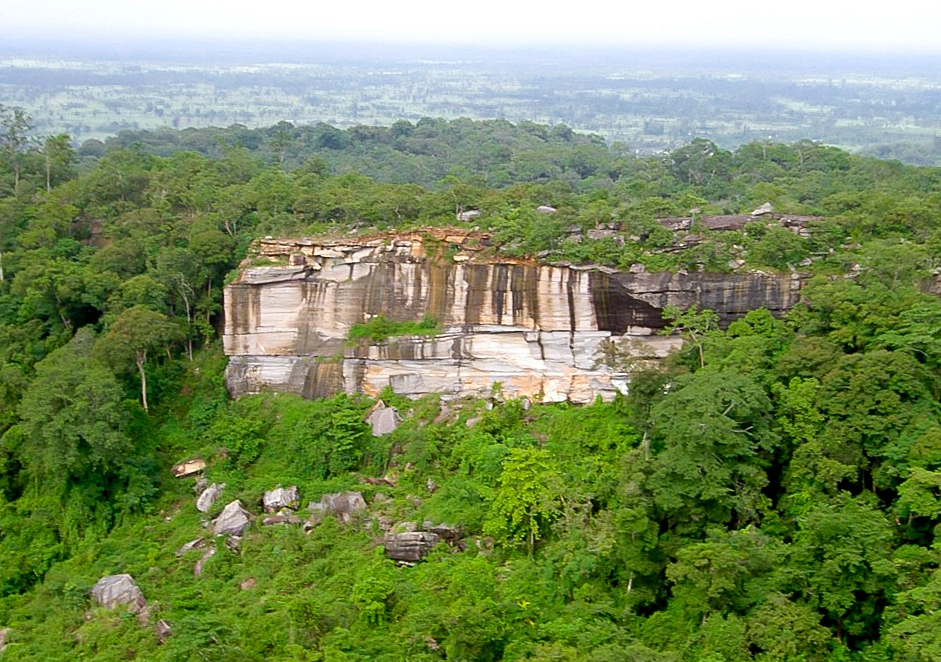
Phu Wat in Amnat Charoen Province is a natural and historically meaningful local attraction in Phon Thong Subdistrict, Senangkhanikhom District. It is a low sandstone hill with many natural stone terraces, dense local woodland, and a long-established historical feature known as Ho Akkharahat. The area is also home to wildlife such as junglefowl, foxes, squirrels, tree shrews, birds, insects, and other small forest creatures. For foreign travelers looking for a quiet, nature-based destination away from commercial routes, Phu Wat offers a meaningful combination of rock landscape, forest ecology, local memory, and rural Amnat Charoen atmosphere.
Phu Wat is located very close to Phu Phon Thong, about 1 kilometer to the north. Because of this, both places can be visited together in the same local nature route. While Phu Phon Thong is remembered for its steep mountain, high cliffs, and historical traces connected with political conflict in the past, Phu Wat has a different character. It is lower, more gentle in form, and known for its stone terraces, forest cover, wildlife, and Ho Akkharahat. Visiting both places helps travelers understand the landscape and local history of Phon Thong Subdistrict more completely.
The landscape of Phu Wat is shaped by its low sandstone hill and many rock terraces. These stone surfaces create open natural spaces where visitors can see the texture of the rock, weathered surfaces, cracks, and forms shaped gradually by natural processes. Some rock terraces are open and suitable for resting, while others are shaded by trees or connected with forest paths. This combination of open stone and woodland gives Phu Wat a balanced atmosphere: bright, calm, and natural at the same time.
The value of Phu Wat does not come from great height or dramatic cliffs. Its charm lies in the accessibility of a low hill where visitors can enjoy nature without a demanding mountain climb. Travelers who want to experience outdoor scenery, local forest, and stone terraces without a difficult route may find Phu Wat especially suitable. It offers the feeling of being close to nature while remaining easier to explore than many steeper mountain attractions.
Ho Akkharahat is the key historical feature that gives Phu Wat cultural depth. The name is associated with old local memory and historical social structure in northeastern Thailand. The word “Akkharahat” or “Akkharat” appears in historical contexts related to positions of authority or assistants to local rulers in older administrative systems. The presence of Ho Akkharahat on Phu Wat therefore connects the natural site with human history, local leadership, and the community’s remembered past.
Although detailed written records of Ho Akkharahat are not widely available in general tourism sources, its presence in local descriptions makes it an important point of interest. Visitors should view this site not only as a place to walk or take photos but also as a local heritage point. Respectful behavior is important because places like this carry meaning for the community beyond what can be seen on the surface.
The forest on Phu Wat gives the mountain its living character. Trees of different sizes provide shade, retain moisture, and create habitat for many animals. Wildlife mentioned in local descriptions includes junglefowl, foxes, squirrels, and tree shrews. The presence of these animals reflects the ecological value of the area. Phu Wat is therefore suitable for conservation-minded travel, quiet walking, and careful nature observation.
The wildlife of Phu Wat shows how the stone terraces, woodland, shrubs, and natural hiding spaces work together. Junglefowl are often associated with open forest and forest edges. Squirrels and tree shrews depend on trees, seeds, fruits, and plant cover. Foxes use semi-forested rural landscapes and open areas. These animals make Phu Wat more than a scenic place. It is a small natural habitat that still supports living movement and ecological relationships.
Visitors should avoid disturbing this natural balance. Do not make loud noise, chase animals, feed wildlife, or leave food waste in the area. Such actions may change animal behavior and damage the forest environment. A proper visit to Phu Wat should be quiet and observant: walking gently, listening to nature, watching for signs of wildlife, and taking photos without disturbing the place.
The stone terraces at Phu Wat serve as both rest areas and learning spaces. In the dry season, the rock surfaces are more visible and their forms can be clearly observed. In the rainy season, the forest becomes greener, but some rock surfaces may become slippery due to moisture and rainwater. Travelers should choose the season according to their purpose. The cool season and the late rainy season are especially comfortable for walking and photography.
Because Phu Wat is a local natural attraction rather than a major serviced tourist site, visitors should prepare basic supplies. Drinking water, a hat, proper walking shoes, sun protection, personal medicine, and a personal rubbish bag are recommended. Good preparation helps visitors stay safe and also reduces pressure on the local area, especially when traveling as a family or in a group.
The suitable visiting time is 06.00 to 18.00 because this period provides enough daylight for walking, observing stone terraces, forest paths, and natural features safely. Visiting after sunset is not recommended for general travelers because the area includes a hill, woodland, natural rock surfaces, and paths that may be difficult to see in the dark.
Getting There is most convenient by private car or rental car. From Amnat Charoen town, travel toward Senangkhanikhom District and continue into Phon Thong Subdistrict by local roads. Phu Wat is very close to Phu Phon Thong, so Phu Phon Thong can be used as a practical route reference. First-time visitors should check the map before departure and ask local residents for final route confirmation when approaching the area.
Having a private vehicle makes the trip more flexible. Travelers can visit Phu Wat in the morning, continue to Phu Phon Thong nearby, and then extend the trip to Sok Hang Waterfall, Phu Phanom Di, or Phu Kaset depending on available time. For a convenient ending to the day, travelers may return to Amnat Charoen town, where restaurants, accommodations, fuel stations, and other services are easier to find.
Phu Wat is best suited for travelers who prefer quiet nature rather than crowded attractions. The site is suitable for forest walking, observing stone terraces, birdwatching, wildlife observation, and learning about local heritage. Visitors who enjoy calm places with fewer people will appreciate the simple and authentic atmosphere of the hill, especially in the morning when the air is cooler and natural sounds are clearer.
Families should choose only safe and easily accessible areas. Children should remain under adult supervision and should not run on stone terraces or enter dense vegetation. Elderly visitors should walk slowly and rest when needed. Although Phu Wat is a low hill, natural ground can still be uneven. Planning according to the physical condition of each traveler will make the visit safer and more comfortable.
As a learning site, Phu Wat can help visitors understand the relationship between sandstone landforms, forest ecology, and local history. The rock terraces reveal the physical character of the hill. The forest shows the ecological value of the area. Ho Akkharahat connects the place with social memory and historical identity. Together, these elements make Phu Wat a multi-layered destination rather than a simple natural stop.
Phu Wat also has strong potential as part of conservation-based tourism in Phon Thong Subdistrict. Nearby places such as Phu Phon Thong, Sok Hang Waterfall, and other natural attractions in Senangkhanikhom District can be linked into one local route. If visitors and the community help keep the area clean, protect wildlife, and avoid damaging stone terraces, Phu Wat can remain a meaningful natural and educational place for future generations.
The relevant local authority for Phu Wat is the Phon Thong Subdistrict Administrative Organization in Senangkhanikhom District, Amnat Charoen Province. Because Phu Wat is a natural attraction in Phon Thong Subdistrict rather than a temple with a formal abbot, travelers seeking updated route conditions, local activities, or area information should contact local officials or community leaders before visiting.
No officially published admission fee for Phu Wat was found in verified public tourism information. Visitors should therefore prepare only for transport, food, drinks, and personal expenses. If local activities, guided visits, or area management arrangements are introduced in the future, travelers should check the latest information from local authorities before travel.
Restaurants near Phu Wat are mainly found in Senangkhanikhom District and along the route back to Amnat Charoen town. Travelers should plan meals in advance, especially when traveling in a group. Local options include cafés, Thai food, northeastern food, noodle shops, and simple local eateries. Amnat Charoen town provides more choices for those who prefer a wider selection after the nature trip.
Accommodation options near Phu Wat are limited compared with Amnat Charoen town. Many visitors may prefer staying in town and visiting Phu Wat as a day trip. The provincial town offers more hotels, restaurants, fuel stations, and services. Those who want to stay closer to the local route should check accommodation in Senangkhanikhom or nearby districts before traveling.
For photographers, Phu Wat offers several gentle but interesting subjects: natural stone terraces, forest paths, filtered light through trees, the Ho Akkharahat area, and the rural hill atmosphere. Morning and late afternoon are better for photography than midday because the light is softer and gives more depth to the rock surfaces and tree shadows. Photography should be done carefully, without stepping on fragile vegetation or disturbing wildlife.
Phu Wat is also suitable for slow travel. Its value often appears in small details rather than dramatic scenes: the sound of junglefowl, traces of animals, seeds on the ground, dry leaves on stone, and sunlight touching the rock surface. These details make the place meaningful for travelers who want to slow down, observe quietly, and experience the natural character of rural Amnat Charoen.
Overall, Phu Wat in Amnat Charoen Province should be understood as both a natural attraction and a place of local historical memory. Although it is a low hill, it contains important elements: stone terraces, forest, wildlife, Ho Akkharahat, and a strong connection with nearby Phu Phon Thong. Its simplicity is its strength, allowing visitors to experience the province in a quiet and community-connected way.
In summary, Phu Wat is suitable for travelers who want a peaceful route through Senangkhanikhom District, with stone terraces, forest, wildlife, and local stories. Its highlights include a low sandstone hill, many natural rock platforms, abundant trees, wildlife such as junglefowl, foxes, squirrels, and tree shrews, and the historically significant Ho Akkharahat. The area is convenient to reach by private car and can be combined with Phu Phon Thong, Sok Hang Waterfall, Phu Phanom Di, and other attractions in Amnat Charoen. Visiting between 06.00 and 18.00 is recommended for the safest and most rewarding experience.
| Name | Phu Wat |
| Location | Phon Thong Subdistrict, Senangkhanikhom District, Amnat Charoen Province |
| Address | Phon Thong Subdistrict, Senangkhanikhom District, Amnat Charoen Province 37290 |
| Highlights | Low sandstone hill, many natural stone terraces, abundant forest, wildlife, and the historically significant Ho Akkharahat |
| History | A low hill in Phon Thong Subdistrict, home to Ho Akkharahat, which is linked with local historical memory and the long relationship between the community and the natural landscape |
| Name Origin | The name Phu Wat is connected with the hill’s role as a local place of natural, cultural, and historical importance in Phon Thong Subdistrict |
| Distinctive Features | Low sandstone hill with several rock terraces, tree cover, wildlife such as junglefowl, foxes, squirrels, and tree shrews, and a quiet natural atmosphere |
| Travel Information | Travel from Amnat Charoen town toward Senangkhanikhom District, then continue into Phon Thong Subdistrict by local roads. Phu Wat is about 1 km from Phu Phon Thong. Private car or rental car is recommended. |
| Current Status | Local natural attraction and community historical learning area in Phon Thong Subdistrict |
| Open Days | Daily |
| Opening Hours | 06.00 – 18.00 |
| Facilities | Natural area; visitors should bring drinking water, proper walking shoes, a hat, sun protection, and a personal rubbish bag |
| Main Areas / Zones | 1. Ho Akkharahat 2. Natural stone terraces 3. Forest area 4. Wildlife observation area 5. Nature walking route 6. Connecting route to Phu Phon Thong 7. Stone terrace rest area |
| Caretaker / Local Authority | Phon Thong Subdistrict Administrative Organization, Senangkhanikhom District, Amnat Charoen Province, Mayor Hotline Tel. 08-3939-8555 |
| Official Website / Official Page | Phon Thong Subdistrict Administrative Organization website |
| Nearby Tourist Attractions | 1. Phu Phon Thong, about 1 km 2. Sok Hang Waterfall, about 5 km 3. Phu Phanom Di / Wat Hin Lan Kon, about 35 km 4. Phu Kaset / Wat Tham Hua Nak Phu Kaset, about 40 km 5. Phra Mongkhon Ming Mueang and Phuttha Utthayan, about 45 km |
| Nearby Restaurants | 1. Srabai Jai Cafe, about 30 km, Tel. 081-079-6855 2. Cafe Thanai Zaap, about 32 km, Tel. 064-086-2424 3. Krua Phet Nam Ngoen, about 30 km 4. Kuai Tiao Ruea Tang Khong, about 31 km 5. Jungle Cafe Senangkhanikhom Branch, about 32 km |
| Nearby Accommodations | 1. Zwa Hotel Amnat Charoen, about 45 km 2. Baan Ing Daan, about 46 km, Tel. 090-268-7597 3. Penphit Hotel, about 46 km 4. Nakarin Hotel, about 47 km, Tel. 045-511-226, 090-245-4567, 091-013-6386 5. Baan Na Resort Grand, Pathum Ratchawongsa District, about 55 km, Tel. 083-629-8797, 063-989-3454, 080-992-6529 |
Frequently Asked Questions (FAQ)
Q: Where is Phu Wat located?
A: Phu Wat is located in Phon Thong Subdistrict, Senangkhanikhom District, Amnat Charoen Province. It is a low sandstone hill about 1 km from Phu Phon Thong.
Q: What are the opening days and hours of Phu Wat?
A: Phu Wat is open daily from 06.00 to 18.00, which is the suitable daylight period for walking, viewing stone terraces, and exploring the natural area safely.
Q: What makes Phu Wat special?
A: Its highlights include a low hill with many stone terraces, abundant forest, wildlife such as junglefowl, foxes, squirrels, and tree shrews, and the historically significant Ho Akkharahat.
Q: Why is Ho Akkharahat important?
A: Ho Akkharahat is an important local historical feature of Phu Wat. It connects the natural hill with community memory and makes the site more meaningful than a simple nature stop.
Q: Is there an admission fee for Phu Wat?
A: No officially published admission fee was found. Visitors should prepare only for transport, food, drinks, and personal expenses.
Q: How do I get to Phu Wat?
A: Travel from Amnat Charoen town toward Senangkhanikhom District, then continue into Phon Thong Subdistrict by local roads. Phu Wat is close to Phu Phon Thong, and a private car or rental car is recommended.
Q: Who is Phu Wat suitable for?
A: It is suitable for travelers who enjoy nature, stone terraces, forest walking, wildlife observation, local history, and quiet non-crowded destinations.
Q: What should visitors prepare before going to Phu Wat?
A: Visitors should wear proper walking shoes, bring drinking water, a hat, sun protection, and a personal rubbish bag, and avoid disturbing wildlife or damaging natural stone terraces.
 Category: ●Nature and Wildlife
 Group: ●Mountain (Doi)
Last Update : 2 MonthAgo
 Last Update : 2 MonthAgo
 Click to Access the Navigation Map GPS
 Art, Culture and Heritage
 Historical Sites and Monuments(1)
 Art, Craft Centres, Tradition(3)
 Museums(1)
 Places of Worship
 Temple(30)
 Other Sacred Sites(7)
 Suburban Living
 Village, Community(3)
 National Parks and Marine Reserves(3)
Mountain (Doi)(5)
National Parks and Marine Reserves(3)
Mountain (Doi)(5)
 Dam, Reservoir, Lake(5)
 Waterfalls(3)
 Caves(2)
 River, Canal(3)
 Other natural attractions(5)
 Entertainment and Agricultural
 Zoos and Aquariums(1)
 Farms, Parks and Ecotourism(4)
 Shopping
 Shopping and Night Market(1)


